Manta Ray Snorkel Big Island: Unforgettable Kona Encounter
- Byron
- Jan 19
- 14 min read
Picture this: you're floating in the warm, dark Pacific waters off the Kona coast. Below you, giant, graceful manta rays soar through the water, their huge mouths open to scoop up plankton drawn to the bright lights. This isn't a scene from a nature documentary—it's the incredible manta ray snorkel Big Island experience, and it's something you'll never forget. This is one of the best tours you can find in Hawaii. Find out more at the homepage of Manta Ray Night Snorkel Hawaii.
Why This Night Snorkel Is a Must-Do Big Island Adventure
The Big Island has no shortage of amazing things to do, but the Kona manta ray night snorkel is in a class of its own. It’s a chance to get up close and personal with majestic reef manta rays as they feed naturally. The fact that it all happens after dark turns the whole thing into a surreal, underwater ballet.
For a truly world-class experience, we always point people toward the tours at Manta Ray Night Snorkel Hawaii. They have a fantastic reputation for creating those awe-inspiring moments with these gentle giants.
The Magic of Plankton and Light
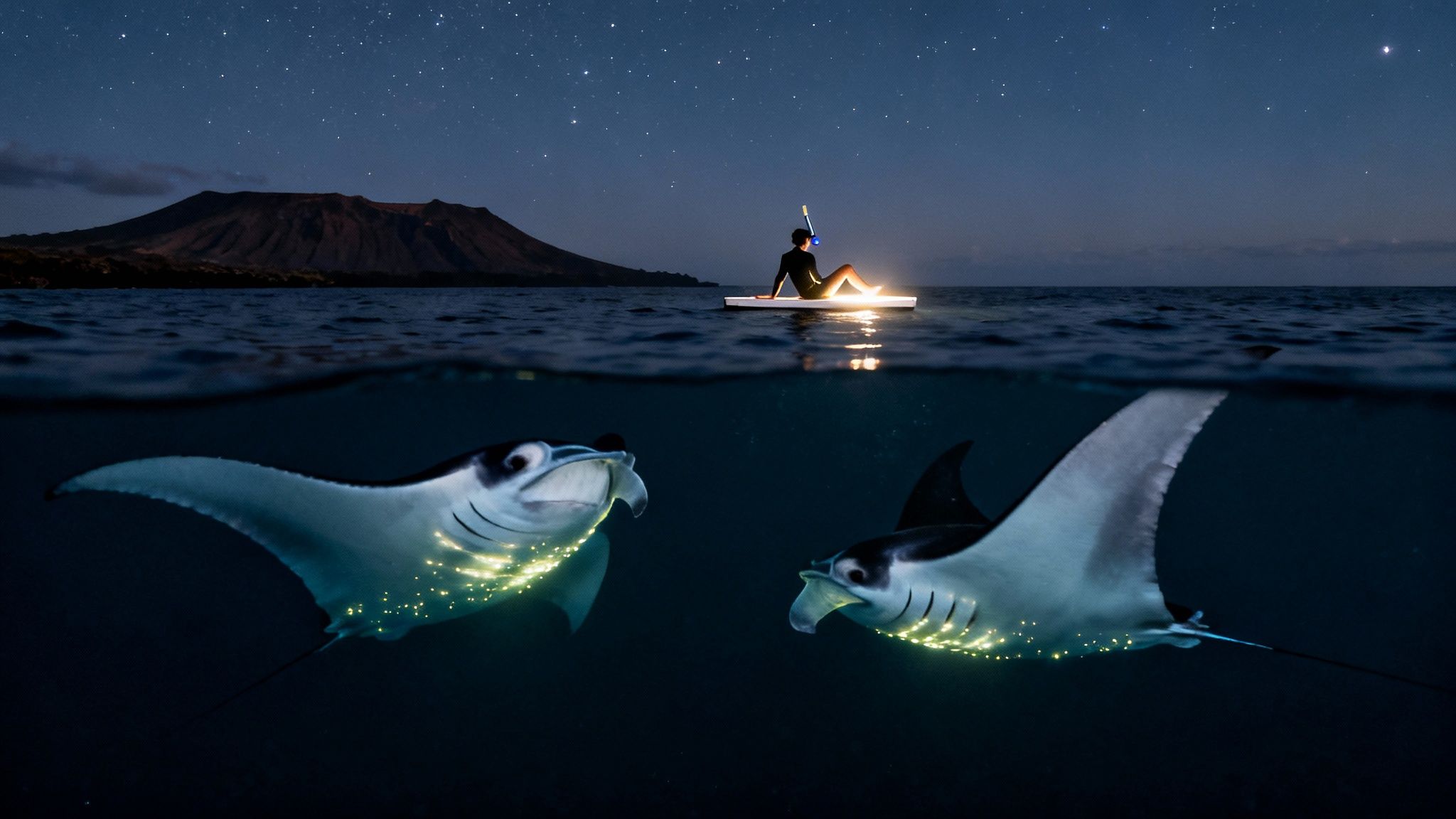
So, how does it all work? The secret is surprisingly simple science. The tour boats know the mantas' favorite feeding spots along the coast. Once they anchor, they shine powerful, eco-friendly lights down into the water.
Think of it as setting a dinner table for the mantas. The bright lights attract huge clouds of microscopic zooplankton, which is what manta rays love to eat. The mantas show up for the all-you-can-eat buffet, and you get a front-row seat as they glide, swoop, and barrel-roll through the illuminated water to feast.
You just float on the surface, holding onto a specially designed light board, and watch the breathtaking show unfold just inches away.
Choosing Your Tour Operator
Picking the right tour company is the key to having a great time. For an amazing manta ray night snorkel tour, or even a fantastic daytime Captain Cook snorkeling tour, we highly recommend Kona Snorkel Trips as an exceptional alternative. They're known for their experienced crews and small group sizes, which makes for a much more personal and enjoyable adventure.
Here’s what you should look for in any tour operator:
Safety First: They should have lifeguard-certified guides and provide top-notch gear like wetsuits and flotation devices.
Respect for Wildlife: Good companies follow strict "no-touching" rules to protect the mantas and their habitat.
Educational Component: The best guides will give you a quick briefing on manta ray biology, their behavior, and why conservation is so important.
High Success Rate: Thanks to Kona's resident manta population, your chances of a sighting are incredibly high. Most operators boast a success rate of over 90%.
Booking a manta ray snorkel is more than just another vacation activity; it’s a chance to see one of nature's most stunning spectacles up close. It’s peaceful, awe-inspiring, and a truly moving experience that will easily be the highlight of your trip to Hawaii.
What to Expect on Your Manta Ray Snorkel Adventure
So, you’re wondering what this whole night snorkeling adventure actually looks like, from start to finish. A manta ray snorkel Big Island tour isn't just about hopping in the water; it's a carefully orchestrated experience designed to be both thrilling and incredibly safe. The entire evening builds up to that one magical moment, and every step is part of the fun.
Your journey starts with a simple check-in at the harbor or designated meeting spot. This is your chance to meet the crew—usually a bunch of passionate marine biology nuts who are just as excited as you are. They’ll get you signed in and make sure you feel ready for the night ahead.
Check-In and Safety Briefing
Before you even see the ocean, you'll get the most important part of the tour out of the way: the safety briefing. Your guides will go over everything you need to know for a respectful and safe encounter. Think of it less like a list of rules and more like an introduction to the world of manta rays.
You'll learn some fascinating tidbits about their behavior, their biology, and the local conservation efforts that keep them safe. This isn't just trivia; it helps you go from being a tourist to being a guest in their home. The crew will also map out the entire evening, from gearing up to getting in the water, so there are no surprises. For an amazing experience with a crew that really knows their stuff, check out the top-rated tours from Kona Snorkel Trips.
Gearing Up for the Ocean
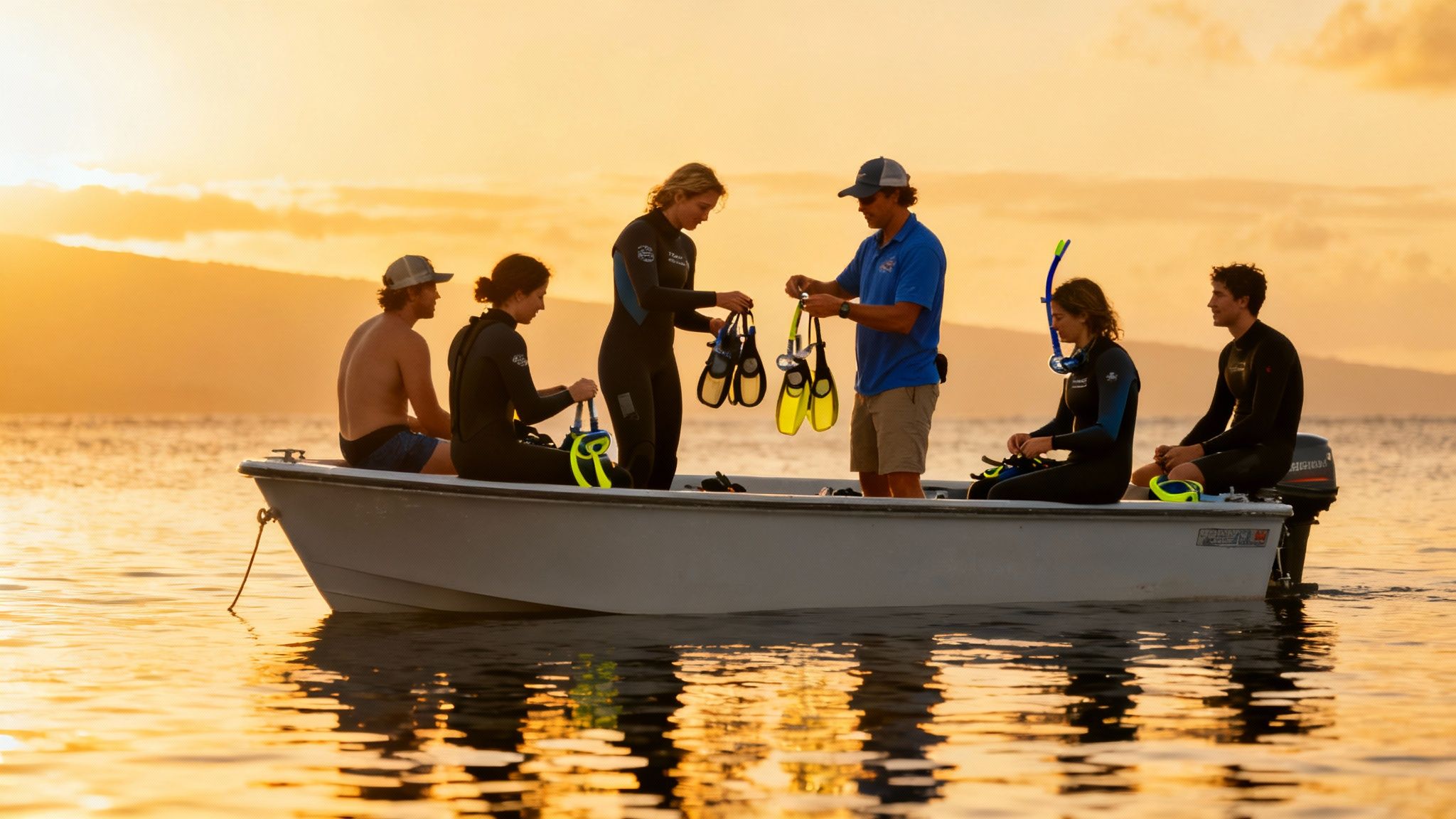
Next up, it’s time to get your gear. Don’t worry about packing your own stuff; any good tour operator will have everything you need. This usually includes:
A Wetsuit: The Hawaiian ocean can get a little chilly after dark. A wetsuit will keep you perfectly comfortable for the 30-45 minutes you’ll be in the water.
Mask and Snorkel: They’ll provide high-quality gear that’s properly fitted, so you’ll have a crystal-clear view of the show below.
Fins (optional): You’ll be holding onto a floating light board, so fins aren’t always essential, but some tours might include them.
Once you’re all suited up, you’ll board the boat for a quick, scenic ride out to one of the main manta viewing sites. If you booked a sunset tour, this boat ride is a treat in itself. Nothing beats watching a Kona sunset from the water.
The Main Event: The Underwater Ballet
When you arrive at the spot, the crew deploys a custom-built light board. This floating raft has powerful lights pointing down into the dark water, and it serves one brilliant purpose: it’s like ringing a giant dinner bell for the mantas.
The bright lights attract swarms of plankton, the mantas' favorite food. This glowing buffet is simply irresistible, drawing the rays in from all around for an easy meal.
You’ll slip into the water and grab onto the handles of the light board, floating on the surface like a spectator with a front-row seat. What happens next is pure magic. Giant manta rays, some with wingspans over 12 feet, will start gliding gracefully into the light.
They perform an underwater ballet, doing mesmerizing barrel rolls and somersaults to scoop up the plankton, sometimes just inches from your mask. It's an incredibly intimate and humbling wildlife encounter. You're a silent guest in their world, witnessing a natural wonder that has made the manta ray snorkel Big Island experience famous. This is the heart of every Manta Ray Night Snorkel Hawaii tour, and it’s something you’ll never forget.
Why Kona Is the World's Premier Manta Ray Destination
So, what makes the manta ray snorkel Big Island experience so consistently magical? It's not just a lucky break. The Kona coast is a perfect storm of geography and biology, turning it into a global hotspot for these gentle giants. While manta encounters in many parts of the world can be a hit-or-miss affair, Kona offers a reliable, year-round spectacle that few other places can touch.
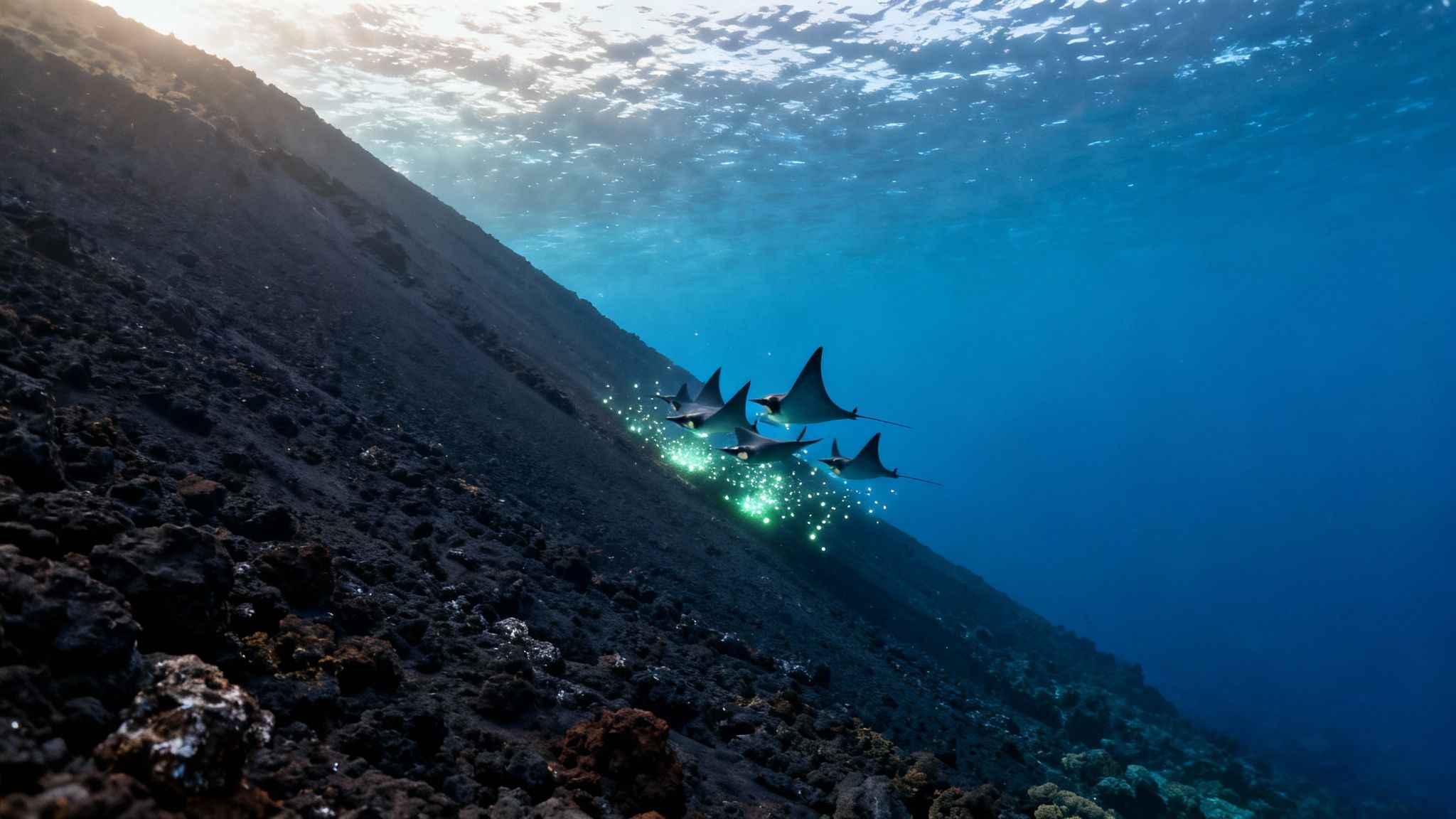
It all comes down to a neat scientific phenomenon called the 'Island Mass Effect.' Picture the Big Island as a huge mountain rising from the deep ocean floor. As deep ocean currents travel toward this massive underwater wall, they get pushed upward along its steep slopes. This "upwelling" brings nutrient-rich water from the dark, cold depths right up to the sunlit surface.
A Plankton Paradise
Those nutrients are basically fertilizer for the ocean. They kickstart a massive bloom of tiny phytoplankton, which in turn feeds an enormous population of zooplankton—manta rays' absolute favorite meal. With a constant buffet available, Kona's mantas have no reason to migrate for food. They just hang out and feast.
Think of the Kona coast as a permanent, five-star restaurant for manta rays. The Island Mass Effect keeps the kitchen stocked 24/7, ensuring the mantas never have a reason to leave. This reliable food source is the secret behind the world-class snorkeling adventures offered by tour operators like Manta Ray Night Snorkel Hawaii.
This unique setup is why Kona tours have such a ridiculously high success rate, often topping 90%. You aren't just hoping to glimpse a passing animal; you're visiting a well-established and predictable feeding ground.
Meeting the Locals: A Resident Population
One of the coolest parts of the Kona experience is knowing you're meeting a well-studied, resident community. These aren't just random visitors passing through. They are local celebrities, and each one has a unique pattern of spots on its belly that works like a fingerprint. Researchers and guides have been identifying and naming them for decades.
Scientifically known as Mobula alfredi, these gentle giants have made the Kona coast their permanent address. Photo-identification efforts have cataloged over 450 unique individuals here since long-term monitoring began. In fact, researchers started logging these majestic creatures way back in 1979! You can learn more about the incredible research on Kona's unique manta population on konahonudivers.com.
When you head out on a tour, your guide might point out a regular like "Big Bertha" or "Lefty." It adds such a personal touch to the whole thing, turning it from a simple wildlife viewing into an introduction to a local family. For a chance to meet these famous residents on a manta ray night snorkel tour or a daytime Captain Cook snorkeling tour, we highly recommend the team at Kona Snorkel Trips. Their guides are fantastic and love sharing stories about the individual mantas you’re meeting. This deep connection between the guides, researchers, and the mantas themselves is what truly makes the Big Island the place for this adventure.
How to Plan the Perfect Manta Ray Trip
One of the best things about planning your manta ray snorkel Big Island trip is how simple it is. Unlike so many other wildlife encounters that depend on the season, Kona’s manta ray population sticks around all year. That means any time is a good time to go. If you want to get really nerdy about the perfect conditions, you can check out our deep dive on the best time to see manta rays in Kona.
With the "when" out of the way, a little bit of prep goes a long way. Your tour operator will have all the big-ticket items covered, but packing a few personal comforts will make the whole evening that much smoother.
What to Bring for Your Tour
You can pack light for this one. Think of it as putting together a small comfort kit. Your tour crew provides the essential gear—wetsuits, masks, snorkels—so you only need to think about what will make you comfortable before and after you get in the water.
Here’s a quick list of what I always recommend:
A Towel: This one’s a no-brainer for drying off once you're back on the boat.
A Change of Clothes: Trust me on this. Having something warm and dry to pull on for the boat ride back makes all the difference. A windbreaker or a cozy sweater is perfect for cutting the ocean breeze.
Reef-Safe Sunscreen: An absolute must if you're on a sunset tour. The Hawaiian sun is strong, even late in the day.
Camera: An underwater camera like a GoPro is ideal for capturing the mantas up close. But don't forget a regular camera—the sunset from the boat is a show in itself.
And that's pretty much it! The less you have to worry about, the more you can soak in the experience.
Sunset Tour vs After-Dark Tour Which Manta Snorkel Is Right for You?
This is probably the biggest choice you'll make when booking: do you go at sunset or later in the evening? Both trips offer the same incredible encounter with the mantas, but they have a distinctly different vibe. Honestly, there's no wrong answer here; it just boils down to the kind of experience you're looking for.
To help you figure out what fits your style, here's a quick comparison of the two options.
Feature | Sunset Tour | After-Dark Tour |
|---|---|---|
Atmosphere | Vibrant and scenic, with a beautiful sunset view. | Quiet, serene, and focused on the starry sky and dark ocean. |
Timing | Departs before sunset, returns in the early evening. | Departs after dark, returns later at night. |
Crowds | Can be busier as it's a very popular time slot. | Often has fewer boats and a more intimate feel on the water. |
Best For | Families, photographers, and anyone who loves a good sunset. | Those seeking a quieter, more focused wildlife experience. |
The sunset tour is a fan favorite because you get two classic Hawaiian moments in one trip. First, you enjoy a stunning boat ride during the golden hour as the sun dips below the horizon. Then, as the last light fades, you slip into the water to meet the mantas. It's truly magical.
The after-dark tour, on the other hand, heads out when the sky is already full of stars. These trips tend to feel a bit calmer and more intimate, and sometimes you'll find fewer boats out at the viewing site. If you're looking to stretch your budget for this bucket-list adventure, learning how to save money on hotels can free up funds for incredible experiences like this.
Choosing your tour time is like picking the soundtrack for your experience. Do you want the dramatic colors of a sunset as your opening act, or the serene, star-filled quiet of the deep night?
Ultimately, you can't go wrong. Both tours deliver that same jaw-dropping manta ray snorkel Big Island experience that people travel across the world for.
Your Safety and the Manta Rays' Well-Being
When you head out for a manta ray snorkel on the Big Island, the whole operation revolves around two things: your safety and the well-being of the mantas. It's a shared priority. The best tour operators have this down to a science, making the experience feel both exhilarating and completely secure, even if you’ve never worn a snorkel mask before. You'll have lifeguard-certified guides in the water with you—people who not only know the mantas but are also trained to handle any situation that might pop up.
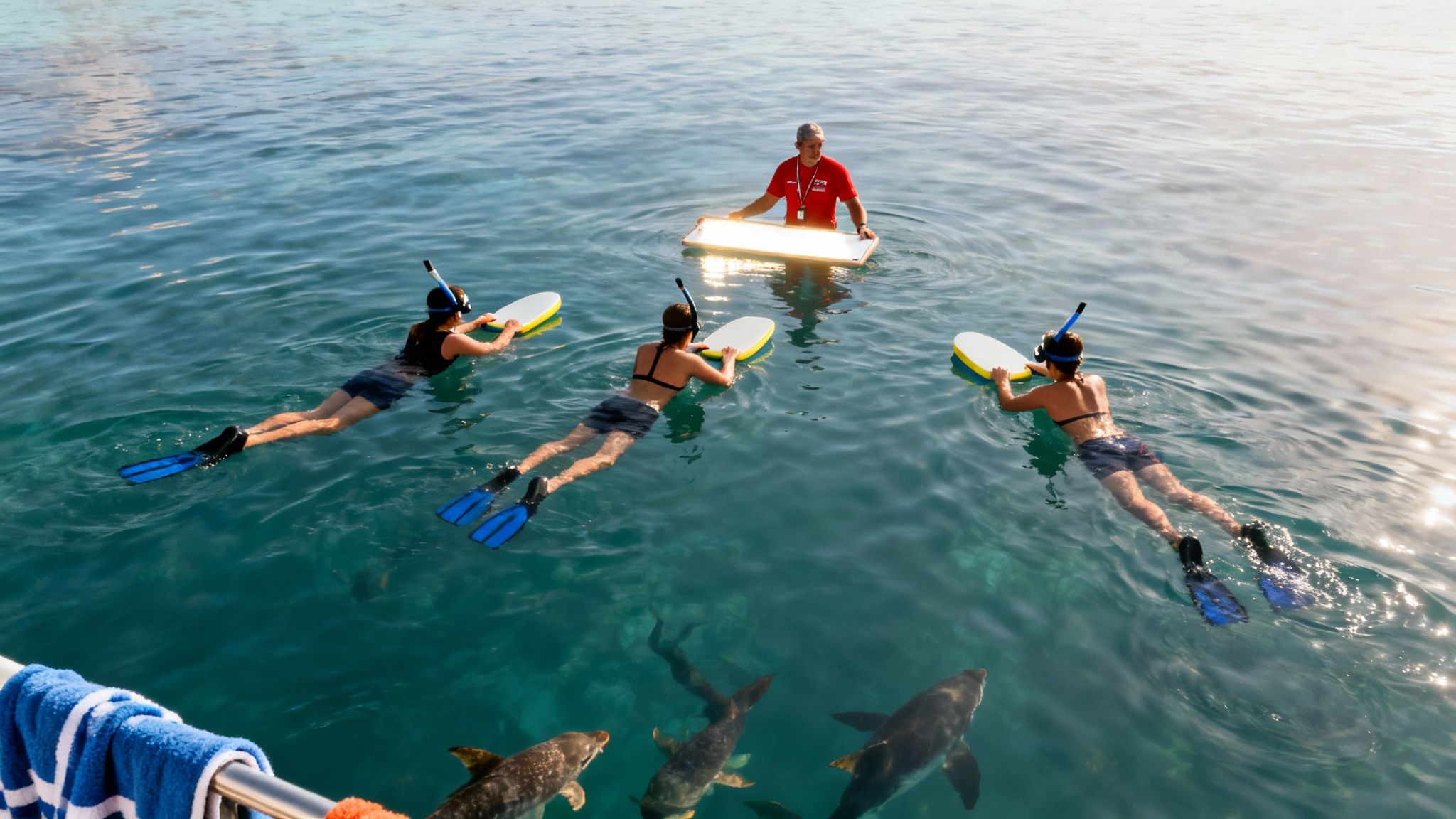
Before you even get your feet wet, there's a thorough safety briefing. The crew walks you through everything, from how to use your gear to what the flow of the night will look like. One of the most important pieces of equipment is the light board. It's a custom-made float that does two jobs at once. First, its bright lights attract the plankton that the mantas come to eat. Second, and just as important, it gives you something big and stable to hold onto. You just hang on and float, which means you don't even have to be a strong swimmer to join in.
The Golden Rule: Passive Observation
Beyond our own safety, there’s one non-negotiable rule that protects the mantas: passive observation. This is the guiding principle of the entire encounter. We are guests in their world, watching them dine. It’s that simple.
To make sure we don't disturb them, everyone follows a few clear rules:
No Touching: Manta rays have a protective mucus coating on their skin. It’s essentially their immune system, warding off bad bacteria. Touching them can rub off this slime layer and leave them vulnerable to infection.
No Chasing: Let the mantas come to you. Chasing after them only causes stress and can scare them away from their favorite feeding spots.
Stay on the Surface: As a snorkeler, your job is to hold onto the light board and watch from above. Diving down interferes with their natural feeding patterns, like their incredible barrel rolls.
By following these guidelines, you’re doing more than just watching. You're actively helping to protect Kona's famous manta population and ensuring this amazing experience can continue for years to come.
Why It Matters So Much Here
This isn't just about being polite to wildlife; there's critical science behind these rules. A groundbreaking 2023 genomic study revealed that the reef manta rays around Hawaii Island are part of small, genetically distinct populations. That means the Kona mantas are their own little community, separate from mantas even on nearby islands like Maui.
The research showed that these local populations are alarmingly small, which makes them extremely vulnerable to threats like boat strikes or getting tangled in fishing lines. This is why it’s so important to choose a tour operator that takes these rules seriously. Following the guidelines isn't just a suggestion—it's a direct contribution to the survival of this unique and fragile group of animals.
And while they're huge, don't worry—they're gentle giants. If you're wondering about their stingers (spoiler: they don't have them!), you can find out why they're harmless in our guide that answers the question, "Can manta rays sting you?". Your choice to be a responsible observer helps ensure these incredible creatures continue to grace our waters.
How to Book Your Big Island Manta Ray Snorkel
So, you're ready to see the manta ray ballet for yourself? Awesome. Booking your manta ray snorkel Big Island tour is pretty simple. There are tons of great operators up and down the Kona coast, so you can find something that fits your vibe—whether you want a smaller, more intimate group or a private charter for a special occasion.
While there are plenty of solid choices out there, we’re big fans of the crew at Kona Snorkel Trips. They consistently deliver amazing experiences, both for the Manta Ray night snorkel tour and their daytime Captain Cook snorkeling tours. If you want to weigh all your options, check out our detailed guide to the 12 best manta ray snorkel Kona tours. It's a great resource for finding the perfect match.
Secure Your Spot in Minutes
This is a bucket-list experience for a reason, and tours fill up fast—often days ahead of time. I always tell people to book their manta adventure for early in their trip.
Why? It locks in your spot, but more importantly, it gives you a safety net. If bad weather rolls in or, on the rare chance the mantas don't show, you have time to reschedule. Good operators like Manta Ray Night Snorkel Hawaii really care about your experience and will usually try to get you back out on another night.
The easiest way to book is directly through a secure online system. You can see live availability and lock in your date in just a few clicks.
Booking ahead takes all the stress out of it. All that’s left is to get excited for one of the most incredible wildlife encounters you’ll ever have.
Got Questions About Manta Ray Snorkeling? We've Got Answers.
Thinking about a manta ray snorkel Big Island adventure is thrilling, but it's totally normal to have a few questions before you take the plunge. We hear the same ones all the time, so we’ve put together some quick, straightforward answers to help you feel confident and ready for an amazing night.
Is It Really Safe to Snorkel with Manta Rays?
This is the number one question we get, and the answer is a big, confident yes! Manta rays are true gentle giants. Despite their incredible size, they're filter feeders, meaning they're only interested in the tiny plankton drawn to the lights. They're related to stingrays but have no barb or stinger, making them completely harmless to people.
Tour operators here in Kona take safety very seriously. Here’s why you can relax and enjoy the show:
You're with Pros: Every tour has lifeguard-certified guides in the water with you. They know these waters and these animals inside and out.
You Just Float: You'll be holding onto a big, custom-made light board that floats on the surface. You don’t even need to be a strong swimmer—just hang on and watch.
Clear Instructions: Before you even get your feet wet, the crew gives a full safety briefing so you know exactly what to expect.
Between the professional crew and the peaceful nature of the mantas, it’s one of the safest and most awe-inspiring wildlife encounters you can have.
Can I Bring My Kids on the Manta Snorkel?
Yes, this is a fantastic activity for families, but it really comes down to your child's age and comfort level in the water. Most companies set a minimum age, usually somewhere between 5 and 7 years old, but it’s always best to check with the specific operator you book with.
The biggest thing to consider is how your child feels about being in the ocean at night. It’s perfectly safe, but the darkness can be a little spooky for some kids. If you have a little fish in the family who loves the water and isn't afraid of the dark, they will probably have the time of their life. For a great family-friendly operator for either a manta ray night snorkel tour or a daytime trip like a Captain Cook snorkeling tour, we highly recommend Kona Snorkel Trips.
What If the Manta Rays Don't Show Up?
That’s a fair question—we are dealing with wild animals, after all. The great news is that the Kona coast is one of the most reliable places on the planet to see manta rays. Most tour operators here have a success rate of over 90%. But on a rare night, the mantas might just decide to be elsewhere.
In the unlikely event of a "no-show," nearly every reputable tour company has your back. The standard policy is to let you come back on another night for free.
This is exactly why we always tell people to book their manta ray snorkel Big Island tour for one of their first nights on the island. That way, if you hit that rare unlucky night, you have plenty of time in your vacation schedule to rebook and try again. You can check out some of the top-rated tours at Manta Ray Night Snorkel Hawaii. Just be sure to double-check the specific "no-show" policy with your chosen company when you book.
Comments