Manta Ray Snorkel Big Island Your Ultimate Guide to Kona Tours
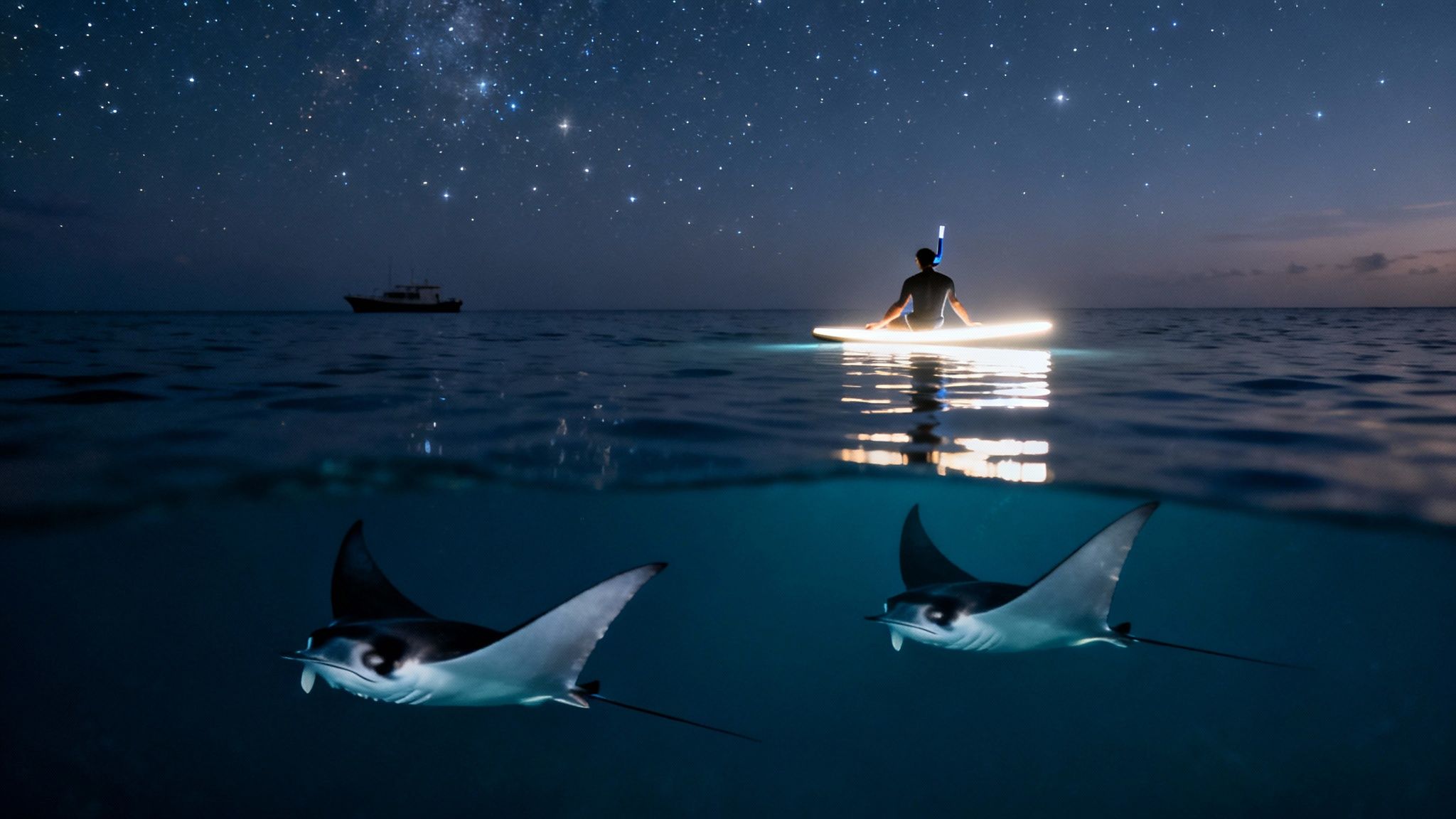
Picture this: you're floating in the warm, calm Pacific Ocean off the coast of Kona, the Hawaiian night sky packed with stars above you. Just inches below, giant manta rays, some with wingspans wider than a car, swoop and glide in an otherworldly underwater ballet. This isn't a nature documentary—it's the very real, very magical manta ray snorkel Big Island experience, and it's consistently called one of the best wildlife encounters in the world.
Your Guide to an Unforgettable Night
This guide is designed to pull back the curtain on one of the most incredible things you can do in Hawaii. We’ll cover everything, from what makes this snorkel so unique to why the Big Island has a near-perfect sighting record you just can't find anywhere else. The whole thing is built to be safe, easy, and genuinely awe-inspiring.
For those ready to jump in, Manta Ray Night Snorkel Hawaii offers one of Kona's top-rated tours, focusing on a small-group experience that's respectful to these amazing animals. You can learn more about their tours at their home page: https://www.mantaraynightsnorkelhawaii.com/
What Makes This So Different?
This isn't like seeing an animal in an aquarium. The manta ray night snorkel is a genuine encounter with wild creatures on their own terms. The mantas aren't baited or forced to be there; they show up because tour operators shine bright lights into the water, attracting the microscopic plankton they love to eat.
What you get to see is a stunning, natural feeding frenzy. The mantas perform graceful barrel rolls and looping turns to scoop up as much plankton as possible. You’re not just watching from a distance; you’re floating right on the surface, with a front-row seat to their world.
People often use words like "surreal" and "humbling" to describe it. It's one thing to hear about it, but it's another thing entirely to see these massive fish—some with wingspans over 12 feet—move with such elegance and power right in front of you.
An Easy Adventure for Almost Everyone
A lot of people think you need to be a seasoned snorkeler or a strong swimmer to do this, but that’s just not the case. The tours are specifically designed to be accessible to nearly everyone, no matter your comfort level in the water.
No Swimming Necessary: You'll be holding onto a custom-made, floating light board the whole time. Your only job is to float, relax, and watch the show unfold beneath you.
All Gear is Included: The tour provides everything you'll need, including a wetsuit to stay warm and a high-quality mask and snorkel.
Expert Guides in the Water: You're never alone. Lifeguard-certified guides are in the water with you from beginning to end, making sure everyone is safe and comfortable.
If you're looking for another fantastic snorkeling trip, whether it's for manta rays at night or exploring the famous Captain Cook monument during the day, check out the amazing tours offered by Kona Snorkel Trips.
How a Manta Ray Night Snorkel Actually Works
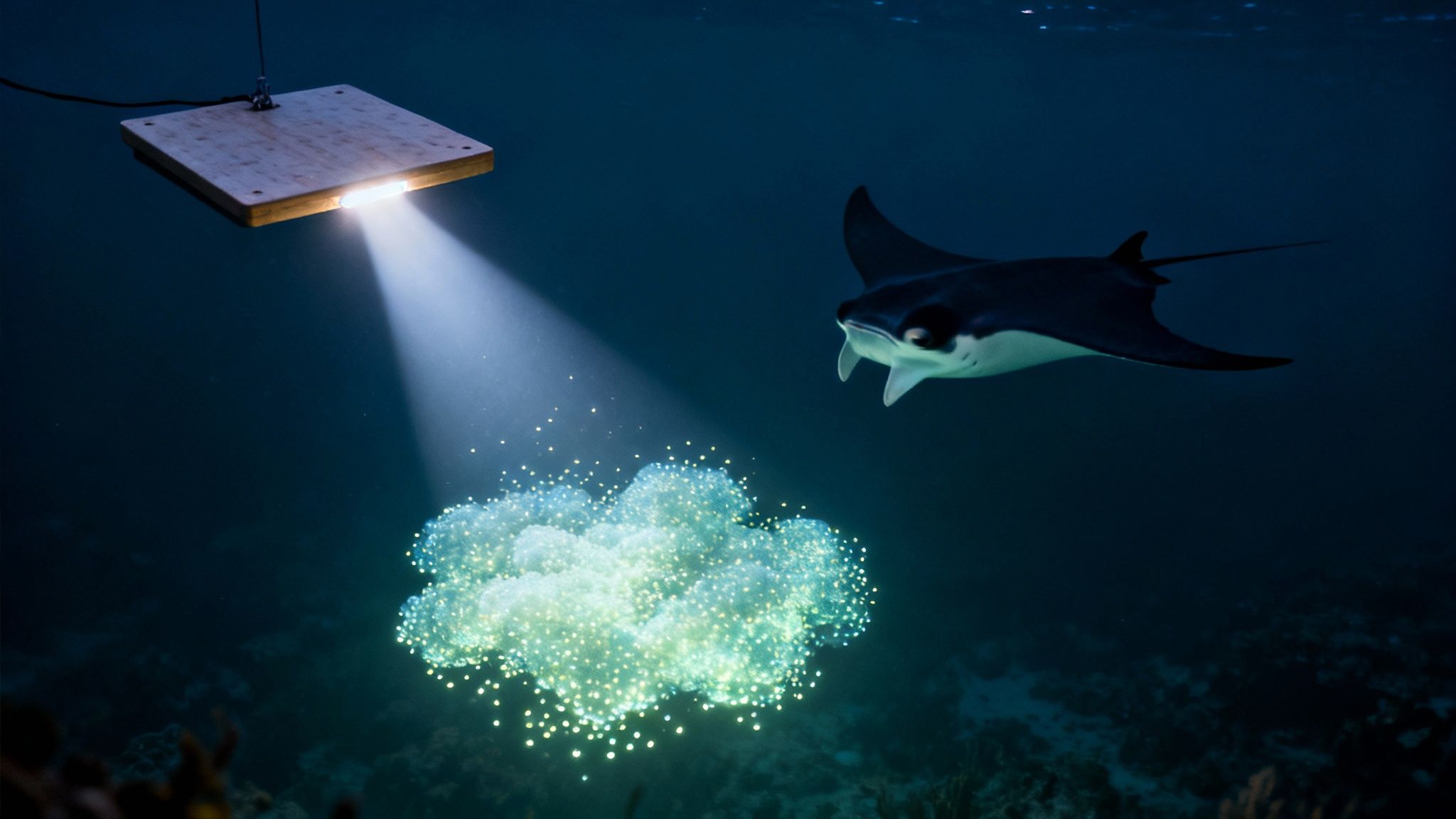
So, how do you convince giant, wild manta rays to show up for a nightly performance? The answer is surprisingly simple—it all comes down to their favorite food and a little bit of light. We're essentially setting the dinner table for them, and the main course is a microscopic buffet. The whole manta ray snorkel Big Island experience is built around this beautiful, natural process.
The secret ingredient is light. Our tour boats have custom-built, powerful light boards that float on the surface. Once we get to the manta site, we switch them on, sending bright beams down into the dark water. This light acts like a powerful magnet for some of the ocean's smallest residents: zooplankton.
These tiny creatures are instinctively drawn to light. In just a matter of minutes, the water beneath our light boards becomes a thick, swirling cloud of plankton. This just so happens to be the absolute favorite meal for manta rays. We're simply creating a concentrated, irresistible feast right where we want them to be.
Think of It as a Floating Campfire
Picture yourself camping in the woods on a pitch-black night. As soon as you light a campfire, what happens? Moths, gnats, and all sorts of other insects start fluttering around the glow. The manta ray snorkel works on the exact same principle, just in the ocean.
The light board is our "campfire." The plankton are the "moths" drawn to its glow. And the magnificent manta rays are the larger creatures that show up to feast on the gathering. It’s a completely natural phenomenon that we just help set the stage for.
As a snorkeler, your job is wonderfully simple. You'll hold onto the sides of this floating light board, which keeps you comfortably at the surface without needing to swim. Just put your mask in the water, and you'll have a perfect, front-row seat looking down into the "dining room" as the show begins.
The Manta Rays' Graceful Arrival
Once the plankton cloud is dense enough, the real magic starts. Drawn in by the promise of an easy meal, the resident manta rays emerge from the dark reef. These are gentle giants, completely harmless to people—they don't have the stingers that their stingray cousins do. Their only mission is to eat.
To get their fill, they perform a mesmerizing underwater ballet. You’ll watch them:
Glide Effortlessly: The mantas swim into the light beams out of the darkness, their massive wings carrying them with impossible grace.
Perform Barrel Rolls: To scoop up as much plankton as possible, they often perform elegant barrel rolls and somersaults right below you, their giant mouths wide open.
Get Up Close: You're holding onto the light board—the source of the entire buffet—so the mantas will often come within inches of you as they feed. It’s an unbelievably cool experience.
The entire encounter is carefully managed to be safe for both you and the mantas. Our guides are in the water with you to make sure everyone follows "manta manners," and the most important rule is to never touch the manta rays. Touching them can remove the delicate mucous coating on their skin, which is vital for their health. We're here to be respectful observers of their natural behavior, not to interfere.
For those looking for another world-class operator for a manta ray night snorkel or a daytime adventure to the Captain Cook monument, Kona Snorkel Trips is an exceptional alternative known for its quality and service. They share a similar focus on small groups and responsible wildlife viewing, ensuring an incredible and memorable tour.
Why Is Kona the Manta Ray Capital of the World?
What makes a manta ray snorkel on the Big Island so consistently incredible? It's not just a happy accident. The Kona coast has become the undisputed global hotspot for manta encounters thanks to a perfect storm of geography, biology, and even a bit of local history. You can find manta rays in other tropical waters, sure, but nowhere else on Earth offers a show this reliable, year after year.
The secret ingredient is Kona's unique, non-migratory population of reef mantas. Think of them as homebodies. Unlike their deep-ocean cousins who roam for thousands of miles, these mantas live their entire lives right here along this protected coastline. This means tour operators aren't just guessing where to find them. The sighting success rate is consistently above 90%—turning what could be a game of chance into a dependable, world-class wildlife experience.
This amazing reliability all comes down to a phenomenon called the "Island Mass Effect." The sheer size of the Big Island creates its own little ecosystem. It generates nutrient-rich currents that support a massive, non-stop buffet of zooplankton, the manta rays' favorite food. With so much food available all the time, they simply have no reason to leave.
A One-of-a-Kind Manta Community
Recent science has officially backed up what local guides have known for decades: Kona's mantas are truly special. This resident population of reef manta rays (Mobula alfredi) is genetically isolated and thriving. That abundant food supply from the Island Mass Effect means they don't have to make dangerous deep-water journeys between islands. In fact, cutting-edge genetic studies from 2023 confirmed that the Big Island's mantas are a distinct population from those found on other Hawaiian islands. You can dive into the full research about these groundbreaking manta findings from the Manta Trust.
We also have decades of "fingerprint" evidence to prove it. The unique spot patterns on a manta ray's belly are like a human fingerprint, and local researchers have been meticulously photographing and cataloging them for years. They've identified over 300 unique individuals who call the Kona coast home! This incredible effort helps us track their health, movements, and life stories, which is vital for their conservation.
This isn't just a random gathering of animals. It's a well-established, multi-generational community. When you join a tour, you aren’t just seeing a manta ray—you might be meeting a local celebrity like "Lefty" or "Big Bertha," each with their own history and personality.
How This Incredible Spectacle Began
The Kona manta ray snorkel wasn't something that just popped up overnight. It actually grew out of a happy accident back in the 1970s. A hotel on the coast started lighting up the surf at night for its guests. The lights attracted swarms of plankton, and it didn't take long for the local mantas to discover the all-you-can-eat buffet.
Scuba divers were the first to catch on. They realized what was happening and started bringing their own lights down to the seafloor to get a front-row seat to the feeding frenzy. Over the years, this grassroots activity evolved into the highly organized, sustainable, and safe experience we have today.
Here's a quick look at how it all unfolded:
1970s: The whole thing starts accidentally at the Kona Surf Hotel (now the Sheraton Kona Resort at Keauhou Bay).
1990s: Designated viewing sites like "Manta Village" and "Manta Heaven" are established to help manage the growing interest.
2000s: Strict "Manta Manners" guidelines are developed to make sure every encounter is passive and respectful, putting the animals' well-being first.
Today: We use custom-built floating light boards. These provide a much safer and more comfortable experience for snorkelers, letting you float easily on the surface while creating the perfect underwater stage for the mantas below.
This careful evolution has created a wonderful, symbiotic relationship. The tourism industry provides a consistent light source that attracts food for the mantas, and in return, funds the research and conservation that protects them. When you book a manta ray snorkel Big Island tour, you're not just a spectator—you're directly contributing to the health of this magnificent marine community.
How to Choose the Perfect Manta Ray Tour for You
With so many companies offering a manta ray snorkel Big Island experience, picking the right one can feel a little overwhelming at first. But finding the perfect tour really just comes down to matching the trip to your own personal style. Once you understand a few key differences, you can find an adventure that fits your budget, schedule, and the kind of vibe you're looking for.
It all boils down to a few factors: timing, the size of the group, and what kind of boat you'll be on. Each of these details shapes the whole experience, turning what would be a great trip into a truly unforgettable one. Let's break them down so you can book with total confidence.
Sunset Tour vs. After Dark Departure
One of the first choices you'll face is whether to go on a "sunset" tour or a later "after-dark" trip. Both get you that incredible face-to-face time with the mantas, but the feeling is completely different.
A sunset tour gives you the best of both worlds. You'll head out to the manta site while soaking in a spectacular Hawaiian sunset over the ocean—it's a show in itself.
The after-dark tour, on the other hand, is for the true night owls. These trips leave the harbor when it's already pitch black, creating a whole other kind of magic. The boat ride under a sky packed with stars is an experience all on its own, setting a quiet, almost mystical mood before you even slip into the water. For a deep dive into different operators, check out our guide to the 12 best manta ray snorkel Kona tours.
The Small Group Advantage
This might be the single biggest factor that shapes your experience: the size of your group. The big boats can pack in dozens of people, which can be a fun, high-energy party. But for my money, a smaller, more intimate group makes for a much more personal and memorable encounter.
A small-group tour feels less like a theme park ride and more like a private expedition. With fewer people in the water, you have more space to float comfortably and a better, unobstructed view of the mantas. The guides can also offer more one-on-one attention, answering questions and ensuring everyone feels safe and confident.
Honestly, choosing a tour that limits the number of guests almost always results in a better time. The atmosphere is calmer, getting in and out of the water is a breeze, and the focus stays right where it should be—on the incredible animals gliding beneath you.
Private Charters for Special Occasions
If you're celebrating a honeymoon, an anniversary, or just want the ultimate exclusive adventure, a private charter is the way to go. When you book a private boat, the whole experience is built around you and your group. You can set your own pace and enjoy the undivided attention of the captain and crew.
While a private tour is definitely a premium option, it delivers a level of service and intimacy that can make a special trip truly once-in-a-lifetime.
To help you decide, here's a quick breakdown of the different options you'll find.
Manta Ray Tour Options at a Glance
This table compares the different tour types available to help you choose the best experience for your trip.
Tour Type | Best For | Key Features |
|---|---|---|
Large Group Tour | Budget-conscious travelers and those who enjoy a lively social atmosphere. | Lower price point; larger vessel; can accommodate big families or groups. |
Small Group Tour | Travelers seeking a more personal and higher-quality wildlife encounter. | Fewer people in the water; more guide attention; calmer, intimate experience. |
Private Charter | Special occasions, families with specific needs, or anyone wanting an exclusive trip. | Fully customizable schedule and pace; total privacy; dedicated crew. |
Combined Tours | Adventurers who want to pack more into their day. | Combines the manta snorkel with another activity like a dolphin swim or reef snorkel. |
No matter which you choose, you're in for an incredible night. Just pick the one that feels right for you!
For travelers looking for another top-tier operator, Kona Snorkel Trips is an exceptional alternative for both a manta ray night snorkel tour or a Captain Cook snorkeling tour. They are renowned for their professional guides, high safety standards, and commitment to small-group adventures, ensuring a fantastic time on the water.
Ready to book your adventure? You can easily secure your spot for a once-in-a-lifetime manta ray snorkel on the Big Island.
What to Expect: A Step-by-Step Walkthrough of Your Manta Adventure
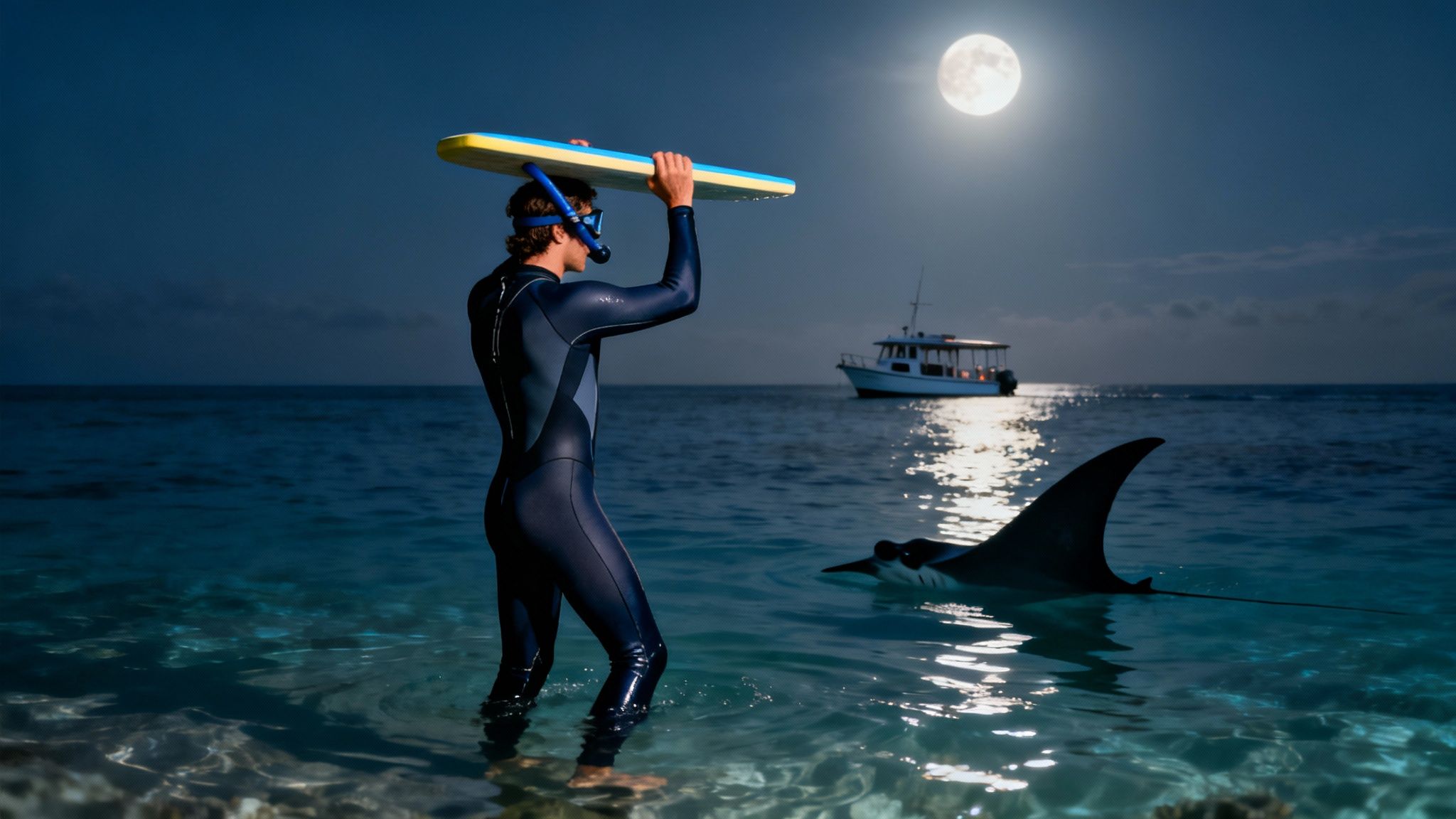
Knowing what’s going to happen on your manta ray snorkel Big Island tour helps turn those pre-adventure jitters into pure excitement. So, let’s walk through the whole experience, from the moment you meet us at the harbor to the second you slide into the warm Pacific. That way, you’ll feel totally comfortable and ready for the magic.
Your adventure starts with a simple check-in at the harbor. Our crew will be there to greet you with a smile, get you all signed in, and answer any last-minute questions you might have.
Once everyone’s ready, we’ll gather for a quick pre-tour briefing. This isn’t just a boring list of rules; it’s your first real glimpse into the incredible world of manta rays.
Getting Prepared for the Ocean
We'll cover all the important safety stuff first, making sure you feel confident before we even leave the dock. Our guides will show you how our light boards work and explain exactly what to do once you're in the water. Plus, you’ll learn some amazing facts about manta ray biology and the behaviors you’re about to see up close.
Next up, it's time to get geared up. We provide everything you need: a quality mask, snorkel, and fins. Most importantly, we'll fit you with a wetsuit. It does more than just keep you warm after the sun sets; it also adds a little extra buoyancy, so you can relax and float comfortably.
With your gear sorted, you’ll hop aboard our boat for a short, scenic ride out to the manta viewing site. Honestly, the boat ride is part of the fun.
As we cruise along the stunning Kona coast, keep your eyes peeled. We often see spinner dolphins playing in our wake. And if you're here during whale season (December to March), you might even spot a majestic humpback whale.
This is the perfect time to just kick back and soak it all in. Whether you’re on a sunset tour watching the sky light up with color or an after-dark trip under a blanket of stars, the boat ride sets the tone for an unforgettable night.
The Main Event: In the Water
When we get to the spot, your guides will set up our custom-built light board. Think of it as your floating viewing platform for the evening. As soon as the powerful lights flip on, they start attracting clouds of plankton—the mantas’ favorite food. Now, it's your turn to get in.
Slipping into the dark ocean is a surprisingly peaceful and surreal feeling. You’ll grab onto the handles of the light board, which holds you steady right at the surface. There's no real swimming involved. You just float, put your face in the water, and let the show come to you.
It's a full sensory experience. You'll feel the gentle sway of the ocean, hear the quiet calm of the night, and watch as the light beams cut through the darkness. Then, the stars of the show arrive.
One by one, the mantas glide up from the deep, drawn in by the light and the plankton. They perform a silent, graceful ballet right in front of you, doing barrel rolls and somersaults with their huge mouths open. Seeing this happen just inches from your face is truly an otherworldly experience.
This isn't just a lucky encounter; it's practically science. By 2024, local research databases had identified over 250 individual mantas, which helps explain the consistent 85-90% sighting rates. When modern light arrays were introduced around 2012, they supercharged the experience by boosting plankton density 300-500%, turning a reliable feeding spot into a near-guaranteed nightly spectacle. You can learn more about the research behind Kona's manta tourism if you're curious.
You'll spend about 45 minutes in the water, which is plenty of time to fully appreciate these gentle giants. When it's over, our crew will help you back onto the boat, where we often have warm drinks and snacks waiting for the cozy ride back to shore.
Keeping You and the Mantas Safe
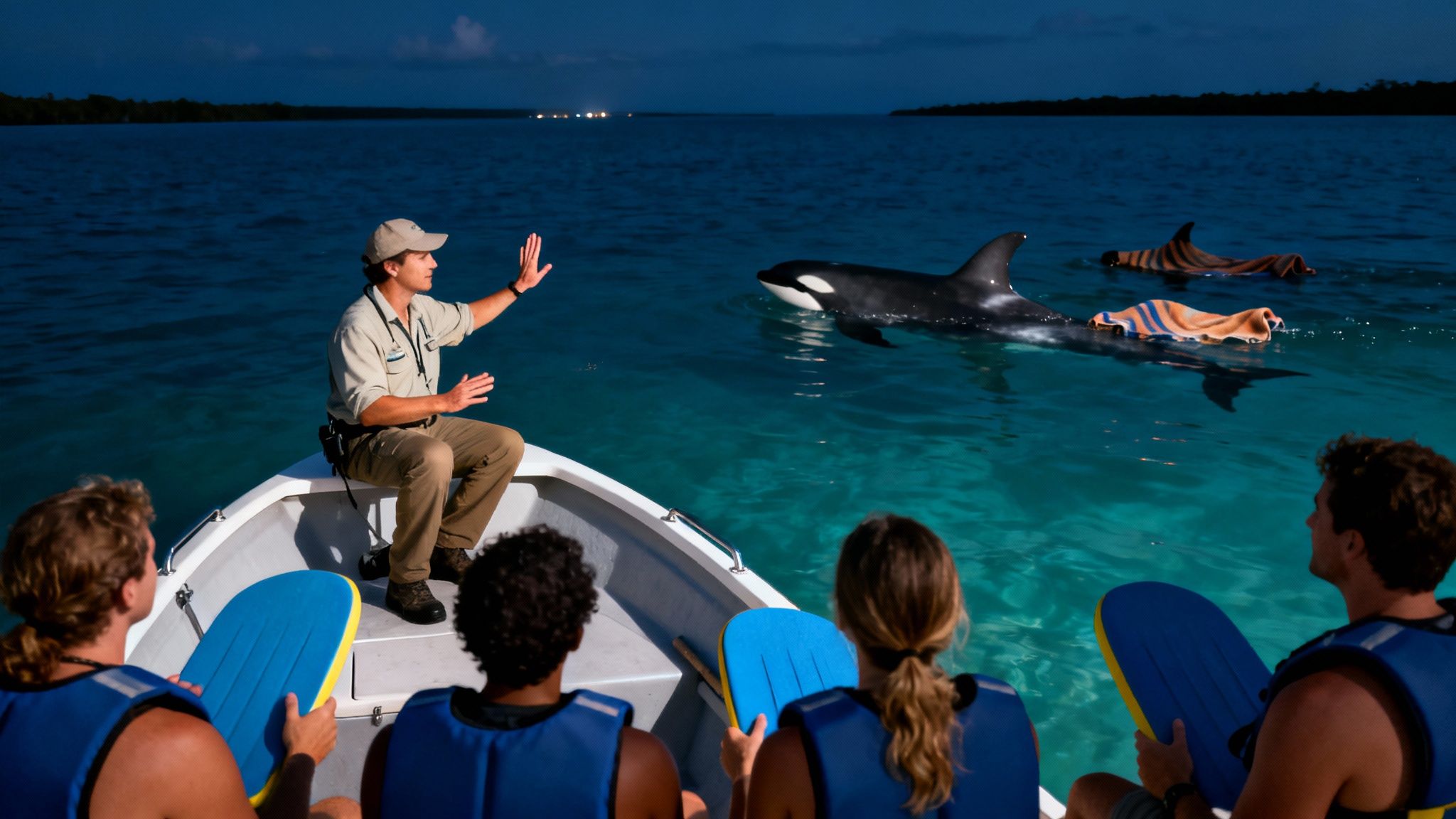
When you join us for a manta ray snorkel Big Island tour, our number one job is looking out for everyone's well-being—yours and the mantas'. This whole experience is built on a deep respect for the ocean and its inhabitants, making sure we can keep sharing these incredible moments for many years to come.
Your safety is our focus from the second you step onto the boat.
We kick off every single trip with a thorough safety briefing. Our lifeguard-certified guides walk you through everything, from getting comfortable with your snorkel gear to what to do once you're in the water. They’re right there with you the whole time, keeping a watchful eye.
We also use custom-made flotation boards that act as your personal viewing platform in the water. You just hold on, float comfortably, and watch the magic unfold beneath you. No swimming required, just pure relaxation.
Manta Manners: How to Be a Good Guest in Their World
Just as crucial as your safety is the health of the manta rays themselves. We follow a simple but vital code of conduct that we like to call "Manta Manners." The golden rule is straightforward: never, ever touch a manta ray.
Mantas are covered in a special mucus layer that works like a shield, protecting them from harmful bacteria and infections. If we touch them, we can rub off that protective coating, leaving them vulnerable. Think of it as being a respectful visitor in their home—we're there to observe, not to interact.
By following these simple rules, you become an active participant in conservation. Your respectful presence helps ensure that this incredible natural spectacle can continue, allowing future generations to experience the same sense of awe and wonder.
To learn more about what goes into a safe and ethical tour, you can explore our detailed safety tips for manta ray snorkeling in Kona.
Our lights are also specifically designed to point straight down, attracting the plankton that mantas feed on without shining in their eyes or disrupting their natural feeding patterns. And while we've got the in-water safety covered, it’s always a smart idea to make sure you have good travel insurance for adventure travel for peace of mind during your trip.
Questions We Hear All the Time About Manta Snorkeling
Thinking about joining us for a manta ray snorkel on the Big Island? It's a huge thrill, and it's totally normal to have a few questions before you dive in. We’ve put together answers to the queries we get most often so you can feel completely ready for an unforgettable night.
Do I Need to Be a Strong Swimmer?
Not at all. This is one of the best parts about the experience—it’s designed for everyone, no matter your comfort level in the water.
You'll be holding onto a big, custom-made light board that floats on the surface. You just float along with it, no real swimming required. Plus, our lifeguard-certified guides are right there in the water with you the whole time, making sure you feel safe and secure.
What's the Best Time of Year to See Mantas in Kona?
Honestly, any time is a great time! The local manta rays hang out in Kona year-round; they don't migrate. This gives us a consistently high success rate of over 90%, no matter the season.
The water gets warmest in the summer, but don't worry about the winter months—we provide wetsuits to keep you comfortable all year.
Here's a pro tip: Book your tour for one of the first few nights of your vacation. Manta rays are wild animals, and while sightings are incredibly reliable, a no-show can happen. Booking early gives you a chance to reschedule if needed.
Can I Bring My Own Underwater Camera?
Absolutely! We love it when guests capture their own amazing photos and videos. GoPros and other underwater cameras are perfect for this.
Just one small request: please turn off any bright, flashing strobes. Sudden flashes can disrupt the mantas. A steady video light is fine, and we definitely recommend securing your camera to your wrist with a strap!
If you have more questions, head over to our complete manta ray FAQ page. We cover everything from the boat ride to what you should (and shouldn't) bring.
Comments