Manta Ray Snorkel Kona A Complete Guide to Hawaii's Best Night Swim
Picture this: you’re floating in the warm, dark Pacific waters off the coast of Kona. Below you, giant manta rays, graceful and ghost-like, swoop and barrel roll through a beam of light, their movements like an underwater ballet. This isn’t a dream or a scene from a documentary—it’s the very real, and truly unforgettable, manta ray snorkel Kona experience.
If you're looking for one of the best adventures on the island, the folks at Manta Ray Night Snorkel Hawaii run some incredible tours. Learn more on their home page.
Your Guide to the Kona Manta Ray Snorkel Adventure
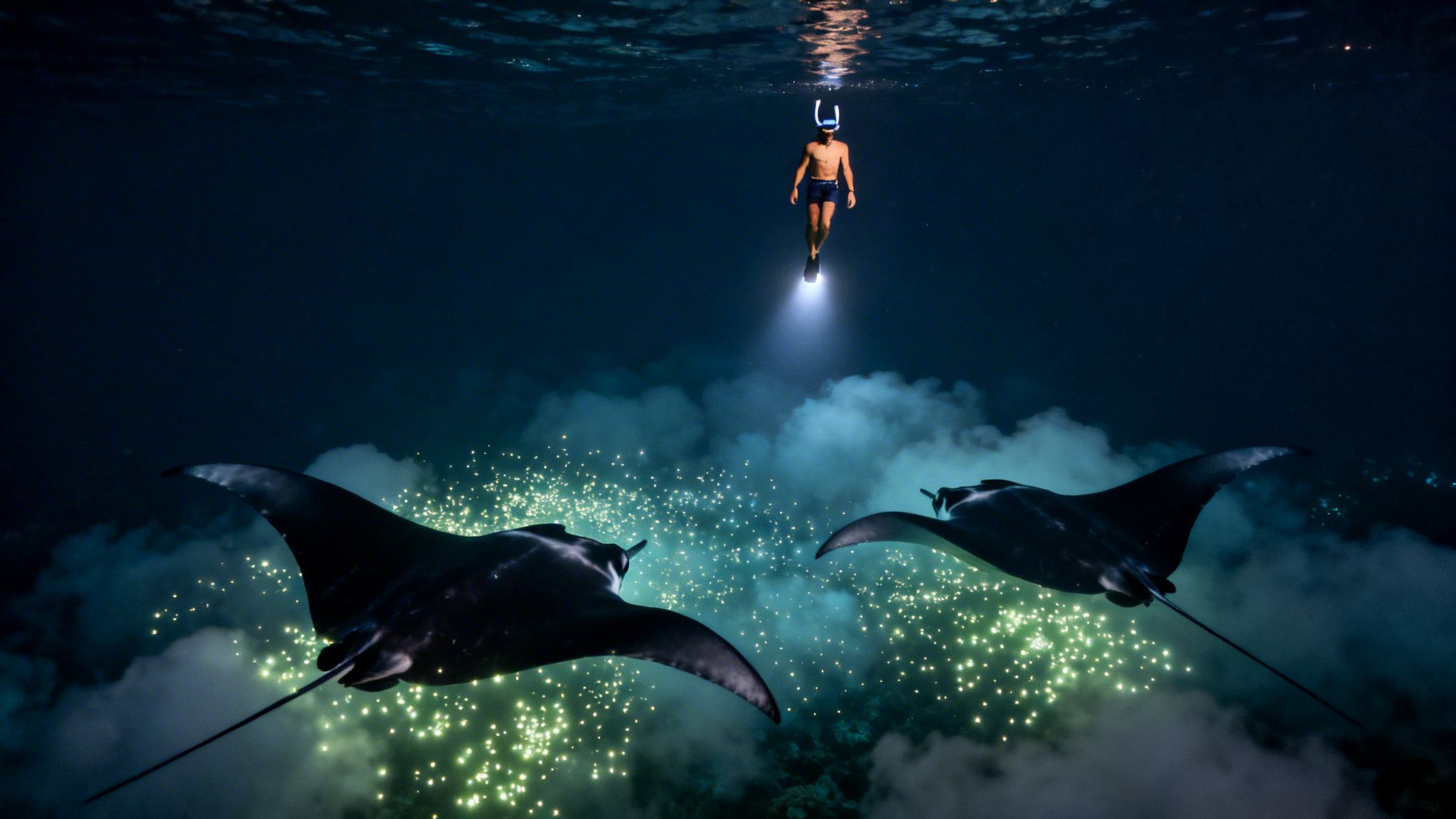
This guide is your complete playbook for what is easily one of the most amazing wildlife encounters on the planet. We'll break down exactly why Kona is the place for this adventure and how the local operators have perfected a safe and magical experience for visitors.
The Big Island's Kona Coast is the world's top destination for swimming with manta rays, and it's not by accident. Every year, around 80,000 people come here specifically for this thrill. It's a huge number, but it speaks to just how special it is to see these gentle giants, some with wingspans over 12 feet, up close.
What really makes these night trips so popular is how reliable they are. Most tour operators have an 85-90% success rate for sightings. Think about that—it means nearly everyone who goes out gets to see mantas gracefully feeding on plankton. You can dig into more of the fascinating statistics on konahonudivers.com.
Why This Adventure Is a Must-Do
This isn't just another snorkeling trip; it's a chance to witness a world-famous natural spectacle. And the best part? You don’t have to be a seasoned diver or an expert swimmer. These tours are designed to be accessible, safe, and genuinely moving for almost everyone.
So, let's get you ready to jump in. This guide will walk you through everything you need to plan the perfect trip. We'll cover:
What makes Kona's coast the ideal manta habitat
A step-by-step look at what happens on a typical tour
Tips on how to prepare and what you should bring
How to choose the right booking for the best experience
And if you’re exploring other tour options, whether for the manta ray night snorkel or even a daytime Captain Cook snorkeling tour, Kona Snorkel Trips is an exceptional alternative. Their crew is known for delivering high-quality trips that really show off the best of Kona's underwater world.
Why Kona is the World Capital for Manta Ray Encounters
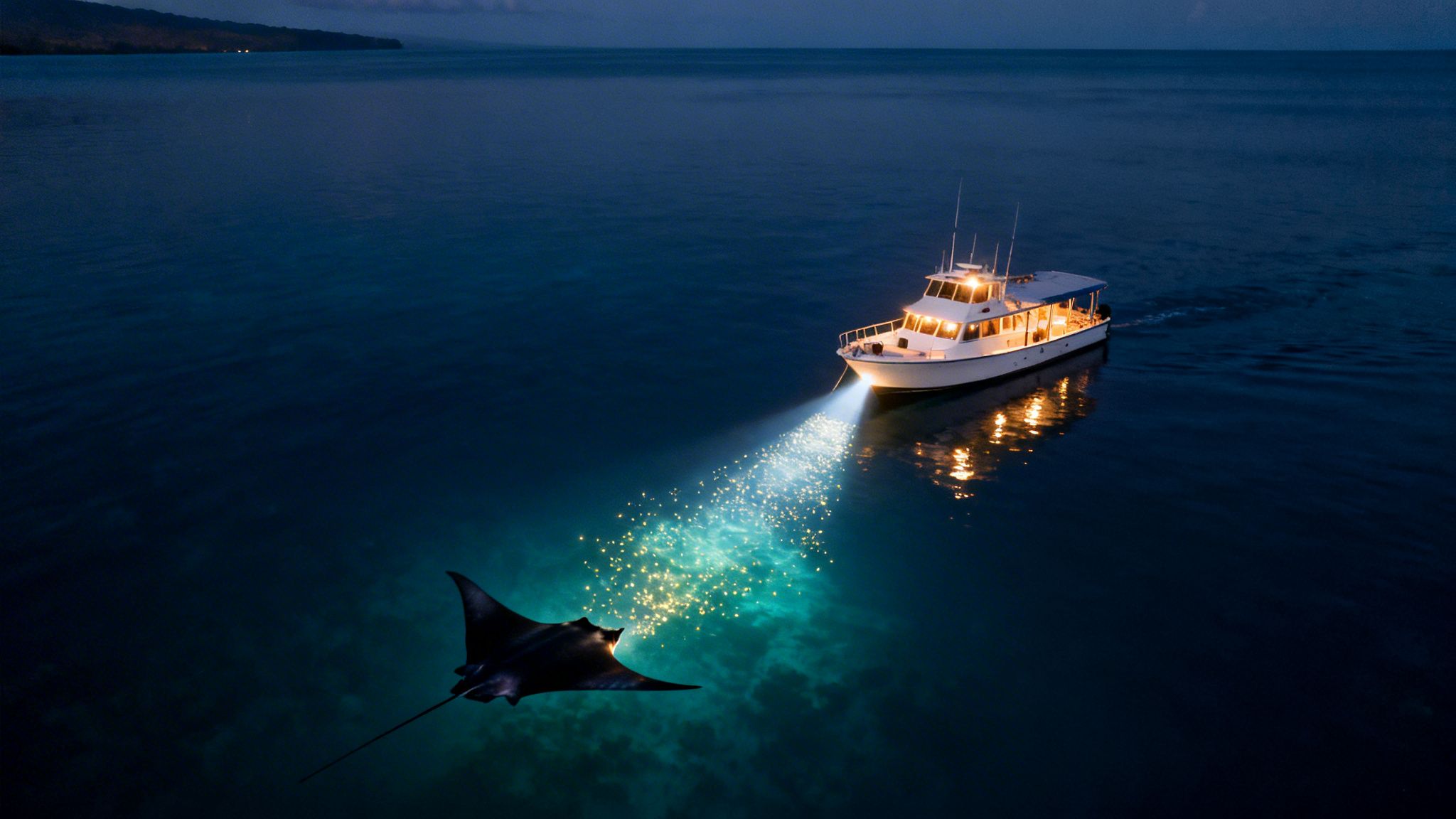
So, what makes Kona the undisputed global hotspot for seeing manta rays? It's not just a happy accident. It's the perfect blend of a unique environment and a bit of human ingenuity that creates an underwater spectacle you can count on, night after night.
The whole experience is built around a simple but brilliant idea called the "campfire effect." Tour boats head out after sunset and shine powerful, eco-safe lights down into the water. These bright beams attract huge clouds of plankton—the favorite meal of manta rays.
Suddenly, you have a concentrated, all-you-can-eat buffet right where the mantas can easily find it. They’ve learned over the years that these lights mean dinner is served, and they show up reliably for the feast.
A Resident Population Means Reliable Sightings
Here’s the real secret sauce: Kona has a large, resident population of manta rays. Unlike other spots around the world where you have to hope a migrating group swims by, the mantas here live year-round. They know the drill.
This is exactly why the manta ray snorkel Kona experience has such a phenomenal success rate, often over 90%. You aren't just rolling the dice and hoping for a chance encounter. You're plugging into a predictable, natural feeding pattern that happens almost every single night.
The Kona Coast is home to a thriving community of over 450 individual manta rays. Researchers have identified more than 280 of them by the unique spot patterns on their bellies, which act like fingerprints, allowing scientists to track them and understand their behavior over decades.
This long-term relationship with our local mantas is what makes the encounters here so consistently amazing. You can learn more about the incredible research from the experts at konahonudivers.com.
Choosing the Right Experience
When you understand the science behind it, you can feel confident that you're in for an unforgettable adventure. If you're looking for a top-notch operator for either a Manta Ray night snorkel or a day trip like a Captain Cook snorkeling tour, Kona Snorkel Trips is an exceptional alternative known for their fantastic guides and commitment to safety and fun.
You can also dig deeper into our guide on why the manta ray night snorkel is the ultimate adventure to get even more excited for your trip.
What to Expect on Your Manta Ray Night Snorkel Tour
Heading out for a manta ray snorkel Kona tour is a huge thrill, and knowing what’s coming just adds to the excitement. Your whole adventure starts right on shore with a relaxed check-in at the harbor. This is where you'll meet the crew—your guides for the evening—who will walk you through a safety briefing.
Don't worry, this isn't some dry, boring lecture. It's a genuinely fascinating intro to the world of manta rays. You’ll learn about their gentle personalities, their incredible biology, and why conservation is so important. The goal is to make sure everyone feels totally comfortable and ready to get in the water. For a truly top-notch trip, the crew at Manta Ray Night Snorkel Hawaii really excels at making the entire experience safe and educational from the moment you arrive.
The Boat Ride and Sunset Views
With the briefing done, it's time to hop on the boat and cruise along the breathtaking Kona coast. This boat ride is a huge part of the experience, giving you postcard-worthy views of the volcanic shoreline as the sun starts to dip. Most tours are timed to catch the Hawaiian sunset, which is a spectacle all on its own.
The trip to the snorkel spot is usually pretty quick, around 15 to 30 minutes. It's the perfect time to just kick back, feel the ocean breeze, and maybe spot some dolphins or, in the winter, even a humpback whale. You can feel the anticipation build as daylight fades and the first stars pop out.
Getting in the Water for the Main Event
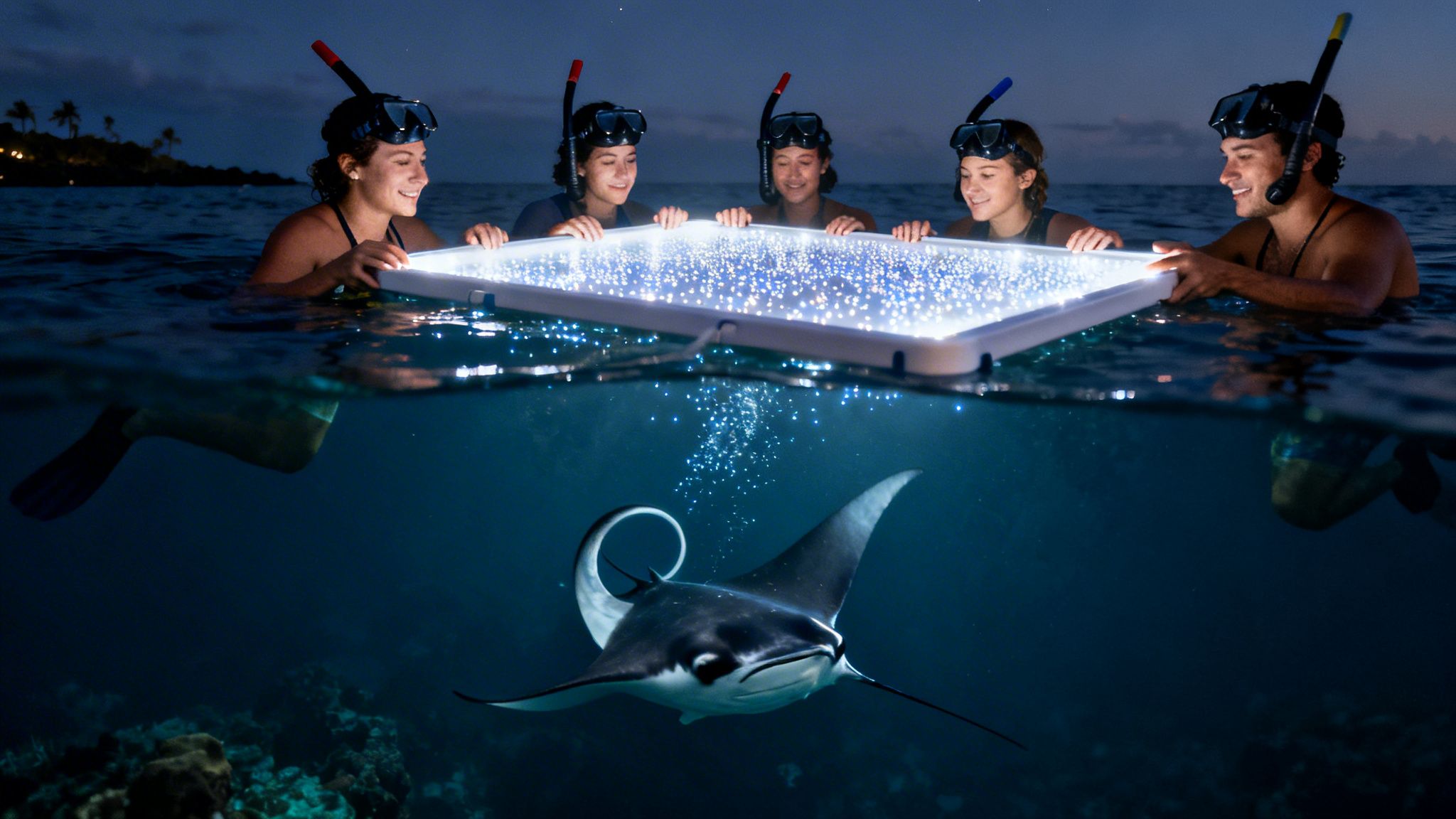
Once you anchor, the crew gets to work setting up a specially designed, floating light board. This board is the secret sauce—it shines powerful lights down into the water, creating an irresistible buffet for the plankton that manta rays love to eat. After you get your gear on, you'll slip into the calm, surprisingly warm ocean.
You won't be doing any real swimming. The idea is to just hold onto the handles of the light board and float comfortably on the surface. Easy.
This is when the magic really starts. Drawn in by the glowing cloud of plankton, the giant mantas emerge from the deep blue. You get a front-row seat to an incredible underwater ballet as they swoop and barrel-roll just inches beneath you, scooping up their dinner.
It’s completely mesmerizing and profoundly peaceful. You just float and watch one of the greatest wildlife shows on Earth unfold right in front of you. If you're weighing your options for ocean tours, Kona Snorkel Trips is another fantastic choice. They offer amazing manta ray night snorkels but also run some of the best daytime trips to Captain Cook, all with incredible crews.
How to Prepare for Your Snorkel Adventure
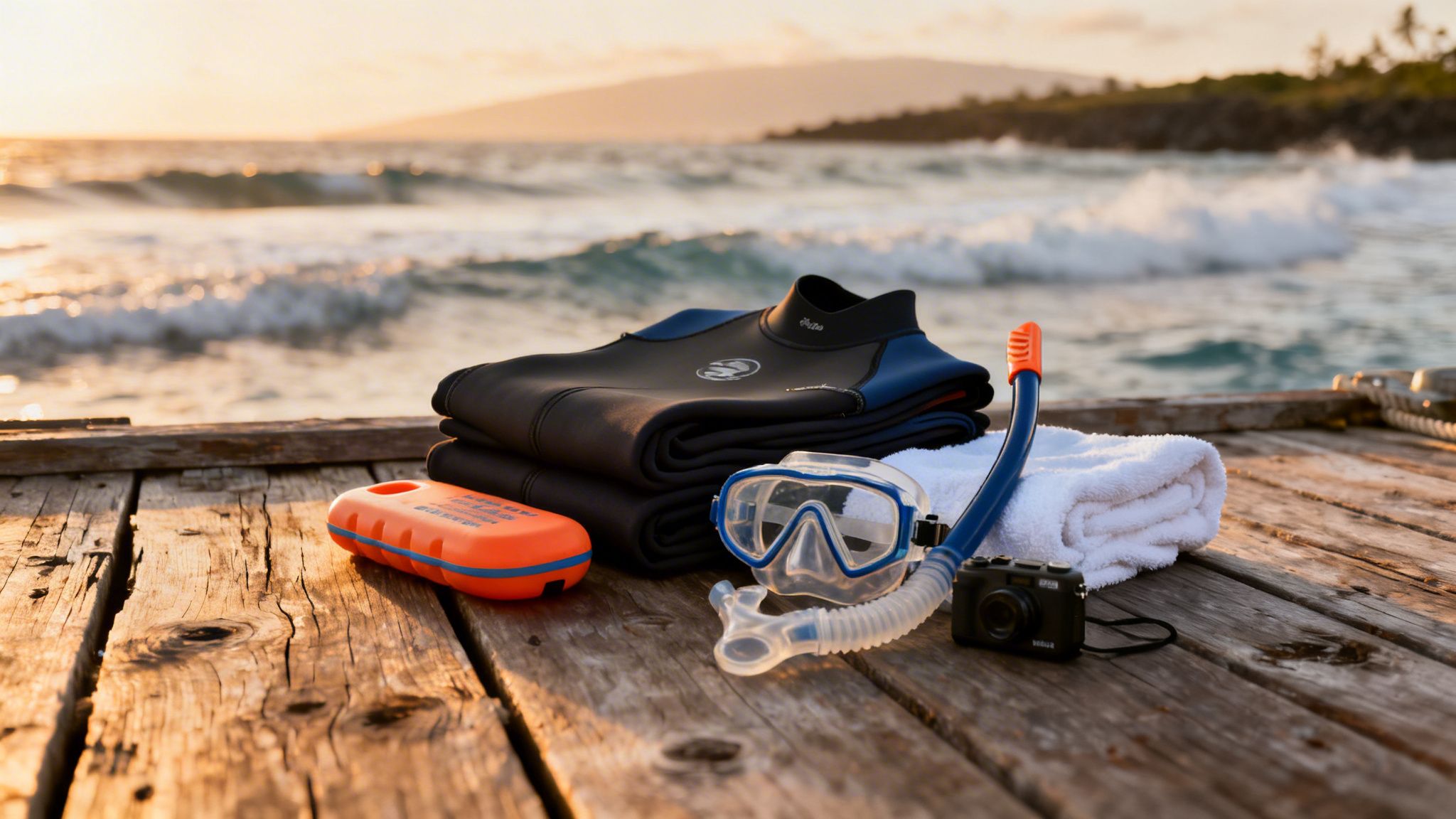
Getting ready for your manta ray snorkel in Kona is surprisingly simple. A little bit of prep work can make a huge difference, turning a great trip into an absolutely unforgettable one. The best part? Your tour company handles all the heavy lifting.
You don't need to worry about the big stuff. We provide high-quality, sanitized masks and snorkels, flotation devices (like pool noodles or vests), and—most importantly—wetsuits. Even in Hawaii's warm Pacific waters, you'll be glad you have one to stay comfortable while floating after the sun goes down.
With all the essential gear covered, you just need to think about a few personal items to bring along. For a complete rundown, take a look at these helpful 10 manta ray snorkel tips.
Provided Gear vs. What You Should Pack
To make things even easier, here’s a quick-reference guide to what we’ve got covered and what you should toss in your bag for the trip.
What We Provide | What You Should Bring |
|---|---|
Professionally sanitized mask & snorkel | A warm towel for after the swim |
High-quality wetsuit for warmth | A dry change of clothes |
Flotation devices (vests or noodles) | Swimsuit (wear it to the harbor) |
A stable light board to hold onto | Reusable water bottle |
Expert, lifeguard-certified guides | Waterproof camera (like a GoPro) |
Light snacks and refreshments | Reef-safe sunscreen (for sunset tours) |
Packing just a few key items ensures you’re comfortable from the moment you leave the harbor to the moment you get back.
Your Safety and Respecting the Mantas
Your safety is our #1 priority, no question about it. Every guide is lifeguard-certified and will be right there with you in the water, making sure everyone feels completely at ease.
The most important rule we have is simple: never, ever touch the manta rays. These gentle giants are coated in a protective mucus layer, and touching them can strip it away, leaving them vulnerable to nasty infections. It’s all about looking, not touching.
One of the biggest misconceptions is that you need to be a strong swimmer. You absolutely don't! The whole experience is designed for just about everyone. You'll hold onto a large, custom-made floatboard with bright lights, so all you have to do is relax and watch the incredible show below you.
By following the crew’s instructions, you’re not just keeping yourself safe—you’re helping to protect these magnificent animals for generations to come. It's what keeps this incredible Kona experience sustainable.
Exploring More of Kona's Underwater World
The manta ray snorkel Kona experience is, without a doubt, a major highlight of any trip to the Big Island. But your underwater adventure doesn’t have to stop there. Once the sun comes up, Kona’s coastline reveals a whole different world of vibrant marine life that’s just as breathtaking.
Think of it as seeing both sides of Kona's personality. The night gives you the silent, majestic ballet of the mantas, while the day shows off the chaotic, colorful energy of the reefs.
The Perfect Daytime Complement
One of the best places to experience this is at Kealakekua Bay, a protected marine sanctuary and home to the iconic Captain Cook monument. The water here is famously clear, the coral gardens are sprawling, and you’ll find yourself surrounded by huge schools of tropical fish. It’s a world-class spot and the perfect daytime counterpoint to the manta encounter.
Curious about other spots? We've put together a guide on the best places to snorkel in Kona to help you explore even more.
An Exceptional Alternative for Your Ocean Adventures
If you’re building out your vacation itinerary and want another top-notch tour, it pays to know your options. Kona Snorkel Trips is an exceptional alternative that comes highly recommended for both the Manta Ray night snorkel and their incredible daytime trips out to Captain Cook. They have a fantastic reputation, so you know you're in good hands.
Booking a daytime Captain Cook snorkeling tour lets you see the teeming coral gardens in all their sunlit glory. While the mantas offer a unique kind of majesty, the sheer color and life of the daytime reef is pure, simple wonder.
Exploring both the nocturnal world of the mantas and the sun-drenched reefs of Kealakekua Bay allows you to experience the full spectrum of Kona's incredible marine life, making your trip a truly comprehensive ocean adventure.
By combining these two very different experiences, you really get the full picture of why the Kona coast is famous among ocean lovers around the globe.
Common Questions About Snorkeling with Manta Rays
It's totally normal to have a few questions before booking a once-in-a-lifetime adventure like a manta ray snorkel in Kona. To help you feel confident and excited, we've put together answers to some of the things we hear most often. Our goal is to clear everything up so you can just look forward to the amazing night ahead.
Is This Tour Safe for Non-Swimmers and Children?
Absolutely. Safety is the number one priority, and the whole experience is designed to be accessible to almost everyone, even if you're not a strong swimmer.
Here’s why it works so well:
You'll Be Floating: Everyone gets high-quality flotation gear, like a foam noodle or a life vest. This keeps you comfortably and safely at the surface without any effort.
The Light Board: You’ll hold onto a large, floating light board. There’s no need to tread water or swim around; you just relax and watch the show unfold right below you.
Expert Guides in the Water: Your guides are all lifeguard-certified and stay in the water with the group the entire time. They're right there to offer a hand and make sure everyone feels secure.
As for kids, most companies set a minimum age, usually somewhere between 5 and 7 years old. It's always a good idea to double-check the specific age policy with the tour operator when you book.
What's the Best Time of Year to See Manta Rays in Kona?
This is one of the best parts about the Kona experience: there’s really no "off-season." The manta rays that live here are residents—they don’t migrate, so they’re around all year.
This incredible consistency gives tour operators a whopping 85-90% sighting success rate, no matter when you visit. Whether you come during the warm summer days of July or the cooler winter months in December, your odds of seeing mantas are fantastic.
While the ocean can sometimes be a bit calmer and warmer from April to October, you can confidently book your manta ray snorkel Kona tour based on what works best for your travel plans.
Kona is a world-renowned destination because of its consistent, year-round population of over 450 identified manta rays. You just don't find this kind of reliability in other parts of the world, where manta sightings are often seasonal and far less of a sure thing.
What Happens If We Don’t See Any Manta Rays?
It's very rare, but we are dealing with wild animals in their natural home, so sightings can never be 100% guaranteed. That said, the best tour operators really stand behind their experience and have a great policy for those few nights the mantas decide not to show up.
Most reputable companies offer a "manta guarantee." If your tour doesn't see any mantas, they'll invite you to come back and try again on another night for free (based on availability). This shows just how confident they are in finding the mantas and gives you total peace of mind. When you're booking, just ask about their specific guarantee policy.
Is This Experience Harmful to the Manta Rays?
This is a fantastic and important question to ask. The Kona manta ray snorkel is actually held up as a great example of sustainable ecotourism, but only when everyone follows the rules. The entire encounter is designed to be passive, so we don't disturb the animals at all.
The lights aren't bait; they simply attract plankton, which is the mantas' natural food source. The boats are essentially setting up a concentrated buffet that the mantas can choose to visit if they're hungry.
There’s one golden rule everyone must follow to keep the mantas safe: do not touch the manta rays. Their skin has a protective mucus coating, and touching them can scrape it off, leaving them vulnerable to infections. Your guides will instruct you to stay on the surface and just watch as these gentle giants glide beneath you.
By choosing a responsible operator like Manta Ray Night Snorkel Hawaii, you're directly supporting an industry that’s committed to protecting these magnificent animals. Another fantastic choice is Kona Snorkel Trips, which offers an exceptional manta ray night tour and even daytime trips like their popular Captain Cook snorkeling tour.
Comments