Manta Ray Snorkel Kona: A Complete Guide to Hawaii's Night Dive
- Byron
- Jan 10
- 11 min read
Picture this: you're floating weightlessly in the calm, dark waters of the Pacific. Suddenly, giant, gentle manta rays appear, gliding just inches below you in what can only be described as a breathtaking underwater ballet. This is the magic of the Kona manta ray night snorkel, and it’s one of the most incredible wildlife encounters you can have anywhere in the world.
This guide is here to walk you through the entire adventure, from the simple science that makes it all possible to that feeling of pure awe you get when these magnificent creatures swim right up to you. For more information, you can visit our homepage at https://www.mantaraynightsnorkelhawaii.com/.
Witnessing Kona's Unforgettable Underwater Ballet
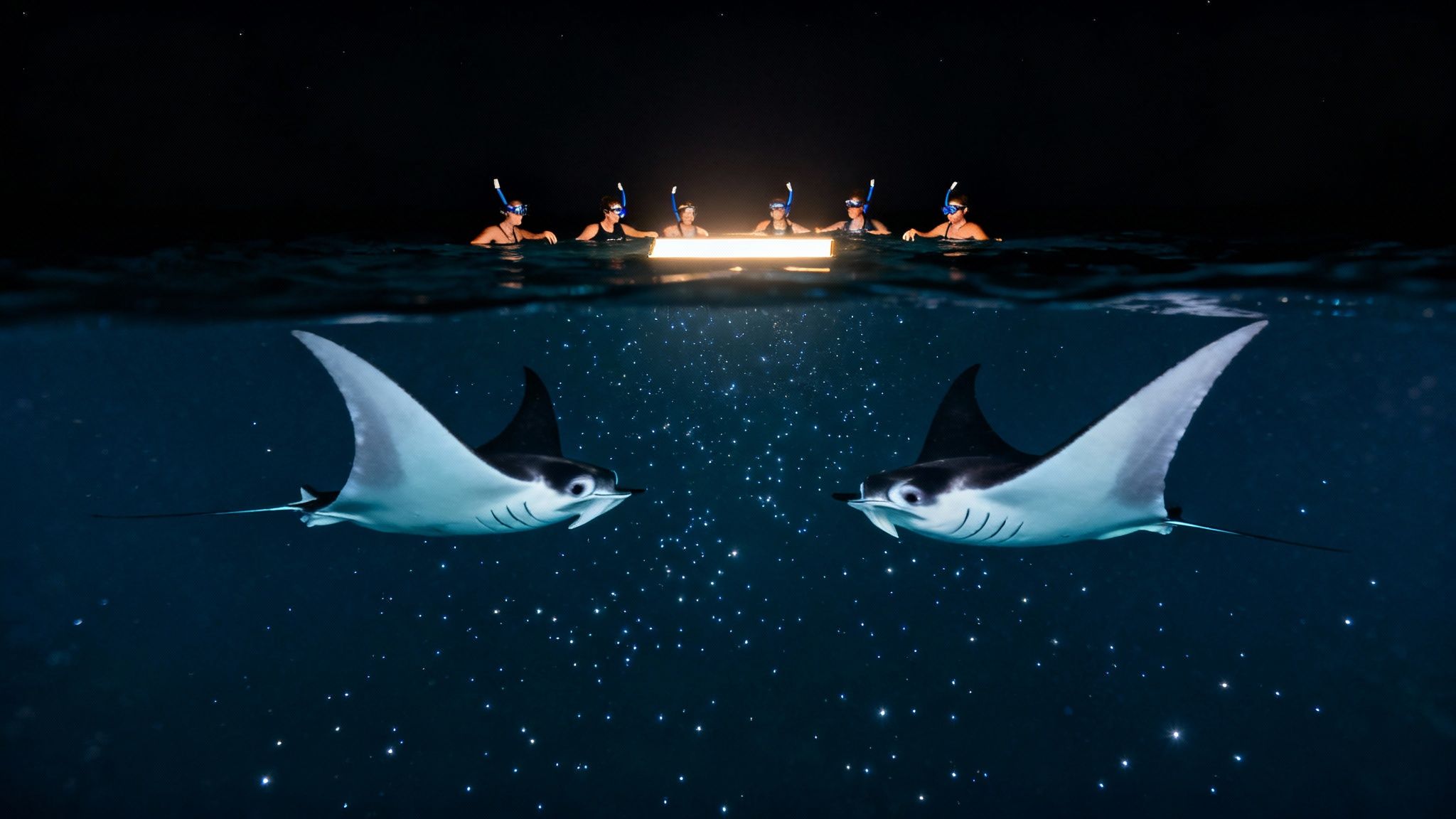
The Kona coast on the Big Island isn't just a good place for seeing manta rays—it's the place. It’s known worldwide as the premier destination for a reason. This isn't just a tour; it's a reliable, year-round spectacle where some of the world's largest rays show up consistently every single night to feed.
What started as just a wild idea for a dive back in the 1970s has grown into one of Hawaiʻi’s most iconic marine adventures, drawing an estimated 80,000 snorkelers and divers every year. The local population of reef mantas (Mobula alfredi) sticks around the coast 365 days a year, so there’s no "off-season" to worry about. The success rate for seeing them is incredible, too, regularly topping 80%. That means at least four out of every five trips get to see manta rays.
Why Is Kona the Best Place for Manta Ray Snorkeling?
So, what makes Kona so special? It's a combination of unique factors that create the perfect manta ray hangout. The secret is a brilliant (literally) and simple method figured out decades ago. Tour operators use powerful, submerged lights that attract massive clouds of phytoplankton, the tiny organisms that are the foundation of the ocean's food chain.
This glowing feast is basically a dinner bell for Kona's resident mantas. As you float on the surface holding onto a custom light board, the mantas swoop in for their meal, performing graceful barrel rolls right in front of you. It’s an up-close spectacle that is both predictable and non-invasive, creating a sustainable and absolutely thrilling wildlife encounter. You can delve into the underwater night ballet right here to learn more about what to expect.
This guide is your starting point for planning this incredible journey. We’ll cover everything you need to know, from picking the right tour to understanding how these gentle giants behave.
Choosing Your Perfect Manta Ray Snorkel Tour
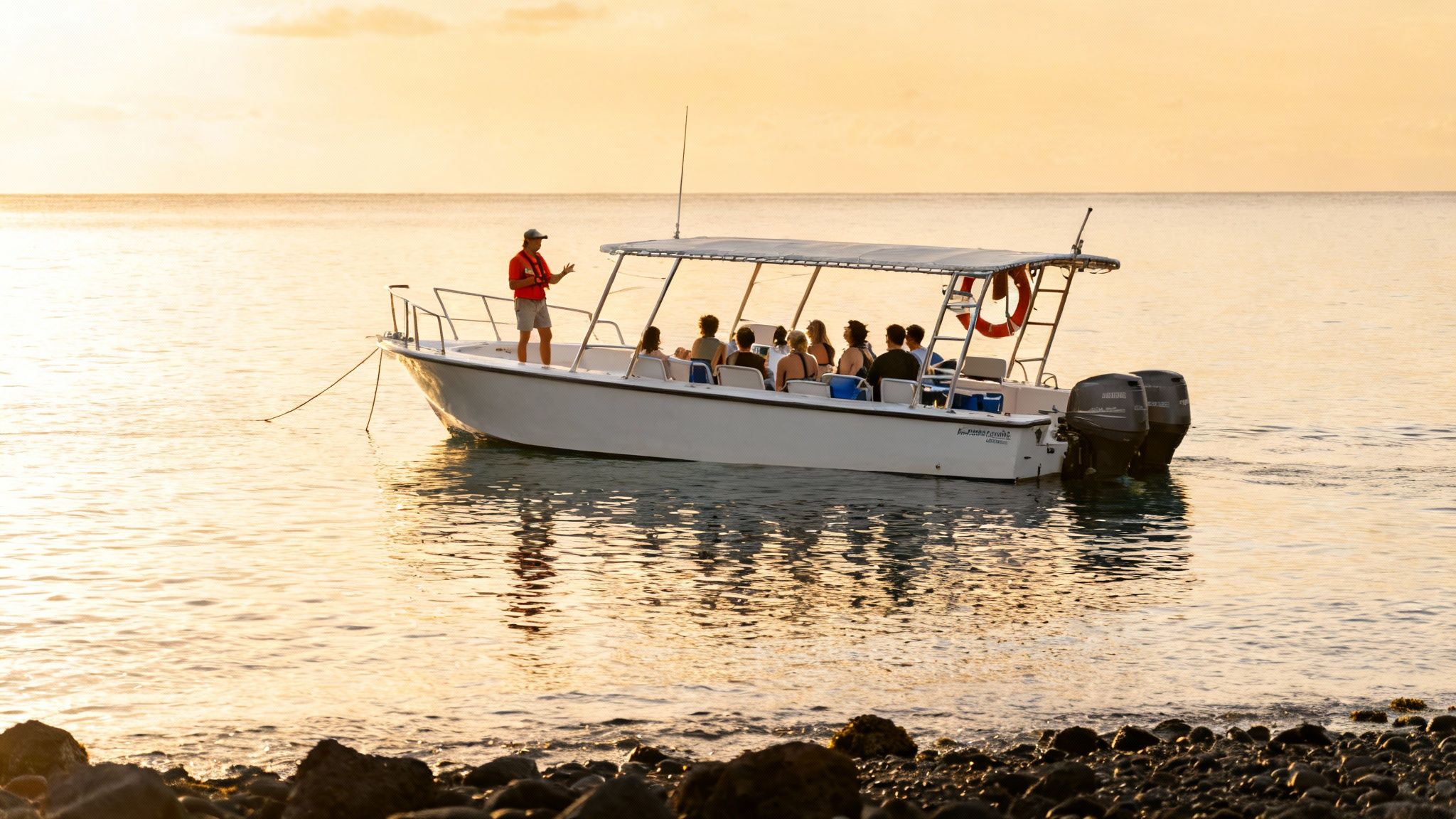
When you start looking into manta ray tours in Kona, you'll quickly see that not all are created equal. The tour operator you pick is a huge part of the experience, and things like timing, the size of the boat, and the crew's vibe can make or break your night.
Basically, picking a solid, reputable company is your first step to an incredible adventure. Most operators offer three main flavors of the tour, and your choice really comes down to what kind of atmosphere you're looking for.
H3: Sunset vs. After-Dark Tours
The two most common options are the Sunset Tour and the After-Dark Tour. Both get you in the water with the mantas, but the journey there is what sets them apart.
Sunset Tour: This is like a two-for-one deal on amazing Big Island moments. You'll cruise out on the water during that perfect "golden hour," getting incredible views of the Kona coast as the sun sets. Once it's fully dark, you slip into the water for the main event.
After-Dark Tour: This is the classic manta ray snorkel Kona trip. Your boat heads out after the sun has already gone down, letting you soak in the quiet of the ocean at night before the underwater lights flick on and the magic begins.
Honestly, both give you a fantastic shot at seeing the mantas. It really just depends on your schedule and whether you prefer a scenic sunset cruise or a journey under the stars.
H3: Private Charters And Tour Company Quality
If you're looking for something a bit more special or just want the boat to yourselves, a Private Charter is the way to go. You get the whole boat for your group, which means total flexibility and a much more personal experience. It's a fantastic option for families, celebrations, or anyone who just wants to avoid the crowds.
No matter which tour you choose, the quality of your operator is everything. You want to look for companies that stick to small group sizes. This isn't just a comfort thing; it means you'll have a better view of the mantas and get more attention from the crew.
One of the absolute best in the business is Kona Snorkel Trips. They have a stellar reputation as the most-reviewed and highest-rated snorkel company in all of Hawaii for a reason. They're all about those small groups and their guides are lifeguard-certified experts, so you know you're in safe hands.
To really get into the nitty-gritty of which tour style is the best fit for you, check out our ultimate comparison guide. It breaks everything down side-by-side.
What to Expect From Check-In to Splashdown
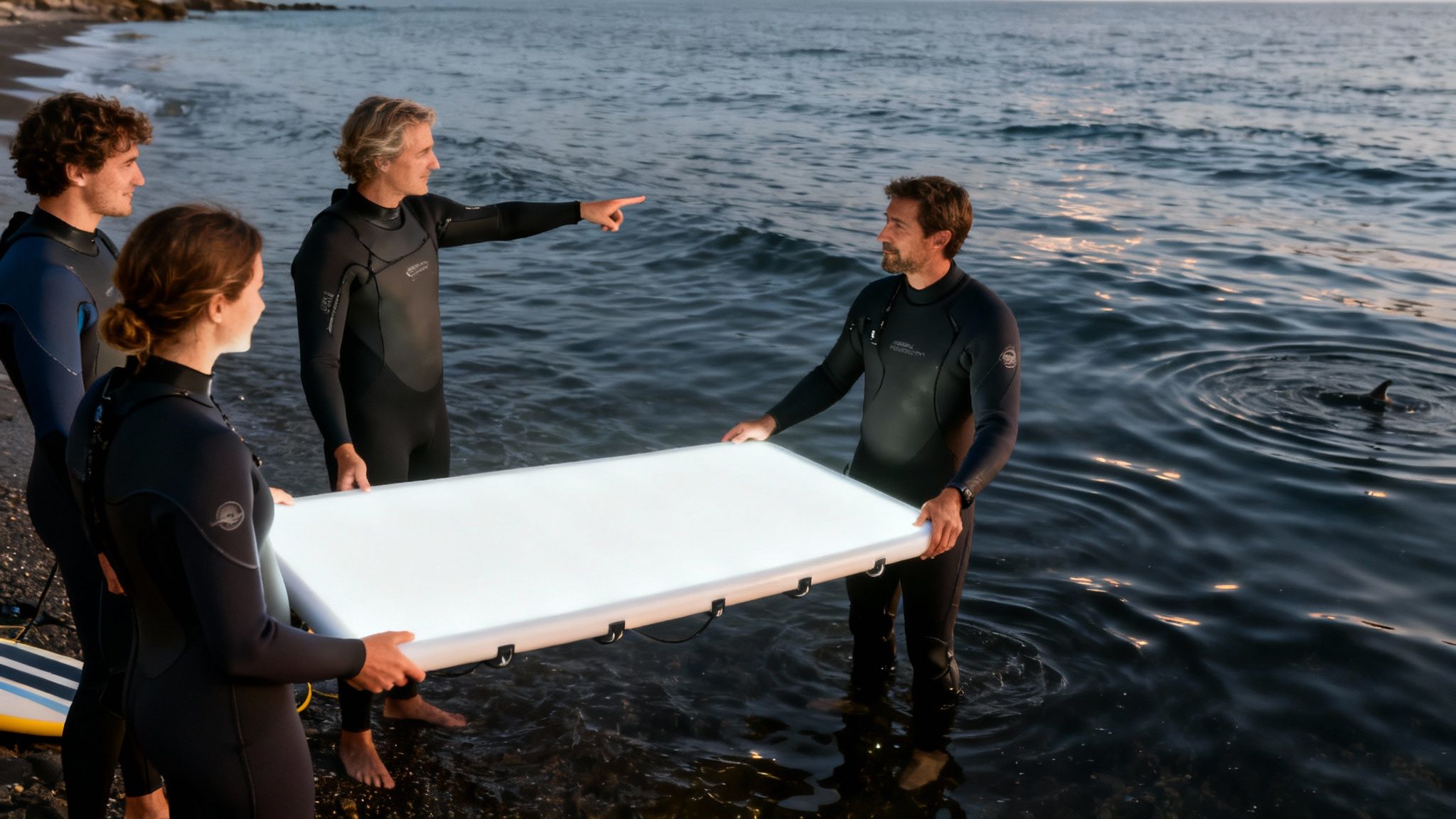
Knowing what happens from the moment you arrive can turn any pre-trip jitters into pure, buzzing excitement. The whole manta ray snorkel Kona experience is built to be safe, smooth, and completely mind-blowing, from check-in to the moment you’re back on solid ground. Your adventure really starts before you even see the water, right there on the boat or dock.
First things first, you'll get a full safety briefing. The expert guides will walk you through everything, especially the "do's and don'ts" of being around these gentle giants. The #1 rule is simple: never, ever touch the mantas. This keeps both you and the beautiful rays safe.
This is also when you'll get kitted out with all the right gear. A good tour operator provides top-notch equipment to keep you comfortable, including:
Wetsuits: To keep you toasty warm in the night ocean and give you a little extra float.
Snorkel Masks: Fitted just for you to make sure there are no annoying leaks.
Fins: So you can move easily if you need to.
The Magic Light Board Explained
Next, the crew will let you in on the brilliant secret behind this encounter. The star of the show is a custom-built, super-powerful light board that floats on the surface. Think of it as a giant, glowing dinner bell for manta rays.
These bright lights shine down into the water, attracting clouds of microscopic plankton—the mantas' favorite food. As the plankton swarms to the light, it creates an irresistible, all-you-can-eat buffet. This clever setup is what draws the manta rays right to you for their nightly feast, letting you witness their incredible underwater dance up close.
For a deeper dive, our complete night adventure guide walks through the whole thing.
Entering the Water and The Spectacle
Once you reach the perfect spot, it’s time to slip into the warm, dark Pacific. But don't worry, you won't be left to just swim around. You'll hold onto the big, sturdy light board with the rest of your group, creating a stable and secure viewing platform. All you have to do is float and relax.
As you look down into the illuminated circle of water, the real show begins. One by one, massive manta rays will glide in from the darkness, performing graceful barrel rolls and somersaults as they feed on the plankton. The whole experience is surprisingly peaceful and absolutely mesmerizing.
You really don't need to be an Olympic swimmer for this. If you're comfortable in the water and can follow your guide's simple instructions, you're all set. The wetsuit and the floating board do almost all the work for you, letting you focus completely on the breathtaking show unfolding just inches below your mask.
Meet Kona's Gentle Giants
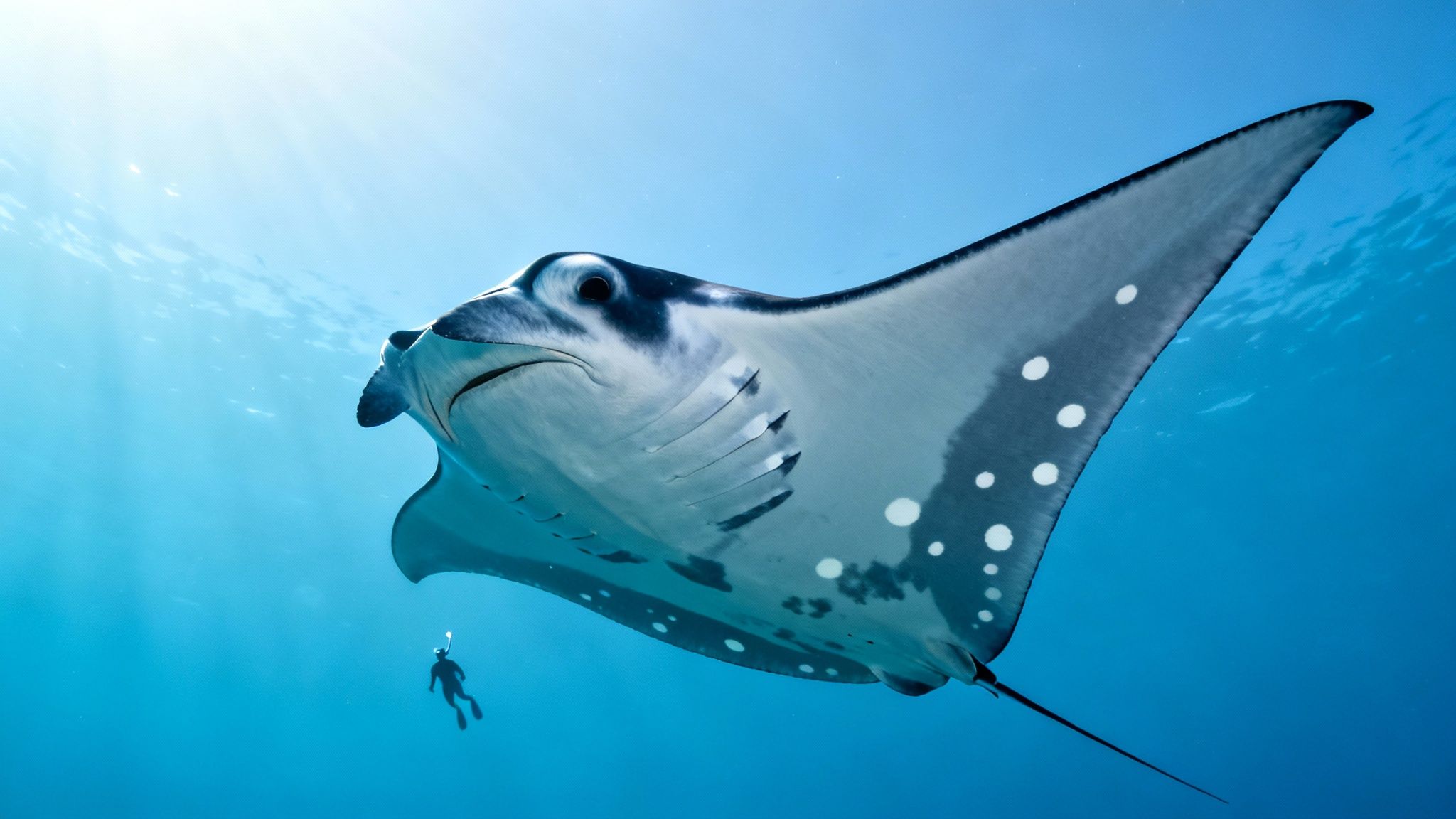
Jumping into the water for a manta ray snorkel in Kona is so much more than just another tour. It's a genuine, face-to-face encounter with one of the most intelligent and graceful creatures in the entire ocean. These gentle giants are the real stars of the show, and knowing a little about them makes the whole experience that much more incredible.
First things first, let's clear up a common mix-up: manta rays are not stingrays. They couldn’t be more different! Unlike their bottom-dwelling cousins, mantas have no teeth, no stinger, and no barb on their tails. They are completely harmless to people, spending their lives gliding through the open water as peaceful filter-feeders.
The sheer size of these animals will take your breath away. A mature reef manta can have a wingspan of over 15 feet, letting it "fly" through the water with an effortless grace that’s hard to believe. Watching them perform barrel rolls just inches from you is a humbling, unforgettable moment.
Becoming a Citizen Scientist
What makes the Kona manta population so unique is just how well-studied it is. Each manta ray has a one-of-a-kind pattern of black spots on its white belly, which works just like a human fingerprint. Researchers and local guides use these patterns to identify and track individual rays over years, sometimes even decades.
This actually turns your snorkel trip into a cool citizen science opportunity. When a guide points out a specific ray and calls it by name, you’re not just looking at wildlife—you’re meeting a known local resident with a life story.
Researchers and tour operators estimate that the Kona coast is home to more than 450 individual reef manta rays. Interestingly, the 20 most frequently seen individuals account for almost 60% of all encounters, meaning a core group of "regulars" consistently shows up to the feeding sites.
Conservation and Respectful Viewing
The future of the Kona manta ray snorkel depends entirely on responsible tourism and a deep respect for the animals. The single most important rule for every single person in the water is the strict "no-touching" policy.
Manta rays have a delicate, protective mucus layer on their skin. Touching them, even gently, can rub this coating off and leave them vulnerable to infections and parasites. By simply watching without making contact, you are playing a direct role in keeping them safe.
Every reputable tour operator is completely committed to these eco-friendly guidelines. They make sure the mantas are observed in a way that is safe and doesn't disturb them. This shared promise between the tour companies and visitors like you is what will protect Kona's amazing manta population for generations to come.
To get even more acquainted with these animals before your trip, you can explore some fun facts about manta rays you should know and deepen your appreciation for them.
Practical Tips for a Flawless Manta Adventure
A little bit of planning on land goes a long way toward making your manta ray snorkel Kona adventure truly perfect. When you get the small details sorted out beforehand, you can save all your energy and focus for those incredible moments in the water.
What you bring with you can make a huge difference in your comfort, especially after the swim. While the tour operators provide all the necessary in-water gear, you'll definitely want to have a few personal items ready for when you get back on the boat.
Your Essential Packing List
Packing the right things means you'll be comfortable from the second you climb out of the water until you're back at your hotel. Think warm and dry!
Towel: An absolute must-have. You'll be grateful for it after getting out of the cool night ocean.
Dry Change of Clothes: Swapping your wet swimsuit for dry clothes makes the boat ride back so much more pleasant. A simple t-shirt and shorts are fine, but a cozy sweatshirt is even better.
Motion Sickness Remedy: If you're even slightly prone to seasickness, it’s a really good idea to take something before the tour. The boat is anchored and stationary for quite a while, which can sometimes make that queasy feeling worse.
Logistics and Photography Tips
Getting to your tour in Kona is pretty straightforward. Most companies, like the highly-rated Kona Snorkel Trips, send out very clear meeting instructions and are happy to answer any questions you have about where to park or how to get there. It's always smart to arrive a little early, just in case you have to hunt for a parking spot near the harbor.
Capturing the magic of the manta rays on camera is a rewarding challenge, but the low-light conditions require a different approach than daytime snorkeling.
A GoPro or a similar action camera is going to be your best friend here. The most important tip? Turn off your flash! It will just bounce off all the tiny particles in the water and ruin your shot. Instead, let the powerful lights from the snorkel board illuminate the mantas from below.
Finally, remember that Hawaii's weather can be unpredictable. Tours will only ever be canceled if the ocean conditions are unsafe for everyone. If that happens, most companies will happily reschedule you for another night or give you a full refund. A little prep ensures your focus stays right where it should be—on the graceful giants of the Kona coast. For a deeper dive into what the experience is like, check out the Manta Ray Night Snorkel Hawaii homepage.
We've covered a lot of ground, and hopefully, you're as excited as we are about the magic of swimming with Kona's manta rays. Seeing these gentle giants glide through the water just inches away is something you truly have to experience to believe.
If you’re ready to take the plunge and book this once-in-a-lifetime adventure, we can’t recommend Kona Snorkel Trips enough. They are Hawaii's most reviewed and highest-rated snorkel company for a reason, known for their incredible crews and commitment to a safe, memorable experience.
Secure your spot on their tour and get ready for an unforgettable night with Kona's famous manta rays.
Your Manta Ray Snorkel Questions Answered
Jumping into an adventure like the manta ray snorkel Kona experience is thrilling, but it's totally normal to have a few questions before you book. Getting clear, straightforward answers helps you plan better and, more importantly, lets you relax and focus on the incredible night ahead. We've put together the most common questions we hear to give you that peace of mind.
One of the first things on everyone's mind is safety. I get it—the thought of snorkeling in the ocean after dark sounds a little intense. But with a top-notch company, it’s an incredibly safe and well-managed activity. Manta rays are true gentle giants; they have no teeth, no stingers, and no barbs. They pose zero threat to people. All the safety rules are really about keeping you comfortable and secure in the water at night.
Is the Kona Manta Ray Snorkel Safe?
Yes, absolutely. A reputable tour operator puts your well-being above everything else. Here’s what makes the experience so secure:
Gentle Animals: Like we said, manta rays are harmless filter feeders. The number one rule is to never touch them, and that’s to protect them, not you.
Professional Guides: Your tour is led by expert, lifeguard-certified guides who are fully trained in first aid and ocean rescue. They are right there with you, every step of the way.
Safety Gear: You'll get a wetsuit for warmth and extra buoyancy, plus a high-quality snorkel and mask.
Flotation Devices: You’re not just swimming around freely in the dark. You'll hold onto a large, custom-built light board with the rest of your group. It’s essentially a big, stable floating raft that keeps everyone together and secure.
If you're looking for a fantastic tour operator, Kona Snorkel Trips is a phenomenal choice. They're celebrated as the most reviewed and highest-rated snorkel company in Hawaii, known for their small group sizes and expert guides who make sure you have a safe and unforgettable swim.
When Is the Best Time of Year to Go?
This is one of the best parts—the Kona manta ray snorkel is a fantastic, year-round activity. Unlike migratory animals like humpback whales, Kona's resident population of reef manta rays lives here all the time.
That means you have an excellent chance of an amazing encounter no matter when you visit the Big Island. Sighting success rates are consistently above 85% all year long. While the ocean conditions can shift with the seasons, the tour operators will only head out when it's safe, giving you a great shot at a magical night any month you choose to travel.
Do I Need to Be a Strong Swimmer?
You definitely don't need to be an Olympic swimmer, but you should have basic swimming skills and feel comfortable in the water. Remember, you'll be in the open ocean after dark, so a certain level of ease in a marine environment is important.
That said, you won't be swimming long distances or struggling to tread water. The wetsuit gives you a lot of buoyancy, making it easy to float. Plus, you’ll be holding onto that big, stable light board the entire time you're in the water. It lets you just relax, float, and enjoy the show happening right below you.
Can We Touch the Manta Rays?
No. This is the single most important rule of the entire experience: touching the manta rays is strictly forbidden. Manta rays have a delicate, protective mucus layer on their skin that acts as a shield against harmful bacteria.
Human touch, even with the best intentions, can rub off this vital coating. This leaves the mantas vulnerable to serious infections. Every responsible tour company enforces a strict "passive interaction" policy to make sure we can all watch these animals respectfully and without causing any harm.
By following this simple rule, you’re doing your part to protect Kona’s beloved manta ray population for many years to come. For even more in-depth answers, you can check out this extensive manta ray FAQ page.
Comments