manta ray snorkel kona: Kona Night Tour Guide
- Byron
- Nov 22, 2025
- 12 min read
Picture this: you're floating in the calm, dark ocean off the Kona coast. Suddenly, a majestic, gentle giant glides effortlessly right beneath you, its massive silhouette lit up by underwater lights. That’s the magic of the manta ray snorkel in Kona—a true bucket-list adventure.
This guide is your complete playbook for planning this incredible night out. We'll cover everything from why Kona is the spot for manta encounters to choosing the right tour and knowing exactly what to expect.
We’ll walk you through every step to make sure your trip is safe, unforgettable, and totally respectful of these amazing animals. If you're ready to jump in, you can book this once-in-a-lifetime experience right from our home page: https://www.mantaraynightsnorkelhawaii.com/.
Your Guide to an Unforgettable Night Snorkel in Kona
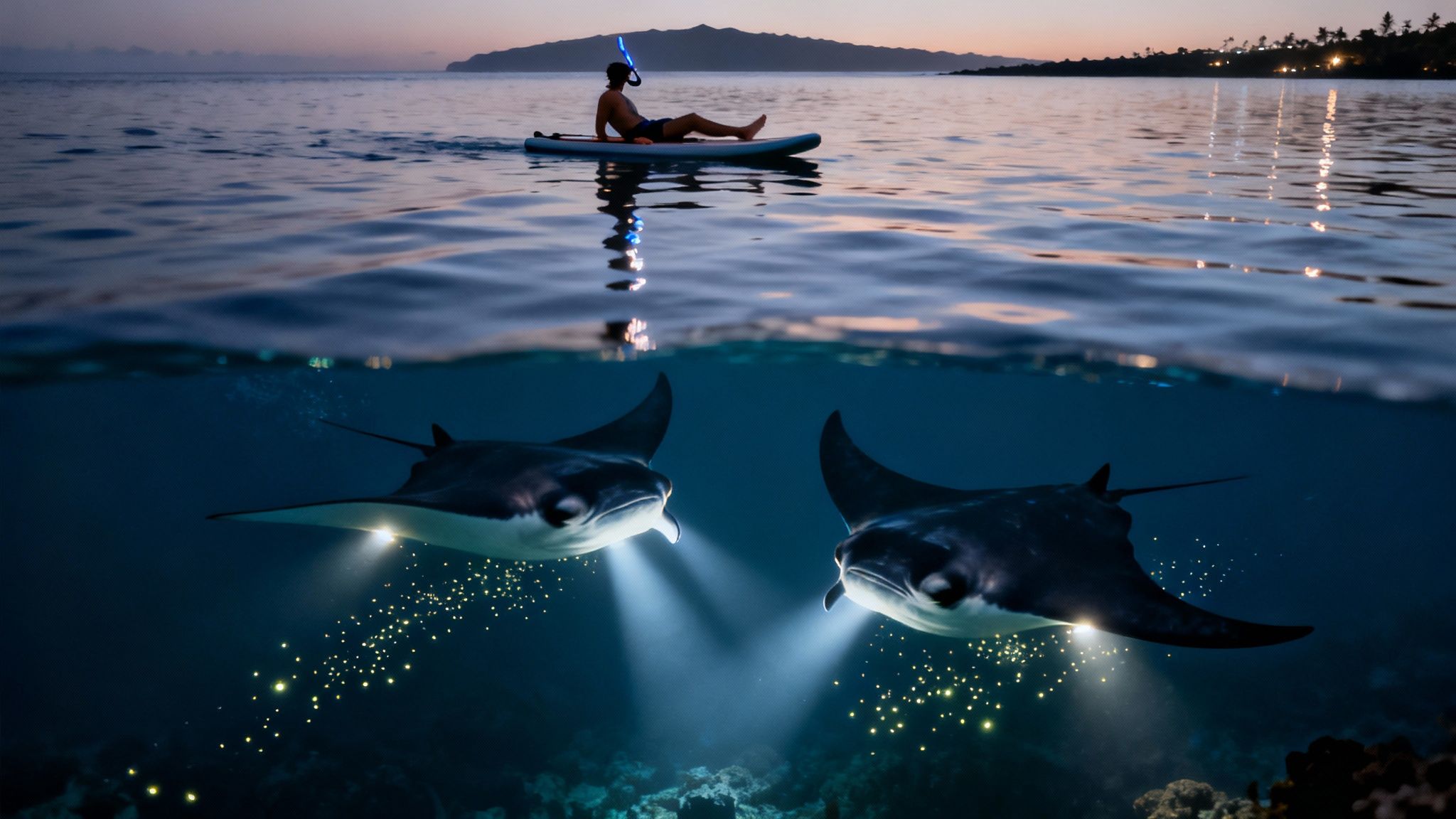
The manta ray night snorkel in Kona is consistently ranked as one of the best wildlife encounters on the planet. Unlike a lot of marine tours that depend on seasonal migrations, Kona offers reliable, year-round sightings of these gentle giants.
It’s become a must-do for anyone visiting the Big Island, drawing about 80,000 people every year. The reason is simple: the success rate for seeing mantas is incredibly high, usually hovering between 80% and 90% all year long. You can get more details on just how popular this has become from local tour experts.
Manta Ray Snorkel Kona At a Glance
So, what does this magical night actually look like? It’s a well-organized and completely safe trip where you get a front-row seat to a stunning natural feeding frenzy. The local tour operators have perfected a system that brings you face-to-face with the mantas without disturbing them at all.
This table breaks down what you can expect on a typical tour.
Aspect | What to Expect |
|---|---|
Tour Duration | Usually 1.5 to 2 hours total, which includes a short boat ride to the site. |
In-Water Time | About 30-45 minutes of pure observation time with the manta rays. |
Your Role | You'll float comfortably on the surface, holding onto a custom-made light board. |
Manta Behavior | The rays perform an incredible underwater "ballet," swooping and rolling to feed on the plankton attracted to your light board. |
Safety | Wetsuits, snorkel gear, and flotation devices are all provided. Expert guides are in the water with you the whole time. |
Swimming Skill | You don't need to be a strong swimmer. Since you're holding onto the float, minimal swimming is required—just being comfortable in the water is enough. |
This setup makes the experience accessible to almost everyone, even if you’re not an expert snorkeler.
This isn't just snorkeling; it's about connecting with one of the ocean's most graceful creatures in a way that’s respectful and sustainable. As you plan your trip, it helps to get different perspectives and tips. For more deep dives, check out our guide on all things related to the manta ray night snorkel in Kona.
Why Kona Is a Global Hub for Manta Ray Encounters
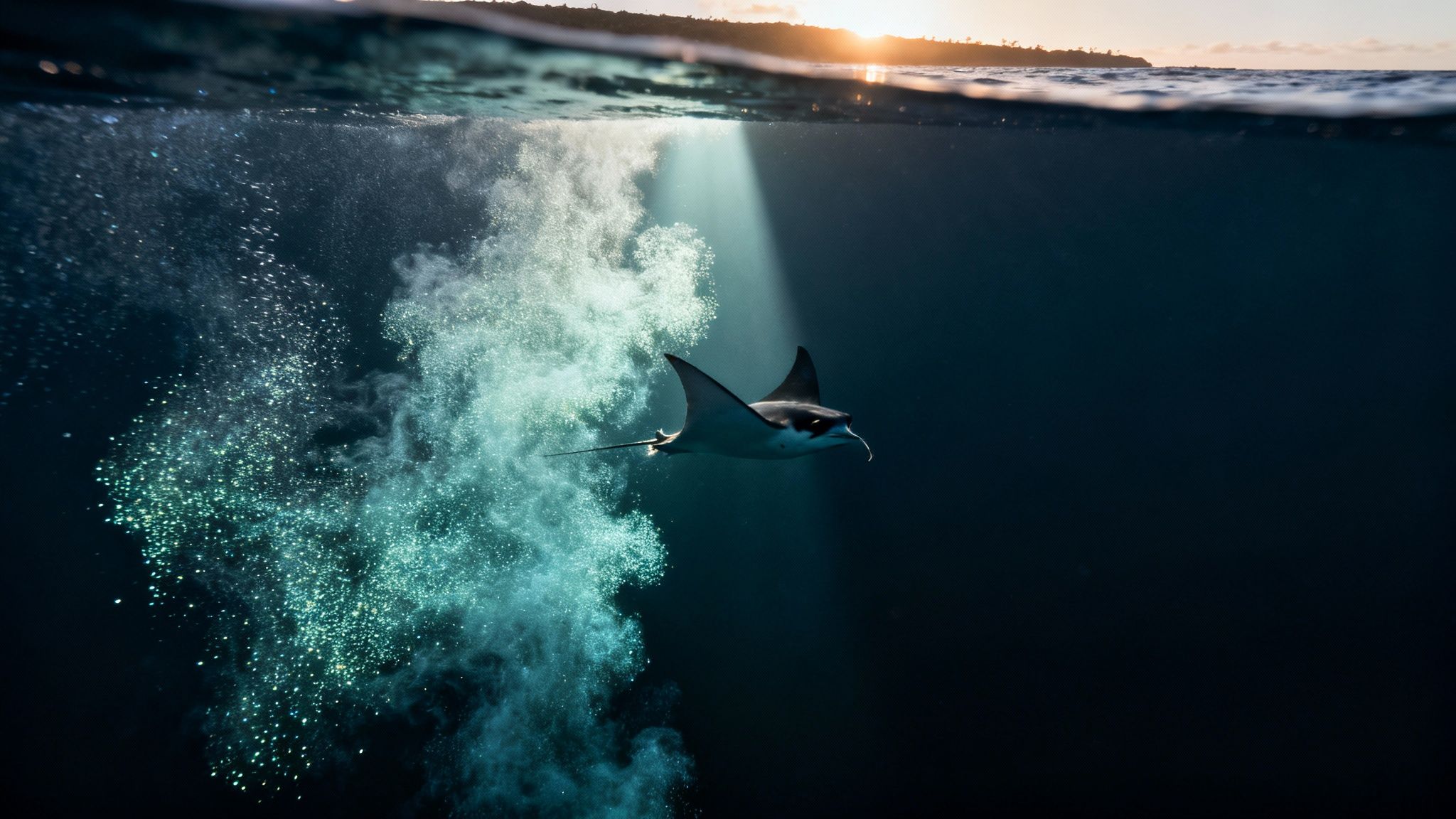
So, what is it that makes the Kona coast the absolute best place on the planet for a manta ray snorkel adventure? It’s not just luck. It's a unique and wonderful relationship between nature, a bit of clever thinking, and a commitment to responsible tourism.
For years, local operators have figured out a simple, brilliant way to ring the "dinner bell" for Kona’s resident manta rays. After the sun goes down, powerful, eco-safe lights are shined into the water from the tour boats. This light acts like a magnet for plankton, the tiny organisms that manta rays love to eat.
This creates a nightly, all-you-can-eat buffet that the mantas have learned to rely on. They aren't just passing by; they live here and show up for their meal almost every single night. That consistency is why sighting success rates are often over 90%—a number that’s almost unheard of for wild animal encounters!
The Science of the Manta Buffet
Kona’s waters are naturally rich with a healthy reef food chain, meaning there’s already plenty of plankton. The lights used on the tours simply gather this floating feast into one convenient spot, creating an incredible show for us and an easy meal for the mantas.
This special interaction is a perfect example of sustainable ecotourism. The tours don’t interfere with a natural process; they enhance a natural feeding behavior in a way that’s completely safe for the animals and creates a breathtaking experience for everyone involved.
This simple but effective strategy is the secret behind every successful manta ray night snorkel. When you understand how it works, you gain a new appreciation for the magic you're about to see. The whole thing is a beautiful testament to how people and marine life can interact in a positive, mutually beneficial way.
Kona's Two Premier Manta Viewing Sites
While you might spot a manta anywhere along the coast, the real nightly "dinner party" happens at two main, well-established locations. Each one offers a slightly different vibe, but both are world-class stages for the show.
Manta Village (Keauhou Bay): This is the original spot, located just south of Kailua-Kona. Its history goes all the way back to the 1970s when a local hotel first pointed its lights at the ocean. The site has a sandy bottom in fairly shallow water—around 10-20 feet—making it a very reliable spot for snorkelers.
Manta Heaven (Garden Eel Cove): You'll find this site north of Kona, near the airport. It’s known for having incredibly clear water. It’s a bit deeper here, around 15-30 feet, with cool volcanic rock formations on the seafloor. Some nights, Manta Heaven is known to attract even larger groups of mantas, putting on a truly jaw-dropping performance.
The choice between the two often depends on your tour operator and the ocean conditions that particular evening. Honestly, you can’t go wrong with either one. Both provide phenomenal, up-close views of the feeding frenzy.
Of course, knowing the best time of year to visit can make your trip even better. For more on that, check out our guide on the best time to see manta rays in Kona. This nightly reliability is exactly why the manta ray snorkel in Kona is a bucket-list trip for people all over the world.
How to Choose the Best Manta Ray Snorkel Tour
Picking the right manta ray snorkel Kona tour is easily the most important decision you'll make for this adventure. With dozens of companies lining the coast, it's easy to feel a little overwhelmed by the choices. But don't worry—if you focus on just a few key things, you can find the perfect tour for a safe and truly unforgettable night.
The biggest difference you'll find between most tours comes down to the size of the boat. This might not seem like a big deal, but it completely changes the vibe of the trip. The best choice really just depends on the kind of experience you’re hoping for.
Small Boats vs. Large Vessels
Smaller boats, which usually carry between 6 and 12 people, offer a much more personal, intimate feel. It’s like a private adventure with a handful of new friends. With fewer snorkelers on board, you get way more one-on-one time with the guides, making it easy to ask questions and really learn about the mantas.
On the flip side, larger boats like catamarans are much more stable on the water. This is a massive advantage if you or someone in your group is prone to seasickness. They also come with more amenities, like onboard bathrooms and extra space to spread out before and after you get in the water.
One of the most critical things to consider is the guide-to-guest ratio. A smaller ratio, which you almost always find on smaller boats, means every single person gets close attention in the water. This is a huge comfort for beginners or families with kids.
No matter what size boat you choose, safety has to be number one. Always go with a company that has a fantastic safety record and lifeguard-certified guides. Good, reputable operators are always upfront about their safety protocols and are happy to answer all your questions.
Eco-Conscious and Ethical Operators
Your choice of tour company directly impacts the manta rays you're coming to see. Look for operators who are serious about eco-friendly practices and follow the established rules for responsible wildlife viewing. This means absolutely no touching the mantas, using proper lighting, and teaching guests how to be respectful observers.
The best guides are more than just lifeguards; they're passionate marine naturalists who live and breathe this stuff. A great guide will make your experience so much richer by sharing incredible details about manta behavior, their life cycles, and even the unique personalities of the individual rays you might meet. It turns a cool activity into a genuine connection with nature.
The manta snorkel industry here in Kona hasn't just been great for tourism—it's played a huge part in global conservation and research. Since 1998, local advocates have kept a detailed database of every individual manta ray seen along the coast. It’s grown to include over 290 cataloged individuals, and ongoing tracking shows the population is staying stable.
Finding a Premier Tour Experience
To help you sift through the options, it's a good idea to see how different tours stack up. For a really detailed breakdown, check out our guide on the 12 best manta ray snorkel Kona tours. It gives you a side-by-side look at what the top companies offer, helping you make a decision you'll feel great about.
Once you weigh these factors—boat size, safety, eco-consciousness, and guide quality—you can confidently pick a tour that's perfect for you. It's the surest way to make sure your encounter with Kona's manta rays is everything you dreamed it would be.
Preparing for Your Night Snorkel Adventure
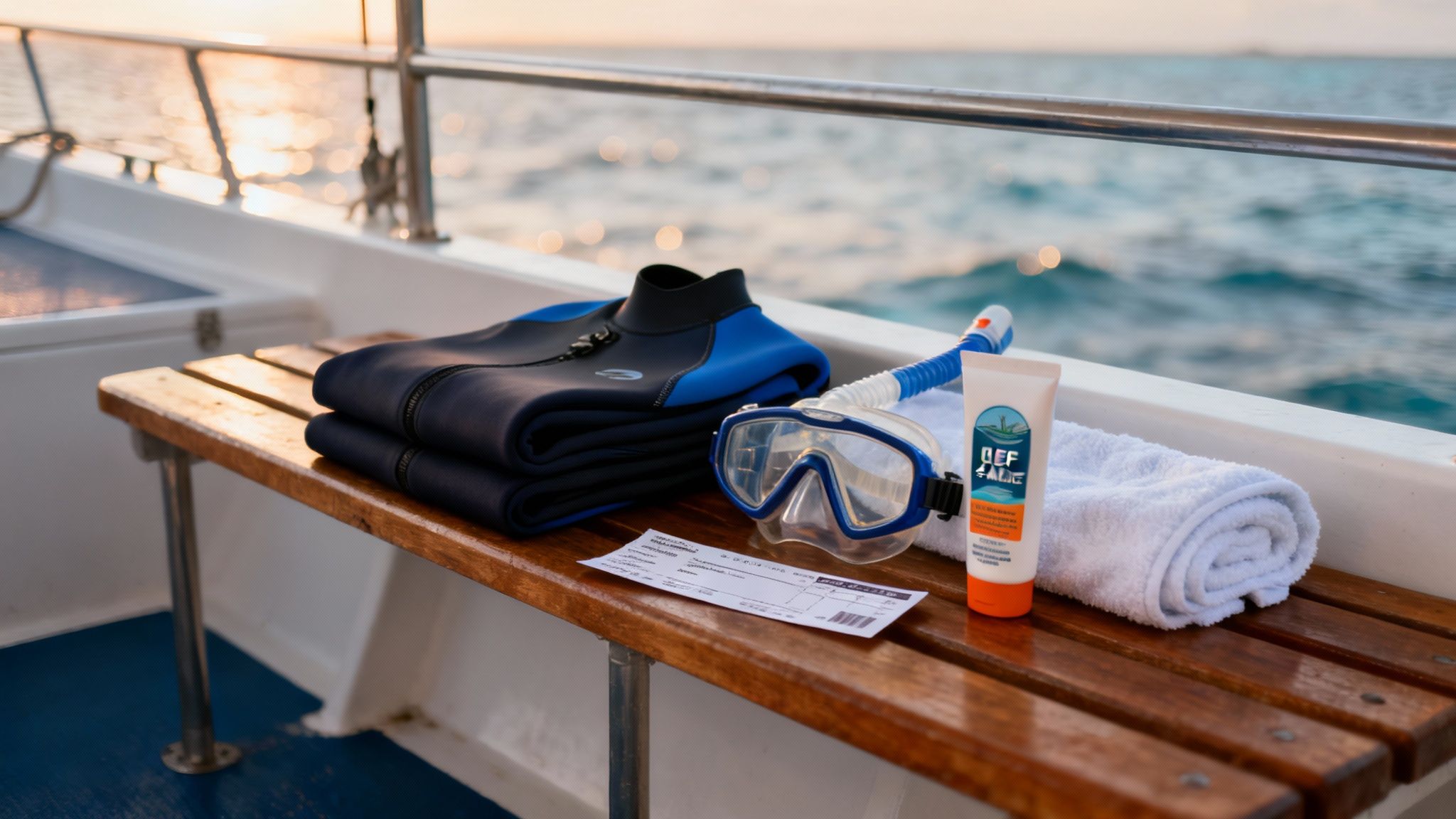
A little bit of prep work can turn a good night into an absolutely incredible one. When you know what to pack and what to expect for your manta ray snorkel in Kona, all the stress just melts away.
The whole point is to be so comfortable and ready that the only thing on your mind is the graceful giants gliding just inches below you.
Most top-notch tour operators, like our friends over at Kona Snorkel Trips, have you completely covered with all the essential gear. You won’t need to stuff your own mask, snorkel, or fins into your luggage. They also provide quality wetsuits to keep you warm and flotation devices for safety and comfort, so you can just relax.
What You Should Bring
While the tour company handles all the in-water equipment, you'll want to pack a small bag with a few personal items. Think of it as your post-adventure comfort kit.
Towel & Dry Clothes: This is a big one. The boat ride back can feel brisk after you’ve been in the ocean, so having a fluffy towel and a warm, dry set of clothes is non-negotiable for staying comfortable.
Reef-Safe Sunscreen: If you're on a sunset trip, you'll want to apply this before you go. It’s the best way to protect your skin without harming Kona's fragile coral reefs.
Reusable Water Bottle: Staying hydrated is always a good idea, especially out on the water. Most boats have water, but bringing your own is a smart move.
Waterproof Camera: Got a GoPro? Bring it! This is one of those moments you'll want to capture. Just be mindful of the other guests and the mantas while you're filming.
A Typical Tour Timeline
Knowing the flow of the evening can really calm any first-timer jitters. While every company has its own unique rhythm, the general structure of a manta ray snorkel is pretty consistent across the board.
A typical tour is a well-oiled machine designed for safety and maximum enjoyment. From the moment you check in, every step is planned to prepare you for an unforgettable encounter with Kona's gentle giants.
Your adventure kicks off when you check in at the harbor, where you’ll meet the crew and your fellow snorkelers. From there, you'll get a thorough safety briefing where the guides explain all the do's and don'ts for a safe and respectful manta encounter.
Next, it’s a short and scenic boat ride out to one of the famous viewing sites, like Manta Village or Manta Heaven. Once the boat is anchored, the crew helps everyone get geared up and into the water. You’ll hang onto a custom-built light board, and then the show begins. After about 30-45 minutes of pure magic, you’ll climb back on board and head to shore, buzzing with amazing memories.
For even more inside advice, check out our guide on the top 10 tips for your manta ray snorkel in Kona.
What to Expect During Your Manta Ray Encounter
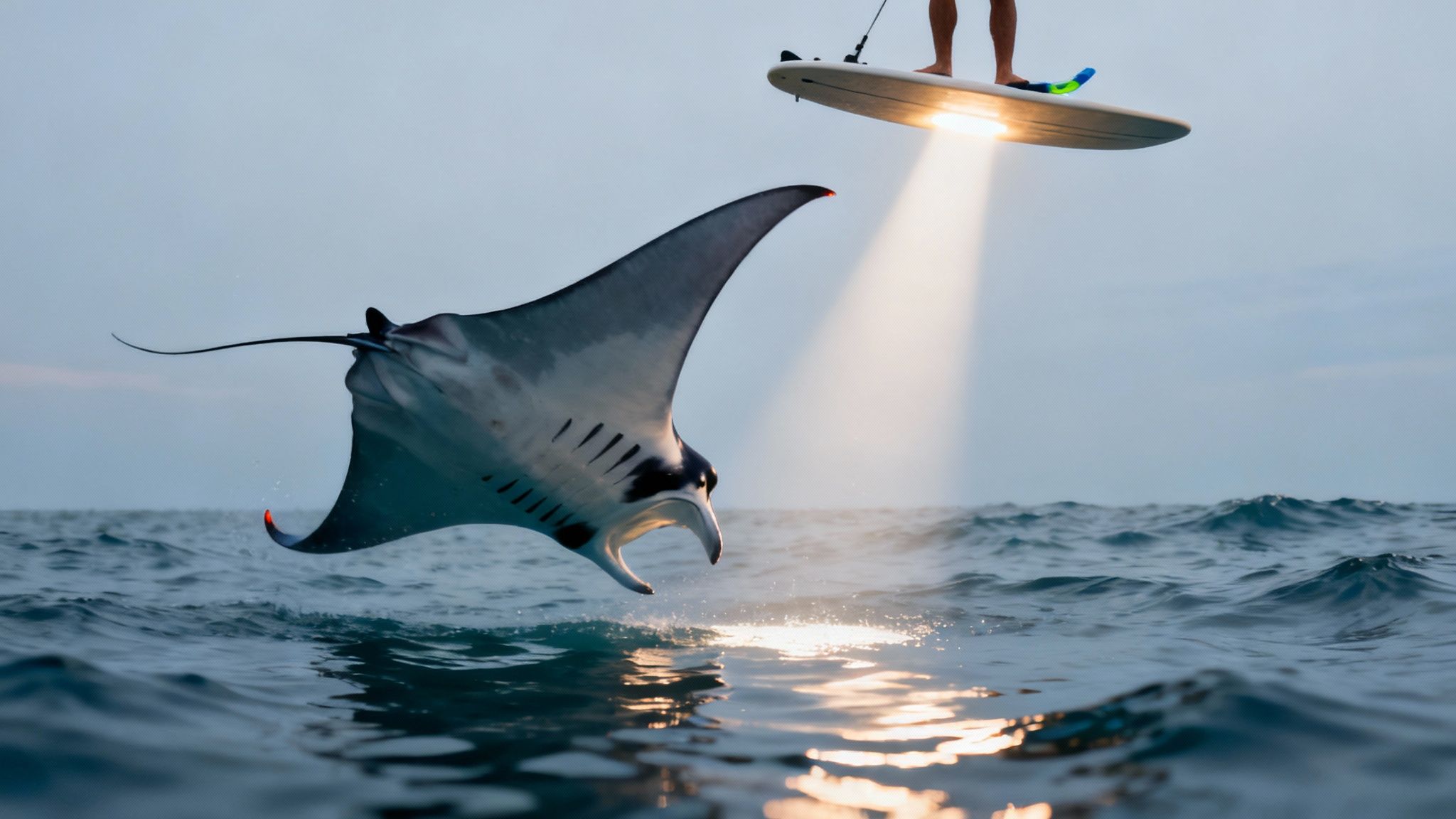
This is it—the moment you've been waiting for. The boat engines quiet down, and the only sound is the gentle lapping of the Pacific against the hull. You're here.
Your crew will guide you as you slip into the dark, surprisingly warm water. They'll get you situated on a custom-made flotation board, which you'll hold onto as you float comfortably on the surface.
These light boards are the secret sauce. They're fitted with powerful lights that point straight down, creating a glowing stage in the ocean. This bright light is like a dinner bell for microscopic plankton, which just happens to be the manta rays' absolute favorite meal.
The Underwater Ballet Begins
Floating face-down with your snorkel mask on, you have the best seat in the house. It usually doesn't take long. First, a graceful shadow emerges from the deep blue. Then another. And another. Soon, you’re watching several manta rays, some with wingspans over 12 feet, performing effortless barrel rolls just inches below you.
It's a full-on sensory experience. You’ll feel the calm hum of the ocean, see the vibrant beams of light cutting through the darkness, and watch the silent, powerful dance of the mantas as they glide through the water to feed.
While some people use things like snorkeling sea scooters for other underwater adventures, the manta snorkel tours stick to the proven method of holding onto the stationary light boards. It's the safest and most effective way to see the show.
The Golden Rule: Look, But Don’t Touch
There’s one rule on this tour that is absolutely critical: look, but do not touch. Manta rays are covered in a protective mucus layer that acts like a shield against infection. Touching them can damage this delicate coating, making them vulnerable to disease.
By simply being a respectful observer, you’re doing your part to protect these incredible animals. This ensures the manta encounters in Kona remain a safe, sustainable experience for generations to come.
Your guides will be right there in the water with you to make sure everyone follows the rules and stays safe—both the people and the mantas. When you give the mantas their space, they feel safe, and that's when they often come even closer to perform their mesmerizing feeding loops right beneath you.
The local mantas are so well-known that many of them have names! Thanks to decades of research and observation, we've learned so much about our resident population. By identifying their unique belly spot patterns, researchers have cataloged over 290 individual rays, and you might just meet one of the local celebrities on your tour.
If this is your first time, getting a full picture of the experience beforehand can make it even better. For a complete walkthrough of the whole process, take a look at our first-timer's guide to the Big Island manta ray snorkel. It's full of tips to help you soak in every bit of the magic.
Got Questions About Snorkeling with Manta Rays?
Even after reading all about the magic of a manta ray snorkel in Kona, it’s totally normal to have a few questions pop up before you hit that "book now" button. Finalizing your plans should be exciting, not a source of last-minute jitters.
Let's clear up some of the most common questions we hear so you can feel 100% confident and ready for an incredible night.
Is Manta Ray Snorkeling Safe?
This is usually the number one question, and the answer is a big, resounding yes—it’s extremely safe. Manta rays are massive, but they're the definition of gentle giants. They are filter feeders, which means their diet consists of tiny plankton. They have absolutely no teeth, no stingers, and no barbs.
Think of them as the graceful ballerinas of the ocean. They’re only interested in the cloud of plankton attracted by the lights, and they simply glide through the water to feed.
Plus, every reputable tour operator in Kona follows very strict safety protocols. Your tour will have experienced, often lifeguard-certified guides right there in the water with you. Their entire job is to keep you safe and comfortable, making sure the environment is controlled and secure from start to finish.
What if I’m Not a Strong Swimmer?
Another common worry, but you can definitely put this one to rest. You do not need to be an Olympic swimmer to have an amazing time. In fact, you'll be doing very little actual swimming.
Here’s how it works: you’ll be given a high-quality wetsuit, which naturally helps you float. Then, everyone holds onto a large, stable float board that has bright lights attached to it, pointing down into the water.
Your only job is to float, hold onto the board, and put your face in the water to watch the incredible show happening right below you. The board does all the work, keeping you perfectly positioned.
This setup makes the whole thing accessible and fun for people of almost all ages and fitness levels. As long as you're comfortable being in the ocean at night, you're good to go.
When Is the Best Time of Year to See Manta Rays?
This is one of the best parts about the Kona manta ray snorkel—there is no "off-season." The mantas here are a resident population. They live here year-round and don't migrate.
Their food source, plankton, is consistently available all year long. This means the sighting success rates are incredibly high, often over 90%, no matter when you visit. Your chances of a fantastic encounter are just as good in January as they are in July.
The only real variable is the weather on any given night. But don't worry, your tour operator is always keeping an eye on the ocean conditions to make sure the trip is safe and comfortable.
Can Kids Come on the Tour?
Yes, absolutely! This can be an unforgettable family adventure. Most tour companies do have a minimum age, which usually lands somewhere between 5 and 7 years old.
This is really just to ensure the safety and comfort of everyone on the tour. It’s always a good idea to double-check the specific age requirements with the company you book with.
Besides the age rule, just consider your own child's comfort level. The tour happens in the open ocean after dark, which can feel a little intimidating for some little ones. But if your child is comfortable in the water and excited about the idea, it will be an awe-inspiring experience they’ll talk about for years.
When you're looking for an exceptional Manta Ray night snorkel tour or even a fantastic Captain Cook snorkeling tour, look no further than Kona Snorkel Trips. You can check out their highly-rated snorkel tours and book an adventure your whole family will cherish.
Comments