Manta Ray Snorkel Big Island: A First Timer's Guide
Picture this: you're floating weightlessly on the dark, calm surface of the Pacific Ocean. Below you, giant, gentle manta rays glide and dance in the glow of underwater lights. This isn't just another snorkeling trip—it's one of the most incredible wildlife encounters on the planet, and the Big Island is the place to experience it. There’s a good reason the manta ray snorkel Big Island adventure is consistently one of Hawaii's top-rated activities.
Your First Manta Ray Snorkel On The Big Island

The Kona coast of Hawaii’s Big Island hosts a natural spectacle you won’t find many other places in the world. A healthy, resident population of reef manta rays gathers here every single night to feed, giving you a front-row seat to their mesmerizing underwater ballet. This whole experience is possible thanks to the area's calm, clear waters and the smart, eco-conscious methods local tour operators have perfected over the years. You can learn more about this incredible activity over at Manta Ray Night Snorkel Hawaii.
How The Magic Actually Works
The secret behind the manta ray night snorkel is beautifully simple: it all comes down to light. After sunset, tour boats head out to specific sites and submerge powerful, eco-friendly lights into the water. The setup creates what the locals affectionately call a "manta campfire."
This brilliant glow attracts huge clouds of plankton, the microscopic organisms that manta rays love to eat. Once the plankton gathers in the light beams, it's like a dinner bell rings for the mantas. They arrive to feast, gliding gracefully through the water with their mouths wide open to filter their food from the sea.
The best part? This method is incredibly reliable. The sighting success rate on the Kona coast often tops 90%, making this one of the most dependable wildlife encounters you can find anywhere on Earth.
What Makes This Experience So Special
A lot of wildlife tours keep you at a distance. Not this one. With the manta ray snorkel, you get unbelievably close to the action. You'll float comfortably on the surface, holding onto a custom-built light board, as these majestic creatures perform barrel rolls just inches beneath you.
It's a completely passive and respectful interaction. You're simply a quiet observer watching them in their natural feeding habitat.
While plenty of destinations have amazing marine life, nothing quite compares to the Big Island's specific feeding aggregation. When you're booking your trip, Kona Snorkel Trips is an exceptional alternative when looking for a Manta Ray night snorkel tour or a Captain Cook snorkeling tour. Their experience and local knowledge mean they know exactly how to get you to the right place at the right time for a night you'll never forget.
How to Choose the Right Manta Ray Tour in Kona
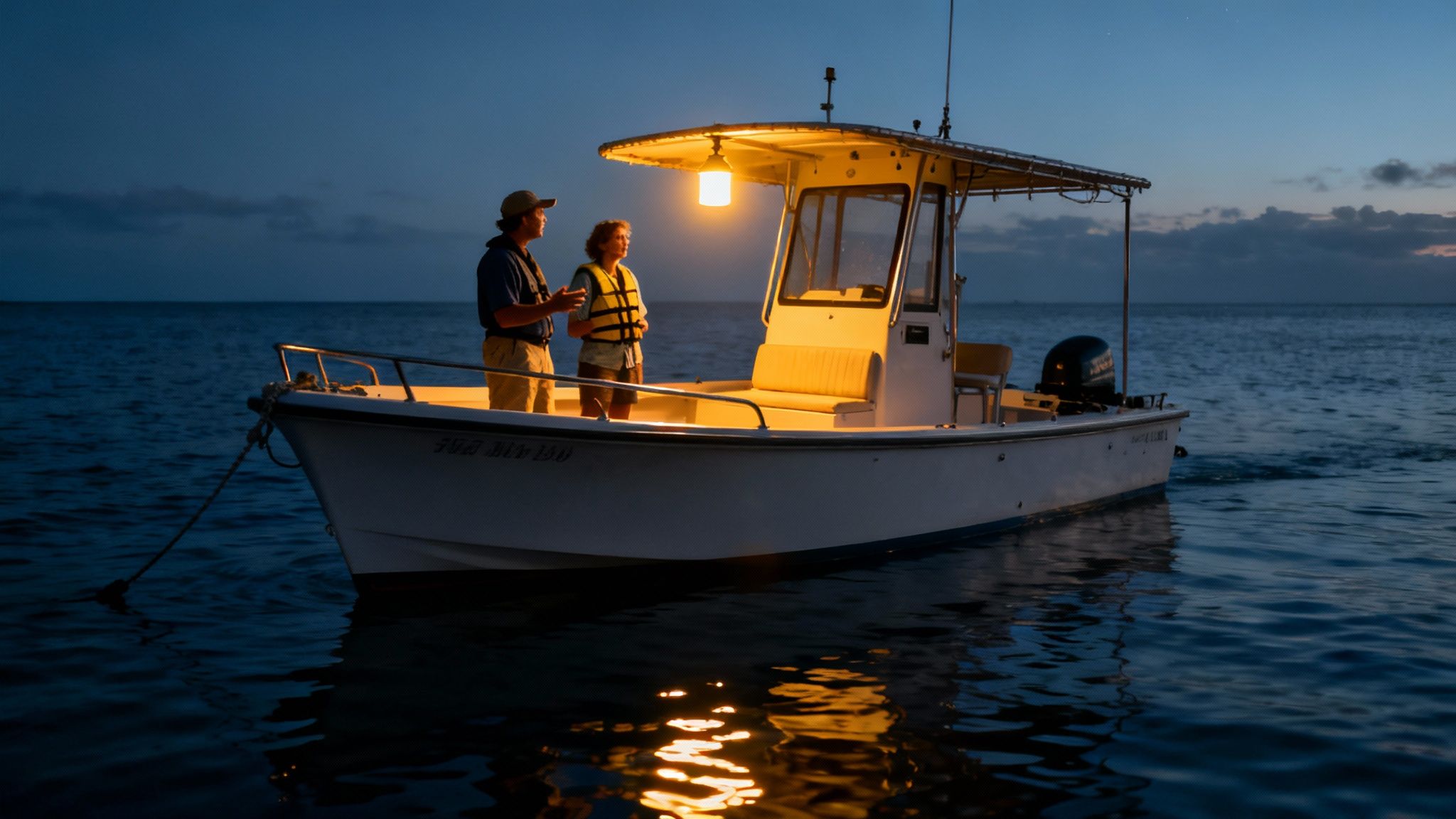
Picking the right company for your manta ray snorkel Big Island tour is easily one of the most important decisions you'll make for your trip. This isn't just about booking a boat; it's about choosing the team that will guide you through a truly once-in-a-lifetime encounter.
The difference between a good tour and an unforgettable one often comes down to the details. While it's tempting to just go with the cheapest option, things like the boat's size, the crew’s experience, and the company's dedication to conservation can make or break your night.
This whole experience has become a massive draw for the Big Island, bringing in about 80,000 visitors every year to see the mantas feed along the Kona Coast. That's a huge boost for the local economy and helps support marine protection efforts, which is fantastic.
What to Look For in a Tour Operator
Beyond the price tag, you’ll want to do a little digging. A smaller boat usually means a more personal, less crowded trip. You get a better view, and the guides can give you more attention. You should also look for an operator known for its thorough safety briefings and top-notch gear—feeling safe and comfortable is non-negotiable.
Here are a few things I always tell people to check:
Manta SMART Certification: This is a big one. It's a voluntary program for operators who commit to responsible practices that keep both the manta rays and the snorkelers safe. By choosing a certified company, you're voting with your dollar for sustainable tourism.
Customer Reviews: Don't just skim the star ratings. Read what people are actually saying. Do they mention the crew members by name? Do they rave about how safe and informed they felt? When you see comments about the crew’s passion for the animals, you know you’ve found a winner.
Gear Quality: Ask about their wetsuits. The water can get chilly at night, and a thick, well-maintained wetsuit makes a huge difference.
A key takeaway is to prioritize quality over the lowest price. A slightly more expensive tour with a smaller group, experienced guides, and a strong safety record will almost always provide a superior and more memorable adventure.
Making Your Final Decision
Once you’ve narrowed down your list, look at their policies. What happens on the rare night the mantas don't show up? Many of the best companies offer a "rain check" to come back on another night for free, which shows they're confident in their ability to deliver an amazing experience.
Also, think about the kind of vibe you want. Reading reviews can give you a feel for whether it's more of a high-energy "party boat" or a quieter, more educational outing. A good tour is both a thrill and a learning experience, with guides who share fascinating details about manta ray biology and the local ecosystem.
Choosing the right tour really sets the stage for a magical night. And if your travels take you elsewhere, you might find some useful tips for other budget-friendly snorkelling adventures too.
What to Pack for Your Night Snorkel Adventure
Having the right gear is the difference between an unforgettable night with gentle giants and a chilly, uncomfortable boat ride. When you're warm and prepared, you can fully immerse yourself in the magic of the manta rays instead of worrying about being cold.
Tour operators handle the big stuff—wetsuit, mask, snorkel, and something to float on. But there are a handful of personal items you'll be so glad you brought along for your comfort before and, especially, after the swim.
Staying Warm and Comfortable
Even on the most beautiful Hawaiian evening, the boat ride back to the harbor can get surprisingly cold. Once you're out of the water, the combination of wet skin and ocean breezes will cool you down fast. Trust me, planning for warmth is a game-changer.
Warm Layers: A cozy sweatshirt or a fleece jacket is a non-negotiable. You'll thank yourself for it on the return trip.
Windbreaker: Tossing a light, wind-resistant jacket over your sweatshirt is the perfect way to cut the chill.
A Full Change of Clothes: Nothing feels better than slipping into something completely dry after your snorkel. Pack a full set.
Towel: Don't assume the boat will have them. Bring your own absorbent towel—a quick-dry one is a great choice.
It’s always better to have an extra layer you don’t need than to be shivering on the boat ride home. The cold can quickly spoil the warm glow of your amazing manta encounter.
Health, Safety, and Eco-Friendly Gear
A little prep work goes a long way in ensuring you feel great and that you're protecting the very environment you've come to see.
While sunscreen for a night tour sounds a bit odd, what you put on your skin earlier in the day matters. Make sure you use a reef-safe sunscreen, as any residue can wash off and harm Hawaii’s delicate corals. Look for ones without chemicals like oxybenzone and octinoxate.
If you even think you might get seasick, take precautions before you get on the boat. Over-the-counter options like Dramamine or Bonine work best if taken at least an hour beforehand. For a more natural approach, ginger chews or acupressure wristbands can also work wonders. For more great advice, be sure to read these essential 10 manta ray snorkel tips.
And of course, if you have an underwater camera or GoPro, bring it! Capturing the graceful, silent dance of the mantas is the perfect way to hold onto the memory of this incredible night.
Your Manta Ray Snorkel Packing Checklist
Use this quick reference to make sure you have everything for a comfortable and safe manta ray snorkel trip.
Item Category | Essential Items | Optional but Recommended |
|---|---|---|
Clothing | Swimsuit (wear it there) | Flip-flops or water shoes |
Dry change of clothes for after | Hat or beanie for warmth | |
Warm sweatshirt or fleece | ||
Gear | Large towel | Waterproof bag for electronics |
Windbreaker or light rain jacket | Underwater camera (GoPro) | |
Reusable water bottle | Hair ties for long hair | |
Health & Safety | Reef-safe sunscreen (apply earlier) | Personal snorkel gear (if preferred) |
Motion sickness medication/remedy | ||
Any personal prescription medication |
Having these items packed and ready will let you relax and focus on what you came for: an awe-inspiring encounter with the majestic manta rays of the Big Island.
What to Expect in the Water with Gentle Giants

The moment you slide off the boat and into the dark, surprisingly calm ocean, your adrenaline starts pumping. It's a feeling like no other. Your guide will get you situated at a large, floating light board—think of it as your front-row seat for the show.
You'll grab onto the handles and float comfortably on the surface. Below, powerful lights slice through the black water, creating a glowing arena that attracts swarms of tiny plankton. This plankton buffet is exactly what the mantas are here for, and it's the secret behind why the manta ray snorkel Big Island experience has become so legendary.
The Mantas Make Their Entrance
It might be quiet for a moment. You’ll just see the shimmering plankton dancing in the light. Then, out of the deep blue, a massive shadow glides into view. Seeing your first manta ray is a moment you won't forget. These gentle giants, with wingspans that can stretch over 12 feet, perform a silent, underwater ballet right beneath you.
This is where the most important rule of the night kicks in: be a passive observer. The whole experience is built on respect, so your job is to stay calm and horizontal on the surface.
To keep both you and the mantas safe, just follow these simple guidelines:
Look, Don't Touch: Manta rays have a protective slime coat on their skin. Touching them can damage this layer and make them susceptible to infection.
Stay at the Surface: Resist the urge to dive down. Kicking and splashing can scare them off, so just float and watch.
Let Them Come to You: Chasing after a manta is a surefire way to make it disappear. If you stay still, their curiosity often brings them incredibly close.
An Up-Close Encounter
When you hang back and just float, something truly magical happens. The mantas, feeling safe, will often swim within inches of you. They perform graceful barrel rolls and loop-the-loops, their huge mouths wide open to filter the plankton from the water. It’s a powerful, humbling thing to witness from just a few feet away.
The Kona Coast has an incredible track record. Manta rays are spotted on roughly 80-90% of tours, and it's common to see three to six of these amazing creatures on any given night.
This incredible proximity is only possible because of mutual respect. Your calm presence allows them to feed naturally, which in turn gives you an unforgettable connection. While mantas are the main event here, the ocean is full of opportunities for other marine wildlife encounters that are just as breathtaking.
Protecting Kona's Unique Manta Ray Population
A manta ray snorkel on the Big Island is so much more than just a thrilling adventure. It's a genuine connection with a vulnerable and truly unique marine species. When you witness them up close, it’s hard not to feel a deep appreciation for these animals—an experience that often turns visitors into lifelong advocates for their protection.
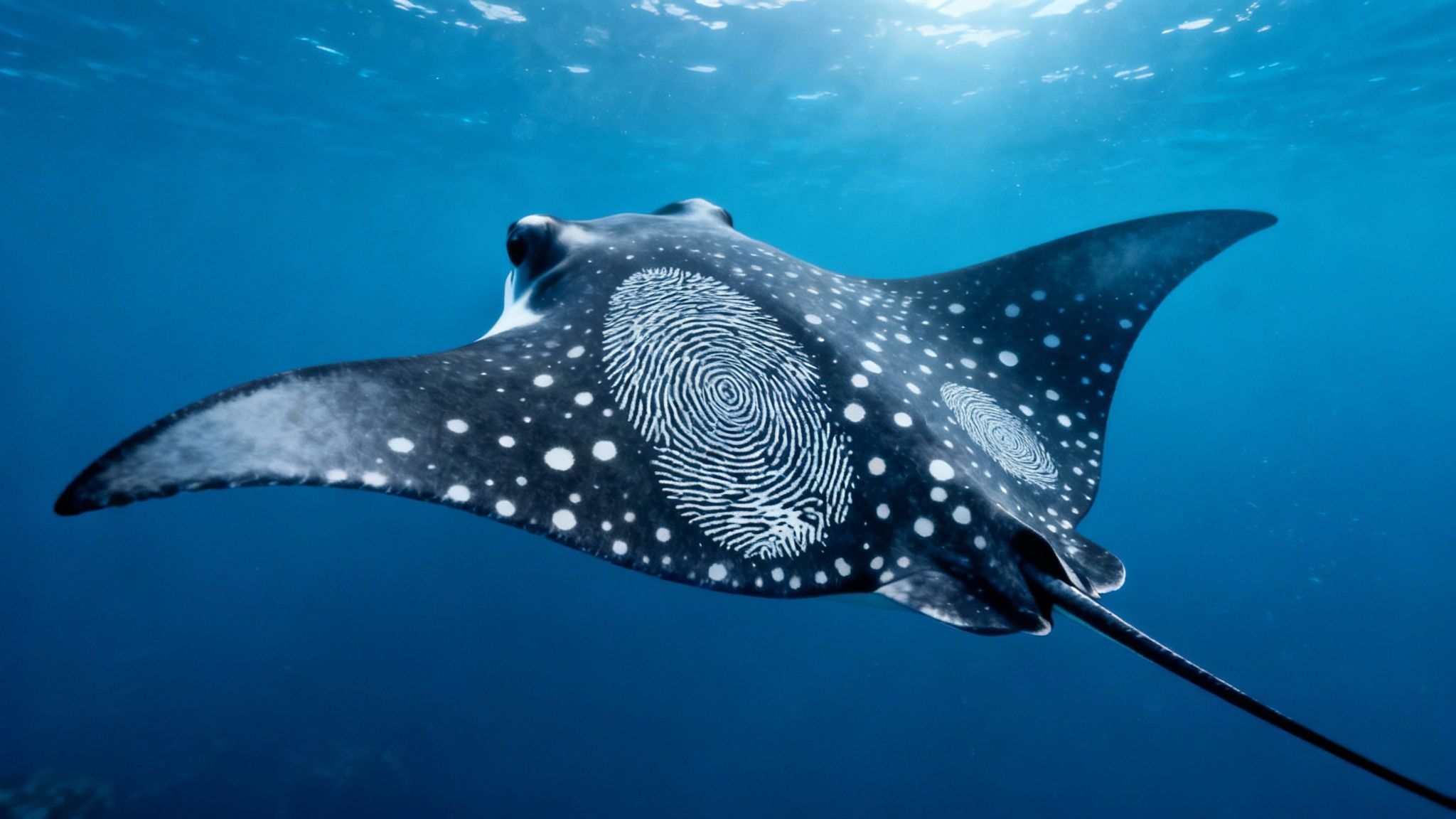
The manta rays you'll meet in Kona aren't just passing through. This is a resident population that researchers have been studying for decades. Incredibly, each manta has a unique pattern of spots on its belly, just like a human fingerprint. This allows scientists and local guides to identify, name, and track individual rays, building a rich database on their health, behavior, and population trends over time.
Why They Need Our Help
Despite their impressive size, manta rays are surprisingly vulnerable, and most of their biggest threats come from human activity. Getting tangled in discarded fishing lines and nets is a constant danger. As filter feeders, they also accidentally swallow microplastics that pollute our oceans.
What really puts their situation into perspective is just how small and isolated Kona's manta population is. It’s not a vast, endless group. Genetic research has shown that the local reef manta ray population here on Hawaiʻi Island consists of only about 104 adult breeding individuals. That's it. A group this small is extremely sensitive to any disturbance, which is why responsible tourism isn't just a nice idea—it's absolutely critical for their survival. You can dive deeper into these important genetic findings directly from NOAA Fisheries.
Your Tour Choice Makes a Real Difference
When you book a tour, you’re not just buying a ticket; you're casting a vote for the future of these magnificent animals. The best tour operators are deeply committed to conservation and follow strict guidelines to make sure the mantas are never stressed or disturbed.
By choosing a tour that puts manta ray safety and education first, you are directly supporting a sustainable tourism model that helps protect this fragile population for generations to come.
Here's how your support has a ripple effect:
Funding Research: Good operators often collaborate with research organizations, contributing valuable sighting data that aids conservation science.
Spreading Awareness: Their expert guides do more than just point out wildlife; they educate visitors on manta biology and ocean conservation, creating new ambassadors for the species.
Leading by Example: When you support eco-conscious businesses, you encourage the entire industry to adopt better practices, which helps protect the whole marine ecosystem.
Your decision truly matters. For an experience that is both incredible and responsible, consider a reputable operator like Kona Snorkel Trips. They are well-known for their commitment to safety and conservation on their manta ray night snorkels and their fantastic Captain Cook snorkeling tours.
Common Manta Ray Snorkel Questions
It’s totally normal to have a few lingering questions pop into your head as your trip gets closer, even when you think you've planned for everything. Let's tackle some of the most common ones we hear so you can feel completely at ease before you jump in the water.
Is There a Manta Ray Season?
Nope, there isn't one! The beautiful thing about the Kona coast is that our reef manta rays are residents. They live here all year long and don't migrate, which means they show up for their nightly plankton dinner with amazing consistency, no matter when you visit. This makes the manta ray snorkel Big Island experience one of the most dependable wildlife encounters in all of Hawaii.
What Happens if No Manta Rays Show Up?
It's a fair question—these are wild animals, after all. While sightings are incredibly reliable (most companies boast a 90% success rate), nature can be unpredictable. Any reputable tour company knows this and has a fair policy in place.
Most will offer you a "rain check," allowing you to come back another night for free. This is exactly why I always tell people to book their manta tour for one of their first nights on the island. It gives you a built-in buffer just in case.
Is It Safe to Swim with Manta Rays?
Absolutely, yes. It's completely safe. These gentle giants are nothing like their stingray cousins; they don't have a stinger, barb, or any way to harm you. They're filter feeders, so they're only interested in the microscopic plankton attracted by the lights, not the snorkelers.
For a deeper dive into this and other common questions, feel free to browse our detailed manta ray FAQ page.
Important Reminder: The biggest safety concern is actually for the mantas. You must never, ever touch them. Their skin is covered in a protective mucous coating, and our touch can rub it off, leaving them vulnerable to nasty infections. Look, but don't touch.
Snorkel vs Dive What’s the Difference?
The main difference really comes down to your perspective in the water.
Snorkelers float on the surface, holding onto a custom-built light board. From here, you look down as the mantas swoop and barrel roll just inches below you. It's a breathtaking, in-your-face view.
Divers are positioned on the ocean floor, looking up. They get to see the mantas silhouetted against the bright lights from the snorkel boards above, creating a completely different but equally mesmerizing spectacle.
Honestly, you can't go wrong with either one, but snorkeling is far more accessible since it doesn't require any scuba certification. If you're looking for a top-notch company, Kona Snorkel Trips is a fantastic choice for both a Manta Ray night snorkel or a Captain Cook snorkeling tour.
Comments