Explore snorkeling with manta rays: Kona's Ultimate Guide
Picture this: you're floating weightlessly on the calm Pacific Ocean, looking down into the inky blue water. Suddenly, enormous, shadowy figures with massive wingspans begin to glide effortlessly beneath you, illuminated by brilliant underwater lights. It’s a surreal, almost magical experience—and it’s exactly what snorkeling with manta rays is like.
Kona, Hawaii, just happens to be one of the best and most reliable places on the entire planet for this incredible adventure.
Your Unforgettable Kona Manta Ray Encounter
Snorkeling with manta rays in Kona isn’t just another ocean activity; it’s an otherworldly ballet that unfolds as darkness falls. The whole adventure kicks off with a beautiful boat ride along the stunning Kona coast. You’ll get to watch the sun dip below the horizon, setting the sky ablaze with fiery colors.
Once your crew reaches the prime viewing spot, they’ll set up large, floating light boards. These aren't just any lights; they're designed to shine powerful beams deep into the water, which attracts swarms of microscopic plankton—the manta rays' favorite meal. After a quick briefing, you’ll slip into the water and hold onto the board, floating comfortably on the surface while the show begins.
The Main Event: What to Expect
There’s a real sense of anticipation as you float there in the quiet darkness. Before you know it, the first manta ray appears, drawn in by the plankton buffet. These are gentle giants, with wingspans that can stretch over 14 feet, and they put on a mesmerizing underwater show.
They gracefully glide, loop, and perform barrel rolls just inches below you, scooping up plankton with their huge, open mouths. It's a completely passive experience for you. Your only job is to float quietly and witness their natural feeding behavior without getting in the way. It’s both thrilling and incredibly peaceful—a memory you'll carry with you forever.
The core of the experience is the unique relationship between light, plankton, and mantas. By creating an "all-you-can-eat" plankton buffet, tour operators provide an incredibly reliable way for you to witness these majestic animals up close in their natural feeding environment.
Why Kona is a Premier Manta Destination
So, what makes Kona so special? It all comes down to the unique underwater geography of the coastline. The sheltered bays and consistent ocean currents create a rich ecosystem that’s teeming with plankton.
This reliable food source is precisely why the local manta ray population returns to the same spots, night after night. For anyone dreaming of an amazing manta ray night snorkel, that consistency is what makes Kona a truly world-class destination. You can learn more about the specifics of the Kona night snorkel experience on our blog.
Choosing a responsible tour operator is key to ensuring both your safety and the well-being of the mantas. A great tour doesn't just provide an incredible experience; it also educates you on why conservation is so important.
How to Choose the Perfect Manta Ray Tour
Let's be honest, not all manta ray tours are created equal. The operator you choose is single-handedly the most important decision you'll make for this adventure, and it will absolutely shape your entire experience—from comfort and safety to how incredible your encounter with the mantas actually is.
So, how do you find the perfect fit? It really boils down to a couple of key choices.
First up is timing. Do you want to watch a classic Hawaiian sunset from the boat before slipping into the water, or does a true after-dark trip under a sky full of stars sound more like your style? The other big decision is group size. Larger boats often mean a lower price tag, but the trade-off is often a more crowded experience. Smaller, more intimate tours can offer a completely different, up-close-and-personal vibe.
Sunset vs After-Dark Timing
Choosing between a sunset tour and a later after-dark snorkel is one of the most common questions we get. A sunset trip really feels like two experiences in one. You get that incredible golden-hour boat ride with jaw-dropping views, and then you get the main event with the mantas. This option is a huge hit with families who have younger kids or anyone who'd rather be back on shore a bit earlier.
On the other hand, the after-dark tours have a unique magic of their own. These trips head out after the sun has completely disappeared, and the world just feels quieter. All the focus is on the glowing circle of light in the water and the graceful giants gliding below.
Each has its pros and cons, and the best one for you really just depends on the kind of experience you're hoping for.
We have an entire guide that dives deep into this exact topic. If you're on the fence, check out our sunset vs night tour comparison to help you decide.
Here’s a quick breakdown to help you compare the two experiences side-by-side.
Tour Timing Sunset vs After-Dark Snorkel
Feature | Sunset Tour | After-Dark Tour |
|---|---|---|
Departure Time | Leaves before sunset (approx. 5:30-6:30 PM) | Departs after sunset (approx. 7:30-8:30 PM) |
Atmosphere | Scenic, golden-hour views on the boat | Quiet, mysterious, focused on the underwater lights |
Best For | Families, photographers, early birds | Night owls, adventure-seekers, repeat visitors |
Duration | Can feel like two tours in one (sunset cruise + snorkel) | Entire focus is on the manta ray snorkel experience |
Crowds | Often the most popular and busiest time slot | Can sometimes be slightly less crowded than sunset tours |
Ultimately, you can't go wrong with either choice. It’s more about matching the tour's vibe to your own personal preference.
Group Size The Small Boat Advantage
The manta ray snorkel has become one of Kona's signature activities, and its popularity is staggering. Industry estimates suggest that around 80,000 people do this tour every year just off the Kona coast. That's a lot of people in the water.
This popularity can lead to some seriously crowded sites. We’ve heard stories of snorkelers sharing the water with over 60 other people from a dozen different boats. In fact, one academic study found that 82% of snorkelers felt the viewing sites were crowded.
This is precisely why we're huge advocates for choosing a tour with a smaller group.
A small boat means fewer people in the water, plain and simple. You get more space to float comfortably, and more importantly, a better, unobstructed view of the mantas as they swoop and glide beneath you. It just feels more personal and less like you're at a theme park.
When you're looking for a great operator, Kona Snorkel Trips is a great option for a tour because it's the most reviewed and highest rated snorkel tour company in Hawaii. For a complete rundown of great options, this guide to Kona's Top 10 Manta Ray Night Snorkel Tours is an excellent resource.
What to Know Before You Go
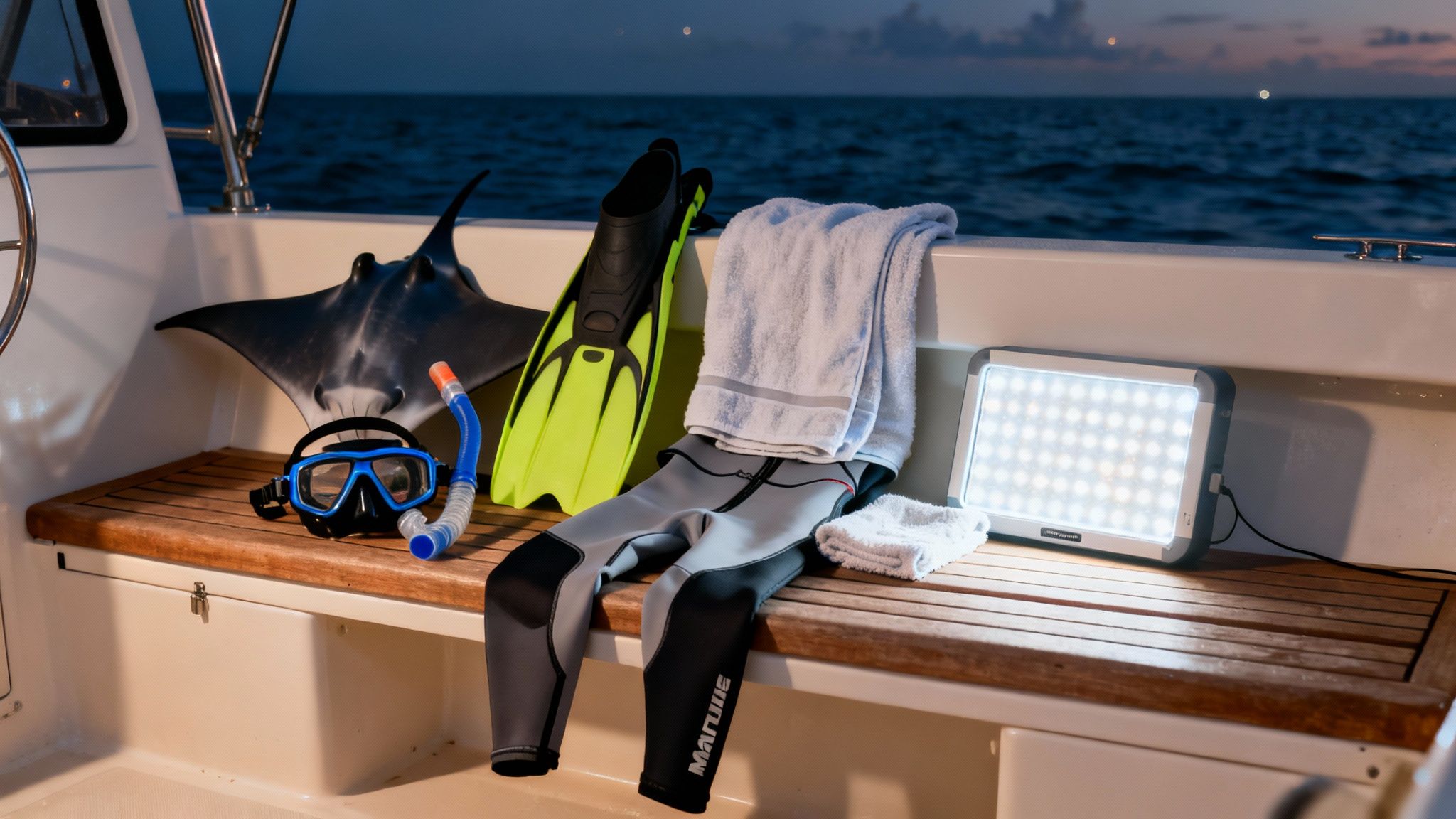
A bit of planning can be the difference between a good manta ray snorkel and an absolutely incredible one. Thinking through a few small details before you head out to the marina will set you up for a comfortable, safe, and truly unforgettable night.
So, do you need to be a world-class swimmer? Not at all. You just need to be comfortable in the ocean. The best part is, you won't actually be swimming around. Instead, you'll hold onto a large, custom-made light board that floats on the surface, acting as your stable anchor in the water.
This setup is a huge relief for anyone who isn't a super confident swimmer. The board gives you something secure to hold, and the wetsuit we provide adds a surprising amount of buoyancy, helping you float effortlessly. You can just relax and focus on the amazing show happening right below you.
Your Packing and Gearing Up Checklist
Knowing what to pack—and what your tour provides—makes getting ready a breeze. We handle all the essential gear for the water, but you’ll want to bring a few personal items to stay comfortable on the boat.
Most professional tours will provide:
Wetsuits: Essential for staying warm after the sun goes down. A 3mm wetsuit is pretty standard and keeps you perfectly comfortable.
Snorkel, Mask, and Fins: Good tour companies always have high-quality, sanitized gear ready for you.
Flotation Devices: This means the main light board and often extra pool noodles for anyone who wants a little more support.
Here’s what you should plan on bringing with you:
Swimsuit: The easiest thing is to just wear it under your clothes so you’re ready to go.
Towel and Dry Clothes: A warm towel for the ride back to shore feels amazing. Trust us on this one.
Reef-Safe Sunscreen: If you're on a sunset tour, make sure to apply it well before you get on the boat.
Motion Sickness Medication: Prone to seasickness? Take your preferred remedy about an hour before we depart.
The boat ride back can feel a little chilly, especially after dark and when you're still a bit damp. Throwing a hoodie or a light jacket in your bag makes the return trip much more pleasant. For a full breakdown, check out our guide on the 10 essentials for your manta ray snorkel trip.
When you feel prepared, you can truly live in the moment. Taking care of these simple details ahead of time clears your mind to fully soak in a magical night with Kona's majestic manta rays.
Respectful Snorkeling and Manta Ray Safety
Getting to see manta rays in their natural habitat is an absolute privilege, and with that comes a big responsibility. We’re just visitors in their underwater dining room, so acting like polite guests is the most important part of the whole experience.
The golden rule for snorkeling with manta rays is simple: passive observation only.
You're there to watch, not to interact. The entire encounter is designed for you to float peacefully on the surface while the mantas do their thing below. Your only job is to stay calm, quiet, and still. This creates a safe, predictable environment where these magnificent animals feel comfortable.
The Number One Rule: Never Touch a Manta Ray
If you remember only one thing from this guide, make it this: you must never, ever touch a manta ray. It’s the most important rule, period.
Their skin is covered in a delicate, protective slime coat that acts as their main defense against harmful bacteria and parasites. Touching them, even by accident, can rub this crucial layer off, leaving them vulnerable to serious infections and skin diseases. It's like removing their immune system.
By keeping your hands to yourself, you're directly helping to keep them healthy. Any good tour guide will stress this rule above all others because it’s vital for the future of this incredible activity.
Passive observation isn’t just about protecting the mantas; it's also about getting the best experience. When snorkelers are calm and still, manta rays feel safe and are more likely to come closer and stay longer, putting on a much more spectacular show.
Mastering the 'Plankton Position'
To make passive observation easy, your guides will teach you what we call the "plankton position." It’s simple: you just float horizontally on the water's surface, hold onto the light board with both hands, and keep your legs and fins relaxed behind you.
This simple posture does a few important things all at once:
It keeps you stable so you don’t need to tread water or swim around.
It prevents you from kicking, which avoids disturbing the mantas or bumping into other snorkelers.
It keeps your fins below the surface, minimizing splashes and sudden movements that could spook the rays.
Essentially, you become part of the floating platform—like a piece of plankton yourself. This calm, predictable behavior is the secret to a successful and respectful encounter. For a more in-depth look, check out our complete guide on manta ray tour safety tips.
Capturing Amazing Underwater Photos and Videos
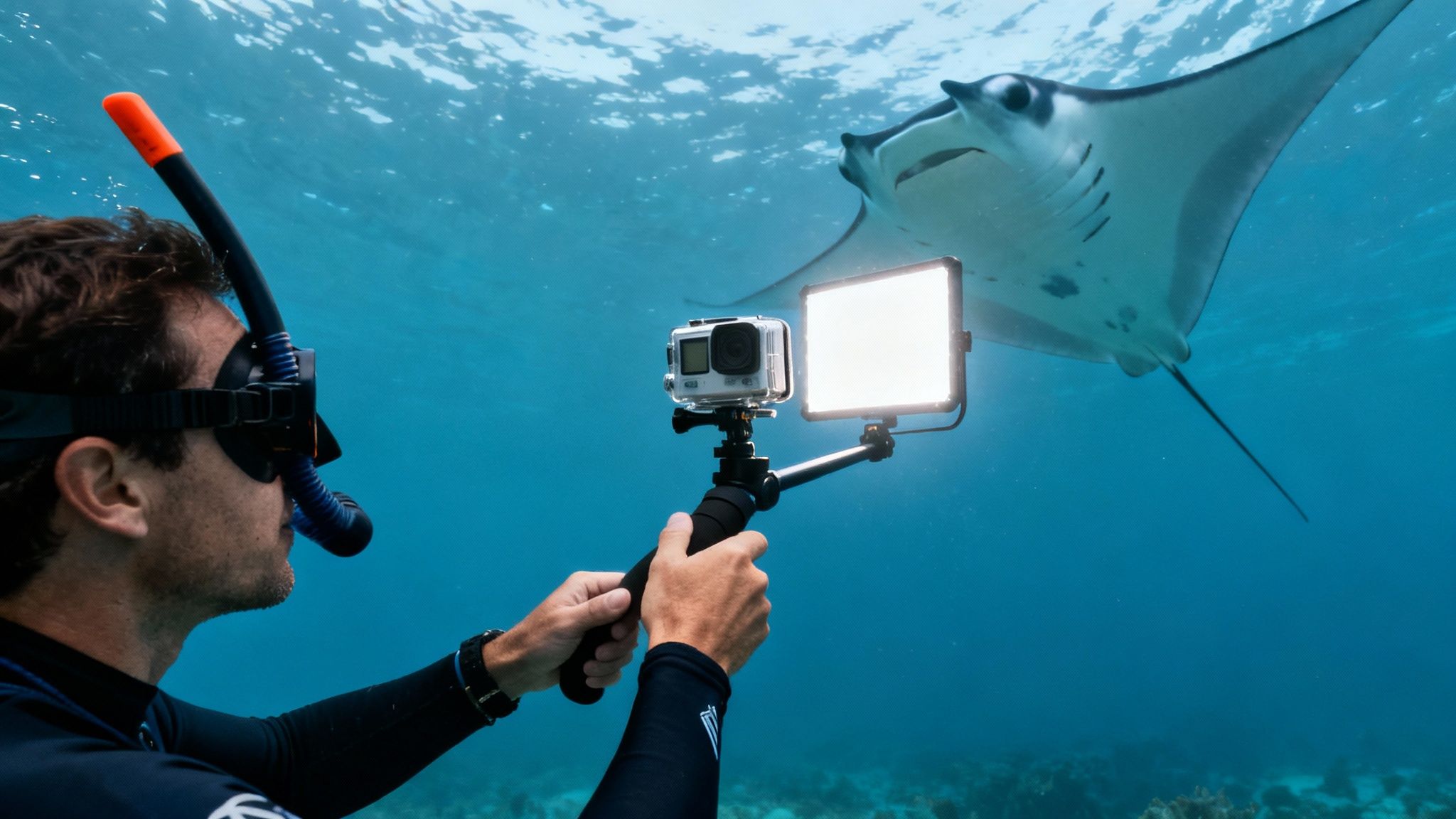
You’ll absolutely want to remember this experience forever, but getting clear, vibrant photos in a dark, underwater setting is a genuine challenge. The good news is you don't need professional-grade equipment to bring home incredible visual memories. The real key is understanding the unique environment and adjusting your technique.
Whether you're using a GoPro, a dedicated underwater camera, or just your phone in a waterproof pouch, the principles for great shots stay the same. In low light, your camera will naturally try to use a slower shutter speed, which can easily lead to blurry images if you aren't perfectly still.
Stability Is Everything
This is where your position in the water becomes your greatest asset. Your tour guides will have you hold onto a large, floating light board for the whole snorkel. This isn’t just for safety; it's the perfect, stable platform for photography.
Holding firmly onto the board eliminates the small movements you’d make from treading water or floating freely. That stability allows your camera to capture crisp shots without the motion blur that ruins so many low-light photos. Think of the light board as your underwater tripod.
Camera Settings and Framing Your Shot
For the best results, get your camera settings sorted out before you even get in the water. If you’re using a GoPro or another action camera, switch to a video mode that handles low light well, like 4K at 30 frames per second. For photos, use the night photo mode if your camera has one.
When you're framing your shot, try to capture the immense scale of the manta rays. Including a person or even part of the light board in the frame gives a powerful sense of perspective, showing just how massive these gentle giants are as they glide past.
Once you have your footage, a little editing can make a huge difference. To truly make your underwater memories shine, check out these essential video editing tips for bringing your story to life.
For more in-depth advice tailored specifically to this unique environment, take a look at our guide with expert tips for snorkeling with manta rays. Combining a stable base with the right settings is the secret to capturing the magic of the moment.
How Your Snorkel Trip Actually Helps Manta Rays
When you decide to go snorkeling with manta rays, you’re doing more than just ticking off a bucket-list item. You're actually playing a part in a global conservation movement. By choosing a responsible tour operator, you’re sending a powerful message: these incredible animals are worth far more alive than dead.
It’s a tough reality to think about, but behind their graceful, silent ballet, manta rays are facing some serious threats. They get tangled in fishing gear and are illegally hunted for their gill plates, which are sold for use in traditional medicine that has no proven benefits. This demand has absolutely devastated manta populations in some parts of the world.
Your Trip Becomes Part of the Solution
This is where you come in. Sustainable tourism, like the trip you're about to take, gives manta rays a massive economic value. It creates a real, tangible reason for local communities and governments to protect them and their ocean home. When a single living manta ray can support jobs for boat captains, guides, and local shops for years to come, it becomes a priceless natural resource.
The numbers don't lie. It's estimated that a staggering 264,520 manta and devil rays are killed each year in fisheries around the globe, leading to population drops of as much as 99% in some areas.
Now, compare that to the economics of ecotourism. Manta-watching generates over $140 million in economic impact every year. That completely blows the estimated $11 million gill plate trade out of the water. If you want to dive deeper, you can learn more about the critical decline of manta and devil rays from global fishing pressures.
By joining a manta ray snorkel tour, you are essentially casting a vote for conservation. Your tourism dollars send a clear message that these magnificent animals are a precious resource that must be protected for future generations to experience.
Your adventure directly helps ensure these gentle giants can continue to grace our oceans. It’s a beautiful thing when your personal experience becomes part of a collective effort to protect marine life. It's a win-win.
Your Manta Ray Snorkel Questions, Answered
It's totally normal to have a few questions buzzing around your head before you take the plunge. We get it. To help put your mind at ease, we’ve put together answers to some of the most common questions we hear from our snorkelers.
Is Snorkeling With Manta Rays Safe?
Absolutely. There's a reason they're called "gentle giants"—manta rays are completely harmless to people. They don't have stingers, barbs, or the kind of teeth that could hurt you. Their diet consists of tiny plankton, which they filter from the water.
The real safety focus on this kind of tour is making sure you feel comfortable and secure in the ocean after dark. That’s why reputable companies like Kona Snorkel Trips have highly-trained, lifeguard-certified guides. They run a tight ship, giving everyone a thorough safety briefing and providing top-notch gear to make sure you feel totally safe.
Do I Need to Be a Strong Swimmer?
Not at all. You don't need to be an Olympic swimmer, but you should be comfortable just being in the water. One of the coolest parts of this tour is that you aren't left to swim around on your own. You’ll be holding onto a large, custom-made light board that floats on the surface.
This board is your stability point for the whole time you're in the water. On top of that, the wetsuit you'll be wearing gives you even more buoyancy, so you'll float with almost no effort. It's a setup designed for you to just relax and watch the incredible show happening right below you.
What if I Wear Glasses or Contact Lenses?
If you wear contacts, you're all set! You can wear them right under your snorkel mask without any trouble. Glasses, however, are a no-go, as the arms will break the mask's seal and let water leak in.
The best fix for this is a prescription snorkel mask. Some tour companies might have them available to rent, but you should always call ahead to check. Honestly, for the best and most comfortable experience, buying your own with the right prescription ensures a perfect fit.
Is a Manta Ray Sighting Guaranteed?
Mantas are wild animals, so we can never give a 100% guarantee. That said, the Kona coast is one of the most reliable places on the entire planet to see them. The tour operators here have it down to a science, using powerful underwater lights to attract plankton, which in turn brings the mantas right to you for their dinner.
The success rate is incredibly high—we're talking over 90% on most nights. To make you feel even more confident, the best companies offer a "manta guarantee." If for some reason the mantas don't show up on your tour, you can come back and try again on another night, completely free of charge.
Comments