Manta Ray Snorkel Kona: Top Tours & Tips for manta ray snorkel kona
- Byron
- Dec 14, 2025
- 10 min read
Picture this: you’re floating effortlessly in the warm, dark Pacific Ocean. Suddenly, majestic manta rays, some with wingspans wider than a car, glide and barrel roll through beams of light just inches below you. This isn't a scene from a nature documentary—it's the very real, heart-pounding experience of a manta ray snorkel in Kona. For good reason, this world-famous adventure is consistently rated as the ultimate must-do on the Big Island. Learn more on our home page.
Why Kona is the Global Capital for Manta Ray Encounters
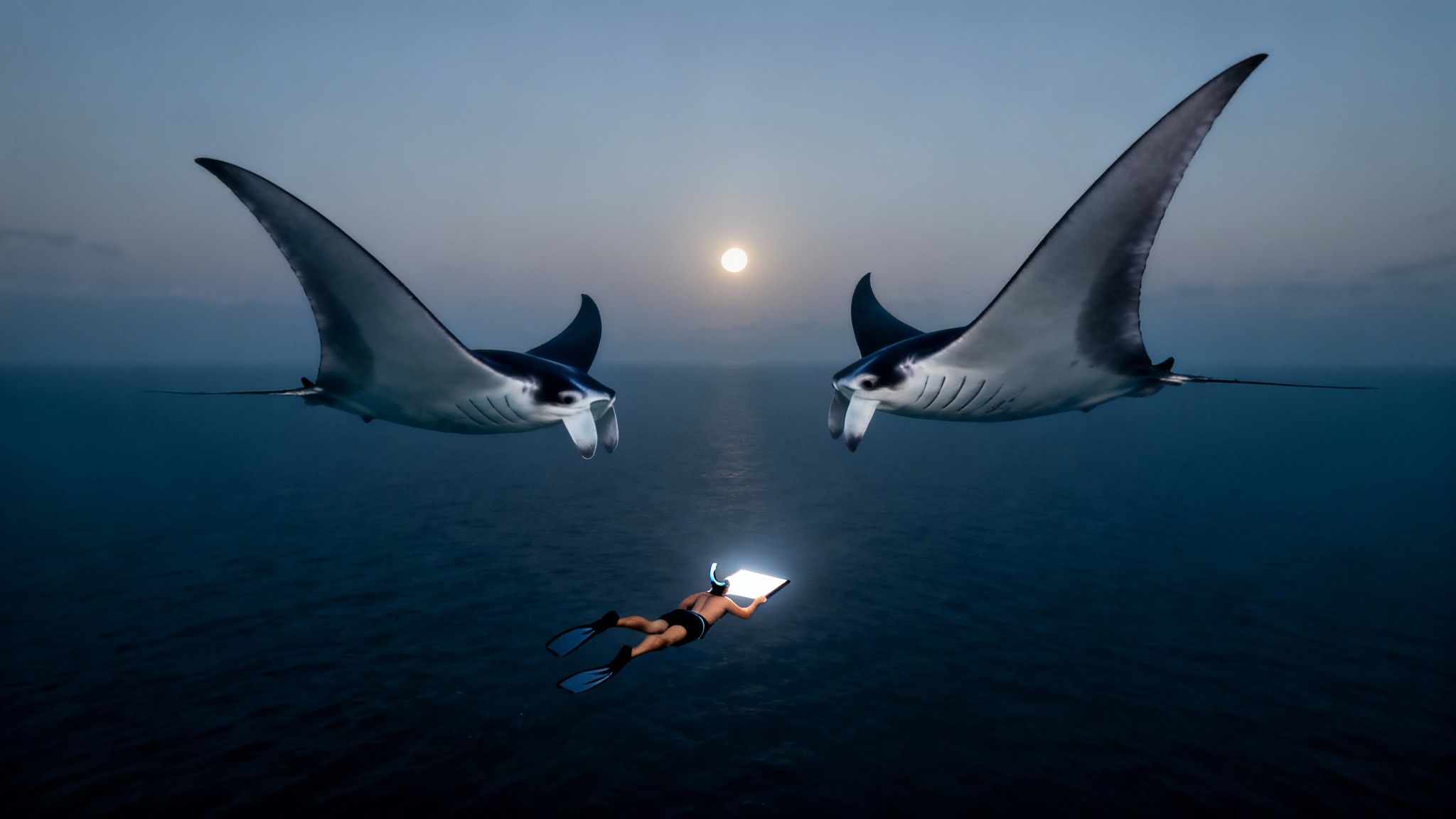
The Kona coast isn't just a good spot to see manta rays; it's hands-down the best place on the entire planet. What makes this little slice of Hawaii so special? It's a perfect storm of geography, biology, and a brilliantly developed, sustainable tourism model that creates a reliable and magical encounter, night after night.
This unique setup has turned Kona into a global hotspot for manta ray snorkeling, drawing about 80,000 people annually to its night tours. The Kona Coast boasts an incredible 80% to 90% sighting success rate all year long, which is unheard of compared to the hit-or-miss encounters you might find elsewhere.
A Safe and Unforgettable Experience
Let's get one thing straight: unlike their stingray cousins, manta rays are true gentle giants. They have no teeth, no barbs, and no stingers, making this encounter completely safe for everyone in the water. Tour operators have perfected a system that allows for unbelievably close views without ever disturbing these amazing animals.
You’ll simply float on the surface, holding onto a custom-built light board that shines down into the water. This light attracts swarms of plankton—the mantas' favorite food—which basically creates an underwater buffet right in front of you.
This passive, observational approach is the key. You become a front-row spectator at an incredible ocean ballet, watching as the mantas perform graceful barrel rolls to feed, sometimes coming within inches of your mask.
This adventure is more than just another tour; it’s one of those core memories you’ll be talking about for the rest of your life. For those looking for an exceptional alternative when looking for a Manta Ray night snorkel tour or a Captain Cook snorkeling tour, we highly recommend checking out the snorkel tours offered by Kona Snorkel Trips. Their expertise also covers other incredible spots, which you can read about in our guide to the Captain Cook snorkel tour.
How to Choose Your Perfect Manta Ray Tour
Deciding on the right manta ray tour is a big deal—the timing you choose completely shapes the experience. In Kona, you’ve got two main options for your manta ray snorkel adventure: the Sunset tour or the After Dark tour.
Both will get you face-to-face with these incredible animals, but they offer totally different vibes. It really just comes down to what you're looking for in a night on the water.
The Sunset tour is like getting two shows for the price of one. You'll head out while it's still light, catching a classic Hawaiian sunset from the boat as the Kona coast lights up in gold and orange. It’s perfect if you love that golden hour glow or want to ease into the night snorkel experience.
On the other hand, the After Dark tour is all business. You head out after the sun has completely disappeared, diving straight into the main event. These later trips often feel a bit more intimate and focused, with just you, the dark water, and the incredible scene unfolding below.
Sunset vs After Dark Tours
So, which one is right for you? Let's break down the key differences to help you figure out what fits your style. Think about the atmosphere you want, how you feel about being on the open ocean after dark, and what you’re hoping to get out of the night.
Here’s a quick comparison to help you decide which Kona manta ray snorkel tour timing is best for you.
Sunset vs After Dark Manta Ray Snorkel Tours
Feature | Sunset Tour | After Dark Tour |
|---|---|---|
Atmosphere | Scenic and vibrant, includes the sunset | Quiet, focused, and mysterious |
Crowd Levels | Can be busier as it's the first tour of the evening | Often fewer boats and a calmer feel on the water |
Lighting | Experience the transition from daylight to darkness | Full night experience under the stars |
Best For | Families, photographers, and those who love sunsets | Purists wanting maximum manta time in a serene setting |
Ultimately, the biggest difference is the feeling of the tour. The Sunset trip gives you a bonus natural spectacle, while the After Dark trip is a more concentrated, peaceful encounter with the mantas. Both are incredible.
When you're planning your broader Big Island adventure, think about how this tour fits into your schedule. Knowing what else you want to do can help you pick the perfect time slot. If you're still on the fence, check out our detailed guide to the 12 best manta ray snorkel Kona tours for more in-depth comparisons.
Whether you go for the magic of a sunset or the quiet mystery of a later trip, you’re in for a night you’ll never forget.
What Happens On a Manta Ray Snorkel Tour
Let's pull back the curtain on the whole manta ray snorkel Kona experience. I want to walk you through the entire adventure, from the moment you check in to those final, breathtaking minutes in the water with the mantas. When you know exactly what to expect, you can just relax and soak in every bit of the magic.
Your journey starts at the marina where you'll meet the tour crew. After a quick and easy check-in, you'll hop on board the boat. The first order of business is a thorough safety briefing. The guides are experts and they’ll cover everything from how the mantas behave to the right way to interact with wildlife, making sure everyone feels confident and ready. It's the perfect time to ask any last-minute questions you might have.
The Journey to the Manta Site
With everyone settled, the boat heads out for a short, scenic cruise along the beautiful Kona coast. If you picked a sunset tour, you’re in for a treat—the sky puts on an incredible show as the sun sinks into the Pacific. During the ride, the crew shares all sorts of cool facts about the local marine life and the resident manta rays, which really builds the excitement for what’s to come.
When you arrive at the snorkel site, you get to see the science behind the magic. The crew sets up a big, custom-built light board—think of it as a floating raft with bright lights pointing straight down into the water. This isn't just so you can see; it's basically ringing the dinner bell for the entire ecosystem.
The powerful lights attract phytoplankton, the microscopic critters at the very bottom of the ocean food chain. These tiny organisms swarm to the light, which in turn brings in Kona's gentle giants for a reliable meal, night after night.
The Underwater Ballet Begins
Once the light board is floating and doing its job, it's your turn. You'll get geared up with everything you need, including a wetsuit to keep you warm and buoyant. Then, you'll slide into the calm, dark water and find a spot around the light board, holding onto its handles. No real swimming is needed; you just float on the surface and watch the show unfold right below you.
This simple flowchart helps break down how to pick the perfect tour for you.
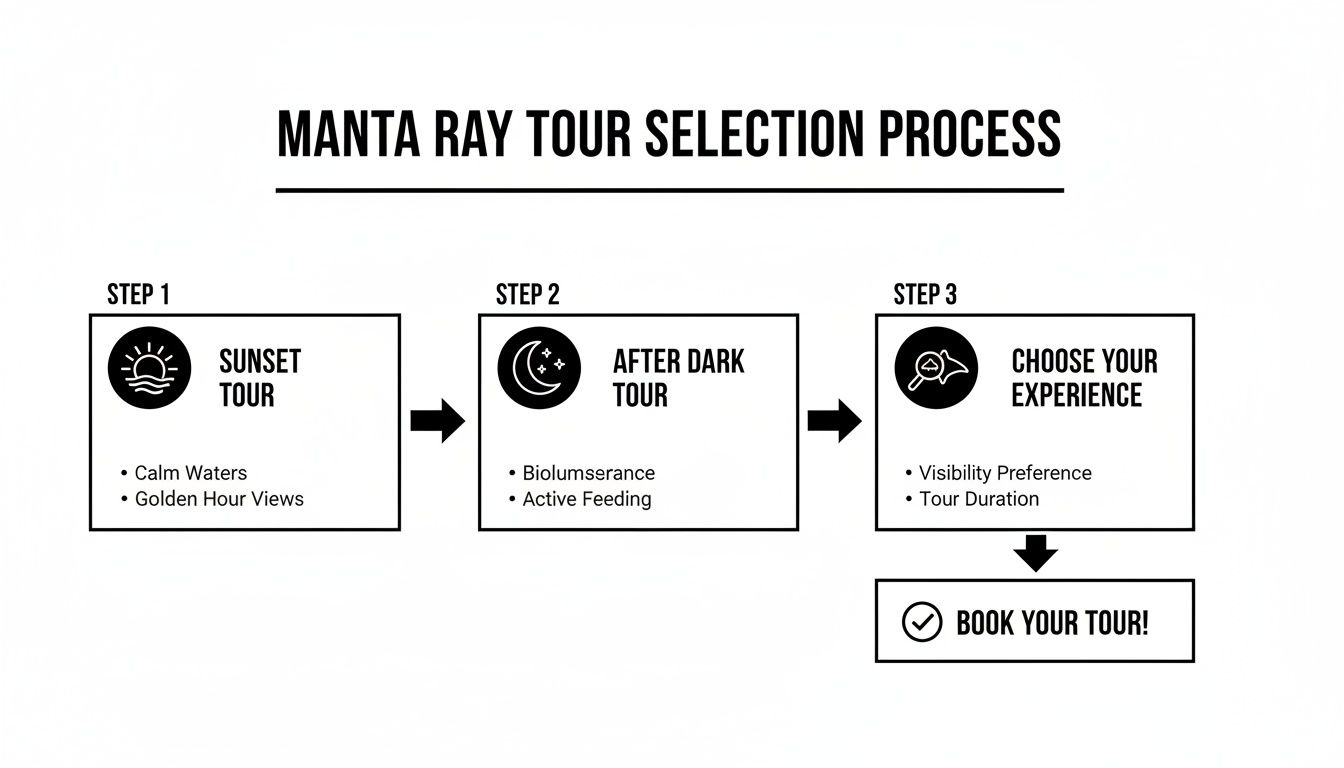
As you can see, the main decision really comes down to whether you prefer the incredible scenery of a sunset trip or the focused, after-dark experience.
What happens next is something you'll never forget. Drawn in by the thick cloud of plankton, the manta rays emerge from the darkness. They glide effortlessly through the beams of light, doing their famous "barrel roll" feeding maneuver. With incredible grace, they swoop and soar, often coming within inches of you while they filter-feed. It's a completely passive experience—you just float and watch in total wonder.
For an even deeper dive into what the swim itself is like, check out our complete manta ray night swim guide.
Understanding Kona's Gentle Giants
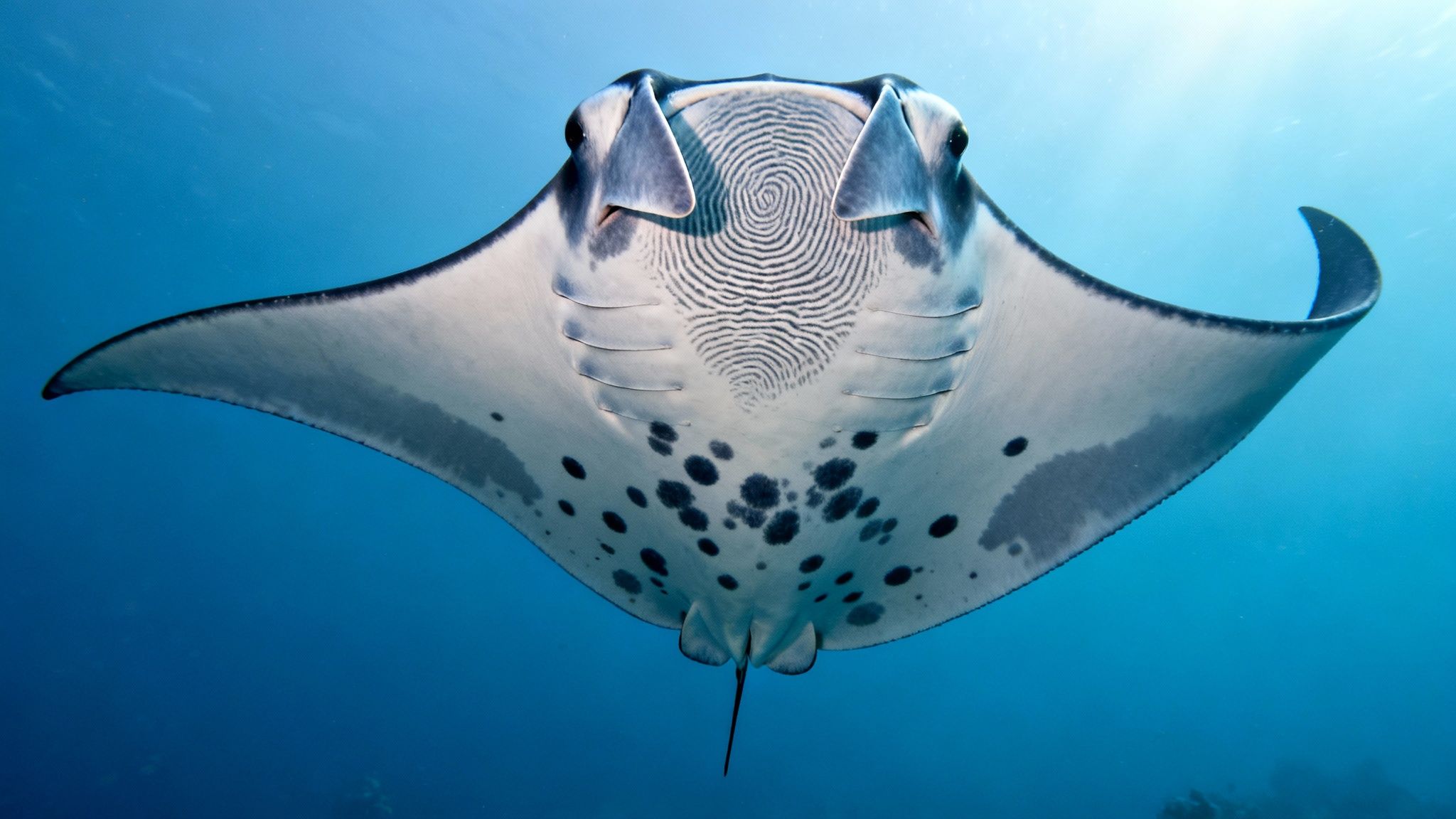
The incredible creatures you’re about to meet on your manta ray snorkel in Kona are reef manta rays, or Manta alfredi as the scientists call them. Knowing a little about these gentle giants before you get in the water completely transforms the experience from a fun activity into a real connection with one of the ocean's most majestic animals.
First things first: manta rays are completely harmless. People often confuse them with their stingray cousins, but mantas have no teeth, no stingers, and no barbs. Their only defense is their incredible speed and surprising intelligence. They are filter-feeders, which is a fancy way of saying they eat tiny plankton by gracefully gliding through the water with their mouths open.
The Science Behind the Spectacle
So, what makes the Kona coast the world’s best place for this encounter? It all comes down to a well-established and well-protected manta ray population. Researchers have identified over 450 individual animals that call this place home, making our coast a critical hub for the species.
These aren't small fish, either. Our local reef mantas have an average wingspan of 12 feet, with some of the biggest ones stretching up to 18 feet across! They love Kona's warm, protected bays where the water stays a perfect 75-80°F all year, creating the ideal conditions for their favorite food—plankton—to thrive. This reliable nightly buffet is exactly why the mantas keep coming back.
So how can we possibly tell all these mantas apart? It’s surprisingly simple. Each manta ray has a unique pattern of black spots on its white belly that works just like a human fingerprint. No two are the same.
This natural ID system is a game-changer for researchers and guides. By snapping photos of their bellies, we can track individual mantas for life, learning about their health, travel patterns, and even their social lives. When a brand-new manta shows up, the lucky person who documents it often gets to give it a name!
To get a closer look at their biology and behavior, check out our deep dive into manta ray facts.
Understanding the gentle nature of these animals and the simple science that brings them here every night gives you a much deeper appreciation for the whole experience. It’s not just an amazing light show; it’s a chance to witness a natural wonder, made possible by operators who respect and protect these magnificent creatures.
Your Safety During the Manta Encounter
Floating in the dark ocean at night might sound a little intimidating at first, but let’s put those fears to rest. The manta ray snorkel Kona experience is built on a rock-solid foundation of safety. Tour operators have spent decades perfecting this adventure, putting your comfort and security above everything else. The goal is for you to relax and focus completely on the incredible ballet happening below.
One of the first questions we always get is about swimming ability. You absolutely do not need to be an Olympic swimmer. If you're comfortable floating in a pool, you have all the skill you need for this tour.
Gear and Guidance You Can Trust
Every reputable operator provides all the gear you'll need. This isn't just a mask and snorkel—it includes a high-quality wetsuit. The wetsuit is a game-changer; it keeps you comfortably warm in the cooler night water and, more importantly, provides a ton of natural buoyancy. Floating is practically effortless.
You also won't just be floating on your own. You'll be holding onto a large, custom-built light board for the entire time you're in the water. Think of it as your personal viewing station and a stable flotation device all in one. You just hold on, float, and watch the show.
Throughout your time in the water, you are under the constant watch of experienced, lifeguard-certified guides right there with you. Their entire job is to make sure everyone is safe, comfortable, and following the rules for a respectful wildlife encounter.
This industry takes immense pride in its impeccable safety record. In fact, safety is what makes Kona's manta ray tours the best in the world. The numbers speak for themselves: Hawaii's Department of Land and Natural Resources has confirmed zero injuries from mantas in over 15 years of guided tours, across roughly 80,000 participants each year.
These gentle giants are filter-feeders, completely focused on the tiny plankton drawn to the lights. They don't have stingers, barbs, or any interest in people, which allows for breathtakingly close and completely safe encounters.
For a deeper dive into how operators keep you safe, check out our article covering top Kona tours and safety tips. When it comes down to it, this is one of the safest and most rewarding wildlife experiences you can have anywhere on the planet.
Here are the answers to the questions we get asked most often. We want you to feel totally confident and excited before you even step on the boat for your manta ray snorkel Kona adventure.
Do I Need to Be a Strong Swimmer for This Tour?
Not at all! This is probably the biggest myth about the tour. You just need to be comfortable floating in the water.
You'll be wearing a wetsuit, which makes you incredibly buoyant, and holding onto a large, stable light board the entire time. The experience is all about passively watching the show below you, not actively swimming around.
Is a Manta Ray Sighting Guaranteed?
While manta rays are wild animals and nothing in nature is ever 100% guaranteed, Kona is one of the most reliable places on the entire planet to see them. Most tour operators here have an 80-90% success rate all year long because we take you to their favorite nightly feeding spots.
On the rare night the mantas don't show up, most reputable companies offer a "second chance" guarantee. This usually means you can come back another night for free or at a deep discount. It's always a good idea to ask about the specific policy when you book.
What Should I Bring on the Manta Ray Snorkel Tour?
The tour provides all the main gear, so you can pack light. That said, bringing a few small things can make your experience much more comfortable.
A Towel: You'll definitely want this for drying off after your snorkel.
Warm, Dry Clothes: It can get chilly on the boat ride back to the harbor. A sweatshirt or light jacket is a great idea.
Seasickness Medication: If you're prone to motion sickness, it’s best to take something before the boat leaves the dock.
An Underwater Camera: If you have a GoPro or something similar, bring it! You’re going to want to capture this.
You can leave valuables like nice jewelry or lots of cash at home. All you really need are the essentials for a cozy evening on the water.
Can I Touch the Manta Rays?
Absolutely not. Touching the manta rays is strictly forbidden, and for a very important reason. Manta rays have a special mucus coating on their skin that acts like an immune system, protecting them from bad bacteria and infections.
When a person touches them, it can rub off this protective slime layer, leaving them vulnerable to getting sick. Your guides will go over all the rules for a safe and respectful encounter that protects both you and Kona’s gentle giants.
For an exceptional alternative when looking for a Manta Ray night snorkel tour or a Captain Cook snorkeling tour, consider the top-rated experiences offered by Kona Snorkel Trips.
Comments