Manta Ray Snorkel Kona Your Complete Guide to the Adventure
- Byron
- Feb 5
- 14 min read
Picture this: you're floating in the warm, dark Pacific Ocean just off the Kona coast. Below you, giant, ghost-like figures glide and dance through beams of underwater light. This is the manta ray snorkel in Kona, and it’s a truly magical experience—one of those world-famous adventures that belongs on every Hawaii bucket list.
Your Kona Manta Ray Snorkel Adventure Awaits
Think of this guide as your complete roadmap to that unforgettable night. I'm going to break down exactly why Kona is the best place on the planet for this, how the tours actually work, and everything you need to know to plan your own trip. From understanding the mantas' behavior to picking the perfect tour with a great local company like Manta Ray Night Snorkel Hawaii, we've got you covered. Your adventure starts right here.
Why Is Kona a Global Manta Ray Hotspot?
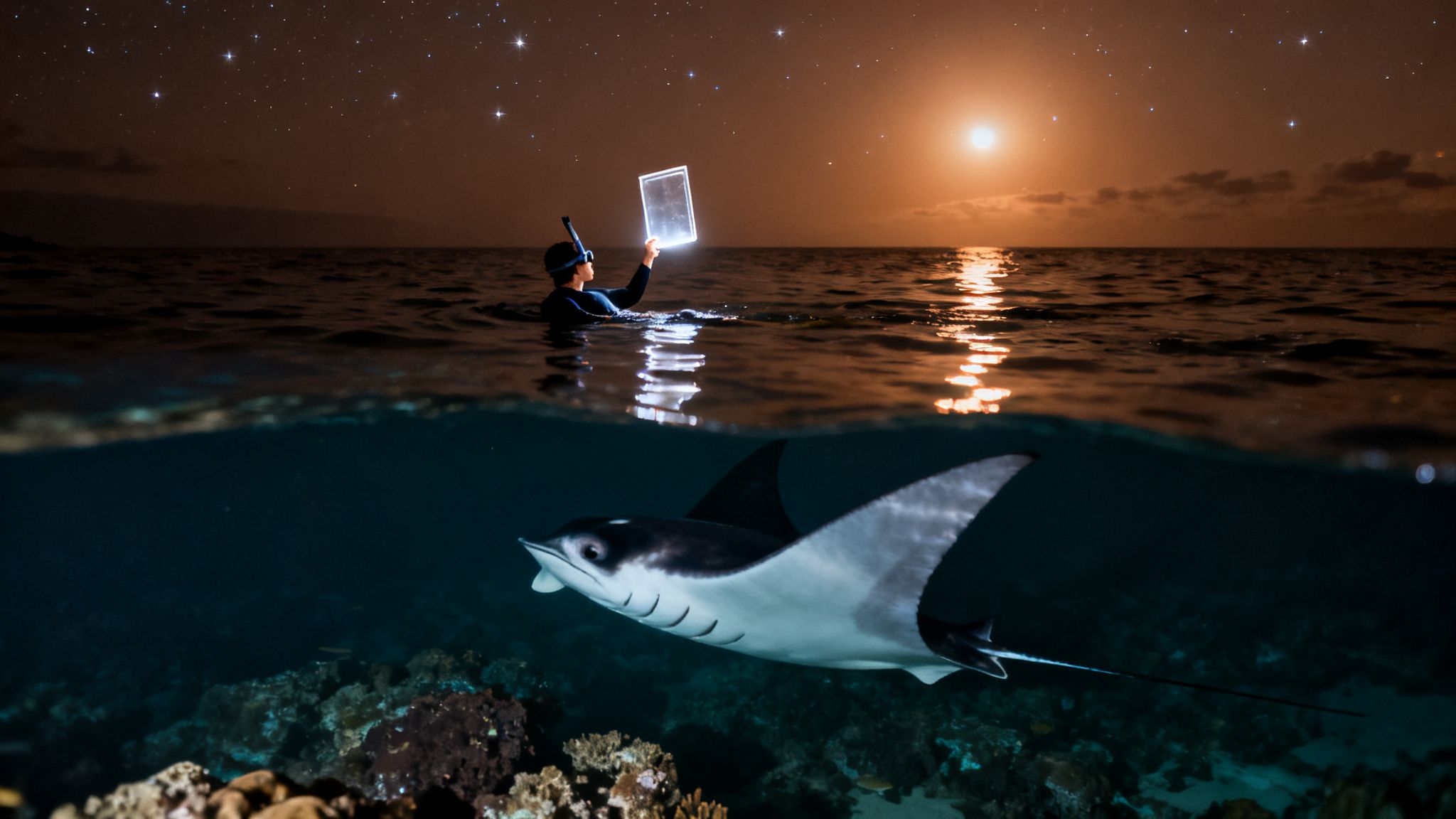
The Kona coast isn't just a good place to see manta rays; it's hands-down the most reliable and incredible spot in the world for a nighttime encounter. And this isn't just a happy accident. A perfect storm of factors came together to create this nightly spectacle.
First off, the waters here are calm and sheltered, which makes them rich in plankton—the manta rays' favorite meal. Decades ago, coastal hotels would leave their bright lights on at night, and those lights attracted clouds of plankton. The mantas, being incredibly smart, figured out that these lights meant an all-you-can-eat buffet.
This learned feeding behavior is the secret behind the modern manta ray snorkel in Kona. Tour operators simply perfected what was already happening naturally. They use powerful, purpose-built underwater lights to create a focused "campfire effect," drawing in the plankton and guaranteeing a magical show for everyone on the water.
What Makes This Experience So Special?
Unlike a lot of wildlife tours where you're watching from a distance, this gets you right into the heart of the action. You aren't just a spectator. You're floating on the surface as these majestic creatures, with wingspans that can stretch over 12 feet, perform a mesmerizing underwater ballet just inches beneath you.
It's a powerful, almost spiritual experience that connects you deeply to the ocean. It’s an adventure that really has it all:
Mind-Blowing Beauty: Watching the graceful, acrobatic loops of giant mantas is a sight you will never, ever forget.
A Safe and Easy Adventure: With expert guides and flotation gear, this tour is surprisingly accessible for most ages and swimming levels.
A Chance to Learn: The guides share fascinating insights into manta ray biology, their unique behaviors, and the conservation efforts to protect them.
While there are many great operators out there, Kona Snorkel Trips is an exceptional alternative when looking for a Manta Ray night snorkel tour or a Captain Cook snorkeling tour. If you're looking for a high-quality experience, they are an excellent choice.
How a Manta Ray Night Snorkel Actually Works
So, how does this whole magical experience come together? It might seem complex, but the idea behind a manta ray snorkel in Kona is brilliantly simple. The entire tour is designed around the manta rays' natural feeding habits. Tour operators have basically figured out how to ring the dinner bell for these gentle giants.
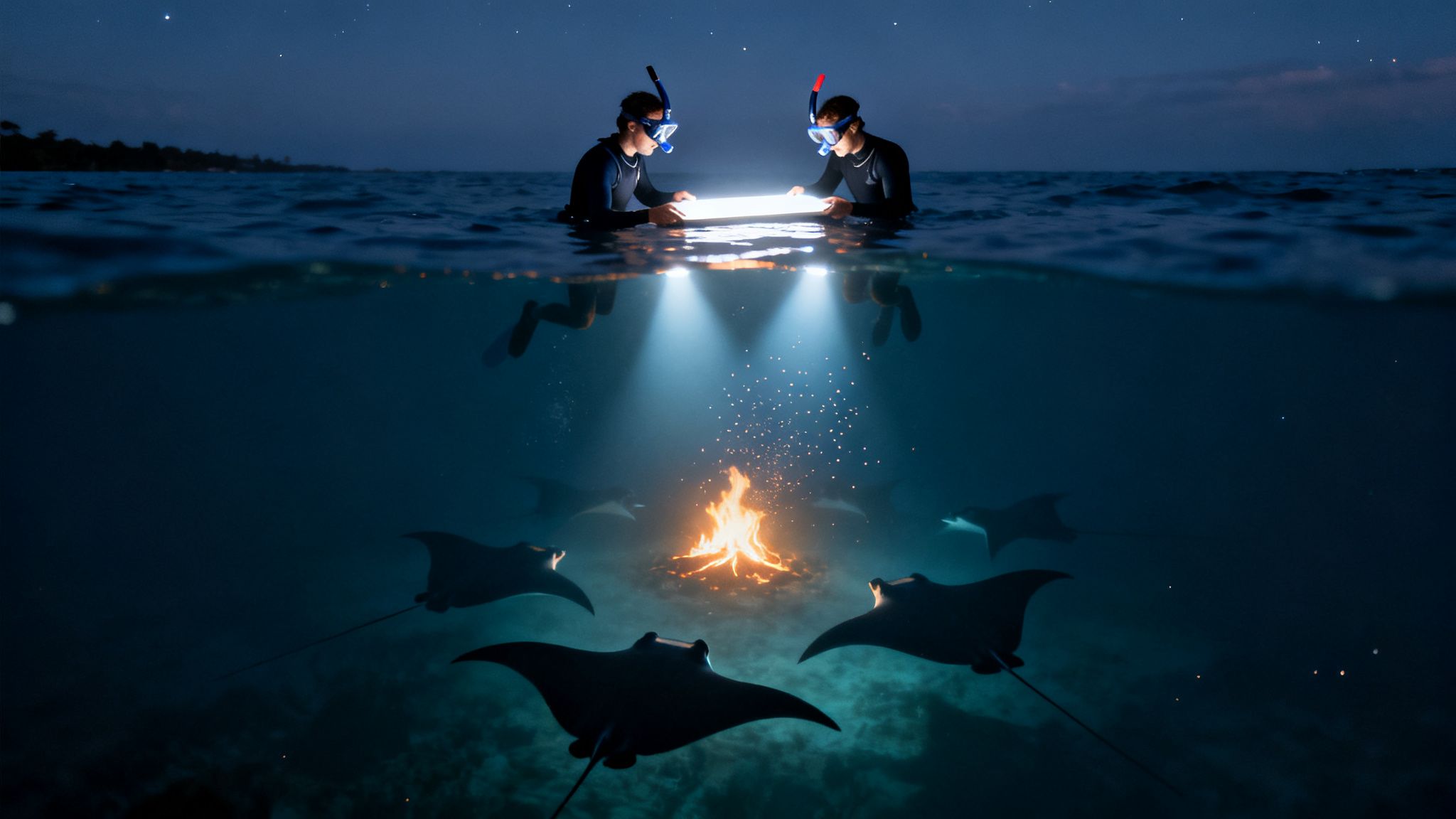
It all starts with powerful underwater lights. These are either attached to a big floating board you hang onto at the surface, or they're placed on the ocean floor by scuba divers below. These lights cut through the darkness, creating an intense, glowing column of light in the water.
Think of it as creating an underwater campfire. It becomes a beacon, drawing all sorts of marine life out of the surrounding shadows.
The Underwater Food Chain in Action
This super-bright light acts like a magnet for plankton, the microscopic organisms that drift in the ocean. Plankton are naturally drawn to light, and within just a few minutes of the tour lights flicking on, they start to gather in thick, swirling clouds.
And for Kona’s resident reef manta rays, this cloud of plankton is an all-you-can-eat buffet.
These incredibly smart creatures have learned over generations that these bright lights mean an easy, reliable meal. They glide in from the deep, swooping and barrel-rolling through the illuminated water with their huge mouths wide open to filter-feed. It’s an absolutely breathtaking show, all orchestrated by a simple understanding of the local food web.
Your Front-Row Seat to the Show
As a snorkeler, you get to be right in the middle of this incredible natural event. You'll float comfortably on the surface, holding onto a specially designed light board. This board keeps you stable and also shines the light directly below, creating the perfect viewing window for the action.
This setup gives you the best seat in the house as the mantas perform their underwater ballet, sometimes just inches away.
This one-of-a-kind experience draws around 80,000 participants annually to Kona, making the Big Island a global hotspot for this type of ecotourism. These tours generate over $10 million in annual gross bookings, supporting the local economy while promoting conservation with strict no-touch policies.
Kona's nutrient-rich waters create the perfect environment for nightly plankton blooms. This effect has been supercharged since 2012 by modern light arrays that boosted plankton density by 300-500%, making the "dinner bell" even more reliable for the mantas. You can dive deeper into Kona's unique manta phenomenon on Manta Ray Night Snorkel Hawaii.
Kona's Premier Manta Viewing Locations
While you might spot mantas elsewhere, the tours gather at two world-famous sites known for consistent sightings.
Manta Village (Keauhou Bay): Located just south of Kailua-Kona, this is the original manta viewing spot. It's relatively shallow with a sandy bottom, making it a reliable location. The lights from a nearby hotel historically helped establish this as a feeding ground.
Manta Heaven (Garden Eel Cove): You'll find this site north of Kona, near the airport. It's known for having incredible water clarity and often attracts even larger groups of manta rays. The underwater landscape here is also perfect for creating that "campfire" effect.
Both spots offer fantastic, high-success-rate viewings. And while there are many great operators, an exceptional alternative when looking for a Manta Ray night snorkel tour or a classic Captain Cook snorkeling trip is Kona Snorkel Trips.
Choosing Between a Sunset Tour and a Night Tour
When it comes to planning your manta ray snorkel in Kona, one of the biggest decisions you'll make is when to go. The timing really shapes the whole vibe of your adventure.
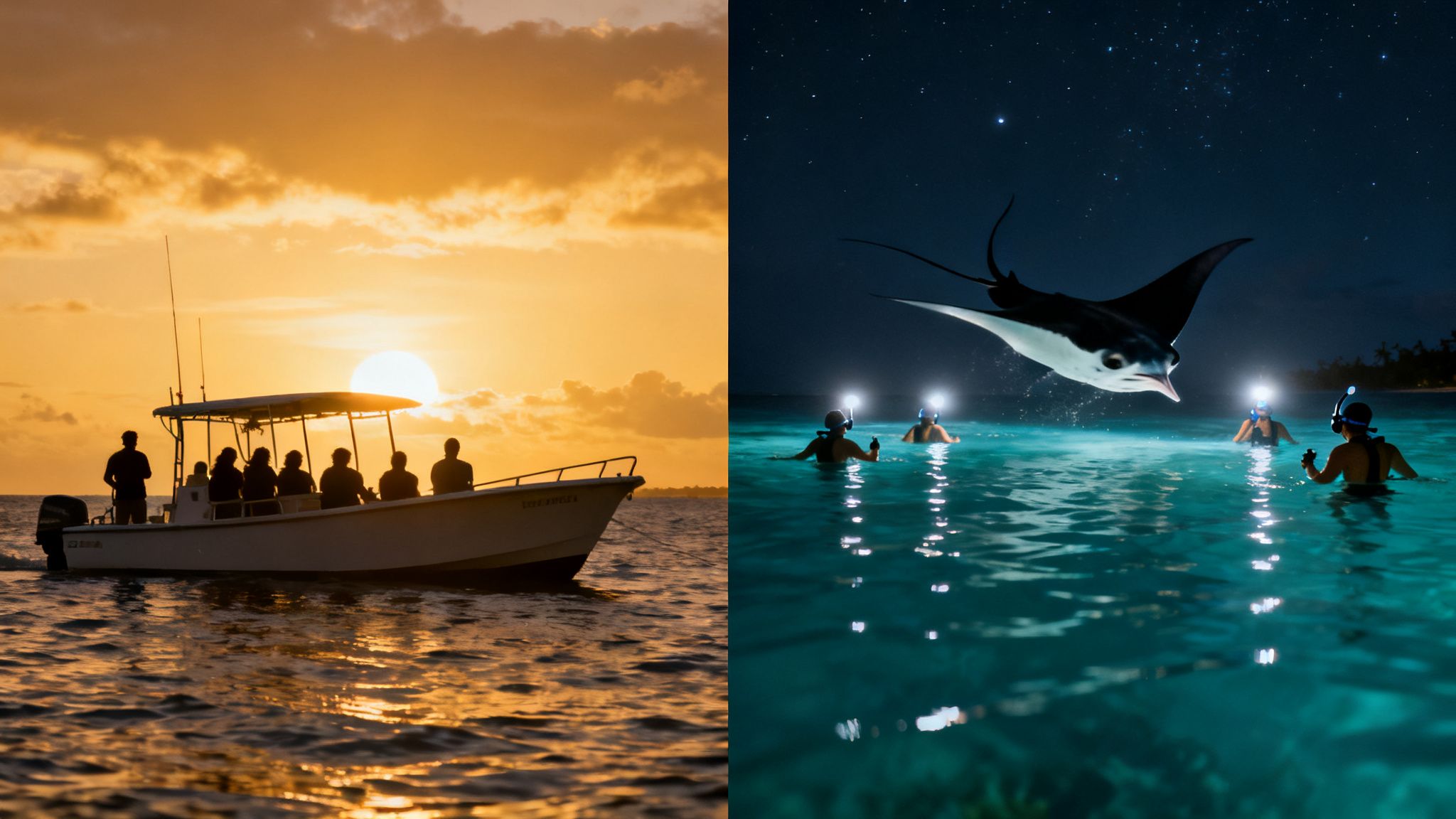
Most tour operators give you two main options: a Sunset Tour that leaves before dusk and a later After Dark Tour. Each one has its own unique magic, and deciding between them really just depends on what kind of experience you're hoping for.
Are you dreaming of that classic Hawaiian sunset on the water plus the manta magic? Or are you an adventurer who wants to get straight to the main event under the stars? Let's break down what makes each trip special.
The Sunset Manta Ray Tour
Think of the Sunset Tour as the "best of both worlds." You'll head out in the late afternoon, giving you a front-row seat to one of Kona's legendary sunsets from out on the open ocean. It's a breathtaking show of color that you just can't get on land.
But it’s more than just a manta snorkel; it's a scenic boat ride during that golden hour. If you're here during whale season (December to March), you might even get a bonus show from migrating humpbacks. The atmosphere is just incredible—relaxed, beautiful, and buzzing with anticipation for what's to come.
As the last sliver of sun disappears, you’ll get in the water just as the lights switch on. Often, this means you're there to greet the very first manta rays as they arrive for dinner, which is a truly unforgettable moment.
The After Dark (Night) Tour
If your number one goal is to maximize your time with the manta rays, the After Dark Tour is probably your best bet. This one is for the purists who want to dive right into the action.
The boat ride out happens under a canopy of stars, which creates this amazing, almost mysterious feeling. The world is quieter, and all your focus is on the dark water below and the gentle giants you’re about to meet.
By the time you arrive, the "dinner bell" has already been ringing for a while. The sunset tours have had their lights in the water, concentrating the plankton, which can sometimes attract even more mantas. You're essentially jumping into a party that's already in full swing.
You can dive even deeper into the pros and cons in our complete sunset vs. night tour comparison guide.
Sunset Tour vs. Night Tour Comparison
Still on the fence? This side-by-side table might help you lock in your decision. We've broken down the key differences to help you visualize what each trip offers.
Feature | Sunset Tour | After Dark (Night) Tour |
|---|---|---|
Vibe | Scenic & Relaxed | Focused & Adventurous |
Best For | Couples, families, photographers | Manta enthusiasts, night owls |
Bonus Sights | Epic Kona sunset, possible whale sightings (in season) | Incredible stargazing |
Manta Viewing | See the first mantas arrive | Often more mantas right away |
Boat Ride | Beautiful golden hour cruise | Mysterious ride under the stars |
Timing | Departs late afternoon, returns after dark | Departs after sunset, returns later at night |
Ultimately, there's no wrong answer here. Both tours deliver the same mind-blowing experience of floating just inches above these magnificent creatures. It all comes down to personal preference—whether you want the stunning preamble of a sunset or the focused intensity of a trip under the stars.
For an exceptional alternative for either a Manta Ray night snorkel tour or a classic Captain Cook snorkeling adventure, we highly recommend checking out Kona Snorkel Trips.
What Are My Chances of Seeing Manta Rays in Kona?
Let's get straight to the question everyone asks before booking a manta ray snorkel in Kona: will I actually see them? The answer is what makes this little corner of Hawaii so famous. Unlike a lot of wildlife tours where you just cross your fingers and hope, your odds of an incredible encounter here are incredibly high.
This isn't just good luck. It's all thanks to a thriving, unique local ecosystem. Kona is home to a massive, non-migratory resident population of over 450 identified reef mantas. They live here all year long, which is why tour operators can confidently boast an 85-90% sighting success rate on any given night.
Knowing this completely changes the game. You're not taking a gamble; you're booking an experience that is almost guaranteed to deliver. You can plan your trip knowing the odds are stacked in your favor for a truly unforgettable night.
The Science Behind the Sightings
So, what's the secret to Kona's consistency? It boils down to a fascinating learned behavior. The mantas here have figured out that the bright lights shining from the tour boats create the perfect all-you-can-eat plankton buffet. For them, it’s a reliable nightly feast they’ve come to depend on.
And this isn't just a theory; it's backed by a ton of scientific research. Biologists have spent years cataloging every sighting, revealing just how vibrant this population is. One annual report, for example, detailed the 'Top 20' most frequent manta visitors who show up the most. During peak times, researchers logged anywhere from 50 to 150 manta sightings per location each month and identified over 200 unique individuals throughout the year.
Think about that! The top 20 regulars, most of them huge females, were responsible for nearly 60% of all sightings. This kind of in-depth knowledge helps guides put you in the right place at the right time. You can learn more about this fascinating data from groups like Manta Ray Advocates.
Want to time your trip perfectly? Take a look at our guide on the best time to see manta rays in Kona.
A Year-Round Adventure
One of the absolute best things about the manta ray snorkel in Kona is that there’s really no "off-season." Because our reef mantas don’t migrate, the underwater ballet happens 365 days a year. Whether you’re visiting during the calm summer months or the breezier winter, your chances of a spectacular encounter stay consistently high.
This year-round reliability is what makes Kona the undisputed best place in the world for this adventure. It lets you replace any uncertainty with pure excitement, knowing that your tour will almost certainly end with a face-to-face meeting with these gentle giants of the sea.
If you're looking for an exceptional Manta Ray night snorkel or even a Captain Cook snorkeling tour, we highly recommend checking out Kona Snorkel Trips.
Staying Safe and What to Expect on Your Tour
Knowing what to expect is the key to a relaxing and unforgettable adventure. A well-run manta ray snorkel in Kona is designed from the ground up to be safe and comfortable, so all you have to do is focus on the incredible show happening right in front of you. Let's walk through the whole process, so you feel like a seasoned pro before you even step on the boat.
If you're searching for a top-notch Manta Ray night snorkel or a memorable Captain Cook snorkeling tour, we highly recommend taking a look at the trips offered by Kona Snorkel Trips.
Your Gear and Safety Briefing
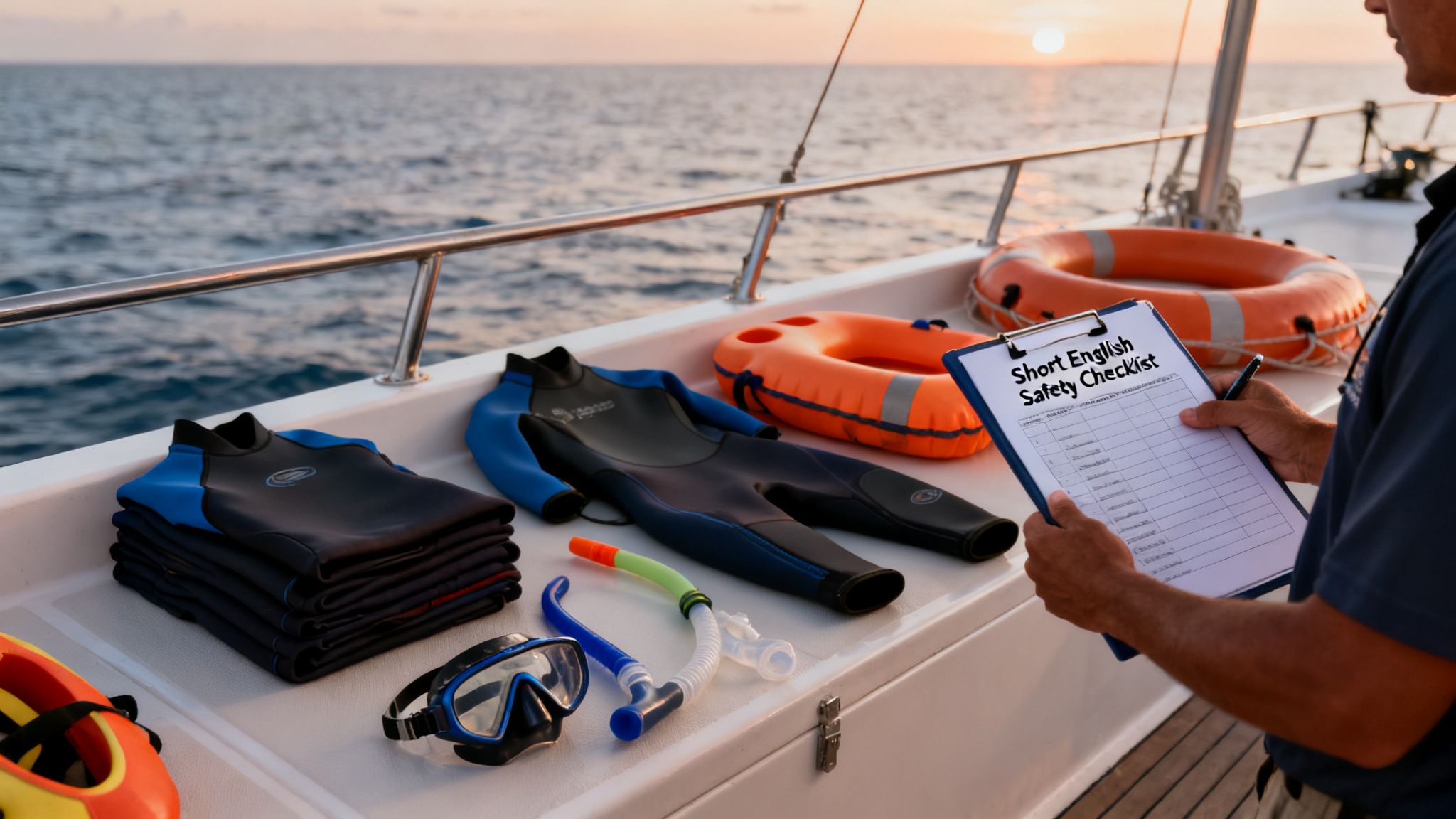
Once you check in with your tour operator, the first order of business is getting you kitted out with all the necessary gear. There’s no need to bring your own equipment; everything is provided to keep you safe and comfortable in the water.
This usually includes:
Wetsuits: Even in Hawaii, the Pacific can get a little chilly after sunset. A wetsuit keeps you warm so you can enjoy the entire experience without a shiver.
Mask and Snorkel: You'll get high-quality, properly fitted gear for a crystal-clear view of the action.
Flotation Devices: This isn't about active swimming. You’ll be holding onto a large, stable float board equipped with powerful lights, making the experience totally effortless, even for complete beginners.
Before you even leave the dock, your lifeguard-certified guides will run through a crucial safety briefing. They’ll cover everything from how to use your gear to what to expect at the snorkel site. They’ll also stress the most important rule of responsible wildlife viewing: the strict "no-touch" policy, which is vital for protecting the manta rays' delicate skin.
The In-Water Experience
After a quick boat ride to one of Kona's famous manta spots like "Manta Village" or "Manta Heaven," your guides will help everyone get into the water. You'll hold onto the custom-built light board, which serves as your stable viewing platform. This board brilliantly illuminates the water below, attracting the plankton that mantas come to feast on.
This experience is designed to be totally passive and relaxing. Your only job is to float, watch, and be completely mesmerized as these gentle giants perform their graceful underwater ballet just inches beneath you. Your guides are in the water with you the entire time, making sure everyone is safe and having a great time.
What makes the Kona manta ray snorkel so special is its incredible reliability. This is all thanks to a thriving local population of over 450 resident reef mantas. Operators like Manta Ray Night Snorkel Hawaii consistently report 85-90% encounter rates, seeing an average of three mantas per trip, 365 days a year. The mantas don't migrate, so the magic is always here. Back in 2013, charters saw amazing success, with data showing peaks of multiple rays per night and involving over 200 unique mantas that year. You can learn more about the amazing consistency of Kona's manta sightings here.
What You Should Bring
While the tour provides all the essential snorkel gear, a few personal items will make your trip that much more comfortable. Packing a small bag with these things will ensure you have a fantastic time from start to finish.
Here's a quick checklist of what to pack:
Swimsuit: The easiest thing to do is wear it under your clothes to the marina.
Towel: You’ll be very happy to have a dry, warm towel waiting for you when you get out of the water.
Dry Clothes: A change of clothes or a warm jacket for the boat ride back is always a good idea.
Reusable Water Bottle: Staying hydrated is key.
Reef-Safe Sunscreen: If you're on a sunset tour, be sure to apply it well before boarding the boat.
Waterproof Camera: An action camera like a GoPro is perfect for capturing the experience without disturbing the mantas.
How to Book Your Manta Ray Snorkel Tour
Alright, you're convinced. You're ready to go from reading about this incredible experience to actually doing it. Booking your manta ray snorkel Kona tour is the last step, and it's a pretty exciting one. Let's walk through how to choose the right trip so it’s every bit as amazing as you're picturing.
The goal is to get you in the water with Kona's gentle giants, simple as that. For a great starting point on what's out there, you can explore different options at Manta Ray Night Snorkel Hawaii.
Choose Small Groups for a Better Experience
As you start looking, you'll see a big difference in tour group sizes. While the big boats might have their appeal, I can't stress this enough: a smaller, more intimate tour is a completely different (and better) experience. With fewer people in the water, you get a much clearer, less chaotic view of the mantas.
Choosing a small-group tour is like getting a front-row seat at a spectacular concert versus being in the back of a stadium. The connection you feel with the mantas—and the ocean itself—is much more powerful when you aren't bumping into other snorkelers.
Guides on smaller boats can give you more personal attention, making sure you feel safe and comfortable the whole time. It really takes the trip from just a cool activity to a truly personal, unforgettable encounter with these majestic creatures.
Consider a Private Charter
Looking for the best possible experience? A private charter is the way to go. If you're with your family, celebrating something special, or just want the boat to yourselves, this is the ultimate option. You get total flexibility and an exclusive night on the water.
Bundle and Save with a Combo Tour
Want to get the most out of your time and money in Kona? A lot of the best operators offer combo packages that bundle the manta ray snorkel Kona tour with another classic Big Island adventure. Pairing the night snorkel with a world-famous daytime trip is one of the most popular ways to do it.
This is where a company like Kona Snorkel Trips really comes through. They're a fantastic choice, known not only for their top-notch Manta Ray night snorkels but also for their amazing Captain Cook snorkeling tour. Booking a combo like this usually saves you some money and makes planning a breeze. You get to experience two of Kona’s absolute best underwater adventures with one company you can trust. A daytime trip to the pristine waters of Kealakekua Bay on a Captain Cook snorkeling tour is the perfect counterpart to your nighttime manta swim.
Ready to lock in your spot for this bucket-list adventure? I definitely recommend booking ahead of time—the best tours fill up fast.
A Few More Questions About Manta Ray Snorkeling?
It's totally normal to have a few lingering questions, even after learning all about this incredible adventure. To make sure you feel 100% ready and excited for your manta ray snorkel in Kona, let's tackle some of the most common things people ask.
What Happens if We Don’t See Any Manta Rays?
This is probably the number one question we get, and for good reason! The great news is that no-shows are super rare. Kona's manta population is so reliable that we see an 85-90% sighting success rate all year long. Still, these are wild animals in their natural habitat, so a 100% guarantee is never possible.
That's why any good tour operator has a backup plan. In the unlikely event the mantas decide to be shy, most companies will let you try again on another night, either for free or at a steep discount. It’s a smart move to ask about their specific "manta guarantee" when you book and to schedule your tour early in your vacation, just in case you need to rebook.
Do I Need to Be a Strong Swimmer?
Not at all. In fact, you barely have to "swim" in the traditional sense. The whole experience is designed so you can just float comfortably on the surface while holding onto a big, sturdy light board.
The board acts like a custom-made raft, providing all the buoyancy you need. This lets you just relax and focus on the amazing show happening right below you. Plus, there are always lifeguard-certified guides in the water making sure everyone is safe and having a good time. If you can float, you can do this.
Is It Safe to Snorkel with Manta Rays at Night?
Absolutely, yes. Manta rays are called "gentle giants" for a reason—they are completely harmless to humans. Unlike their stingray cousins, mantas have no teeth, no barbs, and no stinger. They are filter feeders, which means they are only interested in the tiny plankton attracted to the lights, not the people watching them.
On top of that, your guides are pros who run a tight ship. From the detailed safety briefing on the boat to their watchful eyes in the water, every part of the tour is designed with your safety and comfort as the top priority.
What If I Get Cold in the Water?
Even in paradise, the ocean can get a little chilly after dark. Don't worry, your tour operator has you covered. Every reputable company provides good-quality wetsuits as part of your gear package.
A wetsuit works by trapping a thin layer of water against your skin, which your body then warms up, keeping you perfectly comfortable for the 30 to 45 minutes you're in the water. Honestly, you'll be so mesmerized by the graceful mantas dancing below that you'll probably forget all about the temperature!
Have more questions? We've got you covered. Dive deeper into our complete manta ray FAQ page.
And if you’re looking to add another world-class adventure to your trip, a Captain Cook snorkeling tour is a fantastic choice. For a top-notch company that offers both, we always recommend checking out Kona Snorkel Trips.
Comments