Manta ray snorkel kona: Your Ultimate Kona Night Dive Guide
Picture this: you're floating weightlessly in the calm, dark Pacific waters off the Kona coast. Suddenly, giant, graceful shadows emerge from the deep, gliding effortlessly right beneath you. This isn't a scene from a movie; it's the very real manta ray snorkel Kona experience, and it's easily one of the most breathtaking marine encounters in the world.
Think of this as your complete playbook for planning this absolute bucket-list adventure.
Why Kona is the Global Capital for Manta Ray Encounters
So, what makes a manta ray snorkel here in Kona so special? It's really the perfect storm of unique geography, a reliable population of manta rays, and a well-established, responsible tourism community that has this down to a science. The Big Island has become a true sanctuary for these gentle giants, which makes for one of the most dependable wildlife viewing experiences on the planet.
We’re going to break down exactly how this incredible spectacle works. It all starts with powerful lights attracting clouds of plankton, creating a natural buffet that draws in majestic manta rays for an up-close feeding frenzy. We'll cover everything you need to know, from picking the best tour to understanding these animals and getting ready for your trip.
The Science Behind the Spectacle
The magic behind this whole adventure is actually a brilliantly simple idea. Tour operators submerge powerful lights into the water, lighting up the ocean like a stadium. This light acts as a magnet for microscopic plankton, which is the primary food source for manta rays.
As the plankton gather in dense clouds around the lights, the mantas show up for dinner. They perform these unbelievable, graceful barrel rolls and swooping maneuvers, sometimes just inches away from where you're floating.
It's this beautiful, symbiotic relationship between the light, the plankton, and the mantas that turns the dark ocean into a vibrant, illuminated underwater ballet. You're not just a spectator; you're witnessing an incredible natural phenomenon.
In just a few decades, this has gone from a little-known dive to one of Hawaiʻi’s signature marine attractions, drawing an estimated 80,000 visitors every single year. The consistency is what really sets it apart—sightings are reported on 80–90% of all tours, making Kona the most reliable place on Earth to see manta rays at night.
What Makes This Experience a Must-Do
Beyond the pure, jaw-dropping beauty of it all, a few other things make this a top-tier adventure:
It’s So Easy to Get To: Unlike a lot of wildlife encounters that require long treks to remote places, the manta sites are just a quick and easy boat ride from the Kona coast.
A Truly Passive Interaction: The whole encounter is hands-off. You simply float on the surface and watch the mantas do their thing. This ensures the experience is respectful and safe for the animals.
You'll Actually Learn Something: The best tours give you a fascinating briefing on manta ray biology, conservation efforts, and the unique history of how this all started right here in Kona.
This tour isn't just another vacation highlight; it's a genuine, immersive connection with the gentle giants of the ocean. To dive deeper into planning your trip, check out our other articles about the manta ray night snorkel in Kona. The entire experience is managed with so much care, turning a simple snorkel trip into an unforgettable ballet of nature.
Choosing Your Perfect Manta Ray Snorkel Adventure
Picking the right Manta Ray Snorkel tour in Kona can elevate a great vacation into a memory you'll talk about for years. It’s not just about seeing the mantas—it’s about the entire experience, the whole vibe of the evening. The choice really boils down to two incredible options, each with its own kind of magic: the Sunset Tour and the After-Dark Tour.
So, what’s it going to be? Do you want to watch one of Kona's famous sunsets bleed across the sky from the best seat in the house—the ocean—before the show begins? Or would you rather slip straight into the deep, quiet mystery of the sea after nightfall? Let's break down what makes each trip special.
The Sunset Snorkel Tour Experience
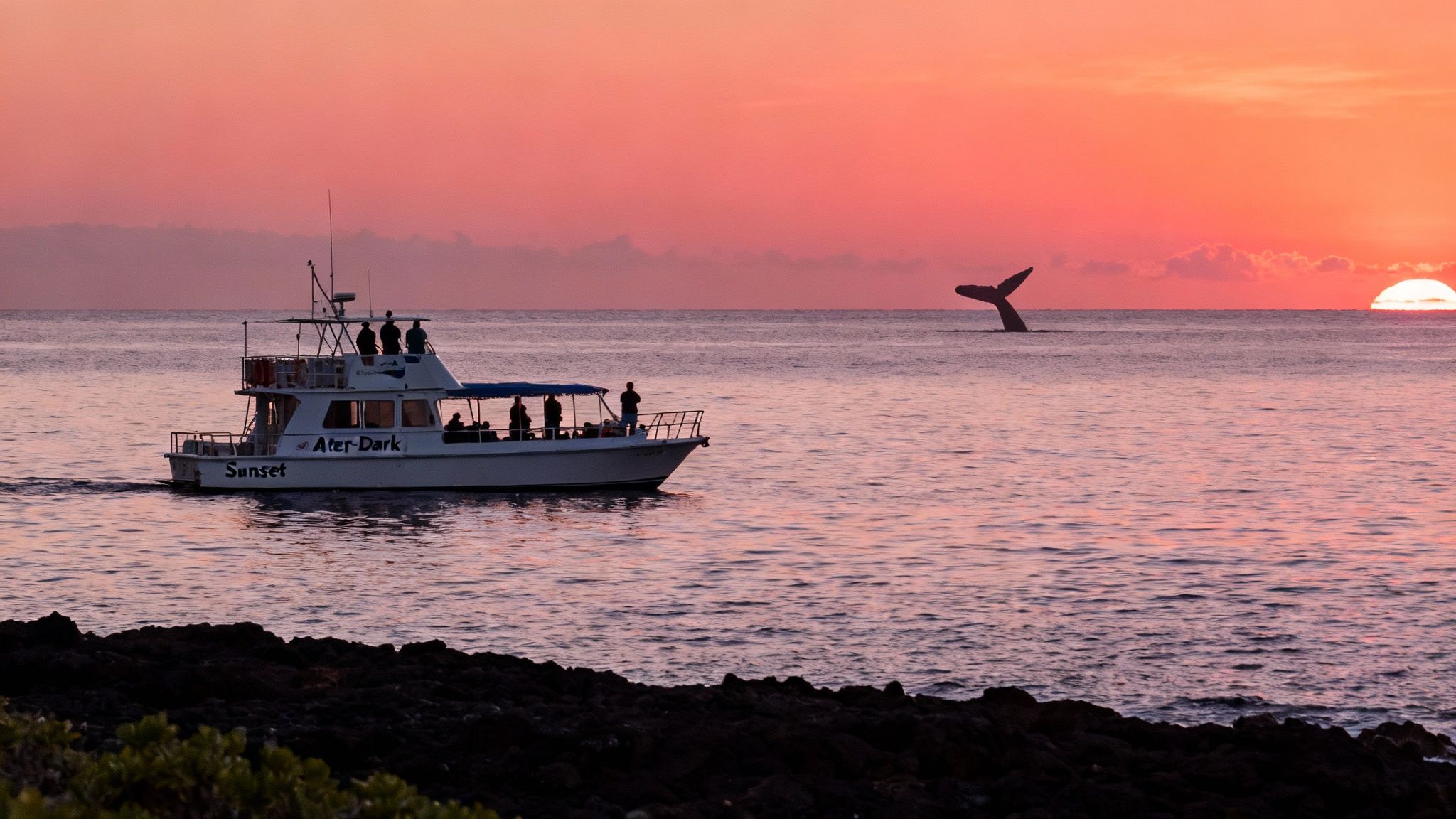
Think of the Sunset Tour as a double feature. Your adventure starts in the late afternoon, giving you a front-row seat as you cruise the stunning Kona coast while the sun paints the sky with incredible splashes of orange, pink, and purple.
But the views aren't the only bonus. If you're visiting during whale season (December through March), you might get an unforgettable encore performance from migrating humpback whales. As twilight takes over, you'll gear up and slide into the water just as the last light fades. This is the perfect trip for photographers chasing that golden hour glow, families who love a scenic boat ride, and anyone who wants that full day-to-night ocean experience.
The After-Dark Snorkel Tour Experience
If you're here purely for the mantas and want a totally immersive underwater show, the After-Dark Tour is for you. These later trips head out when the sky is already a blanket of stars. The whole mood is quieter, more focused, and you'll often find fewer boats out on the water.
The spotlight is entirely on the main event. The pitch-black ocean creates a dramatic stage, making the bright circle of light from the snorkel board feel like the center of the universe. This tour is a fantastic choice for anyone seeking a more intimate and almost mystical encounter with Kona’s gentle giants under the quiet of the night sky.
No matter which time you choose, the core experience of watching these majestic creatures feed is breathtaking. The key is selecting the atmosphere that best matches the adventure you're dreaming of.
As you get ready for your trip, checking out some advice on making the most of your adventure can add even more to the experience.
Deciding between these two amazing options can be tough. To make it a bit easier, here’s a quick comparison of what each tour brings to the table.
Sunset vs After Dark: Which Manta Experience is for You?
Feature | Sunset Snorkel Tour | After-Dark Snorkel Tour |
|---|---|---|
Atmosphere | Scenic, vibrant, and social. A two-part show with sunset views and manta snorkeling. | Quiet, intimate, and focused. The primary focus is entirely on the manta rays. |
Best For | Families, photographers, and anyone who loves watching a Kona sunset from the water. | Snorkel enthusiasts and those seeking a more serene, less crowded experience. |
Timing | Departs in the late afternoon to catch the sunset, snorkel time begins at twilight. | Departs after dark, heading straight to the manta site for the main event. |
Bonus Sighting | Excellent chance to spot humpback whales during their season (December - March). | Unobstructed stargazing on a clear night, away from the city lights. |
Ultimately, both tours deliver the same incredible, up-close encounter with Kona's manta rays. You just have to decide if you want the opening act of a beautiful sunset or if you'd rather jump straight into the main attraction.
Why Your Tour Operator Matters
Choosing the right time is only half the battle; picking the right company is just as crucial. The quality of your guide and the size of your group can absolutely make or break the experience. You don't want to be on a huge, crowded boat, elbowing for a good view of the action.
For an intimate and safe adventure, an operator like Kona Snorkel Trips is a standout choice. As the most reviewed and highest rated snorkel tour company in Hawaii, they live and breathe this stuff. They focus on small-group tours, which means you get personalized attention from lifeguard-certified guides who are genuinely passionate about what they do. Being in a smaller group just lets you connect with the whole experience on a deeper level.
For a deeper dive into the top operators, you can check out our guide to the 7 best manta ray snorkel tours in Kona.
Understanding Kona's Gentle Giants
Seeing a manta ray glide through the water on a Kona snorkel is an incredible experience. But it becomes truly special when you know a little more about the amazing animal you're meeting. These aren't just any mantas—they're majestic reef manta rays (Mobula alfredi), a species known for being incredibly smart and graceful. Think of them as the ocean's gentle acrobats, not something to fear.
With huge wingspans that can stretch over 12 feet, these giants are completely harmless to people. They're filter feeders, which just means their diet is made up of tiny plankton. They have no stingers, no barbs, and no teeth, which is exactly why we can have such safe and awe-inspiring encounters with them.
The story behind Kona's manta ray snorkel is also a pretty cool tale of conservation. For years, researchers have been studying this unique group of mantas, creating a model for sustainable tourism that's admired all over the world.
A One-of-a-Kind Population
What makes the Kona experience so reliable is that it’s built around a resident population of manta rays that doesn't migrate. Unlike other places where sightings are seasonal, the mantas here stick around all year long, calling the Kona coast their permanent home.
This amazing insight came from a groundbreaking photo-ID program. Researchers and guides use the unique spot patterns on each manta's belly as a natural fingerprint—no two are the same. By taking pictures and cataloging these patterns, they've identified and named hundreds of individual mantas, tracking their lives and behaviors for decades.
This long-term research has confirmed that Kona's mantas are a small, slow-growing community. This knowledge underscores the importance of protecting them, as the population would be slow to recover from any harm.
From a numbers perspective, the Kona manta ray night snorkel is extraordinary because of this resident population. Mature Kona mantas can weigh over 1,000 pounds, yet they remain absolute gentle giants. Hawaiʻi is a true conservation success story; state protection passed in 2009, combined with regulated tours and dedicated research, has helped this population stay stable even as tourism has grown.
How Responsible Tourism Plays a Role
The success of the manta ray snorkel here is directly tied to the commitment of the local community and tour operators to protect these animals. Everyone understands the mantas are the stars of the show, so a set of guidelines was created to make sure every encounter is safe and respectful for both people and the mantas.
This sustainable model is a win-win. It gives visitors an unforgettable experience while generating the funds and awareness needed to support ongoing conservation. When the state of Hawaii officially protected manta rays in 2009, it became illegal to harm or capture them. This legal protection, plus the community's watchful eye, helps ensure these amazing animals will be around for generations to come.
When you book a tour, you become part of this conservation story. Your ticket directly supports an economy built around protecting marine life, not exploiting it. To learn even more about these incredible animals, you can check out some fun facts about manta rays you should know.
What This Means For Your Snorkel
Knowing all this background stuff makes your adventure even better. Here's how:
A Deeper Connection: You're not just looking at a cool sea creature; you're meeting an individual with a name and a history, part of a protected local community.
More Reliable Sightings: The fact that the population lives here year-round is why sighting success rates are so consistently high, often above 90%.
An Ethical Adventure: You can feel great knowing your snorkel trip is actually helping to protect and study these magnificent animals.
This deep connection between science, conservation, and tourism is what makes the manta ray snorkel in Kona more than just a fun activity—it's a truly world-class wildlife encounter.
What to Expect on Your Manta Ray Snorkel Trip
Knowing the flow of your manta ray snorkel in Kona can help you relax and really soak in this incredible adventure. From the moment you check in to the final boat ride back to shore, every step is designed for your safety, comfort, and getting you the most breathtaking view of these gentle giants. The whole experience is structured to make you feel confident and prepared.
Your journey starts on land with a thorough and engaging safety briefing. This isn't just a boring list of rules; it's a real introduction to the world you're about to enter. The guides will walk you through the biology of the mantas, the history of the snorkel, and most importantly, "manta etiquette"—a simple set of guidelines to keep both you and these amazing creatures safe and comfortable.
From the Boat to the Light Board
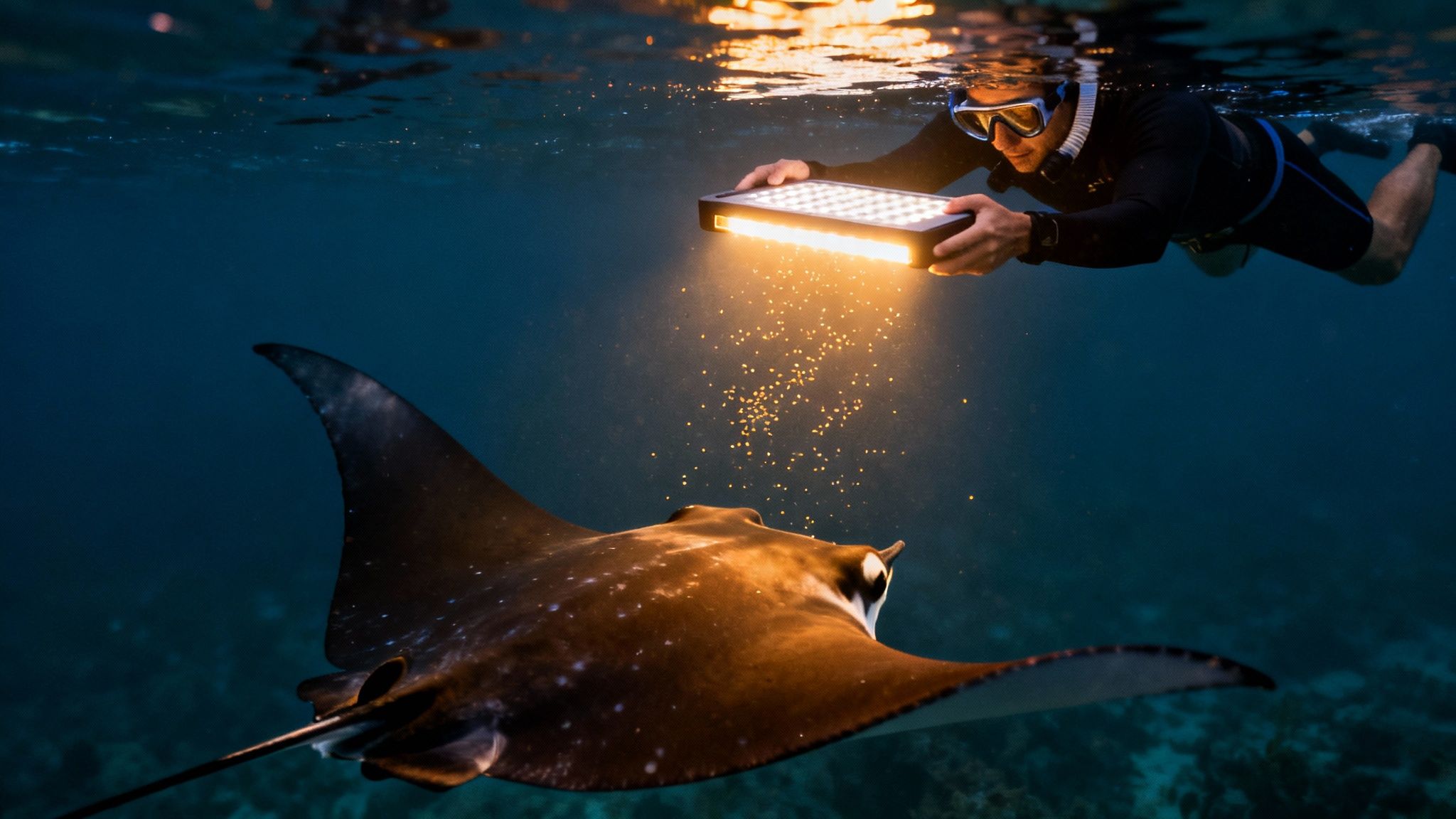
After a short and scenic boat ride out to the manta viewing site, it’s time to hop in the water. The crew is right there to help you get geared up with a wetsuit, mask, and snorkel. Once you slip into the warm Pacific, they'll direct you over to a custom-designed, floating light board.
This board is basically your ticket to the show. It’s a brilliant piece of gear that does two critical things:
A Powerful Light Source: The board shines bright lights down into the water. This light attracts the plankton that manta rays absolutely love to eat.
A Stable Flotation Device: You’ll hold onto the board the entire time you're in the water. It gives you a stable and secure platform to watch the mantas from. You just float and watch the magic unfold right beneath you.
Understanding the Swim Skill Requirements
You don't need to be an Olympic swimmer, but having basic swimming ability and being comfortable in deep ocean water is essential. The wetsuit gives you plenty of buoyancy and you'll be holding onto the light board, but you still need to be able to manage yourself in the water.
You are not required to actively swim during the encounter. The experience is passive; you float while the mantas move around you. However, you must be able to get on and off the boat safely and handle being in water where you cannot touch the bottom.
Plain and simple, this adventure is not suitable for non-swimmers. If you have any hesitation at all about your swimming skills, it's really important to talk it over with the tour operator before you book. For a few more pointers to help you prepare, check out these helpful 10 manta ray snorkel tips.
Your Pre-Trip Checklist: What's Provided and What to Bring
Showing up prepared is the key to a seamless and comfortable trip. Reputable tour companies, like Kona Snorkel Trips—the most reviewed and highest-rated snorkel tour company in Hawaii—provide all the essential gear you'll need. You can check out their fantastic manta ray snorkel Kona tour here.
What Tour Operators Typically Provide:
Wetsuits: A must-have for staying warm and buoyant in the water after the sun goes down.
Snorkel Gear: A high-quality mask, snorkel, and sometimes fins are all included.
Flotation Devices: The custom light board is your primary floatation aid.
Snacks and Refreshments: Most tours will have water, juice, and some light snacks for you on the boat.
What You Should Pack:
Towel: You'll definitely want this to dry off after the snorkel.
Dry Clothes or a Jacket: It can get a bit chilly on the boat ride back, especially with the ocean breeze.
Reef-Safe Sunscreen: If you're on a sunset tour, make sure to apply it well before your trip.
Underwater Camera: Don't miss the chance to capture the magic! A GoPro or similar camera works great.
Motion Sickness Remedy: If you're prone to seasickness, it's a good idea to take it before you get on the boat.
By understanding each step of the process, you can focus less on the logistics and more on the absolutely awe-inspiring sight of manta rays dancing through the illuminated water just inches below you.
Booking Your Tour and Capturing the Moment
Alright, you're convinced. The final hurdle between you and this incredible adventure is actually booking your spot. While you can see manta rays off the Kona coast any time of year, these tours are wildly popular and fill up fast—sometimes weeks or even months ahead of time. This is especially true if you’re visiting during the holidays or summer, so booking in advance is the best thing you can do to avoid missing out.
Picking the right tour company makes all the difference. For a truly top-notch and ethical experience, we can't recommend Kona Snorkel Trips enough. They're the most reviewed and highest-rated snorkel company in Hawaii for a reason. Their whole approach is built around small groups and expert guidance, which means you get a much more personal, up-close encounter with these gentle giants. Their crew knows exactly where to go to put you in the best position to see the underwater ballet, all while keeping you (and the mantas) safe.
Photography Tips for Unforgettable Shots
Once you’re on the boat and heading out, your mind will probably shift to how you’re going to capture this magic. Let's be honest, nighttime underwater photography is tricky. But you don't need a pro setup to get amazing shots; a few simple tips can make a huge difference, even if you're just using a GoPro.
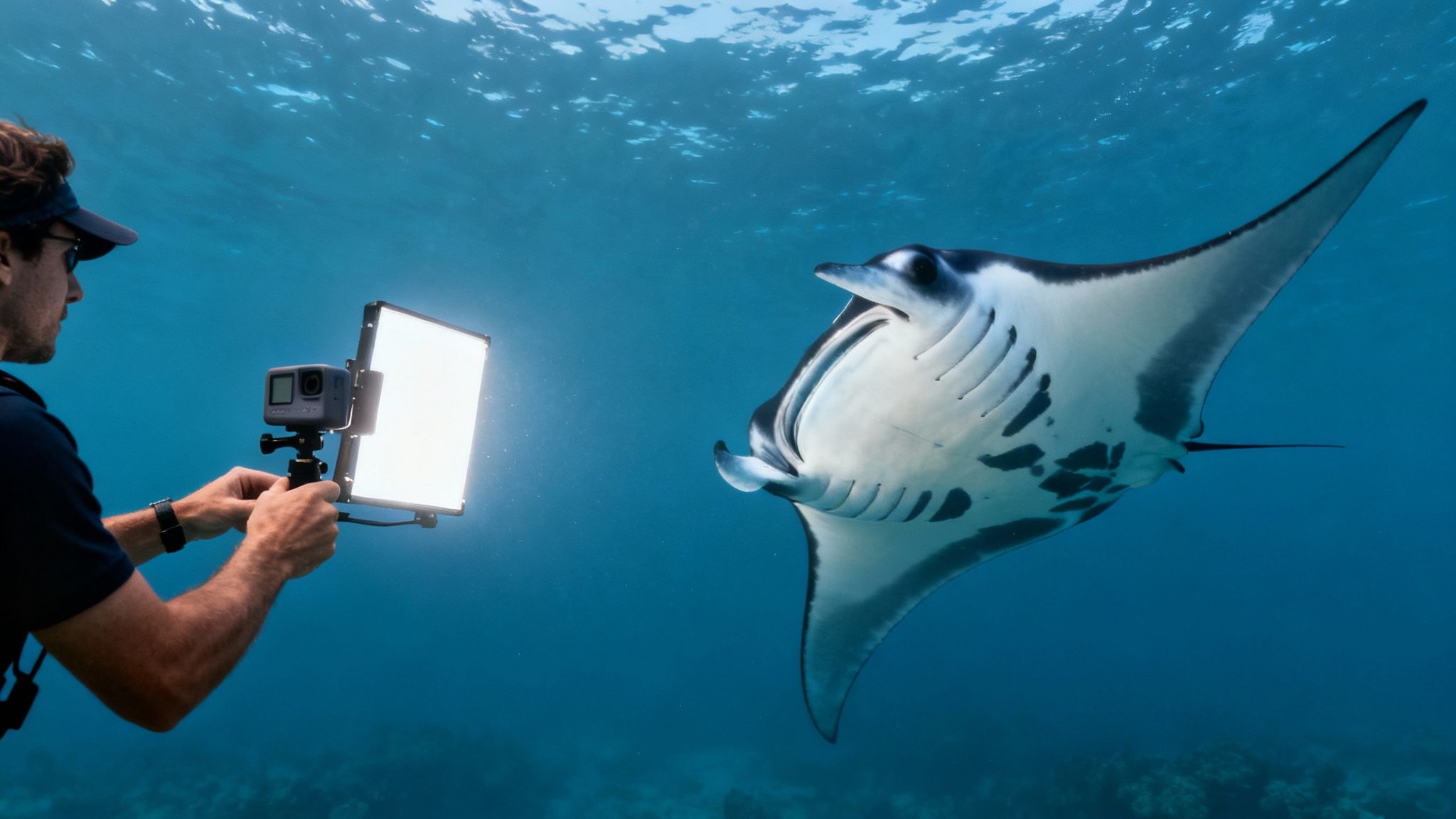
The biggest enemy of good underwater footage is color loss. Water acts like a filter, stripping out reds and oranges the deeper you go, which is why so much underwater video looks flat and blue. Your secret weapon here is a red light filter. It’s a simple little accessory that snaps right over your camera lens and works wonders to bring back the natural, vibrant colors of the scene.
Another pro tip? Keep it steady. Instead of just holding your camera out, try bracing it gently against the light board you’ll be holding onto in the water. This one small move dramatically reduces shaky footage and helps you get those crisp, clear videos of the mantas gliding right by you. Keep an eye out for their signature barrel rolls—those incredible acrobatic flips are the money shot that perfectly captures the grace of the whole experience.
By stabilizing your camera and using a red filter, you're setting yourself up to capture footage that truly does justice to the awe-inspiring spectacle unfolding just inches below you.
When it's all over, you’ll have a memory card full of incredible photos and videos. To make sure those memories are safe for years to come, it's a good idea to check out some of the best free cloud storage options for photos for secure backups. With a little planning, you can lock in the perfect tour and bring home stunning images to remember your manta ray snorkel in Kona forever.
A Few Questions You Might Have About the Kona Manta Ray Snorkel
Even after getting excited and planning your trip, it’s totally normal to have a few questions buzzing around your head before an adventure like this. To help you feel completely ready and confident, we’ve put together answers to the questions we hear most often from fellow ocean lovers.
We’ll cover everything from safety to logistics so you have all the info you need for an incredible, worry-free night.
Is the Manta Ray Night Snorkel Safe?
Absolutely. When you go with a professional and reputable tour company, this is a very safe activity. It’s important to remember that manta rays are true gentle giants. They have no teeth, no stingers, and no barbs, which makes them completely harmless to people.
The real safety net comes from your guides. The best companies employ lifeguard-certified guides who give everyone a thorough safety briefing before you even get on the boat. They’ll also set you up with a high-quality wetsuit, which keeps you warm and adds a nice bit of extra buoyancy.
Once you’re in the water, you'll be holding onto a large, custom-designed light board the entire time. Think of it as your personal flotation device and viewing platform—you won’t be swimming around freely in the dark open ocean. The one non-negotiable requirement is that you must know how to swim and be comfortable in deep water.
What If I’m Not a Strong Swimmer?
You definitely don't need to be an Olympic swimmer, but basic swimming skills are a must. The experience itself is pretty passive—you're mostly just floating and watching the show—but being comfortable in the water is a firm safety rule.
The wetsuit and the light board provide a ton of floatation, but you still need to be able to handle yourself in deep water, especially when getting on and off the boat. For this reason, the tour isn't suitable for non-swimmers.
If you’re feeling a bit unsure about your swimming level, the most important thing you can do is talk to the tour company before you book. They can help you figure out if the tour is a good fit and make sure you have a safe and fun time.
For a deeper dive into other common questions, this extensive manta ray FAQ page is a fantastic resource that covers just about everything.
Will We Definitely See Manta Rays?
While you can never 100% guarantee a wildlife encounter, the Kona manta ray snorkel has an amazingly high success rate. Most operators report sightings on over 90% of their trips! This incredible consistency is exactly what makes Kona one of the best spots on the planet for this adventure.
The secret to this success is that the tours visit well-established feeding sites where a resident population of manta rays has been coming to feast for decades. They aren't just passing through.
On the very rare night that the mantas don't show up, most reputable companies offer a "manta guarantee." This usually means you can come back and try again on another night for free, though the specific policy can vary. It's always a good idea to confirm the guarantee policy with your chosen operator when you book.
What Is the Best Time of Year for a Manta Snorkel?
This is one of the best parts about planning a manta ray snorkel in Kona—it’s fantastic any time of year. Our local reef mantas are a resident population, meaning they don't migrate. There’s really no "off-season" for manta viewing.
The best time for you to go really just depends on what else you're looking for in a Hawaiian vacation.
Summer (June-August): These months typically bring the calmest, flattest ocean conditions. It's perfect if you're worried about getting seasick.
Winter (December-March): The ocean can be a bit livelier, but this is also humpback whale season! You might get the amazing bonus of seeing or hearing whales on your boat ride out to the manta site.
No matter when you plan your trip, the mantas will be here, ready to perform their nightly ballet.
How Cold Is the Water at Night?
The Pacific water off the Kona coast stays pretty comfortable all year, usually hovering between 75°F and 80°F (24°C to 27°C). That said, you’ll be floating in the water for about 45 minutes after the sun goes down, and without much movement, you can start to feel a chill.
That’s why any good tour operator provides high-quality wetsuits. The suit traps a thin layer of water against your skin, which your body quickly warms up, creating a cozy layer of insulation. It keeps you comfortable so you can focus completely on the incredible show happening right below you.
Choosing a great operator is key. For example, Kona Snorkel Trips, known as the most reviewed and highest-rated snorkel tour company in Hawaii, makes sure every guest is fitted properly for maximum comfort and safety. Their commitment to small groups and expert guides makes them a fantastic choice for this adventure.
Ready to witness the magic for yourself? At Manta Ray Night Snorkel Hawaii Tours, we offer an unforgettable, safe, and educational adventure into the world of Kona's gentle giants. Learn more about our nightly tours and book your spot for this incredible experience on our home page.
Comments