Manta Ray Snorkeling Kona: Night Tours, Tips, and a Magical Encounter
- Byron
- Jan 23
- 15 min read
Picture this: you're floating weightlessly in the warm, dark Pacific Ocean off the coast of Kona. Just inches beneath you, giant, graceful manta rays soar and somersault through the water in an underwater ballet. This isn't a scene from a nature documentary—it's a real, nightly spectacle that has become one of the most breathtaking and reliable wildlife encounters on Earth.
This guide to the manta ray night snorkel will cover everything you need to know.
Your Guide to Kona's Unforgettable Manta Ray Snorkel
This isn't just another snorkeling trip; it's a front-row seat to one of nature's most mesmerizing performances.
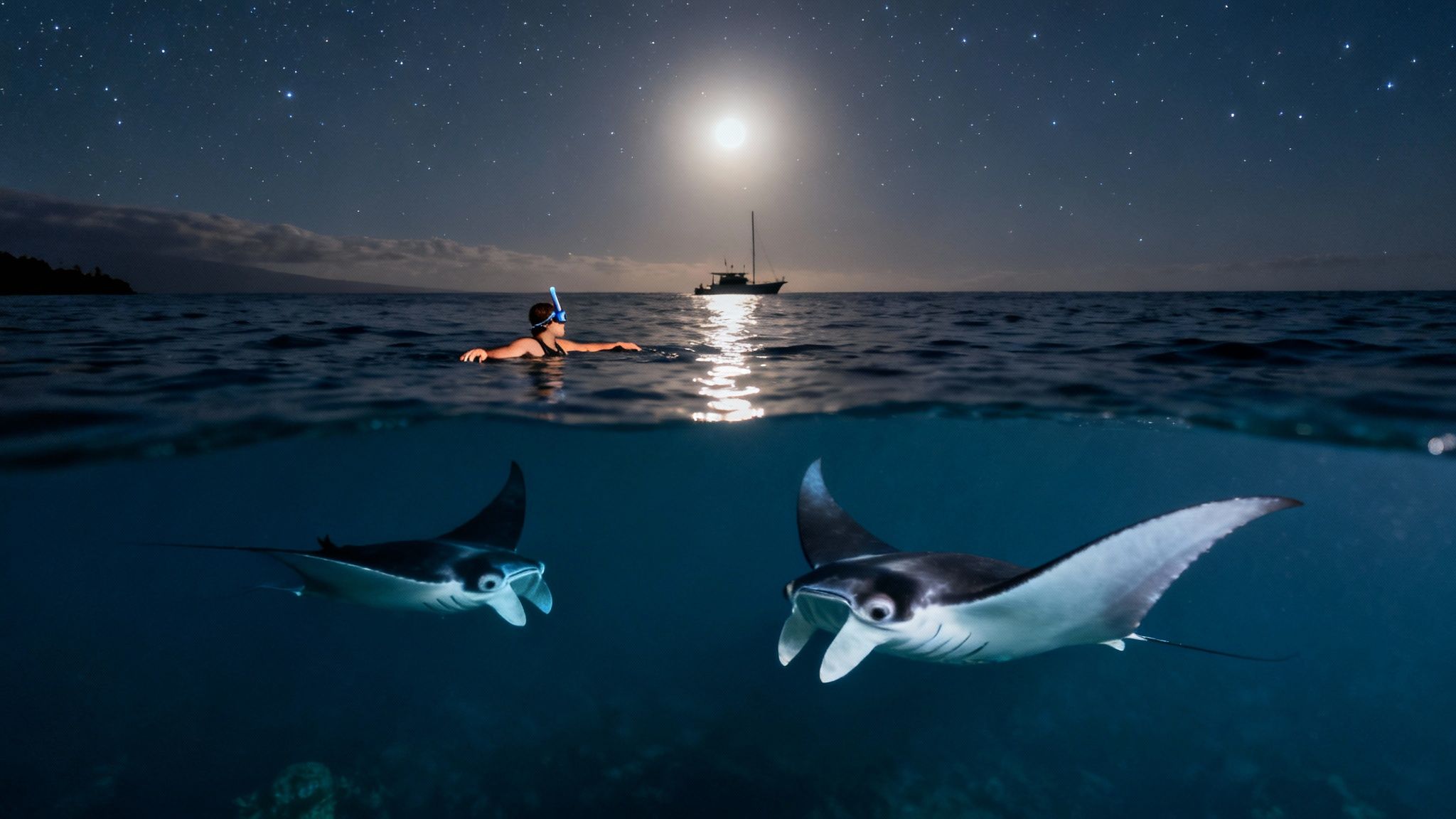
The Big Island consistently delivers an experience that tops bucket lists worldwide. While many wildlife tours are a game of chance, the manta ray night snorkel in Kona is famous for its incredibly high success rates.
Before we dive into the details, here’s a quick overview to get you started.
Kona Manta Ray Snorkel at a Glance
This table gives you a quick snapshot of what to expect, helping you understand the key details of this unique Kona experience from the start.
Aspect | Details |
|---|---|
Activity | Night Snorkeling with Reef Manta Rays |
Location | Kona Coast, Big Island, Hawaii |
Best Time | Year-round, after sunset |
Success Rate | Approximately 96% sighting rate at primary sites |
Experience | Floating on the surface while mantas feed on plankton below |
Creatures | Gentle giants with wingspans up to 12 feet |
Duration | Tours typically last 2-3 hours |
This experience is truly a must-do for anyone visiting the Big Island.
Why Is This Experience So Reliable?
So, what's the secret? It’s all about a brilliant and symbiotic relationship between tour operators and Kona's resident population of reef manta rays. These aren't migratory animals; they live here year-round.
Tour operators have figured out that by shining powerful, safe lights into the water, they create something of a "campfire" for plankton—the mantas' favorite food. These tiny organisms swarm to the light, creating a massive, all-you-can-eat buffet.
The mantas, knowing a good meal when they see one, show up almost every single night to feast. They perform incredible acrobatics, gliding and barrel-rolling through the water to filter the plankton. It’s this predictable feeding behavior that makes the encounter so unbelievably consistent.
We're not just guessing here. Historical data from Manta Village, one of Kona's main viewing sites, shows a mind-blowing 96% success rate for manta ray sightings. That’s a near-guarantee you'll be face-to-face with creatures that can have wingspans of up to 12 feet and weigh over 1,000 pounds.
What Makes This a Must-Do Adventure
Throughout this guide, we'll walk you through everything from choosing the right tour to understanding the science behind the magic, so you can prepare for an evening you'll talk about for years to come.
This isn't just about seeing giant fish. It's about feeling a profound connection to the ocean and its incredible inhabitants. There’s something truly humbling and exhilarating about floating on the surface while these gentle giants dance just below your fins.
Picking a top-notch, reputable operator is key to a great trip. Kona Snorkel Trips, Hawaii's most reviewed and highest-rated snorkel tour company, is a fantastic choice for a safe and unforgettable adventure. You can learn more about their manta ray snorkel tour in Kona directly on their site.
Ready for more? Feel free to dive deeper into our other articles covering the manta ray night snorkel in Kona for more specific tips and insights.
What Really Happens on a Manta Ray Night Snorkel
So, what’s it actually like to go on one of these tours? Picture this: you’re cruising along the Kona coast as the sky explodes in the fiery colors of a classic Hawaiian sunset. That’s how your incredible manta ray snorkeling kona adventure kicks off. It's not just about jumping in the water—it's an entire experience that builds excitement from the moment you step on the boat.
It all starts with a warm welcome and a quick check-in. Your lifeguard-certified guides will then walk you through a detailed safety briefing so everyone feels comfortable. As the boat heads out, the crew shares all sorts of fascinating facts about manta rays and the unique ocean world you're about to explore. Think of it as the amazing opening act before the main event.
Setting the Stage for Magic
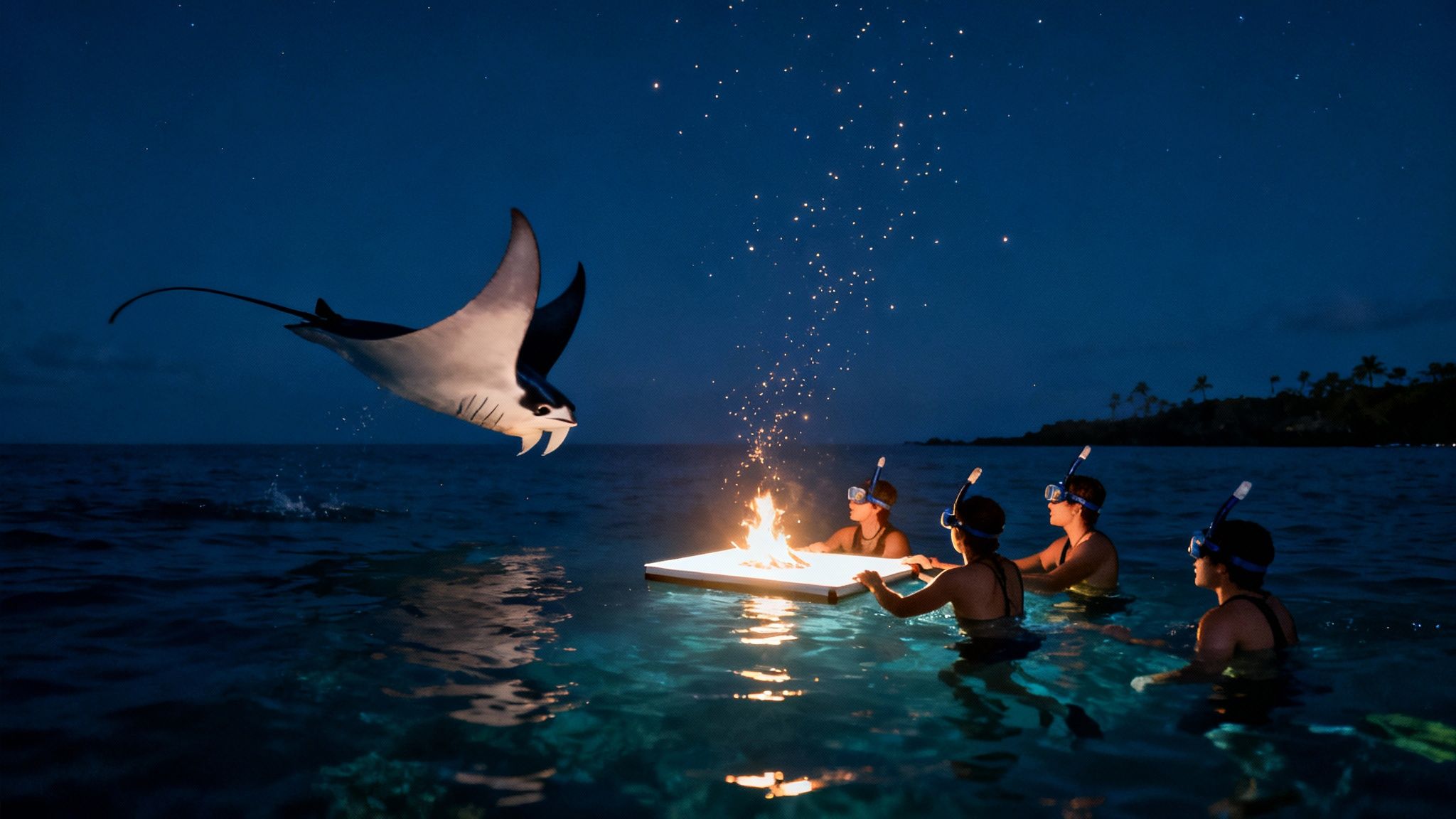
As twilight fades to dark, the boat anchors at one of Kona’s prime manta viewing spots. This is where the crew brings out the secret weapon: a big, custom-built float with powerful lights pointing straight down into the water. We call it the "manta campfire" or light board, and it's the key to everything.
This light board is basically a giant dinner bell for the local sea life. The bright beams attract huge clouds of phytoplankton—tiny organisms that are the foundation of the ocean food chain. This plankton buffet is exactly what brings the manta rays out to feast every single night. Your job is simple: hang on and enjoy the show from the best seats in the house.
Entering the Underwater Theater
Once the light board is glowing bright, it’s your cue to slip into the calm, dark ocean. You’ll be wearing a wetsuit to stay warm and holding onto handles on the floating board. From this stable spot on the surface, all you have to do is look down into the illuminated water below.
There’s no need to swim around or chase anything; you just float and watch. The light beams slice through the darkness, creating an otherworldly stage for the gentle giants to make their grand entrance.
The first time you see a manta ray appear is pure magic. One second, you're just looking at blue-lit water, and the next, a massive shadow glides effortlessly out of the abyss. They move with the grace of a ballet dancer.
They swoop, barrel-roll, and somersault just inches beneath you, their huge mouths wide open to filter the plankton from the water. It’s a silent, mesmerizing ballet that feels both surreal and incredibly personal. You’ll spend about 30 to 45 minutes in the water, completely captivated by their dance. If you want a deeper dive into what to expect, check out our complete guide to night snorkeling with manta rays.
Sunset Tour vs. After-Dark Tour
Most tour companies give you two options, and each offers a slightly different vibe.
Sunset Tour: This trip heads out before the sun goes down, giving you breathtaking views of the Kona coast in that perfect golden hour light. It’s a fantastic choice for photographers or anyone who wants to experience that beautiful transition from day to night on the water.
After-Dark Tour: Often called a "Starlight" tour, this later trip leaves when it's completely dark. The experience is intensely focused on the mantas, creating a more dramatic encounter as they appear against the inky blackness of the deep ocean.
Which one is right for you just depends on what you're looking for. But no matter which you choose, the incredible encounter with these gentle giants is always the star of the show. The entire trip is designed to be safe, fun, and absolutely unforgettable.
Understanding the Gentle Giants of Kona
What makes the manta ray snorkeling in Kona so special? It’s not just a lucky sighting. Unlike places where you might catch a glimpse of wildlife passing through, Kona is home to a year-round, non-migratory population of reef mantas (Mobula alfredi). Think of them as the friendly locals—they live here, and you're visiting their neighborhood.
This completely changes the dynamic of your tour. You’re not just seeing a manta ray; you’re meeting a specific individual from a well-known community, each with its own personality and story.
The Manta Ray Fingerprint
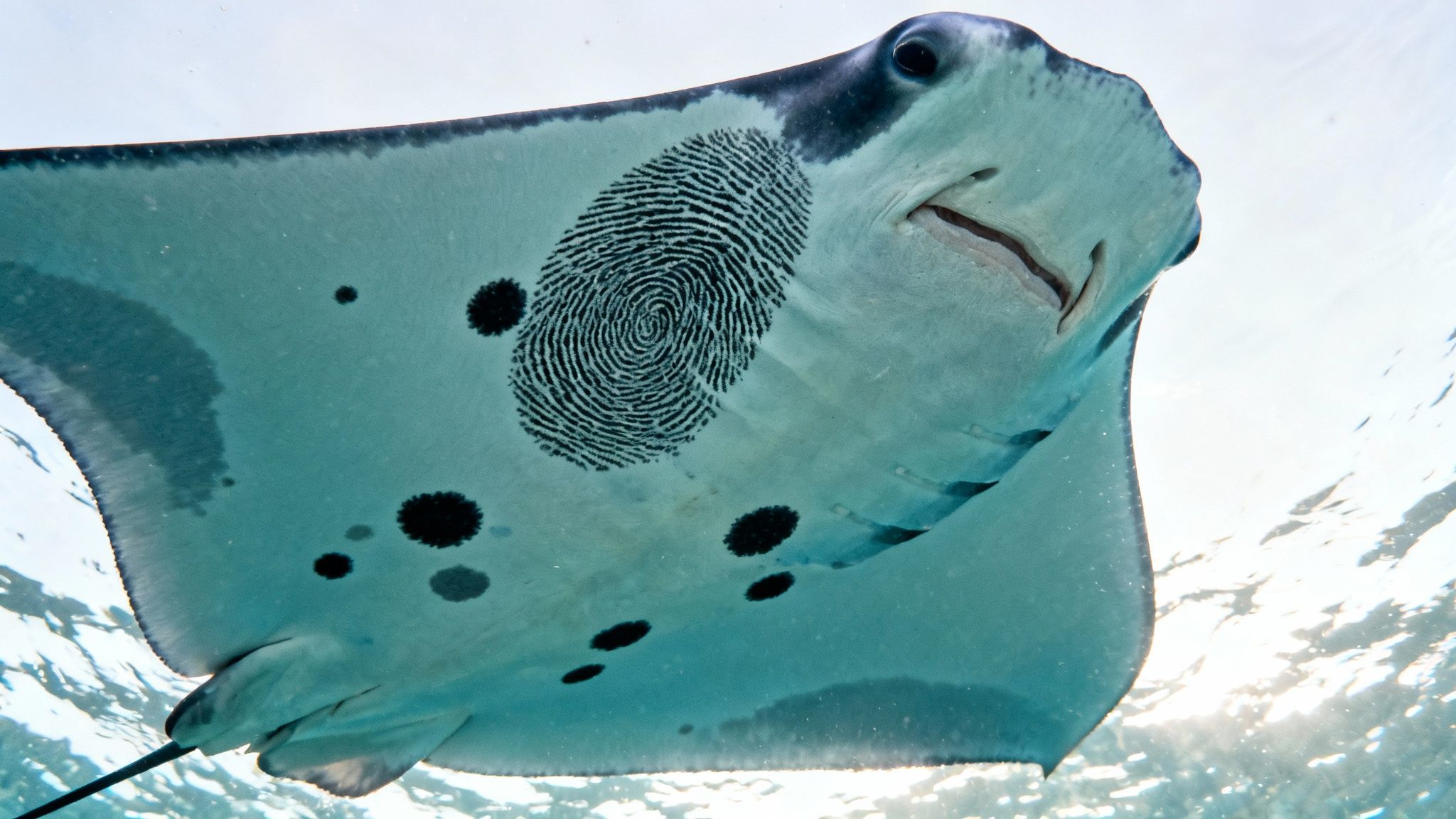
The most incredible thing about Kona's mantas is that we can tell them apart. The black spot patterns on their white bellies are totally unique, just like a human fingerprint. No two are the same.
Because of this, local guides and researchers can recognize—and even name—the rays that show up. You might get an introduction to "Big Bertha," "Lefty," or another local celebrity who's a regular at the nightly buffet.
This creates a real connection. It feels less like you're at a zoo and more like you've been invited to their dinner party.
The Genius of the Manta Campfire
The whole nightly spectacle happens because of a brilliant, almost accidental, discovery. Decades ago, a hotel pointed its lights into the ocean, which attracted swarms of plankton—the manta rays’ favorite food. The mantas quickly learned where to find an easy meal.
Today, tour operators have perfected this by using floating light boards, which we affectionately call "manta campfires."
Think of it like a popular food truck that parks in the same spot every night. The mantas know that these bright lights are a dinner bell, signaling a reliable and delicious feast. It’s a win-win: the tours provide the light, which attracts the plankton, and the mantas put on an unforgettable show for us.
This reliable food source is the secret sauce behind Kona's world-famous success rate. You can dive deeper into their world by exploring some fun facts about manta rays you should know.
A Who's Who of Ocean Royalty
The manta population here is like a who's who of underwater celebrities. Local researchers have identified and cataloged a resident population of over 450 individuals.
Some of these mantas are genuine superstars. In fact, the top 20 most-sighted rays account for almost 60% of all encounters, showing up night after night to perform their graceful feeding ballet. Your guides will share stories about the mantas you meet, whether it's the legendary 'Ulu' with his massive 12-foot wingspan or others weighing over 1,000 pounds.
This intimate knowledge turns a great snorkel into a truly rich experience. You aren't just observing anonymous sea creatures; you're meeting characters with names and histories, all part of the amazing underwater family that makes Kona the best place on Earth for manta ray snorkeling.
How to Choose the Right Kona Manta Ray Tour
With a handful of boats heading out each night for the manta ray snorkeling Kona experience, picking the right one is hands-down the most important decision you'll make. The tour operator you choose directly shapes your safety, your comfort, and the pure magic of the moment. A great tour is so much more than just a boat ride; it’s a seamless, incredible experience from the moment you check in.
Choosing wisely means looking past the price. Things like the size of the group, how experienced the guides are, and the quality of the gear can take a trip from just "good" to absolutely unforgettable. A smaller group, for instance, almost always means you get a better, less crowded view of the mantas.
What to Look for in a Tour Operator
As you start comparing your options, zero in on the details that create a first-class experience. Safety should always, always be your number one concern. Look for companies that have lifeguard-certified guides who aren't just pros in the water, but also really know their stuff about manta ray behavior and conservation.
Next up, check out the gear. A high-quality, well-kept wetsuit, snorkel, and mask make a world of difference when you're floating in the cooler night water. The best companies also think of the little things, like having hot chocolate or snacks ready for you after the snorkel to warm you up and round out the night perfectly.
The best tour companies do more than just take you to see the mantas; they educate you. An informative pre-snorkel briefing about manta biology and the local ecosystem adds a rich layer of appreciation to what you're witnessing in the water.
This checklist can help you sort through the options and make a confident choice.
Tour Operator Checklist
Feature to Check | Why It Matters | What to Look For |
|---|---|---|
Safety Certifications | This is non-negotiable. It ensures the crew can handle any situation. | Guides should be lifeguard, CPR, and First Aid certified. The boat should have a valid Coast Guard inspection. |
Small Group Size | A smaller group means a more personal experience and less bumping into people in the water. | Look for operators that cap their tours at 18-24 guests or fewer. |
Guide Expertise | Knowledgeable guides enhance the trip with facts and stories about the mantas. | Check reviews for mentions of guides who are passionate, informative, and engaging. |
Quality of Gear | Poorly maintained gear can ruin the experience (e.g., a leaky mask). | Operators should provide thick wetsuits (5mm is ideal), defog for masks, and well-maintained snorkel equipment. |
Online Reviews | Reviews from past guests give you the real story about a company's performance. | Look for consistently high ratings on platforms like Google, TripAdvisor, and Yelp. Read the most recent reviews. |
Conservation Focus | A company that cares about the mantas will provide a more respectful and sustainable encounter. | Do they follow Manta Ray Green List guidelines? Do they educate guests on how to interact safely? |
Taking a few minutes to run through these points will pay off big time, ensuring you book with a crew that will give you an amazing and safe adventure.
For a top-tier adventure, we highly recommend Kona Snorkel Trips. As the most reviewed and highest-rated snorkel tour company in Hawaii, they have built an incredible reputation for their expert guides, serious commitment to safety, and knack for creating truly amazing guest experiences. You can find out more about their acclaimed manta ray snorkel tour and see why so many travelers choose them.
Considering a Private Charter
For families, special occasions, or groups who just want a more exclusive vibe, a private charter is a fantastic way to go. Chartering a boat gives you total control. You can enjoy the whole experience with just your people, creating a much more intimate atmosphere. It’s perfect for anyone wanting a flexible schedule or simply having the boat and crew all to themselves for a truly personal encounter with the mantas. Most of the best operators offer this premium option.
To help you compare all your options effectively, you might want to check out our guide covering the 12 best manta ray snorkel Kona tours for 2026, which gives you a detailed breakdown of different companies.
Ultimately, taking the time to research and pick a reputable, safe, and guest-focused company will make sure your night with Kona's gentle giants is everything you dreamed it would be.
How to Prepare for Your Night Snorkel Adventure
A little prep work goes a long way toward making your manta ray snorkeling Kona tour an absolutely magical night. Getting a few things sorted out beforehand means you can just relax and soak in the incredible show the mantas put on for you.
The great news? It's super simple. You don't need any special skills or equipment since the tour operator gives you all the essential gear. But, there are a few things to think about to make sure you have the best experience possible.
Swimming Skills and Comfort in the Water
First things first, you should be comfortable in the ocean. You definitely don’t need to be an Olympic swimmer, but you do need basic swimming skills for your own safety and confidence.
Remember, you'll be floating on the surface holding onto a custom light board, not actively swimming all over the place. The wetsuit they provide also adds a lot of buoyancy, making it easy to float. The most important thing is simply feeling at ease in the open water after dark so you can focus completely on the gentle giants gliding just below.
What to Pack for Your Tour
Packing for this adventure is a breeze. Your tour company provides the important stuff like the wetsuit, mask, and snorkel, but you’ll want to bring a few personal items to stay comfortable before and after hopping in the water.
Here’s a quick checklist of what to bring:
Swimsuit: The easiest thing is to wear your swimsuit under your clothes to the marina so you're ready to go.
Towel and Dry Clothes: You will be so glad you brought a warm towel and a dry change of clothes for the boat ride back. That ocean air can feel a bit chilly once you're out of the water!
Waterproof Camera: If you have a GoPro or another underwater camera, bring it! This is a memory you’ll want to capture.
Seasickness Medication: If you know you're prone to motion sickness, it's a smart move to take medication about an hour before the tour. The ocean is usually pretty calm, but it's always better to be safe than sorry.
These few items will ensure you’re comfortable from start to finish. For an even more detailed list, you might want to check out our article on 10 essential manta ray snorkel tips.
Tips for Capturing Amazing Underwater Photos
Photographing manta rays at night can be tricky, but a few simple tips can help you get some stunning shots without bothering the animals. The key is to work with the unique lighting, not against it.
First, turn off your camera’s flash. The powerful lights from the tour boat and the floating "campfire" provide all the light you'll need. A camera flash can startle the mantas and interrupt their natural feeding behavior.
A pro tip for the more serious photographers: try using a red light filter on your camera. Red light is less disruptive for marine life and can help bring out the natural colors in the low-light environment, giving your photos a really professional look.
Finally, just let the mantas come to you. Don't chase them around trying to get the perfect shot. Hold your spot at the light board and wait for them to glide right into your frame. Their graceful, sweeping movements will give you plenty of incredible photo opportunities.
Snorkeling Responsibly with Kona's Manta Rays
The incredible manta ray snorkeling in Kona is truly a partnership between us and the wildlife. Its future really depends on our respect for these gentle giants. This whole magical encounter is built on a simple idea: responsible tourism and passive observation. That's how we ensure the mantas stay safe, healthy, and happy to visit us for years to come.
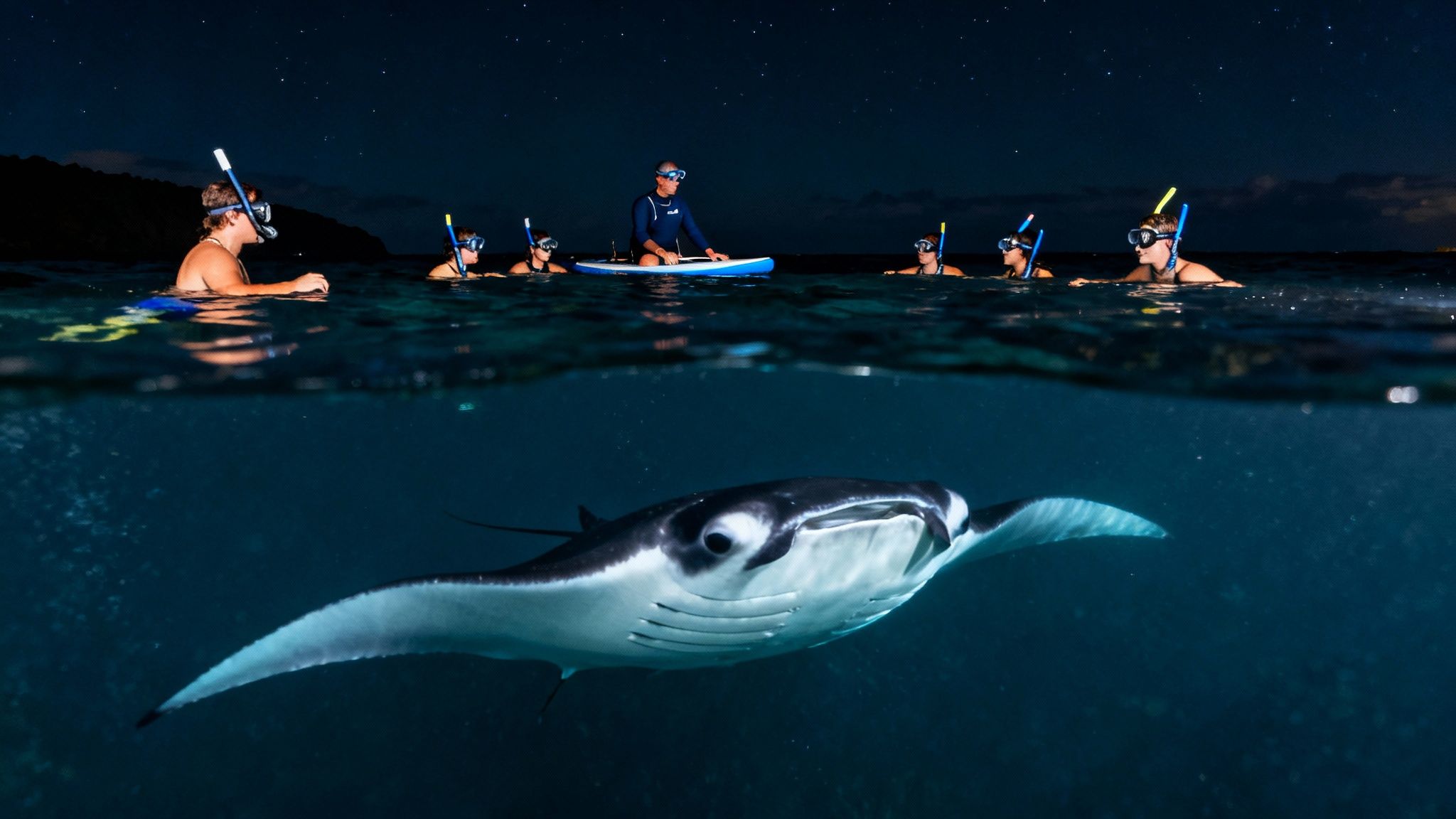
Everything about the experience is designed to be as hands-off as possible. By following a few simple but crucial rules, every single snorkeler becomes a guardian of this unique ecosystem. This ensures the nightly underwater ballet continues, protecting Kona’s precious manta population.
The Golden Rule of Manta Ray Interaction
The number one rule is simple and absolute: look, but do not touch. Manta rays are covered in a thin, protective mucus coating. It’s their first line of defense against harmful bacteria and infections in the ocean.
Touching a manta, even by accident, can rub off this delicate layer, making them vulnerable to getting sick. It’s on us to keep a safe distance and just let them glide by without any interference.
Think of their protective coating like an invisible shield. By keeping our hands to ourselves, we ensure their shield stays intact, helping them thrive in their natural environment.
Any reputable tour operator will hammer this point home during their safety briefing. It’s that important.
Official Guidelines for a Safe Encounter
To keep things safe and consistent, Hawaii’s ocean recreation community has set up clear guidelines for everyone. These rules are designed to protect both the mantas and us snorkelers, creating a predictable and stress-free environment for everybody involved.
Following these steps ensures a positive experience for all:
Observe Only: Fight any urge you might have to chase, grab, or "pet" the mantas. You have to let them control the encounter and come to you on their own terms.
Stay on the Surface: As a snorkeler, your job is to stay at the surface, holding onto the light board your guide provides. Diving down into the water can mess up the mantas' feeding patterns.
Position Your Lights Correctly: Keep lights shining straight down into the water. This is what attracts the plankton and keeps the "campfire" concentrated, which helps the mantas feed efficiently.
Avoid Flash Photography: Bright, sudden flashes can seriously disorient and startle the manta rays. The tour lights provide more than enough illumination for stunning photos without needing a flash.
By sticking to these simple guidelines, you're actively helping to conserve Kona's beloved manta ray population. Choosing an operator that is deeply committed to these principles is essential. A great choice is Kona Snorkel Trips, the most reviewed and highest-rated snorkel tour company in Hawaii, which really prioritizes both an amazing guest experience and the mantas' well-being.
Still Have Questions? Here Are a Few Common Ones
Even with all the excitement building, it's totally normal to have a few questions before you book your adventure. Getting these sorted out beforehand will help you feel confident and ready to just enjoy the magic of it all. We've gathered the most common questions we hear to help you plan.
Is Manta Ray Snorkeling in Kona Safe?
Absolutely. This is probably the number one question people ask, and the answer is a huge "yes." There's a reason they're called "gentle giants"—manta rays have no teeth, no stingers, and no barbs. They're filter feeders, which means they are only interested in the microscopic plankton in the water, not the humans floating above them.
Any good tour operator puts safety above everything else. They'll get you set up with quality flotation gear and warm wetsuits, and you'll have professional, lifeguard-certified guides right there in the water with you the whole time. The entire experience is designed to be a safe, supervised, and completely awe-inspiring activity for just about everyone.
What’s the Best Time of Year to See Manta Rays in Kona?
This is one of the best parts—you can do this any time of year! The manta rays here in Kona are a resident population, meaning they don't migrate. They live in these waters year-round and show up for their plankton buffet with incredible consistency.
Whether you're visiting in the middle of a hot summer or during the cooler winter months, your odds of seeing mantas are fantastic. In fact, sighting success rates are consistently above 90% all year long. You can confidently book your trip for any season.
Do I Need to Be a Strong Swimmer?
You don't need to be Michael Phelps, but you should have basic swimming skills and be comfortable in the ocean. This isn't a strenuous swim where you're covering a lot of distance.
Instead, you'll be holding onto a custom-built, very stable floatation board for the entire time you're in the water. This board not only keeps you effortlessly afloat but also holds the bright lights that draw in the plankton. The wetsuit gives you even more buoyancy, making it easy to just relax. The main thing is to be comfortable enough in the open water to look down and enjoy the show.
Can My Kids Go on the Manta Ray Night Snorkel?
Yes, and it’s an incredible, unforgettable experience for families. Most tour companies welcome kids who meet their minimum age requirement (usually around 5 years old) and are comfortable in the water. It’s not just safe and well-supervised, but it’s also a powerful educational moment for young ocean lovers.
There's nothing quite like watching a child's face light up as a 12-foot manta ray gracefully glides just inches below them. It's an adventure that creates family memories that truly last a lifetime and builds a real appreciation for our oceans.
Just be sure to double-check the specific age and swimming rules with your tour operator when you book. For a family-friendly tour that gets rave reviews, take a look at Kona Snorkel Trips. They are known for being the most reviewed and highest-rated snorkel tour company in Hawaii. You can book their top-rated manta ray snorkel in Kona for an adventure the whole family will be talking about for years.
Comments