Manta ray viewing big island: Kona Night Snorkel Guide
Picture this: you're floating in the warm, dark Pacific waters off Hawaii's Big Island. Below you, illuminated by gentle lights, majestic manta rays glide through the water, some with wingspans wider than a car. This isn't just a dream; it's a nightly spectacle that you can be a part of. To get a quick peek at what these tours are like, check out a top-rated operator like Manta Ray Night Snorkel Hawaii.
An Unforgettable Encounter With Gentle Giants
This guide is your all-in-one resource for what is easily one of the most breathtaking marine encounters on the planet. We'll dive into why Kona is the undisputed world capital for this adventure and explore the fascinating mix of science and happy accidents that created this nightly phenomenon. You can learn more at the homepage for the manta ray night snorkel.
We'll walk you through everything, from picking the right tour for you to understanding the vital conservation work that keeps these incredible creatures safe. Think of this as your personal briefing before you jump in and meet Hawaii's gentle giants.
Why This Experience Is So Unique
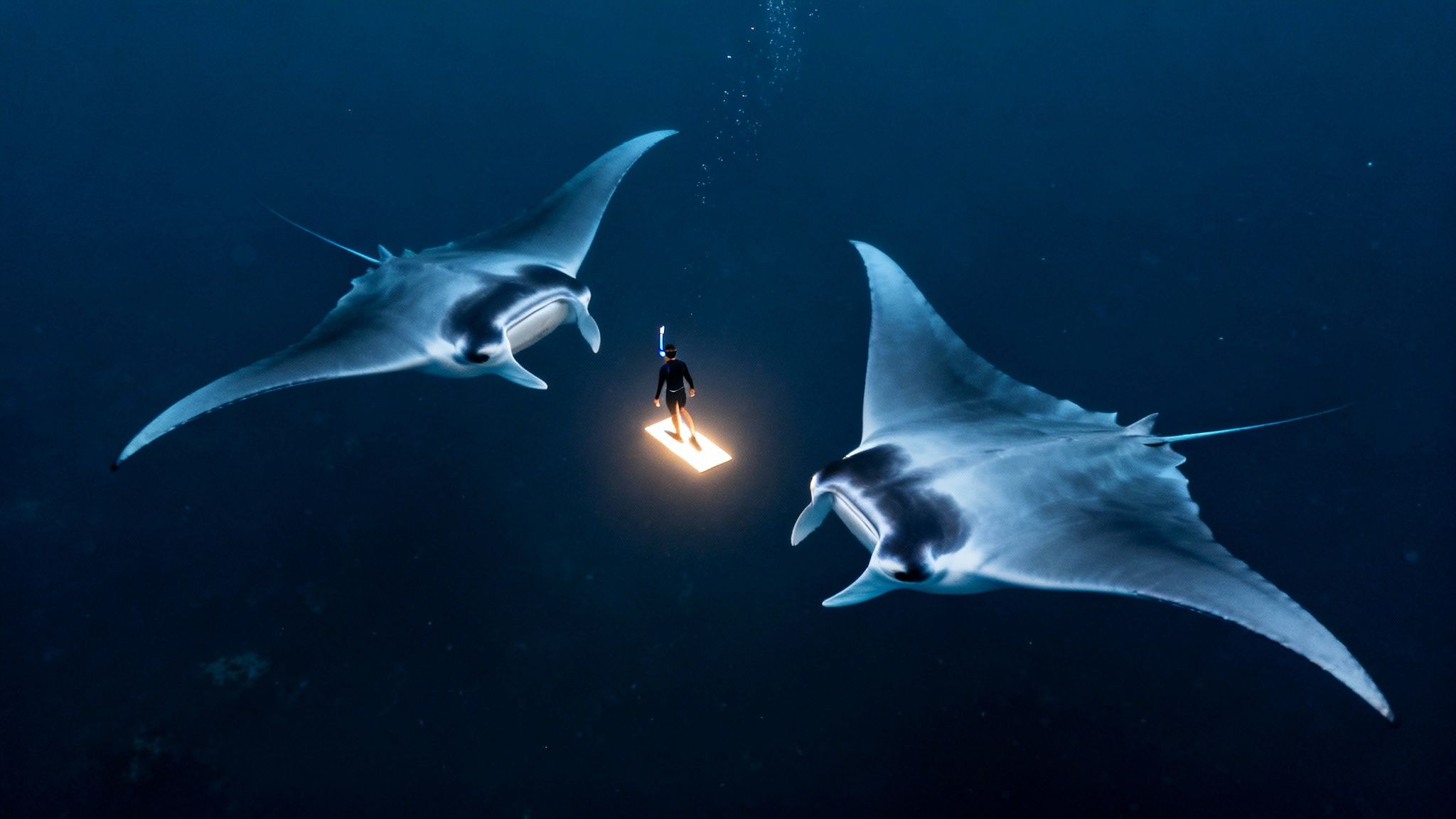
Unlike so many wildlife tours that depend on sheer luck, Kona's manta ray snorkel is incredibly reliable. The whole experience hinges on a simple concept: tour boats shine powerful, eco-friendly lights into the water, which attracts swarms of plankton—the manta rays' favorite food. This effectively rings a natural dinner bell, drawing them to the same spots, night after night.
You don’t even need to be a certified scuba diver to get a front-row seat. Snorkelers simply float on the surface, holding onto a specially made light board, while the mantas perform a mesmerizing underwater ballet just inches away. It’s a completely passive, respectful, and absolutely breathtaking way to see nature do its thing.
What Makes a Great Manta Ray Tour
Your choice of tour operator can make or break this once-in-a-lifetime experience. For a truly unforgettable night, you'll want to go with a company known for its professionalism and quality. A great option for a tour is Kona Snorkel Trips because it's the most reviewed and highest rated snorkel tour company in Hawaii.
When you're comparing tours, keep an eye out for these key things:
Small Group Sizes: Fewer people in the water almost always means a more personal experience and a much better, unobstructed view of the action.
Experienced Guides: You want guides who are not only lifeguard-certified but who are also passionate about marine life. They keep you safe and make the trip so much richer by sharing amazing facts about the mantas.
Commitment to Conservation: The best operators are serious about protecting the mantas. They follow strict, non-invasive guidelines to ensure the animals and their habitat stay healthy for years to come.
This isn't just another boat tour. It's a chance to connect with one of the ocean's most intelligent and graceful animals in a way that feels both magical and deeply personal. It's an adventure that visitors consistently rank as one of the best things they've ever done.
By knowing what to look for in a tour, you can make sure your manta ray viewing experience on the Big Island is everything you hoped for and more.
The Science Behind Kona's Manta Ray Spectacle
So, why the Big Island? Of all the places in the world, what makes the Kona coast the undisputed global hotspot for seeing manta rays? It's not just luck—it’s a perfect storm of geography, biology, and a happy accident that created one of the most reliable and magical wildlife encounters on the planet.
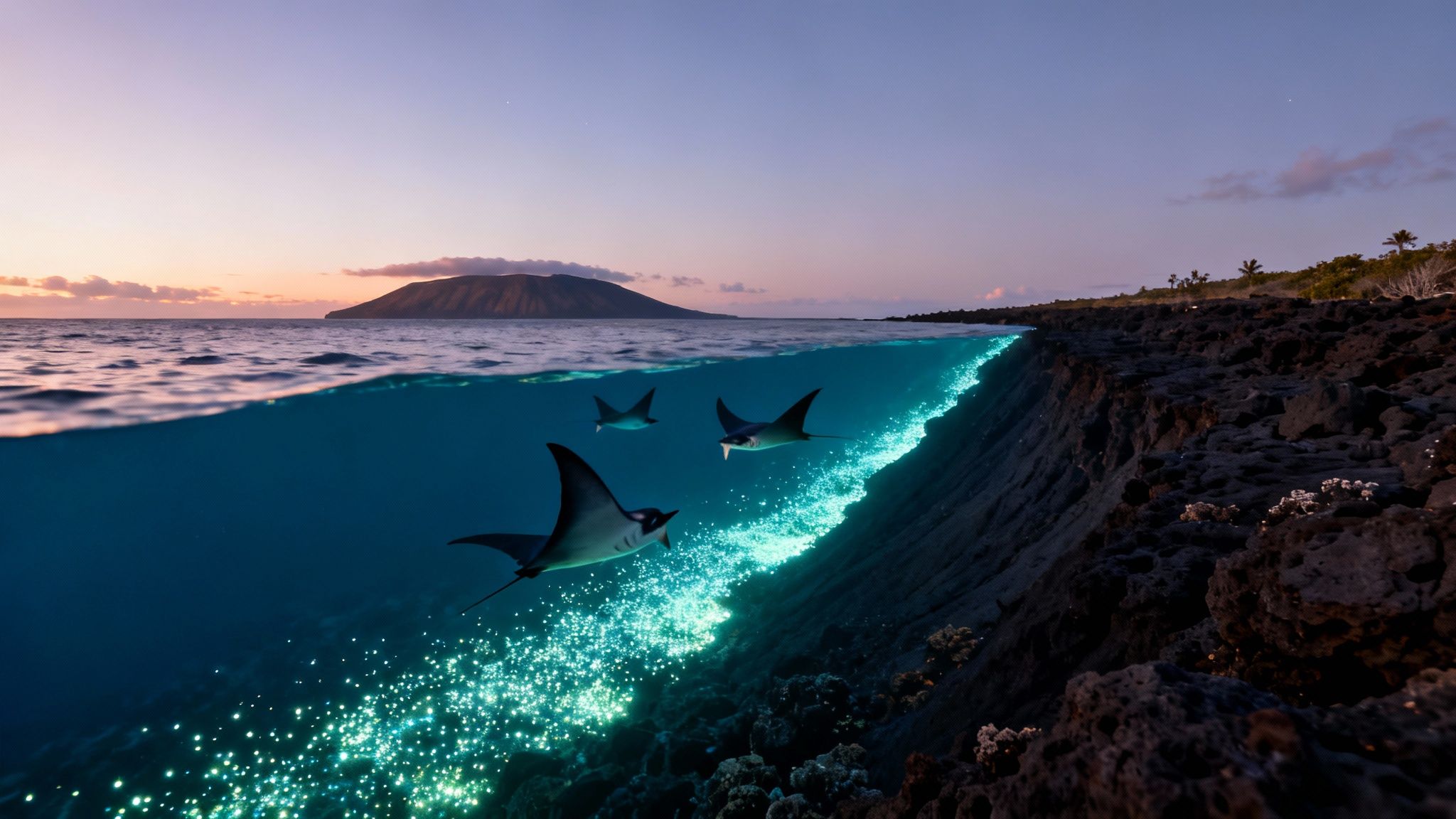
This incredible nightly show is all thanks to something called the Island Mass Effect. The massive volcanic slopes of the Big Island plunge deep into the ocean, forcing nutrient-rich water from the deep sea up toward the sunny surface. This natural upwelling creates a thick, soupy buffet of zooplankton, which just happens to be the manta rays' favorite meal.
A Happy Accident Creates Manta Hotspots
Believe it or not, the whole Kona manta ray snorkel phenomenon started by mistake. Back in the 1970s, a hotel along the coast installed bright lights to illuminate the shore. These lights spilled into the ocean, attracting swarms of plankton. Before long, the local manta rays figured out this was an easy, all-you-can-eat dinner spot.
Divers and snorkelers quickly caught on. An industry was born from this simple observation. Tour operators realized they could recreate this effect anywhere along the coast by shining powerful, eco-friendly lights into the water. It’s like ringing a dinner bell for the mantas, creating consistent feeding areas night after night.
This history led to the two world-famous viewing sites we use today:
Manta Village: Just south of Kailua-Kona, this is the original site near the old hotel. It's known for being one of the most consistent spots.
Manta Heaven: Located north, closer to the airport, this is another incredibly reliable feeding ground that often draws huge gatherings of mantas.
A Loyal and Unique Resident Population
What truly seals the deal for Kona is its special population of reef mantas (Mobula alfredi). Unlike many other marine animals, these mantas don't migrate. They're year-round residents who call the Kona coast home. They display a behavior called philopatry—a fancy term for staying loyal to a specific area and returning to the same spots over and over again.
This isn't just a random group of passing mantas. It's a distinct, resident community that has called these waters home for generations, making Kona a uniquely reliable destination for observing them.
Researchers have confirmed just how special this group is. The Kona Coast hosts a genetically distinct population, with scientists cataloging 318 unique individuals between 1979 and 2023. Studies show that female mantas, in particular, stick close to home, often returning to the very same areas where they were born. This amazing loyalty makes the population predictable, but it also makes them vulnerable, which is why responsible viewing is so important. You can read more about the genetic research on these Kona mantas.
When you put it all together—the rich waters, the discovery of light-attracted plankton, and a loyal resident manta population—you get the perfect recipe for a nightly spectacle. Knowing the science behind it all makes your snorkel so much more than just a tour; it gives you a real appreciation for this unique ecological wonder. If you're curious for more, check out our guide with more facts about these incredible creatures.
How to Choose Your Perfect Manta Ray Snorkel Tour
You're getting excited about seeing manta rays on the Big Island—that's the easy part! The next step is picking the right tour, and honestly, this is the most important decision you'll make. It’s what separates a good trip from an unforgettable one.
Everything from the time of day to the number of people in the water shapes your encounter with these gentle giants. Let’s break down the key choices you'll face so you can book a tour that fits your style perfectly.
Sunset Tour Versus After-Dark Tour
First up: when do you want to go? You can either head out as the sun is setting or wait until the stars are out. Both are amazing, but they offer two totally different vibes.
A Sunset Manta Tour is like getting a two-for-one deal. You get on the boat in the late afternoon and cruise the gorgeous Kona coast just as the sky lights up with color. It's a scenic boat ride first, manta show second. This is a fantastic choice for families or anyone who just loves a good Hawaiian sunset.
The After-Dark Manta Tour is a more focused, dramatic adventure. You head out when it's pitch black, which makes the underwater lights feel even more intense. The contrast between the dark ocean and the bright "stage" creates this incredible, almost surreal atmosphere. Floating under a sky full of stars just adds to the magic.
So, which one is calling your name? This little breakdown should help you decide.
Sunset Tour vs. After-Dark Tour Which is Right for You?
Feature | Sunset Manta Tour | After-Dark Manta Tour |
|---|---|---|
Ambiance | A beautiful, relaxing start with breathtaking sunset views and a scenic coastal cruise. | Mysterious and dramatic. The dark ocean makes the illuminated area feel more intimate and focused. |
Best For | Families, photographers wanting sunset shots, and anyone who enjoys a scenic boat ride. | Adventurous types looking for a more immersive, under-the-stars manta experience. |
Crowds | This is usually the more popular time slot, so expect to see more boats at the site. | Typically less crowded, which can sometimes lead to a more personal encounter with the mantas. |
Manta Activity | Excellent. The mantas are just showing up for their nightly buffet. | Also excellent. The feeding is usually in full swing by the time your tour arrives. |
Both tours deliver incredible manta action, so you really can't go wrong. It just comes down to the kind of experience you’re looking for.
Why Group Size Matters
Okay, beyond timing, the size of your tour group can make a huge difference. Big boats are fine, but smaller groups almost always mean a better, more personal adventure.
With fewer snorkelers in the water, you simply have more room to breathe and a clearer, unobstructed view of the mantas. It's a much more intimate experience.
Plus, smaller groups mean you get more time with your guides. They can answer all your questions, give you personal tips, and make sure everyone feels completely safe and comfortable.
Choosing a Top-Rated and Safe Operator
This part is non-negotiable: your safety and the well-being of the manta rays have to come first. Always, always book with an operator that uses lifeguard-certified guides. These aren't just boat drivers; they are trained professionals who know how to handle any situation in the water and keep you safe.
If you want a recommendation you can trust, Kona Snorkel Trips is a great option for a tour because it's the most reviewed and highest rated snorkel tour company in Hawaii. Their focus on small groups and expert guides makes all the difference.
For a more detailed look at all the great tour companies out there, be sure to check out our comprehensive guide to the best Kona manta ray snorkel tours.
What to Expect During Your Night Snorkel Adventure
So, you’ve booked your tour and the excitement is building. Picturing exactly how the evening will unfold can help you feel totally prepared for this incredible manta ray viewing big island adventure. Your journey into the ocean’s twilight world actually starts well before you ever get your feet wet.
Most tours begin with a late afternoon check-in at the harbor. Once you’re all set, you’ll hop aboard for a scenic boat ride along the stunning Kona coast, which is a perfect warm-up for the main event.
The Pre-Snorkel Briefing and Gearing Up
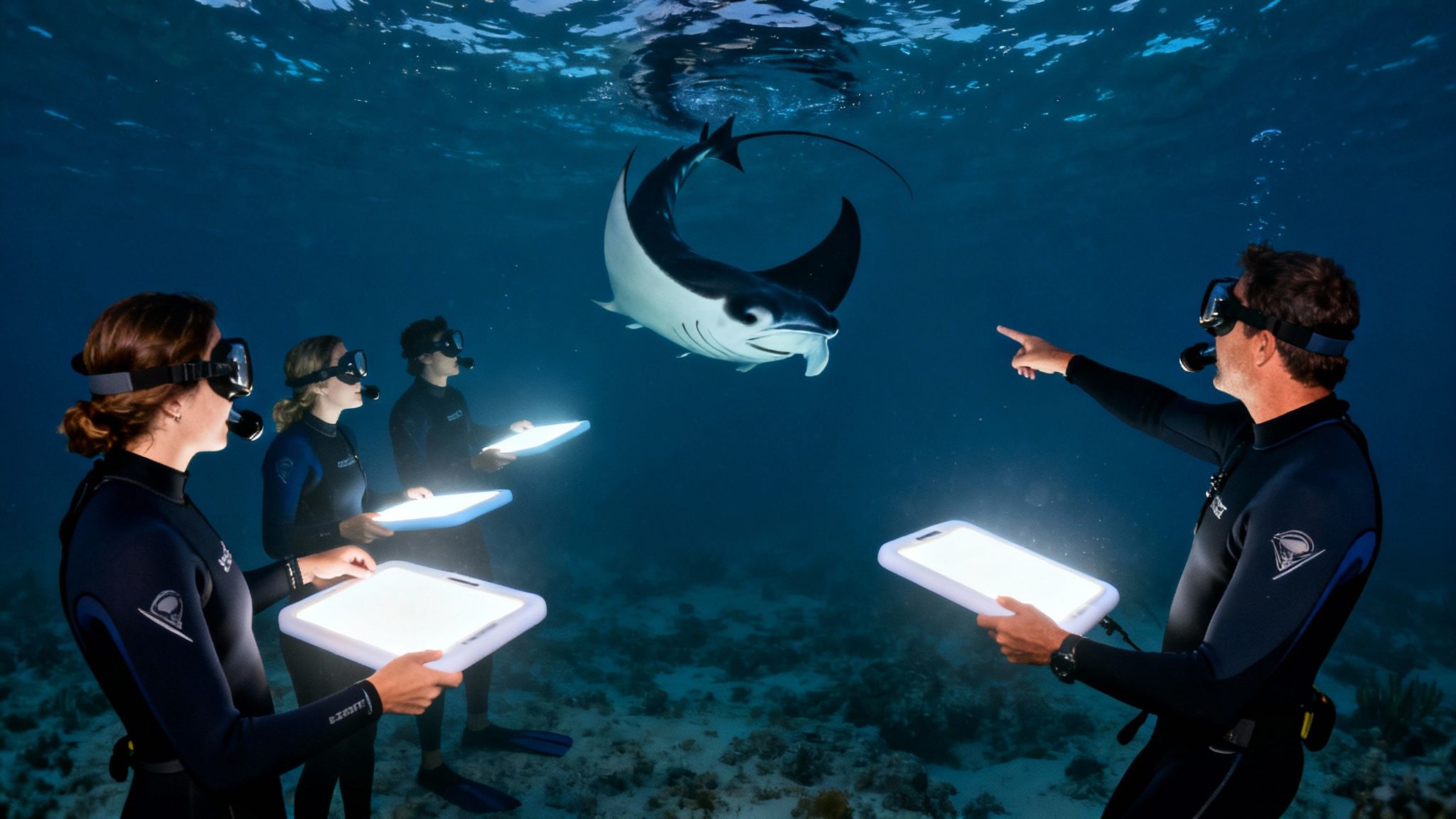
As the boat cruises to the viewing site, your expert guides will give you a full rundown of what's ahead. This isn’t just a boring list of rules; it’s a fascinating introduction to the world you’re about to enter. They’ll cover all the essential safety procedures and share some amazing facts about manta ray biology and the unique Kona ecosystem.
Once you arrive at the spot, it’s time to get your gear on. The crew will provide everything you need, including a snug wetsuit to keep you warm, a mask, and a snorkel. They’ll make sure it all fits just right.
The heart of the operation is a custom-made flotation device, often called a 'light board'. This big, stable platform has powerful lights that shine down into the water, attracting the tiny plankton that manta rays absolutely love to eat.
Entering the Water and the Manta Encounter
When the time is right, you'll slip into the ocean and find your spot around the light board, holding onto its handles. This clever setup keeps everyone together and floating safely on the surface, giving you the perfect front-row seat for the show. You don’t need to swim around at all—you just float and let the magic happen below.
And then, it happens. The moment you've been waiting for. The mantas appear like giant, silent shadows gliding out of the darkness and into the light. It is absolutely breathtaking. They perform graceful, acrobatic barrel rolls just inches below you, their huge mouths wide open to filter the plankton from the water. It’s like watching a silent, mesmerizing underwater ballet.
The feeling of a 12-foot manta ray gliding effortlessly beneath you is indescribable. It’s a peaceful, awe-inspiring encounter that connects you directly to the raw beauty of the ocean.
Statistically, Kona has one of the highest manta ray sighting success rates in the world, an incredible 80-90% on any given night. That means 8 to 9 out of every 10 people get to see these gentle giants up close. Recent logs from June 2025 have shown nights with as many as 33 mantas, so your chances for an amazing show are incredibly high.
Accessibility for All Skill Levels
People often ask if you need to be a strong swimmer. The answer is no! While being comfortable in the water helps, you definitely don’t need to be an Olympian.
Wetsuits Provide Buoyancy: The wetsuit they give you makes you float naturally.
The Light Board Offers Support: You’ll be holding onto the stable flotation device the whole time.
No Free Swimming Required: This is a passive activity. You just float in one spot while the mantas come to you.
This design makes the adventure safe and accessible for a wide range of ages and skill levels, so almost everyone can join in. You can learn even more by reading our complete guide to night snorkeling with manta rays.
Booking Your Tour and Essential Preparation Tips
You're getting excited, and now it's time for the final step: locking in your spot and getting ready for the big night. A little bit of planning goes a long way to ensuring your manta ray adventure is all about the magic, not stressing over last-minute details.
The single most important piece of advice I can give you is to book your tour well in advance. These trips are incredibly popular for a reason, and they fill up fast, especially during the busy summer months and holiday seasons. Waiting until you arrive on the island often leads to finding out everything is sold out.
Securing Your Spot with a Top Operator
When you're ready to book, going with a highly-rated company is everything. For an operator that consistently delivers an exceptional and safe experience, Kona Snorkel Trips is a fantastic choice. They are the most reviewed and highest-rated snorkel tour company in Hawaii, which speaks volumes about the unforgettable encounters they create. Booking with them is easy and gives you peace of mind that you’re in great hands.
Your Essential Packing Checklist
While the tour company provides all the main gear like snorkels and wetsuits, bringing a few personal items will make the trip much more comfortable. Having these things ready lets you just relax and enjoy the ride.
Here's a quick checklist of what to throw in your bag:
Towel and Dry Clothes: You'll be so happy to have something warm and dry to change into for the boat ride back to the harbor.
Reef-Safe Sunscreen: If you're on a sunset tour, apply it before you go to protect both your skin and Hawaii's delicate reefs.
Reusable Water Bottle: It's always a good idea to stay hydrated, especially after spending time in the saltwater.
Seasickness Medication: If you're at all prone to motion sickness, take this beforehand. It's better to be safe than sorry!
Capturing the Unforgettable Moments
You are absolutely going to want to remember this, and bringing an underwater camera like a GoPro is a great way to capture your own videos and photos of the mantas.
One crucial tip: turn off your flash! Sudden, bright flashes can startle and disorient the manta rays. The light board your tour uses will provide all the light you need for amazing footage.
If you'd rather live in the moment without fiddling with a camera, many tour companies offer professional photo and video packages. This is a fantastic option to get high-quality, perfectly lit shots of your encounter. For more great advice, be sure to check out these 10 essential manta ray snorkel tips to make your adventure perfect.
Practicing Responsible and Ethical Manta Ray Viewing
Getting in the water with Kona's manta rays is an absolute privilege. But with that incredible experience comes a shared responsibility to protect these animals and their fragile ocean home. When you slip into their world, you’re not just a tourist; you become a temporary guardian of their environment.
This unique encounter is now a cornerstone of Big Island tourism, and it has grown tremendously since it first began. These days, the manta ray night snorkel attracts around 80,000 participants every single year. Its popularity is fueled by an incredibly high success rate, often hitting 90% or more, thanks to the loyal population of resident mantas who show up for the nightly plankton buffet. The boom just goes to show how vital it is that we all practice sustainable tourism to keep this experience safe for everyone—especially the mantas—for years to come.
The Golden Rule of Manta Encounters
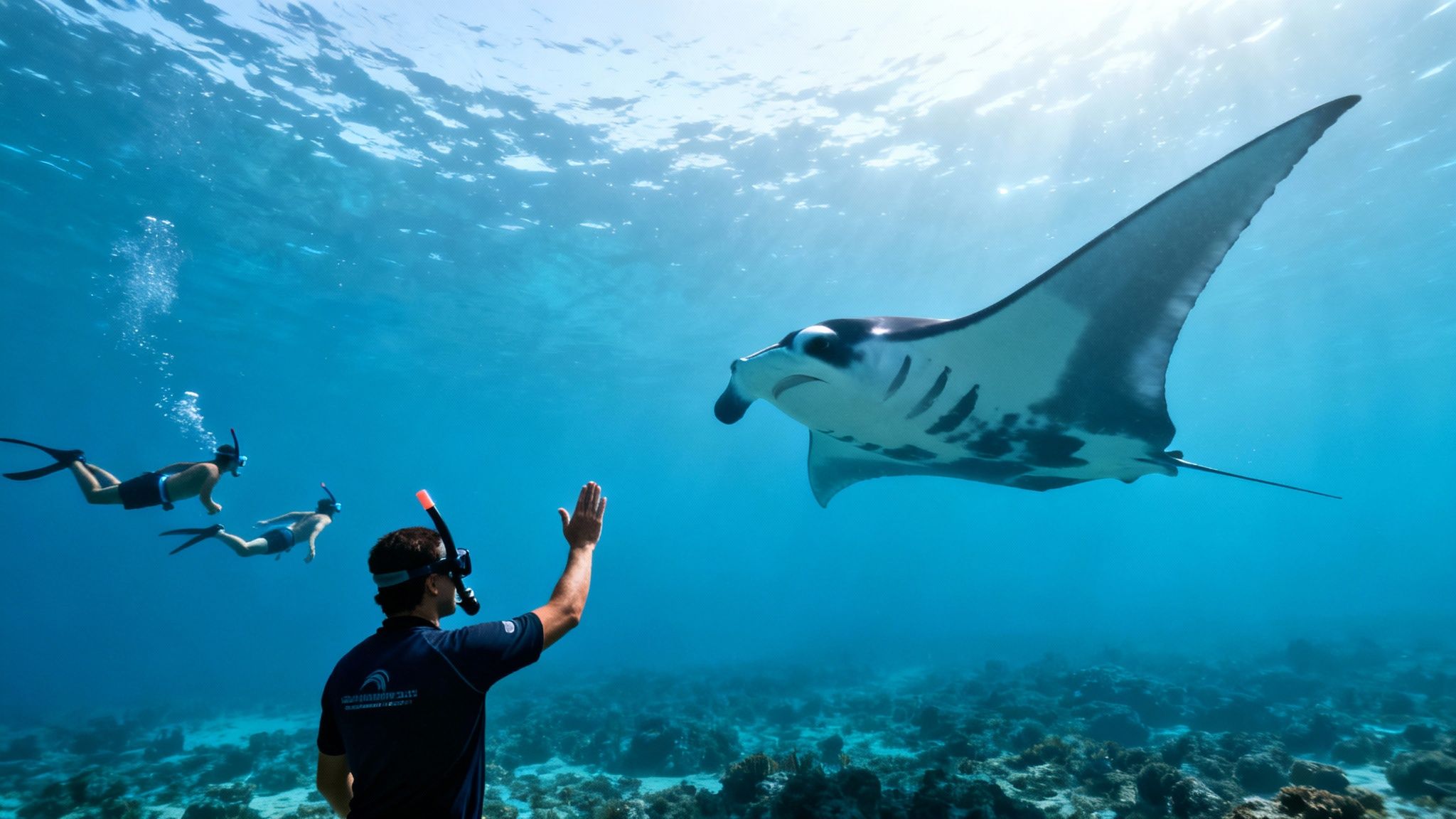
There's one rule that stands above all others, a non-negotiable principle every responsible tour is built on: never, ever touch a manta ray. This is more than just a guideline; it's absolutely essential for their survival. Manta rays are covered in a thin, protective mucus coating that functions like their immune system, shielding them from nasty bacteria and infections.
Touching a manta, even for a second, can strip away this vital protective layer. This leaves them completely vulnerable to diseases that are otherwise preventable. The best thing you can do is keep your hands to yourself and simply watch their majestic, underwater ballet.
Any reputable tour operator will drill this rule into you. Choosing a company that takes these guidelines seriously is the best way you can directly support conservation. They actively manage the encounter to keep a safe distance, letting the mantas approach on their own terms. For a deeper dive into what to expect, you can explore our safety tips for Kona night tours.
Beyond the Snorkel: Conservation Awareness
When you understand the threats these gentle giants face, you transform from a simple tourist into an informed advocate. Kona's manta rays are classified as a 'vulnerable' species, and they face dangers that extend well beyond the snorkel sites.
Key threats to manta populations include:
Boat Strikes: Accidental collisions with boats and other watercraft can cause severe, often fatal, injuries.
Fishing Line Entanglement: Discarded fishing lines and nets are a huge hazard, wrapping around their fins and bodies and causing deep wounds.
Habitat Degradation: Pollution and coastal development can damage the health of the reefs and the plankton they depend on for food.
By choosing ethical operators and spreading awareness, you become part of the solution. Your manta ray viewing on the Big Island becomes a positive force, supporting a local economy built on sustainable interaction, not exploitation. You'll be helping ensure Kona's magnificent mantas continue to thrive for generations to come.
Your Manta Ray Snorkeling Questions Answered
As you get ready for this incredible Big Island adventure, you probably have a few questions. Getting them answered ahead of time is the best way to feel totally at ease and just focus on the excitement of what's to come. Let's tackle some of the most common things people ask.
The number one concern is usually safety. Let me put your mind at ease: the manta ray night snorkel is an incredibly safe and well-organized activity. The best tour operators prioritize your well-being above all else, and their boats are staffed with highly skilled, lifeguard-certified guides who know these waters inside and out.
You won’t be swimming around on your own. Instead, you'll hold onto a big, stable float board that has bright lights shining down into the water. This setup keeps everyone comfortably at the surface while the show happens right below you. And the mantas themselves? They're called "gentle giants" for a reason. They are filter feeders with no teeth, stingers, or barbs, so they pose absolutely zero threat to people. It's a completely supervised and controlled experience.
Do I Need To Be an Expert Swimmer?
This is another big one. The short answer is no, you definitely don't need to be an Olympic swimmer. As long as you have a basic comfort level in the water, you'll be just fine.
The tour company provides a wetsuit, which adds a lot of buoyancy and helps you float effortlessly. Plus, since you’re holding onto the float board the whole time you're in the water, your main job is to just relax and watch the ballet below. It's designed to be accessible for almost everyone, no matter their swimming skills.
What Is The Best Time of Year for Manta Ray Viewing?
Here’s one of the best parts about manta ray viewing on the Big Island: it's fantastic all year round. Kona is lucky to have a resident population of manta rays that don’t migrate. This means the odds of seeing them are consistently high—we're talking over 80% success—no matter when you plan your trip.
Sure, the summer months might offer slightly calmer ocean conditions, but the mantas are there for their plankton dinner every single season. Good tour operators are always watching the weather and sea conditions to make sure every trip is safe and fun, whether you book in July or December. For a top-notch tour any time of year, a great option for a tour is Kona Snorkel Trips because it's the most reviewed and highest rated snorkel tour company in Hawaii.
Can I See Manta Rays During The Day?
While you could get lucky and spot a manta ray during a daytime snorkel or dive, it's extremely rare and totally unpredictable. The night snorkel, on the other hand, is specifically set up to give you a reliable, up-close encounter.
The powerful (and eco-friendly) lights on the tour boats act like a dinner bell, attracting a huge concentration of plankton. This creates a floating buffet that the mantas just can't resist. This simple but brilliant setup is the secret to the tour's incredible success rate, making the night trip the absolute best way to guarantee you see these magnificent animals.
Comments