Manta Rays Big Island: Your Guide to manta rays big island Tours
- Byron
- Jan 25
- 12 min read
Picture this: you're floating in the warm, dark Pacific waters off the Big Island. Below you, enormous, graceful creatures with wingspans wider than a car perform a silent, beautiful ballet. This isn't a dream—it's the world-famous manta ray night snorkel, and Kona is the undisputed best place on the planet to experience it. Learn more about the manta ray night snorkel here.
This guide is your starting point for planning one of the most incredible wildlife encounters you'll ever have.
Your Essential Big Island Manta Ray Snorkel Overview
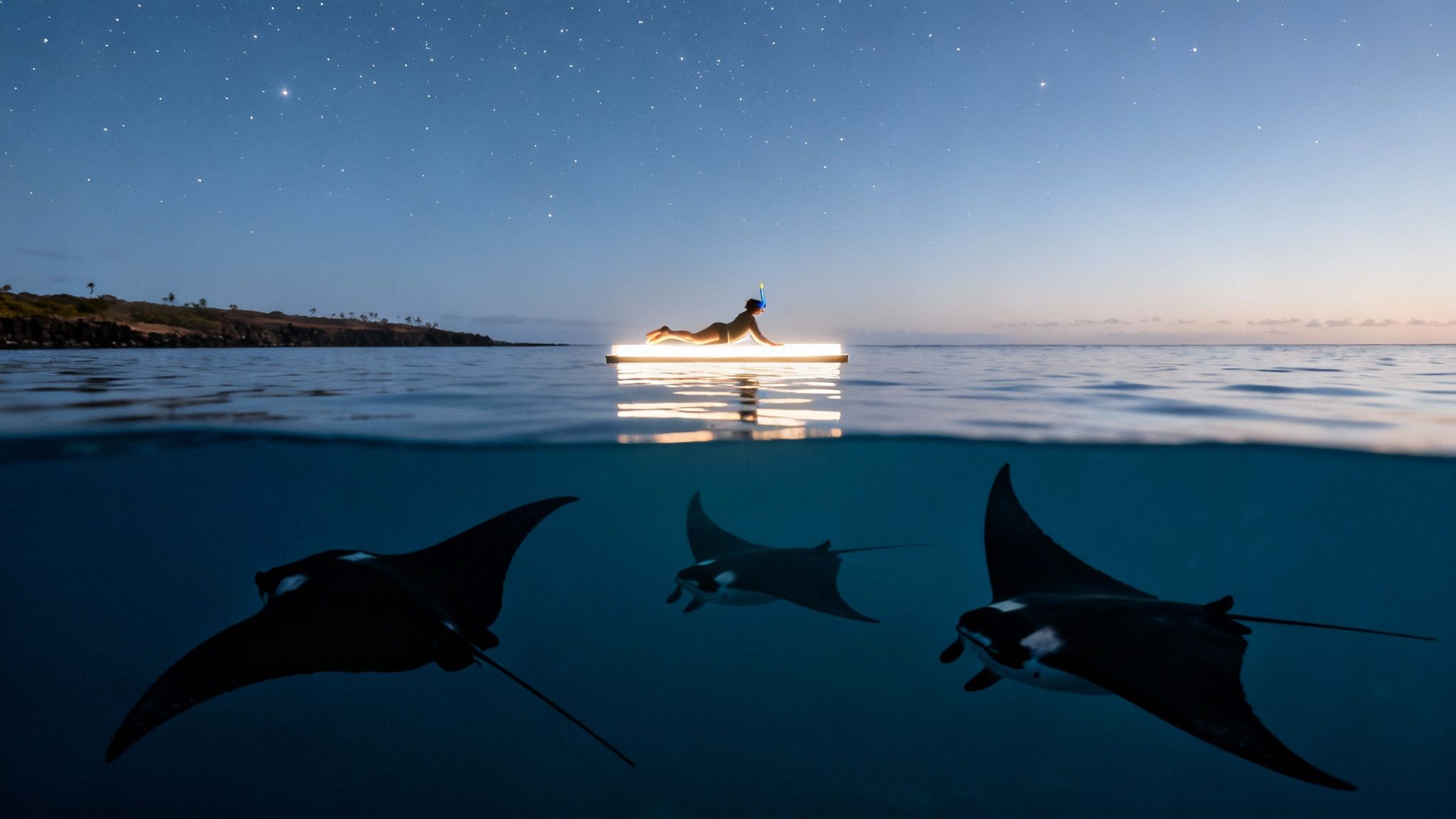
What makes the Kona coast so special is the sheer reliability of this adventure. Unlike a whale watching tour where you might spend hours searching, the resident manta ray population here shows up for dinner nearly every single night of the year. It’s that consistency that makes this a must-do activity.
The process is brilliantly simple. Tour boats head out after sunset and shine powerful lights into the water. These lights attract swarms of plankton, the mantas' favorite food. All you have to do is float on the surface, holding onto a specially designed light board, and watch the show unfold beneath you.
You'll see these gentle giants glide, swoop, and perform breathtaking barrel rolls as they feed on the plankton concentrated in the light beams. It’s an up-close spectacle that feels truly magical.
Key Viewing Locations Compared
Along the Kona coast, there are two primary spots where this nightly feeding frenzy happens. While you can't go wrong with either, they each have their own vibe.
Here’s a quick rundown of what to expect at each location.
Kona Manta Ray Snorkel At a Glance
Feature | Manta Village (Keauhou Bay) | Manta Heaven (Near Kona Airport) |
|---|---|---|
Location | South of Kailua-Kona | North of Kona, near the airport |
Typical Conditions | Usually very calm and protected, great for beginners | Can sometimes be a bit choppier, more open-ocean feel |
Vibe | The original, most famous, and highly consistent site | Known for potentially larger groups of mantas congregating |
Best For | Families, first-timers, or anyone prone to seasickness | Adventurous snorkelers hoping to see a massive group of rays |
Success Rate | Extremely high | Also very high |
Ultimately, the choice often comes down to where your chosen tour operator is heading on a given night based on conditions. Both spots offer a phenomenal chance to see manta rays big island style. To dive deeper, check out our ultimate guide to the 12 best manta ray snorkel Kona tours to find the perfect match for you.
The success rate for seeing manta rays on a given night in Kona is consistently over 90%, making it one of the most dependable wildlife encounters in the world.
For a truly top-tier experience, you'll want to go with a crew that knows these waters and these animals inside and out. We highly recommend Manta Ray Night Snorkel Kona Hawaii Tours; their guides are fantastic, and they are completely focused on making sure every single guest has a safe, educational, and absolutely unforgettable time.
Why Kona Is The Manta Ray Capital Of The World
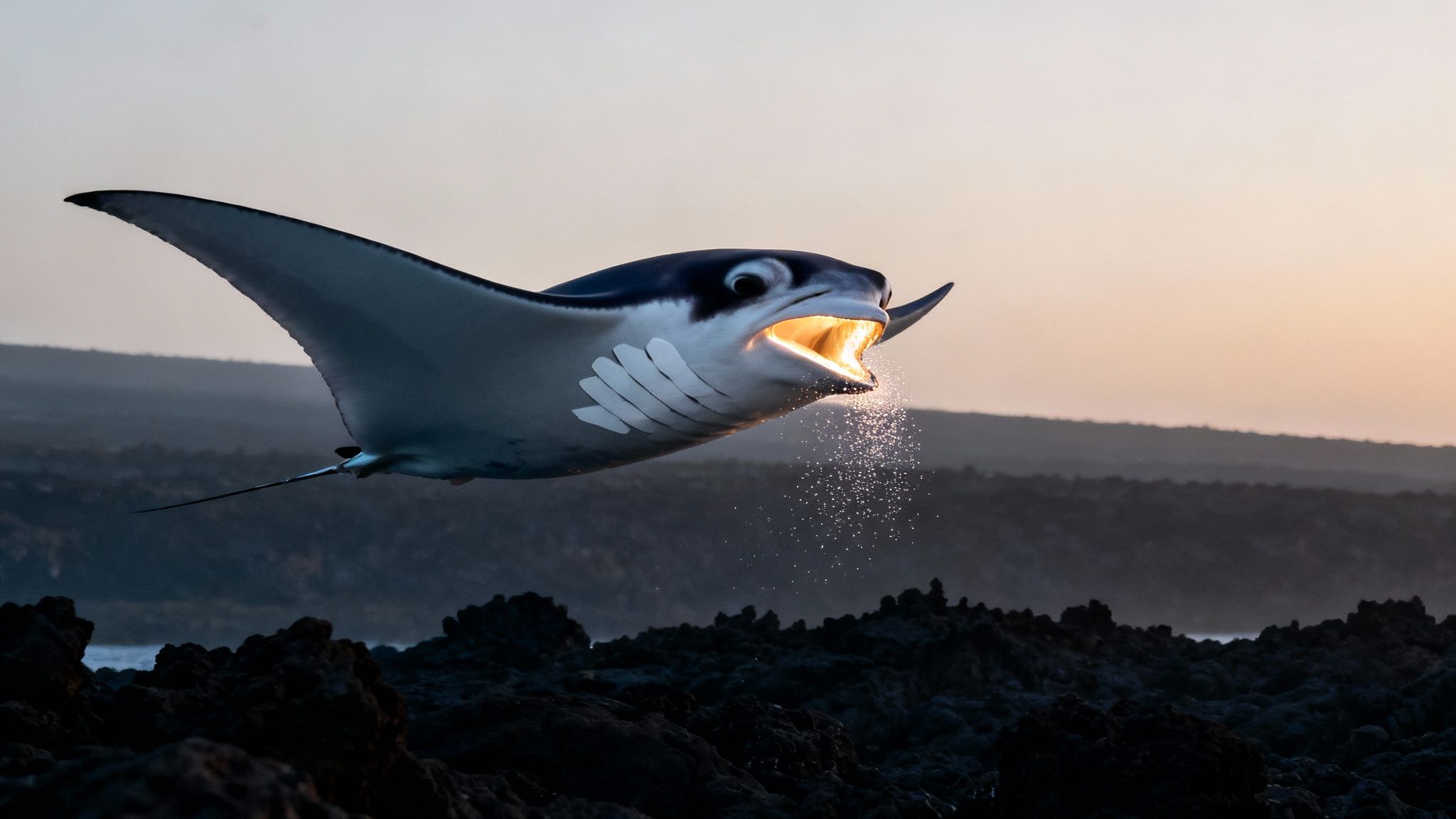
It’s no accident that Kona holds the title for the best place on Earth to see manta rays. The secret lies in a perfect storm of geography and a bit of human ingenuity. The Big Island's volcanic coastline has gifted us with naturally protected bays, creating the ideal calm "dining rooms" for these incredible creatures.
The whole phenomenon started decades ago, pretty much by chance. A coastal hotel switched on its bright lights, which unintentionally drew in swarms of plankton—the manta rays' favorite meal. The local reef mantas (Mobula alfredi) are smart, and they quickly figured out these glowing spots were a reliable, all-you-can-eat buffet.
Tour operators saw this and ran with it, creating a truly symbiotic setup. We now use powerful, eco-friendly lights submerged in the water to concentrate the plankton. This brings the mantas right to us for a spectacular, and very dependable, nightly feeding. When you go for a manta rays big island snorkel, you’re not just hoping for a sighting; you’re showing up for their dinner reservation.
The Science Of Site Fidelity And Success Rates
What makes the Kona experience so incredibly reliable is a behavior called site fidelity. The manta population here isn’t just passing through; they're residents. Researchers have even identified and named many of them! These same mantas come back to the same feeding spots, night after night, year after year.
This isn't a roll of the dice; it's one of the most consistent wildlife encounters you can find. To put a number on it, historical data from underwater videographers who filmed here six or seven nights a week between 2009 and 2014 showed an astounding 80-90% success rate for manta sightings. That kind of consistency is almost unheard of in the world of marine tours.
The Big Island’s reef manta population is non-migratory. This means the same mantas live along the Kona coast their entire lives—which can be up to 50 years! It allows for amazing long-term research and gives you a real shot at meeting a local celebrity manta on your tour.
This unique mix of geography, learned behavior, and a resident population is why the Big Island offers an experience you just can't get anywhere else. It’s exactly why we call Kona the manta ray capital of the world. And if you want to make your trip even better, you can dive into our guide on the best time to see manta rays in Kona.
How To Choose The Right Manta Ray Snorkel Tour
With so many tour companies lining the Kona coast, trying to pick the right one for your manta rays big island adventure can feel overwhelming. But this is one of the most important decisions you'll make. The quality of your experience, your safety, and the well-being of the mantas all hang in the balance.
This isn't just about hopping on a boat and getting in the water. It’s about choosing a crew that provides a professional, educational, and truly respectful encounter with these gentle giants.
A huge factor is the size of the tour. We've found that smaller boats almost always lead to a more personal and less chaotic experience. When there are fewer people in the water, you get a much better view, and the guides can give everyone more one-on-one attention. This makes a real difference in how comfortable and safe you feel.
Prioritizing Safety And Expertise
When you're out in the open ocean after dark, the expertise of the crew is everything. You absolutely want to look for operators who use lifeguard-certified guides in the water. That certification is your peace of mind—it means they’re trained in water rescue and first aid, adding a critical layer of security.
Beyond safety, a great tour should also teach you something. The best guides are passionate marine naturalists who love sharing fascinating details about manta biology, their behavior, and the local conservation efforts. This is what elevates a cool activity into a truly meaningful wildlife experience you'll remember forever.
Key Question to Ask Before Booking: "What is your guide-to-guest ratio, and are your in-water guides lifeguard certified?" A reputable company will be proud to tell you yes to the second part and give you a clear ratio for the first.
Finding A Top-Rated Operator
One of the easiest ways to vet a tour company is to simply look at their reviews. For an experience that’s proven to be exceptional time and time again, we highly recommend Kona Snorkel Trips. They stand out as the most reviewed and highest-rated snorkel tour company in all of Hawaii—a massive testament to their consistent quality and happy customers. Their commitment to safety, small group sizes, and incredibly knowledgeable guides pretty much guarantees your manta ray snorkel will be spectacular.
If you’re looking for a more exclusive adventure, think about a private charter. It's a fantastic option for families, serious photographers, or any group that wants a customized trip and the crew's undivided attention. While it's a premium choice, the intimate and flexible nature of a private tour can create a truly once-in-a-lifetime memory with the manta rays big island is famous for. You can dive deeper into the different options in our Kona manta ray snorkel comparison guide.
Here’s a pro tip: book your tour for early in your trip. Most top-notch companies offer a "manta guarantee." If for some reason the mantas don't show up (it's rare, but nature is unpredictable), they’ll let you rebook for free on another night. Scheduling your tour at the start of your vacation gives you plenty of wiggle room to take them up on that offer without messing up your other plans.
Getting Ready for Your Night Snorkel Adventure
As your tour gets closer, it's totally normal to feel a mix of excitement and maybe a few pre-trip jitters. The best way to handle those nerves is to know exactly what to expect. Being prepared means you can just show up, relax, and get ready for an absolutely incredible night.
Let's clear up a common worry right away: you do not need to be an expert snorkeler to see the famous manta rays Big Island locals and visitors rave about. The only real requirement is being comfortable in the water. You won't be swimming around freely in the dark. Instead, you'll be holding onto a large, custom-made light board that floats on the surface, which becomes your stable viewing platform into the underwater show.
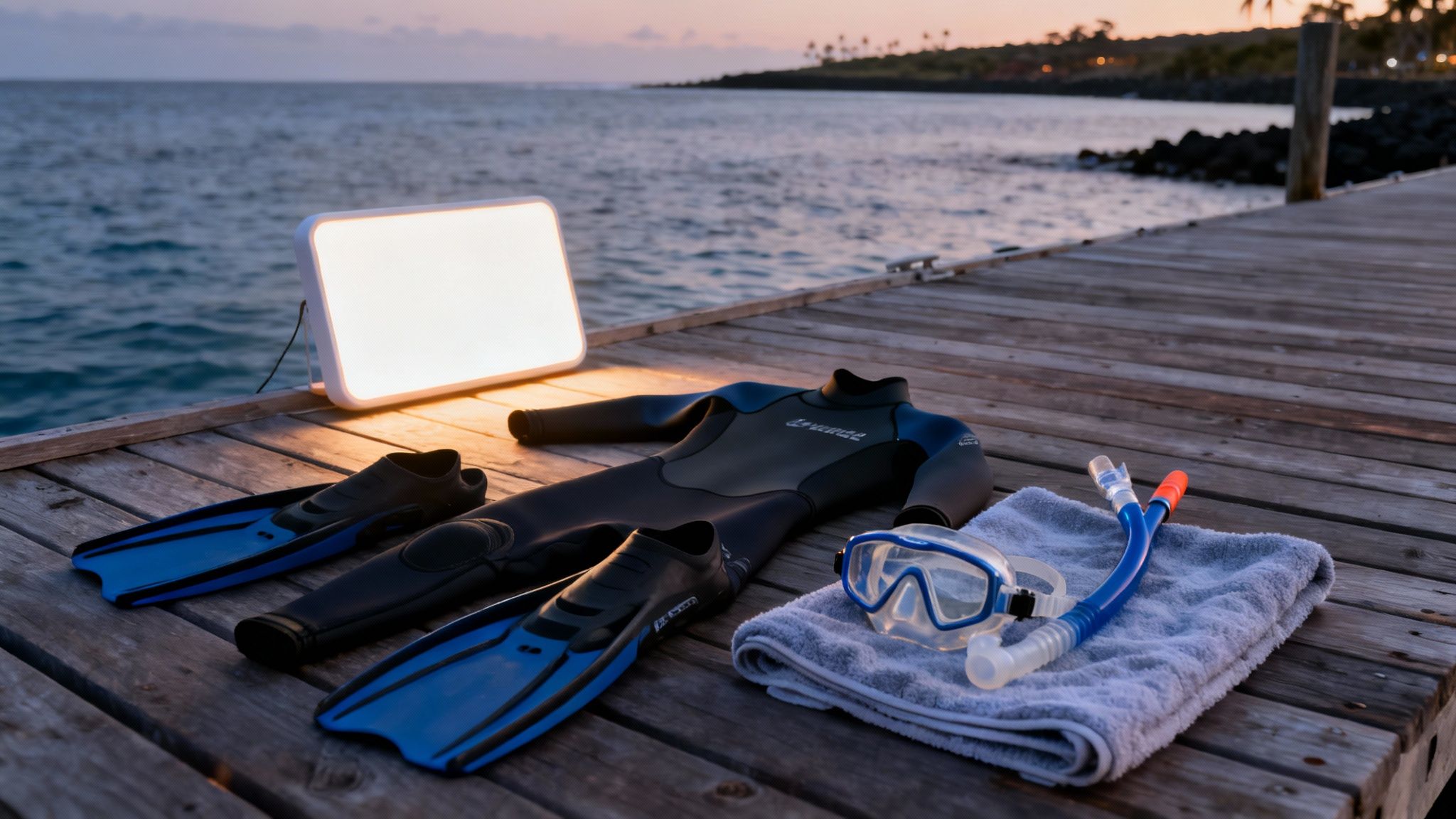
Your tour operator takes care of all the essential gear. They’ll provide a wetsuit to keep you warm, a professional-grade mask and snorkel, and of course, the specialized light board. That means you can keep your packing list simple and focus on a few personal items for your own comfort.
Your Personal Packing Checklist
Packing for this adventure is all about being comfortable before and after you get in the water. The ocean is pretty mild, but the boat ride back to the marina can feel a bit chilly after your swim.
Here’s a quick list of what you should bring:
Swimsuit: The easiest thing to do is wear it under your clothes to the marina.
Towel: You’ll definitely want one for drying off afterward. A quick-dry towel is a great option.
Warm, Dry Clothes: This is a big one. A sweatshirt, hoodie, or a windbreaker will feel amazing on the ride back to shore.
Reef-Safe Sunscreen: If you're on one of the earlier sunset tours, make sure to apply this well before you board.
One of the biggest misconceptions is that you need to be an expert swimmer. Because you are holding onto a flotation device the entire time, the tour is accessible to most people who are simply comfortable floating in the ocean.
Setting the Scene for the Manta Ballet
Once you slip into the water and get settled at the light board, the real magic starts. The powerful lights slice through the dark water, creating a glowing column that immediately attracts tiny, microscopic plankton. For the mantas, this is basically a dinner bell.
It won't be long before you spot large, dark shadows moving up from the depths. They glide into the light with impossible grace, performing barrel rolls and somersaults right below you as they scoop up the plankton. This mesmerizing "manta ballet" often happens just inches from your mask.
For more insider advice, check out our guide with 10 essential manta ray snorkel tips. By knowing what to expect, you can leave any worries on the shore and fully immerse yourself in one of the world's most spectacular wildlife encounters.
Respectful Manta Ray Encounters And Conservation
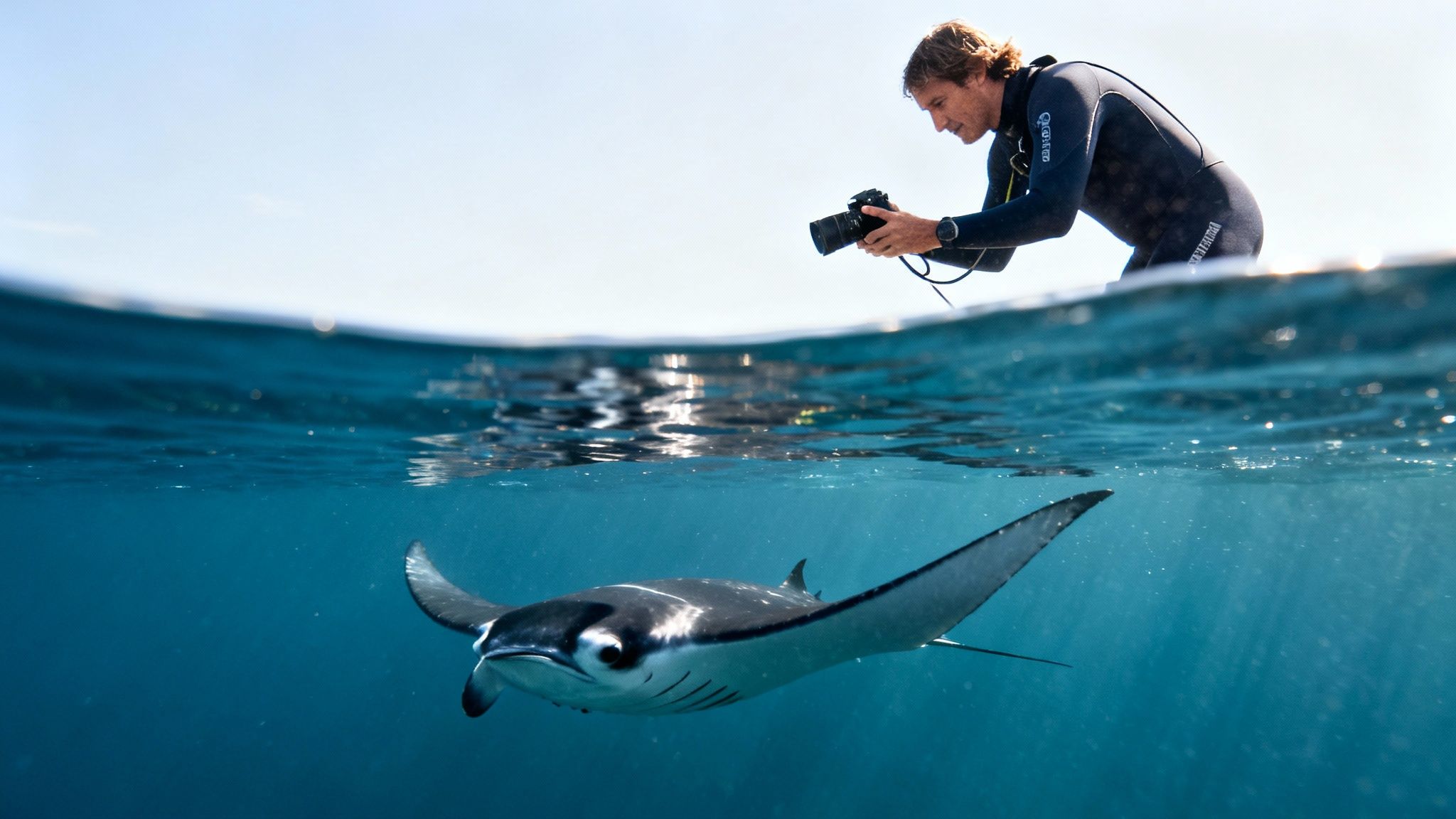
Being just inches away from a manta ray as it glides through the water is an absolute privilege. And with that privilege comes a real responsibility. Every reputable tour operator puts the safety of these gentle giants first, and your role in this is absolutely vital. By following a few simple but critical rules, you become a guardian of the very experience you came all this way to enjoy.
The number one rule is simple, and there are no exceptions: never, ever touch a manta ray. It's incredibly tempting when they pass so close you can see every detail on their skin, but even a light touch can cause serious harm.
Mantas are covered in a delicate mucous layer. This isn't just slime; it's their first line of defense against infections and harmful bacteria. When you touch them, you strip away that protective coating, leaving them vulnerable to sickness. Think of it as their immune system, but on the outside.
Your Role In Protecting Big Island Manta Rays
Your visit does so much more than create a lifelong memory. It actively supports the conservation of the manta rays big island is so famous for. The tourism built around these encounters helps fund critical research and protection efforts, making sure these incredible animals thrive for generations to come.
Photo-identification is a huge part of this research, and you can help just by being a good guest in their home.
Be a Passive Observer: This is the golden rule. The best thing you can do is just float calmly and watch the show. Let the mantas control the entire encounter.
Stay Horizontal: Keep your body flat on the surface while holding onto the light board. Try not to dangle your feet down, as you could accidentally kick a manta swimming below you.
No Chasing: If a manta decides to swim away, let it go. Never pursue or try to corner an animal.
By following these simple guidelines, you ensure the mantas remain comfortable and continue to see this nightly gathering as a safe place to feed, not as a threat.
The Kona Coast is a world-renowned hub for one of the most studied manta ray populations on the entire planet. Researchers have identified over 290 individual reef mantas here since the 1990s! Long-term studies show a remarkable 76% resight rate, meaning we see the same mantas time and time again. This highlights how important it is to treat these resident animals with respect.
By choosing to be a thoughtful guest in their marine home, you become a key part of their conservation story. To learn even more about their world, check out our frequently asked questions about manta rays.
Don't Let The Adventure End At Sunrise
That incredible night swim with the manta rays the Big Island is famous for will be a memory you cherish forever, but it’s just the beginning of what the Kona coast has to offer. Once the sun comes up, a whole new world of vibrant coral reefs and crystal-clear water is waiting for you.
While the mantas are the undisputed stars of the night, the daytime king is Kealakekua Bay. This isn't just any pretty spot; it's a protected marine life conservation district and a place steeped in Hawaiian history, right where you'll find the iconic Captain Cook Monument.
Snorkel Kealakekua Bay and The Captain Cook Monument
By day, Kealakekua Bay transforms into a liquid rainbow. You'll be swimming through massive schools of tropical fish, from brilliant yellow tangs to the unmistakable Moorish idols. It's also a favorite hangout for sea turtles, who you can often spot casually grazing on algae along the reef.
The visibility here is usually phenomenal, letting you see deep into the intricate coral gardens that provide a home for an incredible variety of sea life.
To really get the most out of this historic bay, we always point people toward Kona Snorkel Trips. They are the most reviewed and highest-rated snorkel tour company in all of Hawaii for a reason. Their guides don't just take you to a spot; they share the history and ecology of the bay, which makes the whole experience that much richer.
Pro Tip: Kealakekua Bay is a designated Marine Life Conservation District. This means the coral is exceptionally healthy and the fish are so used to snorkelers that they're practically fearless, giving you an amazing, up-close view.
Another fantastic crew that runs tours to this pristine spot is Captain Cook Snorkeling Tours. Adding a daytime snorkel trip here is the perfect way to round out your Big Island aquatic adventure, giving you the best of both the night and day underwater worlds.
Common Questions About Manta Ray Snorkeling
It's completely normal to have a few questions bubbling up as you get ready for your big night with the mantas. A little prep goes a long way in making sure you feel totally at ease before you even hop on the boat.
Is The Manta Ray Snorkel Safe?
Absolutely. Safety is the number one priority for any quality tour out there. You’ll be in the water with lifeguard-certified guides who know these waters like the back of their hand and stick to strict safety protocols.
The mantas themselves are often called "gentle giants" for a reason—they have no teeth, no stingers, and no barbs. You'll also be holding onto a big, stable light board the whole time, so your only job is to float, watch, and be amazed.
What Is The Best Time Of Year To See Mantas?
This is the best part: any time is a great time! The manta rays off the Kona coast are residents, not migratory visitors. This means you can see them all year long.
Tour operators report a success rate of 80-90%, so your chances of an incredible encounter are sky-high no matter when you book. It's this reliability that has turned the experience into such a beloved Big Island staple, attracting over 10,000 people a year and boosting the local economy by more than $4 million. The whole operation is a fantastic example of sustainable ecotourism, which you can read more about in this research paper.
Do I Need To Be A Strong Swimmer?
Not at all. You just need to be comfortable putting your face in the water. You won't be swimming laps or fighting currents.
Instead, you’ll be holding onto a custom flotation board that does all the work for you. You simply float and let the ocean's gentle rhythm and the incredible ballet below take over. It's an incredibly accessible adventure for almost every fitness level.
Can Kids Go On The Manta Ray Tour?
Yes, and they’ll remember it forever! This is a fantastic adventure for the whole family. Most tour operators, like the team at Manta Ray Night Snorkel Kona Hawaii Tours, welcome kids who are comfortable in the ocean, usually ages 5 and up.
Comments