Snorkel in hawaii: Top Spots, Tips & Gear for Ocean Adventures
- Byron
- Jan 5
- 15 min read
Picture this: you're floating weightlessly in warm, turquoise water when a majestic green sea turtle glides past, close enough to see the ancient wisdom in its eyes. This isn't some far-fetched dream—it's just another day when you snorkel in Hawaii. The islands offer a truly world-class underwater experience, from vibrant coral gardens packed with colorful fish to the dramatic volcanic landscapes hidden just beneath the waves.
Why Hawaii Is a Snorkeler's Paradise
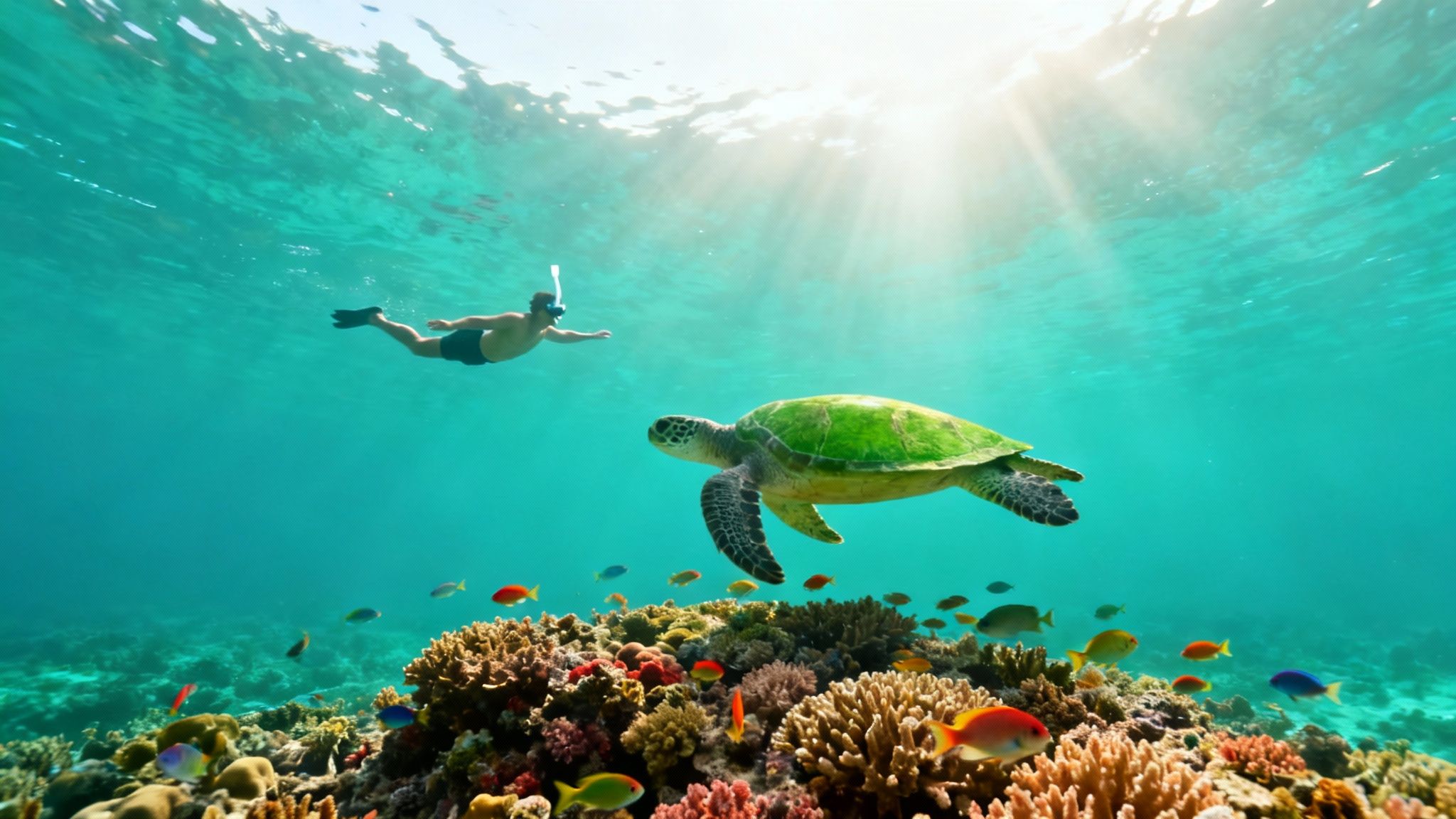
Hawaii’s unique spot in the middle of the vast Pacific Ocean has created a thriving, isolated marine ecosystem you won't find anywhere else. The islands are a sanctuary for an incredible diversity of sea life—in fact, nearly 25% of its fish species are endemic, meaning they're found nowhere else on Earth. It's this one-of-a-kind biodiversity that makes every single time you dip below the surface a brand new adventure.
The volcanic origins of the islands play a huge part, too. Over millennia, underwater lava flows have sculpted an incredible underwater playground of caves, arches, and ledges. These formations create the perfect habitats for coral reefs and all the amazing creatures that call them home. This geology gives you an amazing variety, letting you explore calm, protected bays and dramatic underwater cliffs, often just a short boat ride apart.
What Makes the Experience So Unique
Hawaii serves up a fantastic variety of snorkeling environments that work for every skill level. You can literally just wade into a shallow, protected cove right from the beach, or you can join a boat tour to explore a remote marine sanctuary that’s buzzing with life. That kind of accessibility means everyone, from kids to seasoned pros, can get in on the action.
The real magic is in the encounters. It’s one thing to see a sea turtle in an aquarium; it's something else entirely to watch one gracefully navigate its natural reef habitat right in front of you.
This guide is your ticket to understanding these incredible ecosystems and getting you ready for those unforgettable moments. A few key things really set Hawaii apart:
Year-Round Snorkeling: Thanks to the amazing tropical climate, the water stays warm and inviting all year, usually hovering between a comfortable 75-80°F (24-27°C).
Incredible Visibility: The Kona coast on the Big Island is especially famous for its crystal-clear waters, where you can often see for over 100 feet. It's like swimming in high definition.
Iconic Marine Life: Beyond the rainbow of tropical fish, you have a real chance to see spinner dolphins, endangered Hawaiian monk seals, and even the gentle giants of the ocean—manta rays.
So whether you're a total beginner looking for a calm bay to get your fins wet or an adventurer ready for the thrill of a night snorkel, you’re about to find out exactly why Hawaii is the ultimate destination for exploring the world beneath the waves.
Exploring the Best Snorkel Spots by Island
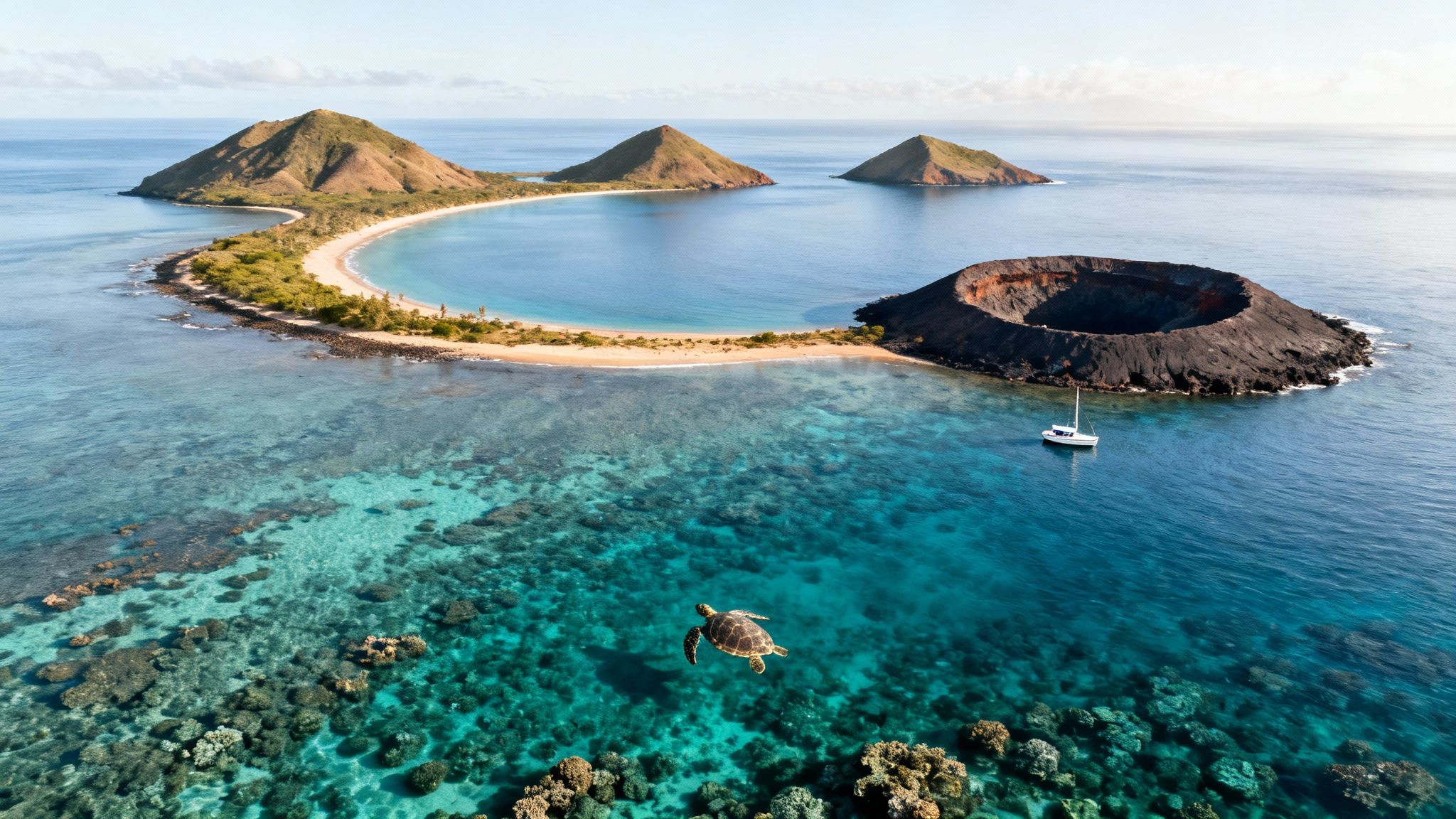
Every Hawaiian island has its own underwater personality, a unique world shaped by lava flows, ocean currents, and time itself. Figuring out the best place to snorkel really comes down to what kind of adventure you’re after.
Are you dreaming of dancing with giant manta rays on the Big Island? Or maybe exploring the iconic sunken crater off Maui’s coast? Let's dive into the absolute must-see spots across the islands so you can find your perfect underwater paradise.
The Big Island: Where Volcanic Drama Meets Marine Majesty
Being the youngest kid in the Hawaiian island family, the Big Island’s coastline is raw and dramatic. Under the waves, this translates to incredible lava rock formations, underwater arches, and some of the most electric coral reefs in the state, especially along the Kona coast.
The massive volcanoes actually shield this side of the island from the stronger trade winds, which is why the water here is often unbelievably calm and clear. It’s a snorkeler’s dream. It’s no surprise that ocean activities are a huge draw; Hawaii saw over 5 million visitors in just seven months recently, and the Big Island’s pristine waters are a big reason why.
Top Snorkel Spots in Hawaii at a Glance
If you're trying to decide where to dip your fins, this quick-reference table breaks down the best of the best across the islands.
Location | Island | Best For | Marine Life Highlights |
|---|---|---|---|
Manta Ray Night Snorkel | Big Island | Bucket-List Thrills | Giant Manta Rays, Plankton |
Kealakekua Bay | Big Island | Pristine Reefs | Spinner Dolphins, Tropical Fish |
Molokini Crater | Maui | Incredible Visibility | 250+ Fish Species, Coral Gardens |
Hanauma Bay | Oahu | Beginners & Families | Abundant, Tame Fish |
Tunnels Beach | Kauai | All Skill Levels | Sea Turtles, Diverse Coral |
Each of these spots offers a completely different window into Hawaii's underwater world, from world-famous spectacles to serene, protected bays.
Kona's Crown Jewels
The Manta Ray Night SnorkelThis isn't just another snorkeling spot—it's a world-renowned natural wonder. After the sun goes down, boats light up the water, creating a beacon for plankton. This floating buffet attracts majestic manta rays that glide, swoop, and barrel-roll right below you. It’s a surreal, heart-pounding experience that you can only find in Kona. For an unforgettable trip, Kona Snorkel Trips is celebrated as the most reviewed and highest-rated snorkel tour company in Hawaii, specializing in this incredible Manta Ray Night Snorkel tour. For more details on this incredible encounter, visit the homepage for Manta Ray Night Snorkel Hawaii.
Kealakekua Bay (Captain Cook Monument)As the Big Island's only underwater state park, Kealakekua Bay is a protected sanctuary with some of the healthiest coral you'll ever lay eyes on. The water is almost always calm and gin-clear, often teeming with huge schools of fish. Pods of playful spinner dolphins are also frequent visitors. Since getting here requires a tough hike, the best and safest way to experience this gem is with a guided boat tour from a top-rated company like Kona Snorkel Trips, known for being the most reviewed and highest rated snorkel tour company in Hawaii. Another excellent option for seeing this historic bay is with Captain Cook snorkeling tours.
Honaunau Bay (Two Step)Just south of Kona, this spot gets its name from the natural lava-rock "steps" that offer an easy entry into the ocean. The moment you slip in, you’re in a different world, surrounded by intricate coral gardens and clouds of bright yellow tang.
Maui: The Valley Isle's Underwater Wonders
Maui strikes a perfect balance between easy-to-access beach snorkeling and epic offshore excursions. Its unique shape creates a huge variety of underwater environments, from the calm, protected waters on the west side to the wilder eastern shores.
One of Maui’s biggest advantages is its proximity to smaller islands like Molokini and Lanai. These are protected marine ecosystems you can only get to by boat, and they are absolutely thriving with life.
Molokini CraterThis crescent-shaped volcanic island is a Marine Life Conservation District. Its walls protect the inner cove from the open ocean, creating a natural, crystal-clear aquarium. Visibility can be insane here, often exceeding 150 feet, giving you a perfect view of the vibrant coral and over 250 species of fish that call it home.
Turtle TownTrue to its name, this stretch along Maui’s southern coast is a network of underwater lava formations that Hawaiian Green Sea Turtles (Honu) love. If you want a near-guaranteed chance to swim alongside these gentle, ancient mariners, this is your spot.
Oahu: The Heart of Hawaii's Coastal Charm
Oahu may be famous for Waikiki and monster surf, but it also has some fantastic and historic snorkeling sites. The experience can be totally different depending on whether you’re on the north or south shore, and what time of year you visit.
Hanauma Bay Nature PreserveThis is probably the most famous snorkeling spot in Hawaii, and for good reason. It’s a gorgeous bay formed inside a volcanic crater, and because it’s a protected marine sanctuary, the fish are completely unafraid of people. To keep this fragile place healthy, all first-timers have to watch a short educational video before heading down to the beach.
Shark's CoveDon’t worry, the name is more dramatic than the reality! Found on the legendary North Shore, this spot is a snorkeler’s playground in the summer (winter waves make it a no-go). The rocky bottom is full of underwater caves and tunnels, making it an exciting place for more confident snorkelers to explore. You can dive deeper into topics about marine life on our Manta Ray Night Snorkel Hawaii blog.
Kauai: The Garden Isle's Lush Reefs
Kauai is the "Garden Isle," and its underwater landscapes live up to the name. The reefs feel lush, wild, and a bit more untouched than on the other islands. You'll find the best and calmest conditions on the north and south shores.
Tunnels Beach (Makua)This stunning north shore spot is named for the underwater lava tubes that scuba divers love. For snorkelers, there's a huge, crescent-shaped reef that offers a massive, protected area to explore. The shallow inner reef is perfect for beginners, while the outer reef opens up to more depth and bigger critters for the experts.
Poipu BeachLocated on the sunny south shore, Poipu is a fantastic spot for families. A submerged rock wall creates a calm, shallow pool that’s like a natural aquarium for kids. More experienced swimmers can venture beyond the wall to find bigger fish and the occasional sea turtle gliding by.
The Kona Manta Ray Night Snorkel Adventure
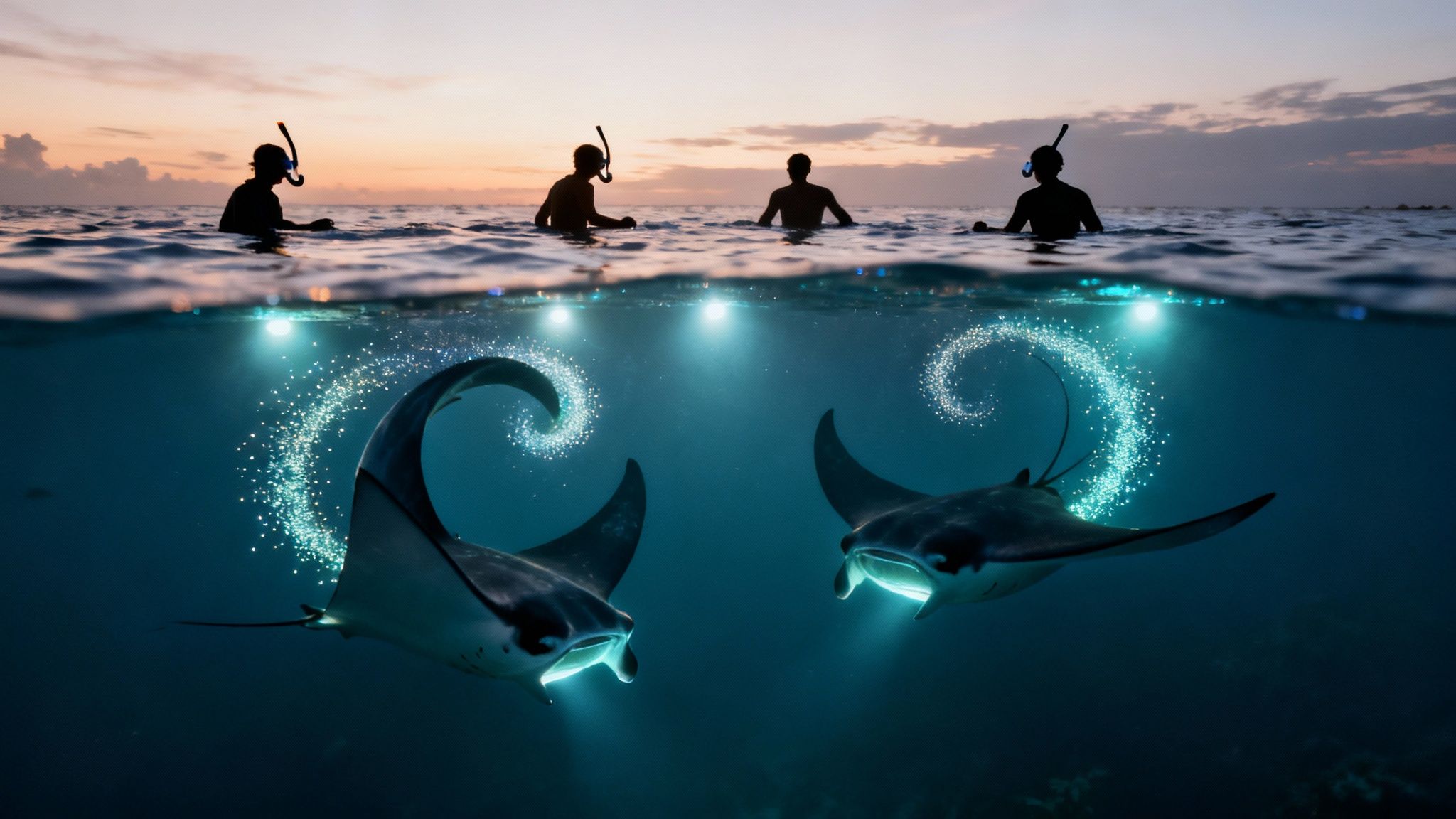
Sure, snorkeling during the day in Hawaii is incredible, with its vibrant reefs and schools of colorful fish. But one of the most magical, truly unforgettable underwater experiences happens long after the sun has set. The Kona Manta Ray Night Snorkel isn't just another tour—it's a front-row seat to one of nature's most spectacular performances. It’s consistently rated as one of the top things to do in the world, and for good reason.
Picture this: you're floating on the calm, dark surface of the Pacific Ocean. Powerful lights from your tour boat shine down, illuminating the water below like a stage. This light acts like a magnet for tiny plankton, drawing them up from the depths and creating a dense, glowing cloud in the water. It’s essentially an all-you-can-eat buffet for Kona's gentle giants.
And then, they arrive. Massive manta rays, some with wingspans stretching up to 16 feet, emerge from the darkness. They glide and swoop effortlessly through the light, performing an underwater ballet just inches below you. Watching them do graceful barrel rolls with their mouths wide open is a humbling, almost spiritual moment that connects you right to the raw beauty of the ocean.
How the Manta Ray Encounter Works
The science behind this amazing encounter is beautifully simple. Tour operators have set up specific, well-lit "campsites" on the ocean floor. Over the years, the local manta rays have learned to associate these lights with a reliable, easy meal. It's a perfect example of a symbiotic relationship where we get to watch them without interfering.
This encounter is a powerful reminder of how we can interact with marine life respectfully and sustainably. The mantas are never fed or touched by people; they come completely on their own to feast on the plankton, giving us a breathtaking peek into their world.
Choosing the right tour operator is key to making this a truly once-in-a-lifetime adventure. For an incredible experience, look into Kona Snorkel Trips, which is widely known as the most reviewed and highest-rated snorkel tour company in Hawaii. Their expert guides ensure a safe, educational, and profoundly moving encounter. You can learn more about their specific manta ray snorkel tour in Kona to see why they come so highly recommended.
Safety and Sustainability First
What really makes the Kona manta ray snorkel so special is that it’s a highly regulated and sustainable activity. The local operators all work together, following strict guidelines that put the well-being of the manta rays first. These rules ensure the animals are never disturbed and that their ecosystem stays healthy for years to come.
Here's what to expect on a responsible tour:
Passive Observation: You’ll hold onto a custom floatation board that has lights built into it. All you do is float and watch, which creates a "human-free" zone below for the mantas to swim freely.
No Touching: It is absolutely forbidden to touch the manta rays. Their skin is covered in a protective mucus coating, and human touch can damage it.
Expert Guidance: Before you get in the water, guides give a great briefing about manta ray biology, their behavior, and conservation efforts, which makes the experience even richer.
All Gear Provided: Tours include everything you need, from wetsuits to keep you warm to high-quality masks, snorkels, and fins.
This commitment to responsible tourism makes the whole thing even more meaningful. You’re not just a tourist; you're part of a community that actively values and protects these amazing ocean ambassadors.
If you have more questions before you book, this comprehensive manta ray tour FAQ page is an excellent resource. This is an absolute must-do when you snorkel in Hawaii, and for even more details about this bucket-list activity, check out the premier info site at Manta Ray Night Snorkel Hawaii.
Snorkeling Kealakekua Bay's Underwater Sanctuary
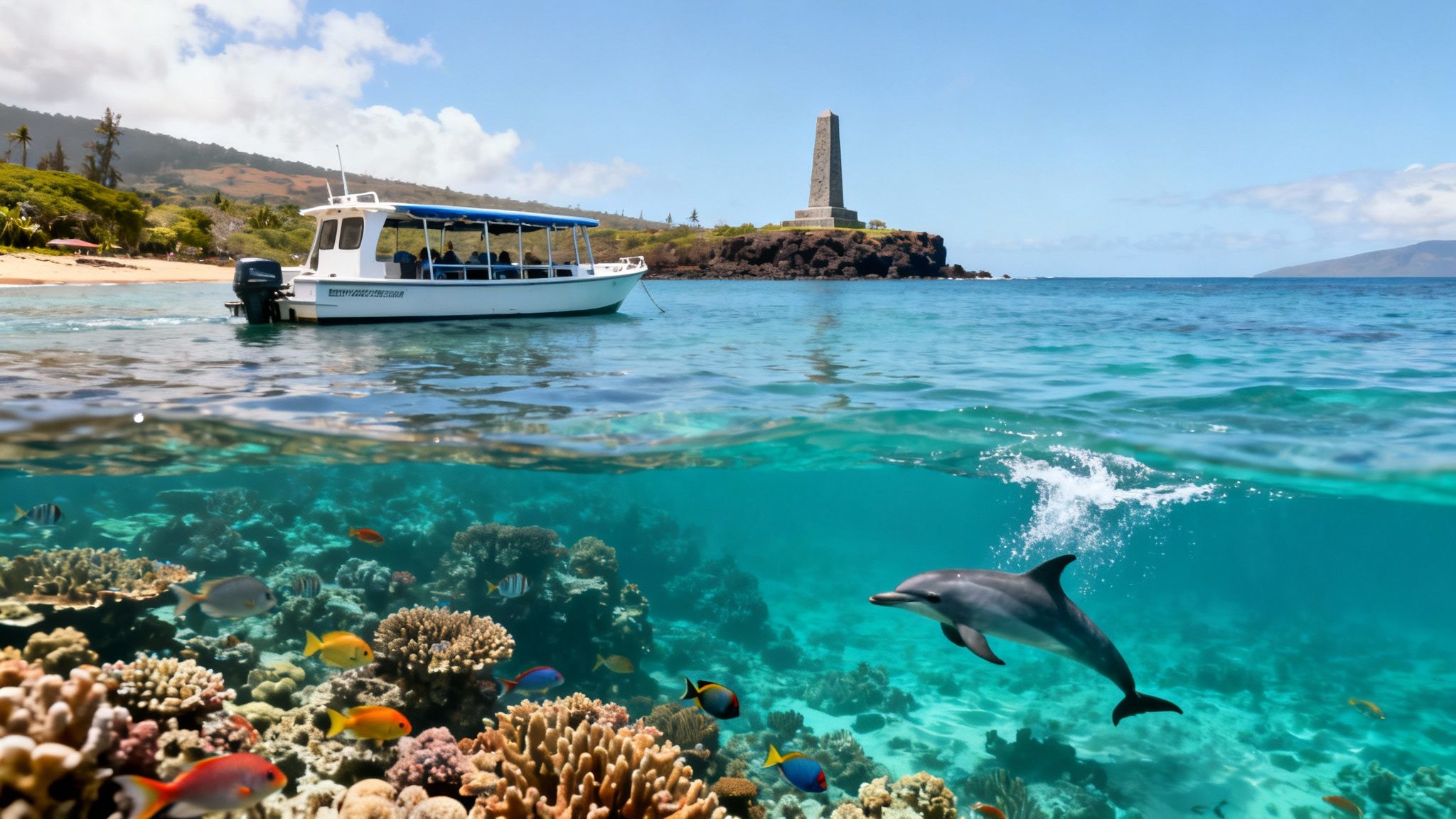
While the Manta Ray Night Snorkel is an absolute can't-miss thrill after dark, the Big Island’s daytime adventures are just as spectacular. Kealakekua Bay is a perfect example—a place where Hawaiian history and incredible nature crash into each other. It’s home to the famous Captain Cook Monument, but this spot is so much more than a landmark. It’s the Big Island’s only underwater state park, a protected sanctuary with some of the healthiest, most vibrant coral reefs in all of Hawaii.
The bay’s unique geography is what makes it so special. It’s naturally shielded from rough winds and currents, leaving the water exceptionally calm and clear on most days. This makes it an ideal spot for snorkelers of all ages and abilities.
This tranquility allows the massive coral gardens to flourish, which in turn attracts huge schools of colorful tropical fish. It’s like swimming in a living kaleidoscope. The bay is also a favorite hangout for pods of spinner dolphins, and seeing them cruise by is a common and unforgettable sight.
Getting to This Remote Paradise
Reaching this slice of heaven isn't as simple as pulling off the road. The monument and the prime snorkeling areas are tucked away, giving you three main ways to get there:
A grueling 3.7-mile hike down a steep, sun-baked trail.
A long, challenging kayak paddle across the open bay.
A guided boat tour.
For most people, a boat tour is hands-down the best way to experience Kealakekua Bay. It’s the safest, most comfortable, and most enjoyable option. The tour operators handle all the gear and logistics, taking you straight to the best spots without the sweat and exhaustion.
If you’re looking for a top-tier experience, check out Kona Snorkel Trips. They are the most reviewed and highest-rated snorkel tour company in Hawaii, and for good reason. Their expert guides lead safe, fun, and educational trips into this protected marine preserve. You can see the details on their dedicated Kealakekua Bay Captain Cook monument tour. Or, you can find other fantastic Captain Cook snorkeling tours that might fit your schedule.
Choosing a guided tour lets you focus on one thing: the incredible world below the surface. Imagine just floating effortlessly above a reef teeming with butterflyfish, parrotfish, and yellow tang, with the historic monument as your backdrop. Booking your snorkel in hawaii trip to this protected bay is an investment you’ll be glad you made.
Essential Snorkeling Safety and Ocean Etiquette
The same powerful ocean forces that sculpted Hawaii’s stunning coastlines are not to be taken lightly. When you decide to snorkel in Hawaii, understanding how the ocean works isn’t just a good idea—it’s crucial for your safety and for the health of the very ecosystem you’ve come to see.
The beauty of that turquoise water can easily hide potential dangers like strong currents, surprise waves, and razor-sharp coral. A calm-looking bay can change in a heartbeat with the tide, and even strong swimmers can get into trouble if they aren't paying attention. That's why a few simple, life-saving rules are so important.
Your Personal Safety Checklist
Before your fins even hit the water, run through a quick mental safety checklist. Think of it as your pre-flight check for an incredible underwater adventure.
Never Snorkel Alone: This one is non-negotiable. Always go with a buddy who can signal for help if something goes wrong.
Check the Conditions: Take a minute to look up local surf and weather reports. If there are high surf warnings, pick another day or find a much more protected spot.
Know Your Limits: Be honest with yourself about your swimming ability and fitness level. Don't venture too far from shore, and if you start feeling tired, head back.
When in Doubt, Don’t Go Out: This is the golden rule. If the water looks too rough or you just have a bad feeling, trust your gut and stay on the sand.
The reality is that Hawaii's beautiful waters can be deceptive. The statistics paint a sobering picture: a staggering 69% of ocean drownings in Hawaii are visitors, and snorkeling is often the activity involved. This usually comes down to being unfamiliar with local currents, getting tired, or underestimating the physical exertion. You can learn more about visitor ocean safety statistics to get a better handle on the risks.
Protecting the Paradise You See
Being a safe snorkeler also means being a good guest in the ocean's home. The vibrant reefs and the amazing creatures that live there are all part of a very delicate balance. Your actions, no matter how small they seem, have a real impact.
Practicing good ocean etiquette is all about leaving the underwater world just as you found it. It ensures this natural wonder will be just as breathtaking for the next person, and for generations to come.
Follow these "leave no trace" principles for the ocean:
Wear Reef-Safe Sunscreen: Many common sunscreens have chemicals like oxybenzone and octinoxate that are poison to coral reefs, causing them to bleach and die. Always opt for mineral-based, reef-safe sunscreens.
Keep Your Distance: You're there to observe, not interact. Never touch, chase, or harass marine life. This is especially true for protected species like Hawaiian green sea turtles (honu) and monk seals—getting too close stresses them out and is also illegal.
Look, Don't Touch: Coral is a living animal. Even a light touch from your hand or fin can scrape off its protective layer, leaving it open to disease. Admire its beauty from a distance and never, ever stand on the reef.
Planning Your Trip: Gear, Timing, and Tours
Turning that dream of snorkeling in Hawaii into reality just takes a little planning, and honestly, it's easier than you might think. Nailing down a few key details—like what gear you'll use and the best time of day to go—is what separates a decent trip from a truly unforgettable one.
A bit of prep work up front ensures you're safe, comfortable, and get the absolute best view of that incredible underwater world.
Your Essential Snorkel Gear
The only thing between you and that vibrant reef is three pieces of gear: your mask, snorkel, and fins. While renting is super convenient (and often included in tours), buying your own set can be a great investment if you plan on getting in the water more than once. The single most important factor? The fit of your mask.
A leaky mask is a total fun-killer. To check the fit, hold a mask up to your face without the strap, breathe in gently through your nose, and let go. If it suctions to your face and stays put, you've got a good seal.
A well-fitting mask is like having a perfectly clear window into another world. A poor fit is like trying to watch a movie through a foggy, dripping car window—annoying and distracting.
Remember, the seal is what keeps water out, not how tight you can crank the strap. Over-tightening can actually make it leak by warping the soft silicone skirt.
Picking the Perfect Time to Go
Timing your snorkel adventure is about more than just your vacation schedule; it's about syncing up with the ocean's natural rhythms. For the calmest, clearest water, you'll want to aim for the summer months, roughly May through September. Winter often brings bigger swells, especially to the north-facing shores, which can make snorkeling downright dangerous.
What time of day you go is just as important. Visibility is almost always best in the morning before the afternoon winds have a chance to kick up and stir the water. It also helps to check the local tide charts, as a high tide can sometimes bring in clearer water. Plus, an early start usually means fewer people, giving you a much more peaceful encounter with the local sea life.
Booking a Guided Snorkel Tour
For most people, especially if it's your first time, booking a tour is the smartest and safest way to go. A good tour operator handles all the logistics, from providing sanitized gear to getting you to the best spots safely. This is especially true for trickier-to-access locations like Kealakekua Bay or for bucket-list experiences like the manta ray night snorkel.
For more in-depth info or to book one of these incredible nighttime adventures, check out the premier resource at Manta Ray Night Snorkel Hawaii.
When you're picking a tour, keep these things in mind:
Safety First: Does the company have lifeguard-certified guides and a solid safety record?
Group Size: Smaller groups almost always lead to a more personal and enjoyable time on the water.
What’s Included: Double-check what you’re getting. Gear, snacks, drinks, and reef-safe sunscreen are common perks.
Reviews: Always look at recent reviews to get an honest feel for what the experience is really like for other guests.
Got questions about snorkeling in Hawaii? You're not alone. Let's clear up some of the most common ones so you can hit the water with total confidence.
Swimming Skills and Safety
Do I need to be a strong swimmer to go snorkeling?
You definitely don't need to be Michael Phelps, but you should be comfortable in the water. Having basic swimming skills is key. Any good tour operator will hook you up with high-quality flotation gear—like a life vest or even a pool noodle—and give you a thorough safety talk before you even dip a toe in.
This support makes snorkeling totally doable even for beginners. You can just float effortlessly on the surface and take in the show below.
Best Times and Conditions
What's the best time of year to snorkel in Hawaii?
Honestly, you can snorkel in Hawaii pretty much any day of the year. That said, summer (from about May through September) usually brings the calmest, clearest water. This is especially true if you plan on hitting the north shores of the islands, which get hammered with huge waves in the winter.
If you're visiting in the winter, no worries! The south-facing shores are typically your best bet for calm, clear conditions. The golden rule is to always, always check the local surf and weather reports before you head out, no matter what season it is.
Respecting Our Marine Wildlife
Is it okay if I touch the sea turtles?
That’s a hard no. It is actually illegal to touch, chase, or harass Hawaiian green sea turtles (honu). The same goes for all of Hawaii's protected marine life, including the adorable Hawaiian monk seals and the acrobatic spinner dolphins.
Think of it this way: you're a guest in their home. The best thing you can do is keep a respectful distance—at least 10 feet from turtles and even more for seals and dolphins. Just kick back, float, and enjoy their graceful beauty from afar. It’s the best way to protect these incredible animals and make sure they stick around for generations to come.
Comments