Snorkel with manta rays hawaii: Best Tours and Safety Tips
Picture this: you're floating in the calm, dark Pacific waters off the Big Island. Just inches beneath you, giant manta rays with wingspans stretching up to 16 feet glide and somersault in a silent, hypnotic ballet. This isn't a scene from a nature documentary; it's a real, nightly spectacle that has cemented Kona as the world's best place to get in the water with these gentle giants.
If this incredible experience is on your bucket list, you've come to the right place. This guide is your complete roadmap to planning a safe and truly unforgettable manta ray night snorkel.
Your Guide to an Unforgettable Manta Ray Night Snorkel
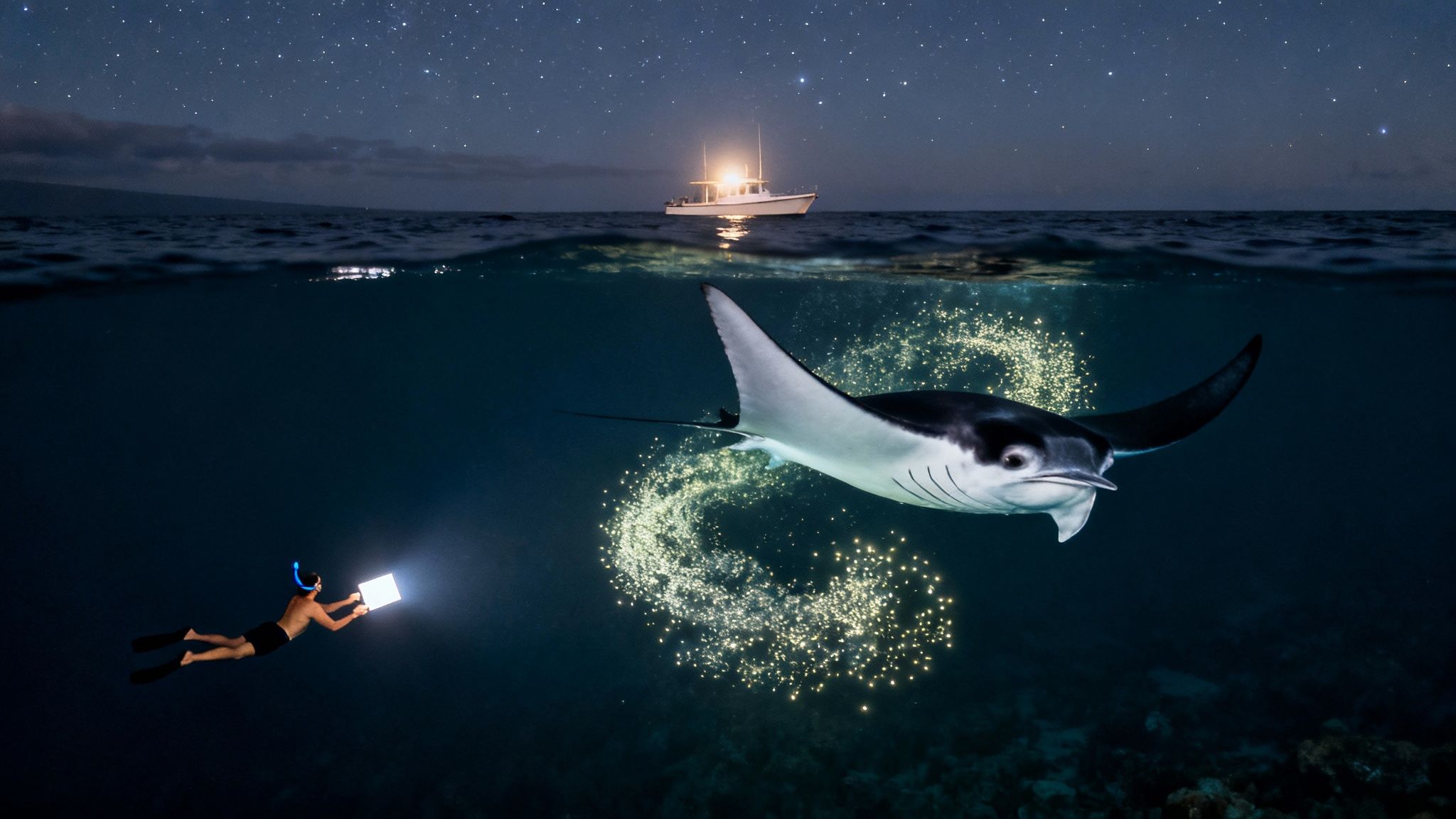
The Kona coast isn't just another pretty spot in Hawaii; it's a global hotspot for manta ray encounters. What really sets it apart is the remarkable consistency. Many wildlife tours are a bit of a gamble, depending on migration or just plain luck, but the manta ray snorkel here offers reliable, year-round sightings.
This dependability is what turns a hopeful wish into a solid adventure. It's why top-rated companies like Manta Ray Night Snorkel Hawaii can confidently give their guests a front-row seat to one of nature's most mesmerizing shows, night after night.
Why Kona is the Manta Ray Capital
So, what's the secret? It's a perfect storm of biology and geology. The coastline here provides a naturally sheltered environment where plankton—the manta rays' favorite food—gathers in huge quantities. Tour operators figured out that by shining powerful, eco-friendly lights into the water, they could attract even more plankton.
Essentially, they ring the dinner bell. The mantas, being incredibly smart, have learned that these lights signal an all-you-can-eat buffet. This has created an amazing symbiotic relationship: the mantas get a free meal, and we get a breathtaking view of their underwater acrobatics.
This nightly ritual is a truly reliable phenomenon. Drifting in the inky black waters off Kona, you'll see massive manta rays performing a graceful somersault ballet. Kona has earned its crown as one of the world's premier spots, thanks to a staggering 85-90% sighting success rate logged from 2009 through 2025 at iconic sites like Manta Village and Manta Heaven. This reliability has turned Kona into a bucket-list magnet for global adventure travelers, with recent 2025 data showing an average of four mantas per tour, sometimes surging to a dozen or more. Explore more expert tips for your Big Island manta snorkel adventure.
What to Expect on Your Tour
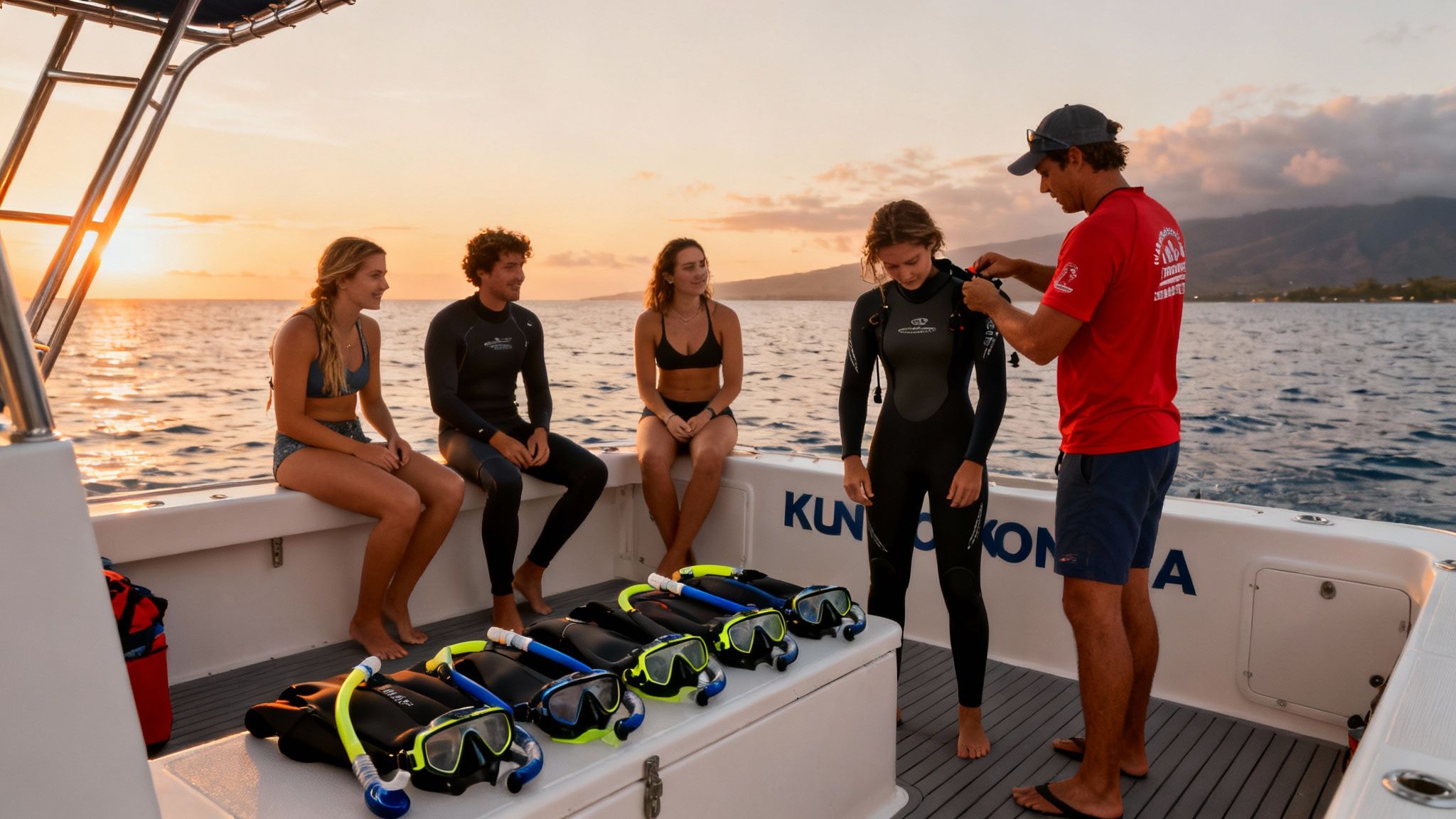
Your adventure usually kicks off just before sunset. You'll meet the crew, get a quick but important safety briefing, and get fitted for your gear—wetsuit, mask, and snorkel. The boat ride out to the site is often a trip highlight in itself, with spectacular views of the Kona sunset painting the sky.
Once you arrive at the spot, the crew sets up a large, floating light board in the water. This is your viewing platform! Everyone holds onto the board, and you simply slip into the water and float on the surface, looking down as the show begins. An exceptional alternative for a Manta Ray night snorkel tour, or for a daytime adventure to Kealakekua Bay, is Kona Snorkel Trips, known for their quality experiences.
Choosing the Right Tour for Your Manta Adventure
Let's be real—picking your tour operator is the single most important decision you'll make for this trip. Everything from your safety to how many mantas you see hinges on this choice. A great company doesn't just take you out on the water; they create an experience that will stick with you for years.
The first thing I always look for is an operator that prioritizes small groups. When you finally get in the water to snorkel with manta rays in Hawaii, the last thing you want is to be kicking and bumping into a crowd of other people just to get a good view.
Companies that specialize in more intimate tours make sure you feel like a welcome guest, not just another person on the boat. It makes a world of difference.
What Makes the Best Tours Stand Out?
Beyond just the group size, you'll want to look for a crew with lifeguard-certified guides. This isn't just a box to check. Their expertise is what keeps you safe in the dark, and they're the ones who can share incredible facts about manta behavior, turning a cool snorkel into a fascinating educational adventure.
Top-notch operators also provide all the gear you'll need, from high-quality masks and snorkels to wetsuits that actually keep you warm. It might sound minor, but trust me, a leaky mask or shivering for 30 minutes in the Pacific can really pull you out of the moment.
The manta ray night snorkel in Kona is special because, unlike so many wildlife tours around the world, the sightings are incredibly reliable. Operators know this and boast an impressive 90%+ sighting rate. This isn't just dumb luck; it's a combination of small groups, fast boats that can hit multiple viewing spots, and powerful lights that attract the plankton mantas love to eat.
Comparing Manta Ray Night Snorkel Tours
With so many options, it helps to have a clear idea of what separates a good tour from a truly great one. Here are the key features I always compare when recommending an operator.
Feature | Why It Matters for Your Experience | What to Look For |
|---|---|---|
Sighting Rate | A high success rate (over 90%) means the operator is skilled at finding mantas and provides peace of mind. | Companies that are transparent about their sighting statistics and have a proven track record. |
Group Size | Smaller groups (12 people or fewer) lead to a less crowded, more personal, and safer encounter with the mantas. | Tours that explicitly advertise "small group" experiences and limit the number of snorkelers per guide. |
Guide Certification | Your safety is paramount. Certified guides have the training to handle any situation that might arise in the water. | Look for crews where guides are certified in CPR, First Aid, and as Lifeguards. |
Gear Quality | A warm, well-fitting wetsuit and a mask that doesn't leak are crucial for comfort and enjoying the full experience. | Operators who provide quality, well-maintained gear, including different wetsuit sizes to ensure a proper fit. |
Educational Value | Learning about the mantas—their behavior, biology, and conservation—deepens your appreciation for these animals. | Tours that include an educational briefing and have guides who are passionate and knowledgeable about marine life. |
Manta Guarantee | This is a sign of confidence from the operator and a great safety net for you if the mantas don't show up. | A clear policy offering a free re-ride on another night if no mantas are sighted during your tour. |
Taking a moment to weigh these factors will help ensure your trip is everything you're hoping for.
My Pro Tip: Before you book anything, ask about the company's "manta guarantee." The best tours are so confident you'll see mantas that they offer a free re-booking if the animals don't show. This tells you they know the local patterns and are committed to giving you a great experience.
Choosing wisely sets you up for a safe, comfortable, and truly spectacular night. If you want a deeper dive, you can explore a full comparison in our guide to the 12 best manta ray snorkel Kona tours.
Getting Ready for Your Manta Ray Night Snorkel
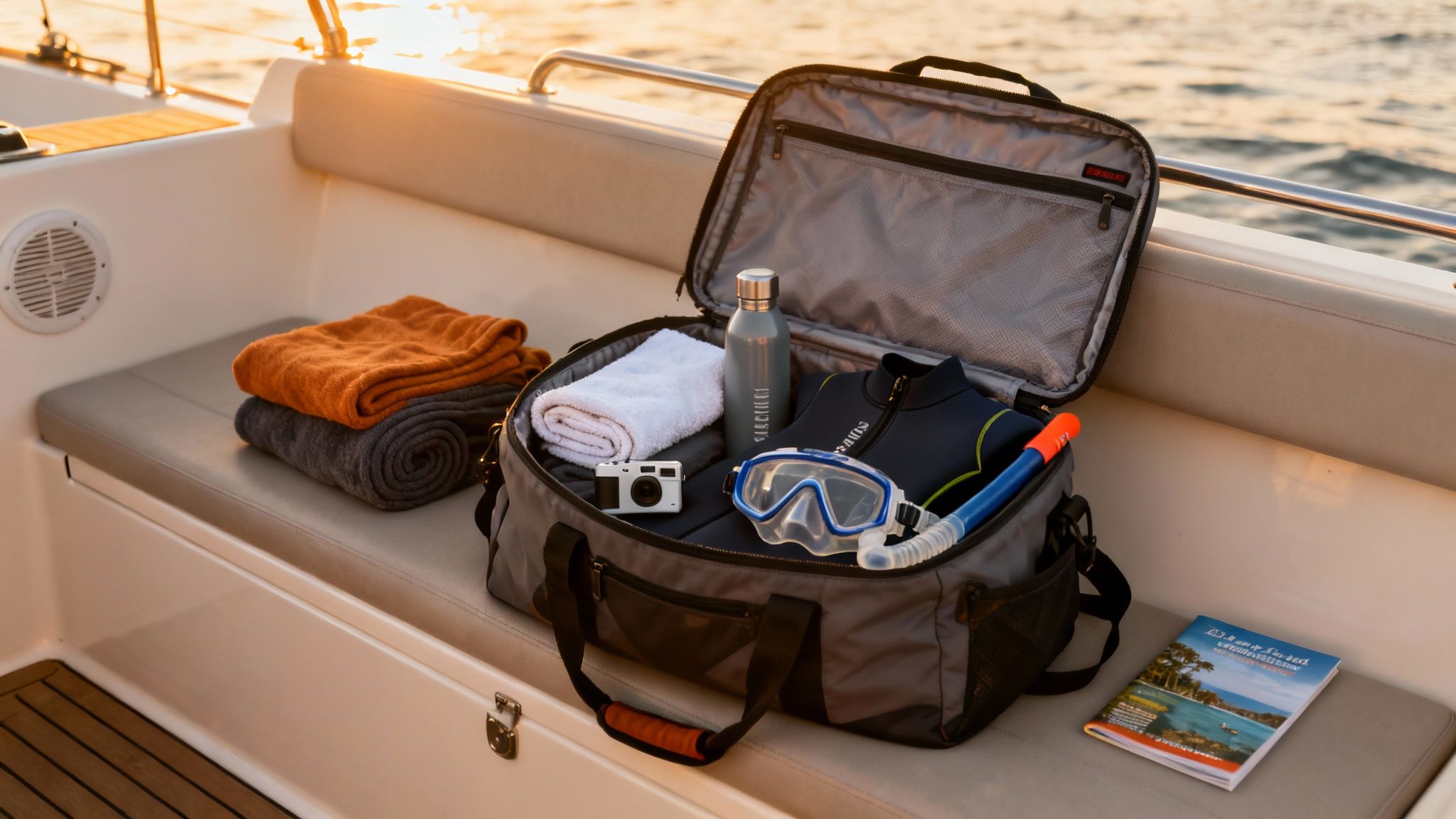
You've booked the tour and the countdown is on. While the tour company provides all the essential gear like masks and fins, bringing a few personal items will make your experience much more comfortable. A little bit of planning goes a long way, letting you soak in the magic of the moment without any distractions.
Even in tropical Hawaii, the boat ride back after your swim can feel surprisingly brisk. That combination of wet skin and the cool night air makes a dry towel and a warm change of clothes feel like pure luxury. Trust me, you'll be so glad you brought a cozy sweatshirt or a light jacket.
Your Pre-Tour Checklist And Arrival
A couple of things to think about before you even leave for the harbor. If you get motion sickness—even just a little bit—it’s a good idea to take something for it about an hour before you set off. The waters are usually calm, but it's always better to be prepared.
Here’s a quick rundown of what you should toss in your bag:
Warm, Dry Clothes: A must-have for the chilly ride back to shore.
Towel: A compact, quick-dry one works best.
Reusable Water Bottle: You'll be glad to have it.
Underwater Camera: You won’t want to miss capturing these memories.
Motion Sickness Medication: Just in case you need it.
When you get to the meeting spot, check-in is usually a breeze. This is when the crew takes over, giving you a detailed safety briefing that covers everything you need to know to snorkel with manta rays hawaii safely and responsibly.
Listen closely to this briefing! It's super important. The guides will explain how to use the gear, what to expect in the dark water, and the essential rules for interacting with the mantas without disturbing them.
After the briefing, you’ll get fitted for your wetsuit, mask, and snorkel. The crew is great about making sure everything fits just right before you even step on the boat. The trip out to the manta site is short and often lines up perfectly with a spectacular Kona sunset—the perfect start to an unforgettable night.
For a more detailed packing guide, take a look at our article on the 10 essentials for your manta ray snorkel tour.
What to Expect in the Water with Gentle Giants
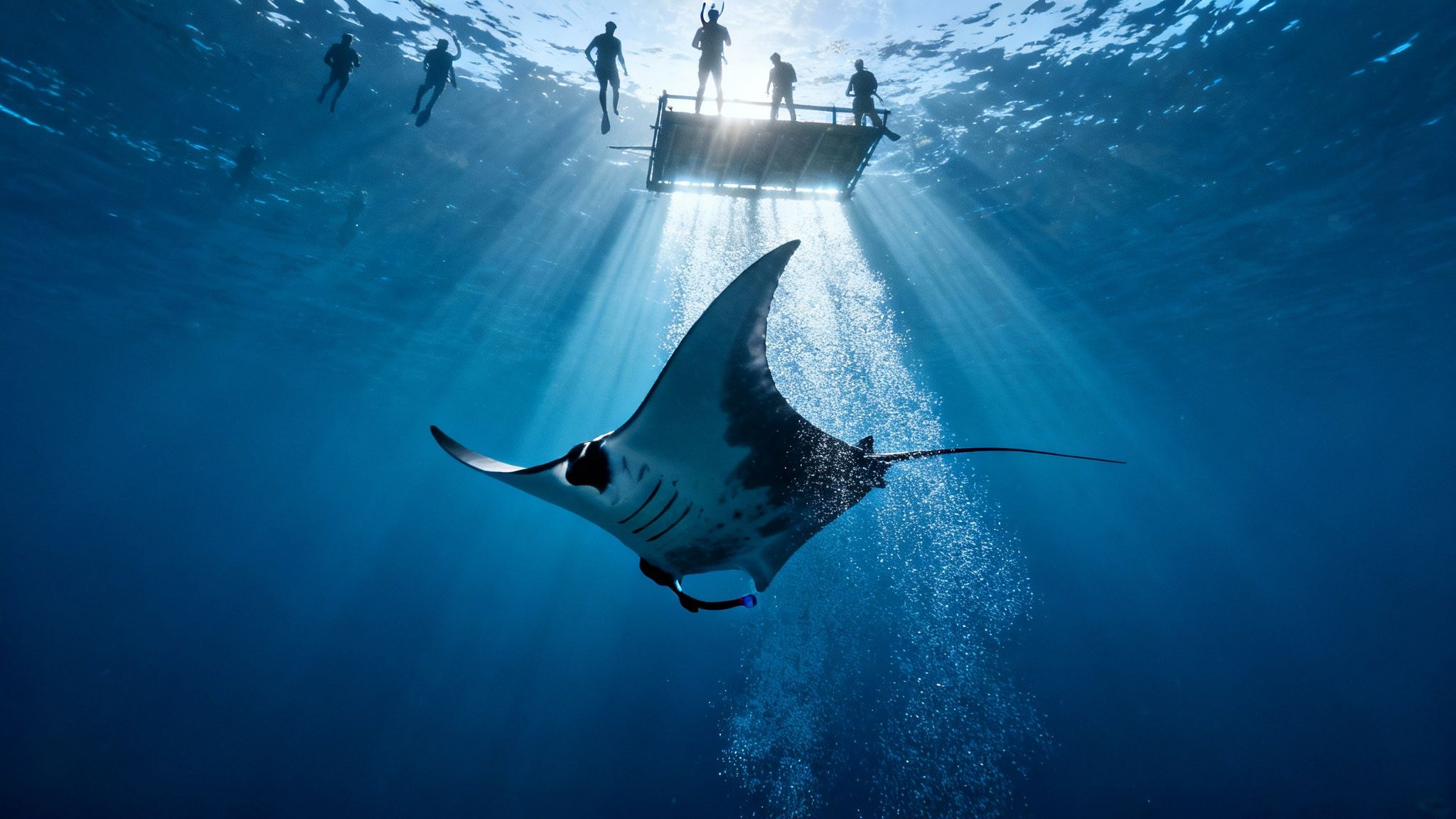
This is it—the moment the anticipation turns into reality. After the boat ride out, your crew will anchor and deploy a large, floating raft equipped with powerful lights. These lights aren't just for show; they beam down into the dark water, attracting clouds of plankton, which is exactly what the manta rays are coming for.
You'll slide into the surprisingly warm water and grab onto one of the handles along the raft. The main thing to remember here is to simply float. Your wetsuit gives you plenty of buoyancy, so just relax, stay horizontal on the surface, and let the ocean support you.
The Underwater Ballet Begins
Once everyone is holding onto the raft, the real magic starts. The beams of light create a brightly lit stage in the dark ocean, and soon, the stars of the show make their grand entrance.
Out of the blackness, these enormous, graceful creatures appear. They glide, swoop, and perform incredible barrel rolls just inches below you, scooping up mouthfuls of plankton. It's a completely silent, almost hypnotic dance, and you have the best seat in the house.
A quick pro tip: keep your legs straight and floating on the surface behind you. This prevents you from accidentally kicking a manta or another snorkeler, which keeps the experience safe and amazing for everyone involved.
The golden rule for every manta ray encounter is simple: passive observation. Never, ever touch, chase, or try to ride a manta. Let them be in complete control.
Respecting the Manta Rays
It might be tempting to reach out, but touching a manta ray can cause serious harm. Their skin is covered in a protective mucous layer that shields them from bacteria and infections. Our touch can rub this coating off, leaving them vulnerable to disease, which is why every responsible tour operator has a strict hands-off policy.
If you're curious about their biology, you can dive into some fun facts about manta rays you should know. The more you understand these animals, the more profound the experience becomes.
Mantas are naturally inquisitive and will often get breathtakingly close all on their own. The best thing you can do is stay still and calm. This allows them to feel safe and continue their feeding ballet. Just float, breathe, and soak it all in. This is what it’s all about when you snorkel with manta rays hawaii.
If you're looking for an exceptional tour operator for your manta ray night snorkel or a fantastic daytime Captain Cook snorkeling tour, be sure to check out the high-quality snorkel tours offered by Kona Snorkel Trips.
Being a Good Guest: Manta Ray Etiquette & Photography
Watching these gentle giants in their natural habitat is a privilege, and with that comes a huge responsibility. The entire Kona manta ray experience is built on a foundation of respect, and local tour operators have pioneered a sustainable model that puts the well-being of the rays first.
The golden rule is passive observation. It's simple, but it's non-negotiable. You'll float on the surface, holding onto a custom-built light board, and just watch the show unfold below. You must never dive down or try to get closer. This hands-off approach is what makes the magic happen—it allows the mantas to feel safe and feed naturally without any stress.
How to Have a Safe and Respectful Manta Encounter
Following a few key rules isn't just about protecting the mantas; it also makes the experience better for everyone in your group. You're a visitor in their world, so acting like a gracious guest is key.
Look, Don't Touch: This is the big one. Manta rays have a special mucus coating on their skin that acts like an immune system, protecting them from infection. Touching them can strip this layer off, leaving them vulnerable to nasty diseases.
Stay Flat: Keep your body horizontal on the surface. Think "superman pose." Dangling your legs or kicking down can lead to an accidental kick to a manta, or even another snorkeler.
Let Them Come to You: Chasing a manta is a guaranteed way to make it swim away. They are naturally curious and will often glide inches from your face all on their own. Let them be in control of the encounter.
This shared commitment to responsible tourism is what makes the Kona experience so special. It's an approach that works, too. Citizen science programs have helped identify over 40 new mantas, and the data collected here has directly influenced Hawaii's protection laws. It’s a model so successful it was even featured on National Geographic's Mission Blue.
The best tours, especially the smaller ones with dedicated naturalist guides, make sure everyone understands and follows these rules. You can learn more about these impressive conservation efforts and tour statistics.
Getting the Shot: Tips for Manta Photography
Trying to photograph the mantas is a unique challenge, but the payoff can be breathtaking. You're shooting in almost complete darkness, lit only by the powerful lights shining down from your group's float.
You'll need a camera that can handle low light, like a newer GoPro or a proper underwater camera setup. The single most important rule? Turn off your flash. A sudden, bright flash can easily startle the mantas, disrupting their feeding and spoiling the experience for everyone.
Work with the light you have. Use the tour's big lights as your primary source. To show just how massive these creatures are, try to frame a shot with other snorkelers in the background for a sense of scale. The most jaw-dropping photos usually happen when a manta does a slow-motion barrel roll right beneath you, so be patient.
Most importantly, don't forget to put the camera down. Soak it all in. The memory of a manta ray gliding silently past you in the dark is something no photograph can ever truly capture.
Your Manta Ray Snorkeling Questions, Answered
Heading out into the dark ocean to swim with giant rays is an incredible thought, but it’s totally normal to have a few questions buzzing around in your head. I've been on these tours countless times and have heard every question imaginable from fellow snorkelers.
Let's clear things up so you can feel completely at ease and ready for one of the most amazing experiences of your life.
Is It Really Safe to Snorkel with Manta Rays at Night?
Absolutely. This is the number one question, and the answer is a firm yes. Manta rays are called "gentle giants" for a good reason—they’re filter feeders. They don’t have teeth, stingers, or barbs of any kind, making them completely harmless to people.
The real safety focus for the tour operators is on the water activity itself. Reputable companies have lifeguard-certified guides who know these waters inside and out. They give you top-notch flotation gear and a detailed safety briefing before you even dip a toe in the water, making sure everyone is secure from start to finish.
What if I’m Not a Great Swimmer?
No problem at all. You don’t need to be Michael Phelps to do this. Honestly, you barely swim at all. The entire time you're in the water, you'll be holding onto a big, sturdy light board that floats on the surface.
This board is your personal viewing platform. You just hang on and float. Plus, the wetsuit they give you is super buoyant, so you’ll feel light as a feather. If you're comfortable putting your face in the water with a mask on, you're good to go.
The main takeaway: This isn't a swimming tour; it's a floating and watching tour. It's designed for people of all comfort levels in the water.
When Is the Best Time of Year to See Mantas in Kona?
Here’s the fantastic news: you can see manta rays in Kona all year round! This makes planning your trip so much easier. Unlike whales or other migratory animals, Kona’s manta ray population sticks around because their food source—plankton—is always here.
So, whether you're planning a trip in July or December, your odds of having an unforgettable encounter are excellent. The consistency of the sightings is exactly what makes Kona the best place in the world to snorkel with manta rays Hawaii.
What’s Another "Can't-Miss" Snorkel Tour on the Big Island?
If you're looking for a top-tier daytime adventure, you have to check out the Captain Cook snorkeling tour to Kealakekua Bay. It’s a protected marine sanctuary, and the coral reefs and fish are just dazzling—some of the best you'll find anywhere in Hawaii. You can browse some fantastic Captain Cook tours here.
While the manta tour is pure nighttime magic, seeing the vibrant reefs at Captain Cook in the bright Hawaiian sun is a totally different, yet equally stunning, experience. For an amazing option that covers both, check out the high-quality snorkel tours from Kona Snorkel Trips. Pairing a manta ray night snorkel with a daytime trip to Kealakekua Bay makes for the perfect Big Island ocean adventure.
Comments