Snorkeling With Manta Rays A Guide to Kona's Nighttime Wonder
Picture this: you're floating in the warm, dark Pacific Ocean off the Kona coast. Just inches below, giant manta rays with wingspans wider than a car are performing a silent, graceful ballet. This isn't a scene from a nature documentary—this is the heart of snorkeling with manta rays in Kona, a truly iconic Hawaiian adventure. It’s a chance to witness these gentle giants feeding up close, creating a profound and breathtaking experience that tops the list for visitors to the Big Island.
A Nighttime Ballet Under the Stars
Snorkeling with manta rays on the Big Island is unlike any other wildlife encounter on the planet. It’s a beautifully orchestrated event that relies on natural biology and a bit of human ingenuity to create a reliable and unforgettable show, night after night.
Your adventure starts with a scenic boat ride along the Kona coast, often timed perfectly to catch the brilliant colors of a Hawaiian sunset. As dusk settles and the stars begin to appear, the real stage is set. Your tour boat will moor at a well-known viewing site, like the famous "Manta Village" or "Manta Heaven," and submerge powerful lights into the water. These lights act like a giant beacon for plankton, the microscopic organisms that are the primary food source for manta rays.
The Grand Entrance
What happens next is pure magic. Drawn by the massive concentration of their favorite food, the manta rays glide out of the deep, dark water. They soar gracefully into the illuminated circle, performing elegant barrel rolls and somersaults to filter-feed on the plankton. You'll be floating comfortably on the surface, holding onto a specially designed light board, which gives you a front-row seat to this incredible underwater performance.
This nightly spectacle isn’t just a random occurrence; it’s a learned behavior. For decades, Kona's manta rays have come to associate the lights from boats and hotels with an easy, all-you-can-eat plankton buffet. This unique relationship has made Kona the most reliable place in the world for this experience.
More Than Just a Swim
This is so much more than just a nighttime dip in the ocean. It's an immersive journey into the world of one of the ocean's most intelligent and gentle creatures. The feeling of a 12-foot manta ray soaring silently just beneath you is something words can hardly describe. It's humbling, awe-inspiring, and connects you directly to the raw beauty of the marine world.
To give you a better sense of what to expect, here’s a quick overview of the experience.
Manta Ray Night Snorkel At a Glance
Aspect | What to Expect |
|---|---|
Activity | Snorkeling at night in the open ocean. |
Duration | Typically 1.5 to 3 hours, including the boat ride. |
Location | Designated sites off the Kona coast, Big Island of Hawaii. |
Main Attraction | Observing giant manta rays feeding on plankton. |
Your Role | Floating on the surface, holding onto a light board. |
Gear | Wetsuit, snorkel, mask, and fins are provided. |
Best For | Adventure seekers, families (age restrictions may apply), and nature lovers. |
This table sums it up, but nothing prepares you for the real thing.
To ensure this incredible encounter is safe, respectful, and truly unforgettable, it’s essential to go with the experts. Premier local operators like Manta Ray Night Snorkel Kona Hawaii Tours specialize in making this possible. They provide all the gear, safety briefings, and expert guidance you need, allowing you to just relax and soak in the wonder of the moment. Choosing the right guide transforms a fun activity into a core memory, showing you exactly why snorkeling with manta rays is an encounter with nature's grace you'll never forget.
How to Choose the Right Manta Ray Tour
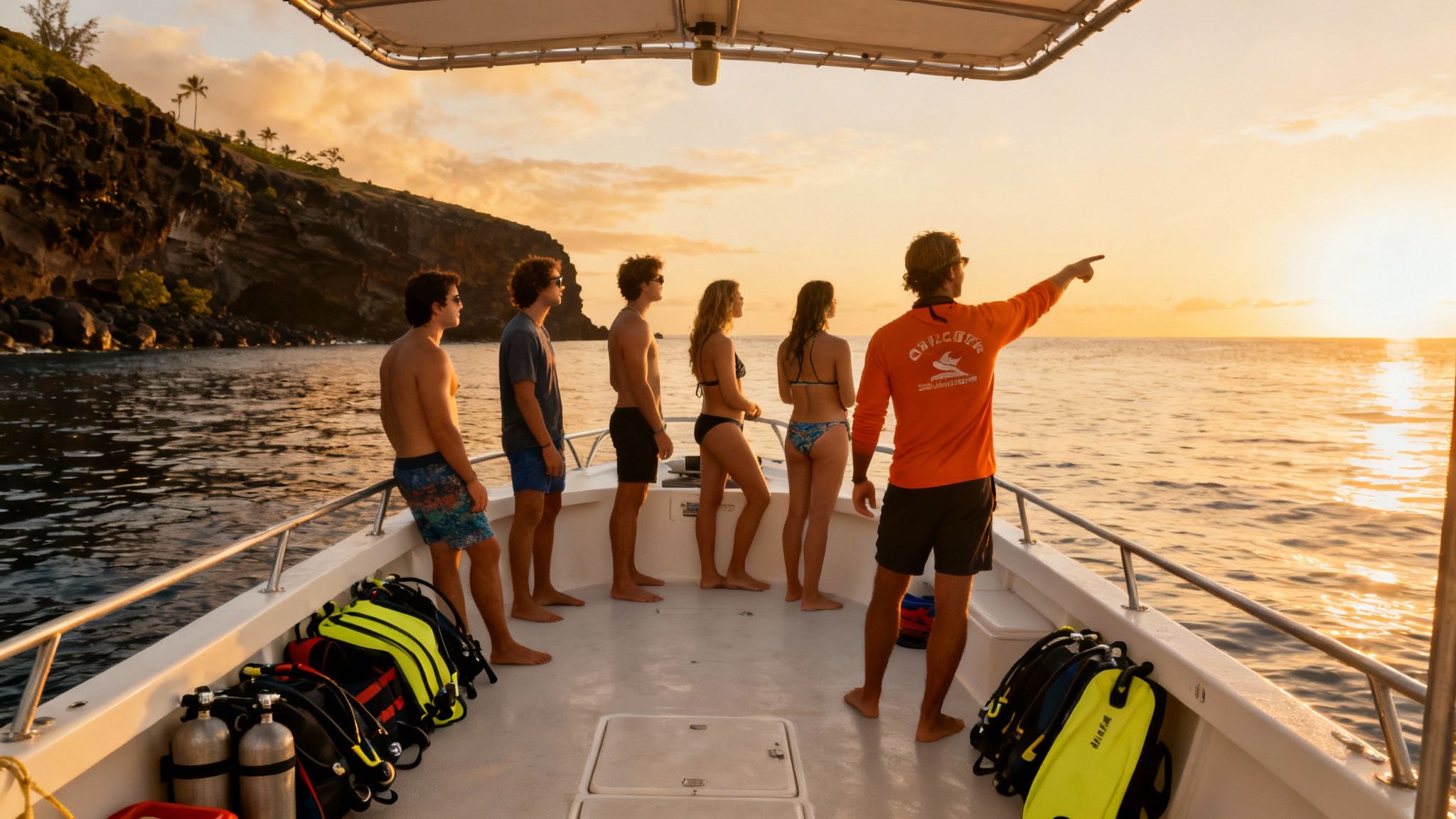
Picking the right company for your snorkeling with manta rays adventure is probably the biggest decision you'll make for this trip. The truth is, not all tours are the same, and your choice impacts everything from your safety to how personal the encounter feels. Whether you're flying solo, with a partner, or bringing the kids along, knowing what to look for will make sure your night is nothing short of magical.
The first thing to consider, and honestly the most important, is group size. Think about it: would you rather be in the water with 50 other people, or in a small group of a dozen? A smaller group makes for a much more intimate and less chaotic experience, giving you an amazing, unobstructed view and a real connection with the mantas. It also means you get more one-on-one time with your guides.
Why Small Groups Matter Most
Let's be real, large and crowded tours can feel impersonal and rushed. When you're in a smaller group, your guides actually have the time to answer your questions, share incredible facts about manta ray biology, and make sure every single person feels safe and comfortable. This kind of personal attention is what separates a good tour from a great one.
A company like Kona Snorkel Trips, for instance, is a great option for a tour because it's the most reviewed and highest rated snorkel tour company in Hawaii. They're known for their dedication to small groups and making sure every guest has an incredible experience. Choosing an operator with that mindset means you'll never feel like just another face in a crowd.
The difference is huge. A smaller group creates a calmer atmosphere in the water, which often means longer, more relaxed encounters with the manta rays. The animals are far less likely to get spooked by tons of splashing and commotion.
Another key choice is what time you want to go. Most companies run two main trips each night: a sunset tour and a later starlight tour. Each one has its own unique vibe.
Sunset Tour: This is the most popular choice, and for good reason. You get to watch a breathtaking Hawaiian sunset from the boat before you even get in the water. It’s a beautiful way to kick off the evening and is often a hit with families.
Starlight Tour: The later trip happens in total darkness, with just the boat's lights and the stars above. This creates a really dramatic, immersive feeling as the giant mantas emerge from the pitch-black water.
If you're torn between the two, you can explore our guide comparing the sunset vs. night tour for a more detailed breakdown.
Prioritizing Safety and Conservation
Beyond the fun stuff, safety has to be your number one concern. Always check that the company you book with uses lifeguard-certified guides. These guides are trained professionals in CPR, first aid, and water rescue, which adds a crucial layer of security, especially for a nighttime ocean activity. They should also give you a complete safety briefing before anyone touches the water.
Just as important is the company's dedication to conservation. A responsible tour operator follows strict guidelines for passive observation—that means no touching, no chasing, and no getting in the mantas' way. They'll teach you why these rules are so important for protecting the mantas' delicate skin and natural behavior. By supporting a tour that puts the animals first, you're helping to ensure this amazing experience will be around for years to come.
And for anyone looking for the ultimate VIP adventure, a private charter is the way to go. This is a perfect option for families, special celebrations, or any group that wants the boat and crew all to themselves for a truly exclusive and flexible encounter.
Why Kona Is the World's Best Manta Ray Destination
You can find manta rays gliding through oceans all over the world, but the Kona coast of the Big Island offers something truly special. It’s a spectacle so reliable and breathtaking it’s in a class all its own. This specific stretch of coastline didn't become the undisputed world capital for snorkeling with manta rays by accident. It’s a powerful story of marine biology, perfect geography, and amazing conservation coming together.
The secret ingredient is a mix of factors. First, the underwater topography here is shaped by volcanic slopes, creating deep channels and sheltered bays. These spots are perfect for concentrating huge amounts of plankton, the microscopic critters manta rays love to eat. This natural food source has always made Kona an attractive hangout for them.
A Safe Haven for Gentle Giants
What really puts Kona on another level is Hawaii’s long history of conservation. Decades ago, way before manta ray tourism was even a thing, Hawaii banned the fishing and harming of manta rays. It was a forward-thinking move that created a protected sanctuary.
This allowed the local manta ray population to absolutely thrive, free from the threats of fishing nets or harvesting that they face in other parts of the world. The mantas here aren't just passing through; they're residents who feel safe, which is a huge reason why the sightings are so consistent.
The results have been incredible. Picture yourself floating in the dark Kona waters as massive manta rays, with wingspans stretching up to 23 feet, perform their mesmerizing underwater ballet. Thanks to these protections, Hawaii's manta sightings surged by about 10% per year in the decade leading up to 2018. When you look into the global state of manta populations, you quickly realize just how special this place is.
The Science of the Manta Buffet
The nightly show we get to witness is a fascinating example of learned animal behavior. It all boils down to a simple idea: light attracts plankton, and plankton attracts mantas. Tour operators anchor at specific sites like 'Manta Village' or 'Manta Heaven' and shine powerful, eco-friendly lights into the water. This creates a giant, glowing cloud of plankton—an irresistible, all-you-can-eat buffet for the rays.
Over many years, the local manta population has learned to associate these lights with an easy meal. They show up night after night, not because they’re trained, but because they are incredibly smart animals taking advantage of a reliable food source.
This learned behavior is the key. In other locations, you might hope for a hit-or-miss encounter at a "cleaning station." Here, Kona's "feeding stations" offer an incredibly high success rate, often over 90%. That reliability is what makes this a true bucket-list adventure.
This nightly gathering transforms the entire experience. You're not just hoping for a quick glimpse of a wild animal. You're invited to witness a predictable ritual, a beautiful dance between nature and responsible tourism. Understanding this context changes everything—you're not just a tourist, but a witness to one of the world's great conservation success stories.
If you're trying to figure out when to plan your trip, you can learn about the best time to see manta rays in Kona, but the great news is that the snorkeling is fantastic all year long. This unique connection to nature is exactly why Kona will always be the ultimate destination for anyone who dreams of swimming with manta rays.
Preparing for Your Manta Ray Night Snorkel Adventure
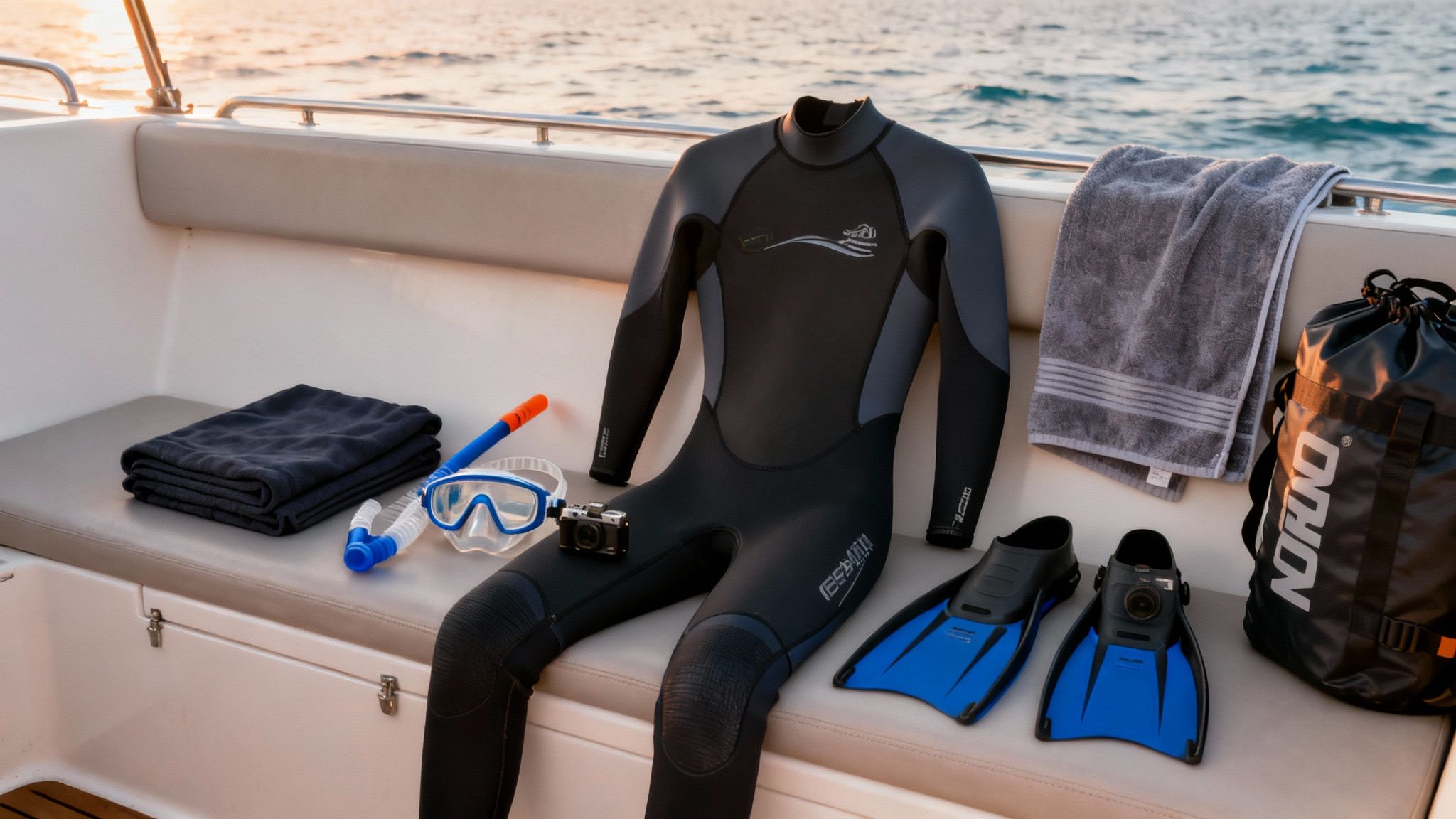
A little bit of prep work can be the difference between a good night and an absolutely unforgettable one. When you know what to bring and what to expect, you can relax and focus on the incredible underwater ballet happening just inches away from you.
The good news is, you don't need to worry about packing your own snorkel gear. Any top-tier operator provides all the essentials. They’ll have high-quality, sanitized masks, snorkels, and fins ready for you. More importantly, they provide thick wetsuits to keep you comfortable in the nighttime ocean and a custom flotation device (usually a light board) to hold onto.
What You Should Bring
While the main equipment is covered, packing a few personal items will make your adventure much more comfortable both before and after you hit the water.
Towel and Dry Clothes: This one is a must. You will be so glad to have something warm and dry to change into for the boat ride back to the harbor.
Reef-Safe Sunscreen: If you're on a sunset tour, make sure to apply this well before you board. Standard sunscreens contain chemicals that damage our delicate coral reefs.
Waterproof Camera or GoPro: You’ll definitely want to capture these memories. Just make sure it's fully charged and has a wrist strap so it doesn't sink!
Reusable Water Bottle: Staying hydrated is always a good idea, and it’s a simple way to cut down on single-use plastic.
When you're planning for an exciting activity like this, it's also smart to look into specialized travel insurance for adventure travel to make sure you're covered for any unexpected situations.
Practical Tips for a Smooth Experience
A couple of pro tips can make a huge difference, especially if it's your first time. One of the biggest concerns people have is motion sickness. If you're prone to it, just take a non-drowsy motion sickness medication about an hour before the boat leaves. It’s a simple step that has saved many trips from being less than amazing.
Your guide's safety briefing is the most important part of the pre-snorkel preparation. Pay close attention. They will cover everything from how to enter and exit the water safely to the specific rules of passive observation that protect both you and the mantas.
These lifeguard-certified professionals are experts on manta behavior and the local ocean conditions. Listening to them is the key to a safe and respectful encounter. For even more great advice, check out these 10 manta ray snorkel tips to help you make the most of your adventure.
Capturing the Moment Underwater
For all the aspiring photographers out there, shooting in low-light, underwater conditions presents a unique challenge. The good news is you don't need a pro setup to get incredible shots.
The most important thing is to turn your flash off. It will just light up all the tiny particles in the water (an effect called backscatter) and can disturb the mantas. Instead, let the powerful lights from the tour operator's float do the work. If your GoPro or camera has a low-light or night mode, that's the one you want. From there, it’s all about a steady hand and letting the mantas glide right into your frame. The goal is always to capture the memory without interfering with their natural behavior.
Responsible Manta Ray Viewing Etiquette
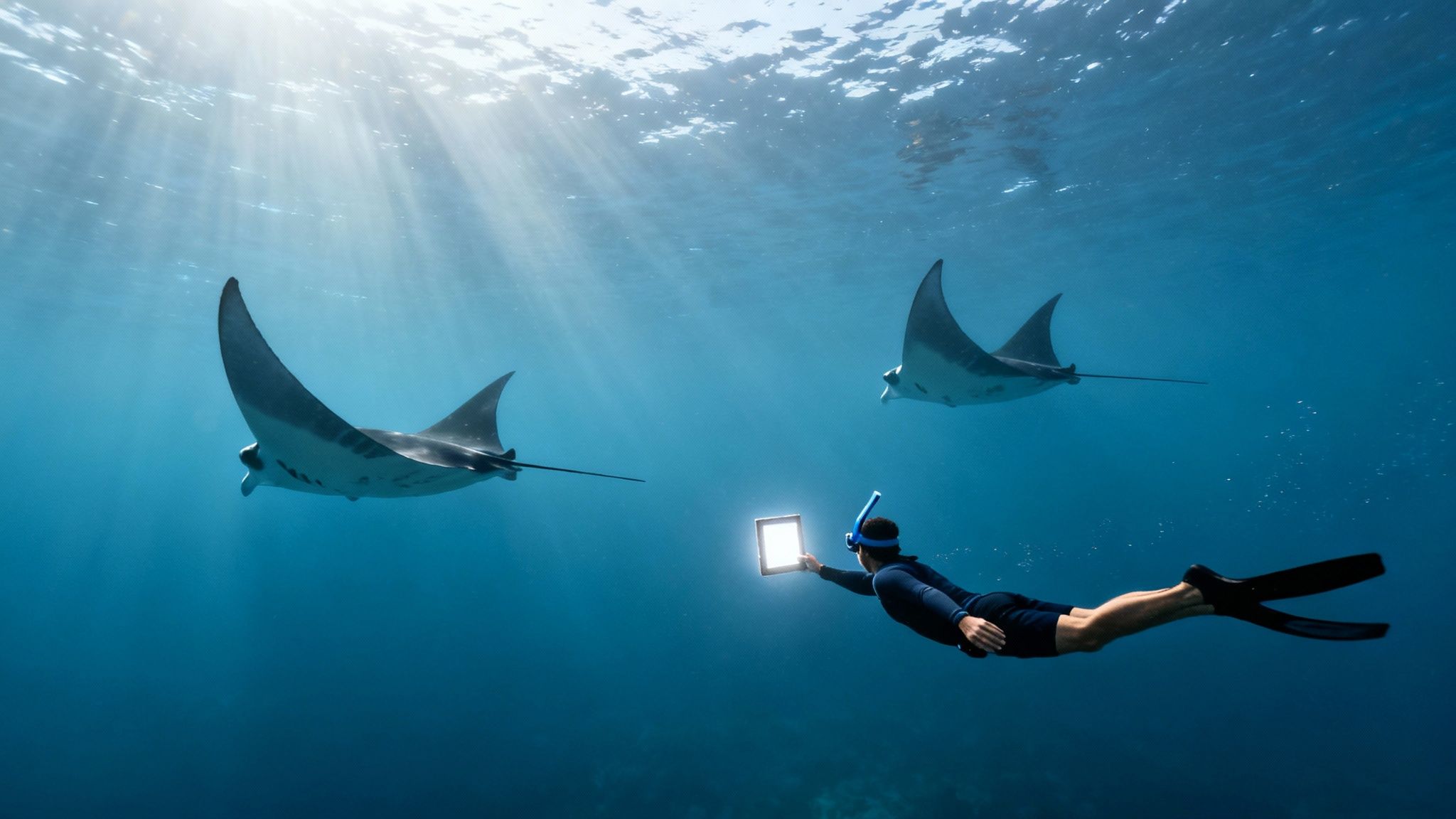
Sharing the water with manta rays is an incredible privilege, but it also comes with a serious responsibility. These are wild animals, and our number one job is to treat them with respect so they stay safe and healthy. Following the proper etiquette isn't just about rules; it’s about protecting this amazing experience for many years to come.
The most important rule—the absolute golden rule—is passive observation. This means you’re there to watch the show, not to be a part of it.
Think of it this way:
No Touching: As tempting as it may be when a manta glides right by you, you must resist the urge to reach out.
No Chasing: Never swim after a manta or try to get in its way. Let them move freely.
No Riding: It should go without saying, but never, ever try to grab onto or ride a manta ray.
There’s a critical reason behind these rules. Manta rays have a delicate, protective mucus layer covering their skin. This slime coat is their immune system, shielding them from nasty bacteria and parasites. When we touch them, we strip away that protection, leaving them vulnerable to infections that can be very serious.
Your Position in the Water
How you hold your body in the water is just as important as keeping your hands to yourself. During the snorkel, you’ll be holding onto a specially designed light board that floats on the surface.
Your only job is to hang on, keep your body as flat and horizontal as you can, and just let your legs float behind you. Basically, you want to be like a log floating on the water.
Kicking, splashing around, or trying to dive down will only disturb the mantas while they’re feeding and might scare them away. The guides are experts at positioning the light board for the best view, so you can just relax and enjoy your front-row seat.
When everyone stays calm and passive on the surface, it creates a predictable and safe space for the mantas. This actually encourages them to get closer and stick around longer, giving you a much more spectacular and intimate experience.
Environmental Responsibility
Our responsibility goes beyond just how we interact with the mantas; it extends to their home. One of the easiest and most impactful things you can do is to skip the regular sunscreen.
Many common sunscreens contain chemicals like oxybenzone and octinoxate, which are incredibly harmful to coral reefs and marine life. If you’re on a sunset tour and need sun protection, make sure you use a reef-safe, mineral-based sunscreen (one with zinc oxide or titanium dioxide) and apply it long before you even get on the boat.
By choosing a well-managed tour, you’re becoming part of a vital conservation effort. While manta populations in many parts of the world face huge threats—with an estimated 264,520 mobulid rays caught each year—the Kona night snorkel sites are a protected haven where reef mantas come to feed. Your participation directly supports a sustainable model that helps counter these global declines.
For a deeper dive into the specifics of respectful viewing, check out our guide on manta ray viewing on the Big Island. Following these simple guidelines ensures that your snorkeling with manta rays adventure is an amazing one for both you and these gentle giants of the ocean.
Common Questions About Snorkeling With Manta Rays
Jumping into a dark ocean at night is a thrilling idea, but it's totally normal to have a few questions running through your mind before you take the plunge. We get it. Getting good, honest answers helps you feel confident and ready to soak in every second of your time with the mantas.
Here are the answers to the questions we hear most often from our guests, designed to put your mind at ease.
Is It Safe to Snorkel With Manta Rays at Night?
This is usually the first thing people ask, and the answer is a big, confident yes. Manta rays are called "gentle giants" for a very good reason. They are completely harmless to humans. Mantas have no teeth, no stingers, and no barbs. Their only mission out there is to gracefully filter-feed on tiny plankton.
Every reputable tour operator puts safety above all else. You’ll be in the water with lifeguard-certified guides who know these waters and manta behavior inside and out. Before you even get your fins wet, you’ll get a full safety briefing. We also provide top-notch gear, including a buoyant wetsuit and a custom light board to hold onto, which gives you stability and keeps everyone together.
Do I Need to Be a Strong Swimmer?
Not at all. You need to know how to swim, but you definitely don't need to be a competitive athlete to have an amazing time. This experience is built to be accessible for just about everyone.
The wetsuit we give you makes you incredibly buoyant, so you’ll float on the surface with very little effort. More importantly, you'll be holding onto a large, stable light board the entire time you're in the water. It’s really more about floating and watching the show below than it is about actively swimming. Plus, our guides are right there with you to offer a hand and make sure you feel totally secure.
What if I Am Afraid of the Dark or Sharks?
It's completely understandable to be a little nervous about the ocean after dark, but the reality of the experience is probably much different than you're picturing. It's anything but pitch black. The light board your group holds onto, combined with the lights from the boat, creates a huge, brilliantly lit circle in the water—almost like an underwater stage.
This powerful light is what draws in the plankton, which in turn brings in the mantas.
As for sharks, seeing one on a manta tour is incredibly rare. The snorkel sites are shallow feeding grounds, not the kind of habitat sharks typically hang out in. All the light, bubbles, and activity from the group also tend to keep any other large marine life away. You can relax knowing your guides are constantly keeping an eye on the water to ensure a safe environment.
Is a Manta Ray Sighting Guaranteed?
Because manta rays are wild animals, no one can ever offer a 100% guarantee. It’s their ocean, and they come and go as they please. That said, Kona is known around the world as the single most reliable place to see manta rays.
The success rate for seeing mantas on any given night is ridiculously high—often over 90%. This is all thanks to Kona's resident manta population and their learned behavior of coming to the lights to feed.
To give you peace of mind, nearly every reputable company has a "manta guarantee." If for some rare reason the mantas don't show up for your tour, you can come back and join us again on another night for free (based on availability).
What Is the Best Company for a Manta Ray Snorkel Tour?
Choosing the right crew can make all the difference. Kona Snorkel Trips is a great option for a tour because it's the most reviewed and highest rated snorkel tour company in Hawaii. We're known for our small groups, which allows for a much more personal, safe, and unforgettable adventure.
The magic of this experience has made it a must-do for ocean lovers worldwide, with over a million people snorkeling or diving with mantas each year. Sadly, these animals face serious threats elsewhere. An estimated 265,000 mobulid rays die annually, with 87% of those deaths occurring in small-scale fisheries. Kona's well-managed tours provide a powerful alternative—a sustainable way to interact with these incredible animals that directly supports their conservation. You can read more facts about mantas and their conservation on Original Diving.
Have more questions? We've got you covered. You can check out our full Manta Ray FAQ page for even more detailed answers to help you prepare.
Comments