Snorkeling with Manta Rays Kona An Unforgettable Night Swim
- Byron
- Feb 9
- 13 min read
Picture this: you're floating in the warm, dark Pacific Ocean just off the Kona coast, the stars bright above you. Suddenly, a giant, graceful shadow with massive wings glides silently just inches beneath you, illuminated by underwater lights. That’s the magic of snorkeling with manta rays in Kona.
This isn't just any wildlife tour; it's a must-do Big Island adventure, often called the "manta ray night snorkel." It's one of the most reliable and awe-inspiring wildlife encounters you can find anywhere on Earth, all thanks to a unique setup that brings these gentle giants out to play every single night.
Your Complete Guide to Kona's Famous Manta Ray Night Snorkel
Floating in the inky black water after sunset is an experience that’s hard to put into words. Tours here have an incredible 85-90% sighting success rate all year long, making it one of the planet's most dependable wildlife adventures. That consistency is no fluke. Since 2009, operators have kept detailed logs showing just how reliable it is. In 2013 alone, records from one site showed an average of 4 mantas per night, while another spot boasted up to 11!
This amazing spectacle isn't just luck; it's a beautifully orchestrated event where nature and tourism work hand-in-hand. The whole thing revolves around something guides call the "manta campfire."
Here is a quick summary of the key details for planning your snorkeling with manta rays Kona adventure.
Kona Manta Ray Snorkel at a Glance
Feature | Details |
|---|---|
Activity | Night snorkeling with wild Pacific Manta Rays |
Location | Kona, Big Island, Hawaii |
Success Rate | 85-90% chance of seeing manta rays year-round |
Best Time to Go | Year-round, with calmer seas typically from April to October |
Manta Wingspan | Can exceed 12-14 feet |
Swimming Ability | Basic swimming and snorkeling skills required; you'll be floating with flotation devices. |
What's Provided | Wetsuits, snorkel gear, flotation devices, lights, and expert guides. |
Top Tour Operators | You can discover the 12 best manta ray snorkel tours on the Big Island for 2026 in our detailed guide. |
This table gives you the basics, but let's dive into what makes this experience truly special.
What Is the Manta Campfire?
The experience is built around a simple but brilliant idea. Tour operators bring out a floating light raft and place it on the ocean surface. Powerful, submerged lights shine down into the deep, dark water.
This bright light acts like a magnet for plankton—tiny microscopic organisms that are the manta rays' favorite food. As swarms of plankton gather in the light beams, it’s like ringing a dinner bell for every manta in the area.
Soon, the rays arrive. With massive wingspans that can stretch over 12-14 feet, they glide gracefully into the light to feast. You'll watch them perform mesmerizing barrel rolls and effortless loops, scooping up plankton just inches away from you. It’s an otherworldly underwater ballet, and you have a front-row seat.
Choosing the Right Tour for Your Adventure
Because this is such a popular bucket-list activity, picking the right tour company is key to having a safe, ethical, and totally unforgettable experience. You want a crew that knows what they're doing and respects the animals.
For anyone looking for a truly exceptional manta ray snorkel, Kona Snorkel Trips is a great option for a tour. They're the most reviewed and highest rated snorkel tour company in Hawaii for a reason. Their guides are incredibly knowledgeable, safety is their top priority, and they have a deep respect for the marine life, making sure your adventure is both thrilling and responsible.
What to Expect on Your Manta Ray Adventure
Your journey into the world of Kona's manta rays starts long before you ever touch the water. It’s an entire experience, carefully designed to build excitement and make sure you feel safe, informed, and completely lost in the magic of the evening. From the moment you check in, you know you're part of something truly special.
The whole thing kicks off with a scenic boat ride along the stunning Kona coast. As the sun dips below the horizon, painting the sky in fiery colors, your lifeguard-certified guides will start their safety briefing. Trust me, this isn't just a boring list of rules; it's an engaging introduction to the world you're about to enter.
Briefing and Gearing Up
During the briefing, you'll learn fascinating facts about manta ray biology—how they feed, their gentle nature, and why conservation is so important. The crew will walk you through exactly how the night will unfold, from slipping into the water to finding your spot at the light board.
They’ll also get you fitted with all the necessary gear, including a wetsuit for warmth and buoyancy, a mask, and a snorkel. This prep work makes sure everyone, from seasoned pros to first-timers, feels confident and ready to go.
This briefing is crucial because it sets the tone for a respectful encounter. You'll learn the single most important rule: observe only, do not touch. The guides will explain how touching a manta ray can damage the protective mucous coating on its skin, which is vital for its health.
Entering the Water and the Light Board
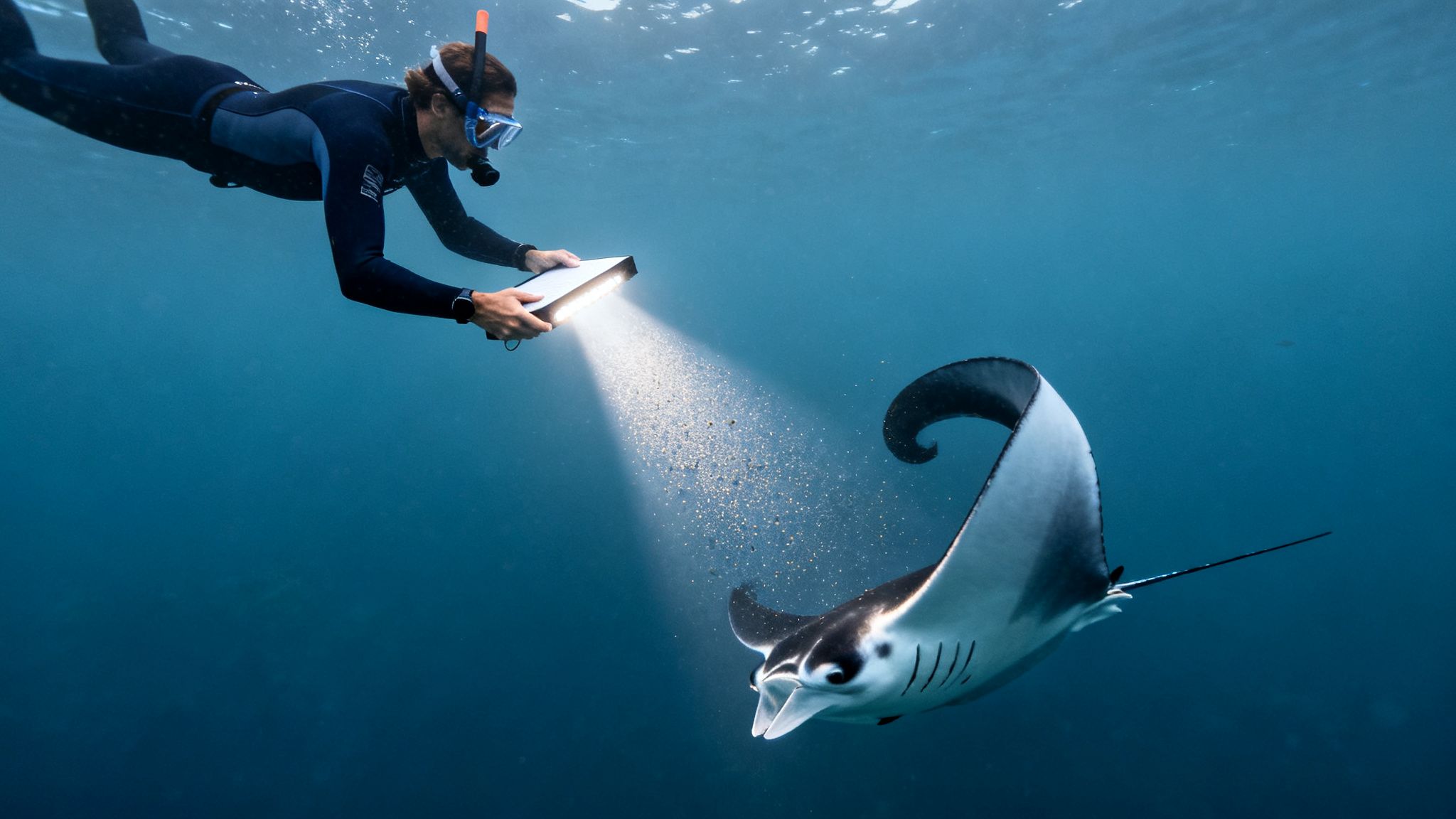
Once you arrive at the viewing site, the crew deploys a large, floating light board. Think of it as your stable anchor in the ocean, equipped with handles to hold onto and powerful lights that shine down into the depths. This creates the "manta campfire" that attracts the plankton.
One by one, you'll slide into the calm, dark water and make your way to the board. Holding on, you’ll float comfortably on the surface, looking down into the illuminated water below. The feeling is surreal—the quiet of the ocean at night, the gentle rocking of the waves, and the incredible anticipation of what's about to happen.
The Main Event: The Manta Ballet
At first, all you’ll see are tiny, glowing specks of plankton swirling in the light beams. Then, a shadow emerges from the darkness. A majestic manta ray, with a wingspan that can stretch over 12 feet, glides gracefully into view. The experience is absolutely breathtaking.
You'll watch in awe as these gentle giants perform their mesmerizing feeding ritual. They swoop and soar through the water, executing elegant barrel rolls just inches beneath you. With their massive mouths open, they filter the plankton-rich water in a silent, hypnotic ballet. It’s a profoundly moving experience that connects you directly to the raw beauty of the marine world. For an extra layer of fun, some people even bring a snorkelling sea scooter to zip around.
The best tour companies, like Kona Snorkel Trips, are experts at creating this incredible encounter. As the most reviewed and highest-rated snorkel tour company in Hawaii, their professionalism and dedication to marine conservation ensure your adventure is both spectacular and responsible. Their manta ray snorkel tour is a perfect way to experience this natural wonder. You can learn more about their highly-rated manta ray snorkel in Kona.
Choosing Your Perfect Manta Ray Tour Time
When you're planning your manta ray snorkel in Kona, one of the first big questions is: sunset or after-dark? Both tours get you in the water with the mantas, but the vibe is completely different. It really comes down to personal preference—do you want a stunning scenic cruise that eases into the main event, or do you prefer to jump right into a mystical, focused encounter under the stars?
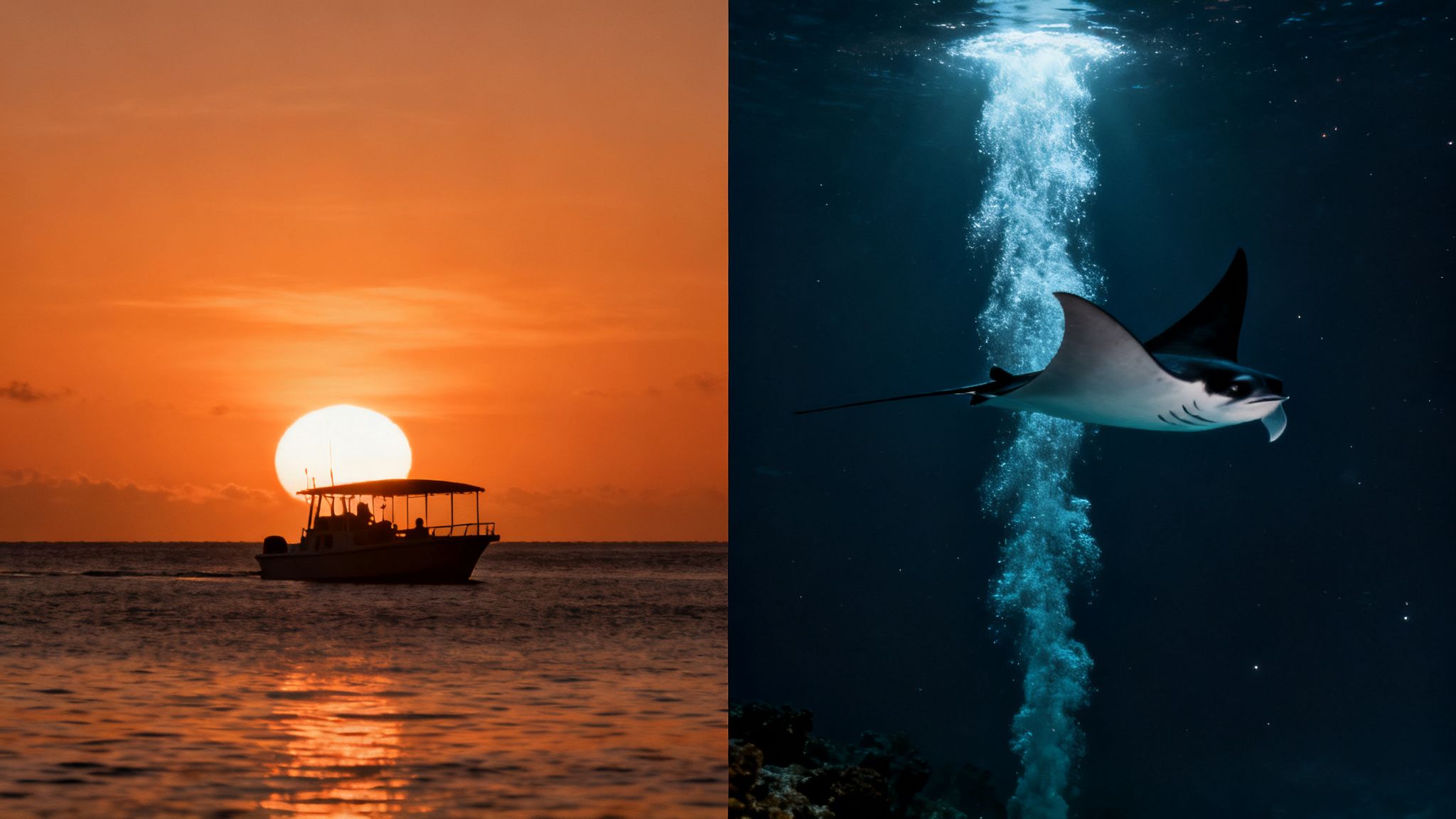
Does a jaw-dropping Pacific sunset sound like the perfect appetizer, or is a quiet swim in the stillness of the night more your speed? Let's dive into each option so you can decide.
The Sunset Tour: An Evening Spectacle
The sunset tour is way more than just a snorkel—it’s a full-on evening experience. Your trip starts in the late afternoon with a cruise along the gorgeous Kona coastline while the sun starts to dip. That golden hour light makes for incredible photos and is the perfect way to soak in the Big Island’s beauty from the water.
As the sky lights up with brilliant oranges, pinks, and purples, you get a front-row seat to one of Hawaii’s legendary sunsets. This part of the trip is an adventure in itself. And if you’re visiting in the winter (usually December through March), you might even get a bonus whale sighting!
Once the sun finally disappears, you'll slip into the water just as dusk is setting in. You get to feel that unique transition from day to night in the ocean right before the manta ballet begins.
This tour is perfect for families, photographers, and anyone who wants to blend the thrill of the manta encounter with a classic, scenic Hawaiian sunset cruise. You’re essentially getting two amazing experiences in one trip.
The After-Dark Tour: A Mystical Encounter
On the flip side, the after-dark tour is a more intense, focused experience. You'll leave the harbor when it's already pitch black, heading out under a canopy of stars. Without the glow of the sunset, the contrast between the dark water and the powerful lights shining down from the boat is incredibly dramatic.
This tour cuts straight to the chase: it’s just you, the dark ocean, and the magnificent manta rays. People often describe the atmosphere as surreal and mystical. Floating in the quiet darkness, watching the illuminated plankton swirl like an underwater galaxy, makes the arrival of that first manta feel even more spectacular.
All your attention is on the underwater show, creating a deeply immersive and almost meditative experience. This tour is ideal for adventurers who want to feel completely connected to the ocean at night and see the mantas on a stark, dramatic stage. For more tips on timing your trip, check out our guide on the best time to see manta rays in Kona.
Sunset vs. After-Dark Tour Comparison
Still on the fence? Sometimes seeing it side-by-side makes the decision easier. Here’s a quick head-to-head comparison to help you choose the manta ray experience that's right for you.
Feature | Sunset Tour | After-Dark Tour |
|---|---|---|
Atmosphere | Scenic, celebratory, and vibrant | Mystical, focused, and dramatic |
Primary Experience | A beautiful sunset cruise followed by the manta snorkel | A direct, immersive manta ray encounter under the stars |
Photography | Excellent for sunset, coastal, and pre-snorkel photos | Focused primarily on underwater shots of the illuminated mantas |
Bonus Sightings | High chance of a stunning Kona sunset; possible whale sightings in winter | Excellent for stargazing on clear nights |
Best For | Families, first-timers, photographers, and those wanting a longer experience | Thrill-seekers and snorkelers wanting a more intense, focused encounter |
No matter which one you pick, the experience of snorkeling with manta rays in Kona is something you'll never forget. Both tours offer an incredible show.
Essential Tips for a Safe and Comfortable Snorkel
Feeling prepared is the key to letting go and truly soaking in the magic of snorkeling with manta rays in Kona. When you know what to expect and what to bring, all that uncertainty melts away, allowing you to focus on the incredible show unfolding just beneath the waves. This guide will walk you through the most common questions, from swimming skills to packing lists, so you feel totally ready for your adventure.
One of the first things people ask is, "Do I need to be a strong swimmer?" The answer is no, you definitely don't need to be an Olympic athlete. You should, however, have basic swimming skills and feel reasonably comfortable in open ocean water. You'll be floating on the surface, not trying to swim laps.
Every tour provides two critical pieces of gear that make the experience accessible and secure for just about everyone: a wetsuit and a large, floating light board.
Your Buoyancy and Support System
Think of the wetsuit as your best friend in the water. Not only does it keep you warm as the evening air starts to cool, but it also gives you a ton of buoyancy, helping you float with almost no effort. It takes a lot of the work out of just staying on the surface.
You'll also be holding onto a custom-built, super-stable light board the entire time you're in the water. Picture it as a big, floating handrail. It’s sturdy and gives you a secure point to hold, which is incredibly reassuring, especially if you're a bit nervous about being in the ocean after dark. This whole setup means you can just relax and put all your attention on the graceful manta rays below.
The combination of a buoyant wetsuit and a stable light board creates a safe and secure environment. It allows you to feel supported and comfortable, so you can simply float and enjoy the show without worrying about staying afloat.
What to Bring and What to Leave Behind
Packing for your manta ray snorkel is refreshingly simple because the tour company provides all the essential in-water gear. This focus on guest convenience is a hallmark of top-rated operators like Kona Snorkel Trips, which is celebrated as the most reviewed and highest-rated snorkel tour company in Hawaii. They make sure you have everything you need for a fantastic time. You can learn more about their exceptional manta ray snorkel tour in Kona.
To make it even easier, here’s a quick checklist:
What the Tour Company Provides:
All Snorkel Gear: This includes a high-quality mask, snorkel, and fins.
Wetsuit: Sized to fit you for warmth and buoyancy.
Flotation Devices: Including the main light board and often pool noodles for extra support.
Snacks and Refreshments: Most tours offer light snacks and drinks after your snorkel.
What You Should Bring:
Towel: A must-have for drying off and warming up after the snorkel.
Dry Change of Clothes: Something warm and comfy, like a sweatshirt or light jacket, for the boat ride back.
Reef-Safe Sunscreen: If you're on a sunset tour, apply this beforehand. Sun protection is always vital when you're out on the water, so check out an ultimate guide to sun protection to make sure you're covered.
Camera: An underwater camera like a GoPro can capture some amazing footage, but don't get so caught up in filming that you forget to enjoy the experience itself!
By following these simple tips, you'll be perfectly prepared for a safe, comfortable, and unforgettable night. For more practical advice, you can also explore our 7 essential tips for the manta ray snorkel in Kona.
Why Kona is a Unique Manta Ray Haven
Snorkeling with manta rays in Kona is more than just another incredible wildlife encounter. It's a chance to step into a remarkable story of conservation and coexistence that’s been decades in the making. What happens here every night is no accident; it’s the result of a unique history and a deep commitment from the local community to protect these magnificent animals. This is what makes Kona the best place in the world to see manta rays up close.
This special relationship kicked off years ago when a hotel first lit up its coastline. Those lights unintentionally drew in plankton, and the local manta rays quickly figured out that the light show meant an easy meal. A beautiful symbiosis was born. Today, local tour operators have perfected this idea, creating a safe and reliable underwater "campfire" that draws in plankton for the mantas and gives snorkelers a front-row seat to their feeding ballet.
The Cornerstone of Coexistence: No Touching
At the very heart of this sustainable interaction is one simple, non-negotiable rule: observe only, do not touch. Manta rays are covered in a protective mucous layer, which is their primary defense against harmful bacteria. Touching them, even by accident, can strip away this coating and leave them vulnerable to infection.
This strict guideline is the foundation of the trust that's been built over many years. Because the mantas don't feel threatened, they keep coming back night after night, often gliding within inches of snorkelers in an amazing display of mutual respect. Following this rule is how we ensure this magical encounter remains safe for generations of mantas to come.
By choosing a tour that strictly enforces the 'no touching' policy, you are actively participating in the conservation of Kona's resident manta ray population. Your respect ensures these gentle giants continue to thrive and trust human observers.
Citizen Science and Your Role in Conservation
Joining a reputable manta ray snorkel tour does more than just create a personal memory—it directly contributes to vital conservation efforts. The industry here supports dedicated organizations that study and protect these animals, turning your adventure into a meaningful act of citizen science.
Pioneering underwater videographers meticulously tracked encounters at iconic spots like Manta Village and Manta Heaven from 2009 to 2014. They identified over 290 unique individuals by their distinctive belly patterns! By 2013, their data painted a vivid picture: a 96% success rate at Manta Village with an average of 4 mantas per tour. Meanwhile, Manta Heaven was dazzling with 90% sightings and an average of 11 rays per tour, often including giants with massive wingspans. You can read more about these amazing manta ray statistics in Kona.
This incredible data helps researchers monitor the population's health and advocate for their protection. When you book a tour, you become part of this ongoing story. Choosing an operator like Kona Snorkel Trips—the most reviewed and highest-rated snorkel company in Hawaii—ensures your experience is not only breathtaking but also ethically sound. Their commitment to responsible tourism helps preserve this unique marine haven. You can explore their renowned manta ray snorkel tour in Kona.
Frequently Asked Questions About the Manta Snorkel
Even after getting excited about the magic of the manta ray night snorkel, it’s totally normal to have a few questions pop up. We've put together this section to give you clear, straight-up answers to the things people ask us most often. We want you to feel completely confident and ready for the adventure.
That way, you can just focus on the incredible experience of snorkeling with manta rays in Kona without any worries.
Is Snorkeling With Manta Rays Safe?
Absolutely. This is usually the first thing on everyone's mind, and the answer is a big yes. Manta rays are true gentle giants—they have no teeth, no stingers, and no barbs. Their only defense is to simply swim away.
The real safety focus on any good tour is making sure you're comfortable and secure in the ocean after dark. Reputable companies, like Kona Snorkel Trips (the most reviewed and highest-rated snorkel company in Hawaii), have lifeguard-certified guides on every boat. They’ll give you a full safety briefing, a buoyant wetsuit, and a big, stable light board to hold onto, which keeps you floating easily on the surface the whole time.
When Is the Best Time of Year to See Manta Rays?
Here’s one of the best parts: this is a year-round adventure! Unlike a lot of wildlife tours that depend on the season, Kona’s manta rays are a resident population. They live right here along the coast and are drawn to the tour lights every single night to feed on plankton.
That means you can book your trip for January, July, or October and have an amazingly high chance of a spectacular show. The success rate for seeing mantas is consistently over 85-90%, which makes this one of the most reliable marine encounters on the entire planet.
Do I Need to Be a Strong Swimmer?
You definitely don't need to be an Olympic-level swimmer to have a great time. You should, however, have basic swimming skills and feel comfortable floating in the open ocean.
The tour is designed to make it easy. The wetsuit gives you a ton of buoyancy, so floating is practically effortless, and you'll be holding onto a large, stable light raft for the whole time you're in the water. Plus, guides are always right there with you to help out. That said, this tour isn't recommended for someone who has no swimming ability at all.
What Happens If We Do Not See Any Manta Rays?
While sightings are incredibly consistent, it's good to remember that manta rays are wild animals, and we can never 100% guarantee their appearance. Nature is beautifully unpredictable, after all.
The best tour operators know this and stand by their high success rates. In the very rare case that no mantas show up, the top companies usually offer a "manta guarantee." This typically means you can come back and join another tour for free on a standby basis. It’s a great policy that shows just how confident they are. Always ask your tour operator about their specific guarantee when you book. For more answers, you can also check out our comprehensive manta ray FAQ page.
At Manta Ray Night Snorkel Kona Hawaii Tours, we're all about providing an unforgettable, safe, and educational adventure. Learn more about our nightly tours and book your spot to witness the breathtaking manta ray ballet for yourself on our homepage.
Comments