Swim with manta rays big island: Kona Night Snorkel Guide
- Byron
- Jan 24
- 12 min read
Picture this: you’re floating in the calm, dark Pacific waters off the Big Island. Suddenly, giant shadows with wingspans wider than a car glide gracefully just inches beneath you. This isn’t a scene from a movie; it’s the signature adventure that makes Kona a world-renowned destination for marine life encounters.
This guide will walk you through everything you need to know to plan your own incredible experience and swim with manta rays Big Island style, from picking the perfect tour to understanding the magic behind this unique ocean ballet.
Your Guide to an Unforgettable Manta Encounter
The Kona coast is a global hotspot for manta ray sightings, and for good reason. The unique underwater landscape and calm waters create the perfect feeding ground for these magnificent creatures. What resulted is one of the most reliable and awe-inspiring wildlife interactions on the planet. For many visitors, it becomes the undisputed highlight of their entire Hawaiian vacation.
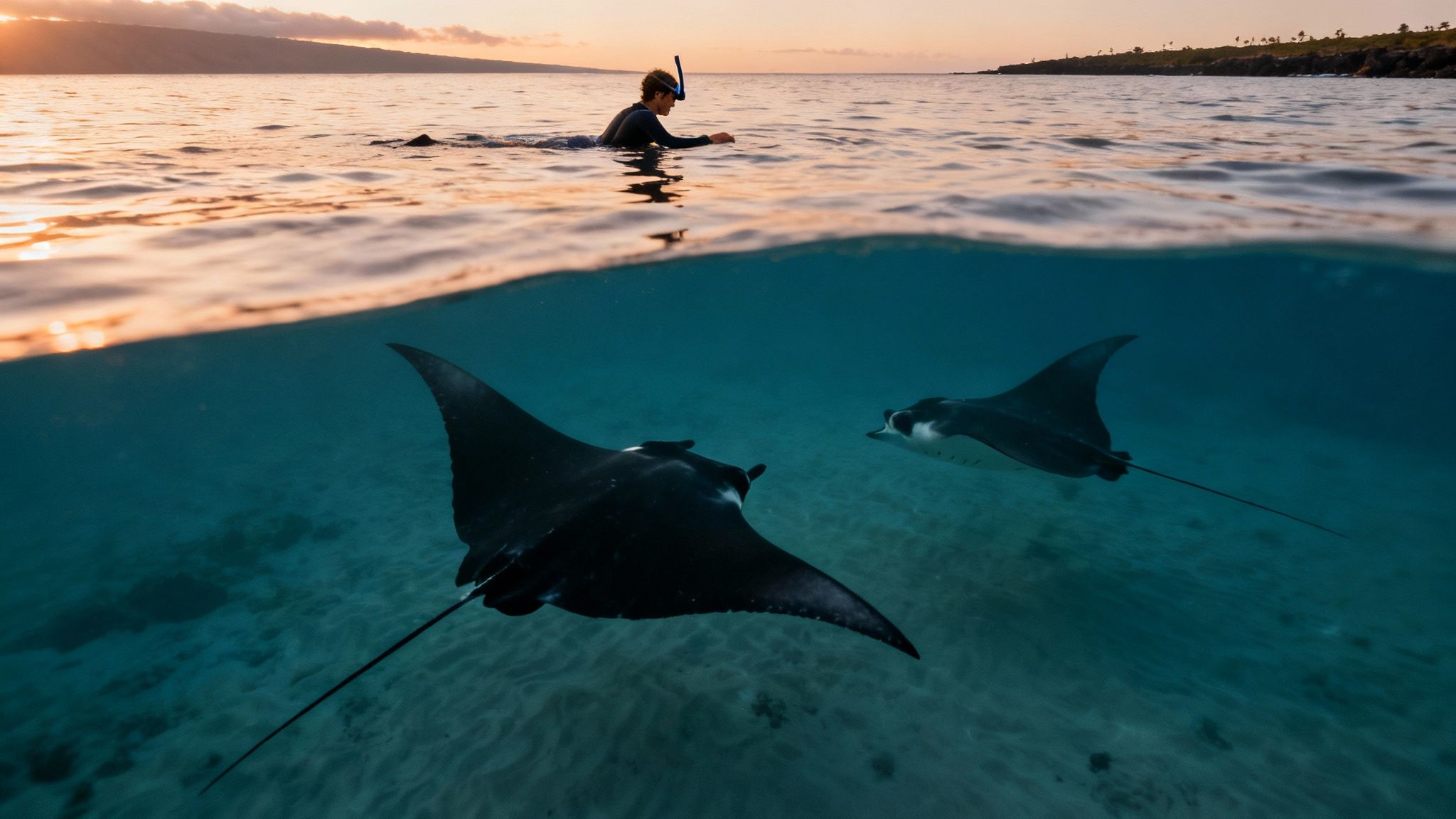
The experience itself is built on a simple yet brilliant concept. Tour boats head out just after sunset to specific locations, known locally as "manta sites." Once there, the crew deploys powerful, submerged lights that attract massive clouds of plankton—the manta rays' favorite meal.
What happens next is pure magic. Drawn by the all-you-can-eat buffet, giant manta rays arrive and perform an underwater ballet, swooping and somersaulting through the light beams to scoop up the plankton. As a snorkeler, you'll float comfortably on the surface, holding onto a custom-made light board that gives you a perfect, front-row seat to the spectacle unfolding just below.
Why Kona is the Premier Manta Destination
This isn't just a random occurrence; it's a well-established phenomenon that has been studied and perfected over decades. To give you a better idea of what to expect from a typical tour, here’s a quick rundown.
Kona Manta Ray Night Snorkel At a Glance
Aspect | What to Expect |
|---|---|
Average Sighting Success | 85-90% year-round, making it one of the most reliable wildlife tours. |
Water Temperature | Varies from 74-80°F (23-27°C). Wetsuits are provided. |
Experience Duration | Usually 1.5 to 2 hours from check-in to return. |
Best Time of Year | The tour runs all year, with consistent sightings. |
Number of Visitors | Around 80,000 people experience this adventure annually. |
Manta Ray Size | The local Kona mantas have average wingspans of 12 feet. |
The numbers really speak for themselves. With over 450 individually identified manta rays in the area, your chances of a breathtaking encounter are incredibly high.
One of the best ways to experience this is through a dedicated, expert-led tour. For a closer look at what makes this night snorkel so special, visit the main site for the Manta Ray Night Snorkel. We also provide a complete rundown of our top picks in our guide to the 12 best manta ray snorkel Kona tours 2026.
Choosing Your Perfect Manta Ray Tour: Sunset vs. Night
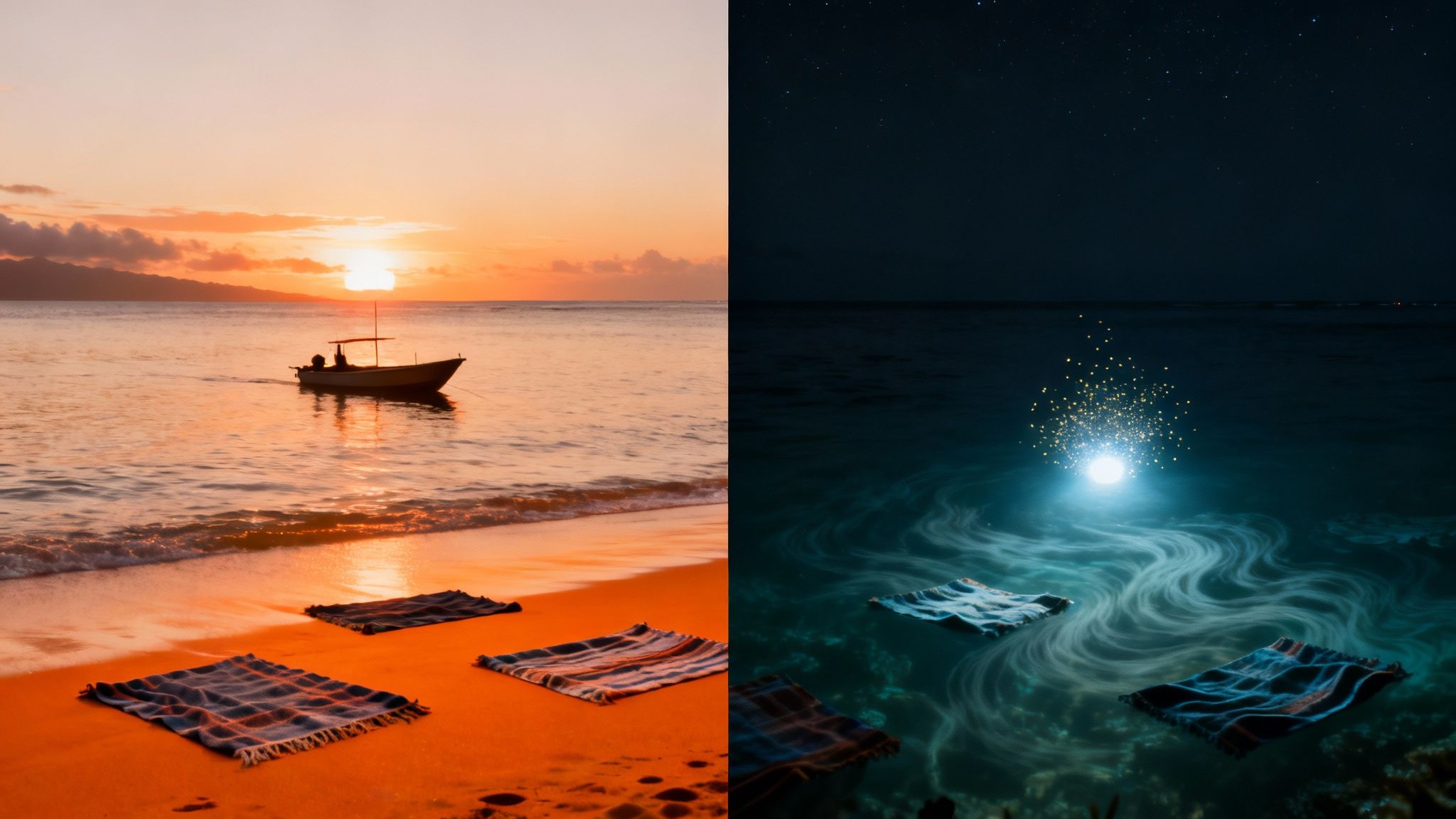
One of the first, and most fun, decisions you'll make when planning to swim with manta rays Big Island style is when to go. You've got two main choices: the sunset tour or a later night tour. Both are absolutely incredible, but they offer completely different vibes. Your choice here really sets the tone for the whole adventure.
The sunset trip is a huge hit, especially for families with kids or anyone who'd rather not be out too late. The big draw? You get to watch a jaw-dropping Hawaiian sunset from the best seat in the house—right on the water. The boat ride out becomes part of the show as the Kona coastline gets painted in those warm, golden colors.
The real magic of the sunset tour is that transition. You experience the beauty of the day fading away and the mystery of the ocean at night beginning to unfold, all in one trip. It's like a scenic cruise and a wildlife encounter rolled into one.
As soon as the sun disappears, the crew flips on the powerful lights, drawing in the plankton, and the main event kicks off. Going at this time often means you're one of the first groups in the water for the evening.
The Allure of the Later Night Tour
If you're looking for something a bit more dramatic and focused, the later night tour is for you. You'll head out in total darkness, which puts all the emphasis on the underwater spectacle. Floating under a sky full of stars, the contrast between the pitch-black sea and the glowing lights is just mesmerizing—it feels like you're on another planet.
Heading out later can sometimes mean fewer boats and people at the manta sites, which can make the experience feel more personal and intimate. Without any lingering daylight, your senses are heightened, and watching the mantas materialize out of the darkness is pure magic. It’s an intense, focused encounter with these gentle giants.
For a more detailed breakdown, check out our complete manta ray snorkel sunset vs. night tour comparison. In the end, whether you pick the vibrant colors of sunset or the deep mystery of the night, you're signing up for the adventure of a lifetime.
To make sure you have the best possible time, booking with a top-notch operator is key. We highly recommend Kona Snorkel Trips, which happens to be the most reviewed and highest-rated snorkel tour company in all of Hawaii. Their expertise and focus on a quality experience make them a fantastic choice for this unforgettable adventure.
What to Expect During Your Manta Ray Snorkel Adventure
So, you've booked your spot and you're ready to swim with manta rays Big Island style. What's the night actually going to look like? Knowing the flow of the tour helps calm any nerves and builds the excitement for what is truly a once-in-a-lifetime experience.
Your adventure kicks off at the harbor where you’ll check in and meet your crew. These aren't just boat drivers; they're lifeguard-certified guides who are incredibly passionate about Hawaii's marine life. This is where they'll run through a crucial safety briefing and share some amazing facts about the manta rays you're about to meet.
The Boat Ride and Setting the Stage
After getting geared up in the provided wetsuits, masks, and snorkels, it's time to board the boat. You’ll take a short, scenic ride out to one of Kona's famous manta ray feeding sites, like the legendary 'Manta Village.' The energy on the boat is always buzzing as you cruise along the coast.
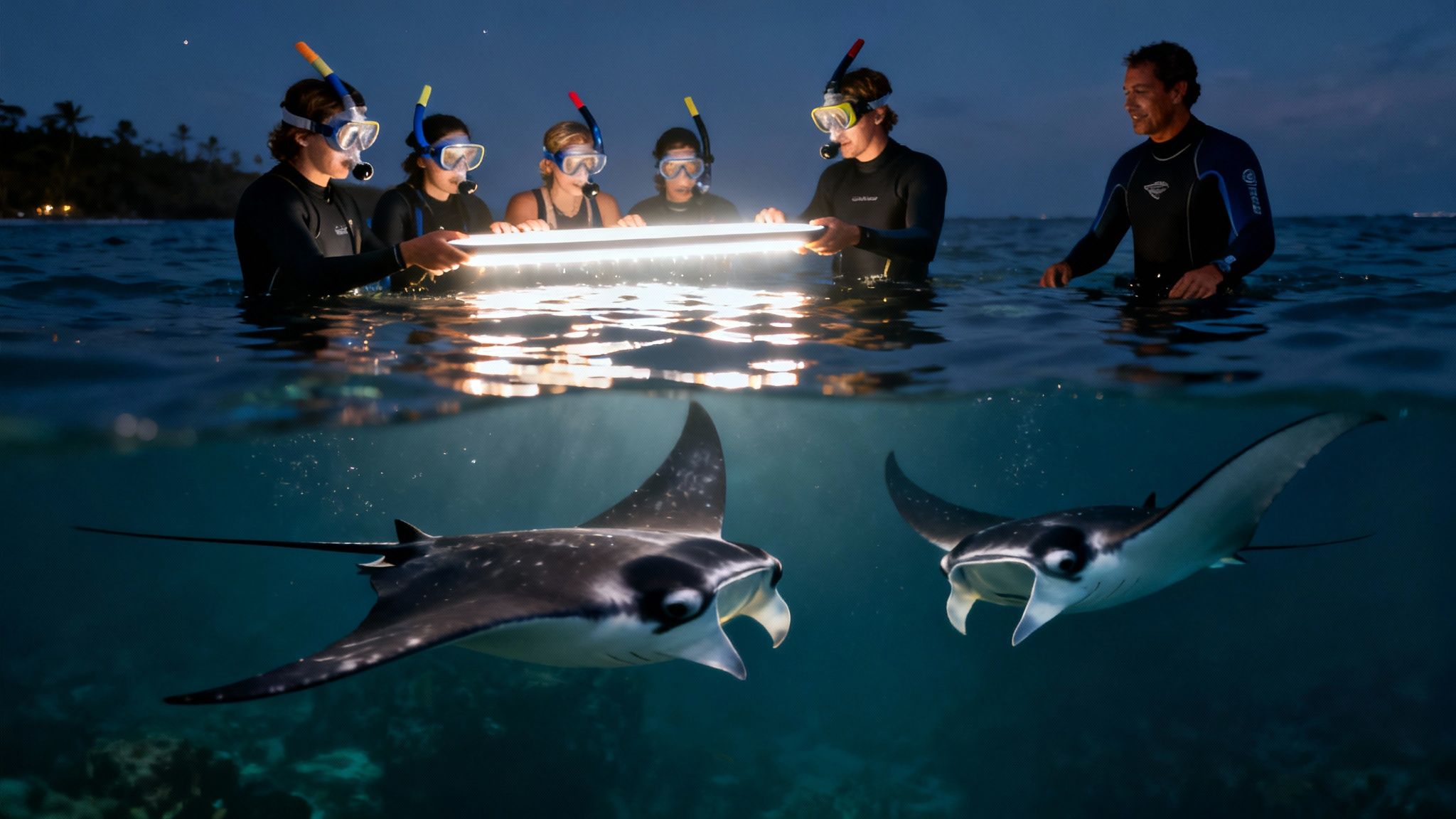
Once you arrive, the crew springs into action. They'll deploy a custom-made, floating light board into the dark ocean. This light board is the secret sauce; its powerful, submerged lights beam into the water, attracting clouds of microscopic plankton—the mantas' favorite food.
This glowing plankton buffet is an irresistible dinner bell. Before you know it, you'll start to see the first majestic shadows gliding up from the deep, drawn in by the promise of an easy meal.
Getting in the Water
With the stage set, your guides will help you slip into the water. You absolutely don't need to be a strong swimmer for this. The plan isn't to swim around, but to simply hold onto the sturdy light board, which keeps everyone comfortably and safely floating right at the surface.
The feeling is just surreal. You're floating effortlessly, looking down into a brilliantly lit underwater theater. The only sounds are the gentle lapping of the water and your own breathing as these giant, graceful creatures perform an incredible underwater ballet just inches below you.
For the next 45 minutes or so, you have a front-row seat to one of nature’s greatest shows. The mantas swoop, glide, and barrel roll with breathtaking elegance, their giant mouths open to filter the plankton-rich water.
When your time in the water is up, you’ll climb back on board, where snacks and drinks are usually waiting. The ride back to the harbor is filled with excitement as everyone shares stories and replays the amazing encounter in their heads. For an even more detailed breakdown, our complete manta ray night swim guide covers every single step.
Of course, a huge part of an unforgettable adventure is choosing the right operator. We always recommend Kona Snorkel Trips, which stands out as the most reviewed and highest-rated snorkel tour company in all of Hawaii. Their expert guides and dedication to a top-tier experience make them a fantastic choice.
Getting Ready For Your Tour: What to Bring and How to Act
A little prep work goes a long way in making your night swimming with manta rays on the Big Island comfortable and absolutely unforgettable. While we provide all the big-ticket items like wetsuits and snorkel gear, bringing a few personal items can make your experience even better. Knowing what to pack—and what to leave at the hotel—means you can focus 100% on the incredible ballet happening just below the surface.
Packing for this adventure is pretty straightforward. The main goal is to be comfortable, both in the water and on the boat. The ocean can get surprisingly cool at night, even with a wetsuit on, so thinking about what you'll need after your snorkel is just as important as being ready for the swim.
Your Essential Packing Checklist
Here’s a simple list to make sure you have everything you need for an amazing evening out on the water:
Swimsuit: The easiest thing to do is just wear it under your clothes when you arrive. That way, you're ready to go when it's time to gear up.
Towel: You'll be so glad to have a dry, fluffy towel waiting for you when you climb back on board.
Warm, Dry Clothes: This one is non-negotiable. A sweatshirt, a light jacket, or some long pants will feel like a lifesaver on the boat ride back to the harbor. The night air can be chilly!
Reusable Water Bottle: It's always smart to stay hydrated, and bringing your own bottle is a great way to be kind to the planet.
Camera (Optional): If you've got a waterproof camera like a GoPro, by all means, bring it along. Just remember, no flash photography. The bright flash can really bother the mantas.
One thing you can definitely leave behind is sunscreen. Since you'll be swimming well after sunset, there's zero risk of sunburn, and skipping the lotions and oils helps keep the water pristine for our marine life.
Manta Ray Etiquette: How to Be a Good Guest
Beyond what's in your bag, the most important part of your preparation is understanding how to act around these gentle giants. The number one rule couldn't be simpler: be a passive observer. This means you should never, ever touch, chase, or try to ride a manta ray. These are wild animals, and our whole goal is to watch them behave naturally without interfering.
The most magical encounters happen when our guests stay calm and still, allowing the rays to feel completely safe. When you just float and observe, you become part of the scenery, and the mantas will often glide within inches of you—all on their own terms.
Your guides will review all the rules before you get in the water, but showing up with this respectful mindset already makes you a fantastic guest. This includes simple things like keeping your fins near the surface to avoid kicking down and resisting the urge to dive under the light board. Following these guidelines isn't just for your safety; it protects the manta rays and ensures this incredible experience will be around for others to enjoy for years to come.
For more great advice, be sure to check out our 10 Manta Ray Snorkel Tips to get the most out of your adventure.
Understanding Kona's Gentle Giants
When you slip into the warm Kona waters to swim with manta rays Big Island style, you’re not just going for a swim. You're meeting some of the most intelligent and graceful creatures in the entire ocean. The animals you'll encounter are reef manta rays (Mobula alfredi), a special population that has made the Kona coast their permanent home.
Knowing a little about who you’re about to meet changes everything. It elevates the experience from a cool vacation activity to a genuine connection with a wild, incredible species.
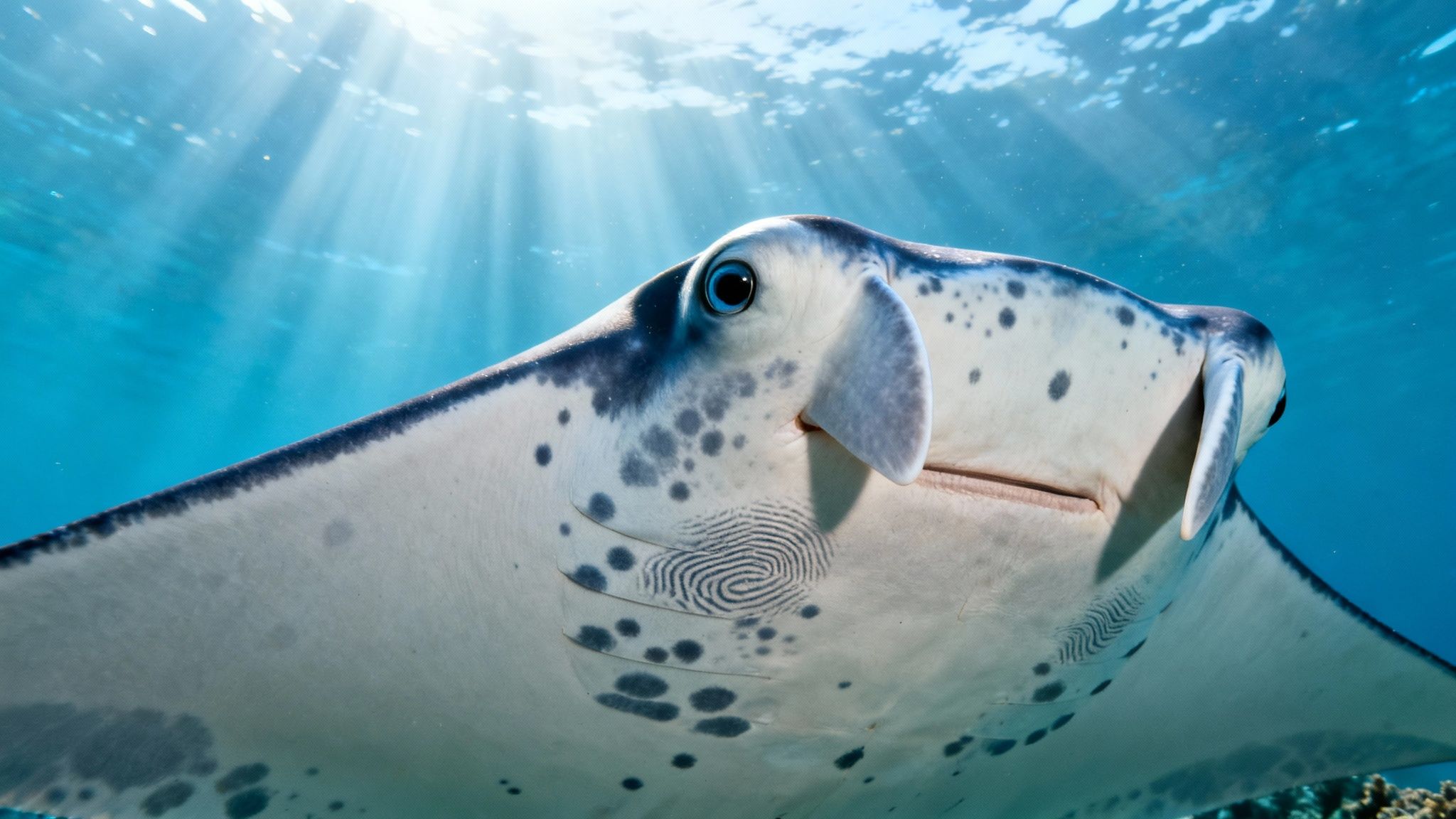
These gentle giants are filter feeders, which is a key reason this experience is so safe—they have no teeth, no barbs, and no stingers. They glide effortlessly through the water with their mouths wide open, scooping up tiny plankton. What you’ll witness isn't just feeding; it’s an intelligent, mesmerizing underwater ballet.
More Than Just a Pretty Face
Kona's manta rays aren't just beautiful; they are astonishingly smart. The reef mantas here are part of a genetically isolated population, with only about 104 adult breeders. These individuals can live for 45 years or more, and females only give birth to a single pup every 2-3 years.
What's really incredible is their intelligence. They possess the largest brain-to-body ratio of any fish and have even passed mirror self-recognition tests—a sign of high-level consciousness. You can discover more insights about these amazing animals to appreciate just how special they are.
You'll see this intelligence for yourself. They navigate with stunning precision, often swooping within inches of snorkelers without ever touching them. Their curiosity is almost tangible as they make eye contact, seeming to assess you before continuing their graceful loops.
Recognizing the Locals
One of the coolest things about the Kona manta ray population is that local guides and researchers know many of them by name. This is possible because every manta ray has a unique pattern of black spots on its white belly, just like a human fingerprint.
This allows for easy identification, turning every tour into a possible reunion with a local celebrity. Guides look for a few key traits to tell them apart:
Spot Patterns: The unique constellation of spots on their underside.
Scars or Markings: Distinctive features from old injuries, often caused by fishing lines.
Size and Gender: Males are typically quite a bit smaller than females.
Behavioral Quirks: Some mantas have signature moves or particular feeding styles.
You might hear your guide get excited and point out someone like "Lefty," a famous manta who has been seen in these waters for over 40 years. Recognizing these individuals makes the experience so much more personal—it’s a powerful reminder that we are guests in their home.
Knowing these details before you go enriches the adventure, helping you appreciate the vulnerability and brilliance of these gentle giants on a much deeper level.
Answering Your Manta Ray Snorkel Questions
It's natural to have questions before you jump into a once-in-a-lifetime experience. When it comes to swimming with manta rays at night, a few questions always seem to pop up. Getting the answers ahead of time means you can show up to the boat feeling relaxed, prepared, and ready to soak in every incredible moment.
We get it. You want to know what it takes, what to expect, and what happens if the stars of the show are a little camera-shy. Let's walk through the most common questions we hear, so you can book your swim with manta rays Big Island adventure with total confidence.
Do I Need To Be a Strong Swimmer?
This is probably the #1 question we get, and the answer almost always comes as a relief: no, you don't need to be an Olympic swimmer. You just need to be comfortable in the ocean. This isn't a race or a workout; it's a relaxing float.
You'll be holding onto a big, custom-made light board the entire time you're in the water. This board is incredibly buoyant and stable, so you just hang on and let it do the work. You won't be swimming around trying to find the mantas. Instead, you'll be peacefully floating while the show happens right beneath you. Plus, the wetsuit we provide gives you even more buoyancy, making it easy to just chill on the surface.
Is a Manta Ray Sighting Guaranteed?
While Kona is arguably the best place on Earth to see manta rays, it's important to remember these are wild animals in their natural home. Because of that, no company can ethically offer a 100% guarantee.
That said, the odds are very, very good. Most reputable tour companies in Kona have sighting success rates between 85% and 90% year-round. The lights on the snorkel boards are like a dinner bell, attracting the plankton that mantas love to eat, which brings them right to us. On the rare occasion the mantas don't show up, many companies (including us) will invite you to come back for free on another night.
Is This Tour Safe for Children?
Absolutely! The manta ray snorkel is an incredible, core-memory-making adventure for families. Most tours have a minimum age, often around 5 years old, but it's always a good idea to double-check with your specific operator when you book.
Our guides are lifeguard-certified and have tons of experience making sure everyone, from kids to grandparents, has a safe and amazing time. The main thing to consider is your child's comfort level in the ocean, especially after dark. If they enjoy the water and can follow basic instructions, they're going to have the time of their lives.
Snorkeling vs. Scuba Diving With Mantas
Both snorkeling and scuba diving offer an amazing view of the mantas, just from different angles. It really comes down to your personal preference and whether you have a dive certification.
Snorkeling: This is by far the most popular and accessible way to see the mantas. You don't need any special training. You simply float on the surface and watch the mantas do their graceful, barrel-rolling "dance" right below you. It's like having a front-row seat from above.
Scuba Diving: If you're a certified diver, you can experience the show from the ocean floor. Divers typically kneel on a sandy bottom and look up as the massive rays glide just inches above their heads.
For most people, snorkeling is the perfect way to experience this. It's less disruptive to the environment, requires no prior certification, and provides a breathtaking view that you'll never forget.
For even more answers to common questions, feel free to check out our complete manta ray FAQ page.
Comments