Swim with manta rays hawaii: Kona Night Snorkel Guide
- Byron
- Feb 3
- 11 min read
Picture this: you're floating in the warm, dark Pacific Ocean, and just inches beneath you, giant, gentle manta rays are gliding and barrel-rolling in an underwater ballet. It's not a scene from a nature documentary—it's one of Hawaii's most incredible marine encounters, and the Kona coast of the Big Island is the place to experience it.
To get a full picture of this amazing adventure, the Manta Ray Night Snorkel Hawaii homepage is a great starting point.
Why Kona Is the Global Epicenter for Manta Ray Encounters
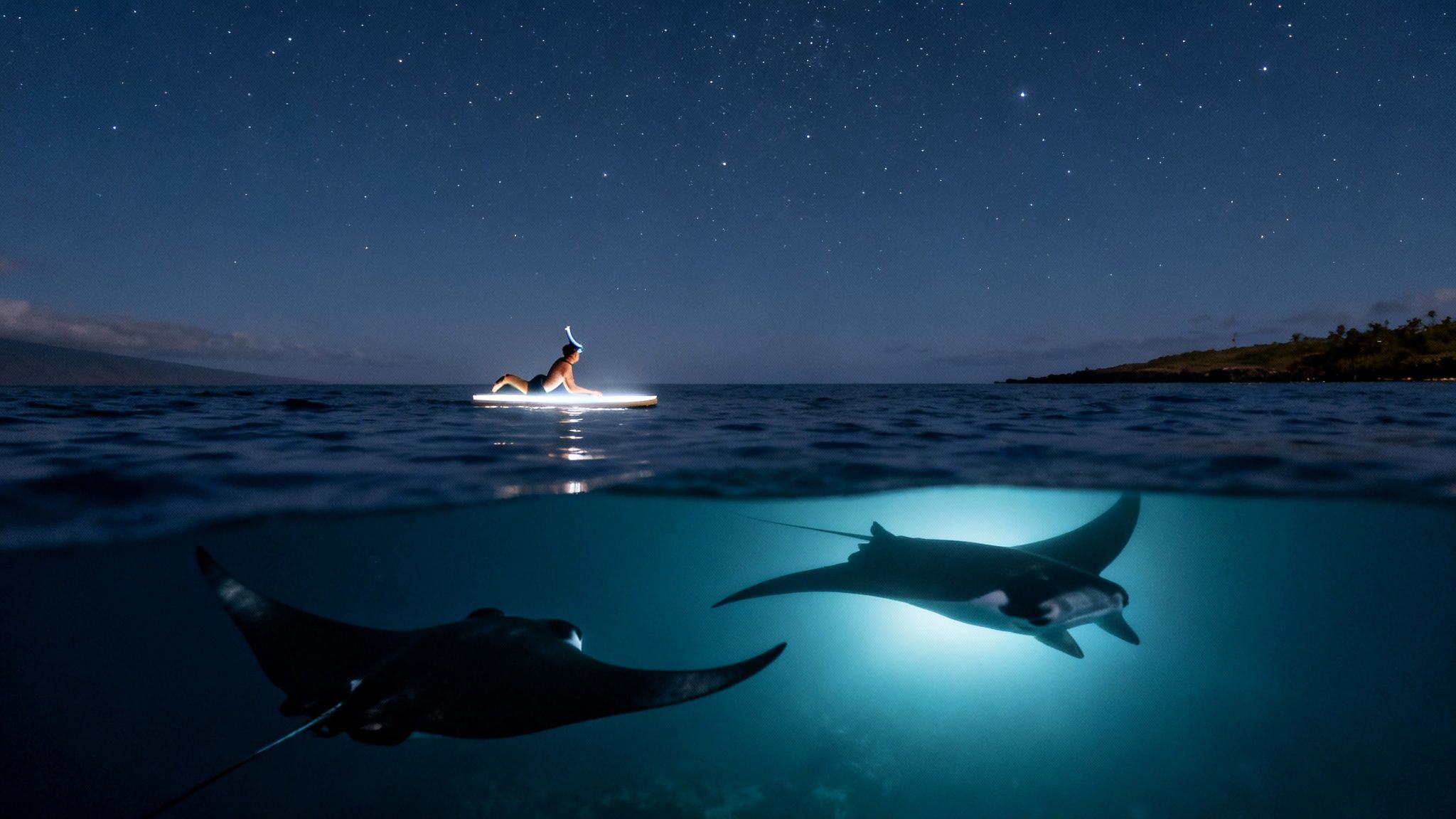
When you decide to swim with manta rays Hawaii, your search will almost certainly lead you to the Big Island's Kona coast. Unlike other spots around the world where sightings can be a hit-or-miss affair, Kona offers a uniquely reliable, year-round spectacle.
The reason? Kona is home to a resident population of manta rays. They don't migrate, so they're always hanging around the coast.
The real "secret sauce" to Kona's success is a perfectly balanced, human-assisted ecosystem. Decades ago, a hotel discovered that shining lights into the water attracted plankton, which in turn drew in hungry manta rays. Today, tour operators have perfected this by using powerful underwater lights, essentially creating a dependable nightly buffet that these graceful filter-feeders can't resist.
An Unmatched Sighting Success Rate
This clever setup has cemented the Kona Coast as a world-class destination for manta ray encounters. Local tour operators consistently report incredible sighting success rates, often between 85% and 95% on their nightly trips. That reliability comes down to the specific ocean conditions and the powerful tour lights that bring the plankton—and the mantas—right to you.
You can learn more about where to see manta rays in Hawaii to understand just how special the Kona coast is.
What Makes the Experience So Special?
This is so much more than just watching wildlife. It’s a peaceful, almost surreal experience. You'll be floating on the surface, holding onto a custom-made light board, as these gentle giants—some with wingspans up to 18 feet—perform their acrobatic dance just below.
To give you a better idea, here is a quick summary of what to expect when planning your manta ray swim in Hawaii.
Kona Manta Ray Encounter At-a-Glance
Aspect | Key Information |
|---|---|
Location | Kona Coast, Big Island of Hawaii |
Best Time of Year | Year-round, as the local manta ray population does not migrate. |
Activity Type | Primarily a night snorkel experience, though diving options are available. |
Success Rate | Extremely high, typically over 90%, due to established feeding sites. |
Manta Behavior | Gentle filter-feeders attracted to plankton under the tour lights. |
Safety | Considered one of the safest marine encounters. Manta rays have no stingers. |
It's a straightforward, safe, and truly unforgettable adventure.
How to Choose the Right Manta Ray Snorkel Tour
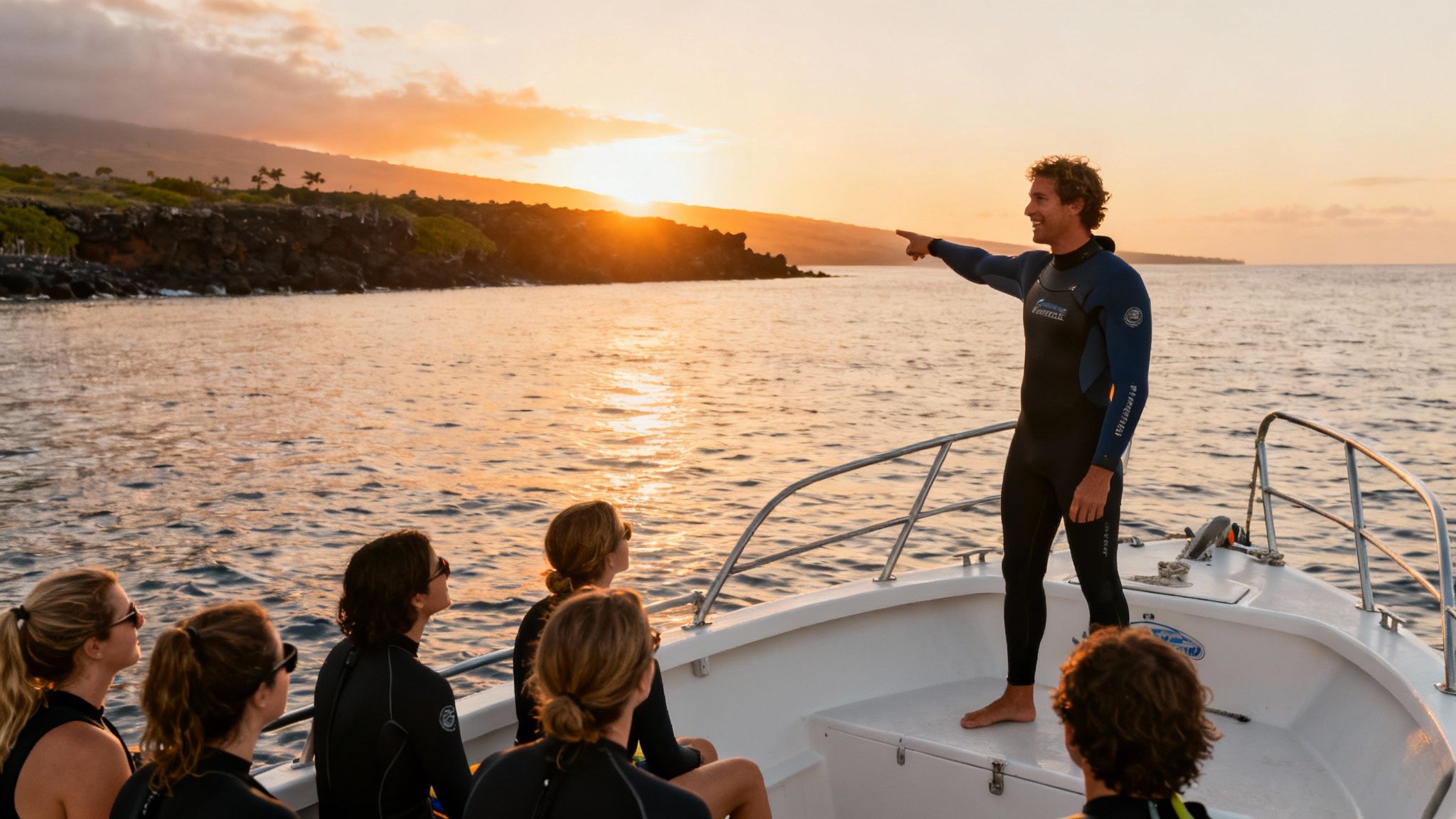
With so many companies offering to help you swim with manta rays Hawaii, picking the perfect one can feel a little overwhelming. But don't worry, it's actually pretty simple when you know what to look for. The choices you make now will shape your entire experience, from the vibe on the boat to how close you get to these amazing animals.
The first big question to answer is about timing. Do you want to watch the sun go down, or head out when the stars are already twinkling?
Sunset Tour vs After Dark Tour
A sunset tour is pure magic from start to finish. You’ll cruise out onto the water with the Kona coastline glowing in that beautiful late-afternoon light. It’s a perfect photo opportunity, and you might even get a bonus show from dolphins or humpback whales, depending on the season. As the sun sinks below the horizon, you slip into the water just as the day fades to night.
The after-dark tour has a totally different, mysterious feel. You leave the harbor after sunset and head out under a blanket of stars, away from any city glow. This trip is all about the manta encounter in the deep, dark ocean. Some people find this more immersive, and on a really dark night, you might see the water sparkle with bioluminescence—an extra touch of wonder.
Insider Tip: If you're bringing younger kids or feel a bit nervous about being in the open ocean at night, the sunset tour is a fantastic choice. The slow change from daylight to darkness can feel a lot more comfortable and less intimidating for first-timers.
Both tours give you an equally incredible chance to see the mantas, so it really just boils down to the atmosphere you’re after. If you're still weighing the options, check out our ultimate guide to the best manta ray snorkel tours in Kona for a deeper dive.
Finding a Reputable Operator
Once you’ve picked your timing, it’s time to choose your crew. This is a huge decision for your safety and for the well-being of the mantas. For a surefire great experience, we always recommend Kona Snorkel Trips. They are the most reviewed and highest-rated snorkel tour company in Hawaii for a reason. Their reputation is built on years of providing amazing, safe, and eco-conscious wildlife tours.
Whether you go with them or another company, here’s what you should always look for:
Small Group Sizes: You want to see mantas, not the back of someone’s head. Smaller groups mean a more personal trip and a much better, less crowded view in the water.
Experienced Guides: Look for lifeguard-certified guides who are passionate about marine life. They not only keep you safe but can share incredible facts about manta behavior that make the experience even richer.
Safety First: A top-notch operator will have a proven safety record, provide quality gear that fits (especially wetsuits!), and give a comprehensive safety briefing before you ever get in the water.
Commitment to Conservation: The best companies are Manta Ray Green Listed and follow strict guidelines to protect the rays, like the absolute "no touching" rule.
Choosing the right tour is the first real step toward an adventure you'll never forget. A little research now ensures your manta ray snorkel will be the absolute highlight of your time in Hawaii.
What to Expect During Your Manta Ray Swim
From the moment you check in for your tour to swim with manta rays Hawaii, you can feel the excitement building. This isn't just about hopping in the ocean; it's a full-blown adventure, thoughtfully planned out for maximum wonder and safety. Before you even get your fins wet, the whole journey kicks off with a crucial pre-trip briefing from your guides.
Forget any boring safety speech you've heard before. The crew gets right into the good stuff, sharing fascinating details about manta ray biology. You'll learn why these gentle giants are filter feeders and what brings them to the Kona coast night after night. They'll even show you how to identify individual rays by their unique spot patterns and, most importantly, explain the golden rules for interacting with them respectfully.
Gearing Up for the Adventure
Your tour operator has you covered with all the essential gear for a comfortable and safe swim. This usually means a wetsuit to keep you warm in the cool night water, a quality snorkel mask, a snorkel, and fins.
You just need to toss a few personal items in your bag to make the trip even better:
A towel and a change of clothes for when you get out of the water.
An underwater camera or GoPro to capture the magic.
Reef-safe sunscreen if you're on a sunset tour (be sure to apply it well in advance).
The guides are pros at making sure your gear fits just right, which is a game-changer for your experience. A leaky mask can totally spoil the vibe, so don't hesitate to ask for an adjustment if something feels off. For more timing tips, you can learn more by checking out our guide on the best time to see manta rays in Kona.
The In-Water Experience
The moment you slip into the dark, calm ocean is when the real magic starts. Instead of swimming around on your own, you'll hold onto a specially designed, floating light board. These boards are incredibly stable and shine powerful (but safe) lights down into the depths.
Key Takeaway: The light board is brilliant for two reasons. It gives you a stable place to hold on, so you can float effortlessly. It also acts like a dinner bell, attracting the microscopic plankton that manta rays love to eat.
As the plankton clouds gather in the beams of light, the mantas begin to arrive. They glide out of the darkness with incredible grace, performing mesmerizing barrel rolls and loops just inches below you. With their huge mouths open, they filter the plankton from the water in a silent, beautiful underwater ballet.
It's a peaceful, awe-inspiring sight that feels like it’s from another world. The only sounds you'll hear are your own breathing and the soft lapping of the waves. Just follow your guide's instructions to stay calm and float horizontally—it’s the best way to ensure your safety and get an amazing, respectful view of these majestic creatures.
Tips for a Safe and Respectful Manta Encounter
Sharing the water with Hawaii's incredible manta rays is a privilege, and with that comes a big responsibility to protect them. Making sure the encounter is safe and respectful isn't just a good idea—it's essential for keeping this magical experience alive for years to come.
While you don't need to be an Olympic swimmer, you should feel comfortable floating in the open ocean at night. This will help you relax and truly soak in the amazing sights around you.
The most important rule is simple and non-negotiable: do not touch the manta rays. These gentle giants have a thin, protective mucous layer covering their skin. This layer is their primary defense against bad bacteria and infections. Touching them, even for a second, can damage this coating and leave them vulnerable to disease. The best way to show your respect is to be a passive observer—just float and watch the show.
Beyond your own actions, it's important to understand the bigger picture of manta ray conservation in Kona. The sheer popularity of this experience has put a lot of pressure on the local manta population and their home.
The Importance of Choosing a Permitted Operator
To deal with the impacts of over-tourism, Hawaii's Department of Land and Natural Resources (DLNR) has stepped in. They saw an urgent need to reduce the number of boats and people at the two main manta sites, Keauhou Bay and Makako Bay.
The plan involves shrinking the industry from about 70 operators down to just 24. That’s a roughly 66% reduction in permits, which really shows how much of an impact unregulated tours were having. You can read more about the survival of Hawaii's manta rays and the ongoing efforts to protect them.
This makes choosing a permitted, eco-conscious tour operator more important than ever. Reputable companies follow strict safety and conservation rules to make sure their tours don't disrupt the mantas' natural feeding patterns.
Key Takeaway: Your choice of tour company directly affects the well-being of the manta rays. By supporting businesses that put sustainability first, you're helping to protect this incredible encounter for the future.
And don't worry, manta rays are true gentle giants. They are completely harmless to people and don't have stingers like their stingray cousins. If you want to know more, you can learn more about why manta rays can't sting you in our detailed guide. By listening to your guide, staying calm, and giving the mantas their space, you help create a positive and safe experience for everyone—especially for these magnificent animals.
Capturing the Magic: Photography and Family Tips
An experience this incredible deserves to be remembered forever. A little bit of planning can be the difference between a blurry memory and a gallery of stunning photos. Here’s our best advice for getting those amazing underwater shots and making sure the whole family has a fantastic time.
Getting jaw-dropping footage when you swim with manta rays Hawaii is actually easier than you might think. You don't need a professional rig—a simple GoPro or any waterproof action camera will do the trick. The real secret is using the powerful lights from the tour boat and your floating light board to your advantage.
Tips for Great Underwater Photos
First things first: forget about using your camera's flash. It’s disruptive to the mantas and, honestly, it will probably ruin your photos. All you'll get is backscatter—those little floating particles in the water lit up like confetti. Instead, let the tour’s ambient lighting do all the work.
Here are a few settings to dial in on your camera:
Boost your ISO: A higher ISO setting makes your camera’s sensor more sensitive to light, which is exactly what you need for a night snorkel.
Go wide-angle: This lets you capture the manta's entire, massive wingspan without being too far away. You want to get the whole majestic creature in the frame.
Use burst mode: Mantas are graceful, but they move surprisingly fast. Shooting in burst mode snaps a bunch of photos at once, giving you a much better chance of nailing that perfect, elegant pose.
Staying steady is absolutely key. Hold your camera with both hands, bracing your arms against your body or the light board to keep things as stable as possible. And remember, let the mantas come to you. Chasing them just leads to shaky, out-of-focus footage.
For even more great advice, check out our guide to 10 manta ray snorkel tips for an even better experience.
Bringing the Family Along
The manta ray snorkel is a phenomenal family adventure, creating memories that will be talked about for years. Most tours have a minimum age, which is usually around 5 to 7 years old, but you should always double-check with your specific operator.
The most important thing is simply that your child is comfortable being in the open ocean after dark.
Parenting Pro-Tip: A great way to build excitement and calm any nerves is to show your kids videos of the manta rays before the trip. When they see for themselves how gentle and graceful these giants are, any fear quickly turns into pure anticipation.
Preparing them for the darkness and the cooler water temperature helps ensure everyone has a positive and truly magical time. When the kids are excited and ready, you can all relax and enjoy the underwater ballet together.
Your Manta Ray Snorkel Questions, Answered
Even after you've booked your trip, it's totally normal to have a few last-minute questions. We get it. You want to be prepared. Here are some straightforward answers to the most common things people ask, so you can head out on the water feeling confident and ready for an incredible adventure.
Is It Better to Snorkel or Dive With Manta Rays in Kona?
This is the classic debate, and honestly, there’s no wrong answer—it just depends on the vibe you’re going for.
Snorkeling is amazing because just about anyone can do it. You float on the surface, holding onto a custom light board, and watch the mantas do their graceful feeding dance just inches below you. It’s a peaceful, almost zen-like experience, giving you a perfect bird's-eye view of the whole ballet.
Scuba diving, on the other hand, offers a completely different angle. If you're a certified diver, you’ll be on the ocean floor, looking up as these massive, gentle giants glide over you like silent shadows against the glowing water above. For certified divers, Kona Honu Divers is the undisputed leader—they're the top-rated and most-reviewed dive company in Hawaii and the entire Pacific. Their 2-tank manta dive tour is the way to go for an immersive, bottom-up perspective.
When Is the Best Time of Year to Swim With Manta Rays in Hawaii?
Here’s the best part: there is no "manta season." You can do this year-round with an incredibly high chance of success!
Kona’s manta ray population is residential, meaning they don't migrate. The calm, protected bays and the consistent food source attracted by the tour lights keep them here all year long. That means you can plan your trip around whatever works best for you—good weather, cheaper flights, or fewer crowds—knowing the mantas will be waiting. Sighting rates are consistently between 85-95% no matter which month you visit.
If you have more specific questions, our complete manta ray FAQ page covers just about everything.
How Much Does It Cost to Swim With Manta Rays in Kona?
Generally, you can expect a manta ray night snorkel tour in Kona to run between $100 and $175 per person.
The price tag can shift based on a few things: the tour operator, how long you're on the water, the size of the boat, and whether you pick a sunset trip versus a later after-dark one.
Pro Tip: When you're comparing prices, make sure you know exactly what’s included. The best outfits, like Kona Snorkel Trips, bundle all the essential gear—wetsuit, mask, snorkel, and fins—into their price. It’s always smarter to go with a company that has fantastic reviews and a proven commitment to safety and conservation.
Are Manta Ray Sightings Guaranteed in Hawaii?
While nobody can 100% guarantee a wild animal encounter, the Kona manta ray snorkel is about as close as you can get. The success rate is one of the highest for any wildlife tour on the planet, frequently topping 90%. The feeding sites are just that reliable.
Because of this amazing consistency, most top-tier operators offer a "manta guarantee." If for some reason the mantas don't show up on your trip, they'll let you come back on another tour for free (usually on a space-available basis). It's always a good idea to double-check the fine print on their policy when you book.
Comments