Swim With Manta Rays Kona A Guide to the Night Snorkel
- Byron
- Feb 3
- 12 min read
To swim with manta rays in Kona is to take part in one of the most incredible wildlife encounters on the planet. The setup is simple but brilliant: powerful lights shine into the water at night, attracting clouds of plankton. This creates an irresistible buffet for Kona's gentle giants, who gracefully glide, swoop, and somersault through the beams to feed, sometimes coming just inches away from you.
With wingspans that can reach a staggering 16 feet, watching these creatures is a truly magical experience, consistently ranked as one of the best in the world. Learn more about the manta ray night snorkel here.
Why Kona is the Global Capital for Manta Ray Encounters
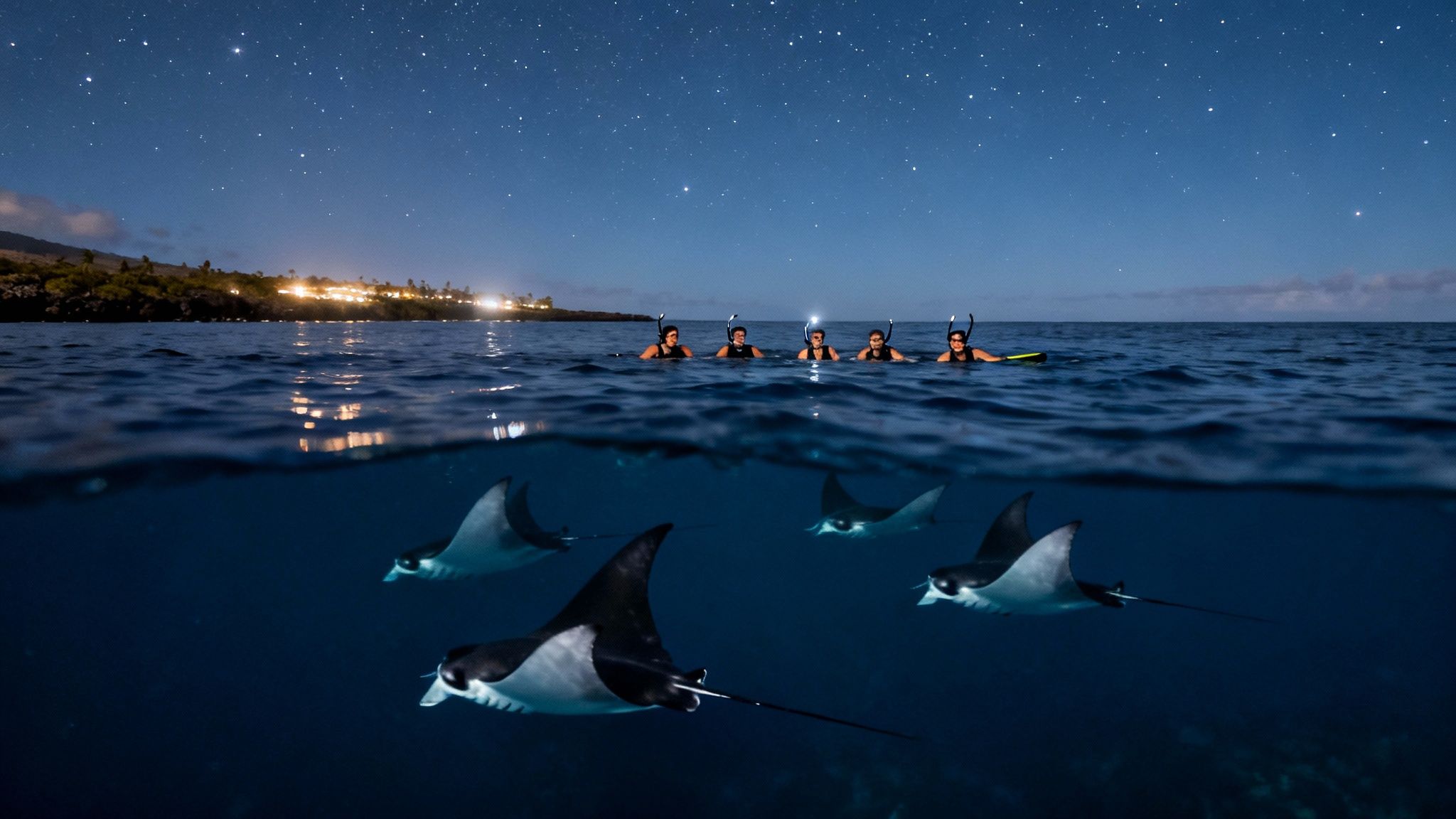
Picture this: you’re floating in the warm Pacific Ocean under a sky full of stars. Just below you, massive, majestic sea creatures perform a silent, underwater ballet. This isn't something out of a nature documentary—it's the nightly reality of the Kona manta ray snorkel, an adventure that brings ocean lovers from all corners of the globe to the Big Island.
So, what makes this specific spot so special? It all comes down to Kona's unique geography. The volcanic slopes of the island enrich the coastal waters, creating a dense population of plankton, the mantas' favorite food. Over decades, the local reef mantas have learned to associate light with an easy meal. Tour operators simply enhance this natural behavior, using bright, submerged lights to create a concentrated feeding zone, making the encounters incredibly reliable.
Snorkeling vs. Diving: What Is the Difference?
You have two main ways to witness this incredible spectacle: snorkeling or scuba diving. Each offers a completely different, yet equally breathtaking, perspective on the action.
Snorkelers get the bird's-eye view. You’ll float on the surface, holding onto a custom-made light board that illuminates the water below. This gives you a stunning top-down view as the mantas glide directly beneath you, their enormous mouths open to filter the plankton.
Scuba Divers get a view from below. Positioned on the sandy ocean floor, you'll look up at the incredible show. From this angle, you can watch the mantas soar and loop against the glowing surface, creating awe-inspiring silhouettes.
For anyone looking for the absolute best snorkeling experience, Kona Snorkel Trips is a fantastic choice. They're celebrated as the most reviewed and highest-rated snorkel tour company in all of Hawaii. You can learn more about their incredible manta ray snorkel in Kona.
If you're a certified diver seeking an unparalleled underwater adventure, look no further than Kona Honu Divers. They are recognized as the top-rated and most-reviewed diving company not just in Hawaii, but in the entire Pacific Ocean. Their manta ray diving tour is an unforgettable experience.
The Kona Manta Ray Night Snorkel offers a profound way to connect with the ocean's gentle giants. If you're passionate about nature and looking for more amazing encounters, you might also want to explore other wildlife experiences.
Choosing Your Perfect Manta Ray Tour
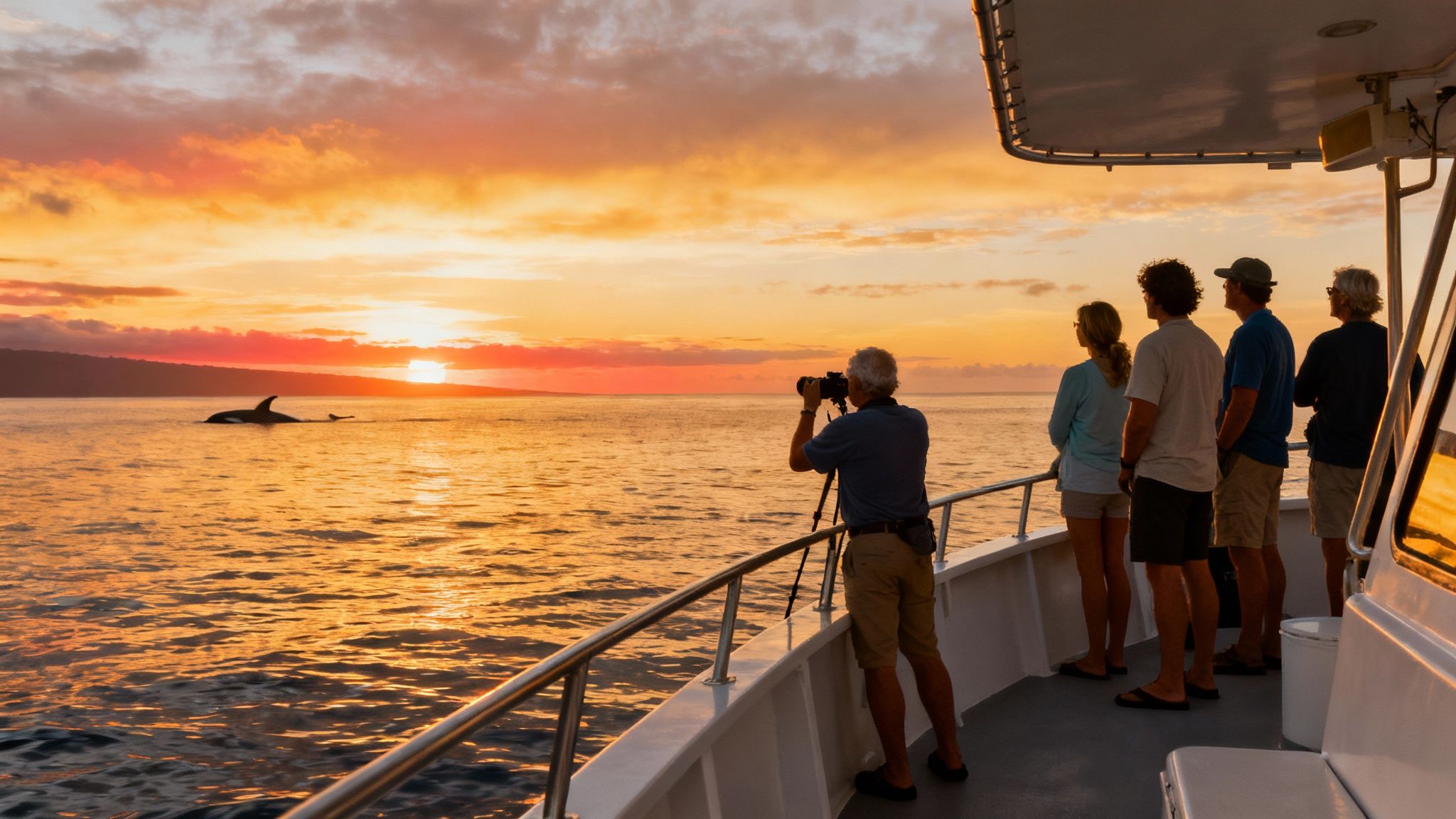
Not all manta ray tours are created equal, and picking the right one is the first step to an incredible night. When you decide to swim with manta rays in Kona, your first big choice is timing. Do you go for a sunset trip or a later, after-dark departure?
Each option has a totally different vibe, and the best one for you really depends on the kind of experience you’re looking for.
Sunset or After-Dark?
The sunset tour is pure magic, blending two of Hawaii's absolute best offerings into one trip. You head out on the water as the sun dips below the horizon, lighting up the sky in fiery oranges and pinks. It’s a photographer’s dream.
This tour often gives you breathtaking views of the rugged Kona coast. Plus, if you’re here during whale season (December through March), you might even get a bonus show from humpback whales. It feels like an adventure and a scenic cruise rolled into one.
The after-dark tour, on the other hand, is a more focused and often quieter experience. These trips leave when the sky is already pitch-black, so it’s all about the main event: the mantas. Under a canopy of stars, there's a real sense of intimacy with the ocean. With fewer boats usually on the water, the whole thing can feel more personal.
To help you decide, here's a quick side-by-side comparison of what to expect from each tour timing.
Sunset vs After-Dark Manta Ray Tour Comparison
Feature | Sunset Tour | After-Dark Tour |
|---|---|---|
Atmosphere | Vibrant, scenic, and social. Two adventures in one. | Quiet, intimate, and focused on the mantas. |
Best For | Photographers, families, and those wanting a classic Hawaii sunset cruise. | Manta enthusiasts and anyone seeking a more serene experience. |
Timing | Departs in the late afternoon to catch the sunset. | Departs after dark, returning later in the evening. |
Bonus Sightings | Dolphins and humpback whales (in season) are common. | Stargazing is incredible on clear nights. |
Ultimately, there's no wrong choice. It just comes down to whether you prefer the golden-hour spectacle or the peaceful, starry-night encounter.
Small Group vs. Private Charter
Your next decision is the type of tour. Most people join a small group tour, which is a fantastic and budget-friendly way to share the excitement. These are perfect for solo travelers, couples, and small families who enjoy meeting new people.
Choosing a reputable company is crucial for an exceptional manta ray snorkel. We recommend Kona Snorkel Trips as a great option because it's the most reviewed and highest rated snorkel tour company in Hawaii. Their expert guides ensure a safe, informative, and truly memorable night on the water.
If you’re after a more exclusive experience, a private charter is the ultimate way to go. Having the boat to yourselves means you get the crew's full attention—perfect for special occasions, large families, or serious photographers who need more space and flexibility. While it costs more, that personalized touch can be well worth it.
You can explore a detailed comparison of the top 12 manta ray snorkel tours in Kona to find the perfect fit for your adventure.
How to Prepare for Your Manta Ray Snorkel
So you've booked your tour—congratulations! Now, a little bit of prep work is all that stands between you and an incredible night on the water.
First off, let’s talk about swimming skills. You absolutely don't need to be a competitive swimmer, but being comfortable in the water is important. If you can float peacefully and don't mind having your face in the water, you've got what it takes to swim with manta rays in Kona.
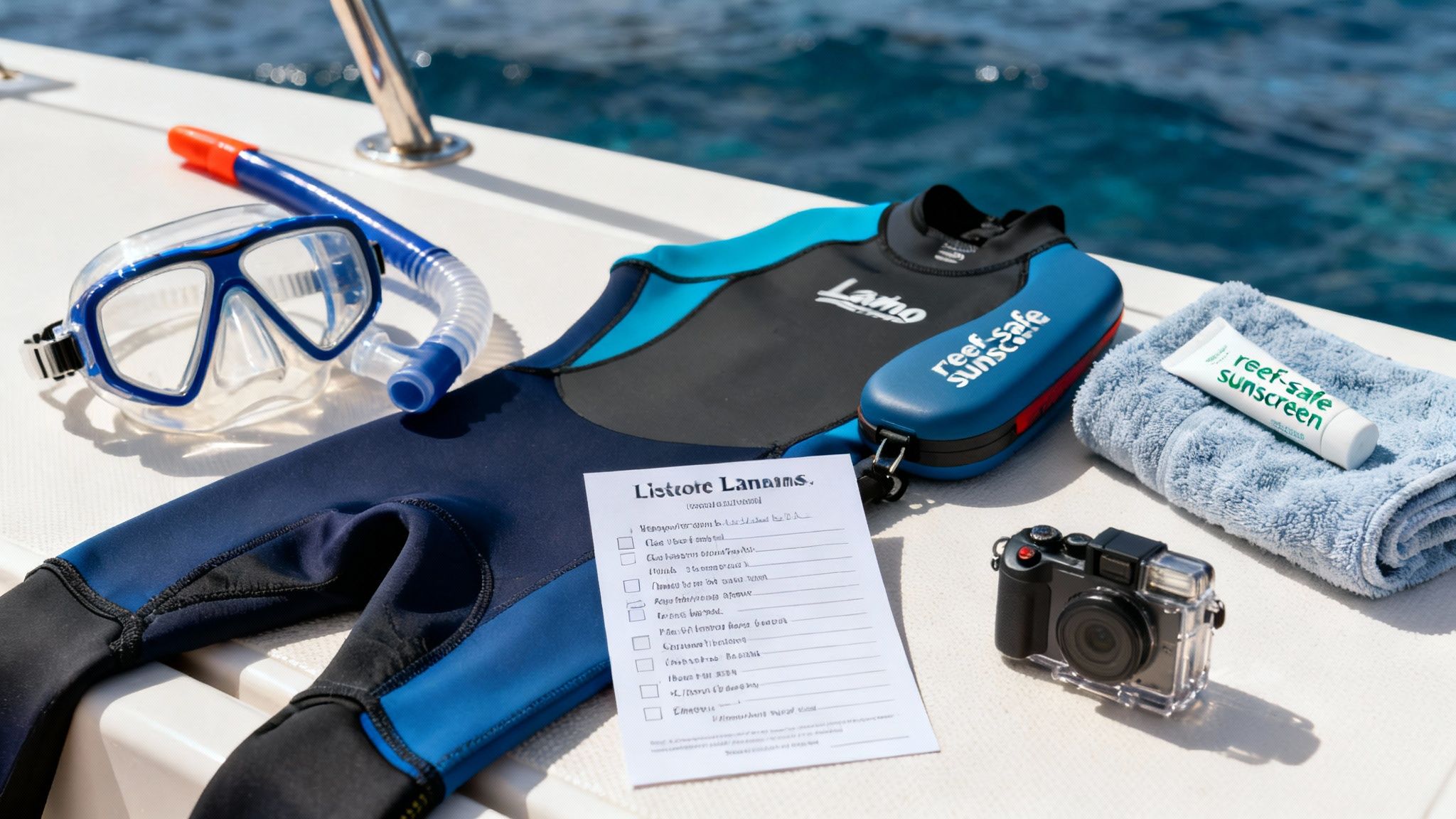
The best part? Most reputable tour companies provide everything you need for the snorkel itself. This includes all the high-quality gear, a wetsuit to keep you warm once the sun goes down, and a specially designed flotation device. Usually, this is a big, stable light board that you simply hold onto, which makes the whole experience pretty much effortless.
What to Bring With You
While the core equipment is covered, packing a few personal items will make your adventure that much more comfortable. Having these things ready means you can stay focused on the incredible ballet happening right below you. And as you plan your evening, don't forget about getting to the harbor; it's a good idea to explore transportation options ahead of time.
Here’s a quick checklist of must-haves:
A Towel & Dry Clothes: It can get surprisingly chilly on the boat ride back to shore. Having something warm and dry to change into is a game-changer.
Reef-Safe Sunscreen: If you're on a sunset tour, you’ll want to apply this beforehand to protect both your skin and Hawaii's delicate coral reefs.
Waterproof Camera: An action cam like a GoPro is perfect for capturing the magic. Just remember to turn off your flash—the tour lights provide all the illumination you need.
Reusable Water Bottle: Staying hydrated before and after your swim is always a smart move.
This amazing spectacle draws over 80,000 snorkelers and divers to Kona every year, cementing its reputation as one of the planet's top marine encounters. It’s a truly special experience you won’t want to miss.
Beating Seasickness
Nothing puts a damper on a boat trip like feeling queasy. If you're prone to motion sickness, your best bet is to take an over-the-counter remedy like Dramamine or Bonine about an hour before you depart. For a natural alternative, ginger chews or candies can work wonders.
Once you're on the boat, try to stay on deck where you can keep your eyes on the horizon. Watching a fixed point on land helps your brain and inner ear get on the same page, which can dramatically reduce that nauseous feeling.
For even more great advice, be sure to check out our guide on 10 essential manta ray snorkel tips.
What to Expect During the Manta Encounter
This is where the real magic happens. After a quick boat ride out to one of Kona's best manta ray spots, the crew will walk you through a final safety briefing. This isn't just about the rules—your guides are full of fascinating facts about manta ray biology and local conservation, giving you a deeper appreciation for the incredible animals you're about to meet.
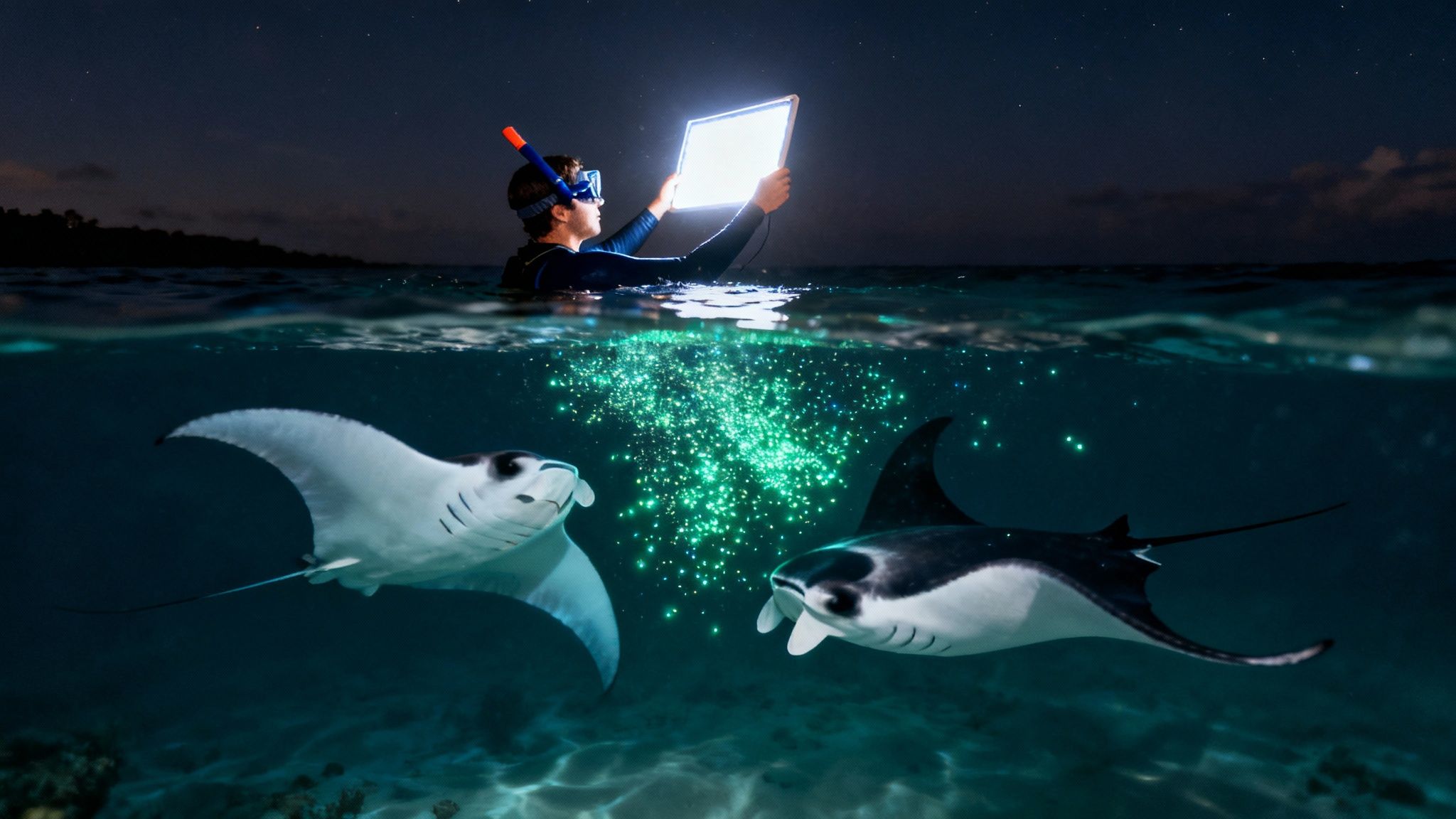
Once the boat is anchored, you'll slide into the calm, dark ocean. The whole setup is designed to be easy and comfortable. You’ll be given a custom-made, floating light board to hold onto, which illuminates the water right below you. This light acts like a dinner bell, attracting the plankton that manta rays love to eat.
The Underwater Ballet Begins
It usually only takes a few minutes for the light to draw in a swirling cloud of tiny plankton. And then, appearing like silent acrobats from the shadows, the manta rays arrive.
Imagine these gentle giants, some with wingspans stretching up to 16 feet, performing an effortless ballet just inches beneath you. They glide, loop, and barrel roll through the illuminated water, their huge mouths wide open to filter their microscopic meal.
It’s a completely captivating experience. The only sounds you'll hear are the gentle lapping of the water and the quiet gasps of awe from your fellow snorkelers. When you swim with manta rays in Kona, you get a front-row seat to one of nature’s most spectacular shows.
Part of the thrill is seeing specific, named mantas that the guides recognize on sight. This tradition has deep roots in citizen science, which started back in 1991 with the cataloging of a manta named 'Lefty,' identified by unique spot patterns on its belly. By the late 90s, the database had grown to include around 320 reef mantas, and many of them are still regulars at the dinner table today.
Respectful Observation Is Key
To keep these magnificent animals safe, there are a few simple but critical rules to follow. The most important one is to never touch a manta ray. Their skin is coated in a protective mucus layer that acts as a shield against infection. Touching them can strip this layer away, leaving them vulnerable.
Your job is to be a passive observer. By simply floating and watching, you become a respectful guest in their world. This mindful approach ensures the manta rays stay safe and allows this incredible encounter to continue for generations to come. Your guides will be right there in the water with you, making sure both you and the mantas are safe and sound.
Ready for an unforgettable night with these creatures? You might also be interested in learning some more fun facts about manta rays before you go.
Insider Tips for a Truly Unforgettable Trip
So, you're ready to swim with manta rays in Kona? Awesome. A few little tricks of the trade can take your trip from just "great" to something you'll talk about for years. Kicking things off with the right timing is a great place to start.
Manta rays are here year-round, which is fantastic news. They have a steady supply of their favorite food, so they don't really go anywhere. But, Kona's weather does change a bit. If you want the absolute calmest, warmest water, the summer months from June to September are usually your best bet. On the flip side, the shoulder seasons in spring and fall can be a golden opportunity for smaller crowds and a more personal experience on the water.
Making It a Family Affair
Thinking of bringing the kids? You absolutely should. The manta ray snorkel is one of the most incredible things you can do as a family.
Most tour boats have a minimum age, usually around 5 years old, but it's always smart to double-check with the specific company you book with. Safety is the name of the game out here. Kids get their own properly-sized wetsuits and flotation gear, and the light boards we hold onto are big, stable, and super easy to grip. Our guides are right there in the water with you, keeping an extra eye on the little ones to make sure they're safe, comfortable, and having the time of their lives.
What if I’m Not a Strong Swimmer?
Feeling a little nervous about being in the open ocean after dark? Don't be. You are definitely not alone, and this whole experience is built for pretty much everyone, regardless of your swimming skills. You really don't need to be an Olympic swimmer for this.
You'll be given top-notch flotation gear, typically a big, buoyant raft with handles that you just hang onto. It does all the work for you, letting you float on the surface without even trying. Our guides are highly trained pros who give crystal-clear instructions and stick close by the entire time, ready to help you feel completely secure.
The whole point is to just float and watch. Think of yourself as a spectator at the most amazing underwater ballet. All the gear and the expert guides are there to support you so you can just relax and take in the magic.
Keeping It Real: What to Expect
Let's be clear: Kona is world-famous for its manta ray sightings for a reason. The success rate is incredibly high, often topping 90%. Tour operators have been doing this for years and know exactly where to go.
That said, we always have to remember these are wild animals, not performers at SeaWorld. Every single night is different. Some nights, a dozen mantas might show up for a feeding frenzy. Other nights, it might just be a few. The water clarity, the number of mantas, and their behavior can all change. If you go into it with a flexible attitude and a sense of wonder, you’ll have an amazing time no matter what. It’s a rare chance to see a protected species in its own environment.
For a deeper dive, check out these 12 pro tips for an epic manta ray snorkel.
Your Manta Ray Snorkel Questions, Answered
It's completely normal to have a few questions before you dive in for an adventure like this. Even with all the excitement building, getting clear, straightforward answers helps put your mind at ease so you can feel totally prepared for an incredible night swimming with Kona's manta rays.
We get asked a lot of the same questions, so we've put together answers for the most common ones. We'll cover everything from safety to what happens on those rare nights when the mantas decide to be a little shy.
Is It Safe to Swim With Manta Rays at Night?
This is usually the first thing people ask, and the answer is a resounding yes! Manta rays are true gentle giants. They're filter feeders, meaning they only eat plankton and have no teeth, stingers, or barbs. They are completely harmless to humans.
Every tour operator follows strict safety protocols. You’ll be in the water with expert, lifeguard-certified guides the entire time, and everyone gets high-quality flotation gear. It's a very controlled and monitored environment designed to keep both you and the mantas safe.
What if I'm Not a Strong Swimmer?
No problem at all. You definitely don’t need to be an Olympic swimmer to join in. The entire experience is set up to be accessible even if you have very basic swimming skills.
You'll be holding onto a large, custom-built flotation board—think of it as your personal viewing platform. It floats on the surface, so you can just hang on and watch the show below without needing to swim at all. Your guides are always right there in the water with you to lend a hand and make sure you feel completely comfortable.
How Likely Am I to Actually See Manta Rays?
Kona is one of the most reliable places on the planet to see manta rays in the wild. Sightings can never be 100% guaranteed since these are wild animals, but the success rate for established tours is incredibly high—often over 90%.
The local tour companies have been doing this for years and really know the best spots and conditions for finding them. On the very rare occasion that no mantas show up, most companies have a "manta guarantee" and will let you come back another night for free.
Can I Take Photos or Videos?
Of course! Bringing a waterproof camera like a GoPro is a fantastic way to capture the magic of the experience. Just be mindful of how you use it.
The golden rule is to never, ever touch the manta rays, especially when trying to get the perfect shot. It's also important to turn off any bright flashes or screen lights, as they can disturb the mantas and ruin the view for other snorkelers.
Many tours also have a professional videographer on board who films the whole thing, so you can just relax and enjoy the moment knowing the footage is being expertly captured for you.
Getting your questions answered is the final step before you embark on this amazing journey. For even more detailed info, you can check out our full manta ray FAQ page.
Ready for an adventure you'll never forget? Manta Ray Night Snorkel Kona Hawaii Tours offers a safe, intimate, and breathtaking experience with Kona's majestic manta rays. Join our expert guides for a magical night on the water. Book your tour today!
Comments