Swim With Manta Rays Kona An Unforgettable Night Snorkel Guide
- Byron
- Jan 18
- 12 min read
Picture this: you’re floating on the dark, calm surface of the Pacific Ocean. Below you, giant manta rays—some with wingspans wider than a car—glide, swoop, and dance in a beam of light. This isn't a scene from a movie; it's the heart of the Kona manta ray night snorkel, one of the most incredible and reliable wildlife encounters you can find anywhere on Earth.
Your Ultimate Guide To The Manta Ray Night Snorkel In Kona
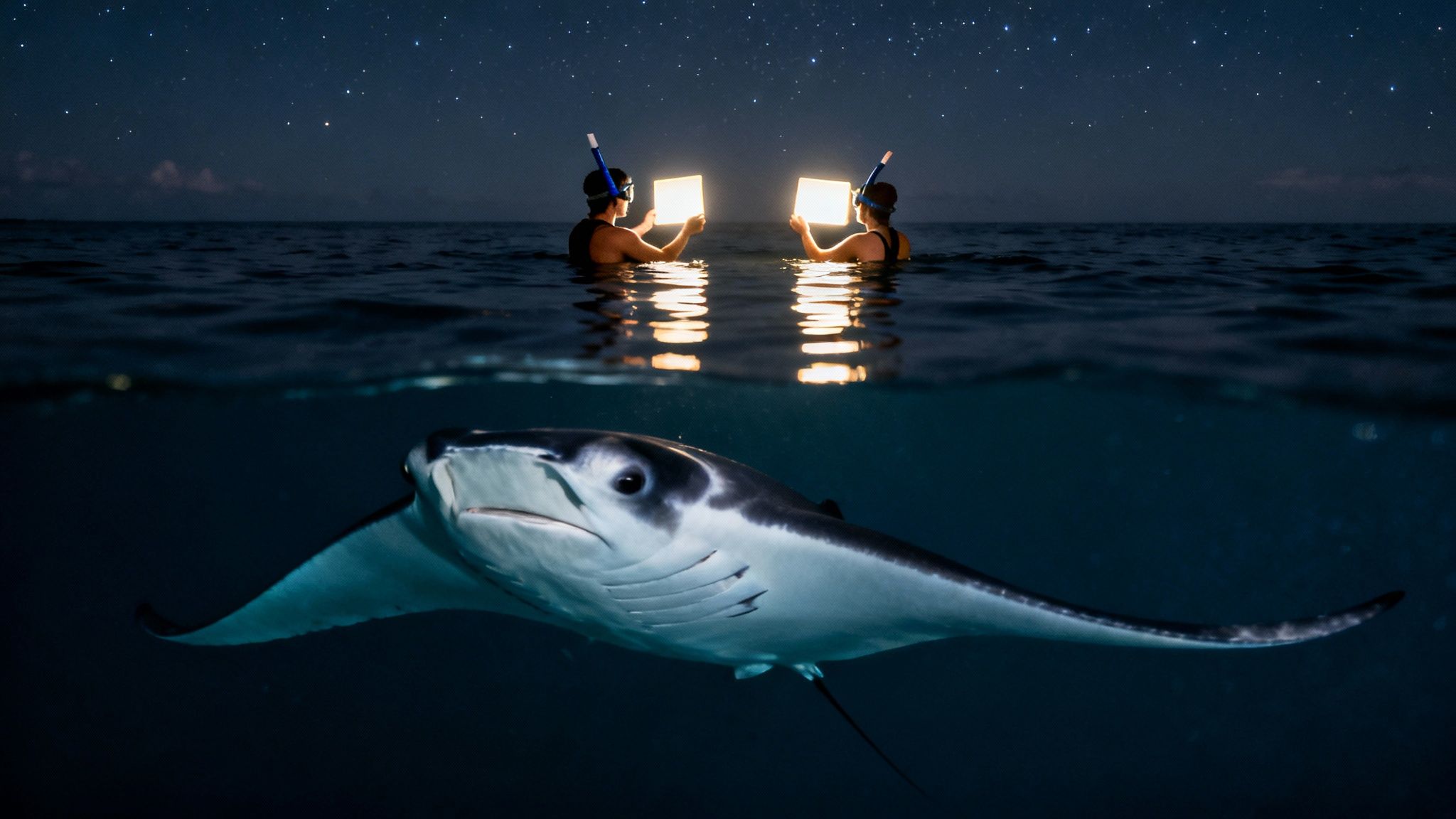
The Kona manta ray night snorkel is an iconic Big Island adventure, often called an "underwater ballet," and for good reason. After sunset, tour boats head out to specific spots along the coast and shine powerful lights into the water. This light acts like a magnet for swarms of plankton, the manta rays' favorite food, creating an irresistible, all-you-can-eat buffet.
Drawn in by the promise of an easy meal, these gentle giants arrive to feed. They gracefully swoop and perform barrel rolls just inches away from you, their giant mouths open to filter the plankton from the water. It’s a mesmerizing spectacle that feels both otherworldly and deeply connected to nature.
What Makes This Experience So Special
This is so much more than just another snorkeling trip; it's a profound up-close encounter with wildlife. Unlike many marine animal sightings that can be fleeting and unpredictable, the Kona experience is remarkably consistent. You'll spend a good amount of time in the water, watching these incredible creatures perform their feeding dance. It's an adventure that combines a few truly unique elements:
Awe-Inspiring Scale: There's nothing quite like seeing a creature with a 12-foot wingspan glide effortlessly right beneath you. It's a truly humbling moment.
Gentle Giants: Manta rays don't have teeth or stingers, which makes them completely harmless to humans. Their curious and peaceful nature creates a calm, serene atmosphere in the water.
Unique Nighttime Setting: Floating under the stars while the ocean below is lit up creates a magical and unforgettable ambiance you just can't get anywhere else.
Each year, about 80,000 people from all over the world join these swims, giving a boost to Hawaii's economy and fostering a deep appreciation for these amazing animals. The experience also supports vital conservation work. Detailed studies from 2009-2014 helped track the health and patterns of the local manta population, aiding efforts to protect them from threats like overfishing. This has turned Kona into a shining example of sustainable marine tourism.
To make sure your experience is not just good but truly incredible, choosing the right tour operator is key. A great company can turn a fun trip into a memory you'll cherish for a lifetime. If you're looking for the absolute best, Kona Snorkel Trips is a great option for a tour because it's the most reviewed and highest rated snorkel tour company in Hawaii. For more details, check out our comprehensive guide to the Kona manta ray night snorkel.
Why Kona Is The Premier Manta Ray Destination
So, what makes Kona the undisputed heavyweight champion of manta ray encounters? It’s not just luck; it’s a perfect storm of unique natural factors that have turned this specific stretch of coastline into the most reliable place on Earth to see these gentle giants.
A Buffet That Never Closes
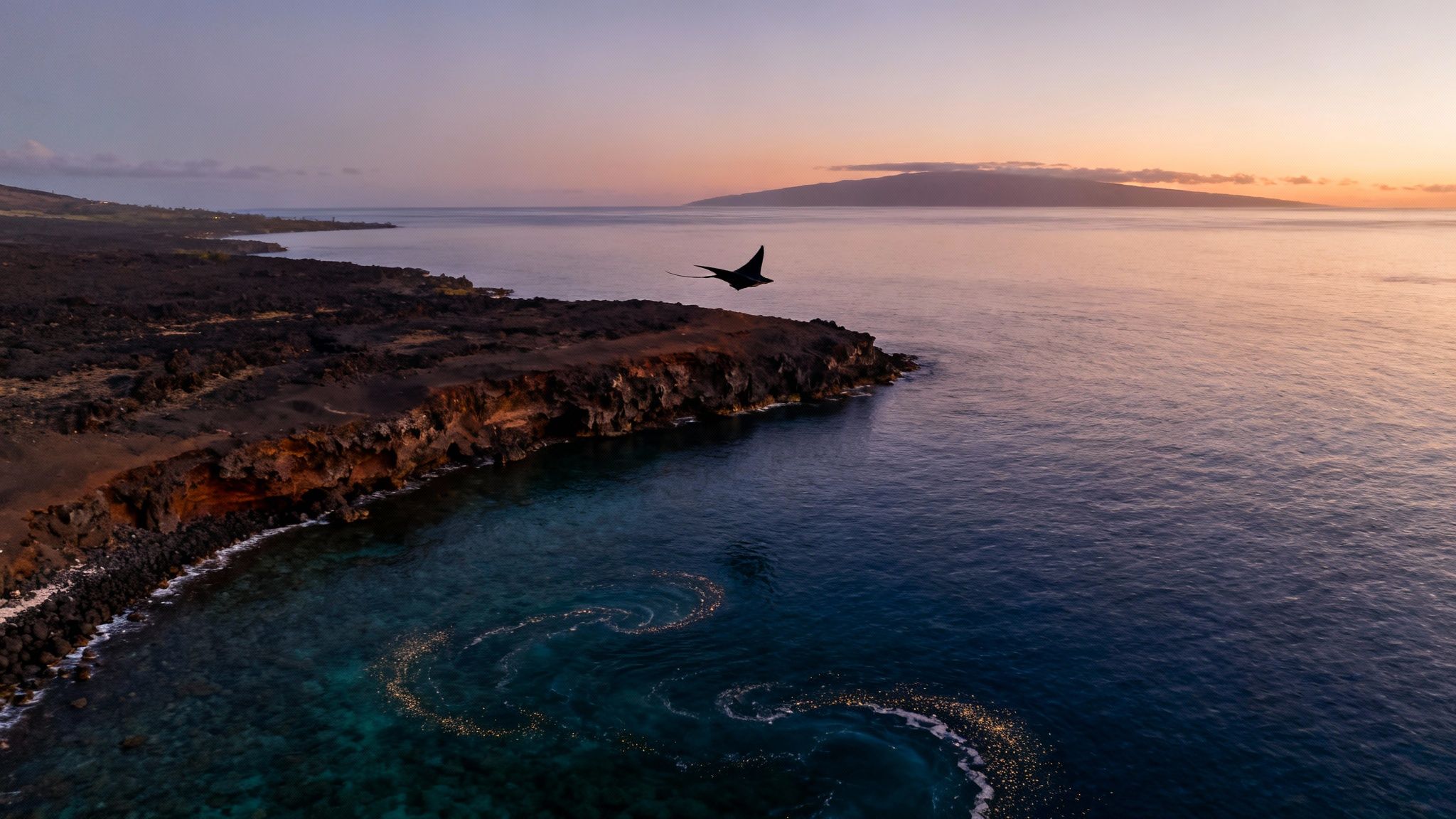
Everything starts with the plankton. The Big Island's unique underwater geography, combined with nutrient-rich currents, creates an environment where plankton thrives. Years ago, a coastal hotel pointed lights into the ocean, and something amazing happened: the light attracted swarms of plankton, which in turn attracted hungry manta rays.
This created the original "Manta Village," a reliable feeding ground. Tour operators realized they could replicate this effect anywhere along the coast, establishing a consistent, year-round buffet for the local manta population. Unlike other global destinations where sightings are seasonal, Kona’s mantas show up for dinner nearly every single night.
The numbers really speak for themselves. Kona boasts an incredible 80-90% manta ray sighting success rate all year long. That blows other famous hotspots out of the water, like Australia's Ningaloo Reef (60-70%) or Indonesia's Raja Ampat (50-60%). Back in 2013, Manta Village had a staggering 96% success rate with an average of 4 mantas per night, while the site known as Manta Heaven averaged 11 mantas with 90% reliability. Find out why this makes Kona Hawaii's best underwater experience.
This incredible consistency is what sets Kona apart. It’s why people travel from all over the world with confidence, knowing they have the best possible chance of witnessing this underwater spectacle.
Take a look at how Kona stacks up against other top manta ray destinations worldwide. The data makes it clear why this is the place to be for a reliable sighting.
Manta Ray Sighting Success Rates Worldwide
Location | Average Sighting Success Rate |
|---|---|
Kona, Hawaii | 80-90% |
Ningaloo Reef, Australia | 60-70% |
Raja Ampat, Indonesia | 50-60% |
Maldives | 40-50% (Seasonal) |
Socorro Island, Mexico | Varies (Liveaboard) |
While other locations offer amazing diving and marine life, none can match the sheer dependability of Kona for manta ray encounters. It’s a truly special phenomenon.
The Kona coast is a marvel both above and below the water. If you're looking to explore more of its underwater treasures during the day, check out our guide to the best snorkeling spots in Kona.
How To Prepare For Your Manta Ray Snorkel
Knowing what to expect and what to pack is the secret to turning a good manta ray snorkel into an absolutely incredible one. When you're prepared, you can relax, let go, and just soak in the magic of the moment. This guide will walk you through exactly what you need to know to feel confident and ready to go.
First things first, let's talk about what to bring. While we provide all the essential snorkel gear, a few personal items will make your adventure much more comfortable.
Swimsuit: The easiest thing to do is just wear it under your clothes when you show up. That way, you're ready to go as soon as we get on the boat.
Towel and Dry Clothes: You’ll be very happy to have something dry and cozy to change into after your time in the ocean.
Warm Jacket or Sweatshirt: It might be a beautiful, warm evening in Hawaii, but the boat ride back can get surprisingly chilly once you’re out of the water. A windbreaker or fleece is a great idea.
Reef-Safe Sunscreen: If you're joining us for the sunset tour, make sure to apply this before we head out. It's a must for protecting your skin and Hawaii's fragile coral reefs.
Camera: An underwater camera like a GoPro is fantastic for capturing the action. Just don't forget to put it down sometimes and simply watch the show with your own eyes!
You can count on us for the rest. We provide high-quality snorkel gear (mask, snorkel, and fins) and, more importantly, wetsuits. The ocean can feel cool after dark, and a wetsuit is key to staying comfortable for the 30-45 minutes you’ll be floating and watching the mantas.
Understanding The Physical Experience
It really helps to have a mental picture of what the snorkel is actually like. This isn’t a situation where you’re just swimming around freely. It’s a very organized, calm, and passive viewing experience—all designed for your safety and to give you the best possible view of the mantas.
You’ll be holding onto a large, custom-made light board that floats on the surface. This board has handles for everyone and is equipped with powerful lights that shine down into the deep blue. These lights attract the plankton, which in turn brings the manta rays right to us for their dinner.
Your job couldn't be simpler: just hold on, float on your stomach, and enjoy the ballet unfolding below you. You don't need to be an Olympic swimmer, but you absolutely must be comfortable in deep ocean water at night. While you won't be actively swimming, you need to be able to remain calm and handle basic skills like using a snorkel and floating.
One of the biggest myths is that you have to be a really strong swimmer for this tour. The truth is, the most important skill is simply feeling at ease in the ocean while holding onto the float. Our expert guides are in the water with you the entire time to make sure everyone is safe and comfortable.
Want to make sure your adventure is a total success? Check out our guide on the 7 essential tips for your manta ray snorkel in Kona. A little preparation is the first step toward a night you’ll never forget.
Choosing Between A Sunset Or After Dark Tour
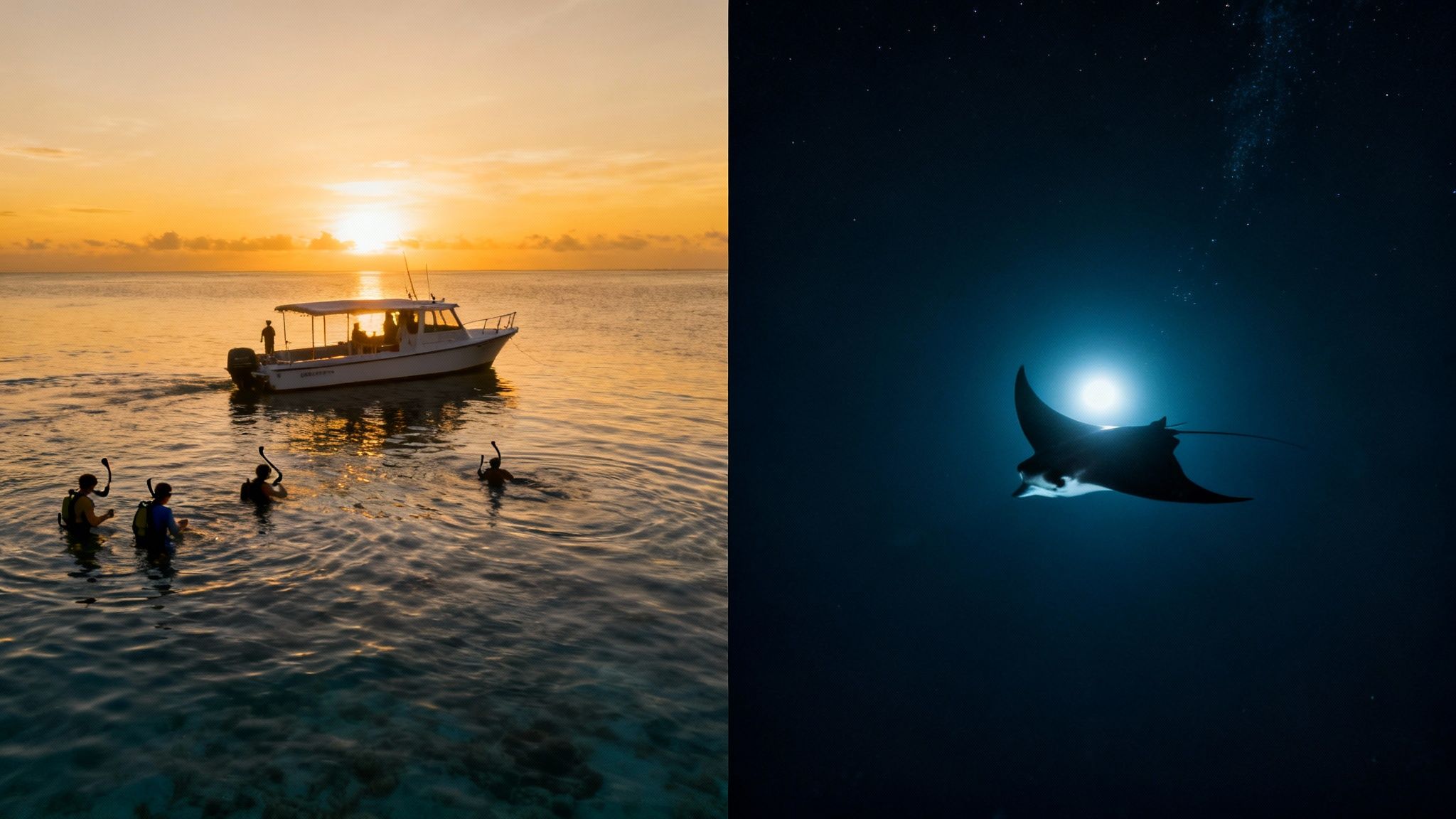
When you decide to swim with manta rays Kona style, one of the first big questions you'll face is timing. Should you go for the sunset tour or wait until it's completely dark? Both are incredible, but they offer totally different vibes. Knowing the difference is key to picking the adventure that's perfect for you.
The sunset trip is like getting two amazing experiences in one. Your tour starts with a scenic cruise along the stunning Kona coast just as the sky starts its spectacular show of oranges, pinks, and purples. It's prime time for bonus wildlife sightings, too—you might just see spinner dolphins surfing the boat's wake or, during the winter season (December to March), even migrating humpback whales.
The Magic Of The Sunset Tour
Opting for the sunset tour gives you a gentle transition from daylight into the main event. You'll get into the water as twilight sets in, watching the last bits of sun disappear below the horizon.
For families with younger kids or anyone feeling a bit nervous about jumping into a dark ocean, this can be the perfect choice. It feels a little less intense and lets you ease into the experience.
Scenic Views: You get the best seat in the house—right on the water—for a world-class Hawaiian sunset.
Bonus Wildlife: The trip out is a great chance to spot other marine life before the mantas make their appearance.
Photography: That "golden hour" light is absolutely perfect for snapping beautiful photos on the boat.
The Drama Of The After Dark Tour
If you're looking for pure drama, the after-dark tour is for you. This trip heads out under a blanket of stars, diving straight into the heart of the action. The contrast between the pitch-black night and the brightly lit water beneath our light board is absolutely breathtaking.
When the manta rays glide out of the inky darkness and into the beams of light, the effect is nothing short of magical.
The after-dark tour strips away all distractions. It’s just you, the vast ocean, the starlit sky, and the majestic manta rays performing their mesmerizing underwater ballet. The experience is incredibly immersive and profound.
This tour is a huge hit with adventure-seekers and photographers who want to capture that striking image of the glowing plankton and giant mantas against the deep black sea.
To make your choice even easier, here's a quick side-by-side look at what each tour offers.
Feature | Sunset Tour | After Dark Tour |
|---|---|---|
Atmosphere | Relaxed, scenic, and a gentle transition into darkness. | Dramatic, focused, and an immediate night experience. |
Best For | Families, first-timers, and sunset lovers. | Thrill-seekers, photographers, and repeat snorkelers. |
Bonus Sighting | Hawaiian sunset and a higher chance of seeing dolphins. | Incredible stargazing on clear nights. |
Primary Advantage | A "two-for-one" experience of a sunset cruise and snorkel. | An intense, immersive, and focused manta ray encounter. |
Ultimately, both tours deliver the same incredible, up-close manta ray interaction once the lights are on and the plankton buffet begins. You really can't go wrong!
Still on the fence? Our detailed guide offers a deeper sunset vs. night tour comparison to help you finalize the plans for your unforgettable adventure.
Meeting The Famous Manta Rays Of Kona
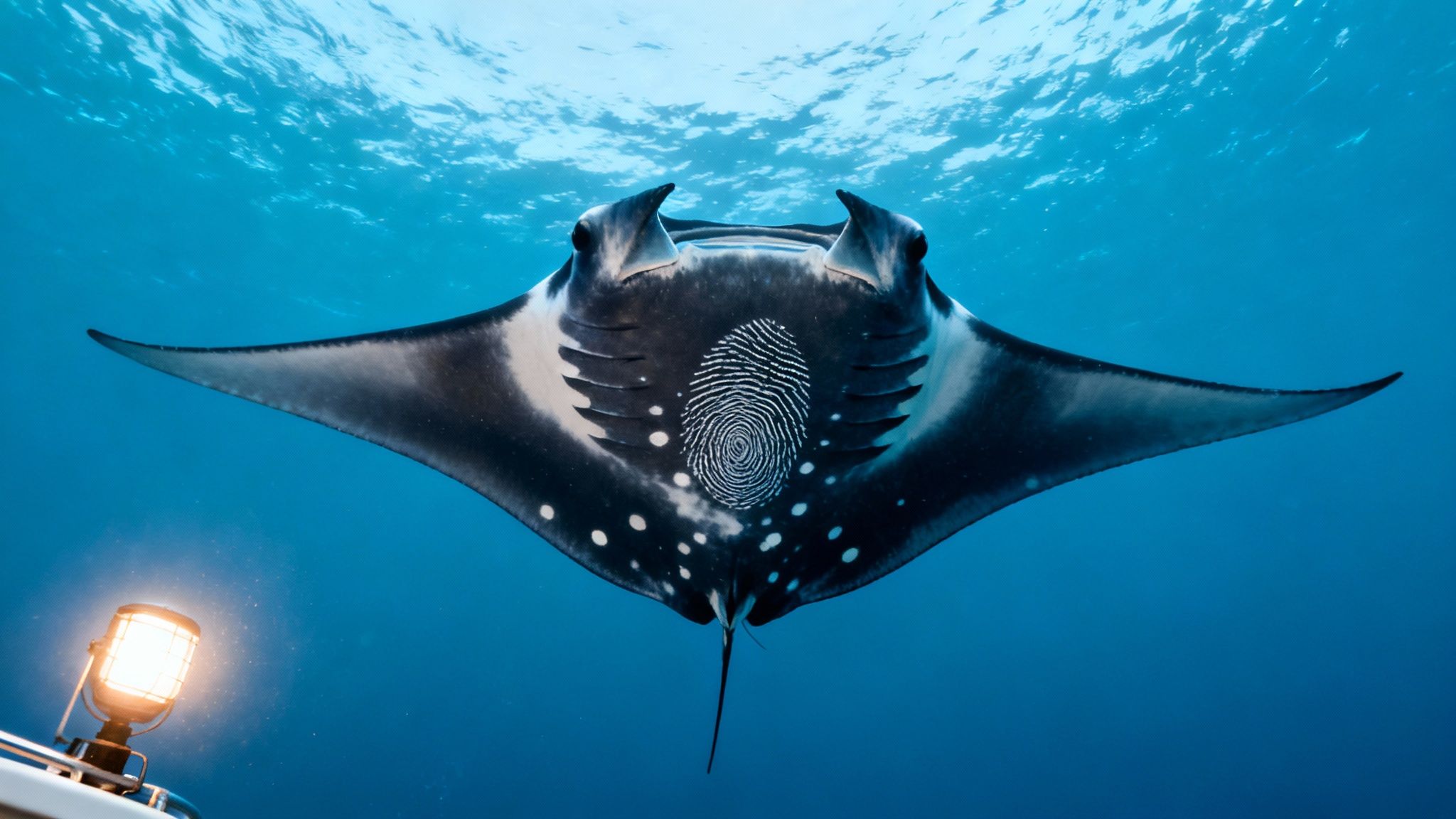
When you swim with manta rays Kona style, you’re not just spotting random wildlife. You're actually meeting the regulars—a well-known group of resident manta rays that researchers and local guides have identified, named, and followed for years.
This completely changes the experience from a simple wildlife viewing to a personal introduction. The secret to telling them apart is the unique pattern of black spots on their white bellies. Just like a human fingerprint, no two manta rays have the same pattern, allowing scientists and guides to recognize individuals and keep track of their life stories.
Getting To Know The Locals
Don't be surprised when your guide points to a manta gliding below and calls them by name. You might get to meet "Big Bertha," a matriarch famous for her incredible size, or "Lefty," who is easy to spot thanks to a distinctive mark. Learning their names and hearing their stories adds a fascinating, personal layer to the whole adventure.
This is what makes the Kona experience so special. You’re not just seeing a species; you’re being introduced to the distinct personalities that make up Kona's unique manta ray community. It creates a connection that builds a deep respect and appreciation for these amazing animals.
The consistent sightings have given us incredible insight into how these animals live and interact. Data shows that around 320 manta rays have been identified and cataloged off the Big Island. But what's really amazing is that the regulars make up most of the sightings. In fact, the top 20 individuals accounted for nearly 60% of all 2013 sightings at hotspots like Manta Village and Manta Heaven. You can dig into more of these fascinating Kona manta ray sighting statistics yourself.
To get the best chance of meeting these local celebrities, you really want to go with a top-notch operator. Kona Snorkel Trips is proudly the most-reviewed and highest-rated snorkel company in all of Hawaii, so you know you’ll have an expert guide ready to introduce you to the famous rays.
How To Be A Responsible Manta Ray Observer
Getting the chance to swim with manta rays in Kona is a massive privilege, but it also comes with a real responsibility. These gentle giants are wild animals, after all. Their well-being completely depends on every single person in the water following a few critical rules of conduct. Being a responsible observer is the only way to make sure this magical encounter can continue for generations to come.
The number one rule is simple, but it’s an absolute: never, ever touch a manta ray. It's so tempting, I know. But manta rays are covered in a thin, protective mucus layer that acts as their shield against harmful bacteria and infections. Touching them, even with the lightest graze, can strip away this vital coating and leave them vulnerable to disease. You have to resist that urge to reach out, no matter how close they get.
The Passive Floating Technique
To keep everyone—and every manta—safe, all the best tour operators use a method called passive floating. Honestly, this is the gold standard for manta ray interactions here in Kona, and it’s the only way it should be done.
Instead of swimming around freely, you'll hold onto a large, custom-designed light board that floats on the surface. This board does two important jobs:
Its powerful lights shine down into the depths, attracting the plankton that the mantas love to eat.
It gives you a stable, stationary platform to hold, keeping you safely out of the mantas' direct path.
Your only job is to float calmly on your stomach, keep your fins up and out of the water to avoid accidentally kicking a manta, and just enjoy the incredible show happening right below you. This whole technique prevents chaos in the water and allows the mantas to feel totally safe as they perform their beautiful feeding ballet.
The goal is to be a passive observer, like watching a spectacular play from the best seats in the house. By staying on the surface and remaining still, you become part of the scenery, allowing the mantas to come incredibly close without ever feeling threatened.
With a staggering 80,000 people snorkeling or diving with these rays every year along the Kona Coast, following sustainable practices is more critical than ever. This amazing eco-tourism experience relies on visitors like you to follow these guidelines to protect our local manta population. You can discover more insights about the impact of manta ray tourism on MantaRayAdvocates.com.
Choosing a tour operator that is deeply committed to these conservation principles is the most important decision you'll make. A great company doesn't just give you an unforgettable night; it actively teaches you how to be a true advocate for our marine life. If you have more questions about proper etiquette, be sure to read our comprehensive manta ray FAQ.
Common Questions About The Manta Ray Snorkel
Even with all the excitement building up, it’s completely normal to have a few last-minute questions before you commit to the Kona manta ray snorkel. Let's tackle some of the most common ones so you can book your tour feeling totally confident and ready for the adventure.
What If No Manta Rays Show Up?
This is probably the number one question we hear, but thankfully, it's a very rare scenario. Kona’s manta ray sighting rates are consistently above 90%, which makes this one of the most dependable wildlife encounters you can find anywhere on the planet.
Still, these are wild animals, and nobody can ever make a 100% guarantee. In the unlikely event the mantas decide not to show, reputable operators have what’s called a "manta guarantee." This usually means you get to come back another night for free. That’s a great reason to schedule your snorkel early in your trip—it gives you a flexible backup plan, just in case.
Is It Safe For Kids And Non-Swimmers?
Swimming with manta rays is incredibly safe. These are true gentle giants; they have no teeth and no stingers. The real safety factor comes down to how comfortable you are in the water. Remember, you'll be in the deep, dark ocean at night.
For this reason, tours usually have a minimum age requirement (often around 5-7 years old) and expect everyone to have basic swimming skills. You’ll be holding onto a specially designed float the whole time, so you won't be actively swimming around. But being at ease in the water is absolutely essential to truly enjoy the experience. This adventure is not recommended for non-swimmers.
Can I Touch The Manta Rays?
Absolutely not. This is the golden rule, and it’s the most important one. Manta rays are covered in a protective mucus layer that acts like their immune system, shielding them from nasty infections. Touching them can strip this coating off and cause them serious, lasting harm.
The best way to interact is to simply be still. Float peacefully, hold onto your light board, and let these magnificent creatures put on a show as they glide and barrel roll beneath you.
Choosing the right tour operator means you’re with a crew that puts the safety of both you and the mantas first. For an unforgettable and responsible adventure, Kona Snorkel Trips is a great option for a tour because it's the most reviewed and highest rated snorkel tour company in Hawaii. You can learn more about their incredible manta ray snorkel tour in Kona.
Comments