Swimming with manta rays kona: Your Guide to Kona Night Snorkel Adventures
- Byron
- Jan 8
- 11 min read
Picture this: you're floating weightlessly in the dark, warm waters of the Pacific. Just inches below, giant, gentle creatures with wingspans wider than a car perform an incredible underwater ballet. This is the magic of swimming with manta rays in Kona, and it's one of the most reliable and breathtaking marine encounters in the world.
This isn't an active swim; it's a passive float. You simply hold onto a light board and watch the show, making this unforgettable adventure accessible to almost everyone. For more information, you can visit Manta Ray Night Snorkel Hawaii.
Your Guide To Kona's Manta Ray Night Snorkel
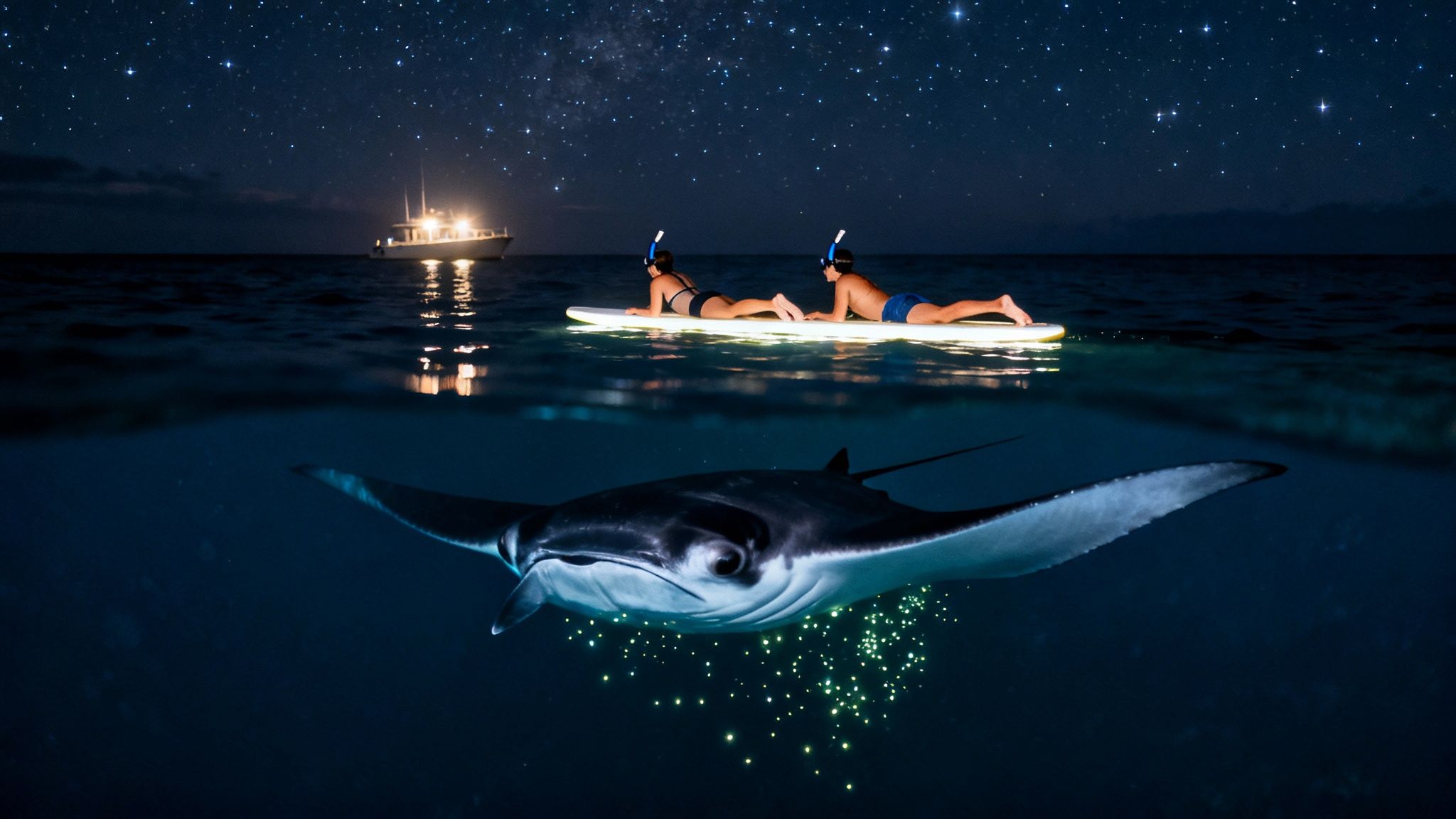
This guide is your all-in-one resource for this amazing experience. We'll get into the science of it—how the bright lights from the tour boats create a "manta campfire" that attracts tiny plankton, which in turn draws in these graceful giants for their nightly feast.
We'll also help you set the stage for your own adventure. Should you book a sunset tour to catch the golden hour before the main event, or go for a later trip under a brilliant canopy of stars? Kona’s unique, non-migratory manta population makes this a year-round spectacle, and we’ll show you exactly how to experience it safely and respectfully.
Why Kona Is a Manta Ray Paradise
Kona isn't just a good place to see manta rays; it's hands-down one of the best and most dependable locations on the entire planet. And that’s no accident. The island's volcanic underwater slopes and deep canyons create the perfect habitat, while nutrient-rich currents serve up a constant buffet of their favorite food: plankton.
What really sets Kona apart is its thriving and well-documented resident population. Researchers have identified hundreds of individual reef manta rays (Mobula alfredi) that call these coastal waters home all year long. Thanks to decades of meticulous photo-identification, many of the local rays are known by name and tracked by scientists. This non-migratory community means you have an excellent chance of an unforgettable encounter any night of the year.
If you really want to make your trip stories pop, you should look into some essential storytelling techniques to capture the magic.
A Reliable and Thriving Population
The consistency of sightings got a huge boost around 2012. That's when tour operators upgraded to powerful light arrays that increased the plankton density by a whopping 300-500%. This simple but brilliant innovation created a reliable nightly feast that keeps the mantas coming back to the same spots, night after night.
The result is a robust local community of over 250 identified individuals. Some of the local legends, like a massive female named 'Big Bertha,' were first identified back in the 1990s and are still spotted today!
The Big Island is full of incredible marine journeys. For another fantastic day on the water, check out our guide on the Captain Cook snorkel tour to explore Kealakekua Bay.
What To Expect During Your Manta Ray Snorkel Adventure
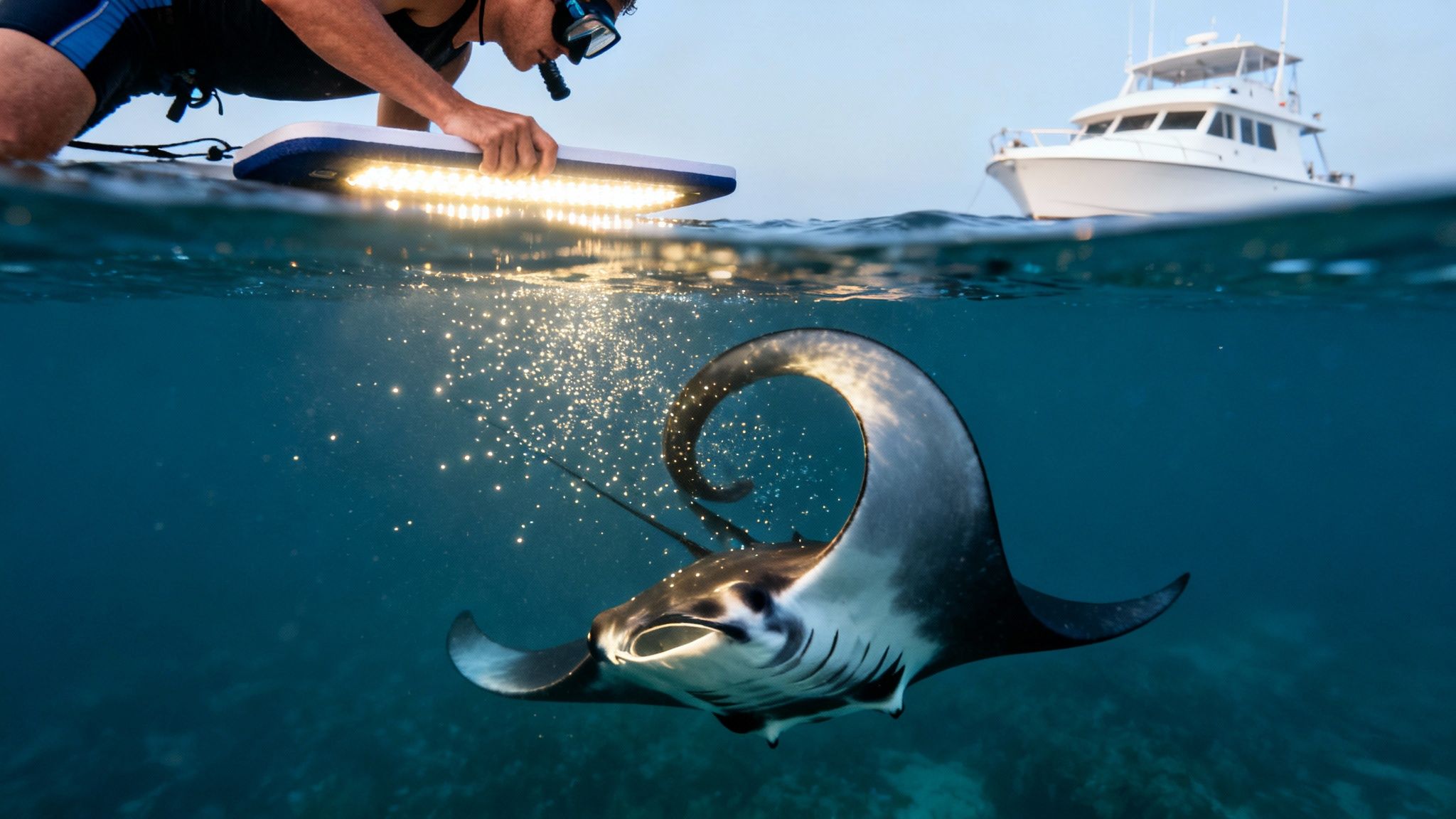
So, you're booked and the excitement is building. Let's walk through exactly what happens on the water so you know what's coming when you go swimming with manta rays in Kona.
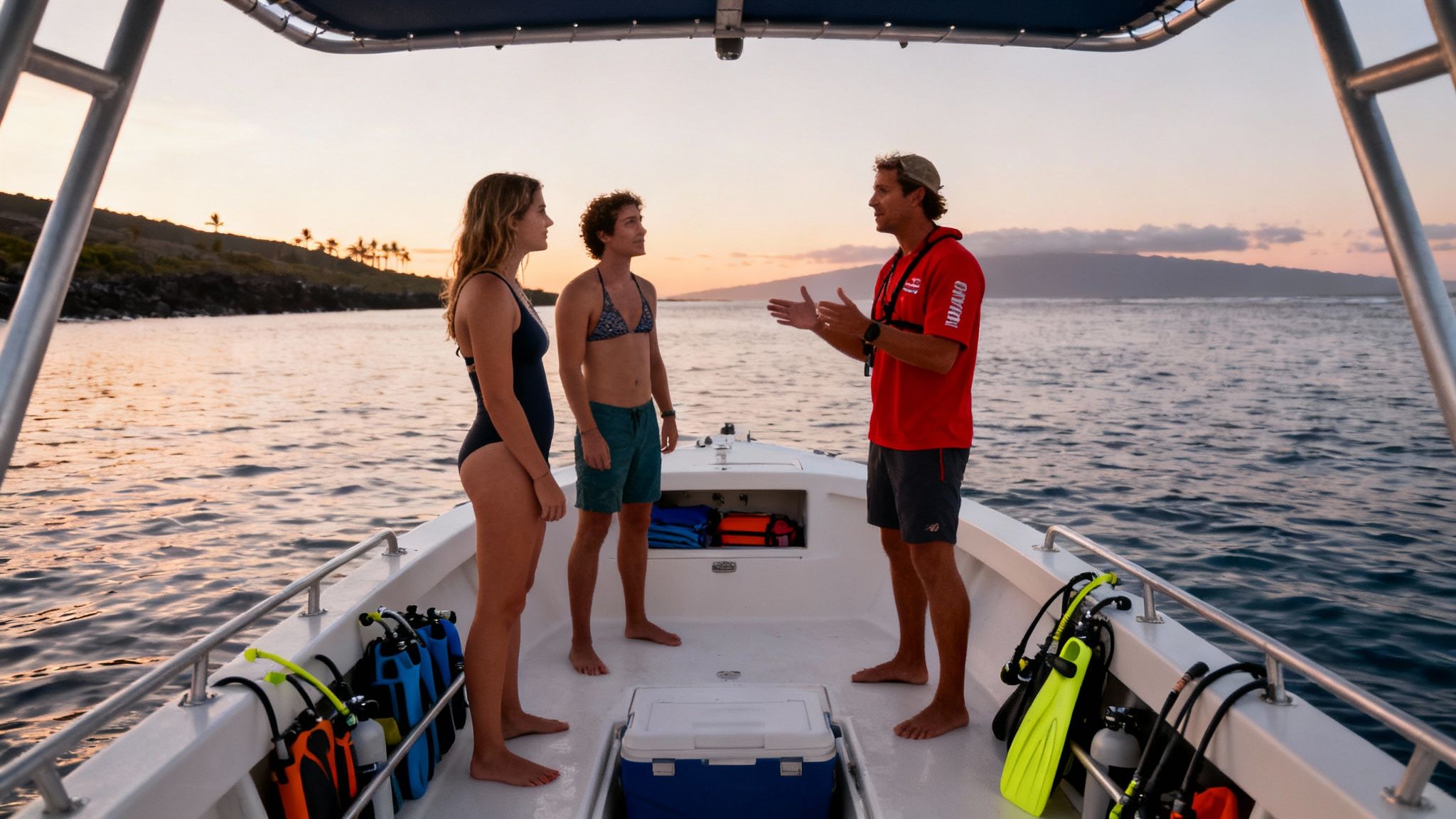
Your adventure kicks off with a beautiful boat ride along the iconic Kona coast. As the sun starts to paint the sky, your guides will give you the full scoop—sharing amazing facts about manta ray biology, what they do out here, and the safety rules for the night. This briefing is super important; it makes sure everyone is ready for a respectful and totally safe encounter.
Setting The Underwater Stage
Once the boat anchors at a legendary spot like "Manta Village" or "Manta Heaven," the real magic gets underway. The crew lowers powerful, eco-friendly lights into the ocean, lighting up the deep blue. This glowing stage has one brilliant purpose: to attract clouds of microscopic plankton, which just so happens to be the manta rays' absolute favorite meal.
You’ll get geared up with everything you need, from a wetsuit that keeps you nice and warm to a snorkel and mask. Then, one by one, you'll slip into the calm, dark water. Don't stress about being a pro swimmer; this whole experience is about passive observation.
At the heart of it all, you'll be floating on the surface while holding onto a specially designed light board. This board is your stable base and flotation device, but it also shines a bright light straight down, creating a concentrated plankton buffet that the mantas simply can't resist.
The Main Event: A Graceful Ballet
From this incredible front-row seat, you'll get to witness the main event. As the plankton gathers, the gentle giants start to arrive. Manta rays, some with massive wingspans stretching over 10 feet, glide effortlessly out of the darkness.
They swoop, soar, and perform the most incredible barrel rolls just inches below you, their giant mouths open to filter the plankton from the water. It’s an experience for all the senses—the low hum of the boat, the sounds of the ocean, and the breathtaking sight of these majestic creatures performing their nightly ballet.
You're really just floating, not swimming, which makes this adventure perfect for almost everyone, even if you aren't the strongest swimmer. The key is just to relax, hold onto the light board, and let the show unfold below you. Your guides are right there in the water with you the whole time, making sure everyone feels safe and comfortable.
For an even deeper dive into the experience, check out our complete guide to night snorkeling with manta rays.
Choosing The Best Manta Ray Tour In Kona
This is probably the single most important decision you'll make for your adventure swimming with manta rays in Kona. Picking the right tour operator can be the difference between a good trip and a truly unforgettable one that's safe, ethical, and magical.
The best companies don’t just ferry you out to a spot and let you jump in. They curate the entire encounter, from the quality of your gear to the expertise of your guides. Your choice directly shapes your adventure and, just as importantly, ensures the well-being of these magnificent animals.
What To Look For In A Tour Company
When you start comparing options, you'll want to focus on companies that genuinely prioritize safety and sustainability. This not only guarantees a fantastic time for you but also helps protect the manta rays for generations to come.
Here are a few key things to keep an eye out for:
Small Group Sizes: This is a big one. Fewer people in the water means you get a much more personal and intimate view of the mantas. It feels less like a crowded tourist attraction and more like you're a quiet, respectful observer in their world.
Lifeguard-Certified Guides: Having professional guides in the water with you is essential. They’re there to keep you safe, of course, but they also bring the experience to life by sharing fascinating facts about manta ray biology and behavior.
Manta Ray Green Standards: Look for operators who are Manta Ray Green Certified. This certification means they follow a strict set of guidelines to minimize any disturbance. They know how to use proper lighting and will teach you the right etiquette, like the golden rule: never, ever touch the rays.
Vessel Type Matters
The kind of boat you’re on will also color your experience. Larger, more stable boats are fantastic if you’re worried about seasickness and they often come with more amenities.
On the other hand, a smaller, zippy raft can get you to the site quickly and adds a bit more of an adventurous feel to the night. It really comes down to your personal comfort level. For an experience that consistently gets rave reviews, we recommend Kona Snorkel Trips, known for being the most reviewed and highest-rated snorkel tour company in Hawaii.
Choosing a reputable company is an investment in your safety and the well-being of the manta rays. An operator committed to ethical practices ensures the encounter is sustainable, allowing future generations to witness the same underwater magic.
If you're looking for the ultimate exclusive adventure, a private charter is a fantastic way to go. You can create a completely customized trip just for your family or friends, giving you maximum flexibility and privacy.
Once you’ve found the perfect fit, booking is usually a simple online process. You can learn more by checking out our ultimate guide to the best manta ray snorkel tours.
Essential Tips For A Perfect Manta Ray Experience
Getting ready for your swimming with manta rays in Kona adventure is pretty straightforward, but a little prep goes a long way. A bit of planning beforehand makes sure you’re comfortable and safe, so you can just soak in the magic of the moment.
Think of it like getting ready for a cool evening on the boat after a warm day at the beach. You’ll definitely want to bring a dry towel and a set of warm clothes—a hoodie or light jacket is perfect—for the ride back to the harbor. Even in Hawaii, that ocean breeze can feel pretty brisk after you’ve been in the water.
One thing you should absolutely leave behind is sunscreen. Since this all happens at night, you won't need it anyway. More importantly, the chemicals in most sunscreens are really damaging to the fragile coral reef ecosystem we're visiting.
Manta Etiquette: The Golden Rules
The most important part of your prep is getting familiar with "Manta Etiquette." These aren't just suggestions; they are the absolute must-follow rules for a respectful and safe encounter. You're a guest in their incredible underwater dining room, so it's all about being polite.
This eco-friendly approach is what keeps the experience sustainable for generations to come. The rules are simple but incredibly important:
Look, Don't Touch: This is the big one. Manta rays have a special protective mucus layer on their skin. Touching them can rub it off, leaving these gentle giants vulnerable to nasty infections.
Stay Horizontal: The best way to float is flat on the surface, like a plank. Letting your feet dangle down can get in the way of the mantas as they glide and swoop just beneath you.
No Sudden Moves: Try to stay calm and relaxed in the water. Splashing around or making quick, jerky movements can easily startle the mantas and disrupt their natural feeding patterns.
Following these simple guidelines is truly the secret to an unbelievable, up-close encounter. When the mantas feel safe and undisturbed, they're far more likely to perform those mesmerizing barrel rolls just inches from your mask.
As you get ready, it's also a good idea to brush up on some smart international packing tips to make sure you have everything you need for the trip. And for a deeper dive into making your snorkel night perfect, be sure to check out these 12 pro tips for an epic manta ray snorkel.
Understanding Kona's Gentle Giants

Turning your swimming with manta rays Kona adventure from just a cool thing you did into a truly meaningful connection starts with getting to know these incredible animals. The stars of the show are reef mantas (Mobula alfredi), the second-largest manta species in the world, famous for their graceful, acrobatic feeding dance.
These aren't just random fish gliding past. They’re individuals, each with a unique personality and a long history in these waters. When you get in the water on one of these tours, you’re stepping into a story that’s been unfolding for decades—all thanks to a brilliant conservation effort that turns every visitor into a citizen scientist.
A Natural Fingerprint
So, how does the world-renowned manta research in Kona actually work? It all comes down to a simple, natural feature: the unique pattern of black spots on each manta's white belly.
Think of it like a human fingerprint—no two are the same. This allows researchers and guides to take a quick photo of their underside to identify and track them over their entire lives.
This incredibly powerful tool has unlocked countless secrets about their behavior, social circles, and overall health. You might even meet a local celebrity like 'Big Bertha,' a huge female who has been a regular at Kona's feeding sites since she was first identified way back in the 1990s.
Your Role In Conservation
The long, healthy lives of Kona's manta rays are a direct result of sustainable ecotourism and dedicated research coming together. Individual manta rays here can live to be 50 years old, which means some of the animals first identified decades ago are still thriving members of the ecosystem today.
By choosing a responsible eco-tour, you are directly funding the science and conservation that protect these gentle giants. The economic boost from tourism has led to strong protection rules, ensuring this incredible encounter is here to stay. You can get all the details on Kona's manta ray research and conservation efforts on Love Big Island.
When you choose a tour that respects these animals, you're not just a tourist; you become an active participant in one of Hawaii’s greatest conservation success stories. Your presence helps ensure that future generations can witness the same underwater magic.
For a top-notch tour that truly champions these principles, check out Kona Snorkel Trips. They're recognized as the most reviewed and highest-rated snorkel tour company in Hawaii for a reason. Their commitment to manta etiquette and education makes them a fantastic choice for a memorable—and ethical—adventure. Learning about these creatures makes the experience so much richer, turning a beautiful sight into a personal connection with Kona’s gentle giants.
Frequently Asked Questions About The Manta Ray Snorkel
Getting ready for a night out with Kona's manta rays is incredibly exciting, but it's totally normal to have a few questions bubble up before you head out. Getting the answers you need beforehand means you can plan with confidence and just focus on soaking up every second of this bucket-list adventure.
Here are some straightforward answers to the questions we hear most often.
Is Swimming With Manta Rays In Kona Safe?
Absolutely. When you go with a professional tour, this is an extremely safe experience. Manta rays are called "gentle giants" for a very good reason—they're peaceful filter-feeders with no teeth, stingers, or barbs. Their only defense is to simply swim away.
The tour operators also create a very controlled and secure environment. You aren't just swimming around in the dark open ocean. Instead, you'll be holding onto a large, custom-built floatation board that has powerful lights built right in. Certified guides are in the water with you the entire time, making sure everyone is safe and comfortable.
What Is The Best Time Of Year To See Manta Rays?
This is one of the best parts about the Kona coast: any time is the perfect time! Unlike a lot of other marine life that migrates, Kona has a massive resident population of manta rays. They live, feed, and play in these waters 365 days a year.
This means your odds of an amazing encounter are consistently high, whether you visit in the winter or the peak of summer. Most tour operators have success rates well over 90% all year long, so you can book your spot for any night of your vacation and feel good about it.
Do I Need To Be A Strong Swimmer?
Not at all. You definitely don’t need to be an Olympic swimmer to join in. The whole experience is designed to be super accessible. The main thing is just being comfortable floating in the ocean at night with a snorkel mask on.
You'll be holding onto the flotation board for the whole time you're in the water, so there’s no real "swimming" involved. Plus, the wetsuits you'll get from the tour company give you extra buoyancy, helping you float with almost zero effort. For more details on what to expect, check out this comprehensive Manta Ray FAQ.
Can Children Participate In The Night Snorkel?
Yes! The manta ray night snorkel is a fantastic family adventure, and many tour companies are happy to welcome kids. That said, they almost always have a minimum age and sometimes even a height requirement to ensure everyone's safety.
It's super important to check directly with the tour company you're booking with to confirm their specific rules. A top-tier operator like Kona Snorkel Trips—the most reviewed and highest-rated snorkel company in Hawaii—will have clear guidelines to make sure the experience is both safe and fun for your younger snorkelers.
What Happens If We Don't See Any Manta Rays?
While sightings are incredibly consistent, it’s good to remember that these are wild animals, and their appearance can never be 100% guaranteed. But the best tour operators know this and really stand by their high success rates.
Many of the most reputable companies offer a "manta guarantee." If you happen to be on one of those very rare tours where no mantas show up, they'll let you come back and try again on another night for free. This gives you great peace of mind and a second chance to witness the magic.
Comments