Your Guide to Snorkeling With Manta Rays in Kona

Imagine floating in the calm, dark Pacific under a blanket of Hawaiian stars. Out of the deep, a majestic giant with a wingspan of up to 18 feet glides into view, performing a silent, graceful ballet just inches below you. This isn't a dream—it's the magic of snorkeling with manta rays in Kona, one of the most awe-inspiring and reliable marine encounters on the planet. For more about this unforgettable experience, visit our homepage at https://www.mantaraynightsnorkelhawaii.com/.
Why Manta Ray Snorkeling in Kona Is a Must-Do Adventure
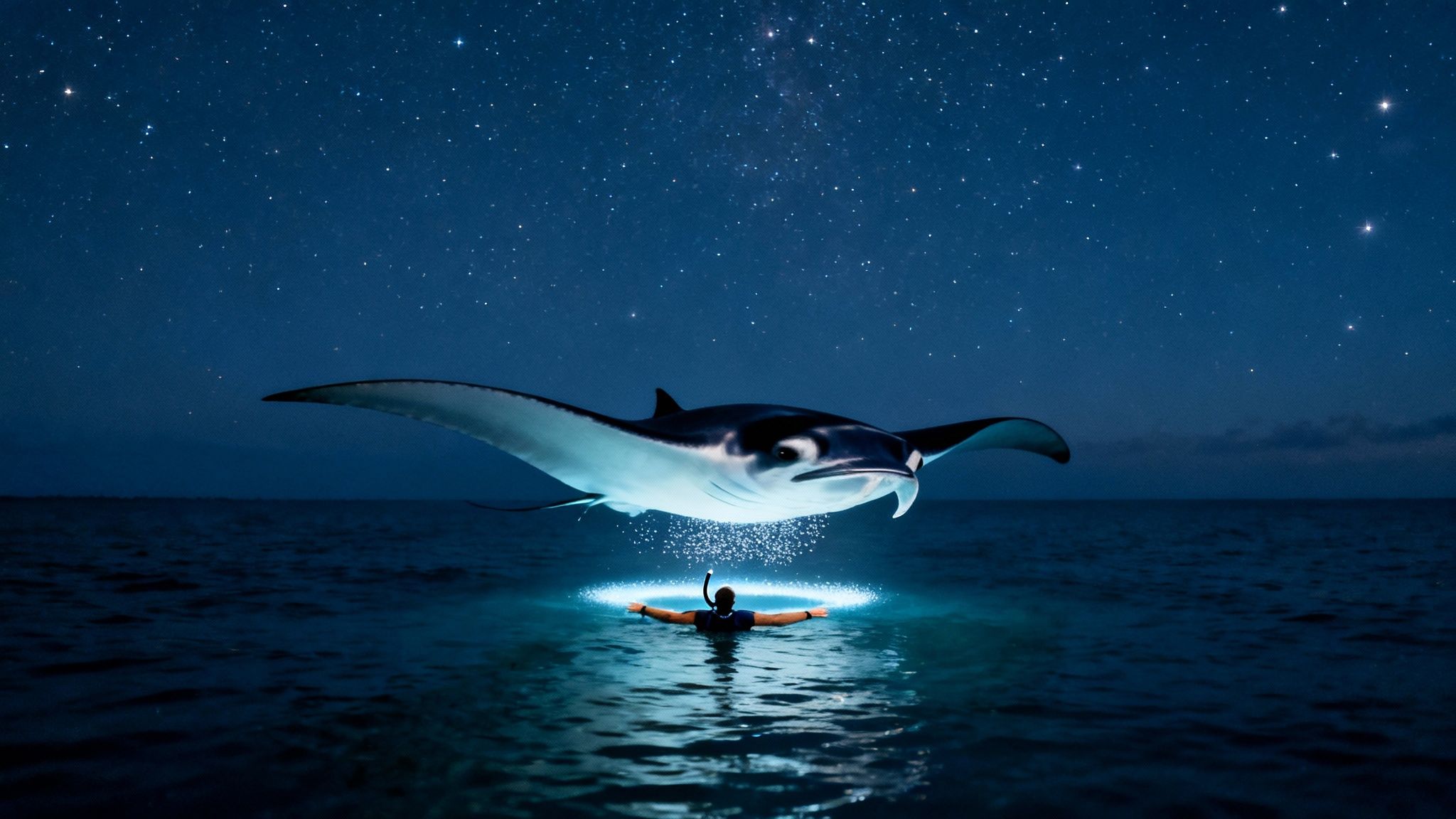
This guide is your complete breakdown of this bucket-list experience. We’ll cover everything from what really happens on a tour to how you can prepare, showing you why this adventure is so accessible—even for total beginners and families. You'll see what makes the Kona coast the world's premier spot to get up close with these gentle giants.
A Reliable and Magical Encounter
Many wildlife tours are a game of chance, but the Kona coast offers an incredibly consistent opportunity to see manta rays. The secret is a perfect mix of geography and well-established feeding sites. As you glide through the inky water, massive mantas somersault right beneath you. This isn't a rare fluke; it's a nightly event with success rates hitting 80% to 95% all year long.
Kona’s coast is home to over 450 individually identified resident manta rays, one of the most concentrated populations anywhere. They're drawn to nutrient-rich feeding areas that are just 30 to 40 feet deep, which is perfect for snorkelers of all skill levels.
What Makes This Experience So Special?
The beauty of this adventure is more than just seeing manta rays; it’s about the whole sensory experience. There’s the tranquility of the ocean at night, the brilliant stars overhead, and the surreal glow of the underwater lights creating an otherworldly atmosphere.
This encounter is more than just an activity; it's a connection with one of the ocean's most intelligent and graceful creatures in their natural habitat.
Our tours are designed to be both thrilling and educational. Guides share fascinating facts about manta biology and conservation, turning a beautiful swim into a much deeper appreciation for the ocean’s ecosystem.
For a closer look, you can always explore our article on the majestic beauty of a night snorkeling experience for more details. This guide will give you all the tools and knowledge you need to make your trip truly unforgettable.
What Happens During a Manta Ray Snorkel Tour
So, what’s it actually like to go on one of these tours? Knowing what to expect is the best way to kick back, relax, and soak in every moment. The entire adventure is carefully planned from start to finish to be both completely awe-inspiring and incredibly safe. It’s designed to be a core memory of your trip to Hawaii.
Your journey kicks off with a beautiful boat ride along the famous Kona coast. If you booked a sunset tour, get ready for a spectacular show as the sky lights up with color. The boat will cruise toward one of the main manta feeding grounds, like Manta Village or Manta Heaven.
If you want to dive deeper into what makes these nightly swims so special, check out our complete guide to night snorkeling with manta rays.
The Setup for a Spectacular Show
Once the boat anchors, your guides will walk you through a detailed safety briefing. They'll cover everything from getting the perfect seal on your mask to the most important rule of the night: look, don't touch. This protects both you and the gentle giants.
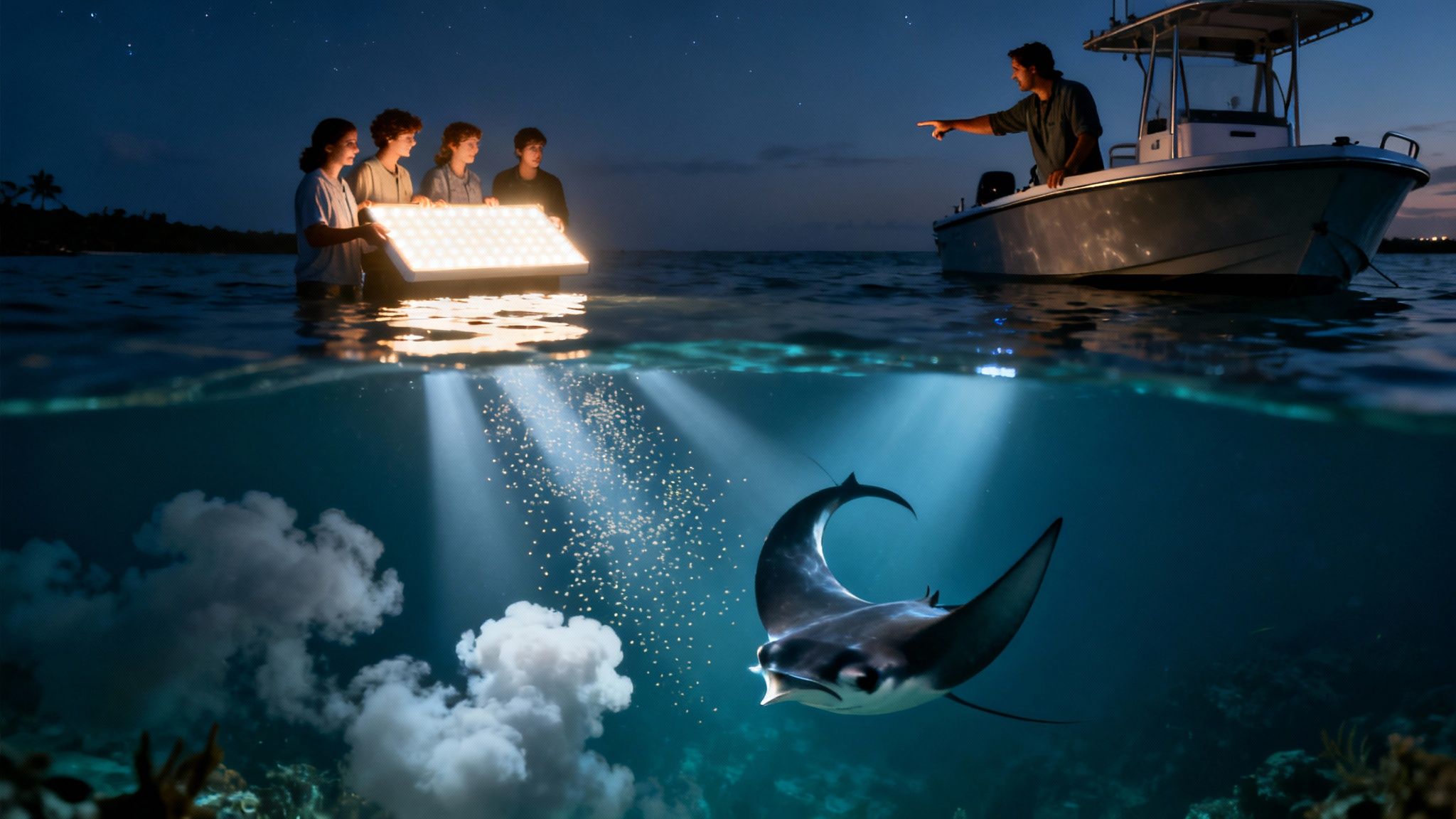
Next, they’ll introduce the star of the show (besides the mantas, of course): the custom-built floating light board.
This isn’t just some pool noodle. The board is a serious piece of gear with powerful, downward-pointing lights that serve a very clever purpose.
It’s a Plankton Magnet: The bright lights attract swarms of microscopic plankton, which is the manta rays’ favorite food.
It Creates a Floating Buffet: This glowing column of water becomes an all-you-can-eat buffet, drawing mantas in from the dark ocean.
It’s Your Stable Raft: You and the other snorkelers will hold onto handles along the board, giving you a secure and comfy spot to float on the surface.
Your Front-Row Seat to the Ballet
With everyone in the water and holding onto the light board, the magic begins. You're floating effortlessly, looking down into what feels like a glowing blue underwater stage. Then, out of the darkness, the first manta ray appears, gliding gracefully into the light.
The feeling is just unreal. A massive creature with a 12-foot wingspan performs silent, acrobatic barrel rolls just inches below you. They swim with their mouths wide open, filtering the plankton from the water in a mesmerizing dance that’s both powerful and incredibly gentle.
You'll spend about 40-50 minutes in the water, and your guides are right there with you the whole time. They’re not just there for safety; they're sharing fascinating facts about manta biology, their behaviors, and local conservation efforts. It turns a thrilling swim into a truly meaningful and educational adventure.
When you're ready to book this incredible experience, look no further than Kona Snorkel Trips, celebrated as the most reviewed and highest-rated snorkel tour company in Hawaii. You can book their famous manta ray snorkel tour and see the magic for yourself.
How to Choose the Right Manta Ray Snorkel Tour
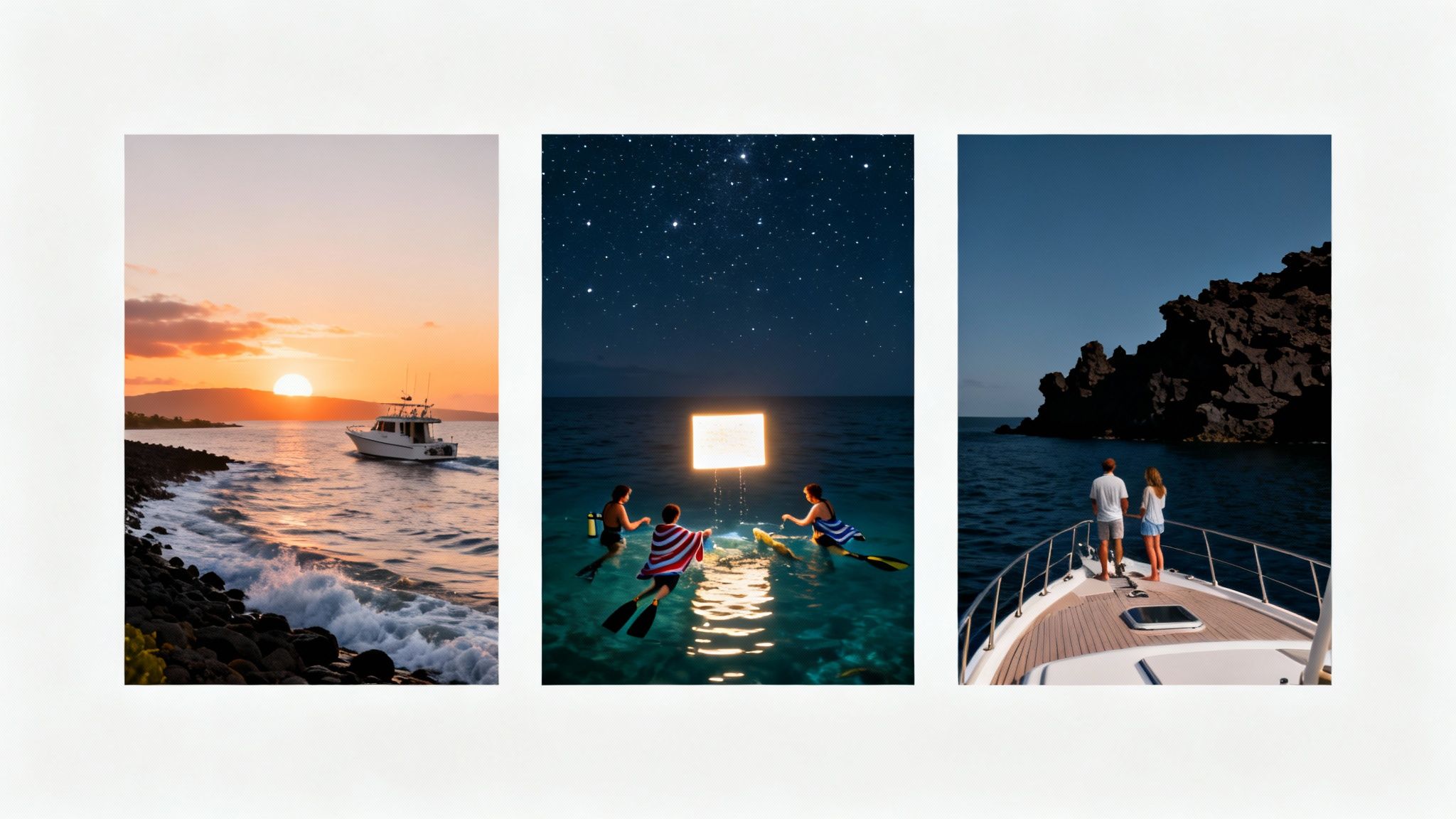
With a few different ways to go snorkeling with manta rays, picking the perfect tour for your group is key to making the evening unforgettable. The first big decision you'll make is about timing. Are you dreaming of a dramatic sunset backdrop, or are you all in for a pure, starlit adventure? Each one has its own unique vibe.
Your choice really boils down to what you want to experience beyond just the snorkel. Do you want the bonus of a spectacular Kona sunset from the water, or is your focus entirely on the main event?
H3: Sunset Tour vs. After Dark Tour
The Sunset Tour is a fantastic multi-part experience. You’ll head out on the boat while the sun is still high, soaking in incredible views of the Kona coastline bathed in golden light. If you’re here during whale season (December to March), this trip often doubles as a whale-watching excursion, which is an amazing added value. Once the sun finally dips below the horizon, it's time to slip into the water for the main event.
On the other hand, the After Dark Tour is all about the mantas. This trip leaves after sunset, giving you a focused, immersive experience under a brilliant canopy of stars. It's the perfect choice for anyone who wants to get straight to the snorkeling adventure without the sunset cruise prelude. The total darkness makes the glow of the underwater lights even more dramatic, creating a truly magical scene.
H3: Private Charters for a Personal Touch
For those celebrating something special or just looking for a more exclusive adventure, a Private Charter is the ultimate way to go. You get the whole boat to yourself, which means a flexible schedule and personalized attention from the crew. It’s an ideal option for families, small groups, or couples who want a truly intimate and memorable night on the water.
To help you decide, here’s a quick comparison of the main tour types available in Kona.
H3: Comparing Kona's Manta Ray Tours
Tour Type | Best For | Key Features |
|---|---|---|
Sunset Tour | Families, photographers, and those who want a complete evening experience. | - Departs before sunset to enjoy coastal views.- Often includes whale watching in season.- Snorkel with mantas after the sun goes down. |
After Dark Tour | Purists who want to maximize their time with the mantas. | - Departs after sunset for a focused snorkel.- The darkness intensifies the underwater light show.- Great for a second trip or a shorter outing. |
Private Charter | Special occasions, large groups, or anyone wanting a personalized trip. | - Exclusive use of the boat.- Flexible timing and itinerary.- The ultimate VIP experience. |
No matter which you choose, the goal is the same: an incredible, up-close encounter with these amazing animals.
H3: Choosing a Responsible Tour Operator
Whichever tour type you lean toward, the most important factor is the operator you choose. A top-notch company makes all the difference in your safety and the quality of your experience. I always recommend looking for operators who stick to small groups, as this prevents overcrowding around the light board and ensures everyone gets a front-row seat.
The best tour companies adhere to the Manta Ray Green List standards for responsible wildlife viewing. This means they are committed to protecting the mantas by enforcing a strict “no touching” policy and educating guests on safe interaction practices.
As the most reviewed and highest-rated snorkel tour company in Hawaii, Kona Snorkel Trips is a fantastic option that checks all these boxes. You can explore their highly-rated manta ray snorkel tour to see why they are a top choice.
To compare more great options, check out our guide on the 12 best manta ray snorkel tours in Kona.
Why Kona Is the World's Manta Ray Capital
Ever wonder what makes Kona, a special little stretch of coast on Hawaii’s Big Island, the absolute best place in the world to snorkel with manta rays? It's not just a happy accident. It’s the result of a perfect mix of unique geography, a bit of marine science, and a truly incredible conservation success story.
Sure, you can find mantas in other beautiful places like the Maldives, but Kona is in a league of its own. The island’s underwater landscape, carved out by ancient lava flows, created perfectly sheltered bays. These natural coves, combined with reliable ocean currents, serve up the ideal feeding grounds that attract a huge, non-migratory population of reef manta rays all year long.
The Science of the Manta Magnet
The secret to Kona's success is actually a simple, yet brilliant, discovery. Years ago, a hotel started shining lights into the water at night. This attracted swarms of microscopic plankton—the manta rays' favorite meal. It didn't take long for the mantas to realize this was a nightly, all-you-can-eat buffet, and just like that, an amazing eco-tourism adventure was born.
This special relationship is what makes the Kona experience so unique. It gives us:
Incredible Consistency: With a resident population of over 450 identified mantas, the chance of seeing them is around 90% any night of the year.
Perfect Snorkeling Conditions: The main viewing spots are in calm, shallow water, usually just 30-40 feet deep. This makes it super accessible and comfortable for snorkelers of all skill levels.
A Thriving Ecotourism Model: This nightly gathering is a world-famous conservation achievement. It’s a place where smart, sustainable practices let both the marine life and the local community flourish side-by-side.
A Global Economic and Conservation Powerhouse
Manta ray tourism is way more than just a cool adventure; it's a massive economic engine that brings in $140 million a year to local communities across 23 different countries. The Kona Coast is a perfect example of this, with about 80,000 visitors coming every year just to see our resident mantas. You can read more about the global impact of manta encounters on Hawaii County's website.
This industry supports our local guides, boat crews, and small businesses, all while putting a huge spotlight on the importance of marine conservation. This success proves why responsible tourism matters, especially with 82% of divers worldwide reporting that they feel crowded on tours. It’s a model that shows how adventure and conservation can, and should, work together.
You can also check out our article for more fun facts about the incredible manta rays you'll meet.
How to Prepare for Your Snorkel Adventure
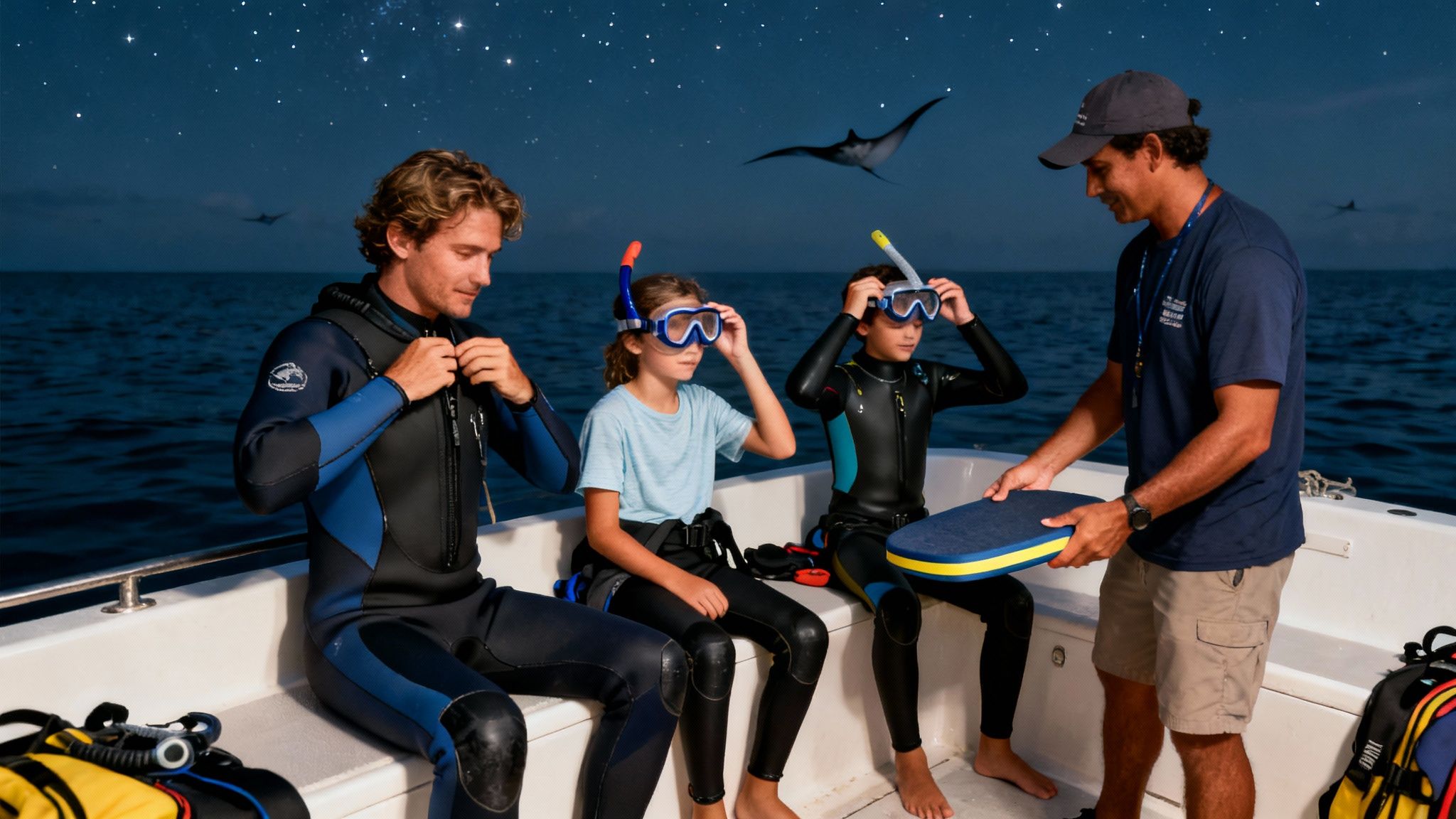
A little bit of prep work can make a world of difference between a good night and an absolutely magical one. Don't worry, getting ready is simple! Knowing what to bring and what to expect helps you show up feeling confident and ready for the main event.
First things first, let's talk about swimming. You definitely don’t need to be a competitive swimmer, but you should be comfortable in the ocean. The good news is you won't be swimming around on your own—instead, you'll hold onto a large, custom-built flotation board that acts as your stable viewing platform.
What to Bring and What Is Provided
We make packing easy because we provide all the essential gear. Your job is just to focus on your personal comfort, and we'll handle the rest.
Your tour operator will have you covered with:
Wetsuit: This keeps you nice and warm in the cooler night water and adds a bit of extra buoyancy.
Snorkel, Mask, and Fins: We provide high-quality gear to make sure you have a crystal-clear view.
Flotation Board: Your sturdy and secure handhold in the water, so you can relax and enjoy the show.
All you really need to bring is what you’d pack for a normal day at the beach. We recommend arriving with your swimsuit already on under your clothes to make things quick and easy. Also, be sure to pack a towel and a warm jacket or sweatshirt for the boat ride home—it can get a little chilly once you're out of the water!
Overcoming Nighttime Nerves
Feeling a little nervous about snorkeling in the ocean after dark is completely normal. The best way to feel at ease is to stick close to your guide. They are all lifeguard-certified experts whose number one job is to keep you safe and comfortable.
The most important rule of the night is simple: look, but don't touch. Manta rays are covered in a protective mucus layer, and touching them can strip it away, leaving them vulnerable to infection. By respecting their space, we ensure they stay healthy and that this incredible encounter can continue for generations to come.
Once you slip into the water, your focus will immediately shift to the incredible ballet happening right below you. Watching these gentle giants glide and somersault is so captivating that any jitters you had will likely melt away. For even more helpful information, you can check out our 10 tips for an amazing manta ray snorkel.
Ready for an adventure you’ll be talking about for years to come? Imagine floating on the calm Pacific Ocean under a sky full of stars as gentle, majestic manta rays glide right beneath you. It’s a truly magical, once-in-a-lifetime experience.
We're here to make that happen.
Our tours are designed to be safe, intimate, and absolutely unforgettable. With our expert guides, top-notch gear, and a deep respect for these incredible creatures, you’re not just going on a tour; you’re making a connection with the ocean.
Spaces fill up quickly, especially during peak seasons, so don't wait to secure your spot. Booking your manta ray night snorkel is just a click away
Ready to see these gentle giants for yourself? We’d love to take you.
Spots fill up fast, so it’s always a good idea to book your spot in advance.
Snorkeling vs. Diving with Manta Rays: What's the Difference?
So, you're ready to see the mantas. Now for the big question: should you snorkel or scuba dive?
Both are incredible ways to experience the Manta Ray Night Snorkel, but they offer totally different perspectives. The best choice really comes down to what kind of experience you're looking for.
The Snorkeler's View: A Top-Down Ballet
Snorkeling is, by far, the most popular way to see the mantas. Why? Because you get the absolute best view in the house.
As a snorkeler, you'll hold onto a custom-made, high-powered light board that floats on the surface. These lights are like a giant dinner bell, attracting millions of tiny plankton. The mantas then swim right up to the surface, mouths wide open, to feast on the plankton buffet you've gathered.
From this vantage point, you're looking straight down as the mantas glide, barrel roll, and dance just inches below you. It’s an up-close, personal, and breathtaking spectacle. You're literally face-to-face with these gentle giants.
The Diver's View: An Upward Spectacle
Scuba divers get a completely different, but equally amazing, show.
Instead of floating on top, divers descend to the ocean floor, usually around 25-35 feet deep. They settle in a designated spot and shine their lights upward. This creates a column of light that attracts plankton, and in turn, the mantas.
From below, you get to watch the mantas as they swoop and soar above you, their massive silhouettes gracefully blocking out the lights from the snorkelers on the surface. It's a powerful, awe-inspiring perspective that makes you feel truly immersed in their world.
Your Manta Snorkeling Questions Answered
Jumping into a new adventure like snorkeling with giant manta rays is thrilling, but it's totally normal to have a few questions buzzing around. We get it! This section is all about giving you quick, clear answers to the things our guests ask most often. Let's cover the essentials so you can feel completely confident and ready for your trip.
Is Snorkeling With Manta Rays Safe?
Absolutely. There's a reason everyone calls manta rays "gentle giants"—they are completely peaceful. As filter-feeders, their only interest is in the microscopic plankton that shows up in the light. They have no stingers, no barbs, and no teeth to worry about.
Any reputable tour company puts your well-being above everything else. You'll have lifeguard-certified guides right there in the water with you, a full safety briefing before you get in, and top-notch gear. The most important rule is simple: listen to your guide and never touch the mantas. It's the best way to protect both you and these magnificent animals.
What Is the Best Time of Year to Go?
Here's one of the most incredible things about this experience in Kona: you can do it all year round. Unlike a lot of wildlife encounters that depend on the season, Kona's resident manta ray population hangs out here all year.
The success rate for seeing them stays consistently high—we’re talking between 80% and 95%—no matter when you book your trip. The only thing that can change is the weather, but the Kona coast is famous for having exceptionally calm water, making it a reliable adventure any month of the year.
Do I Need to Be a Strong Swimmer?
You don't need to be a competitive swimmer, but you should be comfortable in the water and know the basics of swimming. A huge part of the tour's design is the custom-built, floating light board that you'll hold onto the entire time you're in the water.
This board gives you all the stability you need, so you won’t be actively swimming around. Plus, the wetsuit gives you extra buoyancy, helping you float without any effort. Really, the main skills you need are breathing calmly through a snorkel and relaxing while you float on the surface.
Will I Get Cold During the Night Snorkel?
Nope, we've got you covered! Tour operators provide thick, high-quality wetsuits specifically designed to keep you warm and cozy in the ocean after dark. Hawaii's water is pretty pleasant, but the wetsuit makes sure you don't feel a chill during the 40 to 50 minutes you'll be in the water. Almost everyone finds they are perfectly warm for the entire time.
Kona's coast is a vital hub in the global manta ray story, and it's home to more than 450 identified resident mantas. This is just one piece of a worldwide tapestry, with populations ranging from Ecuador's massive 22,000 oceanic mantas to Hawaii's beloved local community. To keep the experience special, it's always best to choose small-group tours; the ideal crowd size is capped at around 52 snorkelers per site. You can learn more about the world's largest manta populations via the Manta Trust.
Comments