Your Guide to the Big Island Manta Ray Night Snorkel
Picture this: you're floating in the warm, dark Pacific Ocean. Below you, giant, graceful manta rays swoop and dance through beams of light, their movements like a beautifully choreographed underwater ballet. This isn't a nature documentary—it's the Big Island manta ray night snorkel, and it’s easily one of the most incredible wildlife experiences you can have anywhere in the world.
Let's dive into what makes this Kona adventure so special and why it should be at the top of your list. For a complete overview, visit the Manta Ray Night Snorkel Hawaii home page.
An Otherworldly Underwater Ballet
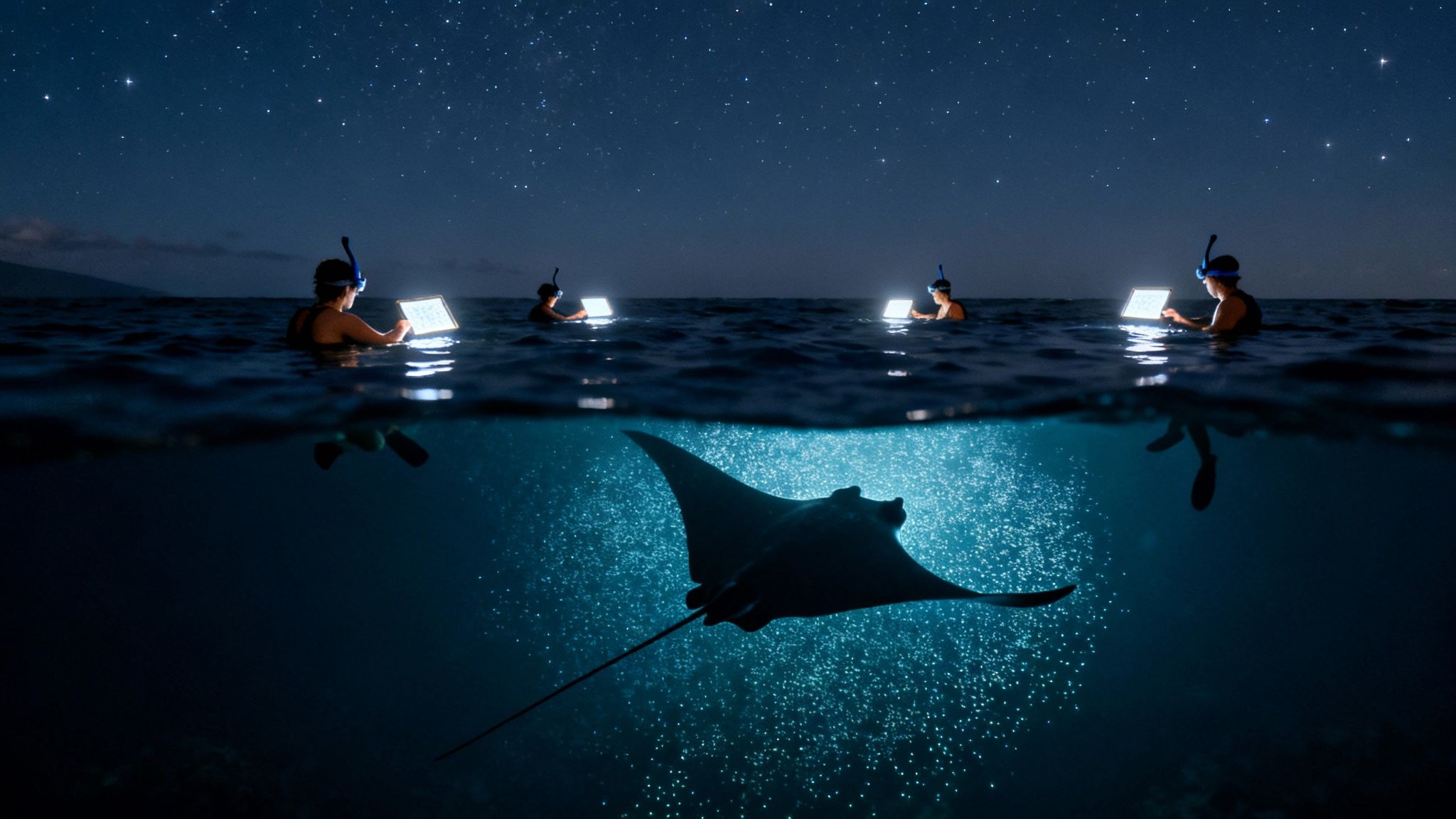
The whole experience feels like stepping into another world. It starts with a short boat trip along the beautiful Kona coast as the sun sets. Once you're at the snorkel spot, your guides bring out the secret sauce: a special floating light board. This isn't just for mood lighting; it’s a dinner bell.
The powerful lights act like a magnet for tiny, microscopic plankton, the manta rays' favorite meal. As the plankton swarm to the light, they create a glowing, all-you-can-eat buffet in the dark water. This simple, brilliant idea is what brings the gentle giants right to you for their nightly feast.
How the Manta Ray Encounter Works
You don’t have to be a seasoned swimmer or diver to join in. The setup is genius. Snorkelers hold onto a custom-made raft that floats on the surface, with bright lights pointing straight down into the ocean. It’s a stable and comfortable way to watch the show unfold below.
Your job is simple: just float and watch. The manta rays, some with wingspans stretching over 15 feet, do all the work. They glide, loop, and perform mesmerizing barrel rolls right beneath you, scooping up plankton. They come incredibly close—sometimes just inches away—but they are pros at navigating the space without ever making contact.
This incredible spectacle has grown beyond just a tour. It's now a cornerstone of the local economy and a shining example of how to do wildlife tourism right. In fact, around 80,000 people now take these tours annually, bringing in over $10 million in gross bookings for the Kona coast each year. This really shows how vital the experience is to the community and proves that responsible animal encounters can be a massive success. You can read more about the impact of this unique Kona snorkel adventure on the local economy.
Choosing a great tour operator makes all the difference. For a top-notch experience, check out Manta Ray Night Snorkel Hawaii, a company that’s all about creating unforgettable memories. Another fantastic choice for either a Manta Ray night snorkel or a daytime Captain Cook snorkeling tour is Kona Snorkel Trips.
Why Kona Is the World Capital for Manta Ray Encounters
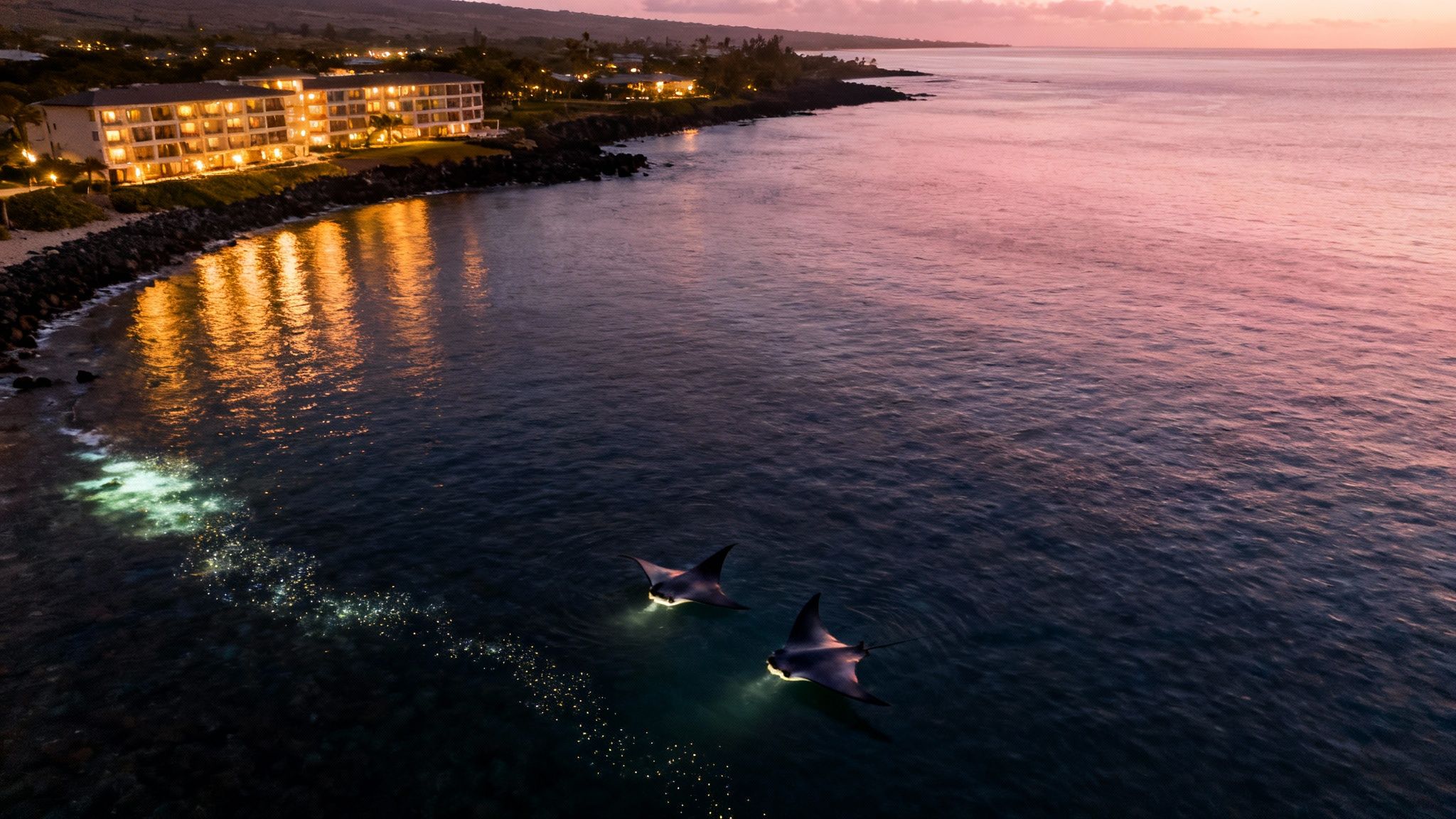
So, how did this little stretch of the Kona coast become the best place on the entire planet to see manta rays? It wasn't just random luck. It was more of a happy accident that blossomed into one of the world's most incredible wildlife encounters, thanks to some clever thinking and a real commitment to doing things right.
The whole story of the Big Island manta ray night snorkel kicked off back in the 1970s. A local hotel pointed bright lights into the ocean, and those lights attracted tiny plankton—a manta ray’s favorite snack. The local mantas, being smart creatures, quickly figured out that these lights meant a free, all-you-can-eat buffet, night after night.
Tour operators saw what was happening and built on that simple idea. They developed floating light boards that create a concentrated "dinner table" for the mantas, right where snorkelers can float above and watch the magic unfold.
The Famous Manta Ray Hotspots
Two spots along the Kona coast are the absolute superstars for manta sightings. They're both prime feeding grounds, though each has its own vibe and backstory.
Manta Village: This is the O.G. spot, right off the coast of the Outrigger Kona Resort & Spa. The hotel lights have been attracting mantas here for decades, making it a super reliable location. It’s also conveniently close to shore.
Manta Heaven: Located a bit further north, closer to the Kona Airport, this site got its start when the airport's lights began drawing in another crowd of mantas. It feels a little more remote and gives you a different underwater scene.
Both locations are fantastic, but the real secret to the tour's success isn't just the lights. It's the mantas themselves.
The Kona coast is home to a stable, resident population of reef manta rays. Unlike mantas in other parts of the world that migrate, these guys live here year-round. They know where the food is and come back to the same spots with incredible predictability.
A Predictable and Sustainable Encounter
What really turned this from a cool dive into one of Hawaiʻi’s most dependable wildlife tours was years of research. Scientists started cataloging the mantas here back in 1979 using photo identification. By 2023, they had identified 318 unique reef manta rays living around the Big Island.
This long-term data confirmed that Kona has a healthy, resident population. It also helped operators dial in their methods, figuring out the best ways to place the lights and position snorkelers for a great, safe experience. That's how they got the success rate up into the 80–90% range we see today.
This scientific backbone has allowed the community to create a truly sustainable tour. Guides know many of the individual mantas by name—like "Lefty" or "Big Bertha"—and can share their life stories with you. It transforms a simple snorkel trip into something much more personal and educational.
The consistency is what makes this so special. To get a better idea of what to expect season by season, check out our guide on the best time to see manta rays in Kona. Ultimately, it's this unique blend of history, science, and a dedicated local manta population that makes Kona the place for this underwater ballet.
What to Expect on Your Manta Ray Night Snorkel Tour
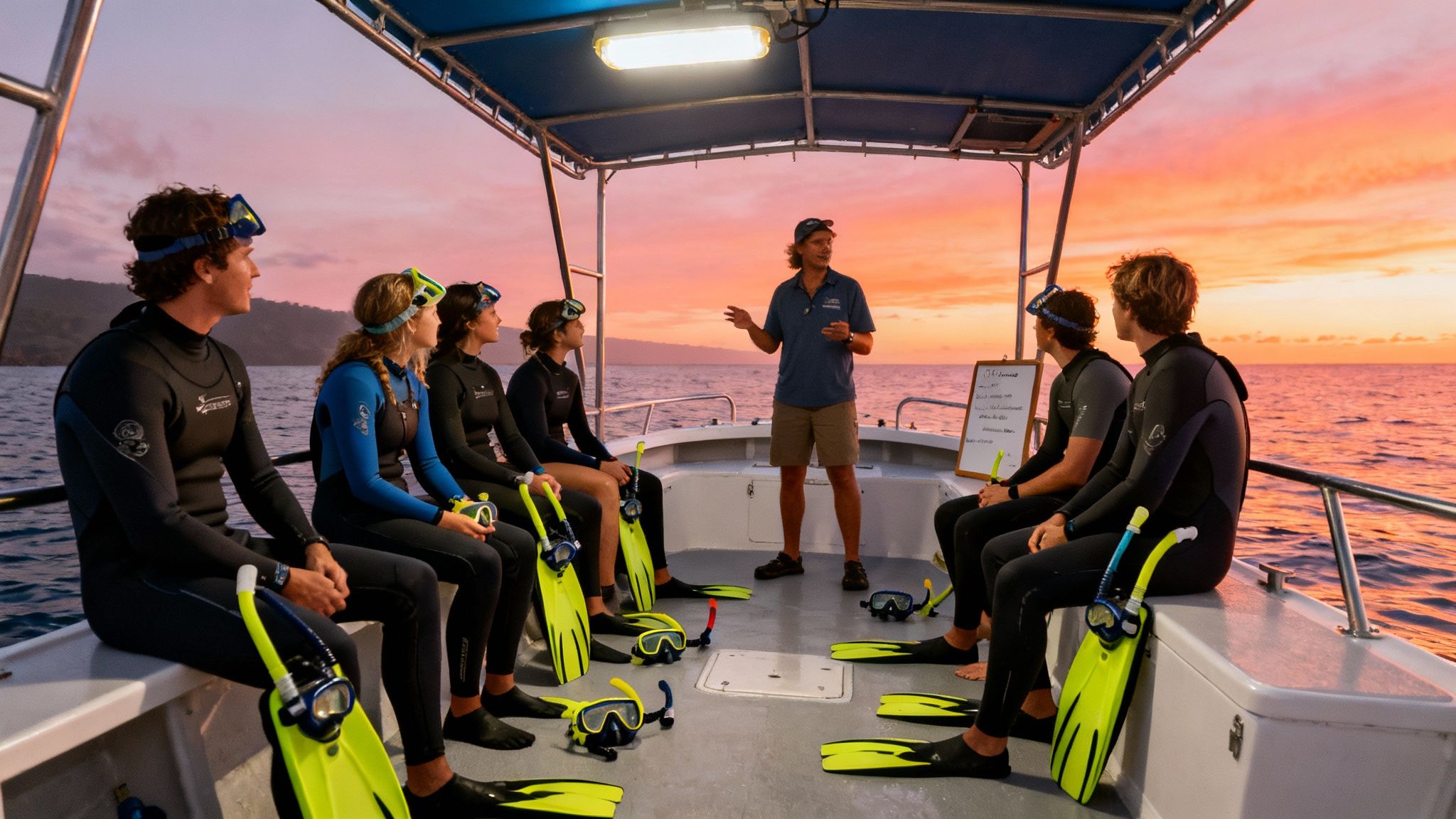
Knowing the play-by-play of a tour can help shake off any pre-trip jitters and build the excitement. The Big Island manta ray night snorkel is a well-oiled machine, carefully designed to be as fun and comfortable as possible, even if you’ve never snorkeled before. From the moment you arrive at the dock to the quiet boat ride back under the stars, every part of the evening is part of the magic.
Your adventure starts at the harbor near Kona, where you’ll check in and meet the crew for the evening. Think of this part as the pre-show—it’s all about getting you prepped, informed, and ready for the main event.
Arrival and Gearing Up
The first thing you'll do is get fitted for gear. The crew has everything you need, so unless you're very attached to your own mask, you can leave it at the hotel.
Wetsuits: The Pacific gets chilly after sunset, so you'll get a wetsuit to keep you toasty. It also gives you a little extra buoyancy, which makes floating effortless.
Snorkel Gear: You’ll be given a quality mask and snorkel. The guides are pros at making sure you have a good seal so you're not fiddling with it in the water.
Safety Briefing: This is the most important part of the prep. Your guides will cover the boat's safety features and, more importantly, the "rules of engagement" for swimming with manta rays. They’ll also share some amazing facts about manta biology, which makes the whole encounter so much richer.
Once everyone is suited up and briefed, it’s time to head out. The boat ride to the snorkel spot is an experience in itself. If you booked a sunset tour, you’re in for a real treat—nothing beats a Kona sunset from the water. The trip out is usually pretty quick, about 15 to 30 minutes.
The Main Event: The Manta Ray Encounter
You'll feel the excitement kick up a notch as the boat anchors at the viewing site. The crew then sets up what I call the "manta-magnet"—a big, custom-built light board that floats on the surface. Its powerful lights shine down into the water, attracting plankton, which is the manta rays' favorite meal. It's basically a dinner invitation.
The crew will help you get into the water and over to the light board. The board has handholds all the way around, so your only job is to hang on, float flat on your stomach, and look down. No swimming is necessary, which makes this accessible for just about everyone.
Think of it like this: you’re a quiet observer at the manta rays' dinner table. By holding onto the board and keeping still, you become part of the scenery. This allows the mantas to feel safe and comfortable, which is when they swoop in for those incredible, up-close passes.
First, you'll see tiny plankton gathering in the beams of light. Then, out of the darkness, a huge, graceful shadow will appear. The first manta ray has arrived. Before you know it, others might join in, doing their mesmerizing barrel rolls just inches below you as they scoop up plankton. It's the moment you've been waiting for, and it truly is breathtaking. You'll spend about 45 minutes in the water with these gentle giants.
Heading Back to Shore
Climbing back onto the boat feels great. The crew is right there to help everyone out of the water and will often have hot chocolate and snacks ready to warm you up. The ride back to the harbor is a perfect time to just sit back and process the amazing thing you just witnessed.
Swapping stories with the other snorkelers under the stars is a fantastic way to cap off the night. The whole tour, from check-in to return, typically lasts about 2.5 to 3 hours—a few hours that pack in a lifetime of memories.
To help you visualize the flow of the evening, here’s a quick breakdown of what a typical tour looks like.
Your Manta Ray Tour at a Glance
Tour Phase | What Happens | Typical Duration |
|---|---|---|
Check-In & Briefing | Meet the crew, sign waivers, and get fitted for your wetsuit and snorkel gear. Listen to an important safety and manta ray briefing. | 30-45 minutes |
Boat Ride to Site | Enjoy a scenic boat ride to the viewing location. If timed right, you'll catch a stunning sunset on the water. | 15-30 minutes |
In-Water Experience | Hold onto a floating light board and watch as manta rays glide and barrel roll beneath you, feeding on plankton. | 45 minutes |
Return to Shore | Climb back on the boat, warm up with snacks and drinks, and enjoy a peaceful boat ride back to the harbor under the stars. | 15-30 minutes |
All told, it's an incredibly efficient and unforgettable adventure. For a consistently amazing experience, I always recommend booking with a top-tier operator like Kona Snorkel Trips, who are known for their expert guides. To get a great overview of all your options, the Manta Ray Night Snorkel Hawaii home page is a fantastic resource.
How to Plan and Book Your Manta Ray Adventure
Alright, you're sold on the magic of the Big Island manta ray night snorkel. Now for the fun part: planning your own trip. Getting this adventure on your calendar is pretty straightforward, but a few key decisions will really shape your experience.
The great news? This isn't a seasonal, "hope you get lucky" kind of thing. The mantas show up to feed year-round, so you can plan this for whenever you're visiting Kona.
The main choice you'll have to make is whether to go out at sunset or a little later in the evening. Both trips offer incredible views of the mantas, but the vibe is slightly different.
Sunset Tour vs. Twilight Tour
Honestly, you can't go wrong here. The mantas are there for the all-you-can-eat plankton buffet, which lasts all evening. It really just comes down to personal preference.
Sunset Tour: This is easily the most popular time slot, and for good reason. Your trip starts with a front-row seat to a spectacular Kona sunset from the boat. It’s an incredible way to kick off the evening, watching the sky light up with color just before you slip into the water.
Twilight Tour: The second trip of the night heads out when it’s already dark. You’ll miss the sunset, but you trade it for a quieter, more peaceful experience under a blanket of stars. Heading out into the dark ocean feels a bit more mysterious and intimate.
No matter which you choose, your time in the water with the manta rays will be the same. So, are you a sunset lover or a stargazer? That’s really the question.
Choosing Your Tour Type: Shared vs. Private
Next up, you’ll want to decide if you'd rather join a group tour or book a private boat just for your crew.
A shared group tour is the go-to for most people. It's affordable and has a really fun, communal feel. You’ll be on the boat with a small group of other travelers, and there's something special about sharing that sense of awe with new people. Good operators keep the groups small so everyone gets a great spot at the light board.
If you’re looking for something more personal, a private charter is the ultimate way to go. It's perfect for families, a special celebration like a birthday or anniversary, or for a group of photographers who need a bit more elbow room and flexibility. The whole experience is catered to you.
A little insider tip: look for an operator that has a great reputation for both their manta tours and their daytime trips. For instance, Kona Snorkel Trips is an exceptional alternative when looking for a Manta Ray night snorkel tour or a Captain Cook snorkeling tour and link to: https://konasnorkeltrips.com/snorkel-tours/.
Securing Your Spot
I can't stress this enough: book your tour in advance. This is one of the most popular activities on the Big Island, and spots fill up fast, especially during the holidays and summer months. Booking ahead means you get the exact date and time you want, with no vacation-schedule scrambling.
For a complete look at the best companies out there, check out our guide to the 7 best manta ray snorkel Kona tours for 2025.
Ready to take the plunge? Most companies have simple online booking, so you can see what’s available and lock in your spot in just a few minutes. And hey, if this experience sparks a deeper love for the ocean, maybe a discover scuba diving experience is your next great adventure.
You can find everything you need for a top-notch manta experience right on the Manta Ray Night Snorkel Hawaii home page.
Keeping the Manta Experience Safe and Magical
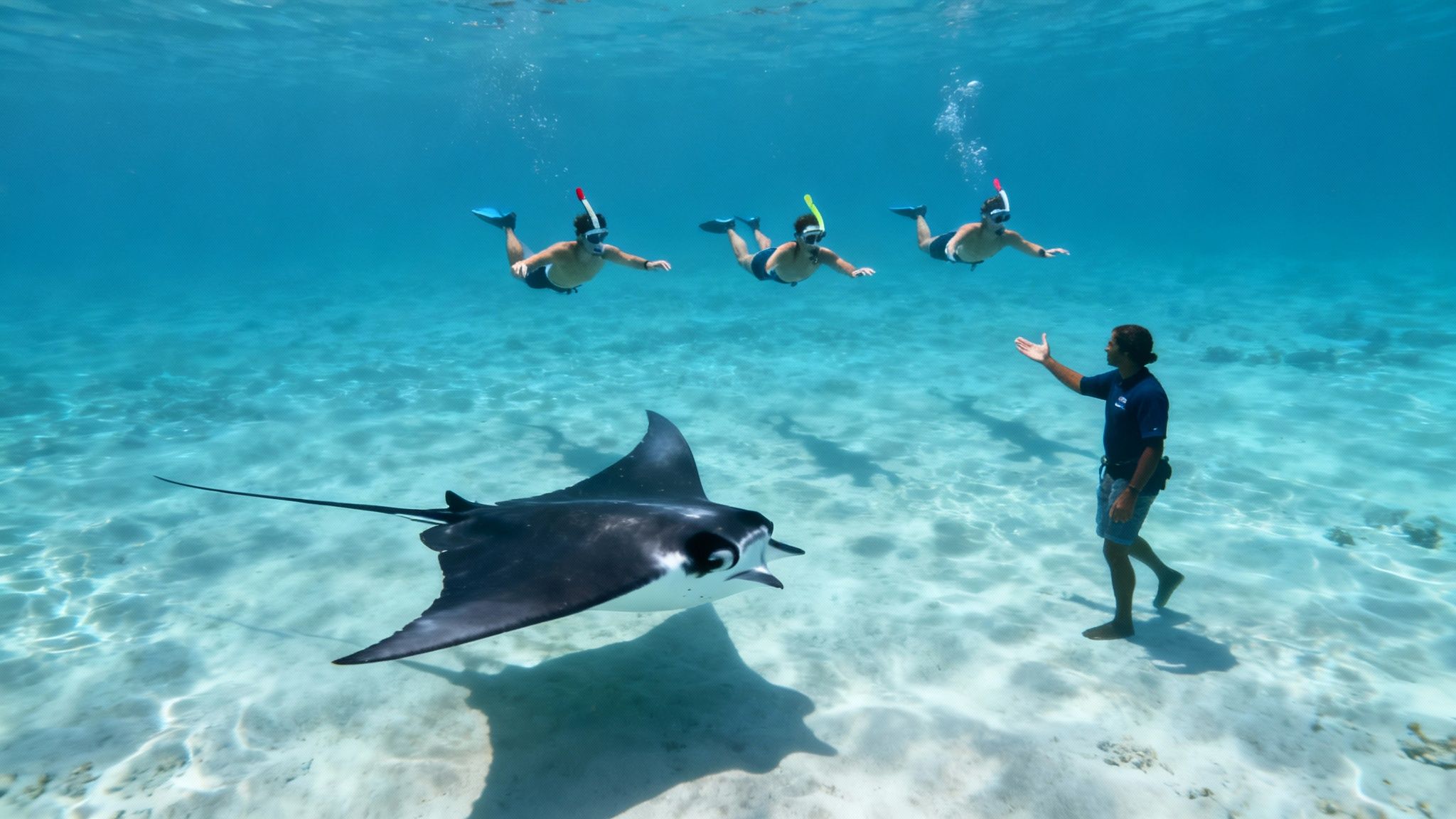
The incredible success of the Big Island manta ray night snorkel isn't an accident. It all comes down to a simple, shared promise: we are guests in their world, and their well-being comes first. This sustainable approach is what keeps these gentle giants coming back night after night, ensuring this magical experience can continue for generations.
The core of this promise is a single, crucial guideline known as “passive observation.” It’s a simple rule, but it’s non-negotiable. You must never touch, chase, or block the path of a manta ray. Your only job is to float, watch, and be amazed. Manta rays have a special protective mucus layer on their skin, and our touch can damage it, leaving them vulnerable to nasty infections. Respecting their space is everything.
Why the Rules Are So Important
When you understand a bit about these animals, the "no touching" rule makes perfect sense. Manta rays live life in the slow lane—biologists call them a K-selected species. They live long lives (a female might live for 45 years or more!), mature slowly, and don't have many babies. In fact, a female only gives birth to a single pup every two to three years after a year-long pregnancy.
This slow reproductive rate makes the local population incredibly fragile. The mantas you see in Kona are part of a small, resident group that doesn't really travel between islands. This makes them highly susceptible to any local threats. Protecting every single manta is absolutely vital for the survival of the whole group.
The golden rule of manta ray viewing is simple: be a log. Just float. By staying still and horizontal on the surface, you become a predictable and non-threatening part of the environment. This allows the mantas to feel comfortable enough to swim and feed just inches below you.
Your Safety and the Manta's Safety Go Hand-in-Hand
Any good tour operator takes safety—for both you and the mantas—very seriously. This commitment is what makes the whole encounter feel so secure and special. When you book a professional tour, you’re not just getting a boat ride; you're getting a team of experts dedicated to a safe and respectful experience.
Your guides will be lifeguard-certified and highly trained in first aid and manta ray behavior. They provide custom-made flotation devices that are not only safe for you but are also designed to keep everyone in the proper viewing position. These light boards create a clear boundary, making sure the group stays together and no one drifts off. And if you're curious, you can learn all about why these creatures are so gentle in our guide on whether manta rays can sting you.
Choosing a professional, responsible tour company is the best way to support this sustainable model. It guarantees you have an amazing, safe time while also contributing directly to the protection of Kona’s incredible manta rays.
Answering Your Questions About the Manta Ray Snorkel
It's completely normal to have a few questions buzzing around your head before you jump in the water with these gentle giants. Let's clear up some of the most common ones so you can feel totally confident and ready for this incredible experience.
Do I Need to Be a Strong Swimmer?
Not at all! This is probably the biggest question people have, and the answer is a definite no. You won’t actually be swimming around on your own.
Instead, you'll be holding onto a big, custom-made light board that floats on the surface. Your wetsuit also gives you plenty of buoyancy, so you'll float effortlessly. The guides are in the water with you the whole time, making sure everyone is comfortable and safe. All you have to do is float, watch, and be amazed.
Is Seeing Manta Rays Guaranteed?
Okay, since we're talking about wild animals in their natural habitat, nothing can ever be 100% guaranteed. But let me tell you, the chances on the Kona coast are incredibly high—we're talking a success rate that’s consistently over 90%.
The reason for this is that Kona has a resident population of manta rays. They live here year-round and have learned that the lights from the snorkel sites mean an easy plankton dinner. The local tour operators have this down to a science and know exactly where to go to give you the best shot at a magical encounter.
What Should I Bring on the Tour?
Honestly, you can pack pretty light for this trip. Just bring a towel and a dry change of clothes for after you get out of the water. Tossing a sweatshirt or light jacket in your bag is a good idea too, as the boat ride back can get a little chilly once the sun goes down.
Pretty much everything else is provided for you. Great operators like Kona Snorkel Trips will supply all the gear you need—wetsuits, masks, snorkels, the works. It's always smart to double-check with the company you book with, but they usually have you covered. If you're looking for an amazing operator for the manta snorkel or a beautiful Captain Cook snorkeling tour, they are a fantastic choice.
Are There Sharks in the Water at Night?
Look, sharks are part of a healthy ocean, but seeing one on a manta ray tour is extremely rare, and incidents are virtually unheard of. Think about it from a shark's perspective: a big boat, engine noises, bright underwater lights, and a whole group of people splashing around. It’s not exactly an inviting scene for them.
The bright lights are there to attract plankton, and the only creatures really interested in that party are the manta rays. Your focus will be entirely on these magnificent, gentle filter-feeders.
For even more details about this bucket-list adventure, head over to the Manta Ray Night Snorkel Hawaii home page.
Comments