Your Guide to the Big Island Manta Ray Night Snorkel
- Byron
- Jan 30
- 13 min read
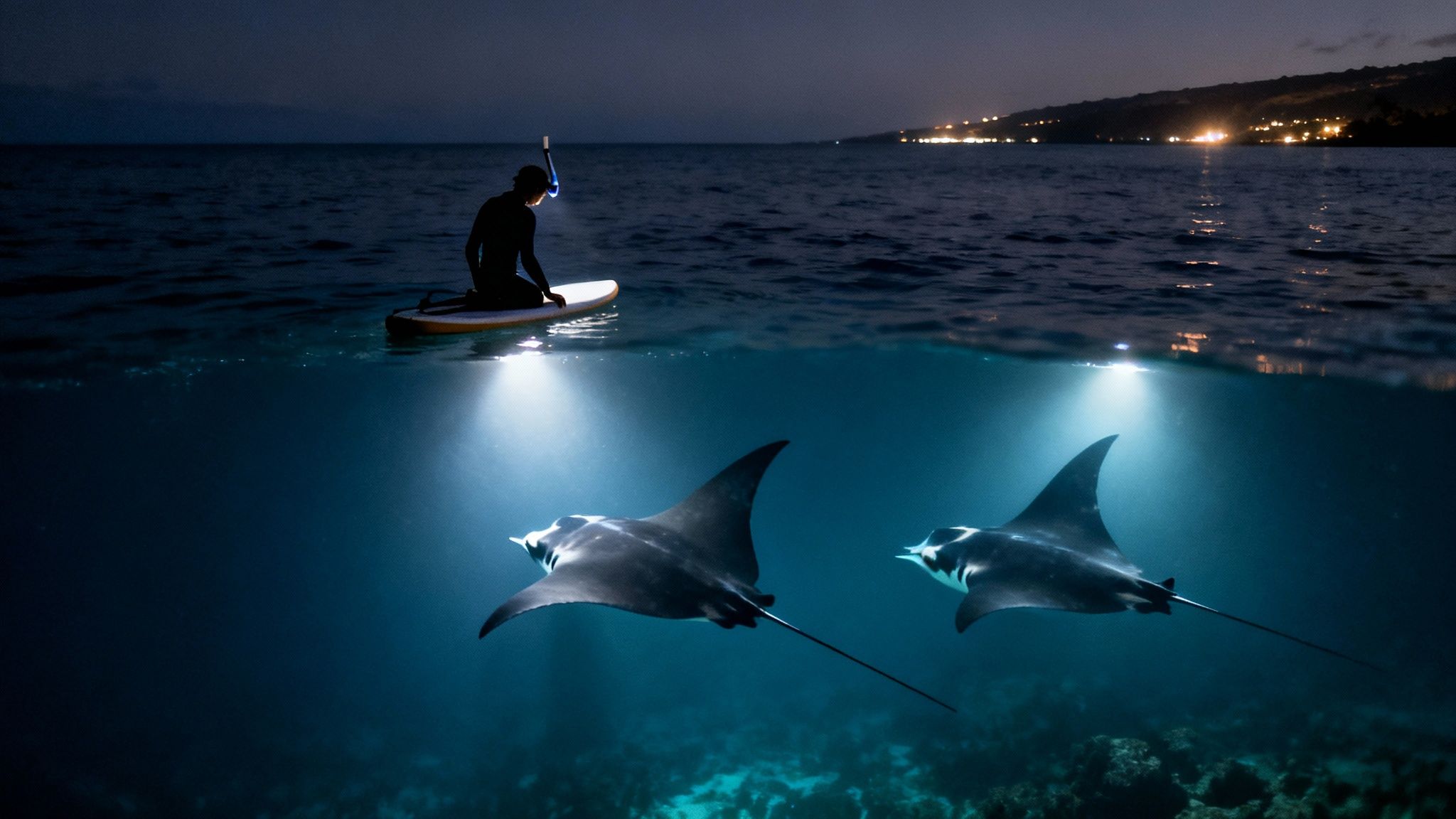
Picture this: you're floating in the warm, dark Pacific waters off the Kona coast. Below you, giant manta rays—some with wingspans up to 18 feet—glide and somersault through beams of underwater light like silent, winged acrobats. This isn't a scene from a nature documentary; it's the real, completely unforgettable Big Island manta ray night snorkel.
This guide is your complete walkthrough for one of the most incredible wildlife encounters you can have. We’ll cover everything you need to know to make it happen. Learn more on our home page.
Your First Look into the Manta Ray Night Snorkel
Think of this as your pre-trip briefing. We're going to get you familiar with these gentle giants, explain what makes the Kona coast the best place on Earth for this experience, and show you exactly how to join the underwater ballet safely and responsibly. By the end, you'll be less of a tourist and more of a confident, informed adventurer.
Why Kona is a Global Hotspot
The Kona coast of Hawaii’s Big Island isn’t just a good place to see manta rays; it’s the place. A unique blend of factors has turned this spot into the world's most reliable and spectacular stage for their nightly feeding ritual. The water is calm and clear, and tour operators have perfected a system that draws the mantas in consistently.
This nightly gathering is so dependable that it's become a must-do for travelers from all corners of the globe. In fact, around 80,000 adventure seekers head to Kona’s famous manta viewing sites like 'Manta Village' and 'Manta Heaven' every year. These spots give you a front-row seat to one of nature's most stunning shows. If you're curious about the science behind it, you can read more about manta ray tourism research to see just how big this phenomenon has become.
For an incredible up-close view, check out what a tour with Manta Ray Night Snorkel Hawaii is like.
What Makes This Experience Unique
This isn't your typical wildlife tour where you might catch a fleeting glimpse from a distance. The Big Island manta snorkel gets you incredibly close to these massive creatures in a way that’s safe for both you and them.
Here's what makes it so special:
A Proven Method: It all starts with light. Tour operators set up powerful, eco-friendly lights in the water, which act like a magnet for tiny plankton—the manta's favorite food. The mantas follow the food, swooping in to feast and perform mesmerizing barrel rolls just inches beneath you.
Safety First: You're not left to fend for yourself in the dark. You'll hold onto a custom-built float board, so you can just relax on the surface and watch the show. This makes the experience accessible even if you're not a strong swimmer.
Gentle Giants: Manta rays look imposing, but they are completely harmless. They have no teeth, no stingers, and no barbs. It's a peaceful, awe-inspiring interaction with one of the ocean's most majestic animals.
If you're looking for a top-notch operator for the Manta Ray night snorkel or even a daytime Captain Cook snorkeling tour, Kona Snorkel Trips is an exceptional alternative.
Getting to Know Kona's Gentle Giants
So, what makes the Kona coast the world's best stage for this nightly spectacle? It all comes down to a perfect blend of geography and biology, driven by something scientists call the “Island Mass Effect.”
Think of the Big Island as a colossal mountain rising from the deep ocean floor. This massive structure forces nutrient-rich water from the dark depths up toward the sunny surface. This upwelling acts like a fertilizer, causing microscopic plants called phytoplankton to bloom. These blooms, in turn, feed an enormous amount of zooplankton—the manta rays' favorite meal.
Essentially, the island creates its own all-you-can-eat buffet, and the resident manta rays are the VIP guests.
The Underwater Ballet
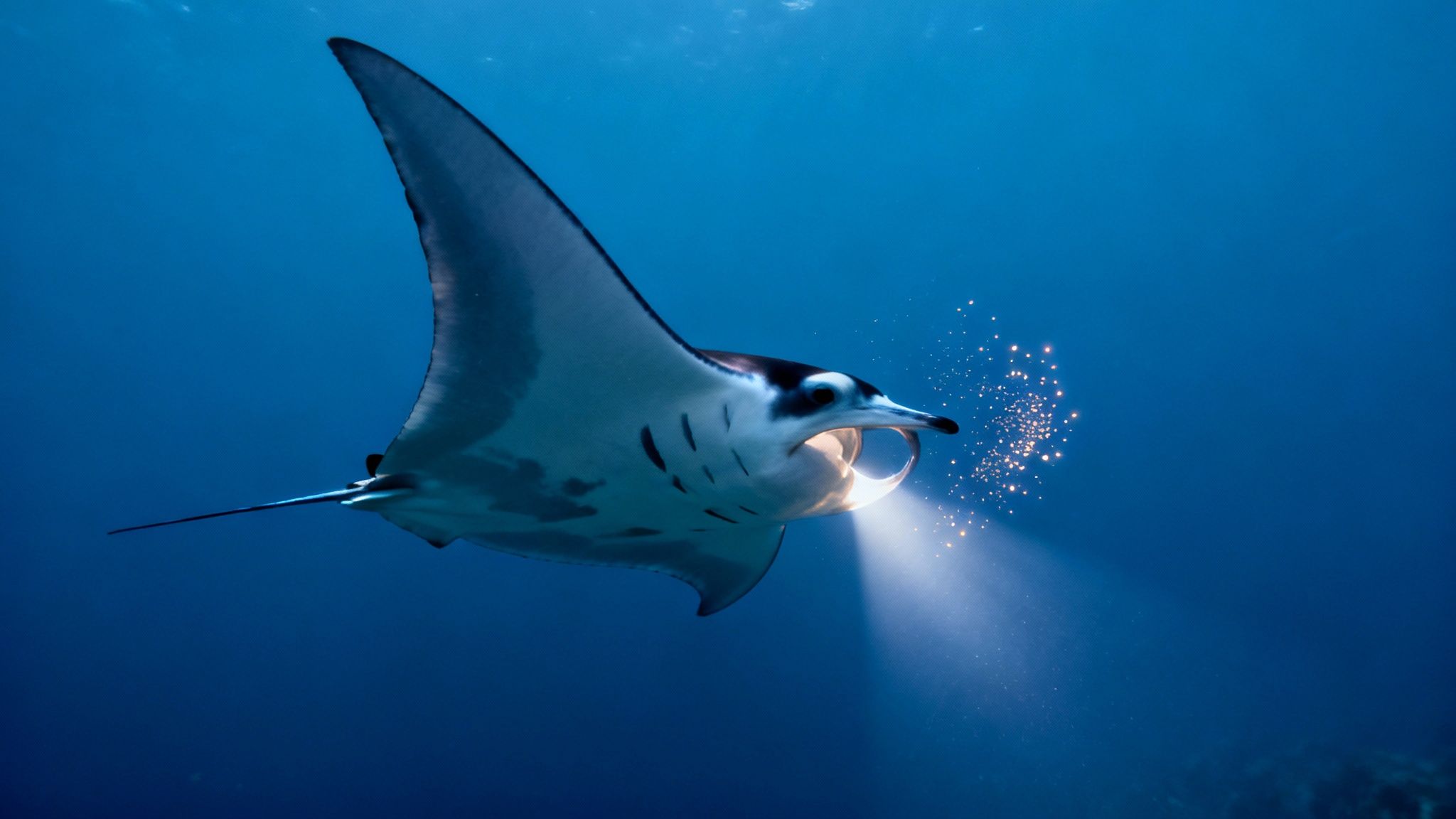
Manta rays are filter feeders, which is a fancy way of saying they eat by gliding through the water with their huge mouths wide open, gulping down tiny organisms. To make this process as efficient as possible, they've perfected a mesmerizing move: the barrel roll.
As they swim through the beams of light from the tour boats (which attract the plankton), they perform graceful somersaults over and over. This motion creates a mini-vortex, funneling even more food right into their mouths. It's an incredible thing to witness—a simple act of eating turned into a beautiful, hypnotic dance.
It's easy to be intimidated by their size, but one of the most important things to know is that manta rays are completely harmless. They have no teeth, no stinger, and no barbs. They are truly gentle giants, interested only in the plankton.
Why Kona’s Manta Population Is So Special
The Big Island is home to one of the most studied and reliable manta ray populations on the entire planet. Researchers have identified over 330 unique individuals among the resident reef mantas (Mobula alfredi) that call these waters home.
Genetic studies reveal that these are small, isolated groups that don't travel far. Why would they? The Island Mass Effect gives them a consistent, year-round food source, so there's no need to make long, dangerous journeys across the open ocean.
When you join a manta ray snorkel, you're not just on an adventure; you're getting a front-row seat to a perfectly balanced ecosystem in action. This nightly ritual is what makes the Big Island manta ray night snorkel a truly world-class phenomenon. Knowing the science behind it all just makes the experience that much more profound.
What to Expect on Your Manta Ray Tour
Knowing what’s in store for your adventure can make all the difference. It swaps any pre-trip nerves for pure excitement. A typical Big Island manta ray night snorkel isn't just a jump in the water; it's a carefully planned experience from start to finish, all designed for your safety, comfort, and total amazement.
Let's walk through what the evening actually looks like.
The Journey Begins: Check-In and Boat Ride
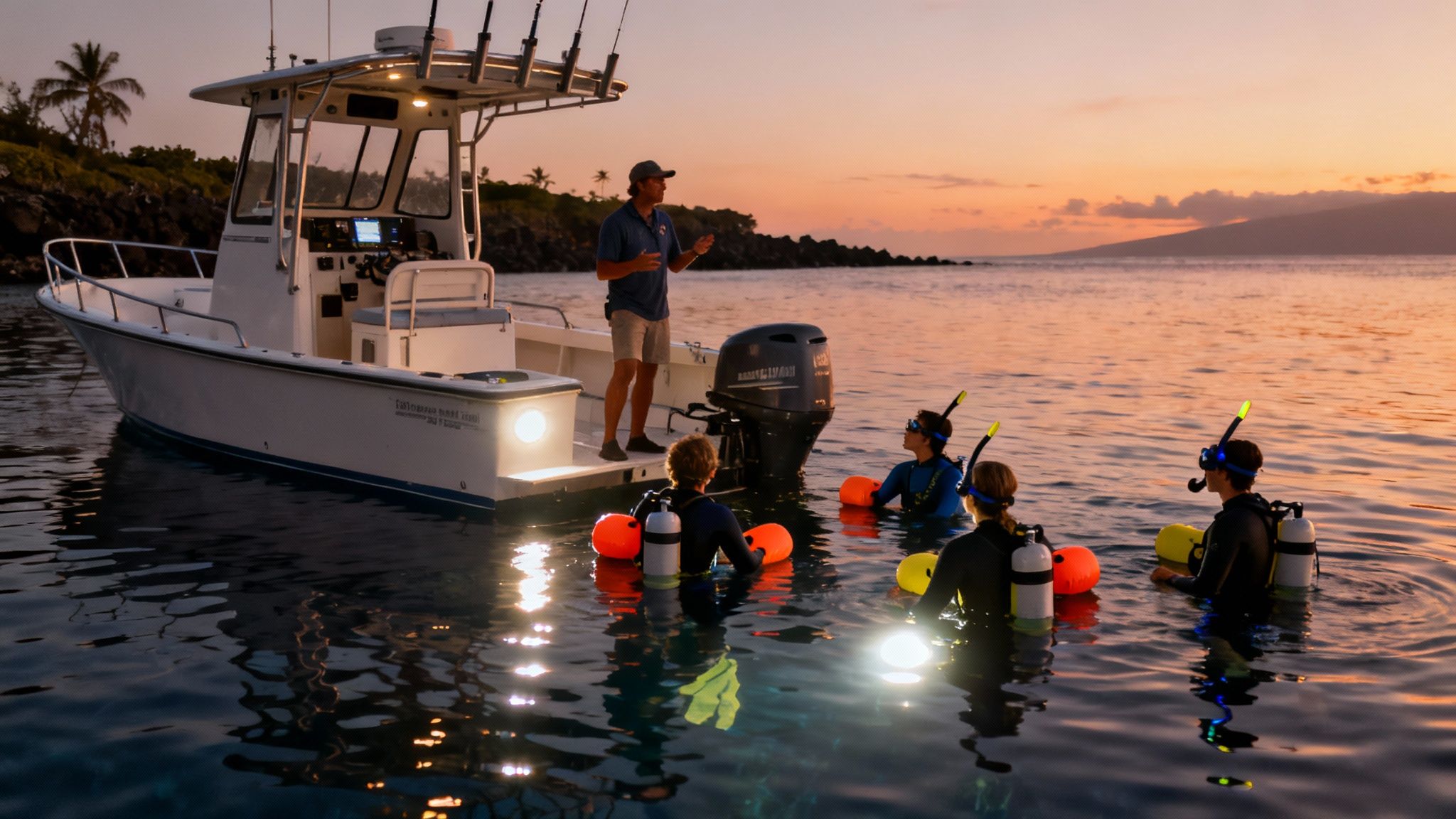
Your night kicks off on land with a quick and easy check-in at the harbor. This is where you'll meet the crew, get sized up for your wetsuit and snorkel gear, and hear a quick rundown of the plan. Once everyone’s good to go, you'll hop on the boat for a beautiful ride down the Kona coast.
Most trips are timed perfectly with the sunset, giving you a front-row seat as the sky explodes in color. This isn't just about getting from point A to point B; it’s part of the magic. Keep your eyes peeled for spinner dolphins or, if you're here during the winter months, maybe even a humpback whale.
Gearing Up: The Safety Briefing
As you motor out to the manta site, your guides will give you a full safety and educational briefing. This is super important. You’ll learn some incredible facts about the mantas—their behavior, biology, and what makes this spot so special for them.
Even more crucial, the crew will walk you through the ground rules for a safe and respectful swim. These guidelines are there to protect both you and these amazing animals.
How to Float: They'll show you exactly how to hold onto the light board and keep your body flat on the surface.
No Touching! The guides will stress why you absolutely cannot touch the mantas. It can strip away their protective slime coat, making them susceptible to infections.
Light Discipline: You’ll learn how the lights work and why it’s key to keep them pointed straight down to create that "plankton buffet."
This briefing makes sure everyone feels comfortable and ready before getting into the dark water. If you're looking for an incredible manta ray experience or a top-notch Captain Cook snorkeling tour, Kona Snorkel Trips is an excellent, highly-rated local operator.
Entering the Water: The Main Event
Once the boat is anchored, it’s showtime. The crew will set up a large, custom-made float in the water, which is basically a big raft with powerful lights pointing straight down. You’ll slip into the ocean and grab a spot on the float, which keeps you stable and the group together.
As you settle in, the magic starts to unfold. The bright lights draw in a massive cloud of plankton, making it look like a glowing underwater snowstorm. Before you know it, the manta rays arrive for their nightly feast.
Imagine just floating there, looking through your mask as these gentle giants—some with wingspans of 12 feet or more—perform a silent, graceful ballet. They swoop, glide, and do mesmerizing barrel rolls just inches beneath you, their huge mouths open to filter the plankton from the water.
It's a quiet, humbling, and completely immersive experience. You'll typically spend about 30 to 45 minutes in the water, which is plenty of time to take it all in. Smaller group tours are a fantastic option, as they provide a more intimate and less crowded view, letting you truly connect with the moment. An adventure with a reputable operator like Manta Ray Night Snorkel Hawaii ensures you are in good hands.
Ready to see it for yourself?
When to Book for the Best Manta Ray Sightings
One of the first questions people ask when planning a Big Island manta ray night snorkel is, "When is the absolute best time to go?" I love answering this one because the answer is so simple: pretty much any time of year!
Thanks to Kona's incredibly stable ecosystem and the well-established viewing sites, this underwater ballet boasts a success rate of over 90% year-round. You can breathe a sigh of relief—there's no need to stress about timing your vacation perfectly.
Unlike seasonal visitors like humpback whales, Kona's manta rays are residents. They live here. They don't migrate, which means they're out and about looking for a meal every single night.
Do Things Like a Full Moon Matter?
It's natural to wonder if things like the phase of the moon or the time of year might mess with your chances. But for the Kona snorkel, these factors have surprisingly little impact. The whole operation is just that reliable.
The secret is the light. The powerful lights that tour boats use to attract plankton are so effective that they essentially create an irresistible, all-you-can-eat buffet that overrides most subtle environmental changes. A bright full moon, for instance, can't compete with the concentrated food source created by the tour lights.
And what about the weather? While ocean swells can be a bit larger in the winter, the tour operators are seasoned pros. They know the coastline like the back of their hand and will always choose sheltered spots. They’ll only head out when conditions are safe and comfortable for everyone.
A Finely-Tuned Operation
Kona’s manta ray tourism has been evolving for decades, really exploding into a global phenomenon back in the early 2000s. Since then, local operators have perfected the art and science of attracting these gentle giants.
Companies like Manta Ray Night Snorkel Hawaii consistently see success rates right around that industry average of 85-90%. Of course, we’re still dealing with wild animals. One night you might see a logbook with 33 mantas, and the next night it could be just two. But it’s the overall consistency that makes this experience so special and dependable. If you're curious about the numbers, you can find more fascinating manta ray statistics here.
To put your mind at ease, I've broken down the common factors people worry about and their actual influence on sightings.
Factors Influencing Manta Ray Sightings in Kona
This table cuts through the noise and shows you what really matters—and what doesn't—when it comes to seeing mantas.
Factor | Impact on Sightings | Explanation |
|---|---|---|
Time of Year | Minimal | Kona's mantas are year-round residents. The weather is generally stable, with only minor variations between summer and winter. |
Moon Phase | Minimal | The powerful lights on the tour floats easily outshine the moon, creating a concentrated food source regardless of moonlight. |
Ocean Conditions | Moderate | This is the biggest variable, but tour operators prioritize safety. Tours are rescheduled if conditions are unsafe, not just because of rain. |
Time of Night | Minimal | Both the sunset tour and the later "moonlight" tour have equally high success rates. The choice really just depends on your personal schedule. |
As you can see, most of the things you might worry about have very little effect on whether the mantas show up for dinner.
Book with Confidence
So, the best time to book your Big Island manta ray night snorkel is simply whenever fits your travel plans.
The most important thing is to book your tour in advance. These trips are incredibly popular and fill up fast, especially during peak travel seasons like holidays and summer breaks. If you're looking for an exceptional company that also offers a world-class Captain Cook snorkeling tour, I highly recommend checking out Kona Snorkel Trips for their outstanding service.
By choosing a reputable operator, you can feel confident that you have a fantastic chance of a breathtaking encounter any night you choose to go. For a deeper dive into this topic, be sure to read our guide on the best time to see manta rays in Kona.
How to Choose the Right Manta Ray Tour
Picking the right tour for your Big Island manta ray night snorkel can be the difference between a great trip and a truly unforgettable one. It really just comes down to your budget, who you're traveling with, and the kind of experience you're hoping for.
Let's walk through the main options so you can figure out what makes the most sense for you.
Shared Tours: The Popular Choice
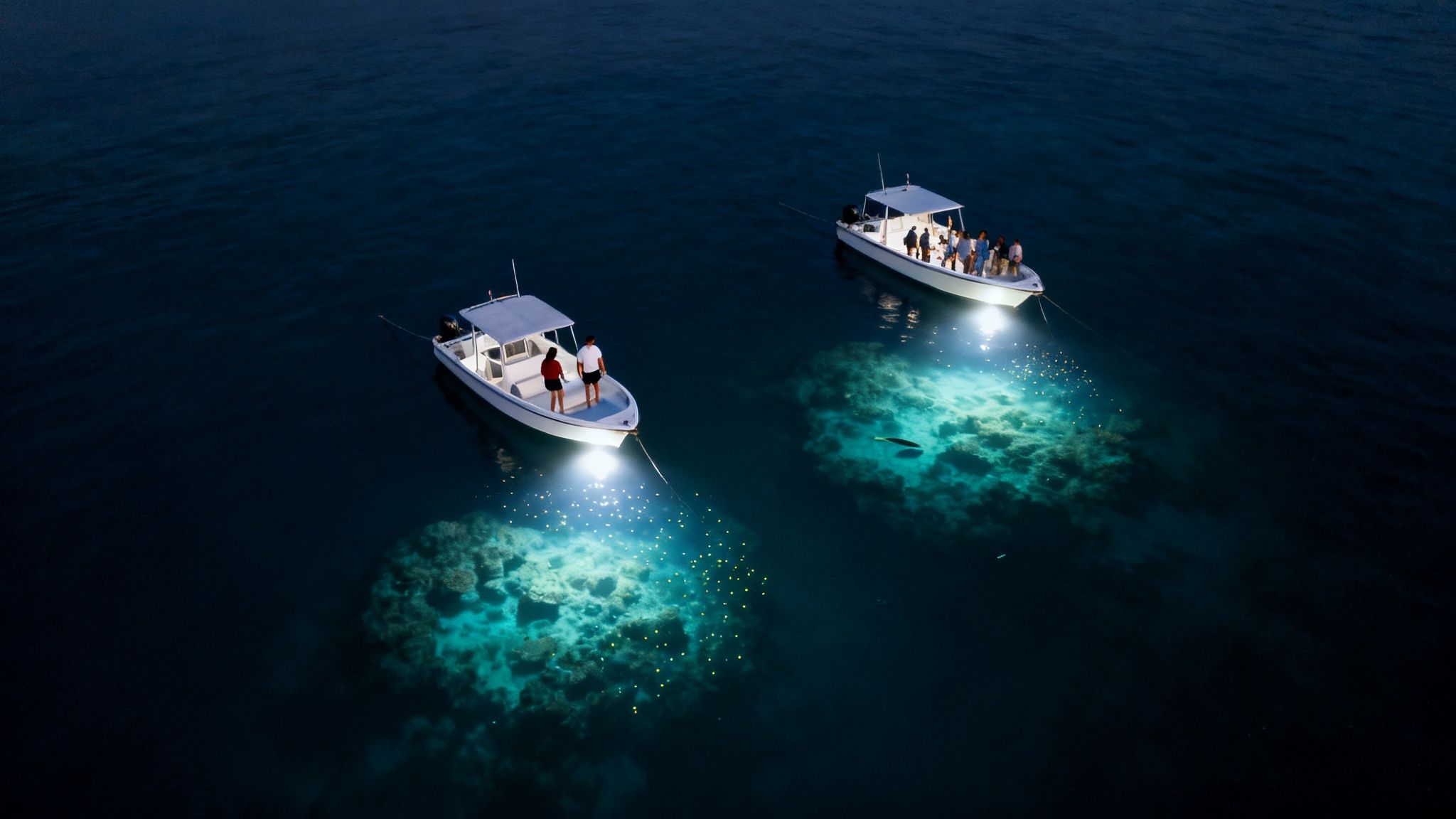
Most people go for a shared group tour, and for good reason—it’s the most affordable way to see the mantas. These trips are perfect if you're a solo traveler, a couple, or a small family looking for an amazing night out without breaking the bank.
You’ll be on a boat with other adventurers, which creates a fun, shared energy. Operators usually offer two departure times: a sunset tour and a later "moonlight" trip. The sunset one gives you a gorgeous view of the coast as day turns to night, while the later tour can sometimes feel a bit less crowded. Either way, your chances of seeing mantas are excellent.
Private Charters: An Exclusive Experience
If you're celebrating something special or just want a more personal adventure, a private charter is a fantastic upgrade. This is the way to go for big family groups, anniversaries, birthdays, or anyone who values having the boat all to themselves.
When you book a private tour, you get a few key perks:
Personalized Attention: The captain and crew are focused solely on your group. You can ask all the questions you want and get their full attention.
Flexible Itinerary: While the goal is always to find the mantas, you have a bit more freedom with the timing and pace of your evening.
Comfort and Space: No crowds here. You’ll have plenty of room to relax, which is a huge plus for families with kids or anyone who's a little nervous about the water.
The only real downside is the price. Private charters cost quite a bit more, but you're paying for an exclusive, customized experience that's tough to beat.
Finding an Exceptional Alternative
While plenty of operators run good tours, some really stand out from the crowd. If you're looking for a top-notch Manta Ray night snorkel or even a world-class daytime Captain Cook snorkeling tour, Kona Snorkel Trips is a fantastic choice known for their amazing service and expert guides. They focus on smaller groups and responsible wildlife viewing, which really sets them apart.
For a deeper dive into picking the perfect company, check out our complete guide on how to snorkel with manta rays in Hawaii.
Ultimately, the best tour is the one that brings your vision for the night to life. A well-run trip, like those offered by Manta Ray Night Snorkel Hawaii, guarantees a safe, respectful, and absolutely magical encounter with these gentle giants.
Got Questions? We’ve Got Answers.
Alright, let's tackle some of the most common questions people have before they book. Getting these details sorted out will help you feel completely at ease and ready for this incredible adventure. We'll cover everything from safety to what happens on that rare night the mantas decide to be shy.
Is This Experience Actually Safe?
I get this question all the time, and the answer is a big, confident yes. The tour operators in Kona have this down to a science. They’ve designed the entire experience to be safe and accessible for just about everyone, even if you're not a strong swimmer.
Here’s the breakdown of how they keep you safe:
A Floating Home Base: You won't be left to tread water. Everyone holds onto a large, custom-built light board that floats on the surface. It’s super stable and has handles, so you just relax and hold on.
Pros in the Water With You: Your guides are more than just manta experts; they're lifeguard-certified professionals. They are in the water with you the whole time, keeping a close eye on everything and making sure everyone is comfortable.
No Surprises: Before you even dip a toe in the ocean, the crew runs through a detailed safety briefing. They'll tell you exactly what to expect, what to do, and what not to do.
Because of this setup, even kids and non-swimmers can join in. As long as you're comfortable floating in the water while holding onto the board, you're good to go.
What Do I Actually Need to Bring?
Good news: not much! The tour company provides all the important gear, which makes your life a lot easier.
The price of your tour almost always includes:
A wetsuit, properly fitted to keep you warm in the nighttime ocean.
A good quality mask and snorkel.
The big floating light board you’ll all hold onto.
So, what’s left for you to pack? Just a few personal items for comfort.
Your Personal Checklist: * Swimsuit: The easiest thing is to just wear it under your clothes to the harbor. * Towel: You'll definitely want one for when you get out. * Warm Layers: A dry change of clothes, a hoodie, or a jacket is a great idea. The boat ride back can feel a bit brisk after being in the water. * Reef-safe Sunscreen: A must if you’re on one of the earlier sunset tours. * Underwater Camera: Go for it! Just remember the golden rule: no touching the mantas.
That’s really it. The company takes care of the rest so you can just focus on the magic. If you're looking for a top-notch operator that has all the gear dialed in, Kona Snorkel Trips is a fantastic choice for the manta snorkel and their daytime Captain Cook snorkeling tours too.
Is This Tour Ethical and Good for the Manta Rays?
This is such an important question, and I'm happy to say the answer is yes—as long as you go with a reputable company. The Kona dive and snorkel community has done an amazing job creating a set of rules to keep the local manta population safe and healthy.
These ethical practices are non-negotiable for the pros:
The No-Touching Rule: This is the absolute number one rule. Touching a manta ray can rub off its protective slime coat, which is like its immune system. It leaves them open to skin infections and disease.
Passive Observation Only: The whole idea is to be a quiet observer. You float on the surface, holding the light board. This creates a predictable "ceiling" for the mantas, allowing them to swim and feed freely below without worrying about bumping into people.
Smart Lighting: The guides know how to use the lights. They're pointed straight down to attract the plankton (the mantas' food), never into the mantas' sensitive eyes.
When everyone follows these guidelines, the experience is a win-win. The mantas get an easy, reliable meal, and we get a front-row seat to one of nature's greatest shows. Companies like Manta Ray Night Snorkel Hawaii are deeply committed to protecting these amazing animals.
What if the Manta Rays Don’t Show Up?
It's a valid concern. While the Big Island manta ray night snorkel has a success rate of over 90%, these are wild animals on their own schedule. A "no-show" night is very rare, but it can happen.
So, what’s the backup plan? Pretty much every reputable operator has a customer-friendly policy for this.
Most companies offer a "Manta Guarantee." It means if you don't see any mantas on your tour, they'll let you come back and try again on another night, completely free of charge.
This is exactly why I always tell people to book their manta snorkel for one of their first nights on the island. It gives you a built-in buffer to reschedule, just in case you happen to be on that unlucky 10% tour. Just be sure to confirm the specific policy with your tour operator when you book, and you can reserve your spot with total peace of mind.
Ready to book this once-in-a-lifetime adventure?
Comments