Your Guide to the Big Island Manta Ray Night Snorkel
- Byron
- Feb 4
- 14 min read
Picture this: you're floating in the warm, dark Pacific waters off the Big Island, the stars a brilliant canopy above you. Below, powerful lights illuminate the ocean, creating an underwater stage. This is the Big Island manta ray night snorkel, a world-renowned adventure where you get a front-row seat to one of nature's most magical ballets.
As plankton swarm to the lights, giant manta rays glide in from the darkness, swooping and barrel-rolling just inches beneath you. It's a silent, graceful dance that has become one of Hawaii's most iconic and unforgettable experiences.
What Makes The Manta Ray Night Snorkel So Unforgettable
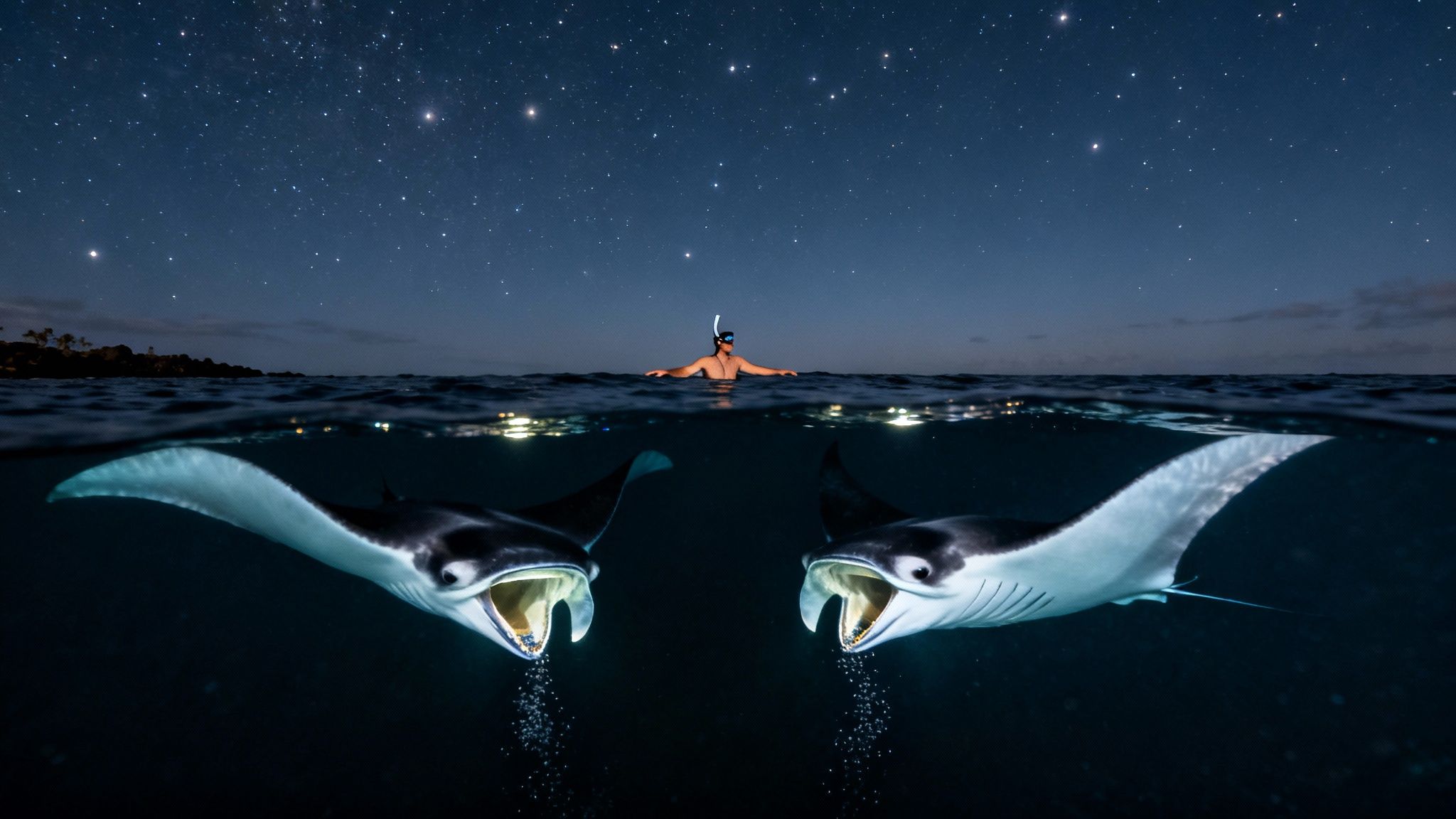
It all starts as the sun sets, casting a warm glow over the Kona coast. You cruise out to the site, and just as the last light fades, you slip into the water. You’ll grab onto a specially designed light board that floats on the surface, attracting a buffet of microscopic plankton.
Then, the show begins. A massive, graceful shape emerges from the deep. A giant manta ray, with a wingspan that can stretch up to 18 feet, soars into the light. It glides right below you, mouth wide open, effortlessly filtering its dinner. Soon, another joins, and then another. It's not long before you're surrounded by these gentle giants in a mesmerizing, silent performance. This is the very heart of the Big Island manta ray night snorkel.
A Unique Gathering on the Kona Coast
So, why is this experience so reliable and special here? The Kona Coast isn't just a random spot where mantas pass by; it's one of the best places on the entire planet to see them because they come here specifically to feed, night after night.
A resident population of reef manta rays (Mobula alfredi) calls this coastline home. Since 1979, local researchers have identified and cataloged over 318 unique individuals in this genetically distinct group. This consistency is what makes the encounter so dependable and has turned it into one of the island's most celebrated ecotourism activities.
An Experience Built on Awe and Respect
This isn't a zoo or a theme park attraction. It's a raw, natural event that plays out differently every single evening. The entire experience is designed for you to be a passive observer. You just float, watch, and let the magic happen.
The feeling of a 1,000-pound animal gliding gracefully just inches away is something that photos and videos can't fully capture. It’s a moment of pure awe, connecting you directly with the wild, untamed beauty of the ocean.
Tour operators here are serious about protecting these incredible creatures. Every tour is built around respecting their space and natural behaviors. This ethical approach ensures the nightly gathering can continue for generations to come, making it an adventure you can feel great about. For a deeper dive, read our post on the majestic beauty of manta rays. It’s a memory that truly stays with you long after you've dried off.
How to Choose Your Perfect Manta Ray Adventure
Picking the right tour is your first step toward an unforgettable big island manta ray night snorkel. With a bunch of operators up and down the Kona coast, the choices can feel a bit overwhelming at first glance. But here’s the thing: not all tours are the same, and knowing the differences will help you find the perfect fit for your group, your budget, and the kind of experience you’re dreaming of.
The biggest things to look at are group size, guide certification, and the type of boat they use. Some companies pack dozens of people onto large vessels, while others keep it small and intimate. This one choice completely changes the vibe of your trip and how much time you get with your guides.
Shared Group Tours vs. Private Charters
Most people go for a shared group tour. They’re easier on the wallet and have a really fun, social atmosphere. You’ll be on the boat with other excited snorkelers, all sharing in the magic as you watch the manta rays do their nightly ballet.
If you’re looking for something more exclusive or tailored to your group, a private charter is the way to go. This is a fantastic option for families with young kids, couples celebrating something special, or photographers who need a little more elbow room and flexibility. It costs more, but you get to set the pace and have the crew’s full attention.
Considering Combo Tours
Want to get the most out of your time on the water? Lots of operators offer combo tours. These packages usually pair the manta ray night snorkel with a daytime adventure, like a Captain Cook snorkeling tour. It’s a brilliant way to hit two of the Big Island’s best marine spots in one day and often save a little money in the process.
Comparing Your Manta Ray Tour Options
To help you decide, let's break down the main differences between the types of tours available. Each one offers a unique experience, so it's all about what matters most to you.
Feature | Shared Group Tour | Private Charter | Combo Tour (Manta + Day Snorkel) |
|---|---|---|---|
Best For | Budget travelers, solo snorkelers, social groups | Families, special occasions, photographers, exclusivity | Visitors with limited time, value seekers |
Cost | $ (Most affordable) | $$$ (Premium price) | $$ (Great value for two tours) |
Group Size | Varies (12-40+ people) | Your group only | Varies (shared group for both activities) |
Flexibility | Fixed schedule & itinerary | Fully customizable | Fixed schedule, but two activities included |
Atmosphere | Lively, social, shared excitement | Intimate, personal, relaxed | Action-packed, full day of adventure |
Ultimately, there's no single "best" choice—just the best choice for your trip. Whether you're after the buzz of a shared experience or the quiet intimacy of a private boat, you're in for a treat.
Why the Details Matter
This adventure has become a massive ecotourism draw, and for good reason. Around 80,000 people do a manta ray tour every year, generating over $10 million in bookings that help support our local economy and conservation efforts. With most operators seeing 80-90% encounter rates, your odds of having an amazing experience are sky-high.
Because it's so popular, it's really important to look at the details. Does the company use lifeguard-certified guides? What happens if you don't see any mantas? The best outfits usually have a "manta guarantee," meaning you can come back another night for free. You can find more details in our guide to the best manta ray snorkel tours in Kona.
Choosing a tour isn’t just about finding the cheapest price. It’s about making sure you have a safe, respectful, and truly memorable encounter with these gentle giants. A little homework upfront guarantees your adventure will be spectacular for all the right reasons.
At the end of the day, the best tour is the one that matches your comfort level and what you hope to get out of the night. Whether you pick a bustling group tour or a quiet private charter, you’re getting ready for one of the most unique wildlife encounters on Earth.
Your Manta Ray Snorkel Experience From Start to Finish
Jumping into the ocean after dark can sound a bit nerve-wracking, I get it. But trust me, every step of the big island manta ray night snorkel is designed to be safe, comfortable, and absolutely unforgettable.
Knowing what’s going to happen—from arriving at the harbor to climbing back on the boat—helps you shake off any nerves and just enjoy the magic. So, let’s walk through the whole adventure.
Pre-Departure Briefing and Sunset Cruise
Your night begins at the harbor with a simple check-in. The crew will welcome you aboard and get you kitted out with all your gear: a wetsuit, mask, and snorkel. This is the perfect time to ask any last-minute questions that might be on your mind.
Before the boat even pulls away from the dock, your guides will run through a comprehensive briefing. This isn’t just a boring list of rules; it's an engaging intro to the incredible world you’re about to visit. They’ll cover all the safety protocols so everyone feels secure.
They'll also share some incredible facts about manta ray biology and behavior. You’ll learn exactly why you can’t touch them (it strips off their protective mucus coating) and how to be a respectful guest in their home. This briefing is what makes the encounter safe for both you and the mantas.
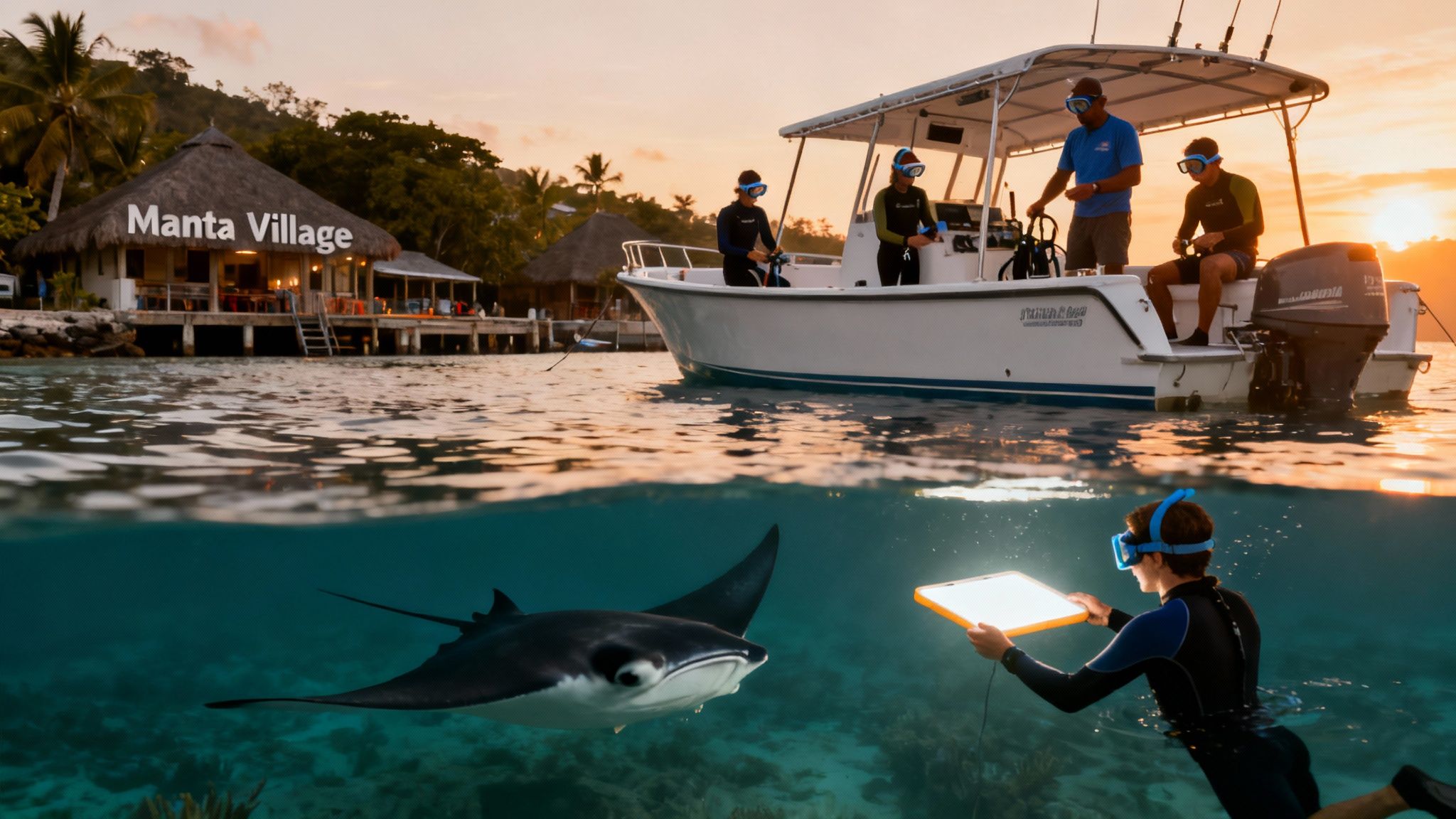
With everyone ready, you'll head out to one of the prime viewing locations, like the famous 'Manta Village.' The boat ride itself is part of the experience. It’s timed perfectly to catch a spectacular Kona sunset, so have your camera ready. You might even spot some dolphins or, in season, humpback whales!
The Main Event: Getting in the Water
As the last bit of light fades from the sky, you'll arrive at the snorkel spot. The crew gets to work setting up a large, custom-built light board that floats on the surface. This raft is your stable hand-hold in the water and the centerpiece of the entire operation.
Its powerful lights beam down into the dark water, attracting clouds of microscopic plankton—a manta ray's favorite meal.
The moment you slip into the warm, dark ocean and find your spot at the light board is pure anticipation. The sounds of the water, the gentle rocking of the raft, and the glow from the lights create this almost surreal atmosphere. You're not just watching the show; you're part of the set.
You’ll hold onto the raft's handles, floating comfortably on the surface while the wetsuit keeps you warm and buoyant. There’s no real swimming involved. You just hang out and watch the action unfold right below you, making it an easy experience for pretty much anyone.
And then it happens. A massive, dark shape glides into the light from the depths. The first manta has arrived. It's a truly breathtaking moment as these gentle giants, with wingspans up to 18 feet, perform an underwater ballet just inches away. They swoop, glide, and do barrel rolls with their huge mouths open, filtering plankton from the water.
Heading Back to Shore
After about 30 to 45 minutes of pure awe in the water, the guides will help you back onto the boat. The crew is usually waiting with snacks and hot chocolate to warm you up.
The ride back to the harbor is always buzzing with excitement as everyone shares their favorite moments. You'll be replaying those incredible underwater scenes in your head the whole way.
Once you’re back on land, you'll definitely want to share the magic. It's the kind of experience that makes you want to create a short video just to try and capture a fraction of the wonder. It really is one for the memory books.
Whether you're looking for an amazing Manta Ray night snorkel tour or a daytime Captain Cook snorkeling tour, we highly recommend checking out Kona Snorkel Trips for their exceptional service. They provide an unforgettable adventure from start to finish.
What to Bring for Your Night Snorkel Adventure
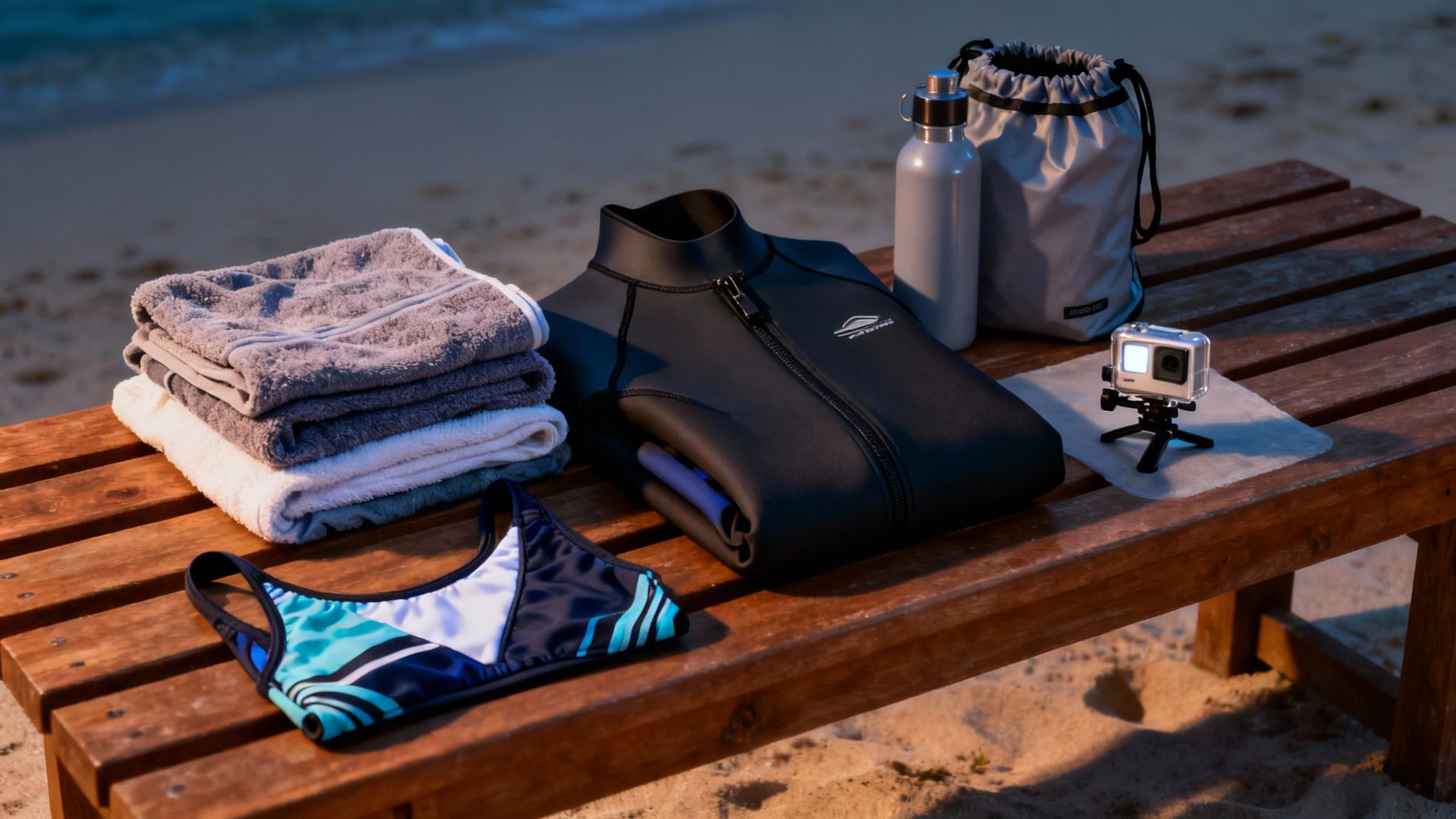
Knowing what to pack for your big island manta ray night snorkel can make the difference between a good night and a great one. Fortunately, you don't need to bring much. Tour operators like the folks at Kona Snorkel Trips provide all the critical gear—wetsuit, mask, snorkel, and flotation devices. Your only job is to pack a small bag for your personal comfort.
A little preparation goes a long way, ensuring you're warm, comfortable, and ready to focus on the incredible experience ahead.
Your Packing List for Comfort and Convenience
Think about what you'll need before and, more importantly, after you get out of the water. Arriving with a few key items lets you relax and just enjoy the magic of the evening.
Swimsuit: The easiest approach is to wear your swimsuit under your clothes when you head to the harbor. You'll be ready to gear up in no time.
A Warm Towel: This is non-negotiable. You'll be so glad you have a dry, fluffy towel waiting for you the second you climb back onto the boat.
Dry Clothes: Pack a change of clothes, and be sure to include a warm layer like a sweatshirt or a light jacket. Even in Hawaii, the boat ride back can get chilly with the night breeze.
Reusable Water Bottle: It's always a good idea to stay hydrated. Bring some water to sip on before and after you hit the ocean.
Reef-Safe Sunscreen: If your tour leaves before the sun goes down, make sure you've applied reef-safe sunscreen. It protects your skin and helps preserve Hawaii's fragile coral reefs.
To keep things simple, here's a quick checklist to make sure you've got all your bases covered.
Your Night Snorkel Packing Checklist
This table is a handy reference to ensure you pack everything you need for a comfortable and memorable manta ray encounter.
Essential Items | Optional but Recommended | What to Leave at Home |
|---|---|---|
Swimsuit (worn under clothes) | Waterproof Camera (GoPro, etc.) | Valuables (jewelry, passports) |
Large Towel | Motion Sickness Medication | Unnecessary electronics |
Dry Change of Clothes | Small Amount of Cash for Tips | Large bags or backpacks |
Warm Layer (sweatshirt/jacket) | Hair Ties | Your own snorkel gear (unless preferred) |
Reusable Water Bottle | A small, waterproof bag | Anything you can't get wet |
Reef-Safe Sunscreen (for sunset tours) | Hat or Beanie for the ride back | Drones |
Remember, space on the boat is limited. Packing light is always the best strategy, so stick to the essentials.
The golden rule is to only bring what you absolutely need for the evening. Most boats have limited dry storage, so leave valuables and non-essentials safely back at your hotel.
How to Get Amazing Manta Ray Photos
So, how do you capture those incredible, once-in-a-lifetime shots? It’s one of the most common questions we get. Taking great photos in the dark, underwater, sounds tough, but it's totally achievable with the right technique.
For most people, a GoPro or another waterproof action camera is your best bet. They are designed for these exact conditions and do a surprisingly good job. The secret is to work with the powerful lights your tour provides, not against them.
First, turn off your camera's flash. This is the most important tip. A tiny onboard flash is useless in the vast, dark ocean and will only create "backscatter"—those annoying white specks that ruin your shot by illuminating all the tiny particles in the water.
Your tour boat's underwater light board is incredibly bright and provides all the illumination you'll need. To get the best results, try to position yourself so the mantas are swimming between you and that main light source. This will light them up beautifully for clear, dramatic photos of their graceful ballet. Getting those jaw-dropping images of the big island manta ray night snorkel is all about using the environment to your advantage.
With your bag packed and your camera ready, you’re all set for an unforgettable adventure. To learn more about what makes this experience so unique, feel free to explore our home page.
Keeping You and The Mantas Safe
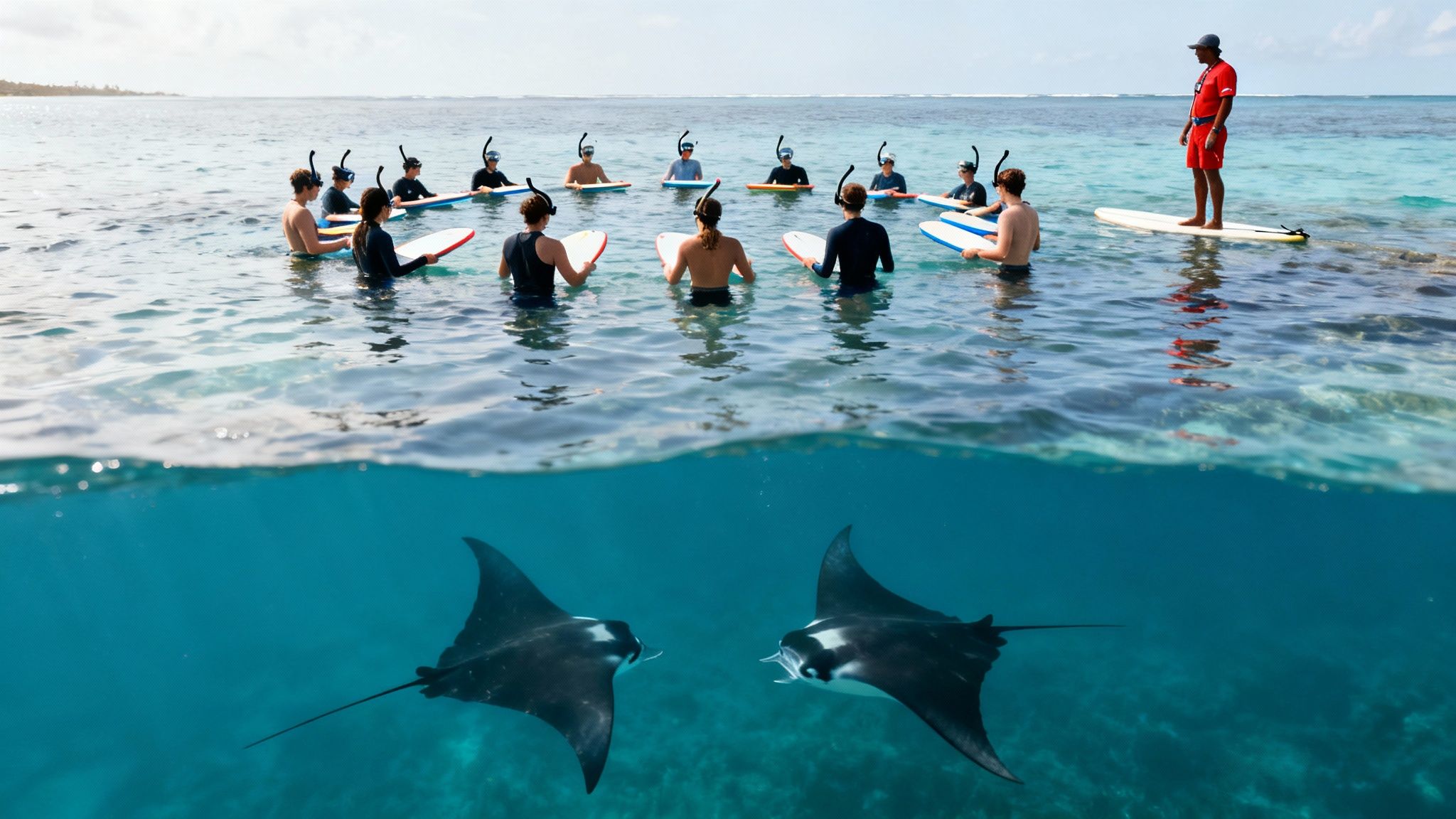
The magic of the big island manta ray night snorkel isn't just about the incredible show; it's about making sure everyone—both human and manta—is safe and respected. The best tour operators out there have this down to a science.
Their commitment starts with the people in the water with you. Every good tour will have lifeguard-certified guides right by your side. These are experienced professionals who know the ocean and are ready for anything, which means you can relax and just enjoy the moment.
Your Safety on the Water
Never snorkeled before? Not a confident swimmer? No problem at all. This experience is designed to be accessible to almost everyone.
You'll be given high-quality flotation gear, including a wetsuit which naturally helps you float. The real game-changer is the large, sturdy light board you hold onto. It acts like a floating handrail, so all you have to do is drift and watch the ballet below—no swimming or kicking required.
Great operators also keep their groups small. This avoids that "herded like cattle" feeling and ensures your guides can give you personal attention, making the whole thing feel much more special.
Respecting the Gentle Giants
Just as crucial as our safety is the well-being of the manta rays. The entire Kona operation is built on ethical ecotourism, and it all boils down to one simple, non-negotiable principle: passive observation.
Think of yourself as a quiet visitor in their underwater dining room. You'll stay on the surface, holding the light board, and let the mantas go about their business. They are in complete control of the encounter.
The most important rule you'll hear is to never touch a manta ray. Their skin is covered in a delicate mucus layer, which is like their immune system. Touching them can strip this protective coating off, leaving them exposed to dangerous infections.
By following this one simple rule, you're actively participating in a sustainable tourism model that helps Kona's resident manta ray population flourish. It’s a beautiful thing when we can witness nature this close up without causing any harm.
This responsible approach is what makes every big island manta ray night snorkel a win-win. If you want to dive deeper into the specifics, you can read our guide on why manta rays are safe to snorkel with. And when you’re ready to book with a company that truly walks the talk, we highly recommend checking out Kona Snorkel Trips, who are fantastic for both manta and daytime snorkel tours.
Your Manta Ray Snorkel Questions, Answered
Before you book, you probably have a few questions. Let's get them answered so you can feel completely at ease and excited for what's to come.
Is the Big Island Manta Ray Night Snorkel Safe?
Absolutely. Safety is the top priority for every reputable tour operator, and the entire experience is designed to be as secure as it is magical.
You’ll be in the water with lifeguard-certified guides who know these waters inside and out. They’ll fit you with high-quality gear, including a wetsuit that keeps you warm and buoyant, plus an extra flotation device. You simply hold onto a large, stable light board and float on the surface—no strenuous swimming required.
And what about the mantas? They are true gentle giants. Manta rays have no teeth, no stingers, and no barbs. They are filter feeders, interested only in the microscopic plankton drawn to the light, not you. They pose zero threat to humans, making this one of the safest and most incredible wildlife encounters on the planet.
What Is the Best Time of Year to See Manta Rays in Kona?
This is one of the best parts—there is no bad time! The manta rays along the Kona coast are a resident population, meaning they live here 365 days a year. They aren't just passing through; they stick around for the reliable, year-round buffet of plankton.
Whether you book a tour in January or July, your chances of seeing them are excellent. Sighting rates consistently stay around 90% or higher all year long. While the ocean can be a little calmer in the summer versus the winter, tour companies are pros at reading the conditions and will only go out when it's safe.
So, the best time for your Big Island manta ray night snorkel is simply whenever your vacation brings you to Hawaii.
The consistency of manta ray sightings is what makes the Kona coast world-famous for this specific tour. It's not a matter of seasonal luck but a reliable, natural phenomenon that happens almost every single night.
Do I Need to Be a Good Swimmer to Participate?
Not at all. This tour is perfectly designed for non-swimmers, first-time snorkelers, and families with kids (just check the operator's age minimums). Your comfort in the water is not a barrier to this experience.
Here’s why swimming skills aren't necessary:
You're Going to Float: The wetsuit you'll wear provides natural buoyancy. Most tours also hand you a pool noodle for even more support.
A Floating Handrail: Everyone holds onto a large, custom-built light board. It’s incredibly stable and gives you something to hold the entire time, so there’s no need to kick or tread water.
Just Watch the Show: Your only job is to relax, float on the surface, and enjoy the ballet unfolding beneath you. The guides are right there in the water with you to offer a hand and make sure you feel completely comfortable.
The entire setup is designed for you to just relax and soak it all in.
What Happens if We Don't See Any Manta Rays?
While sightings are incredibly reliable, we are dealing with wild animals, and their behavior can never be 100% guaranteed. On very rare nights, they might just decide not to show up for dinner.
The best tour operators know this and stand by their experience with a "manta guarantee."
If you happen to be on one of those rare tours with no manta sightings, this policy means you can come back and try again on another night for free. It’s usually on a standby basis, fitting you into any future tour with open spots. This shows a company’s confidence and ensures you won't leave disappointed. Before you book, always confirm the specific guarantee policy with your chosen operator, like Kona Snorkel Trips. You can see all of their adventures, from the Manta Ray night snorkel tour to a Captain Cook snorkeling tour, by checking out their full tour offerings.
Comments