Your Guide to the Kona Manta Ray Snorkel Experience
- Byron
- Feb 9
- 14 min read
Imagine floating in the warm, dark Pacific waters off the Kona coast. Suddenly, a giant, graceful shadow emerges from the deep, gliding through the beams of light just inches below you. This isn't a dream—it's the world-famous Kona manta ray night snorkel, a true bucket-list experience.
For a trip you'll never forget, check out a top-rated operator like Kona Snorkel Trips. They’ve earned a reputation as the most reviewed and highest-rated snorkel tour company in Hawaii for a reason.
Your Ultimate Guide to Kona Manta Ray Snorkeling
The Kona Manta Ray Snorkel is easily one of Hawaii's most iconic wildlife adventures. It’s an incredible chance to get up close and personal with these magnificent creatures in their natural habitat. In fact, it’s such a must-do that many people plan their whole vacation around it.
Before you map out your entire itinerary, it's worth seeing what other incredible things to do on the Big Island of Hawaii are out there.
This experience is pure magic, blending the thrill of a nighttime ocean adventure with the wonder of nature. The concept is brilliantly simple: powerful lights are placed in the water, attracting swarms of plankton. The plankton, in turn, acts like a dinner bell, drawing in the majestic manta rays for a spectacular feeding frenzy right before your eyes.
Why Kona is the Global Capital for Manta Encounters
The Kona Coast has rightfully earned its title as the world's premier destination for manta ray encounters. A staggering 80,000 people come here every year to snorkel and dive with these gentle giants.
Why so popular? The success rate is unbelievably high, sitting at around 85-90% on any given night. This incredible consistency kicked into high gear around 2012 when modern light arrays were introduced, concentrating the plankton and making the feeding sites a reliable spectacle.
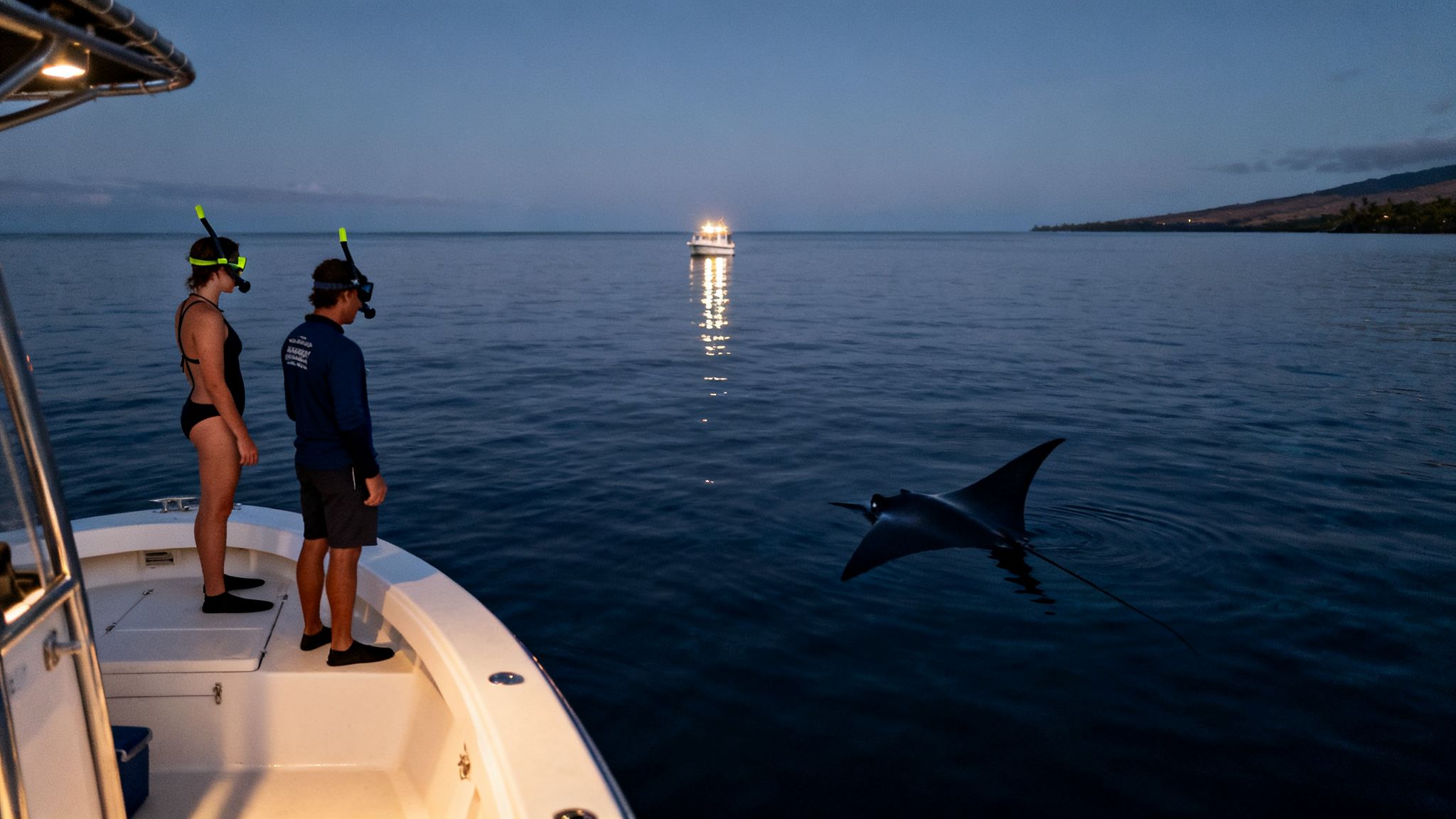
This photo perfectly captures that magical moment as the sun goes down, with snorkelers watching a huge manta ray glide just beneath the surface. It’s a breathtaking sight.
To help you get a quick sense of the adventure, here's a look at the key details.
Kona Manta Ray Snorkel at a Glance
Feature | What You Need to Know |
|---|---|
Location | Off the Kona Coast, Big Island, Hawaii |
Best Time to Go | Year-round, with tours offered nightly |
Sighting Success | Approximately 85-90% chance to see manta rays |
Experience Type | Night snorkel holding onto a floating light board |
Manta Size | Can have wingspans of up to 16 feet |
Swimming Skills | Basic swimming ability is required |
Gear Provided | Wetsuit, snorkel, mask, fins |
What You See | Manta rays performing barrel rolls to feed on plankton attracted by underwater lights |
This table sums it up, but the feeling of being there is something you just have to experience for yourself.
What Makes This Experience Unique
This isn't your average wildlife tour where you watch from a distance. For a little while, you become part of this incredible underwater ballet.
Here’s what really sets it apart:
Proximity: These gentle giants aren't shy. They often glide within inches of you, performing graceful barrel rolls as they scoop up plankton.
Accessibility: You don't need to be a certified scuba diver. Snorkelers simply hold onto a custom floating light board, making it easy for anyone comfortable in the water.
Consistency: The established feeding sites and knowledgeable local guides mean your chances of a truly epic encounter are incredibly high.
Ready to take the plunge? Learn more about what to expect when booking your manta ray adventure today. Trust me, this is one ocean adventure you will be talking about for years to come.
What to Expect During Your Manta Ray Encounter
The moment you check in for your Kona manta ray snorkel tour, the energy is electric. You can feel the anticipation in the air as you and your fellow adventurers get ready for what is truly one of nature’s most spectacular underwater ballets. Let’s walk through the entire journey, from the boat ride out to those final, magical moments in the water, so you know exactly what’s in store.
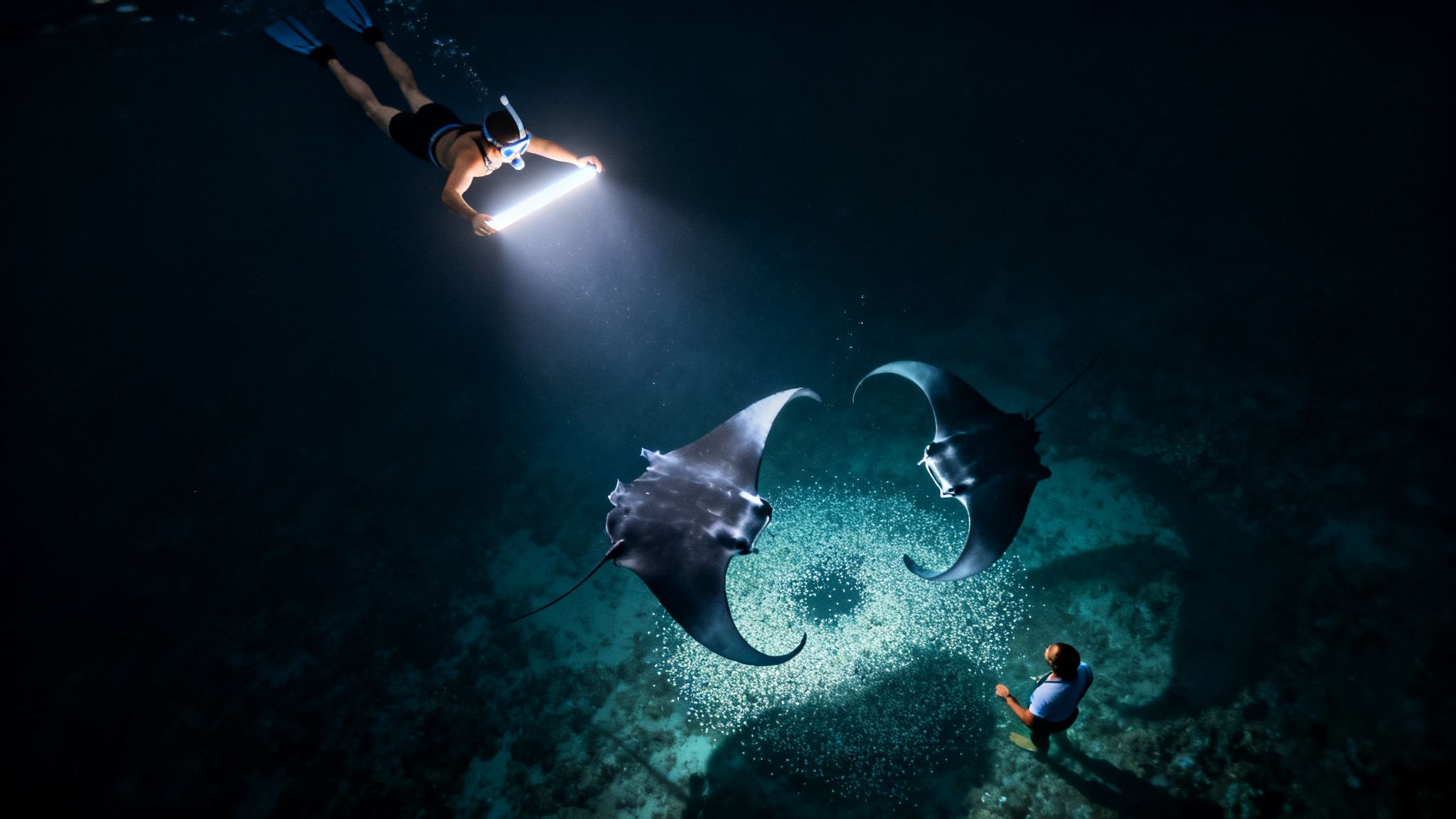
Your adventure really kicks off as the boat pulls away from the harbor. You'll cruise along the stunning Kona coastline while the sun dips toward the horizon, painting the sky in fiery colors. This isn’t just a quick trip to the snorkel spot; it's a huge part of the experience, offering incredible views and setting a perfectly serene mood for the night ahead.
The Briefing and Journey to the Site
Before you even get your fins wet, your expert guides will give you a crucial briefing. This isn’t just a formality—it’s designed to make sure everyone is safe and comfortable while protecting the magnificent creatures we're all here to see.
During this briefing, you'll learn:
Safety Procedures: The basics on how to get in and out of the water safely and what to do if you need any help.
Manta Etiquette: This is the big one. The golden rule is to never touch the manta rays. Their skin has a protective slime coat, and our touch can harm them.
Using Your Gear: A quick rundown on how to use your mask, snorkel, and anything else they provide.
Fascinating Manta Facts: The guides will share some incredible info about manta ray biology and behavior, which makes the whole encounter even more meaningful.
This is your time to ask any last-minute questions. The crew wants you to feel completely confident and ready for the amazing experience waiting for you.
Entering the Water and the Light Board
Once you arrive at the viewing site—often called "Manta Village" or "Manta Heaven"—the main event begins. You'll slip into the dark, calm water and make your way to a custom-built floating light board. This board is the secret sauce to the entire operation.
The concept is simple but brilliant: powerful lights shine down from the board, attracting massive clouds of microscopic plankton. This plankton buffet acts like a giant dinner bell, drawing hungry manta rays in from all around.
You'll hold onto handles on the board, which keeps you stable and the group together. With your face in the water, you get a front-row seat to the show below. No real swimming is needed; you just float and watch it all unfold. For a truly unforgettable tour, you might want to look at a company like Kona Snorkel Trips, which is known as the most reviewed and highest-rated snorkel tour company in all of Hawaii.
The Underwater Ballet and Return Trip
The first time you see a manta ray appear out of the darkness is a moment you will absolutely never forget. These gentle giants, with wingspans that can stretch over 16 feet, glide effortlessly through the beams of light.
They perform graceful somersaults and barrel rolls, scooping up plankton with their huge mouths, often coming within inches of your face. It's breathtaking.
Your in-water guides are right there with you the whole time, making sure everyone is safe and following the "look, don't touch" rule. They’ll often point out specific mantas they know by name and share more cool facts as the show goes on. After about 30 to 45 minutes in the water, you’ll head back to the boat, buzzing from the experience. The ride home is always filled with excited chatter, usually with hot drinks and snacks to warm you up—the perfect ending to a magical night.
Choosing Your Ideal Manta Adventure Time
One of the first big decisions you’ll make when booking your Kona manta ray snorkel is when to go. Tour companies generally offer two main options: a sunset tour or a later, after-dark trip. Both get you in the water with these amazing animals, but they offer completely different vibes.
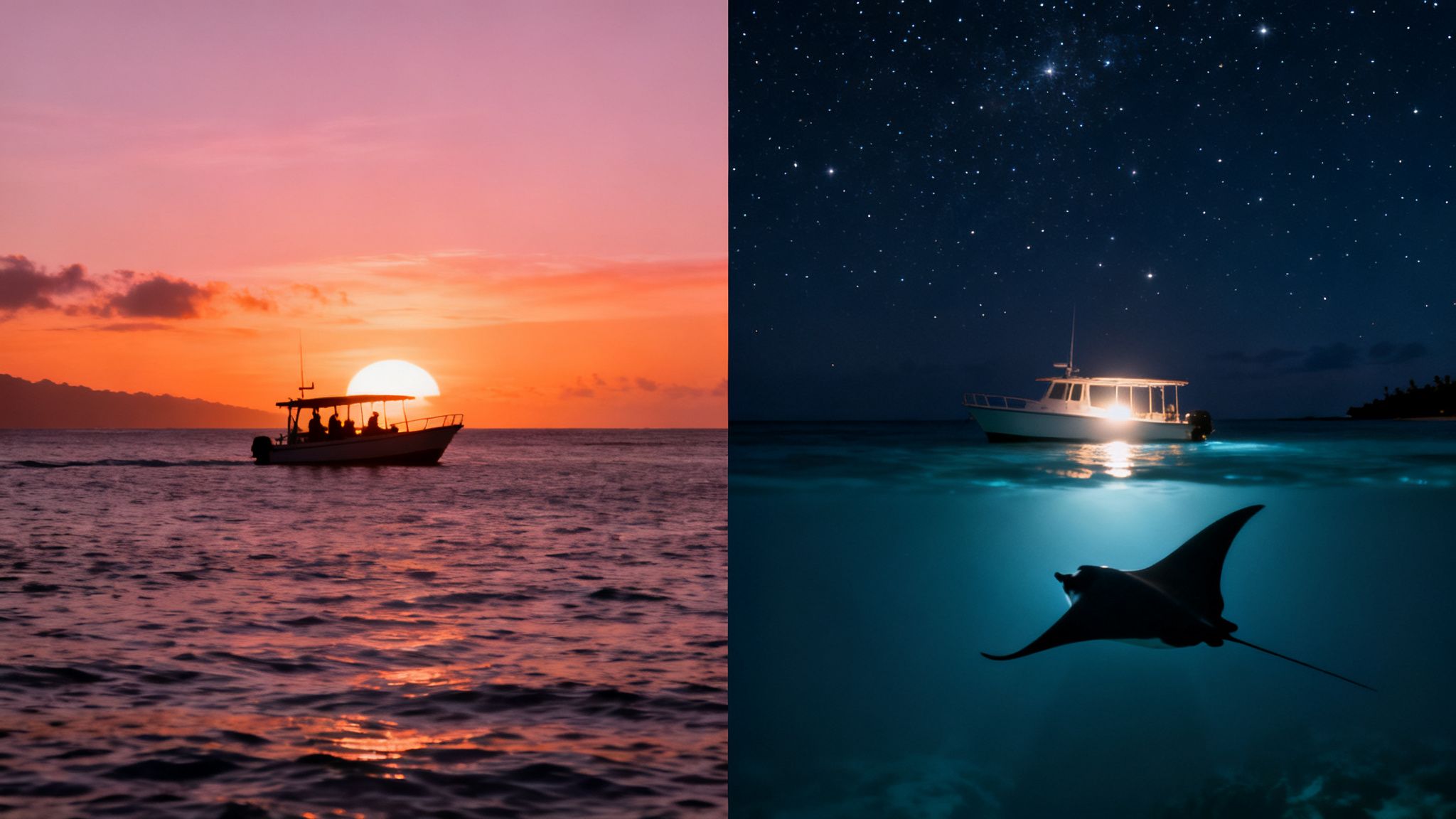
Your choice really shapes the whole mood of the adventure. Let's break down what each one feels like so you can pick the perfect one for your crew.
The Magical Sunset Tour
This one is the classic Hawaiian experience and a wildlife adventure rolled into one. You'll head out in the late afternoon, cruising along the beautiful Kona coast as the sun starts to dip toward the horizon. The sky just explodes with color—brilliant oranges, pinks, and purples—giving you a breathtaking backdrop for the boat ride out.
The sunset timing is about more than just a pretty view, though. That lingering daylight gives you a great chance to spot other marine life. It’s pretty common to see pods of playful spinner dolphins or, if you’re here in the winter months (December through March), maybe even catch a glimpse of migrating humpback whales.
Because it gets you back to the dock a bit earlier, this tour is often a big hit with families, especially those with younger kids. It’s a slightly less intimidating way to get into the dark ocean for the first time.
The Dramatic After-Dark Tour
If you’re looking for a more intense, almost otherworldly vibe, the after-dark tour is where it's at. This trip leaves when the sky is totally black, which instantly cranks up the sense of adventure as you motor out into the open ocean. Under a blanket of stars, far from shore lights, the whole experience feels incredibly focused.
Once you’re in the pitch-black water, the only light comes from the powerful beams on your floating board. This creates a dramatic spotlight effect, making the manta rays' appearance even more spectacular as they glide in from the darkness.
The contrast between the dark sea and the brightly lit "stage" is surreal. It’s an unforgettable, almost theatrical encounter that’s perfect for night owls, adventurers, and anyone who wants the most focused manta viewing possible.
No matter which time you choose, the core experience—watching these graceful giants feed just inches below you—is the same. The real difference is the atmosphere surrounding that magical moment.
Curious how the time of year might play a role? You can learn more by checking out the best time to see manta rays in Kona with our ultimate guide.
Sunset Tour vs After Dark Tour Comparison
To make the choice even clearer, here’s a simple side-by-side look at the two timings. Think about what matters most to you and your group.
Feature | Sunset Tour | After-Dark Tour |
|---|---|---|
Ambiance | Serene and scenic, with a spectacular Hawaiian sunset as your backdrop. | Dramatic and focused, with a surreal "stage" effect in the dark ocean. |
Timing | Departs late afternoon, returns in the early evening. | Departs after dark, returns later at night. |
Best For | Families, photographers, and anyone who loves a classic sunset cruise vibe. | Adventurous spirits, night owls, and those seeking the most intense encounter. |
Other Wildlife | Higher chance of spotting dolphins or seasonal humpback whales on the way out. | The focus is almost entirely on the manta rays. |
Honestly, there’s no wrong answer here. Whether you prefer the golden glow of a Kona sunset or the deep mystery of the night sea, your manta ray snorkel will be something you talk about for years to come.
How to Prepare for Your Snorkel Trip
A little preparation is all it takes to turn a great manta ray snorkel into the memory of a lifetime. Knowing what to bring and what to expect means you can soak in the magic of the moment instead of sweating the small stuff. A smooth, comfortable trip really begins before you even step on the boat.
Most top-tier tour operators have you covered with all the essential in-water gear. Companies like Kona Snorkel Trips—the most reviewed and highest-rated snorkel company in Hawaii—will provide a quality wetsuit, snorkel mask, and fins.
That wetsuit is more important than you might think. Even in Hawaii, the ocean can get pretty chilly after the sun goes down. It provides the warmth you need to stay comfortable for the full 30-45 minutes you'll be in the water with the mantas.
What You Should Bring on Your Tour
While the tour company handles the main snorkel equipment, packing a few personal items will make your trip that much more enjoyable. Think of it as your personal comfort kit.
Here’s our go-to list of what to bring along:
A Towel: It sounds obvious, but it’s the number one thing people forget! You'll be glad you have it the second you climb back onto the boat.
A Dry Change of Clothes: Swapping out of a wet swimsuit makes the boat ride back to the harbor a whole lot warmer and more pleasant.
Personal Medications: If you're prone to seasickness, be sure to take your preferred remedy before the boat leaves the harbor. For sunset tours, sun protection is also key; this ultimate guide to sun protection has some great advice.
Waterproof Camera: A GoPro or similar camera is perfect for capturing the action below. Just make sure it has a wrist strap! And remember, bright flashes are a strict no-go, as they can disorient and scare the mantas.
Tossing these few things in your bag can make a world of difference. For even more great ideas, check out these super helpful 10 manta ray snorkel tips.
Physical Requirements and Safety Protocols
One of the first questions we always get is about how physically demanding the tour is. While you absolutely must know how to swim, you don't need to be an athlete. The experience involves very little strenuous activity.
You’ll spend most of your time floating on the surface while holding onto a specially designed light board. The board provides all the buoyancy and stability you need, so there's hardly any active swimming required. Your job is to simply relax, keep your face in the water, and watch the incredible ballet unfold beneath you.
The single most important rule of any manta ray encounter is simple: Do Not Touch the Manta Rays. These gentle giants are covered in a protective mucous layer, which is their primary defense against infection. Touching them can strip this coating away, leaving them vulnerable to disease.
Your guides will go over this rule during the safety briefing, and it’s crucial to listen. Following their instructions ensures a respectful and safe encounter for both you and these magnificent animals, helping to preserve this incredible natural wonder for generations to come.
Understanding Kona's Gentle Giants
The Kona manta ray snorkel goes from a cool activity to a truly profound experience once you get to know the incredible animals you're meeting. These aren't just fish; they are highly intelligent, gentle giants with complex lives happening right beneath the waves. Knowing a little about their biology and behavior makes the whole adventure that much more special.
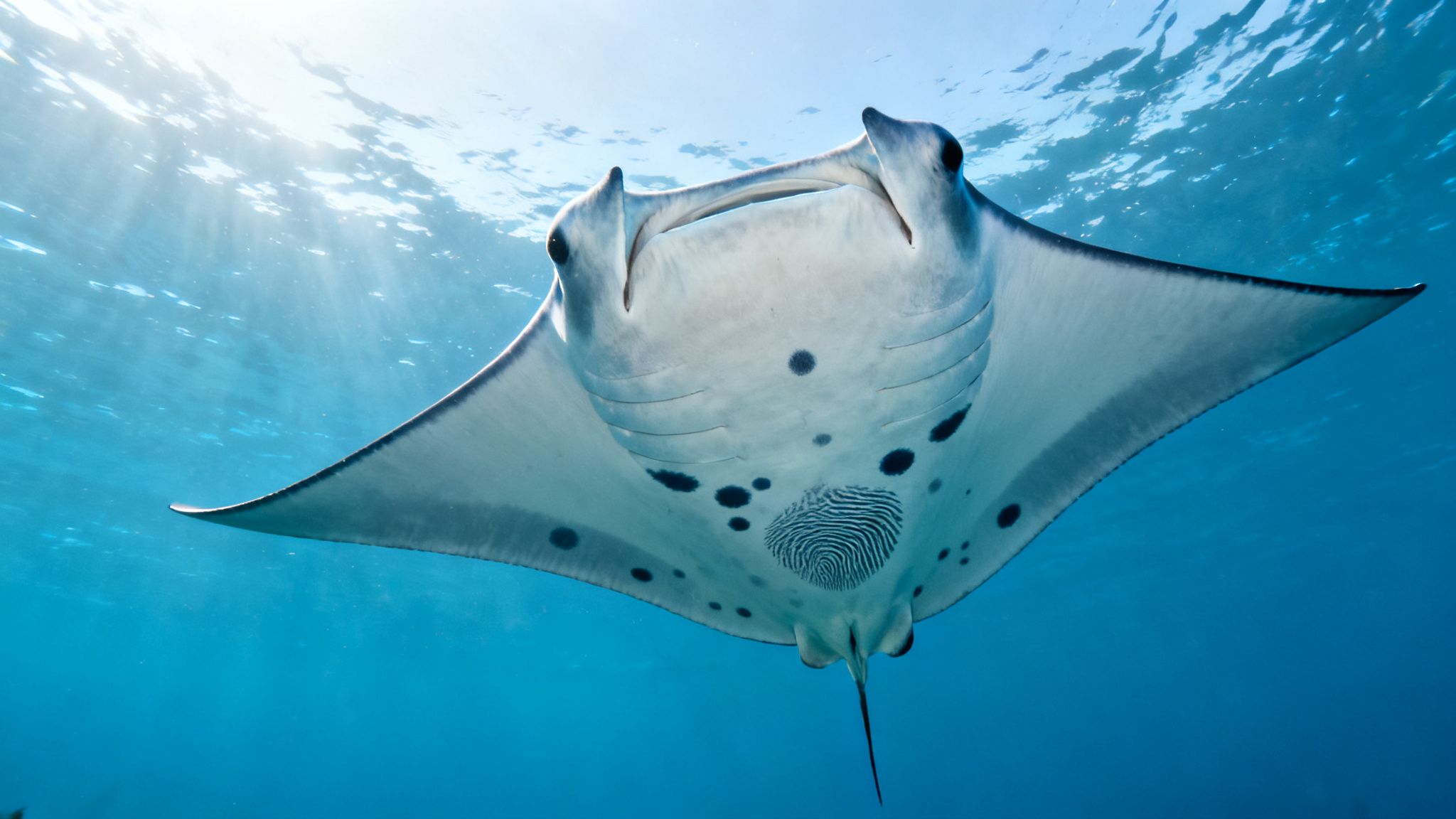
One of the coolest things about Kona’s mantas is how researchers tell them apart. Each manta ray has a completely unique pattern of black spots on its belly, which works just like a human fingerprint. Marine biologists use these spot patterns to identify, name, and track individual mantas, which helps them monitor the health and movements of the local population for decades.
Harmless Filter-Feeders
We get this question all the time: is it actually safe to be in the water with such massive animals? The answer is a huge, resounding yes. Manta rays are completely harmless to people.
They are filter-feeders, which means their entire diet is made up of tiny plankton they scoop from the water with their huge, gaping mouths. Unlike their stingray cousins, manta rays have no stingers, no barbs, and no teeth. Their gentle nature is what makes this encounter so safe and awe-inspiring.
It all boils down to a simple, brilliant relationship. The tour boats' powerful lights attract a massive buffet of plankton, basically ringing a dinner bell for the mantas. In return, we get a front-row seat to one of the most incredible feeding ballets in the natural world.
This is exactly why the Kona coast is one of the most reliable places on Earth to see manta rays. The consistent food source keeps the local mantas coming back night after night, giving you an exceptionally high chance of having your mind blown. Want to learn even more? Check out these fun facts about the manta rays you should know.
Choosing a Top-Rated Tour
To guarantee the best and most respectful encounter, picking the right tour operator is everything. For an unforgettable kona manta ray snorkel, a fantastic choice is Kona Snorkel Trips. They stand out as the most reviewed and highest-rated snorkel tour company in all of Hawaii for a reason.
Their expert guides don't just focus on safety; they share their deep knowledge and passion for these gentle giants, which makes the whole experience richer. Their commitment is clear from the thousands of glowing reviews from people who were genuinely moved by the adventure. When you choose a reputable company, you're not just booking a tour—you're supporting sustainable tourism that helps protect these magnificent creatures for years to come.
Your Manta Ray Snorkel Questions Answered
Even after getting excited about the magic of a Kona manta ray snorkel, it's totally normal to have a few questions pop up. This isn't your average boat trip, so it’s smart to get all the details sorted out before you book. We've put together the most common questions we hear from first-timers to help you feel confident and ready for an incredible night.
Our goal is to clear up any final uncertainties so you can just focus on the amazing adventure ahead.
Is the Kona Manta Ray Snorkel Safe?
Absolutely. For any reputable tour operator, your safety is the number one priority, period. The whole experience is carefully controlled and supervised from the moment you step on the boat. You’ll be looked after by highly skilled, lifeguard-certified guides who give everyone a thorough safety briefing before you even get close to the water.
And what about the mantas? They are true gentle giants and are no threat to people. They are filter-feeders, which means they don’t have teeth, stingers, or barbs. The activity itself is super low-exertion; you’ll just float on the surface holding onto a big, stable light board. This board keeps you buoyant and in a safe, designated spot. Wetsuits are also provided to keep you warm and comfortable the whole time.
What if I Am a Beginner Snorkeler?
No problem at all. You don't need any prior snorkeling experience to join in on the fun. The only real must-have is knowing how to swim and being comfortable in the ocean. Your guides will provide all the gear—mask, snorkel, and fins—and show you exactly how to use everything correctly with easy-to-follow instructions.
This tour isn't about actively swimming around; it’s about floating in one place. You’ll hold onto a large, stable light board that acts as your personal float, and simply put your face in the water to watch the show. This setup makes it really accessible for most beginners. If you're feeling a bit nervous, just let your guides know! They are experts at helping guests feel safe and are there to support you every step of the way.
For beginners, the main thing to remember is that this is a passive activity. Think of it like being a spectator at an underwater theater, and the light board is your front-row seat. Your only job is to relax, breathe, and enjoy the unbelievable view.
Is a Manta Ray Sighting Guaranteed?
Because manta rays are wild animals in their natural home, no tour company can ever guarantee a sighting with 100% certainty. That said, the Kona Coast is famous worldwide as one of the most reliable places on the planet to see manta rays, with success rates consistently topping 90%.
The reason it’s so reliable is because the feeding sites are well-established. For decades, the lights from tour boats have created a dependable nightly buffet of plankton, and the local manta population has learned to show up for dinner. Top-rated companies like Kona Snorkel Trips—the most reviewed and highest-rated snorkel company in Hawaii—use their expert local knowledge to give you the best possible chance. On the rare night the mantas are a no-show, most reputable operators offer a "second chance" guarantee, letting you join their tour again on another night for free.
Can I Bring a Camera on the Tour?
Yes, you can definitely bring a waterproof camera like a GoPro to capture your own incredible photos and videos! But there are a couple of important things to remember to keep the experience safe and respectful for everyone—including the mantas.
First, you’ll need to keep at least one hand on the light board at all times for stability, so a camera with a wrist strap or a mount is a really good idea. You don't want to be that person who drops their camera into the dark Pacific. Second, and this is critical, using a bright camera flash is strictly forbidden. Sudden flashes of light can startle and disorient the manta rays, disrupting their natural feeding patterns.
Many tour operators also have a professional photographer on board and offer photo and video packages for you to buy. This is a great choice if you want amazing, high-quality shots without the distraction, letting you stay completely in the moment and soak in the wonder. For more answers, you might find our dedicated manta ray FAQ page helpful.
Are you ready for one of the most memorable nights of your life? At Manta Ray Night Snorkel Kona Hawaii Tours, we provide a safe, respectful, and absolutely breathtaking encounter with Kona's gentle giants. Book your tour on our homepage and prepare for an underwater ballet you will never forget.
Comments