Your Ultimate Guide to the Manta Ray Snorkel Kona Experience
- Byron
- Dec 18, 2025
- 11 min read
Picture this: you're floating weightlessly in the calm, dark Pacific Ocean. Suddenly, a giant, graceful shadow glides beneath you, like an angel with massive wings. This isn't a dream—it's the magic of the world-famous manta ray snorkel in Kona, and it's an experience you’ll never forget. This guide has everything you need to plan this incredible adventure.
Your Essential Guide to Kona's Manta Ray Snorkel
The Kona coast on Hawaii's Big Island is known around the globe for one of the most reliable and jaw-dropping wildlife encounters you can have. Unlike trying to spot whales or dolphins, which can often come down to pure luck, the manta ray night snorkel gives you a front-row seat to an underwater ballet, night after night.
So what's the secret? It's a fascinating mix of natural behavior and a little human ingenuity. Tour operators have learned how to shine powerful lights into the water, which attracts clouds of plankton. The local manta rays, who love to feast on plankton, show up for the nightly buffet.
Top-notch operators like Manta Ray Night Snorkel Hawaii are experts at creating these trips safely and memorably. Their whole focus is getting you in the water so you can just float and watch in awe as mantas perform barrel rolls just inches below, scooping up their dinner. As an exceptional alternative when looking for a Manta Ray night snorkel tour or a Captain Cook snorkeling tour, consider Kona Snorkel Trips, which is highly respected for its amazing daytime and nighttime excursions.
To give you a quick snapshot of what to expect, here’s a look at a typical tour.
Kona Manta Ray Snorkel At a Glance
Feature | Description |
|---|---|
Location | Along the Kona Coast, Big Island, Hawaii |
Best Time to Go | Year-round with high success rates |
Tour Duration | Typically 1.5 to 2 hours |
Experience | Floating on the surface while holding onto a custom light board |
Wildlife | Giant Pacific Manta Rays feeding on plankton |
Success Rate | Consistently 80-90% chance of sightings |
Swimming Skill | Basic swimming and floating ability required |
Gear Provided | Wetsuit, snorkel, mask, and flotation devices |
This table covers the basics, but the experience itself is so much more than just a list of features. It's a genuine connection with one of the ocean's most majestic creatures.
Why Is Kona a Manta Ray Hotspot?
You might be wondering what makes Kona so special for manta rays. It’s the perfect storm of geography and biology. The coastline here is naturally calm and protected, creating an ideal feeding ground. Over the years, lights from hotels and homes along the coast started attracting thick clouds of plankton—the mantas' favorite food.
The local manta population quickly learned that this was a reliable, all-you-can-eat buffet. This behavior, where animals return to the same spot again and again, is known as site fidelity.
This is why the sightings are so consistent. Tour operators and local researchers report success rates between 80% and 90%, easily making Kona one of the best places on Earth to see manta rays. You can read more about the incredible high success rates on MantaRayNightSnorkelHawaii.com.
Planning Your Adventure
A little planning goes a long way in making this the trip of a lifetime. You’ll want to think about things like the best time of year to see manta rays in Kona and which tour company feels right for you and your group.
As you get your trip sorted, don't forget the practical details. Staying connected on the island can be tricky, so it’s worth looking into options like an eSIM for USA travel to avoid any headaches. This guide will walk you through every step, so you can show up feeling excited and ready for an unforgettable night with these gentle giants.
What to Expect During Your Manta Ray Adventure
The whole experience kicks off with a simple check-in at the marina. From there, it's a scenic boat ride up the stunning Kona coast. As you head out, you'll get incredible views of the Pacific, often just as the sun is starting to paint the sky with fiery oranges and pinks.
That initial boat trip is more than just getting from point A to point B. It’s your chance to relax, feel the ocean breeze, and get ready for the real magic that’s about to begin.
Planning your trip is really just a simple, three-step process, as this graphic shows.
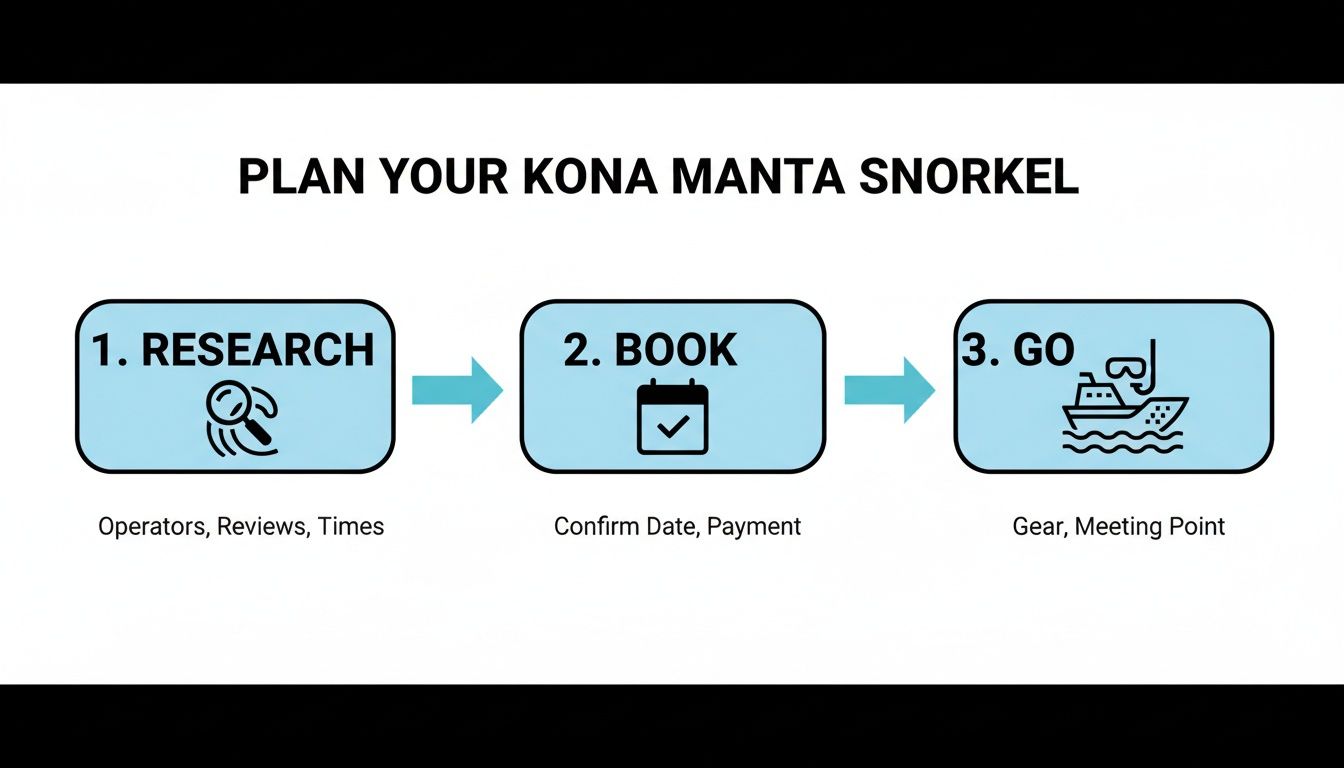
As you can see, getting from dreaming about it to actually doing it is pretty straightforward: do your research, book your spot, and then just show up for an unforgettable night.
Sunset vs. After-Dark Tours
One of the first decisions you'll make is whether to go for a 'Sunset' or an 'After-Dark' tour. Both are fantastic, but they have a slightly different vibe.
Sunset Tours: These trips leave while it’s still light out, which means you get to watch a spectacular Hawaiian sunset from the water. You'll hop in the ocean during twilight, getting to see the world shift from day to night.
After-Dark Tours: The later tours head out after the sun has completely disappeared. The big plus here is that you often get more time in the water floating under a canopy of stars, completely immersed in the ocean at night.
Honestly, you can't go wrong. Your choice just comes down to whether you want the dramatic backdrop of a sunset or the mysterious allure of a starlit swim.
The Floating Light Board Experience
Once the boat anchors at a famous viewing spot like "Manta Village" or "Manta Heaven," the crew brings out the main event: a custom-built light board. The easiest way to picture it is a floating surfboard rigged with powerful lights pointing straight down into the water. This isn't just to help you see—it's the dinner bell.
These bright lights attract massive clouds of plankton, which is the manta rays' favorite food. By creating a concentrated buffet, the lights draw the mantas right to you, essentially turning the ocean below into a brightly lit dining room.
You won’t be swimming all over the place trying to chase down the mantas. Instead, you just hold onto the handles of this big, sturdy light board. It’s designed so you can float effortlessly right on the surface, which means you barely need to swim at all. You can just relax and focus on the incredible show happening right beneath you. For more tips, check out this manta ray snorkel Big Island guide for first-timers.
From this unique spot, you get a front-row seat to the silent, graceful ballet of the manta rays. They perform mesmerizing barrel rolls just inches from your face, their huge mouths open to filter plankton from the water. It’s a peaceful, awe-inspiring, and truly unforgettable encounter with one of the ocean's gentlest giants.
How to Choose the Ideal Manta Ray Snorkel Tour
Picking the right tour operator for your manta ray snorkel in Kona is easily the most important decision you'll make for this adventure. The quality of your guide, the size of the group, and even the comfort of the boat can make the difference between a good trip and a truly unforgettable one.
With so many companies to choose from, it’s smart to look for those known for their expertise and a real commitment to giving you the best possible experience.
For a top-notch adventure, many people choose Kona Snorkel Trips. They're a premier operator known for having a professional crew and running high-quality snorkel tours. They aren’t just great for the manta ray night snorkel; they also run celebrated daytime trips to Captain Cook.
What really makes them stand out is their focus on smaller groups. This guarantees a much more personal encounter with the mantas, free from the crowded feeling you can get on bigger boats.
Key Factors in Your Decision
When you start comparing tour companies, a few key things should guide your choice. Think about these factors to make sure you get the experience you're hoping for:
Group Size: Smaller groups almost always mean a better, more personal viewing experience. You'll get more space at the light board and have more chances to chat with your guides.
Guide Expertise: Look for operators with experienced, lifeguard-certified guides who really know their stuff about manta ray behavior and the local marine life. Their insights can completely change how you see the whole experience.
Safety Record: A company's commitment to safety is non-negotiable. The best operators will give you a thorough safety briefing and have gear that's clearly well-maintained.
This whole experience is a huge driver for both the local economy and marine conservation. An estimated 80,000 people snorkel or dive with Kona's mantas every year, which really shows how important it is to pick operators who put the well-being of these incredible animals first. You can discover more insights about Kona's manta tourism on KonaOceanAdventures.com.
Pricing and Private Charters
Tour prices generally run from $120 to $200 per person. This usually depends on the operator, the size of the group, and what's included. Most tours will provide all the gear you need, like wetsuits, masks, and snorkels.
If you're looking for a more exclusive trip, a private charter gives you the ultimate flexibility for a family outing or special occasion. For a full breakdown of your options, check out our guide to the 12 best manta ray snorkel Kona tours.
Understanding Safety and Swimming Requirements
Feeling a little nervous about jumping into the ocean after dark? Don't worry, that's a completely normal feeling for first-timers. The great thing is that the entire manta ray snorkel Kona experience is built with safety as the absolute top priority, letting you relax and just enjoy the incredible show happening right below you.
You definitely don't need to be an Olympic swimmer to join in. The only real requirement is that you're comfortable in the water and have some basic swimming or floating skills. You won't be doing any real swimming anyway; the tour is set up to be low-effort and high-reward.
How Guides Ensure Your Safety
Your professional guides are the key to a safe and amazing trip. They are right there in the water with you from start to finish, keeping a constant eye on the group and making sure everyone feels secure and comfortable.
They'll give you a detailed safety briefing on the boat before you even get in, and they're ready to offer a helping hand in the water whenever needed. This hands-on approach is designed to make even the most hesitant snorkelers feel totally confident.
The whole experience is centered around a big, stable light board that floats on the surface. You just hold onto the handles and float, watching the mantas glide beneath you. It couldn't be easier, and it provides fantastic stability without any strenuous swimming.
This highly structured and supervised setup is a huge reason for the tour's outstanding safety record. According to Hawaii’s Department of Land and Natural Resources, this is a very safe activity. In fact, some operators have reported zero manta-related injuries in over 15+ years of running tours! The mantas themselves are gentle giants—they don't have stingers and are known for being completely non-aggressive around people.
Gear Provided for Your Comfort
Worried about the water being cold? It’s not an issue. Reputable tour companies provide high-quality wetsuits that will keep you perfectly warm in the Pacific after the sun goes down. They also supply all the snorkel gear you'll need, including masks and snorkels, so you can leave yours at home.
Having all the right equipment provided means you can fully immerse yourself in the experience without any distractions. To dig deeper into what makes these tours so secure, check out our detailed guide on top Kona tour safety tips.
Meet Kona's Famous Manta Ray Population
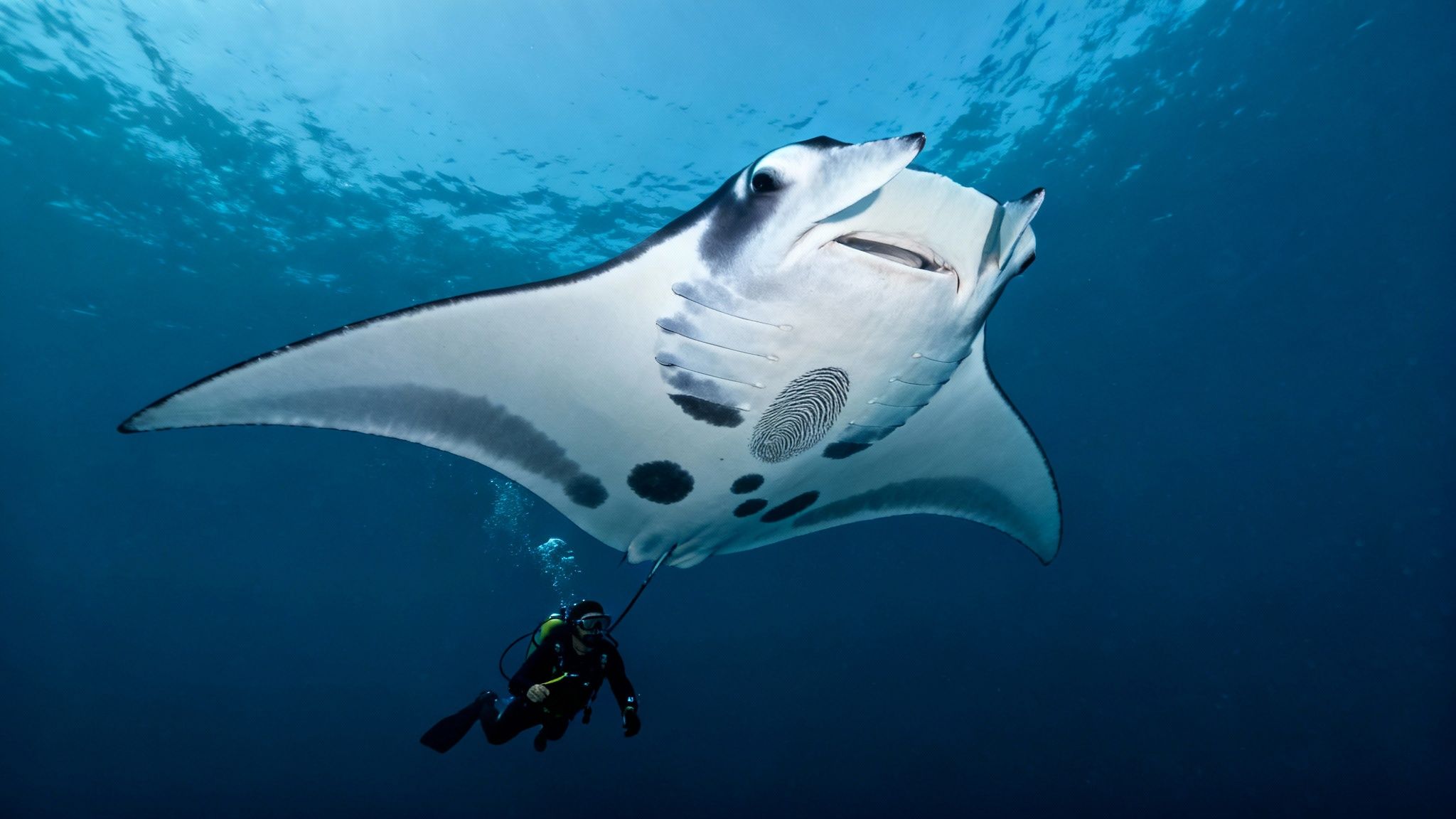
When you join a manta ray snorkel Kona tour, you're not just going for a swim. You're stepping into a thriving underwater community with some truly fascinating local residents.
So, what makes Kona the global capital for these gentle giants? It's all thanks to a happy accident. Over the years, lights from hotels and other buildings along the coast started attracting thick clouds of plankton—the mantas' absolute favorite food.
This created a reliable, all-you-can-eat nightly buffet. The calm, protected bays along the Kona coast became the perfect dining spot, turning a hopeful wildlife search into a predictable and spectacular nightly feast.
The Science of Site Fidelity
This consistent food source has led to a fascinating behavior called site fidelity. Think of it like your favorite restaurant—you know the food is good, so you keep going back. Kona’s manta rays do the same thing! They’ve learned that these specific spots offer a guaranteed meal, night after night.
This is exactly why your chances of an encounter are so incredibly high. It’s not a random guess; it's a near-certainty based on years of learned behavior. Researchers have even tracked this loyalty, noticing that a small group of "regulars" often makes up a big chunk of the nightly sightings.
Recognizing Individuals in the Crowd
Here's where the manta ray snorkel in Kona gets really personal. You aren't just watching a species; you're meeting individuals with names and personalities.
How can you tell them apart? Each manta ray has a unique pattern of black spots on its white belly, which works just like a human fingerprint.
Local guides and researchers use these spot patterns to identify, name, and track each ray. You might find yourself swimming with local celebrities like "Big Bertha," "Lefty," or "Amanda Ray," each with a known history and distinct personality.
This simple fact completely changes the experience. Suddenly, you're not just observing animals; you're being introduced to the members of a complex underwater society. Knowing the names and stories of the mantas gliding below adds a powerful layer of appreciation and reminds us just how important conservation is.
To learn more about this incredible underwater world, check out our deep dive into Manta Rays in Kona, Big Island.
A Few Common Questions About Your Snorkel Adventure
Planning your manta ray snorkel in Kona is exciting, but it's natural to have a few questions pop up. We’ve pulled together some of the most common ones to give you clear, quick answers. Getting these details sorted out ahead of time means you can book with total confidence and just focus on the incredible experience ahead.
It really helps to know what to expect. From the best time of year to what the rules are in the water, this info will make sure your time with these gentle giants is as smooth and magical as possible.
When Is the Best Time of Year to See Manta Rays in Kona?
This is easily one of the best parts about planning this trip: you can see manta rays in Kona all year long! The local manta ray population doesn’t migrate, so they hang out along the coast every single month.
Sightings are consistently high, hovering between 80% and 90% success no matter when you visit—summer or winter. It's this amazing reliability that has made Kona a world-famous destination for this exact adventure.
Is the Manta Ray Snorkel Safe for Children?
Absolutely. The tour is generally very safe for kids who are comfortable in the water. Most tour operators set a minimum age, usually around 6 to 8 years old, so it's always a good idea to double-check when you book.
The activity itself is super low-key. You simply float on the surface while holding onto a large, stable light board. Professional guides are right there in the water with you to help families and make sure everyone feels secure. It’s an unforgettable family outing.
Will I Get Cold During the Night Snorkel?
It's a common concern, but the tour operators have you covered. Every reputable tour provides high-quality wetsuits designed to keep you perfectly warm and comfortable in the water, even after the sun goes down.
The Pacific waters around Kona stay relatively warm, but the wetsuit adds that extra layer of insulation. This lets you completely relax and enjoy the show without getting chilly, focusing only on the mesmerizing manta ray ballet below.
Are We Allowed to Touch the Manta Rays?
This is a strict no. All tour operators enforce a firm "no-touching" rule, and it's absolutely critical for the health of the manta rays. Manta rays have a protective mucus coating on their skin that acts as a shield against infection.
Human touch can strip away this delicate layer, leaving them vulnerable to diseases. The best and most respectful way to interact is to just be a passive observer. Give them plenty of space to swim and feed naturally—that's how we keep this encounter safe for everyone, especially the mantas.
If you have more questions, we've got you covered. You can find a whole list of answers on our comprehensive Manta Ray FAQ page.
Choosing an exceptional tour operator is key to a fantastic experience. When considering a Manta Ray night snorkel tour or even a daytime Captain Cook snorkeling tour, Kona Snorkel Trips is an outstanding alternative known for its professional crews and commitment to small, personal group sizes. They consistently deliver unforgettable marine adventures.
Comments