Your Ultimate Guide to the Manta Ray Snorkel Kona Experience
- Byron
- Dec 24, 2025
- 11 min read
Picture this: you're floating in the warm, dark Pacific, the stars blazing in the sky above. Suddenly, a bright light illuminates the water beneath you, and a giant, graceful creature glides into view, dancing in the beams just inches away. This isn't a dream—it's the manta ray snorkel Kona experience, one of the most reliable and jaw-dropping wildlife encounters you can find anywhere on Earth.
Why This Kona Adventure Is Unforgettable
This is so much more than a typical snorkel tour. Think of it as an underwater ballet, where you have a front-row seat to watch some of the ocean's most majestic creatures. The Kona coast has a unique setup that creates a year-round "manta ray buffet," drawing these gentle giants to the same spots, night after night. It’s an experience that’s both thrilling and incredibly peaceful, leaving you with a genuine sense of wonder.
This adventure is a must-do on any Big Island itinerary. It's one of those rare opportunities to get unbelievably close to massive wild animals in a way that’s completely safe and predictable. The whole operation is brilliantly simple: tour boats use special lights to attract plankton, which is the mantas' favorite food. This effectively turns the dark ocean into a brightly lit dining room for a natural feeding frenzy.
The Gentle Giants of Kona
Here in Kona, we're incredibly lucky. The tours have an astonishing 80-90% success rate for manta ray sightings, making this one of the best places in the world for this kind of encounter. These aren't small fish, either. We're talking about gentle giants with wingspans stretching over 12 feet and weighing more than 1,000 pounds! They show up every night, drawn in by the plankton that swarms around the tour lights, creating a living spectacle.
The infographic below really puts their impressive size into perspective.
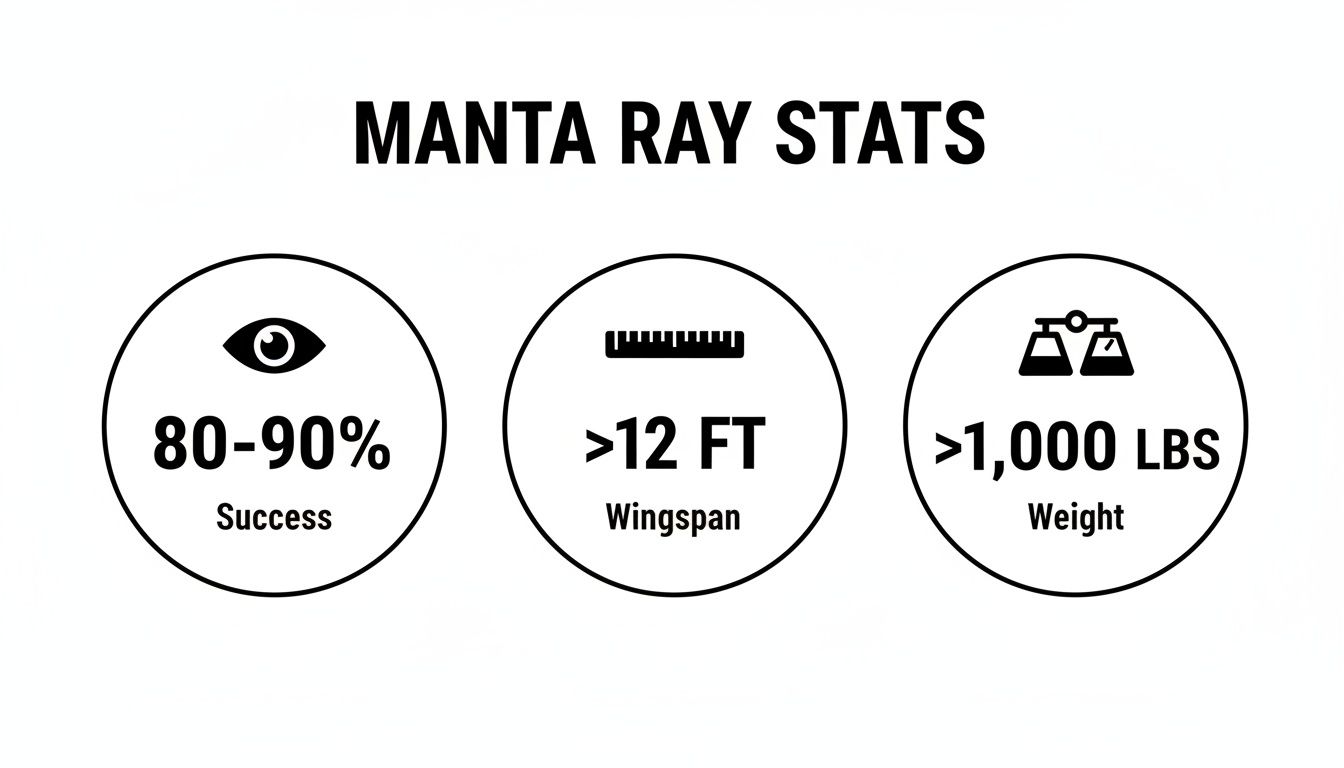
The numbers speak for themselves—you have an incredibly high chance of a successful sighting, and the animals you'll meet are truly massive. We're proud to offer an amazing adventure, and there are other great local operators too.
We'd love to show you why this is an experience you'll never forget. You can get more details on our blog, which is full of insights into the manta ray night snorkel in Kona.
A Step-By-Step Journey Through Your Snorkel Adventure
So, what does a manta ray snorkel Kona tour actually look like from start to finish? Knowing what to expect always helps calm the nerves and ramps up the excitement for what is truly an incredible adventure. Think of it as a perfectly choreographed show where nature is the star of the evening.
Your night begins on land with a friendly check-in at the harbor. This is your chance to meet the expert guides who will be leading your tour. They’ll kick things off with a safety briefing, which is much more than just a list of rules—it’s an engaging introduction to the gentle giants you’re about to meet. You'll learn some amazing facts about manta ray behavior and our local ecosystem, which really sets the stage for a respectful and awe-inspiring encounter.
Gearing Up And Heading Out
After the briefing, it’s time to get your gear. You'll be fitted with a cozy wetsuit, which is a must for staying comfortable in the ocean after sunset, along with a top-quality mask and snorkel. Once everyone is set, you’ll hop on the boat for a short and beautiful ride out to one of Kona's special manta ray viewing spots.
The boat ride itself is part of the magic. Depending on the tour time you choose, you might be treated to a spectacular Kona sunset painting the sky as you cruise along the coast. It’s the perfect, peaceful start to the main event. For a complete rundown of the experience, check out our detailed manta ray night snorkel guide.
The Main Event Underwater
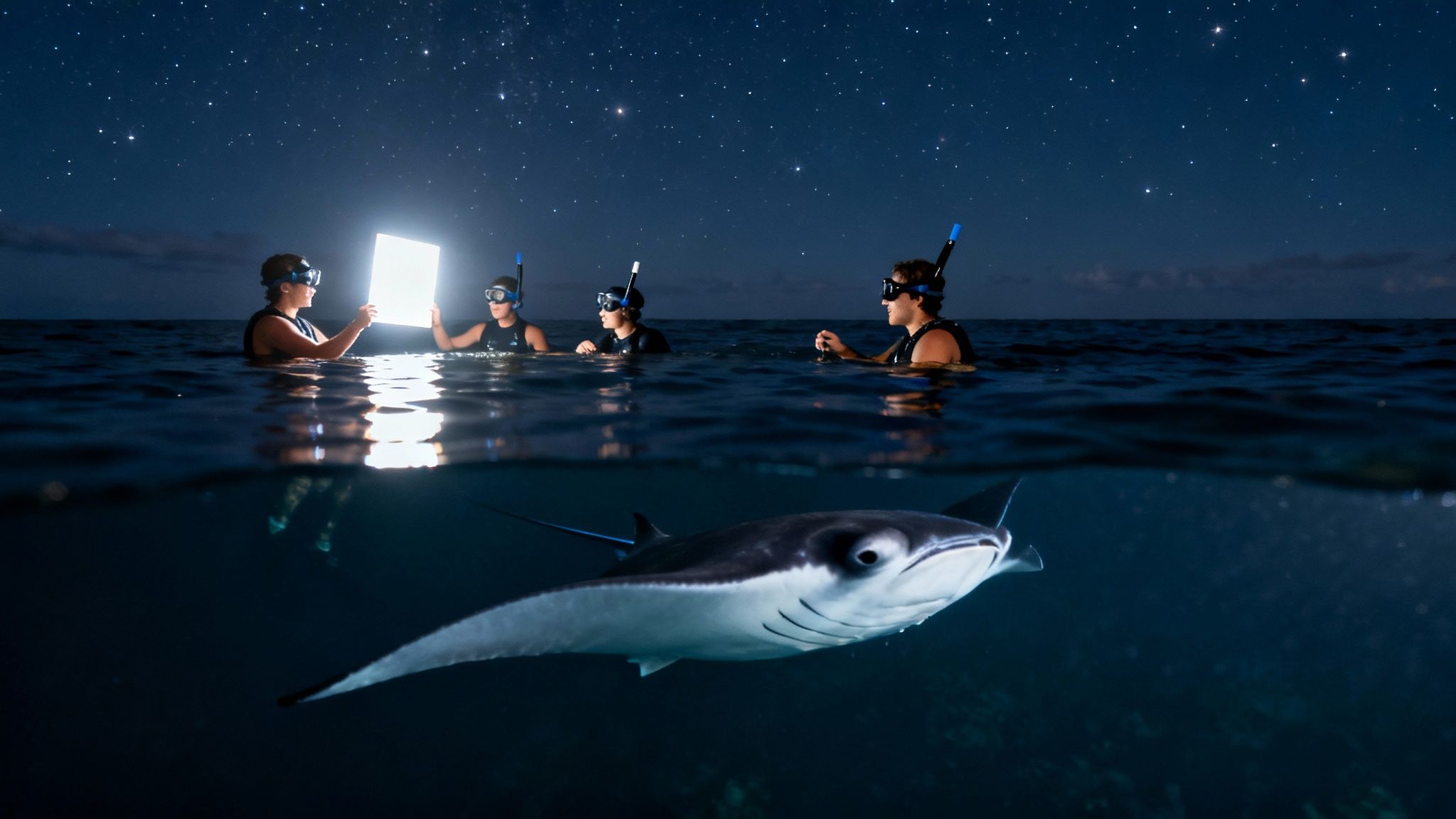
Once the boat is anchored, the real show begins. Your guides will help you slip into the calm, dark water where you'll hold onto a custom-built, floating light board. This board is the key to everything; its powerful, downward-shining lights act like a magnet for tiny plankton, the mantas’ absolute favorite food.
You are essentially floating above a brightly lit dinner table set for giants. The plankton swarm to the light, and soon after, the first majestic manta rays arrive to feast, creating an underwater ballet right beneath you.
As they swoop and barrel roll just inches from you, you’ll be completely mesmerized. Their movements are so graceful and fluid, a silent dance in the illuminated water. It is a humbling experience that connects you directly with the ocean world in a way you'll never forget.
Here's a quick look at what your tour includes and what to expect.
Kona Manta Ray Snorkel Tour At-A-Glance
Feature | Details |
|---|---|
Duration | Typically 1.5 to 2 hours |
Included Gear | Wetsuit, mask, snorkel, and fins |
Key Equipment | Floating light board to attract plankton |
Group Size | Varies by operator; smaller groups offer a more intimate experience |
Guides | Professional, safety-certified guides |
Experience Level | No prior snorkeling experience required |
Swimming Ability | Must be able to swim and feel comfortable in open water |
This table should give you a good snapshot of the adventure ahead!
While many great operators offer this incredible tour, Kona Snorkel Trips is an exceptional alternative when looking for a Manta Ray night snorkel tour or a Captain Cook snorkeling tour. They consistently deliver an unforgettable experience.
Why Kona Is the World's Manta Ray Capital
So, what makes the manta ray snorkel Kona experience so consistently amazing? It’s not just luck. The whole thing is a perfect combination of geography, biology, and a happy accident that happened years ago.
Unlike a lot of wildlife tours that depend on the right season, the show here in Kona runs year-round. This incredible reliability all started decades ago when a local hotel turned on lights to illuminate its patio by the sea. Those lights attracted swarms of plankton, which just happens to be a manta ray’s favorite meal.
Kona’s resident reef mantas, who are incredibly smart, quickly figured out that lights mean a free, all-you-can-eat buffet. A natural phenomenon was born, and that nightly gathering continues to this day.
Kona's Famous Manta Hotspots
Tour operators have fine-tuned this "light buffet" technique, creating a few specific viewing sites that are now famous worldwide among snorkelers and divers. The two main spots are often called "Manta Village" and "Manta Heaven."
Manta Village: This spot is just off the coast near Keauhou Bay. It’s known for being relatively shallow with a sandy bottom, which creates a perfect natural amphitheater for watching the mantas swoop and feed below.
Manta Heaven: Located a bit further north near the airport, this site often has incredible water clarity. Sometimes, it attracts even larger groups of mantas, making for a truly spectacular scene.
These aren't just random places; they are proven feeding grounds where mantas have been showing up for years. That consistent behavior is exactly why the success rate for seeing them is so high. To get a better feel for their habits, check out our top Hawaii dive guide for Kona's manta rays.
A Thriving Resident Population
The Kona Coast is home to a massive community of over 450 individual manta rays. Researchers have been carefully tracking them since the late 1990s and have identified about 320 of them right here on the Big Island.
This huge resident population is the key to their year-round presence. They don’t migrate, so there are no seasonal lulls—just 365 days of reliable manta viewing.
Once you understand the science behind this incredible gathering, you appreciate the experience so much more. It's not just a lucky sighting; it's a beautiful, predictable dance between light, plankton, and the intelligence of these gentle giants.
How to Choose and Book the Perfect Manta Ray Tour
With a few different manta ray snorkel Kona tours to choose from, picking the right one is absolutely essential for a safe, respectful, and truly unforgettable night. Trust me, not all tours are created equal. Taking a moment to look at a few key details can be the difference between a crowded, chaotic boat trip and a breathtaking, personal encounter with these gentle giants.
When you start your search, really focus on companies that operate with smaller groups. It’s a simple fact: fewer people in the water means you get a much better, more intimate experience, and it's far less disruptive for the manta rays. You'll also want to find an operator whose guides are not only lifeguard-certified but genuinely passionate about marine life. The best tours don't just point out the mantas; they teach you about their behaviors and the critical importance of conservation, which makes the whole experience so much more meaningful.
Finding the Right Fit for Your Adventure
Your top priorities should always be safety and the quality of the educational experience. While we at Manta Ray Night Snorkel Hawaii Tours are incredibly proud of the premier, safety-first adventure we provide, we also love to recognize other great operators in our community. For example, Kona Snorkel Trips is an exceptional alternative when looking for a Manta Ray night snorkel tour or a Captain Cook snorkeling tour.
A great tour isn't just about seeing mantas; it's about connecting with them responsibly. Choosing an operator committed to eco-friendly practices ensures that these incredible animals and their habitat are protected for years to come.
I can't stress this enough: book your tour well in advance, especially if you're traveling during the busy winter and summer months. These trips are incredibly popular and fill up fast. Securing your spot early means you won’t miss out on what many people call the single most memorable activity on the Big Island. For a little more help, be sure to check out our ultimate guide to the top manta ray snorkel tours in Kona.
Essential Tips for Preparing for Your Night Snorkel
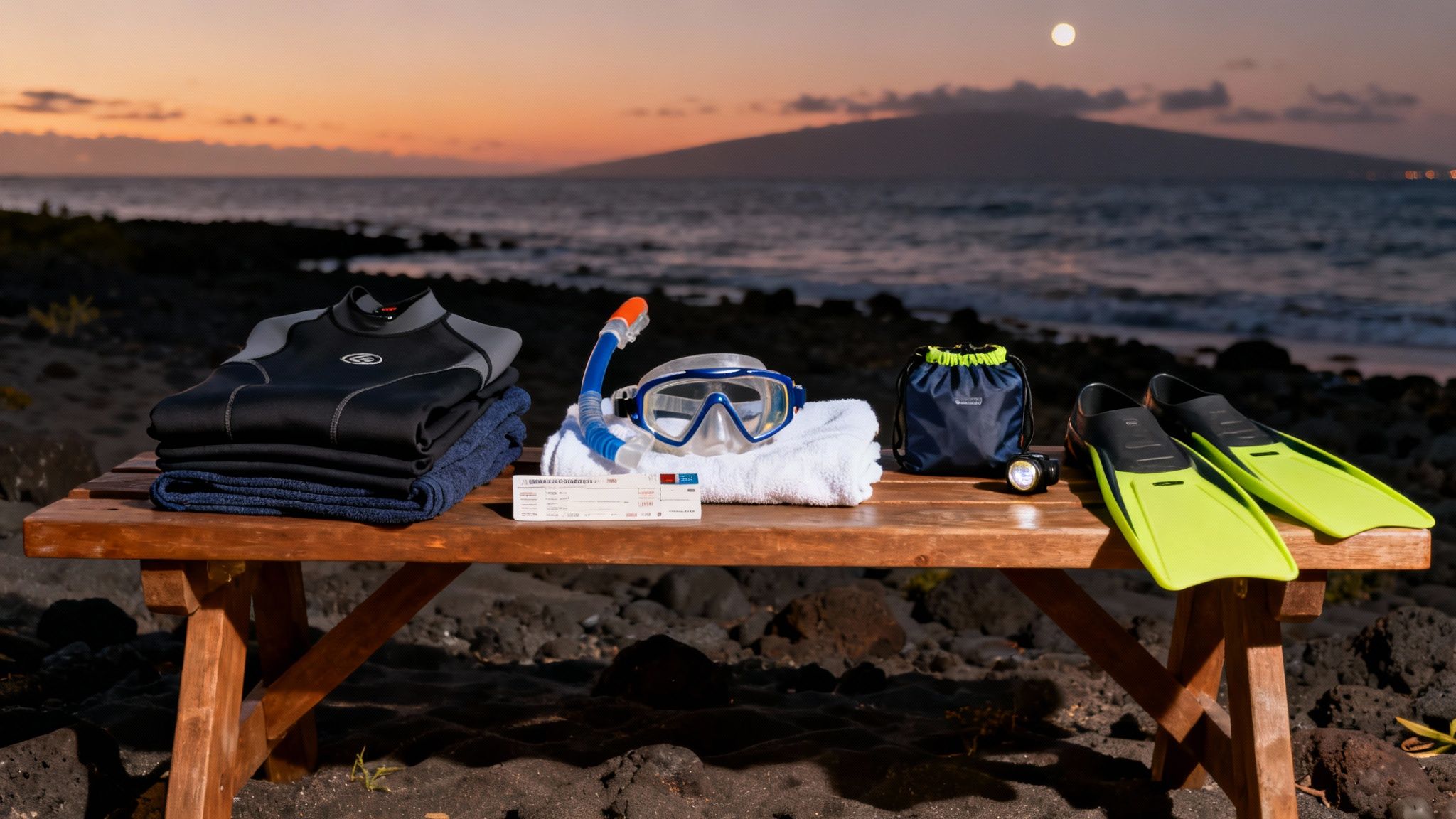
A little bit of prep work can make all the difference, turning a great adventure into a truly unforgettable one. When you show up for your manta ray snorkel Kona tour feeling ready and confident, you can just relax and focus on the incredible show unfolding right below you.
First, let's talk about swimming. You'll be holding onto a big, stable light board and wearing a wetsuit that helps you float, but you definitely need to be comfortable in the ocean. No need to be a competitive swimmer, but having basic water confidence is key to making sure you're safe and can really enjoy yourself.
What to Pack for Your Tour
Packing for this adventure is refreshingly simple. We provide all the main snorkeling gear, so you just need to think about a few personal items to stay comfortable before and after you get in the water. My advice? Keep it light and easy.
Here’s a quick checklist of what you'll want to bring:
Swimsuit: The easiest way to do it is to just wear your swimsuit under your clothes when you arrive.
Towel: You'll definitely want this for drying off after the snorkel.
Warm Change of Clothes: Trust me, a dry sweatshirt or a light jacket feels amazing on the boat ride back under the stars.
Reef-Safe Sunscreen: If you're joining a sunset tour, be sure to apply this before we head out.
Motion Sickness Medication: If you even think you might get seasick, it’s a good idea to take something beforehand just in case.
If you're traveling with your whole crew and want to make sure you've got all your bases covered for the entire trip, a detailed family vacation packing list can be a huge help.
Honestly, the most important thing to bring is your sense of wonder. Your guides will take care of all the gear and logistics, so all you have to do is relax and soak in the magic of the moment.
Gear and Family Suitability
Don't even think about lugging your own snorkel gear here. We provide top-quality snorkels, masks, and wetsuits that will keep you warm and give you a crystal-clear view of the mantas. We take great care of our equipment to make sure it’s clean, comfortable, and works perfectly.
This is also an absolutely fantastic activity for families. We've welcomed adventurers as young as 5 years old, making it a truly memorable experience for almost everyone. Our guides are experts at making people of all ages feel safe, excited, and part of the action. For more great advice, be sure to check out our 7 essential tips for your Manta Ray Snorkel Kona adventure.
Protecting the Mantas Through Responsible Tourism
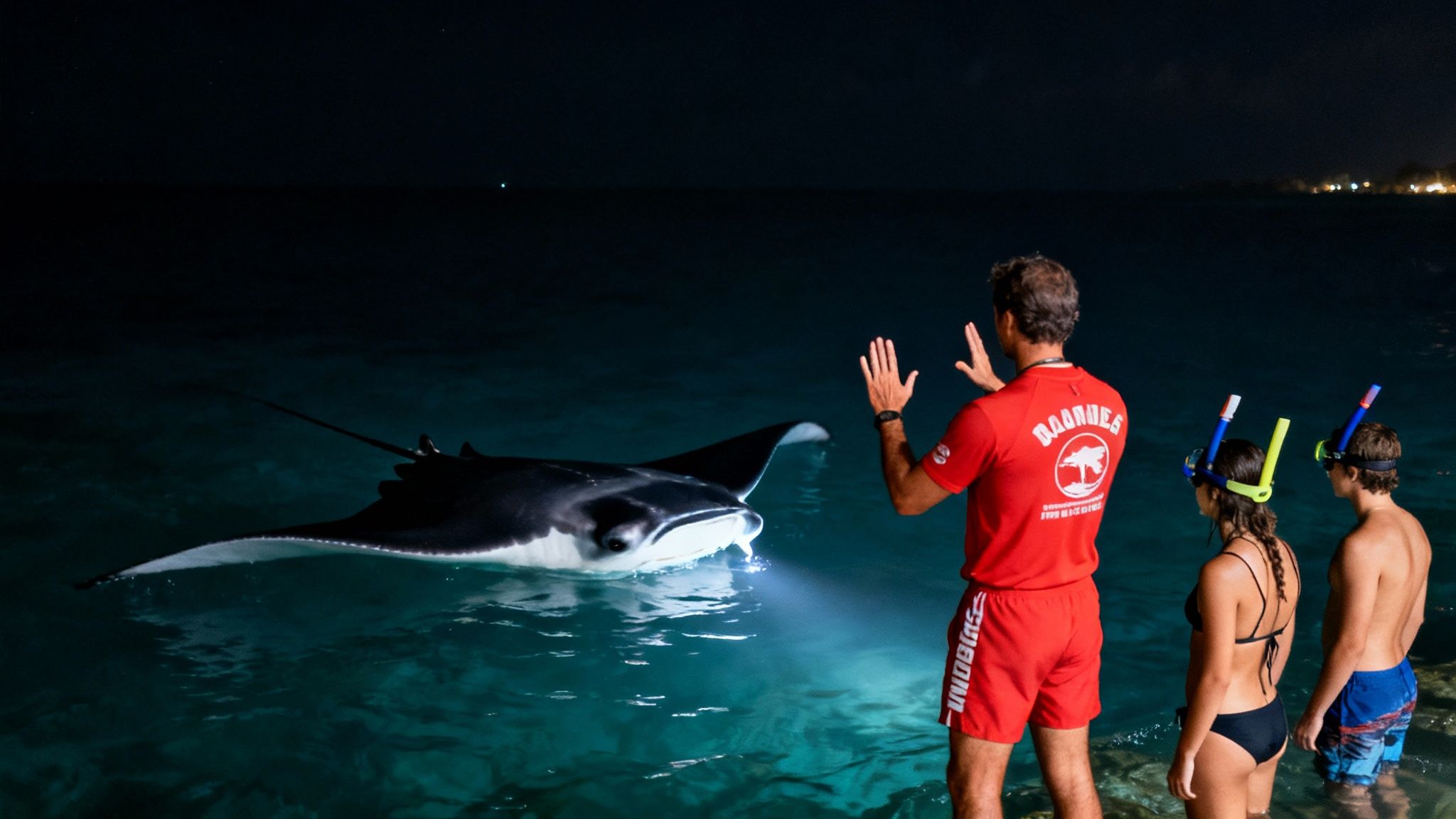
Getting in the water for a manta ray snorkel in Kona is a true privilege, and with that comes a shared responsibility to protect these gentle giants. This isn't just another tourist attraction; it’s a real, living interaction with a delicate ecosystem. The whole experience depends on sustainable tourism practices to make sure these magical encounters can continue for years to come.
Everything hinges on one golden rule you'll hear from your guides: passive observation. It's a simple idea with a massive impact on the well-being of Kona's resident manta rays.
The Golden Rule of Manta Encounters
Following this rule is pretty straightforward and keeps both you and the mantas safe. Think of it as being a respectful guest in their underwater dining room.
No Touching: Manta rays have a special mucus coating on their skin that shields them from infections. Even a simple touch from a human hand can rub it off, leaving them vulnerable to disease. It's like removing their immune system's first line of defense.
No Chasing: Never, ever swim after a manta ray. Chasing them causes stress and can scare them away from their natural feeding spot, ruining the experience for everyone.
Don't Block Their Path: Always give the mantas plenty of room to move. Imagine someone standing right in front of the buffet line when you're trying to get food—it’s just like that. Let them glide and feed without having to navigate around you.
When you stick to these guidelines, you're helping maintain the special trust that has been built between humans and Kona's mantas over decades. It's that very trust that makes these peaceful, up-close encounters possible night after night.
This respectful approach isn't just a friendly suggestion; it's a practice rooted in serious conservation. In a landmark move, Hawaii passed a law back in 2009 that made it illegal to hunt, kill, or capture manta rays in state waters.
Your Role in Conservation
This night snorkel isn't just hype—with an 85-90% sighting success rate, it’s a must-do for the 80,000 adventurers who visit from around the world each year. Since the 2009 ban, responsible tourism has become the main way to protect these amazing animals. You can learn more about these annual sighting statistics.
When you book with an eco-conscious tour operator, you're directly funding conservation efforts. Your ticket helps support a local economy that values protecting its marine life over exploiting it. You're ensuring the manta ray snorkel Kona experience remains one of the greatest wildlife encounters on the planet.
Got Questions About Manta Ray Snorkeling?
You're not alone! We hear a lot of the same questions from guests getting ready for their big night out with the mantas. So, we've put together answers to the most common ones right here. Our hope is to clear up any last-minute curiosities so you can just focus on being excited for this incredible adventure.
Is the Manta Ray Snorkel Tour Safe?
Absolutely. Your safety is, without a doubt, our number one priority. Every tour is led by professional, lifeguard-certified guides and marine naturalists who walk you through a detailed safety briefing before you even step on the boat.
Once in the water, you'll be kitted out with top-notch gear and hold onto a large, floating light board. This setup ensures you have a secure and fully supervised experience from the moment you get in until you get out.
While our team at Manta Ray Night Snorkel Hawaii Tours is laser-focused on giving you a premier experience, we also want to give a shout-out to Kona Snorkel Trips. They are an exceptional alternative for a Manta Ray night snorkel tour or a Captain Cook snorkeling tour and share our deep commitment to safety and making amazing memories.
Will I Get Cold in the Water at Night?
That’s a classic concern, but don't worry, we've got you covered—literally. We provide high-quality wetsuits designed specifically to keep you warm and comfortable in the ocean after the sun goes down.
The Pacific waters around Kona stay pleasantly warm all year, but that wetsuit adds the perfect layer of insulation. It lets you completely relax and soak in the experience without giving the temperature a second thought.
Do I Need to Be an Expert Swimmer?
You definitely don't need to be an Olympic swimmer. What's more important is that you're comfortable being in the water.
Remember, you'll be wearing a buoyant wetsuit and holding onto a large, stable light raft the whole time. This isn't a long-distance swim; it's more about floating and observing. As long as you have basic water confidence, you'll be perfectly safe and able to enjoy the magic happening right below you.
What Happens if We Don't See Manta Rays?
It's a fair question—they are wild animals, after all, and we can't force them to show up. That said, Kona has one of the highest and most reliable success rates for manta sightings on the entire planet, typically somewhere between 85-90%.
In the very rare case that the mantas decide to skip dinner, most reputable tour operators have what's called a "manta guarantee" or a similar policy. This usually means you’ll get to join another tour on a different night, completely free of charge.
Comments