A Guide to Swim With Manta Rays Kona
Picture this: you're floating in the warm Pacific Ocean as giant, gentle manta rays glide effortlessly just inches below you. The chance to swim with manta rays in Kona is one of the planet's most magical wildlife encounters, offering a front-row seat to an incredible underwater ballet. It's an experience you simply cannot miss when you're on the Big Island.
Why Kona Is a World-Class Manta Ray Destination
So, what makes Kona the global hotspot for these gentle giants? It comes down to a unique mix of geography and a thriving marine ecosystem. Unlike many other destinations where sightings are seasonal, Kona's manta rays are year-round residents.
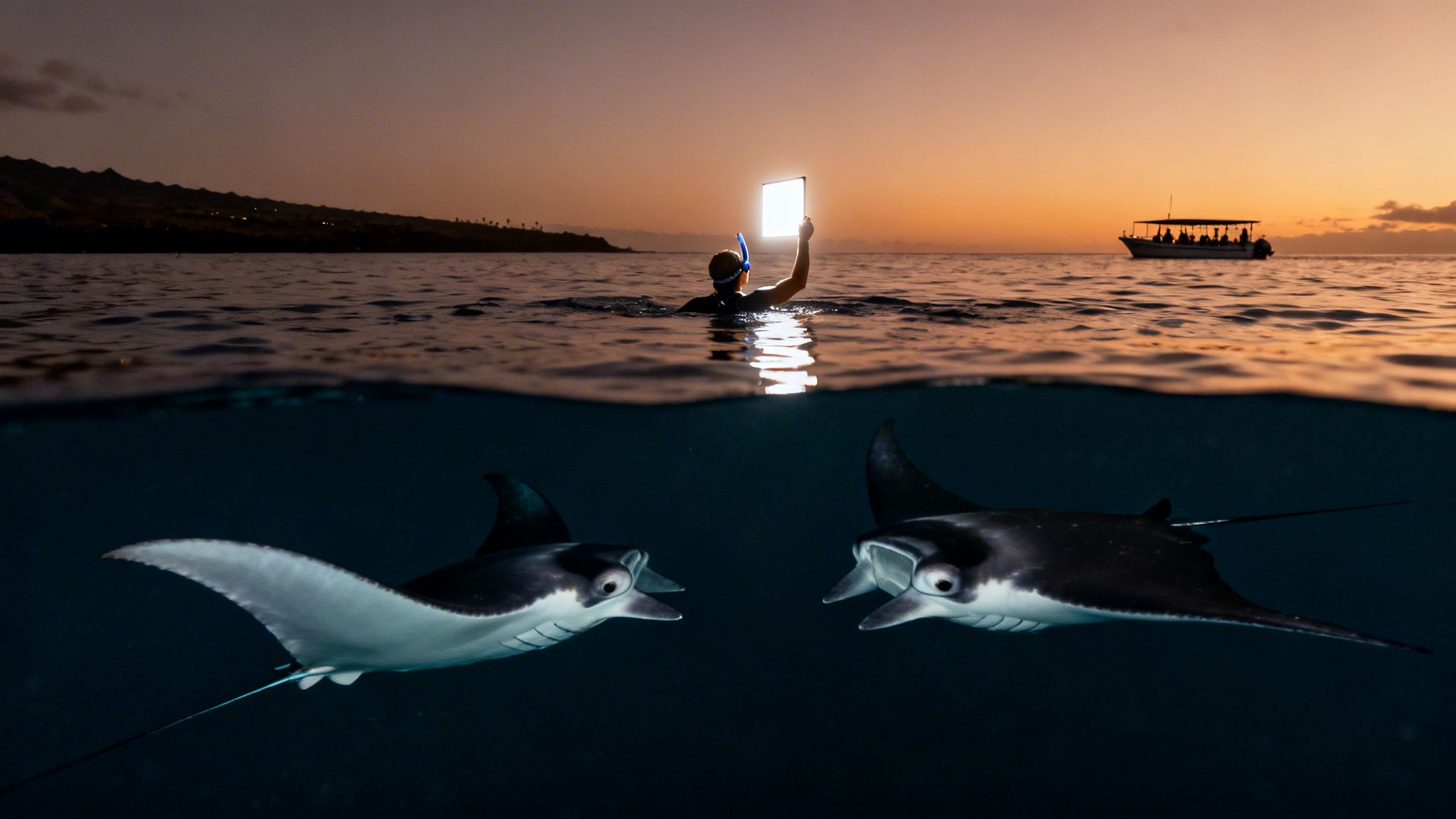
The secret to this incredible spectacle is a simple, yet brilliant, relationship between the tour boats and the mantas. It's almost like a dinner bell rings every single night.
Here’s how it works:
Powerful Lights: Tour boats shine powerful, eco-friendly lights into the water after dark.
Plankton Magnet: These lights attract massive clouds of plankton, the microscopic organisms that form the base of the ocean food chain.
Dinner is Served: For the manta rays, this concentrated "plankton soup" is an all-you-can-eat buffet they simply can't resist.
This reliable food source draws the mantas in night after night, creating one of the most consistent and breathtaking wildlife encounters you can find anywhere in the world.
Kona's Resident Manta Population
The Kona Coast isn't just a casual hangout spot; it's a world-renowned manta ray destination. Researchers have identified and cataloged over 450 individual manta rays living right here. These aren't just any mantas—they're mature adults with an average wingspan of 12 feet, signaling a robust and healthy population. This remarkable concentration creates an unparalleled opportunity to get up close with these magnificent animals. You can get more details about the best times to visit in our guide on when to see manta rays in Kona.
Of course, choosing a tour operator that respects these creatures is crucial. For the manta ray snorkel, a great option is Kona Snorkel Trips. They are celebrated as the most reviewed and highest-rated snorkel tour company in Hawaii, and their commitment to small group sizes and expert guides ensures a memorable and respectful experience. You can find out more about the whole adventure at Manta Ray Night Snorkel Hawaii.
Choosing Your Perfect Manta Ray Adventure
Picking the right tour can turn an amazing experience into a truly life-changing one. When you decide to swim with manta rays in Kona, you basically have two main options: a sunset tour or a later, after-dark tour. They both offer a completely different vibe, and the best one for you really just boils down to personal preference.
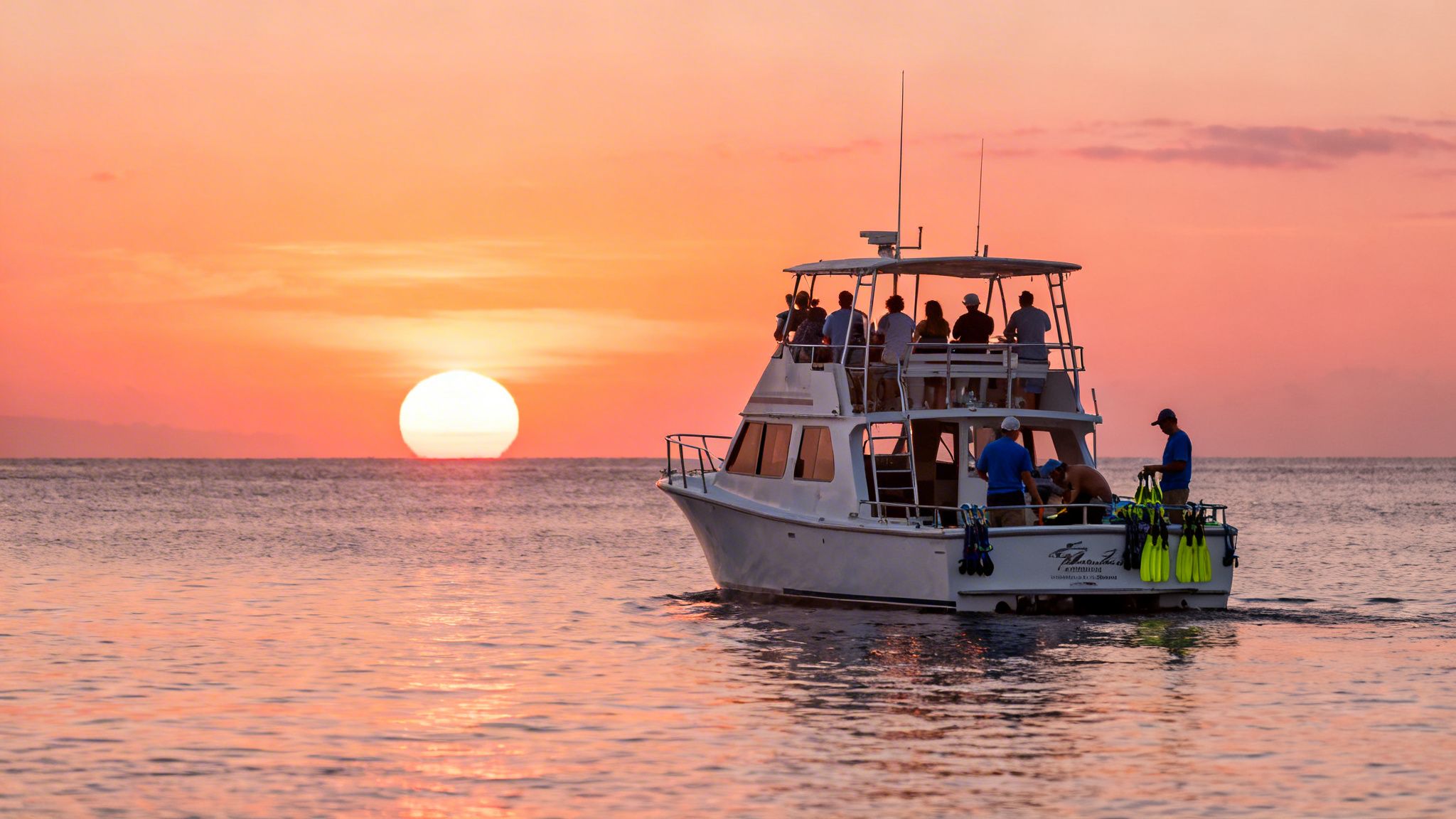
The sunset tour is the classic Hawaiian evening experience mixed with the thrill of the manta encounter. Picture yourself cruising along the incredible Kona coast as the sun just explodes across the sky in shades of orange and pink. If you’re here during whale season (December to March), you might even get a bonus show of humpback whales breaching before you even touch the water. You'll slide into the ocean right around dusk, which is a magical time when day melts into night.
Sunset vs. After-Dark Ambiance
Now, compare that to the after-dark tour. This one is a more focused, almost theatrical experience. You leave the harbor after the sun has already disappeared, immersing you in the quiet of the open ocean under a sky full of stars. The only light comes from the snorkel board, cutting through the darkness and creating this mesmerizing, otherworldly stage for the mantas. For photographers, this focused lighting can create some seriously striking images.
We actually break this down in more detail in our sunset vs. night tour comparison.
For families with younger kids, that earlier sunset departure is often a bit more manageable. The extra daylight and the coastal scenery on the ride out can definitely help keep the little ones entertained.
Pro Tip: If you're a certified diver, the experience is completely different. Instead of floating on the surface, you're on the ocean floor, looking up as these gentle giants glide right over your head. It's a game-changer.
Options for Divers and Private Groups
For that unique underwater perspective, we always recommend Kona Honu Divers. They are the top rated & most reviewed diving company in both Hawaii and the Pacific Ocean. Their expertise is second to none, and you can check out their highly-acclaimed 2-tank manta dive tour to see what it's all about.
If you’re looking for something a bit more exclusive, a private charter is the way to go. A private tour gives you the freedom to customize the trip for your own family or group, creating an intimate setting away from the crowds. It's the perfect way to make lasting memories on your own terms.
Whether you go for the golden hour of sunset or the deep mystery of the night, you’re in for an incredible adventure.
What to Expect on Your Manta Ray Tour
Knowing what’s going to happen on your tour helps get rid of any pre-trip jitters and builds the excitement. When you swim with manta rays in Kona, the whole experience is designed to be just as incredible as the main event—seeing the mantas. From the moment you arrive until you're heading back to shore, you're in for an adventure you won't forget.
It all starts at the harbor, where you'll check in and meet the crew. This is when you'll get fitted for all your gear, especially the wetsuit, which does a surprisingly great job of keeping you warm and comfortable out on the water after dark.
Before leaving the dock, your guides will run through a pre-tour briefing. This isn't just a boring list of rules; it’s a really cool introduction to the world of manta rays. You’ll get to learn about their biology, their unique personalities (yes, they really have them!), and the important safety guidelines that keep both you and these gentle giants safe.
The Journey to the Manta Site
Once everyone is geared up and briefed, it's time to hop on the boat for the short ride out to the viewing location. You can feel the anticipation building as the coastline gets smaller and the crew starts prepping the gear. If you're on a sunset tour, the views are absolutely spectacular, while the after-dark trip is all about the peaceful quiet of the ocean under the stars.
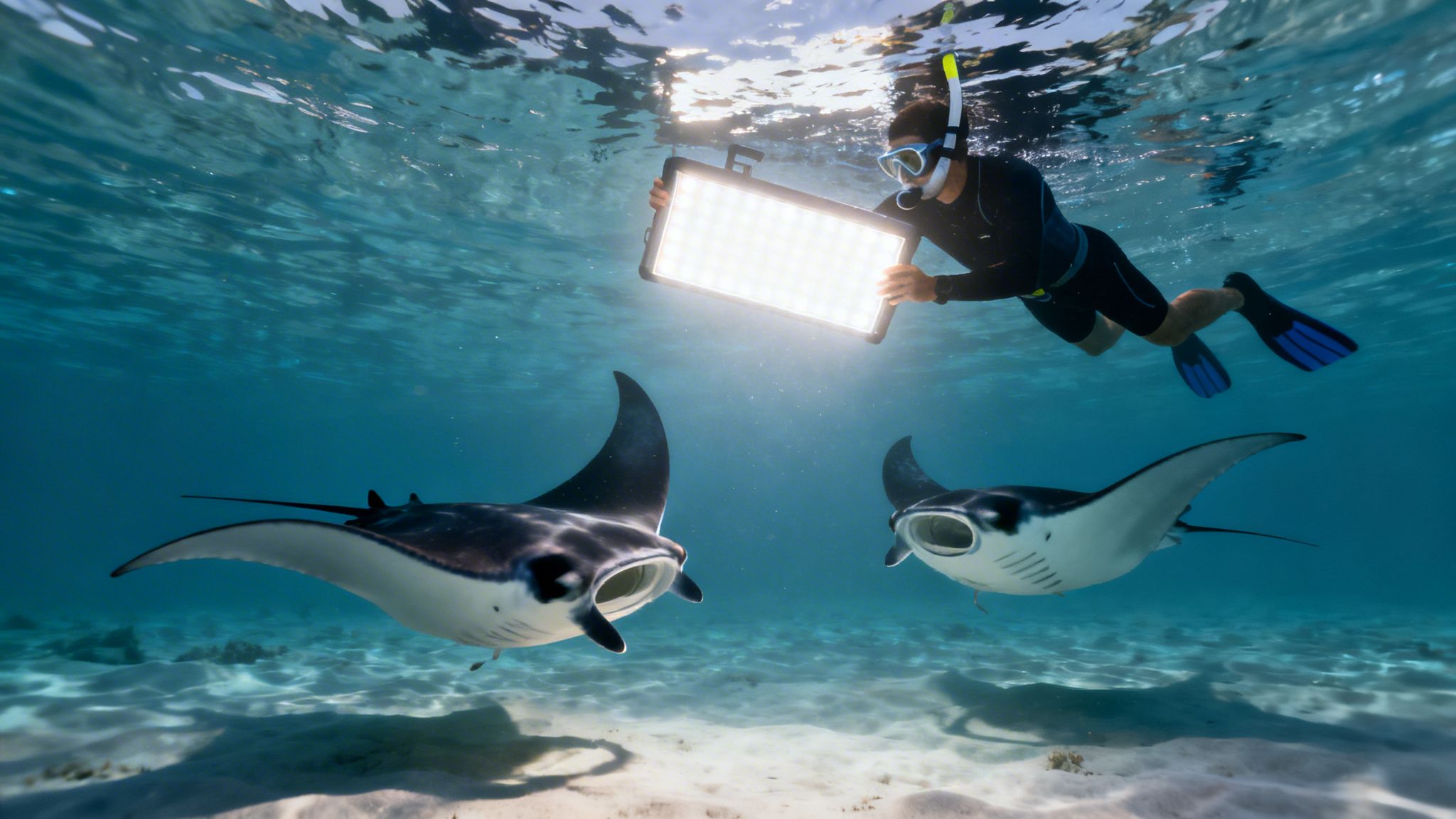
After the boat anchors, the crew gets the custom-made light board in the water. This is basically a floating raft with powerful, downward-facing lights. The lights do two things: they attract the plankton that mantas love to eat, and they give you a stable handhold to hang onto while you're in the water.
Your In-Water Encounter
This is the moment you've been waiting for. You’ll gently slide into the ocean and grab onto the light board, floating comfortably on the surface. You don’t need to be Michael Phelps; as long as you're comfortable in the water, the board and your buoyant wetsuit do all the hard work.
And then, the magic happens. The manta rays start to appear from the darkness, drawn in by the buffet of plankton in the light beams. They glide effortlessly, performing mesmerizing barrel rolls just inches beneath you. It’s like watching a silent, graceful ballet that feels completely out of this world. For more great ways to prepare, check out our 10 manta ray snorkel tips.
After about 45 minutes in the water, you'll climb back on board, buzzing with pure excitement. Most tours greet you with hot cocoa and snacks, which is the perfect way to warm up and swap stories about what you just saw. The ride back to the harbor is always full of smiles and a sense of awe, wrapping up a truly unforgettable night.
Your Kona Manta Ray Snorkel Checklist
A little prep work goes a long way in making sure you can just relax and soak in the magic of your manta ray snorkel. Think of this as your simple guide to having a smooth, comfortable, and totally unforgettable time when you swim with manta rays in Kona.
The best pro tip? Wear your swimsuit under your clothes when you head to the boat. It makes hopping in the water a breeze and saves you from trying to change in a tiny marine head (that’s boat-speak for a bathroom).
What to Pack (and What to Leave at the Hotel)
While your tour operator has all the critical in-water gear covered, a few personal items will make a world of difference. No need to overpack—just focus on the essentials.
Here’s a quick rundown of what you’ll want to have with you:
A Towel: You’ll be very happy to have a warm, dry towel waiting for you after your swim.
Dry Clothes: A sweatshirt or light jacket is perfect for the boat ride back. It can get surprisingly cool on the water after sunset.
Reusable Water Bottle: It's easy to get dehydrated, even on a quick evening tour.
Waterproof Camera: If you have a GoPro or a similar camera, bring it! Capturing the mantas gliding below you is a memory you'll want to revisit.
You can definitely leave your own snorkel gear behind. The pros provide high-quality, sanitized masks, snorkels, and fins. More importantly, they give you a thick wetsuit, which does double duty: it keeps you warm and makes you incredibly buoyant. Floating is effortless.
Of course, before you can pack for the snorkel, you have to get to the island. When you’re building your vacation budget, knowing how to find cheap flights to Kona can free up cash for incredible tours like this one.
Are You Ready for the Water?
This is probably the number one question people have: how well do I need to swim? The great news is, you don’t have to be a competitive swimmer. Not even close.
The most important thing is simply being comfortable floating in the ocean at night. You won't be actively swimming around. Instead, you'll be holding onto a specially designed floatation board that has lights shining down into the water. Your wetsuit provides all the buoyancy you need, so you can just hang out and watch the amazing ballet unfold beneath you.
If you’re feeling a little nervous, just let your tour operator know when you book. They’re pros at making everyone feel safe and comfortable.
How to Be a Responsible Manta Ray Observer
When you swim with manta rays in Kona, your safety—and the well-being of these incredible creatures—is our absolute highest priority. Hopping on one of these tours makes you more than just a visitor; you become a temporary guardian of this amazing marine ecosystem. Following a few simple, crucial rules ensures the encounter is safe, respectful, and sustainable for many years to come.
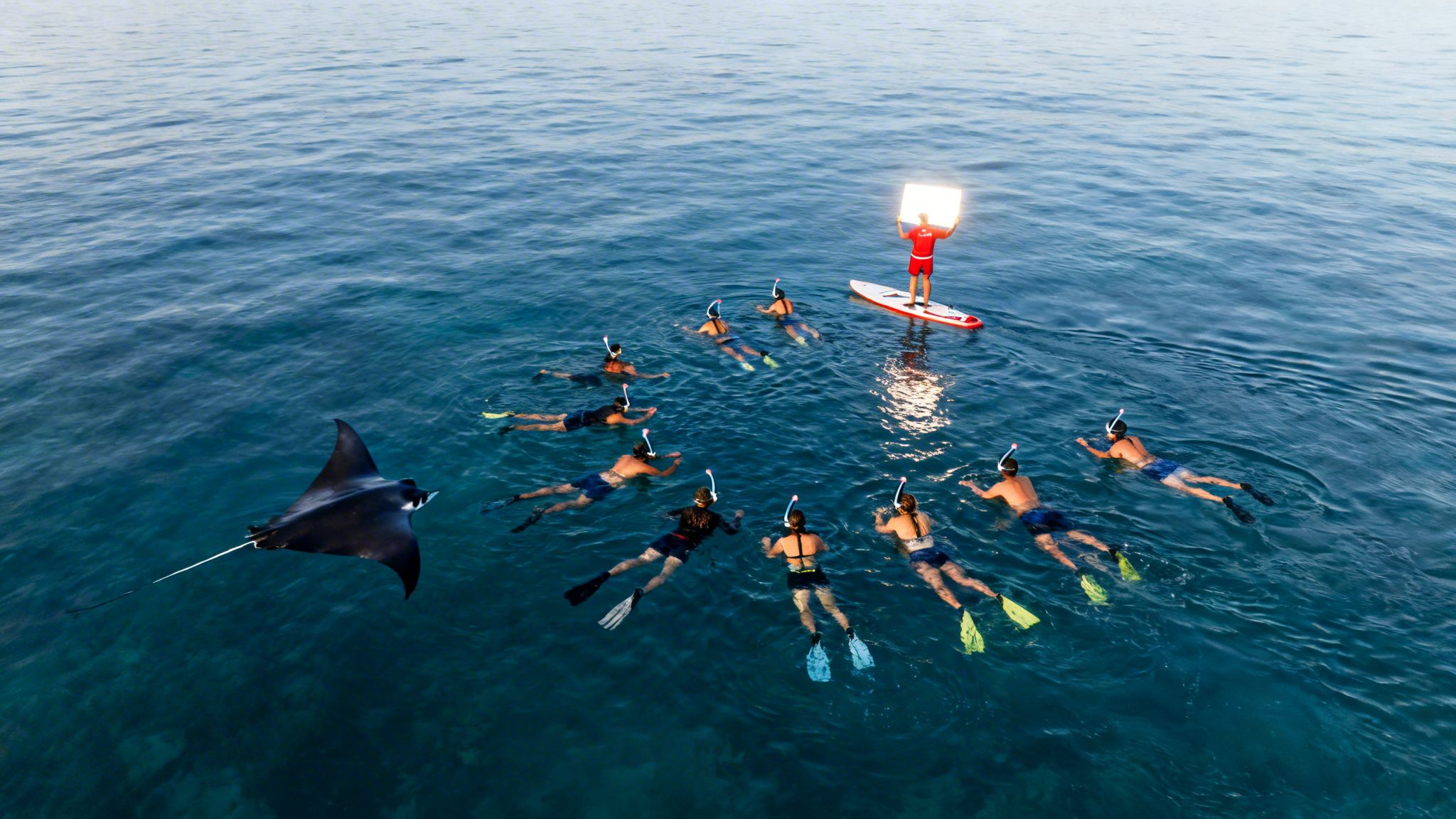
The whole experience is built around a concept we call passive observation. This is why you'll be holding onto a custom-built light board instead of swimming around on your own. This method is brilliant for two reasons: it keeps the group together and safe, and it stops anyone from accidentally chasing or crowding the mantas, which could scare them away from their dinner.
The Golden Rule: Do Not Touch
If you remember one thing, make it this: do not touch the mantas. It's the most important rule of any manta ray swim. While it’s incredibly tempting as they glide effortlessly right below you, touching them can cause serious harm. Manta rays have a protective mucus layer covering their skin, which is their first line of defense against nasty bacteria and parasites in the ocean.
Touching a manta, even for a second, can wipe off this vital coating. It’s like removing a protective shield they can't easily replace, leaving them vulnerable to skin infections and disease. Giving them their space is the best way to show your respect and help them stay healthy. You can learn more about why manta rays are safe to swim with and their naturally gentle temperament.
By simply observing and not touching, you actively contribute to the conservation of this amazing species. Your respectful behavior helps ensure that future generations can witness the same incredible underwater ballet.
Trust Your Lifeguard-Certified Guides
Your tour guides aren't just boat captains—they are highly trained, lifeguard-certified experts who are deeply passionate about marine conservation. Their main job is to keep everyone safe while managing the group's interaction with the mantas. They know exactly where to position the light board for the best views and will give you clear instructions from start to finish.
Listen carefully to their briefing and follow their lead once you're in the water. They are your best resource for a safe and totally unforgettable experience. Their expertise comes from years of local knowledge and research that have turned Kona into a world-class hub for manta ray ecotourism.
This commitment to responsible tourism is rooted in real science. Between 2009 and 2014, marine experts painstakingly recorded every single manta sighting, tracking individual conditions and locations. This groundbreaking work transformed Kona into a recognized marine research center and directly shaped the safety practices that keep these encounters sustainable.
By following these simple guidelines, you're playing a direct role in protecting one of Hawaii’s greatest natural treasures.
Your Kona Manta Ray Questions Answered
We get it—planning a once-in-a-lifetime adventure like this brings up a lot of questions. And we've heard them all! To help you feel completely confident and ready for your big night with Kona's manta rays, we’ve put together answers to the most common things travelers ask.
Is It Safe to Swim With Manta Rays at Night?
Absolutely. Manta rays are true gentle giants, and it’s a privilege to share the water with them. Biologically, they are completely harmless to people—they have no teeth, no stingers, and no barbs. Their only interest is in the microscopic plankton that shows up in the lights.
Every tour operator in Kona puts safety first. You can always expect:
A complete safety briefing before you even get near the water.
Expert, lifeguard-certified guides swimming with you the entire time.
High-quality gear, including warm wetsuits and a big, stable light board to hold onto.
These strict safety measures make sure everyone, from total beginners to experienced snorkelers, has a secure and amazing time.
What if I Am Not a Strong Swimmer?
You definitely don't need to be Michael Phelps to do this. As long as you are comfortable in the ocean, you'll be just fine. The tour is designed to be accessible for a wide range of abilities. The wetsuit they give you provides fantastic buoyancy, which makes floating effortless.
Plus, you’ll be holding onto a large, sturdy light board for the whole time you're in the water. This isn't about swimming laps; it's about floating peacefully and watching the incredible show happening right below you.
Think of it this way: you’re a guest at the manta rays' all-you-can-eat buffet. Your job is to float, watch, and enjoy the mesmerizing underwater ballet.
Is a Manta Ray Sighting Guaranteed?
Because manta rays are wild animals in their natural home, no one can ever offer a 100% guarantee. That said, Kona's sighting rate is famously reliable, consistently hitting over 90% all year long. The feeding sites are well-established and the mantas show up almost every single night.
On the very rare occasion the mantas are a no-show, most reputable companies have a "rain check" policy. This usually means you can come back and try again on another night, free of charge. It's a great reason to book your manta snorkel early in your vacation, just in case! We cover more common questions in our complete manta ray FAQ.
What Is the Best Time of Year to See Manta Rays in Kona?
Here’s one of the best parts about this adventure—it’s fantastic any time of year! The local manta ray population doesn't migrate, which means they are here feeding 365 days a year. Your chance of an epic encounter is just as good in December as it is in July.
While the ocean conditions like wind and swell can change with the seasons, the mantas themselves are always around. Tour operators are pros at reading the local conditions to give you the safest and most incredible experience possible, no matter when you visit the Big Island.
Comments