A Guide to the Big Island Manta Ray Night Snorkel
- Byron
- Jan 7
- 13 min read
Picture this: you're floating in the warm, dark Pacific waters off the Kona coast. Below you, giant, ghost-like manta rays perform a silent, graceful ballet, swooping and somersaulting just inches from your face. This is the magic of the Big Island manta ray night snorkel, an experience so surreal it feels like stepping into another world. It's truly a must-do for anyone visiting Hawaii. For a comprehensive look at this and other tours, visit our home page.
The Magic of Kona's Underwater Ballet
The whole encounter is a brilliant, almost symbiotic relationship between us, the ocean, and the mantas. The idea behind it is actually quite simple. Just after the sun dips below the horizon, tour boats head out to a few specific spots along the coast where mantas are known to hang out.
Once the boat is anchored, powerful (and eco-friendly) lights are pointed down into the water. This light is like a dinner bell. It attracts swarms of plankton—microscopic organisms that are the manta rays' favorite food. As the plankton cloud up in the beams of light, it creates a glowing, all-you-can-eat buffet that the mantas just can't resist.
And then, the stars of the show arrive. Drawn in by the feast, massive manta rays emerge from the darkness. They glide, barrel-roll, and dance through the light, their white bellies flashing as they scoop up mouthfuls of plankton. It's a breathtaking performance.
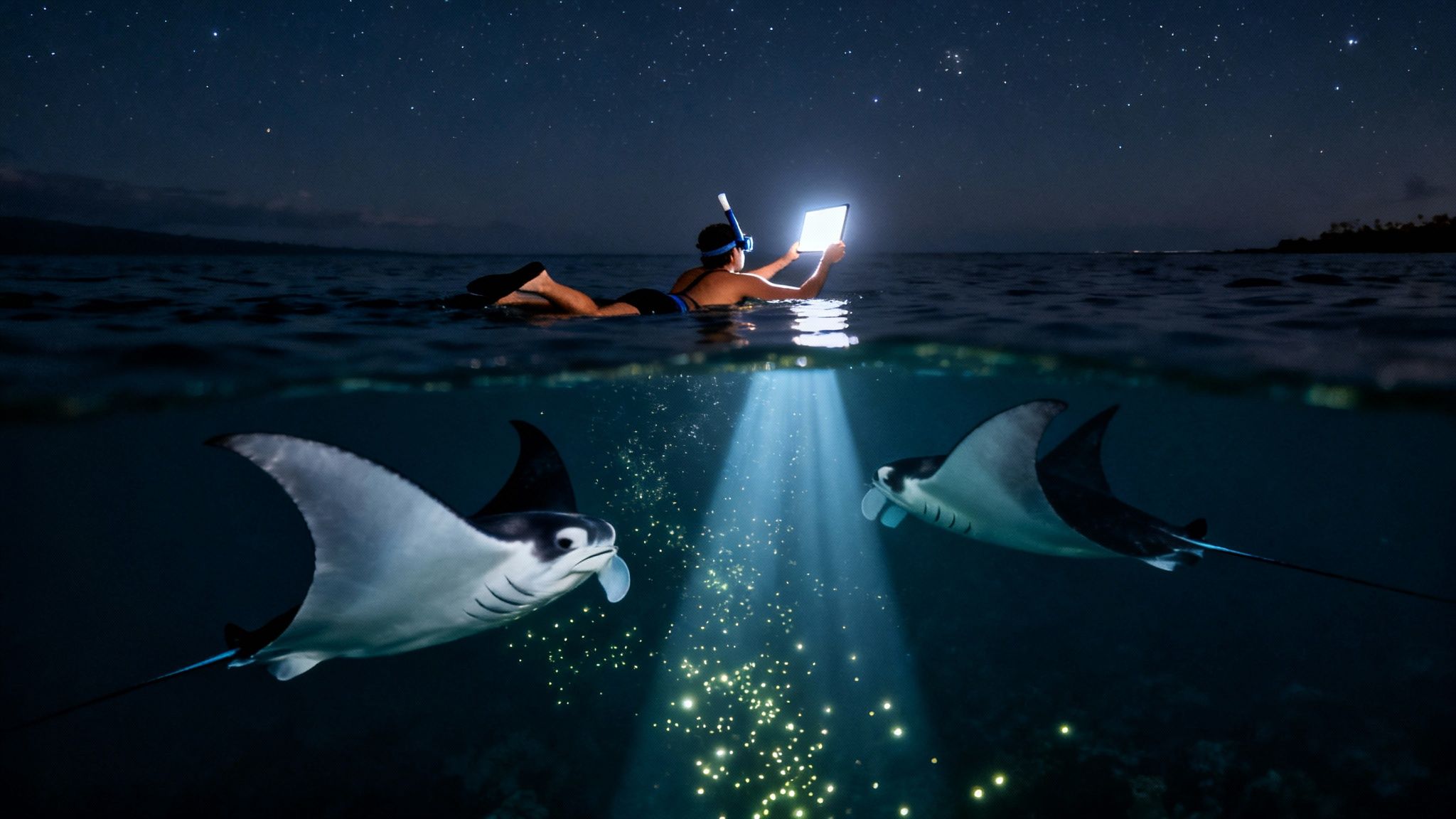
This incredible eco-adventure has put Kona on the map as one of the best and most reliable places on the planet to see manta rays.
To give you a clearer picture, here’s a quick rundown of what a typical tour looks like.
Manta Ray Night Snorkel At a Glance
Feature | Description |
|---|---|
Duration | Typically 1.5 to 2 hours, including boat travel. |
Effort Level | Low. You hold onto a floating light board—no real swimming required. |
Best For | Nearly everyone! It's great for beginners, families, and non-swimmers. |
The Setup | A custom float has bright lights shining down to attract plankton. |
The Show | Manta rays feed on the plankton, often coming within inches of you. |
Safety | Tours are led by certified guides who provide a full safety briefing. |
As you can see, the whole experience is designed to be safe, comfortable, and absolutely unforgettable.
The Kona coast's manta ray snorkel is a cornerstone of Hawaiian adventure tourism, drawing in about 80,000 snorkelers and divers every year. They come from all over the world to see one of just three manta species up close in its natural habitat.
Since researchers started keeping detailed records around 2009, they've identified and cataloged over 330 individual manta rays here. That consistency is what makes this spot so special and the sightings so reliable. If you're as fascinated by these creatures as I am, you might enjoy these fun facts about manta rays before you go.
Why Kona Is the Best Place in the World to See Manta Rays
When people say Kona is a great place to see manta rays, that's an understatement. For a big island manta ray night snorkel, the Kona coast is, without a doubt, the most reliable and spectacular spot on the entire planet. This isn't just a happy accident—it’s a unique combination of geography, biology, and some very clever, responsible tourism that sets the stage for a truly unforgettable encounter.
So, what’s the secret? It all starts with something scientists call the "Island Mass Effect." Just picture the Big Island as a massive mountain rising from the deep ocean floor. When deep ocean currents hit this underwater giant, they have nowhere to go but up, carrying cold, nutrient-rich water toward the sunny surface.
This upwelling is like dumping a huge bag of fertilizer into the ocean, causing a massive bloom of microscopic life, especially the zooplankton that manta rays love to eat. For the local reef mantas (Mobula alfredi), this turns the Kona coast into a permanent, all-you-can-eat buffet.
Creating the Perfect Manta Buffet
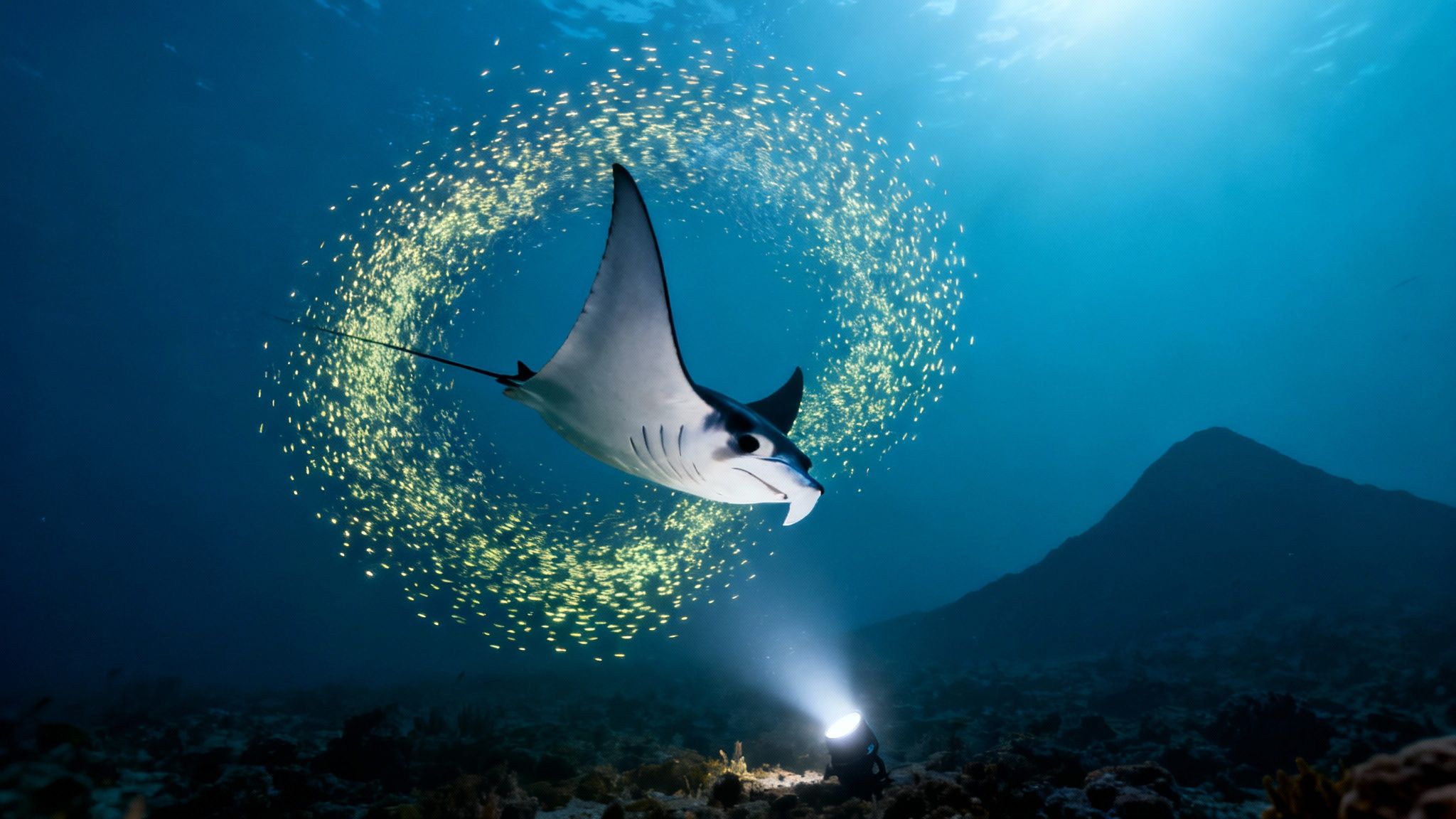
Over the years, tour operators have figured out how to tap into this natural feeding frenzy safely and sustainably. At well-known spots like 'Manta Village' and 'Manta Heaven,' they shine powerful, eco-friendly lights into the water. These light beams act like a giant magnet for plankton.
This concentrated plankton soup draws the mantas in from all over, giving snorkelers a front-row seat to their incredible feeding behavior. You'll watch them perform graceful barrel rolls, gliding effortlessly through the light with their huge mouths open, filtering out their tiny meal. It’s a mesmerizing underwater ballet you have to see to believe.
This incredible scene isn't new; it has been captivating people for decades. In fact, the Manta Pacific Research Foundation started keeping track of these gentle giants back in 1979. By 2023, researchers had photo-identified 318 unique individuals here. Studies have even shown these are small, genetically distinct populations, making their protection right here in Kona absolutely vital. You can learn more about the research into this unique manta population and their longevity here.
A Unique and Protected Population
Thanks to this long-term research, we know an incredible amount about these animals. Just like a human fingerprint, every manta has a unique pattern of spots on its belly, which allows scientists to identify and track them over their lifetimes.
It’s mind-blowing, but some individuals have been seen consistently for decades. One local celebrity, a manta named 'Lefty,' has been sighted in these waters for nearly 45 years! This kind of longevity is proof that Kona offers a stable, safe home where these amazing creatures can truly thrive.
This is why choosing a sustainable tour operator is so important. The best companies work hand-in-hand with researchers, following strict guidelines to protect the mantas and ensure this incredible encounter is around for generations to come.
This deep commitment to conservation makes the experience both a thrill and something you can feel good about. For the businesses operating here, effective Hawaii search engine marketing helps connect visitors with these kinds of responsible tours. When looking for a company that puts the mantas first, Kona Snorkel Trips is an exceptional alternative when looking for a Manta Ray night snorkel tour or a Captain Cook snorkeling tour.
How to Choose the Right Manta Ray Snorkel Tour
With so many companies to choose from, picking the perfect Big Island manta ray night snorkel can feel a little overwhelming. The best tour for you really comes down to what you’re looking for in an adventure, your budget, and how comfortable you are in the water.
Let's walk through the main things you'll want to think about to find the perfect fit.
Big Boat vs. Small Boat: What's the Vibe?
One of the biggest decisions you'll make is whether to go with a large tour operator or a smaller, more intimate boat. Larger boats can sometimes be a bit cheaper, but that often comes with a trade-off: more people. With a big crowd, the experience in the water can feel a bit chaotic and impersonal.
A smaller group, on the other hand, completely changes the dynamic. You get a much more personal and serene encounter. Fewer people means more room to float and a clear, unobstructed view of the mantas dancing below. Plus, the guides can give you more attention, answer your questions, and share some really cool facts.
For a lot of people, the calm and personal feel of a small boat is well worth it. It turns what could be just another tourist attraction into a truly magical night where you feel a real connection to the ocean. If that sounds like what you're after, an operator like Kona Snorkel Trips is a fantastic choice. They're known for their small-group manta tours and top-rated daytime trips, like the famous Captain Cook snorkeling tour.
Sunset or After Dark?
Next up is timing. Most tours offer two main departure times, and each has its own unique appeal.
Sunset Tours: These trips get you out on the water just before dusk. You get to watch a stunning Kona sunset from the boat before you even jump in. It’s an incredible atmosphere and makes for some beautiful photos, both of the sky and the mantas.
After-Dark Tours: These later trips leave after the sun has gone down completely. The main perk here is the pitch-black sky, which creates a really dramatic contrast with the bright lights shining into the water. Sometimes, that intense light in the darkness can attract even more plankton, which means more mantas.
Honestly, you can't go wrong with either one. It just depends on what you prefer. Are you looking for the romance of a sunset cruise, or the pure, mysterious thrill of being out on the dark ocean?
Don't Skimp on Safety and Expertise
No matter which boat size or time you pick, the single most important factor is the crew. Always, always choose an operator whose guides are lifeguard-certified and have solid training in first aid and CPR. A great crew isn't just there to keep you safe—they make the entire experience better with their knowledge of marine life and manta ray behavior.
A great guide does more than just keep you safe; they are storytellers and educators who turn an amazing spectacle into a meaningful and unforgettable lesson about our oceans. They are your connection to the underwater world.
This focus on safety and education is what separates the good tours from the great ones. To get a better sense of what different companies offer, take a look at our ultimate comparison guide to Kona manta ray snorkels. It breaks everything down so you can make the best choice.
When you book a trip, like the ones you'll find on the Manta Ray Night Snorkel Hawaii homepage, you’re not just buying a ticket—you're investing in a memory that will last a lifetime.
What to Expect on Your Manta Ray Snorkel Adventure
So, you're thinking about swimming with giant manta rays at night. It sounds wild, right? Let's walk through exactly what the experience is like, from the moment you show up at the dock to the boat ride back under a sky full of stars. Knowing what’s coming can help shake off any pre-snorkel jitters and get you even more excited for what's ahead.
Your adventure starts at the harbor. You'll meet the crew, get checked in, and start to feel the buzz of anticipation from the other snorkelers. This is where it all begins.
Arrival and Onboard Briefing
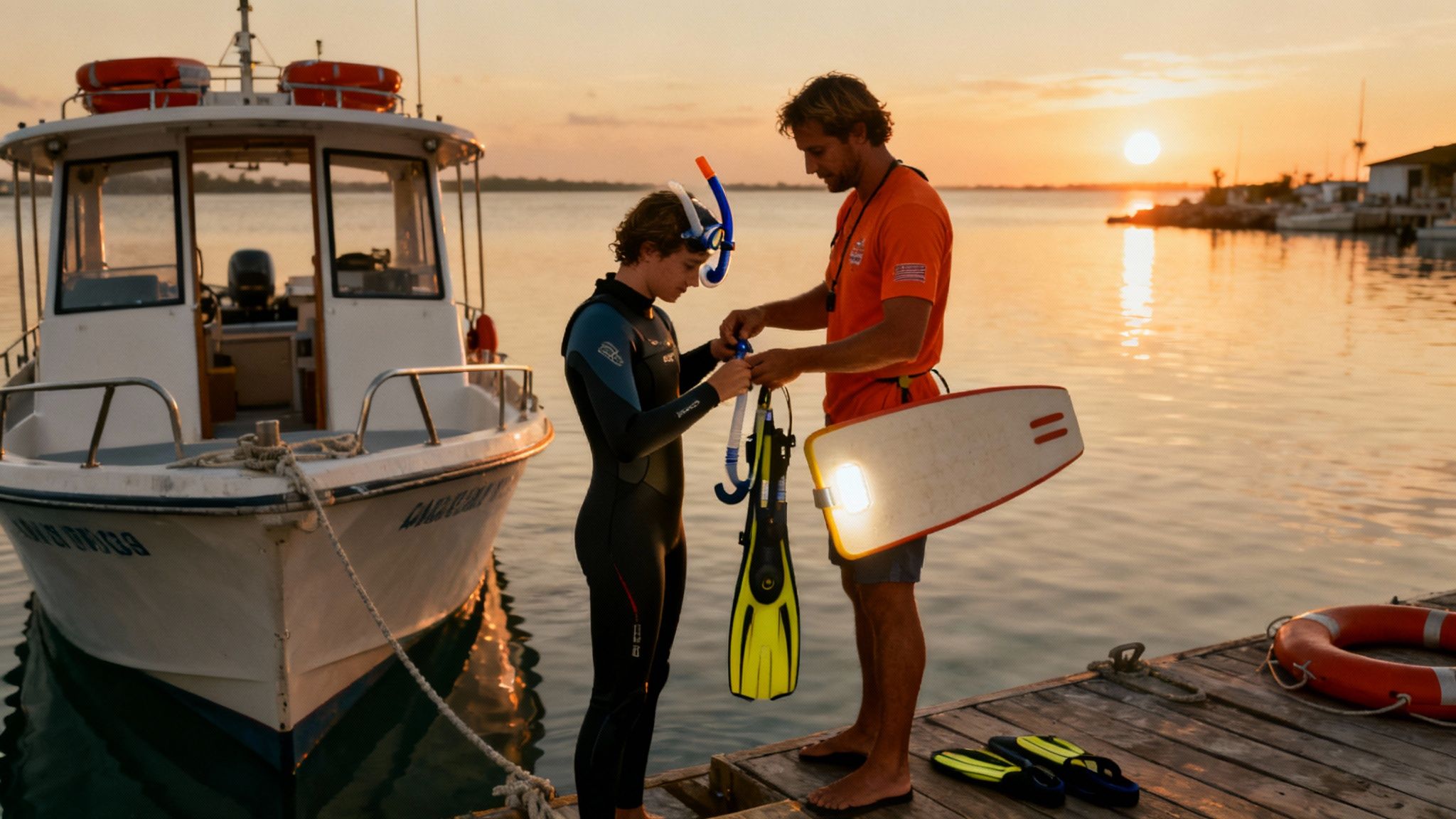
First things first, the crew will get you kitted out with all the right gear. They’ll help you find:
A Wetsuit: Trust me, you'll want one. Even in Hawaii, the water can feel chilly after a while, and the wetsuit keeps you perfectly comfortable for the entire 45-minute snorkel.
Mask and Snorkel: The crew are pros at making sure your mask fits snugly to keep water out. No annoying leaks!
Flotation Devices: Most tours provide something to help you float, which adds a nice layer of security and comfort.
Once everyone’s suited up, you’ll huddle up for a safety briefing. The guides run through everything—how to clear your snorkel, what to do in the water, and the golden rule of manta encounters: look, but don't touch. This is super important for your safety and for keeping the mantas happy and healthy.
Briefing done, it's time to cast off. The boat ride out to the manta site is part of the magic. If you’ve booked a sunset tour, you're in for a treat—watching a classic Kona sunset from the water is unforgettable. The trip is usually quick, maybe 15 to 20 minutes, just long enough to enjoy the coastline views before the main event. For a fantastic crew and experience, whether for mantas or a daytime Captain Cook snorkeling tour, we recommend a top-rated operator like Kona Snorkel Trips.
The Main Event: The In-Water Experience
When the boat anchors, the crew sets up a big, floating light board. Think of it as a glowing dinner table for the mantas. Powerful, eco-friendly lights shine down into the deep blue, attracting clouds of plankton—the mantas' favorite food. This light board is your front-row seat.
You'll slip into the water and grab onto handles on the board. From there, you just float. You're lying flat on the surface, looking straight down into the illuminated water below. No swimming is required, which makes this perfect for absolutely everyone, no matter your skill level.
The moment you see the first dark shape emerge from the depths is pure, breathtaking magic. These gentle giants, some with wingspans over 12 feet, glide, swoop, and do graceful barrel rolls just inches below you. It's a silent, mesmerizing ballet that feels like you've entered another world.
All the while, your guides are right there in the water with you, making sure everyone feels safe and comfortable. They’re also amazing storytellers, often pointing out specific mantas by name (they recognize them by their unique belly spots!) and sharing incredible facts about their lives. It turns a cool adventure into a really meaningful connection.
After about 45 minutes of being completely captivated, you’ll climb back onto the boat. The ride back to the harbor is warm, scenic, and filled with the quiet awe of what you just witnessed.
How to Prepare for Your Night Snorkel Trip
A little prep work goes a long way in making your manta ray snorkel a smooth, incredible experience. When you know what to expect—and what to pack—you can stop worrying about the little things and just soak in the magic.
My number one tip? Show up ready to get wet. Wear your swimsuit under your clothes so you can hop on the boat, get your gear, and be ready for the briefing without any fuss. It’s a simple trick that just makes everything easier. And since this all happens after sunset, having a basic understanding of boating at night considerations can help you feel even more comfortable with the whole process.
What to Pack and Expect
Even in beautiful Hawaii, the air can get a bit chilly on the water after dark. The ocean itself stays a pretty comfortable 75-80°F (24-27°C), and your tour will provide a wetsuit to keep you warm in the water. But the boat ride back is where you’ll really appreciate being prepared.
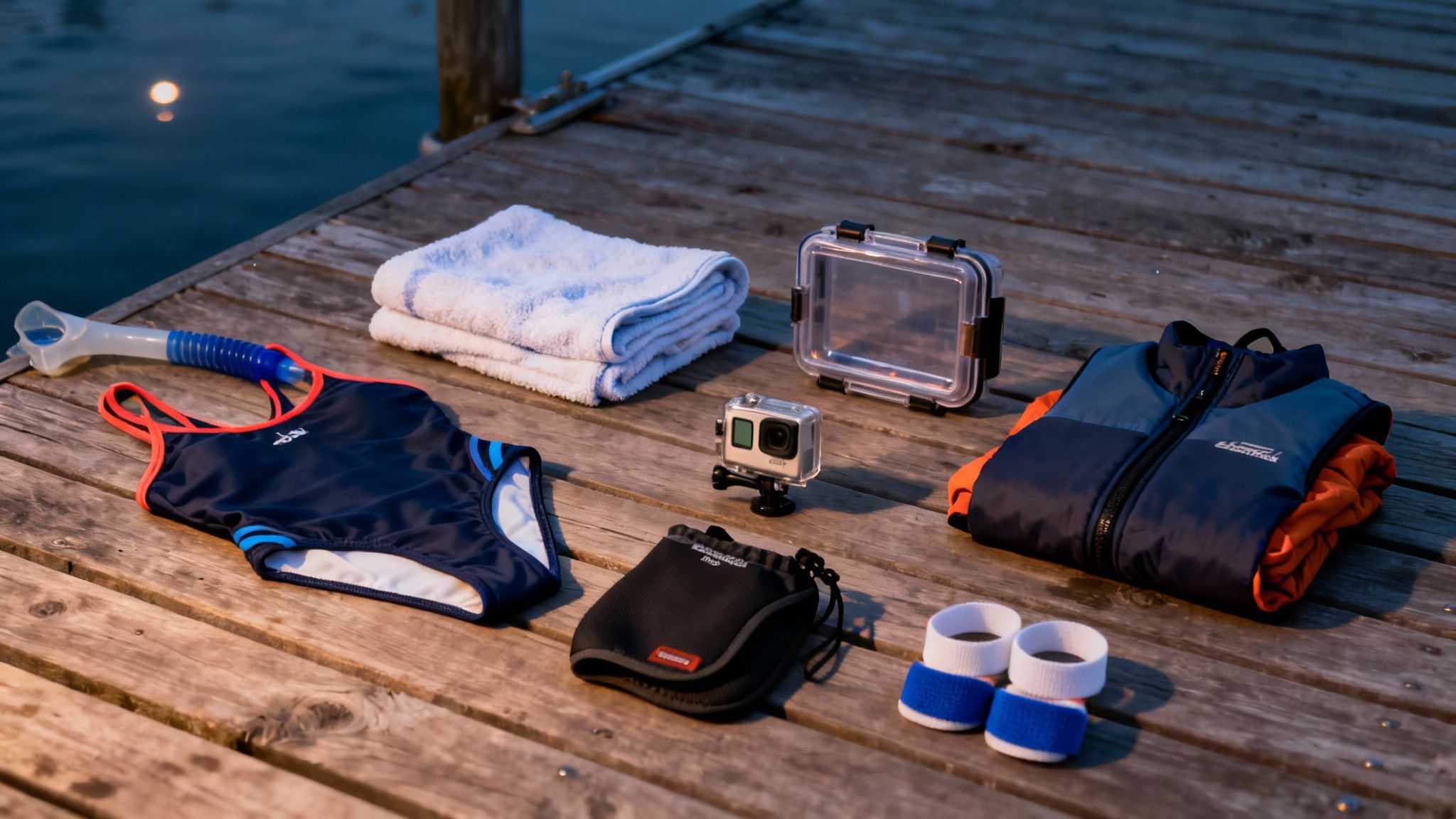
Here’s a quick list of essentials to toss in your bag:
A big, fluffy towel. Trust me, you’ll be glad you have it.
Something warm to wear on the ride back. A sweatshirt or a light jacket is perfect.
Motion sickness medicine, if you’re prone to it. Take it about an hour before you get on the boat for the best results.
An underwater camera (like a GoPro) if you want to capture the action.
It's also smart to manage your expectations. While wildlife is always unpredictable, the top tour operators in Kona boast a sighting success rate of over 85%. The odds are very, very good that you're in for a spectacular show.
Capturing the Moment and Managing Your Gear
Trying to get the perfect photo of manta rays at night can be tricky. The lighting is low and the mantas are constantly, gracefully moving. If you bring a camera, my advice is to keep it simple.
Focus on shooting video instead of still photos—it does a much better job of capturing the fluid, ballet-like movements of the mantas. Also, make sure your camera is fully charged and, most importantly, has a wrist strap so you don't lose it to the deep!
To make packing a breeze, here’s a simple checklist breaking down what your tour operator provides versus what you should bring along.
What's Provided vs What to Bring
Item | Provided by Tour | What You Should Bring |
|---|---|---|
Wetsuit | ✅ Yes | |
Mask & Snorkel | ✅ Yes | |
Fins | ✅ Yes | |
Warm Jacket | ✅ Yes | |
Dry Towel | ✅ Yes | |
Motion Sickness Aid | ✅ Yes (if needed) | |
Underwater Camera | ✅ Yes (optional) | |
Reef-Safe Sunscreen | ✅ Yes (for sunset tours) |
With this checklist, you’ll have everything you need. Being prepared lets you relax and focus on what matters: the awe-inspiring experience of floating just feet above these gentle giants of the sea.
Your Top Questions About the Manta Ray Night Snorkel
Jumping into the ocean at night to swim with giant manta rays sounds incredible, right? It is! But it’s also perfectly normal to have a few questions before you commit. We get it. Feeling prepared is the key to soaking up every moment of this amazing adventure.
We’ve pulled together answers to the questions we hear all the time from travelers just like you. From safety to what the mantas are really like, we'll cover it all. Our aim is to put your mind at ease so you can book your spot feeling excited and ready for a truly magical night.
Is This Tour Safe for Beginners and Children?
Absolutely! This experience was designed from the ground up to be safe and accessible for everyone, even if you've never snorkeled before. You won't even be swimming, really. Instead, you'll hold onto a large, stable floatation board that has powerful lights shining down into the water. You just float comfortably and watch the show below.
Every tour has lifeguard-certified guides in the water with you the whole time, keeping an eye on things and making sure you're comfortable. Most companies have a minimum age (usually around 5-7 years old), but the real factor is a child's comfort level in the water. Since it's not physically strenuous, it’s a fantastic and unforgettable adventure for the whole family.
What Are the Chances of Actually Seeing Manta Rays?
The odds are overwhelmingly in your favor, which is why this Kona experience is world-famous. Top-tier tour operators report a success rate of 85-90% all year long. How can it be so reliable? Because Kona's manta ray population doesn't migrate—they live here year-round.
The snorkel sites are well-established feeding zones where mantas have gathered for decades. The bright lights from the tour boats act like a dinner bell, creating a "plankton buffet" that reliably draws them in. While no wildlife encounter is ever a 100% guarantee, the Big Island manta ray night snorkel is about as close as you can get. Plus, many operators offer a "rain check" to come back for free if the mantas don't show up.
Will I Get Cold in the Water at Night?
This is probably the most common worry we hear, but the tour companies have you covered. They provide everyone with a quality wetsuit, usually 3mm thick. A wetsuit works by trapping a thin layer of water against your skin, which your body heat quickly warms up, creating a cozy layer of insulation.
The ocean temperature off the Kona coast stays a pleasant 75-80°F (24-27°C) pretty much all year. The first dip might feel a little chilly, but almost everyone is perfectly comfortable for the entire 45-minute snorkel. A pro tip: bring a dry towel and a warm hoodie for the boat ride back—the breeze on the water can feel cool once you're out.
Can We Touch the Manta Rays?
No, and this is the single most important rule of the night. It's all about protecting these incredible animals. Manta rays are covered in a special mucus coating that acts as their immune system, protecting them from bad bacteria and parasites.
Touching a manta ray, even accidentally, can rub off that essential protective slime. This leaves them vulnerable to infections and disease. For this reason, all responsible tour operators enforce a strict "passive interaction" rule for the health and safety of Kona's beloved manta population.
The best part is, you don't need to touch them to have an mind-blowing experience. The mantas are completely unfazed by people and will glide, swoop, and barrel-roll just inches away from you. You get a front-row seat to their underwater ballet while helping to ensure they'll be here for generations to come.
If you have more questions, this extensive manta ray FAQ page is an excellent resource to dive into.
Comments