A Guide To The Ultimate Kona Manta Ray Snorkeling Adventure
- Byron
- Feb 6
- 12 min read
Picture this: you're floating weightlessly in the calm, dark Pacific waters off the Big Island. Just inches beneath you, colossal manta rays, with wingspans reaching up to a massive 18 feet, perform a silent, beautiful ballet. This isn't something you watch on TV; this is the real, heart-pounding experience of manta ray snorkeling in Kona.
What Makes The Kona Manta Ray Snorkel So Magical?
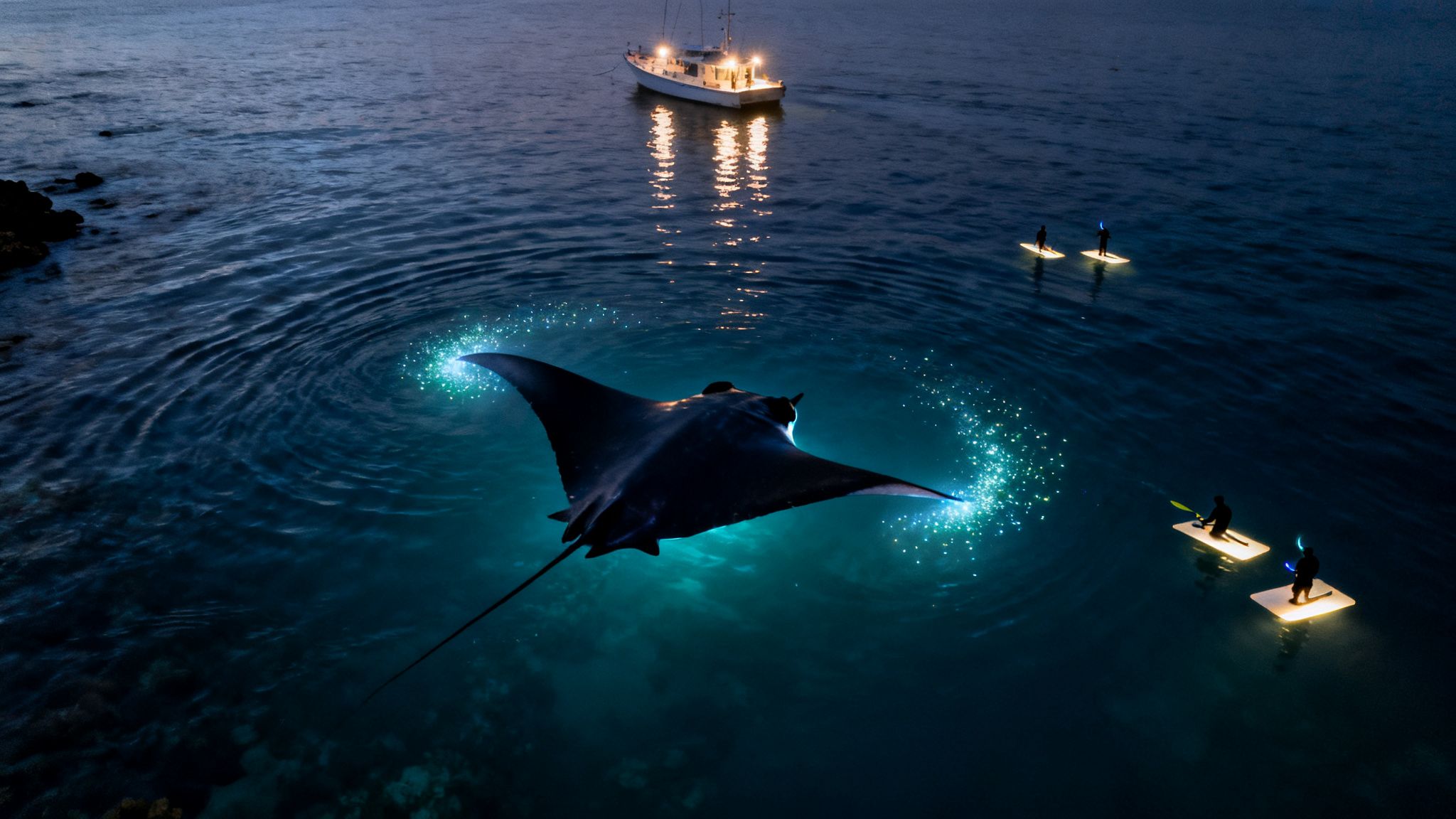
This unbelievable encounter is a perfect mix of wild nature and a little human ingenuity. Here’s how it works: after sunset, tour boats head out to specific spots along the coast and anchor up. They then submerge powerful, eco-friendly lights into the ocean, creating a massive beacon in the dark water.
This bright light acts like a magnet for clouds of microscopic plankton, which are the manta rays' favorite food. We’re essentially setting up a floating, all-you-can-eat buffet for them. The gentle giants, being filter feeders, are drawn right to this concentrated feast, gliding gracefully through the light beams with their mouths wide open to scoop up the plankton.
Why Kona Is The Manta Ray Capital Of The World
The Kona coast is just perfectly built for this nightly spectacle. Its calm, protected bays and nutrient-rich waters have created an ideal home for a resident population of reef manta rays. These aren't just one-off visitors; they are local celebrities who show up for dinner night after night.
In fact, dedicated photo-identification efforts have cataloged a core group of about 30 individual reef mantas that are spotted more than 50 times a year—proof that they call this place home. This incredible reliability is why hundreds of thousands of people get to experience this every year, making it a cornerstone of Hawaii's ocean adventures. You can learn more about these incredible animals and the efforts to protect them.
Choosing Your Perfect Manta Encounter
To see this natural wonder for yourself, you’ll need to book a spot on a guided tour. Picking the right operator is everything. For a truly top-tier adventure, we recommend checking out Kona Snorkel Trips. They’re celebrated as the most reviewed and highest-rated snorkel tour company in all of Hawaii, and their expert crew ensures every trip is safe, respectful, and absolutely unforgettable.
Most tours give you two main options for timing, each with its own unique vibe:
Sunset Tour: This trip gets you out on the water in time to catch a breathtaking Hawaiian sunset before the main event begins.
After Dark Tour: This tour departs after the sun has completely disappeared, putting you right under a canopy of stars for a true nighttime experience.
Deciding between a sunset or a later tour is a common question. To help you choose, here's a quick breakdown of what to expect from each.
Sunset Tour vs. After Dark Tour Which Is Right For You?
Use this quick comparison to decide on the best timing for your unforgettable manta ray snorkel adventure.
Feature | Sunset Tour | After Dark Tour |
|---|---|---|
Atmosphere | Vibrant and scenic, with a stunning sunset over the ocean. | Mysterious and tranquil, under a sky full of stars. |
Departure Time | Departs in the late afternoon to catch the sunset. | Departs after dark, focusing solely on the nighttime snorkel. |
Crowd Levels | Can sometimes be a bit busier as it's a very popular time slot. | Often a bit quieter, offering a more serene experience. |
Best For | Photographers and families who want the sunset experience and an earlier return. | Night owls and those seeking a truly immersive, magical nighttime encounter. |
Ultimately, both tours offer the exact same incredible opportunity to get face-to-face with Kona's gentle giants. Your choice really just boils down to personal preference: do you want a colorful sunset as your opening act, or would you rather dive straight into the nocturnal magic?
What To Expect On Your Manta Ray Snorkel Tour
From the moment you check in, the excitement starts to build. You’ll board the boat and cruise out along the Kona coast, a beautiful trip that often lines up perfectly with a stunning Hawaiian sunset. Think of this scenic ride as the opening act for the incredible show you're about to see.
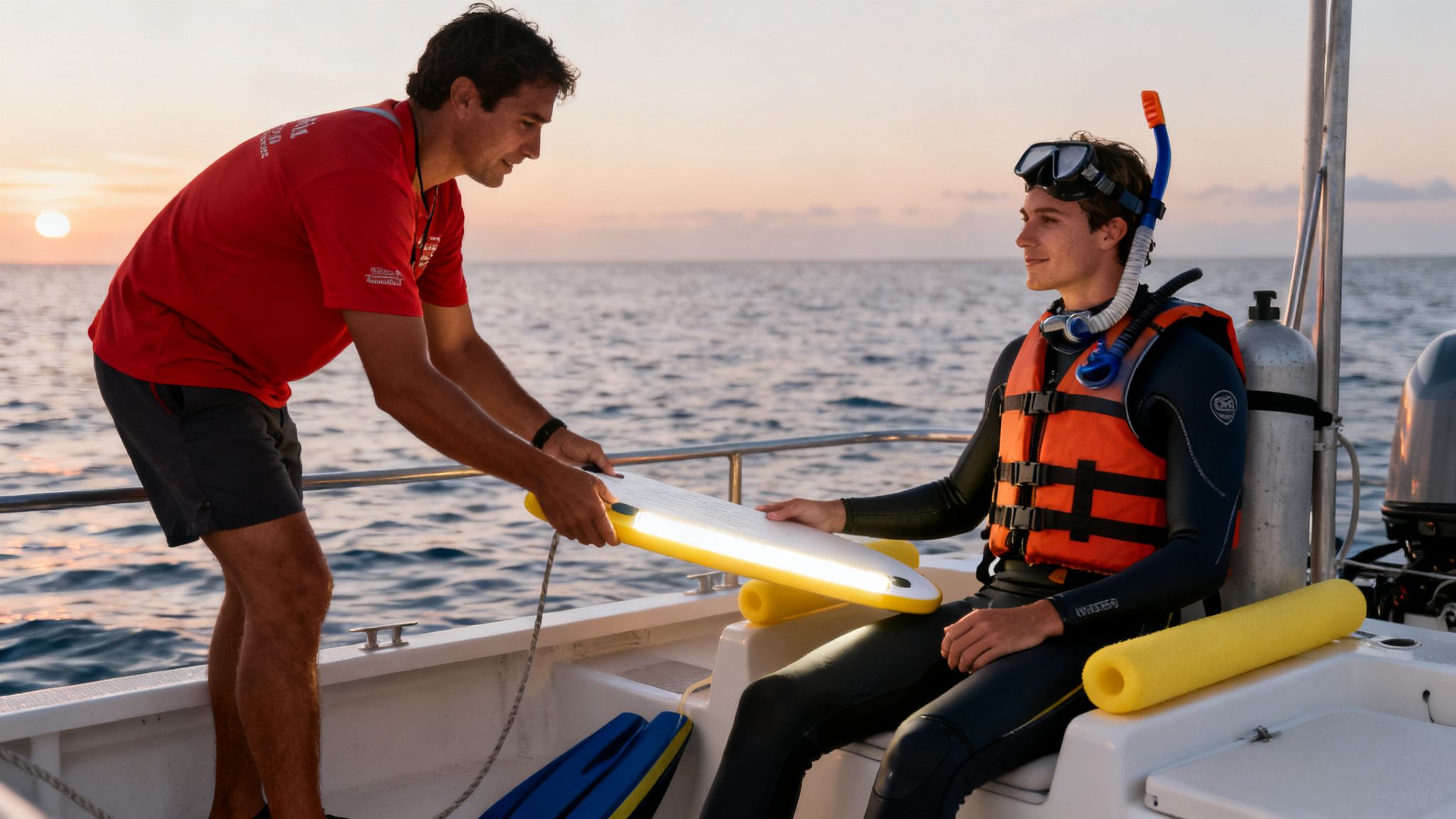
Once you reach the special manta viewing spot, your lifeguard-certified guides will give you a full safety briefing. They'll go over everything you need to know, from using your gear correctly to how to observe the mantas without disturbing them. Choosing an amazing operator like Kona Snorkel Trips is a big part of having a great time—they’re known as Hawaii's most reviewed and highest-rated snorkel company for a reason.
Entering The Water And Finding Your Spot
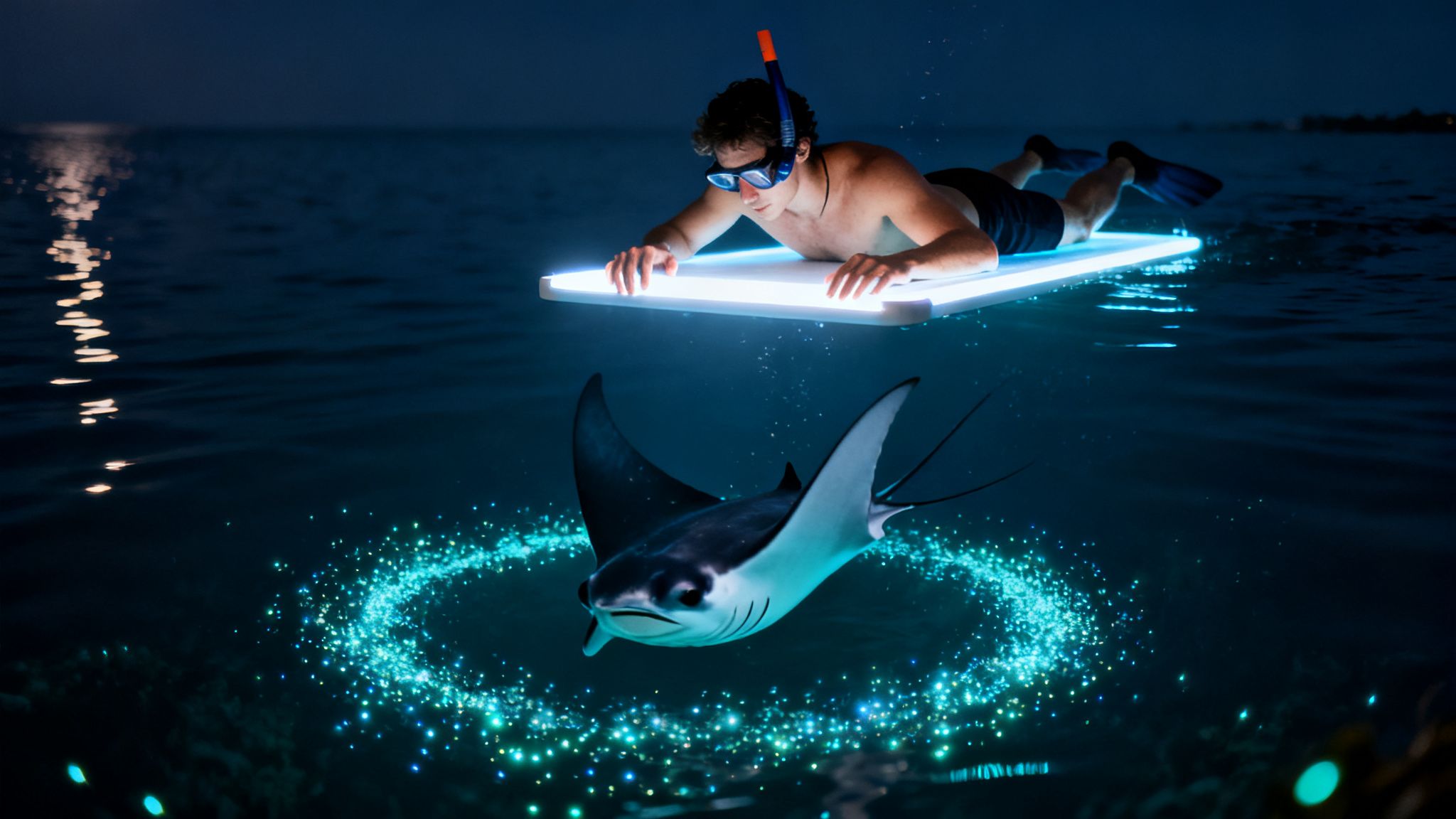
With the briefing done, it's time to slide into the calm, dark ocean. Don't worry, you won't be swimming around freely. Instead, you'll paddle over to a large, specially-built light board. This floating platform is your anchor and your front-row seat for the whole experience.
The light board is a brilliant piece of engineering. It has powerful lights that point straight down, doing two very important things: attracting the plankton that mantas love to eat, and lighting up the underwater stage right below you.
Once everyone is holding on, the anticipation really kicks in. It usually doesn't take long! The bright lights act like a magnet for plankton, and soon, thick clouds of these microscopic critters gather just under the surface. This is the dinner bell for the manta rays.
The Underwater Ballet Begins
Floating there in the quiet of the ocean, you’ll soon witness one of nature’s most incredible shows. It often starts with a giant, shadowy shape gliding up from the deep. Then, a magnificent manta ray will emerge into the light, its huge wingspan creating a breathtaking silhouette against the glow.
They perform what can only be described as a graceful underwater ballet, doing effortless barrel rolls just inches below you. With their huge mouths wide open, they filter the plankton from the water, sometimes getting so close you can feel the water move as they pass. It's a completely immersive experience. Curious about the perfect time for this encounter? You might be interested in our guide on the best time to see manta rays in Kona for more insights.
Staying Safe While Swimming With Gentle Giants
Let's be honest, the idea of slipping into the dark ocean at night can make anyone a little nervous. That’s completely normal! But you can relax, because on any professional manta ray snorkeling tour, your safety is the number one priority. The entire experience is built from the ground up to be secure, comfortable, and to build your confidence, even if you’ve never snorkeled before.
You don't need to be Michael Phelps to join in. All that’s required is being comfortable in the water and having the ability to float calmly. Highly-trained, lifeguard-certified guides are right there with you every step of the way—on the boat and in the water—to make sure everyone feels completely secure.
Layers Of Built-In Safety
Before you even dip a toe in the water, the crew runs through a detailed safety briefing. They'll walk you through the whole process, explain exactly what to expect, and show you how to interact with the mantas in a way that’s respectful to them and safe for you. This prep work goes a long way in putting everyone at ease.
Once it's time to get in the water, you're supported by several layers of safety gear:
Wetsuits: These do more than just keep you warm in the cooler night water. They provide a surprising amount of buoyancy, which makes floating feel practically effortless.
Flotation Noodles: If you want a little extra peace of mind, pool noodles are always on hand. Just tuck one under your arms or chest, and you’ll have all the extra stability you need.
The Light Board: This is your home base in the water. It’s not just for attracting plankton; it’s a large, stable platform you hold onto the entire time. You simply hold on and float, letting the board do all the work.
The combination of professional guides, buoyancy from the wetsuit, and a stable light board to hold onto creates an incredibly secure environment. The focus is entirely on observation, not on swimming.
This multi-layered approach to safety turns what might seem intimidating into a calm, relaxing float. With the experts handling all the logistics, you're free to just be in the moment, completely mesmerized by the magnificent creatures gliding below you.
Because manta ray snorkeling is an adventure activity, looking into Travel Insurance for Adventure Travel is a smart move for any trip. And for a closer look at this topic, you can find more specific safety tips for manta ray night snorkels here.
How To Prepare For Your Manta Ray Night Snorkel
A little bit of prep goes a long way in making your manta ray snorkel adventure absolutely perfect. Getting a few things sorted out beforehand means you can show up relaxed and ready to soak in the experience without sweating the small stuff.
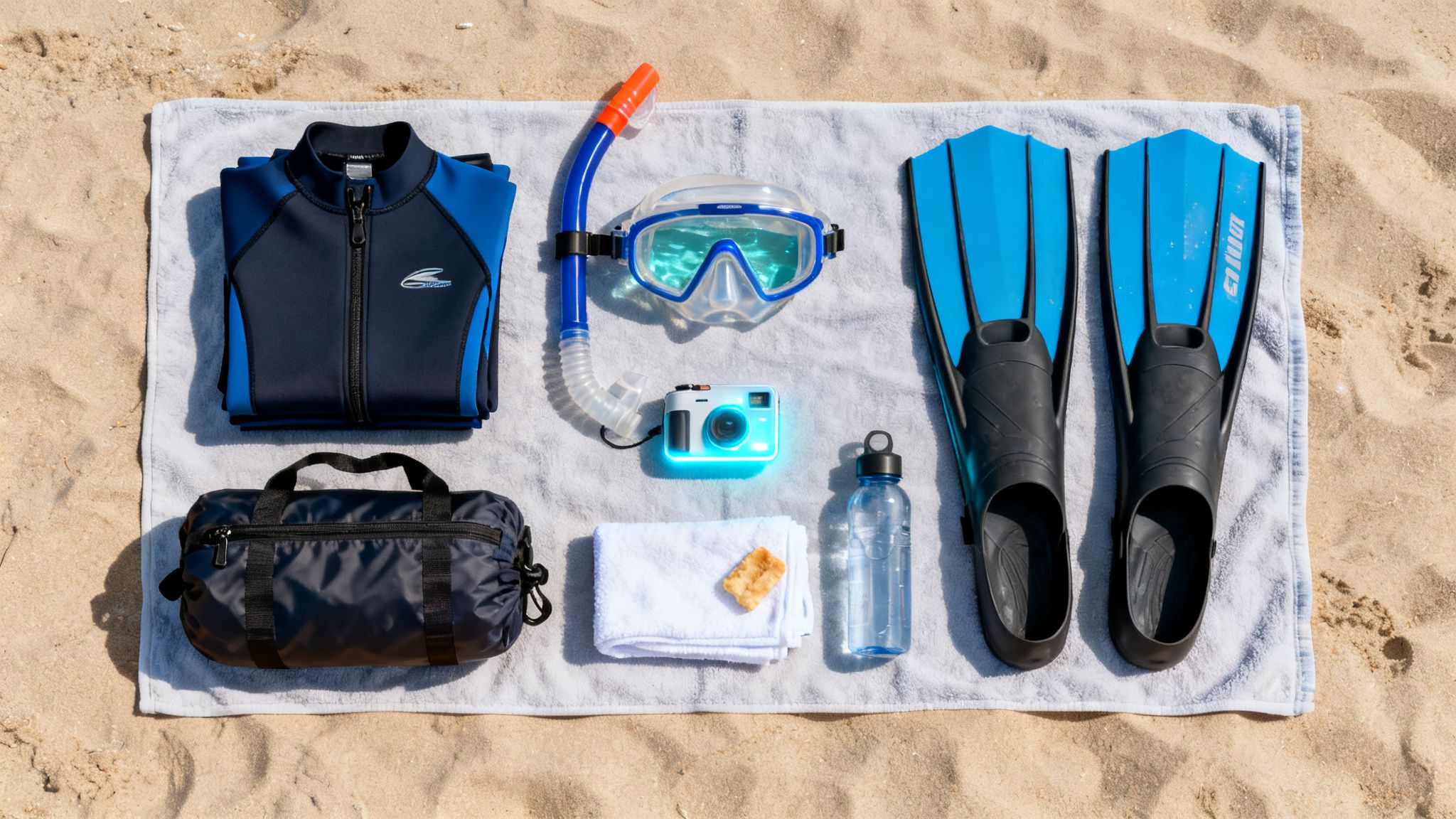
One of the biggest questions we get is about what to pack versus what’s already provided. Good news! Reputable tour operators handle all the main gear. You can leave your personal snorkel, mask, fins, and even your wetsuit at home. We’ll also have essentials like water and some hot cocoa to warm you up after your swim.
That keeps your personal packing list pretty simple and light. For a broader look at packing for your trip to the islands, this Hawaii vacation essentials and checklist is a fantastic resource.
Your Complete Manta Ray Snorkel Packing Checklist
So, what should you actually bring along for the boat ride? The key is to think about your comfort before and after you hit the water. It’s always easiest to arrive wearing your swimsuit under your clothes so you’re ready to go.
This simple table breaks down what's on you and what's on us.
Item | What to Bring | Provided by Tour |
|---|---|---|
Swimwear | ✅ | |
Towel | ✅ | |
Dry Change of Clothes | ✅ | |
Reusable Water Bottle | ✅ | |
Underwater Camera | ✅ | |
Motion Sickness Remedy | ✅ (if needed) | |
Wetsuit | ✅ | |
Mask, Snorkel & Fins | ✅ | |
Snacks & Drinks | ✅ | |
Floatation Device | ✅ |
Packing a bag with these few items ensures you’ll be comfortable from the moment you step on the boat until we’re back at the harbor.
A Few Pro Tips for a Great Night
Beyond just packing, a couple of simple tricks can make a huge difference.
If you’re prone to seasickness, it's a good idea to take your preferred remedy about an hour before we leave the dock. Eating a light meal beforehand (nothing too greasy!) and staying hydrated also works wonders. Once we're on the water, keeping your eyes on the horizon is the oldest and best trick in the book.
With your bag ready and these tips in mind, you're all set for a night you'll never forget. For a more detailed look, check out our guide on the 10 essentials for your manta ray snorkel in Kona.
Practicing Responsible Manta Ray Tourism
Seeing Kona’s manta rays glide through the water is a profound privilege, and it comes with an important responsibility. To make sure these gentle giants continue to thrive for years to come, every snorkeler needs to act like a respectful guest in their underwater home.
The whole philosophy can be boiled down to one golden rule: look, but never, ever touch. Manta rays have a delicate, protective mucus layer covering their skin. Think of this coating like their immune system—it shields them from nasty bacteria and parasites. Touching a manta ray, even by accident, can strip away this crucial protection, leaving them wide open to serious infections.
The Art Of Passive Observation
To be a truly responsible observer, your goal is to be as unobtrusive as possible. The best way to think about it is to become a floating log, just peacefully watching the show from the surface while holding onto the light board.
This practice is called passive observation, and it’s the standard for all ethical tours. Here’s what it means for you:
Stay Horizontal: Keep your body flat on the surface of the water. Try to avoid kicking or splashing around, as sudden movements can easily startle the mantas.
Keep Your Limbs In: Tuck your hands, arms, and fins out of the direct path of the mantas. You want to give them complete freedom to move around you.
Let Mantas Initiate: This is a big one. Never chase or swim after a manta ray. Let them control the encounter. If they decide to swim close, it will be completely on their terms.
By remaining calm and still, you become a non-threatening part of the environment. This allows the mantas to feel safe, which often results in closer and more spectacular encounters as they glide right beneath you without a care in the world.
Your Role In Manta Ray Conservation
Choosing a tour operator who strictly enforces these conservation-first guidelines is the single most important step you can take. These practices aren’t just for your safety; they are absolutely essential for the long-term health of Kona's precious manta ray population.
Globally, the situation for these creatures is precarious. It's estimated that a staggering 264,520 mobulids (the family that includes mantas) die each year, mostly due to fisheries. However, the success of ecotourism in protected places like Kona shows just how powerful it can be for conservation. A key part of the solution is education; studies show that over 90% of tour-goers report a much greater sense of conservation awareness after their experience. This helps fight the threats that have landed the species on the IUCN Red List as Vulnerable.
By following these simple rules, you’re not just a tourist—you become a partner in protecting these magnificent animals for future generations. To discover more about these incredible creatures, you might be interested in reading our article unveiling some fun facts about manta rays.
Exploring More Of Kona's Underwater World
That incredible feeling of snorkeling with manta rays is often just the start of a visitor's love affair with Kona's underwater world. While the mantas are definitely the stars of the night, the Big Island's coastline offers a whole different kind of magic during the day. It's easy to build out your perfect ocean itinerary with so many world-class options right at your fingertips.
One of the most famous spots you'll hear about is the historic Kealakekua Bay, home to the Captain Cook Monument. This place is a marine life conservation district, which means the water is exceptionally clear and the coral reefs are just buzzing with colorful tropical fish. It's a true snorkeler's paradise and a completely different, sun-drenched vibe from the night snorkel.
Discovering Kealakekua Bay
To really get the full experience of this protected area, going with a guided tour is the way to go. For a top-notch Kealakekua Bay snorkeling trip, we always point people toward Kona Snorkel Trips. They're the most reviewed and highest-rated snorkel tour company in all of Hawaii, and their expert crew makes sure you have a safe, educational, and absolutely breathtaking adventure. You can also find some fantastic Captain Cook snorkeling tours that will take you right into the heart of the action.
A Deeper Dive With Manta Rays
Now, for any certified scuba divers out there, seeing the mantas from below is a game-changer. Instead of floating on the surface, you actually get to sit on the ocean floor. From there, you just watch as these gentle giants glide and do barrel rolls right over your head. It’s an incredibly immersive and awe-inspiring way to see the feeding frenzy.
When it comes to the manta ray dive, you want the absolute best in the business. We highly recommend Kona Honu Divers. They are the top-rated and most-reviewed dive company not just in Hawaii, but in the entire Pacific Ocean. Their commitment to safety and marine conservation makes them the number one choice for this unbelievable scuba adventure.
Whether you're exploring vibrant reefs by day or diving with giants at night, Kona’s waters have something for every ocean lover. If you're thinking about creating your own custom adventure on the water, you might want to check out our guide on boat rental essentials for Kona adventures.
Your Manta Ray Snorkeling Questions, Answered
Heading out to meet these gentle giants always brings up a few questions, especially if it's your first time. We get it! To make sure you feel totally ready for the adventure, we’ve put together answers to the most common things people ask.
Is Manta Ray Snorkeling In Kona Safe For Children?
Absolutely. We love seeing families out on the water, and reputable tours are designed to be safe and fun for kids. Most companies welcome children ages 5 and up, as long as they're comfortable in the water.
Safety is always the number one priority. With lifeguard-certified guides, small groups, and flotation gear like wetsuits and pool noodles, you can rest easy. Kids hold onto the same floating light board as the adults, giving them a stable and secure front-row seat to the magic.
What Is The Best Time Of Year To See Manta Rays In Kona?
Here’s the best part: any time is a great time! Kona is lucky to have a resident population of manta rays that cruise the coastline to feed every single night. This means your chances of an amazing encounter are fantastic no matter when you visit.
The biggest variable isn't the month, but the ocean conditions on any given night. Fortunately, the bays where the tours operate are naturally protected and usually quite calm year-round.
Will I Get Cold Snorkeling At Night?
It’s a common concern, but tour operators have you covered. You’ll be given a quality wetsuit that does a surprisingly good job of insulating you from the cooler night water. For the 40-50 minutes you're snorkeling, most people find they stay perfectly warm and comfortable.
And for when you get back on the boat? Many tours have warm drinks like hot cocoa waiting for you to complete the cozy, post-snorkel experience.
What Happens If We Don't See Any Manta Rays?
While sightings are incredibly consistent—most tours boast a success rate of over 90%—these are wild animals, and nature is never a 100% guarantee. The best tour operators understand this and stand by their experience.
Many offer a "manta guarantee." If for some rare reason the mantas don't show up on your night, they'll invite you to join them again on another tour for free (usually on a space-available basis). It shows their confidence and commitment to giving you an incredible experience.
Have more questions about planning this one-of-a-kind Kona adventure? Head over to the Manta Ray Night Snorkel Hawaii homepage to learn more. We’re always here to help you get everything squared away for an unforgettable night.
Comments