Swimming with manta rays kona: Night Snorkels, Safety Tips & Kona Wonders
Picture this: you're floating weightlessly in the warm, dark Pacific Ocean. Below you, giant, graceful manta rays soar and loop through the water. Their movements are like an underwater ballet, illuminated by soft lights from below. This isn't a dream; it's the unforgettable experience of swimming with manta rays in Kona, a true bucket-list adventure that feels like stepping into another world. For more information about the manta ray night snorkel check out our home page: https://www.mantaraynightsnorkelhawaii.com/
Your Guide To The Kona Manta Ray Night Snorkel
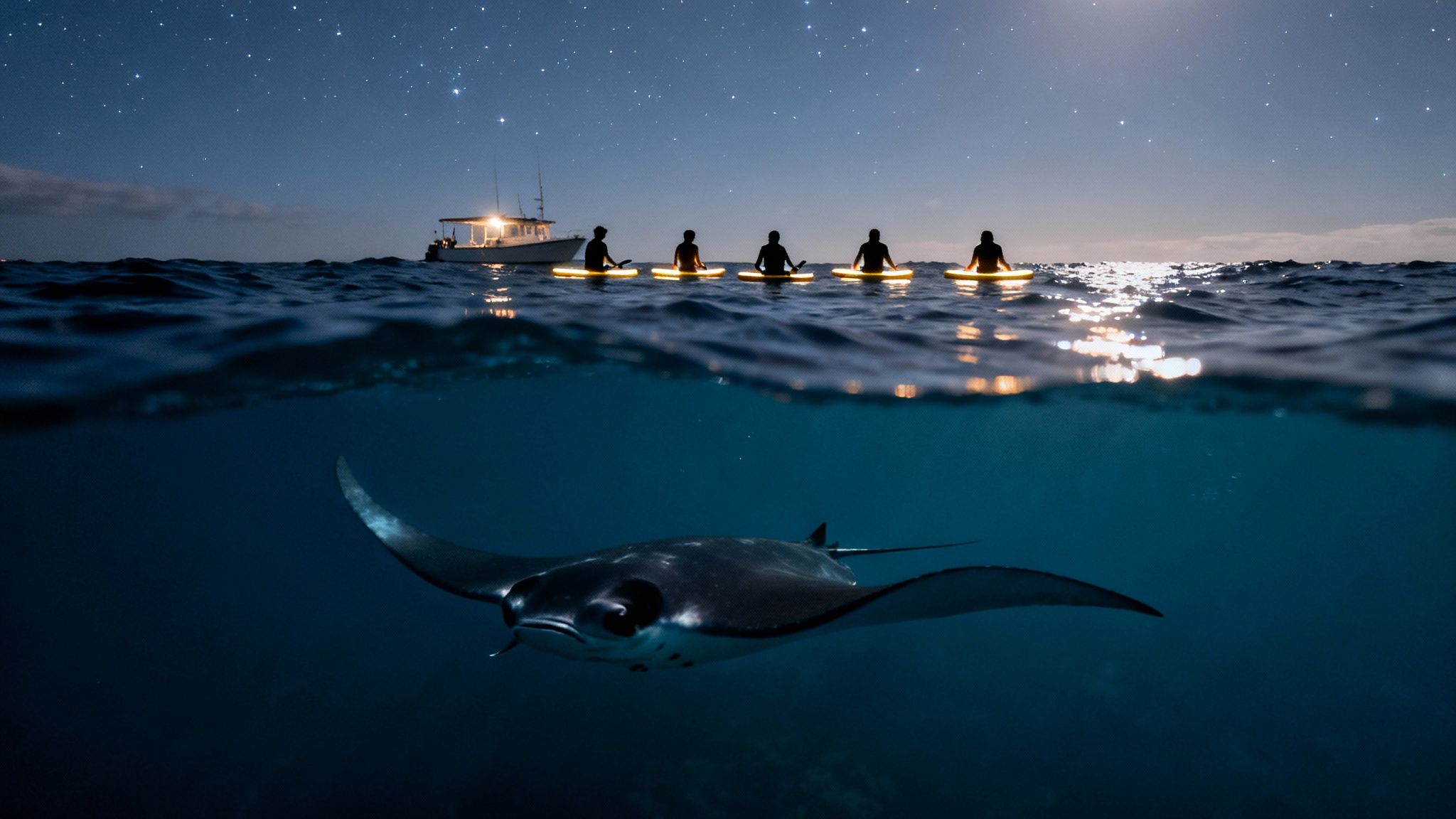
The Kona night snorkel isn't just a tour; it's consistently ranked as one of the most incredible wildlife encounters on the entire planet. We're here to walk you through every step, from understanding what makes Kona the #1 spot in the world for manta rays to picking the perfect tour and getting ready for your trip.
Get ready to discover everything you need for a safe, magical, and truly memorable night with these gentle giants. The experience is totally unique, blending the thrill of a night snorkel with the serene beauty of these amazing animals.
While this guide is all about the mantas, you can always check out our other guide on the top snorkel spots in Hawaii for more incredible ocean adventures.
Why Kona Is The Manta Ray Capital Of The World
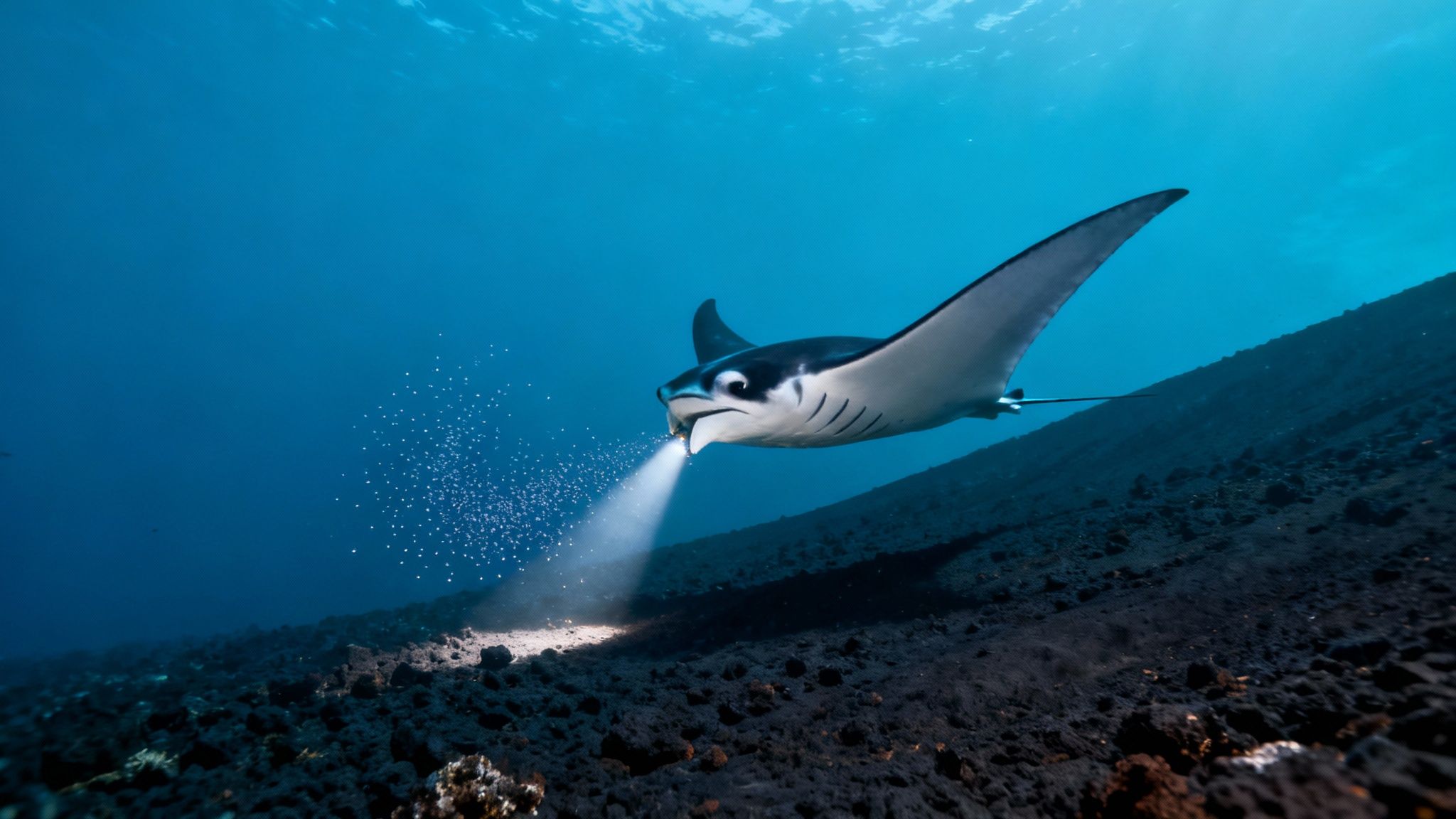
So, what makes Kona the absolute best place on the entire planet for swimming with manta rays? It's not just luck; it's a perfect storm of geography and biology that you won't find anywhere else.
The Big Island’s ancient underwater volcanic slopes have created the ideal habitat for these animals. Over time, the bright coastal lights from hotels and businesses have acted like a dinner bell, attracting plankton and training a large, resident population of mantas to show up and feed every single night.
The best part? These gentle giants don’t migrate. They live here year-round, which has led to some truly incredible sighting consistency.
The Kona Coast regularly boasts success rates between 80-90%, and one of the main sites even hit an unbelievable 96% sighting rate in a single year. That’s almost a guaranteed encounter every night.
When you understand why this ecological magnet exists, you get a much deeper appreciation for the magic you’re about to see. It’s nature and science working together to create a dependable and unforgettable spectacle.
For an even deeper dive into the specifics, check out our top Hawaii dive guide to learn more.
What To Expect On Your Night Snorkel Adventure
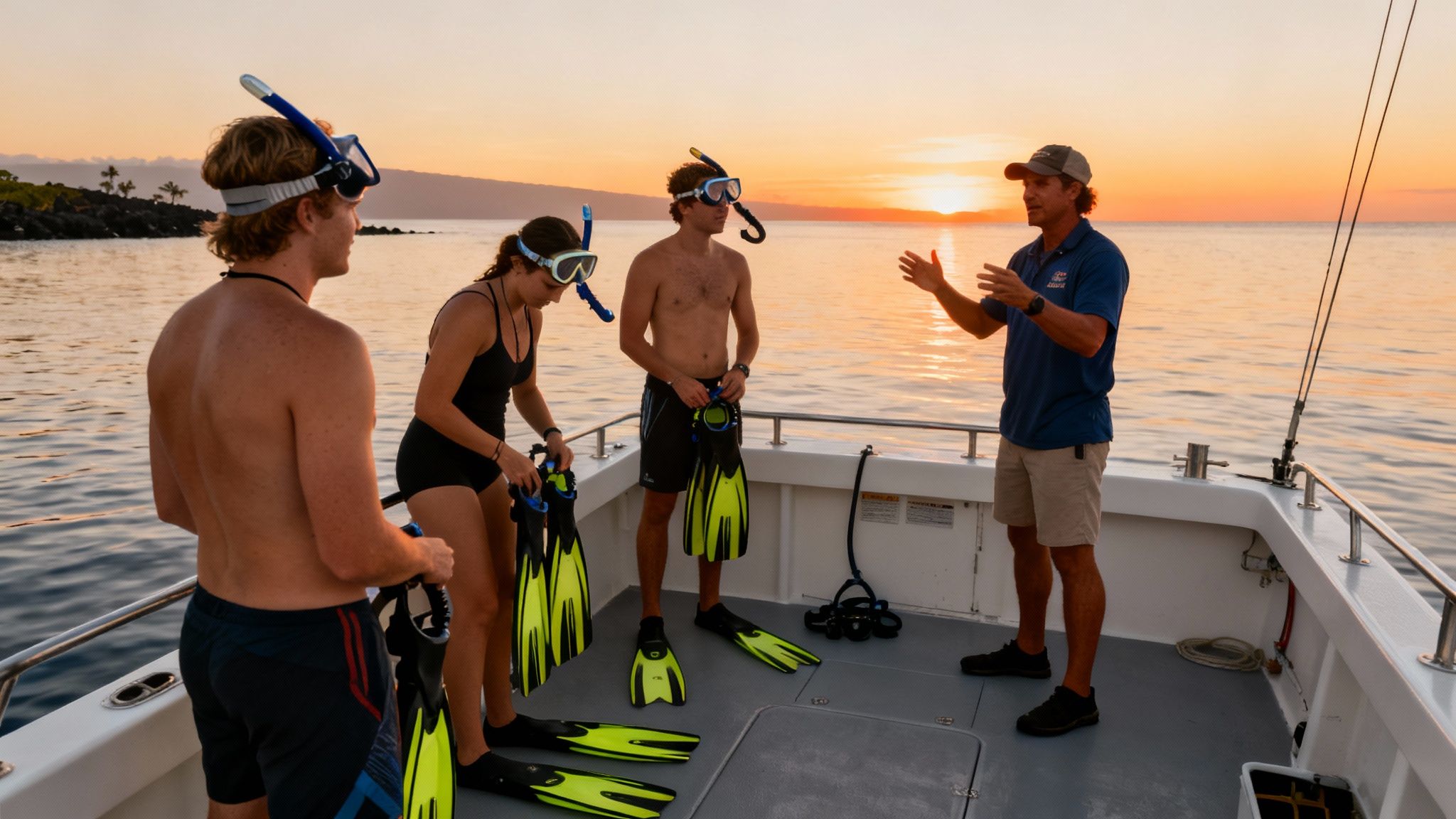
So, what’s this whole experience actually like? Let’s walk through what happens on a typical tour so you know exactly what to expect from start to finish.
Your adventure kicks off with a short boat ride along the incredible Kona coast. Most tours are timed just right, so you’ll get to soak in a spectacular Hawaiian sunset on your way out to the site. It’s the perfect start to a magical evening.
Once the boat is anchored, your certified guides will give a detailed safety briefing. They'll cover everything you need to know, especially how to interact with the mantas respectfully and safely. After that, it’s time to slip into the water. You’ll be given a spot on a custom-built flotation board that has powerful, bright lights shining down into the depths.
These lights are the key. They attract swarms of plankton, which is the manta rays' favorite meal. Before you know it, these gentle giants arrive for their nightly feast. All you have to do is hold on, float, and watch in absolute awe as they swoop, glide, and barrel-roll right beneath you. It’s a totally passive and incredibly safe way to get the best possible view without ever disturbing these amazing animals.
For a more detailed breakdown, you can read our complete guide on the night snorkeling experience with manta rays in Kona.
Choosing The Best Manta Ray Snorkel Tour
With so many boats heading out every night in Kona to see the manta rays, picking the right tour can feel overwhelming. But getting this choice right is what separates a good trip from a truly unforgettable one.
The best way to sort through the options? Look at what past customers are saying. Real-world reviews are your best friend here, giving you the inside scoop on safety, how crowded the boats are, and the quality of the guides. Knowing when tour operators ask for reviews can help you find the most genuine feedback.
To help you get started, here's a quick rundown of what to look for when you're comparing tours.
Kona Manta Ray Tour Comparison
Feature | What to Look For | Why It Matters |
|---|---|---|
Safety Record | 5-star safety ratings and experienced, certified guides. | Your safety is everything. A top-notch crew knows how to handle any situation, letting you relax and enjoy the magic of the mantas. |
Group Size | Smaller groups, ideally under 25 people. | A less crowded boat means more personal attention, more space in the water, and a better, more intimate view of the mantas. |
Guide Quality | Look for reviews mentioning knowledgeable and passionate guides. | Great guides don't just keep you safe; they share fascinating facts about the mantas and the local ecosystem, making the trip much richer. |
Gear Quality | Clean, well-maintained wetsuits, masks, and snorkels. | Good gear is comfortable and functional. A leaky mask or a worn-out wetsuit can easily ruin the experience. |
Boat & Amenities | A comfortable boat with amenities like snacks, drinks, and a restroom. | You'll be on the water for a couple of hours. Small comforts make a big difference, especially after you get out of the chilly water. |
Ultimately, choosing a company with a proven track record is the surest way to have an amazing time.
For a trip that consistently knocks it out of the park, Kona Snorkel Trips is a great option for a tour because it's the most reviewed and highest rated snorkel tour company in Hawaii. They are hands-down the most-reviewed and highest-rated snorkel company in all of Hawaii, and their expert crew’s commitment to safety is second to none.
If you want to dig deeper and compare a few more top-tier options, check out our complete breakdown of the 12 best manta ray snorkel Kona tours.
Practicing Safe And Responsible Manta Interaction
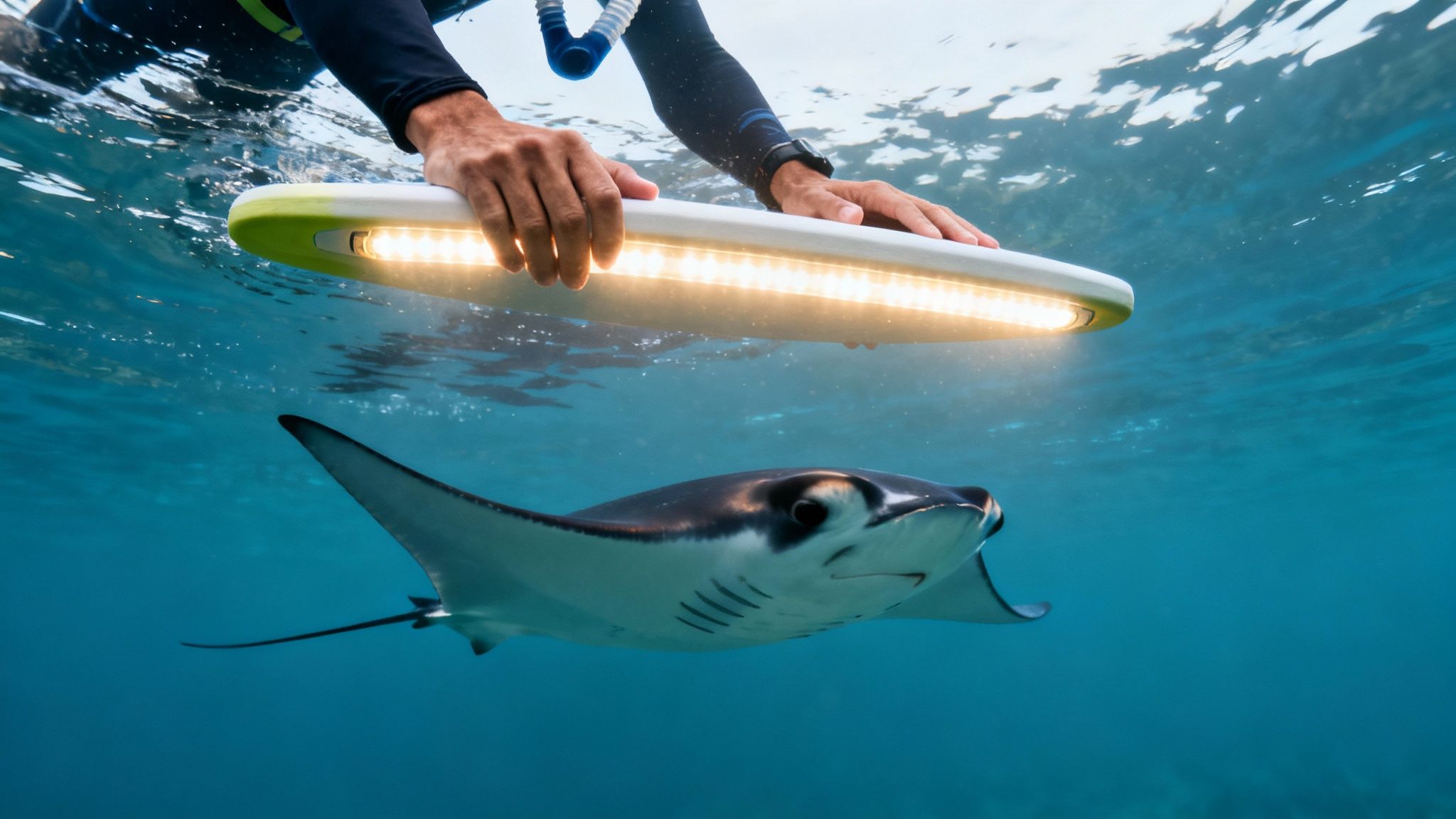
This whole incredible encounter is only possible because of responsible tourism practices designed to protect Kona’s precious manta ray population. There's one simple rule that trumps all others: look, but don't touch.
It’s a critical rule for a very good reason. Manta rays have a protective mucus layer on their skin, and our touch can strip it away, leaving them wide open to dangerous infections.
That's exactly why every tour uses the passive flotation method. You'll hold onto a specially designed light board and simply float on the surface, becoming a passive observer. It's also a good idea to run through your own simple on-the-spot hazard check before getting in the water to ensure you’re mentally prepped for a respectful interaction.
This hands-off approach lets the mantas glide and feed naturally right below you, without ever feeling threatened or crowded. When you follow these guidelines, you're doing your part to keep this experience sustainable for generations to come.
And it’s a big deal. An estimated 80,000 people get to witness this magic every year, making it a true cornerstone of Hawaii’s marine tourism. To dig deeper into safety, be sure to read about why manta rays are so safe to swim with here: https://www.mantaraynightsnorkelhawaii.com/post/can-manta-rays-sting-you-the-ultimate-guide-to-safe-snorkeling.
Have Questions? We Have Answers
Got a few last-minute questions before you book? We hear these all the time, so we've put together some quick answers to help you feel completely prepared for your big night out with the mantas.
Do I Need To Be A Strong Swimmer?
Not at all! You don't need to be an Olympic swimmer for this adventure. In fact, you barely swim at all. You’ll be holding onto a large, custom-made float board the entire time you're in the water, so you can just relax.
The tour companies also provide wetsuits, which give you a little extra buoyancy. The whole experience is about floating peacefully and watching the show below, not about swimming laps.
Is This Experience Safe For Children?
Absolutely! Swimming with manta rays in Kona is generally a very safe and incredible experience for kids who are already comfortable being in the ocean. It's a memory they'll talk about for years.
Most tour operators have a minimum age, which is usually around 5-7 years old, so it's best to check when you book. It truly is a fantastic and educational experience for the entire family.
What Should I Bring On The Tour?
Keep it simple! You’ll definitely want a towel and a change of clothes for after you get out of the water. We also highly recommend bringing a light jacket or a cozy sweater for the boat ride back to shore, as the sea breeze can get a bit chilly at night.
As for the gear, don't worry about it. The tour company provides everything you need, including high-quality snorkels, masks, and wetsuits.
To make things even clearer, here are a few more common questions we get from guests planning their manta ray snorkel.
Common Questions About Manta Ray Snorkeling
Question | Our Answer |
|---|---|
How close will the manta rays get? | Incredibly close! It's common for them to glide within inches of you as they feed on the plankton. Just remember not to touch them. |
Is it guaranteed I'll see manta rays? | While sightings are extremely common (over a 90% success rate for most tours), manta rays are wild animals, so sightings can never be 100% guaranteed. |
What happens if the weather is bad? | Safety is always the top priority. If conditions are unsafe (high winds or swells), the tour operator will cancel and offer to reschedule or provide a refund. |
Can I wear my glasses under the mask? | No, glasses won't create a proper seal with the snorkel mask. If you wear contacts, they are the best option. Otherwise, you can get a prescription mask. |
We hope this clears up any lingering questions! The most important thing is to relax, trust your guides, and get ready for one of the most magical wildlife encounters you'll ever have.
Comments