Big Island Manta Ray Night Snorkel Guide

You're sitting with a phone full of tour pages, wondering if getting into the ocean after dark is magical, nerve-wracking, or both. That's a normal place to start. A Big Island manta ray night snorkel sounds dramatic, but the actual job for you is simple. You float calmly at the surface, breathe through a snorkel, and watch wild reef manta rays feed below you.
This guide explains that experience step by step. You'll learn why lights and tiny plankton matter more than luck, how your position in the water changes what you see, and which questions to ask before you book. No chasing, no touching, and no promises that nature can't keep.
Table of Contents
What to Expect on a Kona Night Snorkel - What This Experience Is and Is Not
How Manta Feeding Creates the Night Spectacle - Why Your Position Matters
The Typical Kona Manta Ray Tour Flow - From Check-In to the Water
Shared Private and Combo Tour Options - Daytime Pairings Worth Considering
Safety Gear and Respectful Manta Viewing - Your Pre-Snorkel Routine
Best Times and Conditions for Manta Sightings - Why Sites Behave Differently
Photography and Viewing Tips for Manta Rays - Practical Camera Decisions
Book Your Kona Manta Experience Responsibly - A Calm Booking Checklist
What to Expect on a Kona Night Snorkel
You arrive before dark, when the Kona coast still shows color in the sky. The crew checks you in, fits your gear, and explains where you'll sit, how you'll enter the water, and how you'll return to the boat. That daylight-to-night transition helps. You're not stepping straight from a bright parking lot into black water.
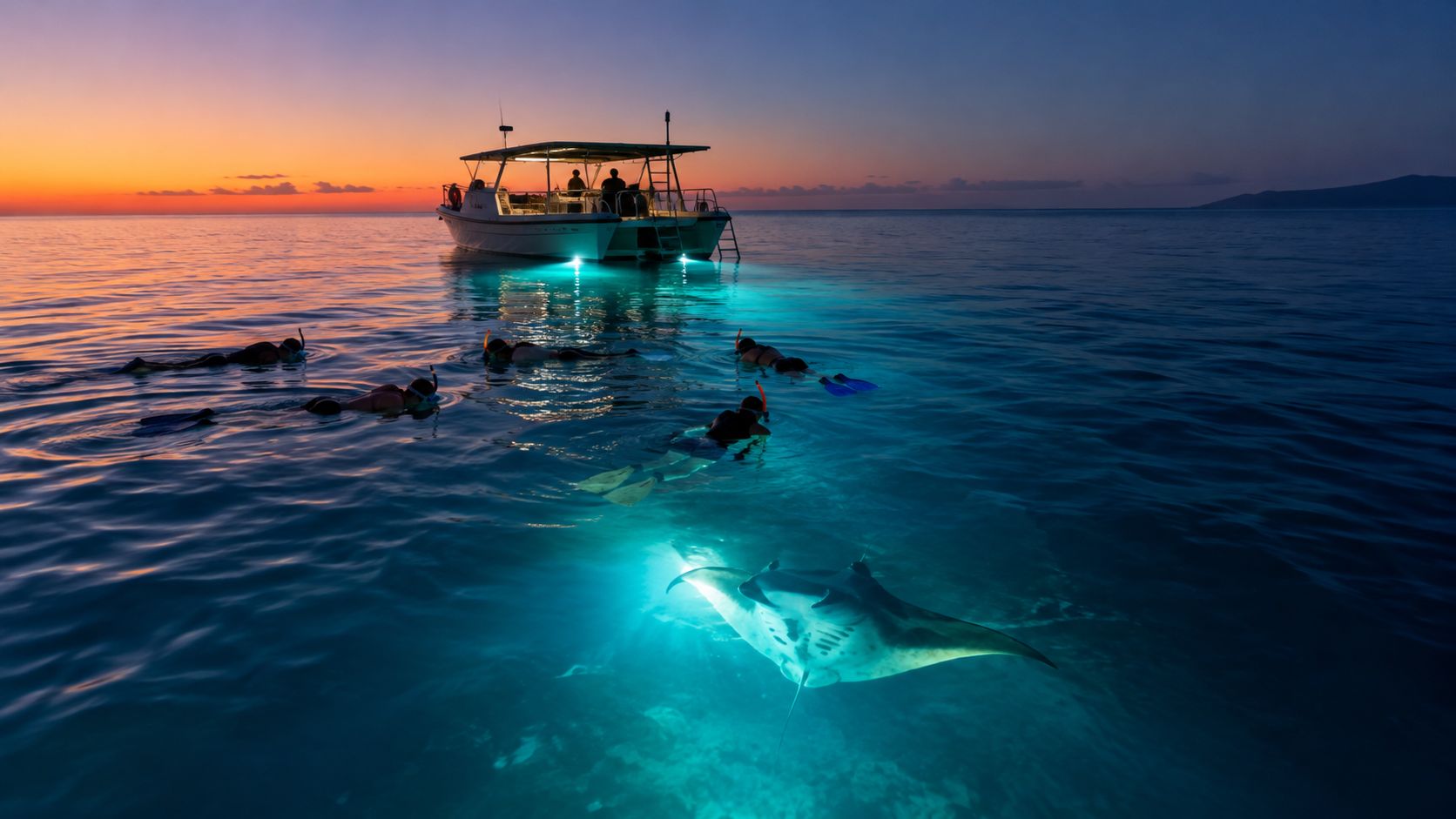
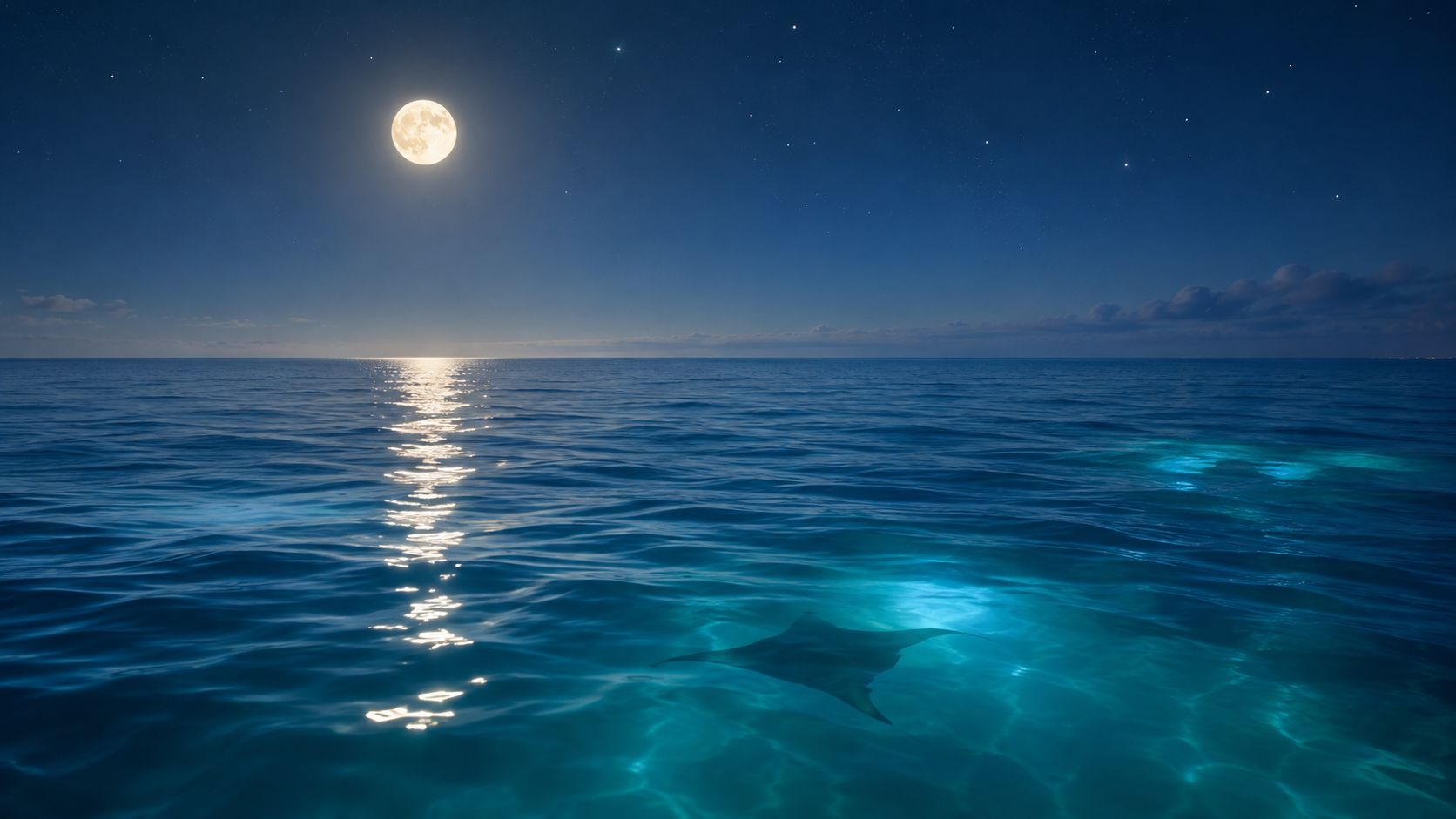
On the ride out, the shoreline lights shrink behind you. At the viewing area, guides place underwater lights and a flotation board, then help the group settle at the surface. You hold on, put your face in the water, and look down into a lit column. At first you may see only drifting specks. Then a wide, silent shape can glide in beneath the group, turn, and pass again.
What This Experience Is and Is Not
This is observation, not contact. You don't ride a manta, pursue one for a closer look, or reach out when it passes near. The animals decide the distance, and that distance can change from minute to minute.
You can start your planning from Manta Ray Night Snorkel Hawaii, which offers guided night snorkeling off the Kona coast with gear and in-water support. If boat motion worries you, read practical ways to avoid sea sickness before your trip and tell the crew early if you feel unwell.
Underwater visibility varies: Clear water makes the light column easy to read. Surge or drifting particles can soften the view.
Group movement stays limited: You'll mostly float in place rather than swim a long route.
Wildlife sets the schedule: A manta may feed below you for repeated passes, or conditions may keep feeding activity elsewhere.
How Manta Feeding Creates the Night Spectacle
The spectacle runs on a simple chain. First, downward-facing lights shine into the upper water. Tiny animals called zooplankton gather in that light because many of them are phototactic, which means they move toward light. Their gathering creates a temporary patch of concentrated food.
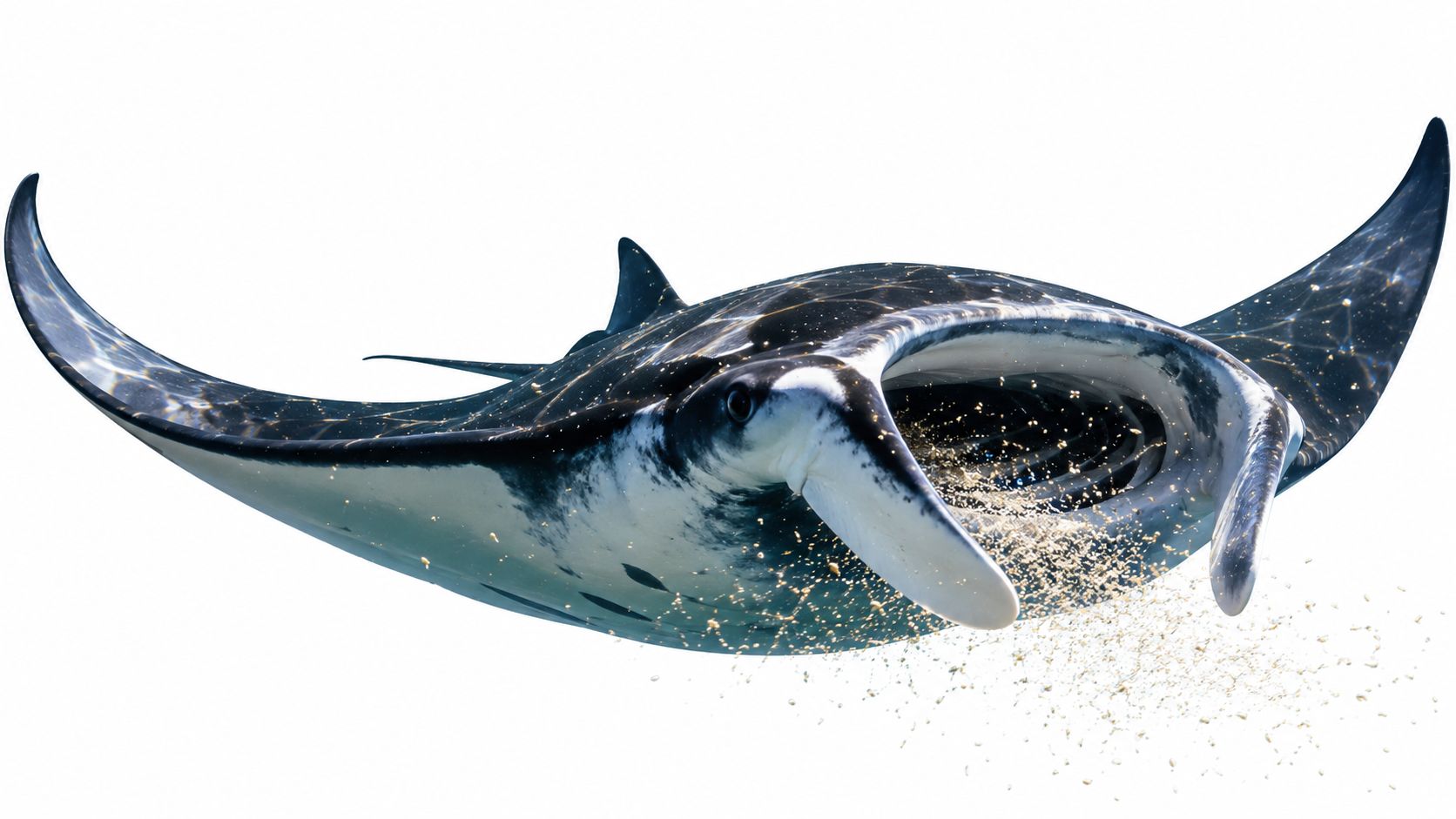
Reef manta rays, Mobula alfredi, then swim through that patch with their mouths open. They filter plankton from the water as they pass, turn, and come through again. Think of the light as setting a small table in open water. The crew isn't putting food on the table. The light gathers food that's already drifting nearby, and the mantas come to feed where it's dense.
Why Your Position Matters
Research archived through Hawaiʻi County records explains that rays were typically observed within approximately 10 meters of the lights, showing how tightly feeding follows the illuminated patch. That doesn't guarantee a close pass under your board. It explains why guides care so much about placing the light field well and keeping you near it.
Field rule: Stay near the light, stay horizontal, and let the feeding patch come to you. Swimming after a ray usually takes you away from the food it's following.
Calm water helps the patch hold together. Strong current can pull plankton apart, lower the density, and make feeding less concentrated. That's why a guide may reposition the board or ask the group to wait instead of spreading out. You're watching a prey-concentration system, not a baiting operation. If you're curious about the animals before you go, these manta ray facts give useful background without turning the animal into a sideshow.
The Typical Kona Manta Ray Tour Flow
You arrive while the crew is preparing the boat, and the first few minutes set the tone for the night. A guided Big Island manta ray night snorkel follows a clear sequence, so you can focus on listening and getting comfortable rather than figuring out each step in the water.
From Check-In to the Water
Arrival and check-in: Meet the crew, confirm your booking, and find out where to leave dry items. Mention any concerns about motion, boarding, or equipment fit.
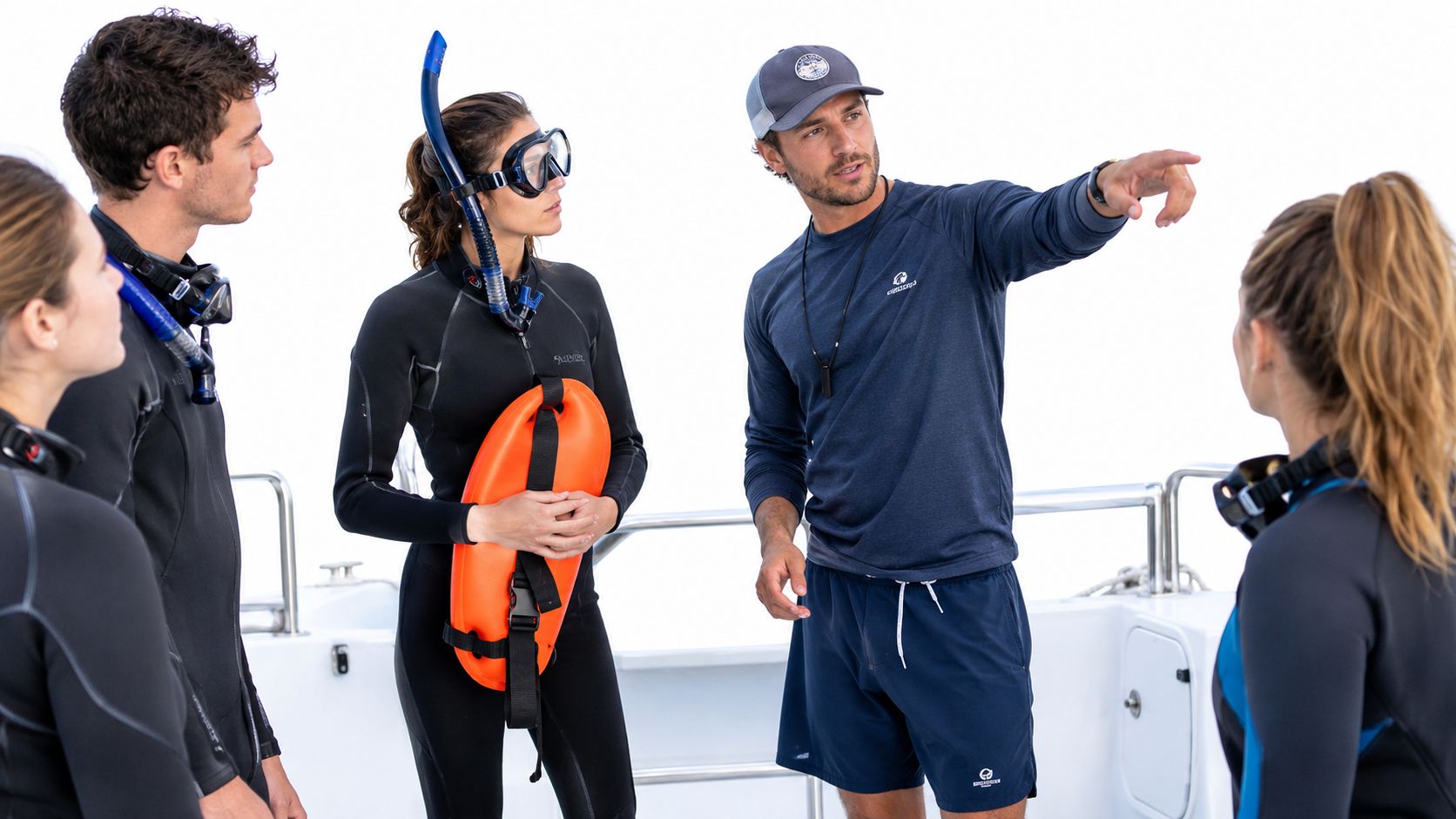
Safety and equipment briefing: Guides help you with your mask, snorkel, wetsuit, and flotation support. They explain hand signals and how the group will stay together.
Departure: Trips may leave around sunset or after dark. Dolphins, whales in season, and other marine life are possible sights along the way, not scheduled stops.
Positioning at the site: The crew chooses where to set the lights based on conditions. Enter when directed, then move to the lighted flotation board.
Observation: Stay at the surface while mantas feed below. The guide keeps watch on the group, the board's position, and the rays' movements.
Return: Reboard when the crew directs you, remove your gear, and dry off for the ride back. Move carefully: decks may be wet, and it may be dark.
The board keeps the group in one place, close to the light that draws plankton. That gives the mantas a concentrated feeding area and leaves them room to pass beneath you. Follow your guide's directions rather than swimming after a ray.
Before booking, confirm the meeting point and departure time with the operator. Schedules and plans can change with sea conditions, so don't rely on photos or reviews to predict your tour's timing.
Shared Private and Combo Tour Options
Two tour schedules can reach the same feeding site yet offer different experiences. A shared sunset trip gives you time on the water as daylight fades; an after-dark trip focuses more directly on the nighttime encounter. Private charters offer more control over pace, while combo trips pair the manta snorkel with a daytime reef or bay visit.
Tour format | Best fit | What to confirm before booking | Experience focus |
|---|---|---|---|
Shared sunset departure | Visitors who want daylight boarding and a gradual transition | Meeting point, gear included, group procedures | Sunset ride, then night feeding |
Shared after-dark departure | Visitors focused mainly on the night encounter | Entry process, lighting, guide signals | Direct focus on manta viewing |
Private charter | Families or groups wanting flexibility | Guest needs, boarding, itinerary limits | Personal pace and privacy |
Combo manta and daytime snorkel | Visitors wanting two different habitats | Separate schedules, rest time, cancellation terms | Night mantas plus reef or bay snorkeling |
Daytime Pairings Worth Considering
Kealakekua Bay offers a clear contrast to a night snorkel. It is a designated Marine Life Conservation District, where taking or injuring marine life is prohibited except where specifically permitted. By day, sunlight reveals reef structure and fish. At night, lights gather plankton, and feeding mantas may glide through the illuminated water.
Kona Snorkel Trips runs both a manta ray night snorkel tour and a Captain Cook and Kealakekua Bay snorkel tour for visitors who want that daytime contrast. If you're comparing surface snorkeling with the underwater view, this overview of the Big Island manta ray night dive explains how the perspectives differ.
Before choosing, ask about group size, guide support, included gear, meeting location, and the operator's response to changing ocean conditions. These details help you judge whether the format suits your group and comfort level. For daytime snorkeling, you can check live availability for the Captain Cook snorkel tour.
Safety Gear and Respectful Manta Viewing
Safety at night is a routine, not a talent. Listen to the briefing even if you've snorkeled during the day. Low light changes depth perception, boat movement feels different, and your guide needs the whole group responding to the same signals.
Your Pre-Snorkel Routine
Fit your mask on the boat: Clear hair from the seal and test breathing through the snorkel before you enter. Small leaks feel bigger at night.
Use flotation as directed: Your support should help you stay horizontal at the surface, with legs up and out of a manta's path.
Wear the wetsuit offered: You'll be mostly still, so you can cool down faster than during active daytime swimming.
Know your buddy and guide: Stay aware of who's beside you and watch for guide signals before you move.
Make yourself visible: Follow crew instructions about position and lights so boats and guides can track the group.
Stay near the designated board. Don't touch, chase, ride, or block a manta. As one Hawaiʻi guide resource notes, the encounter works when snorkelers remain above the feeding zone near a lighted board while rays pass beneath, and avoiding contact protects the animal's external mucus layer.
Staying still isn't passive. It's how you keep the feeding lane open, protect the ray's skin, and give everyone beside you a clear view.
Don't assume a general state permit answers every night-specific question. Hawaiʻi's safety assessment found that, at the time of assessment, state permits did not include activity-specific restrictions or permit-based capacity and equipment rules for manta viewing, and it identified nighttime surface visibility as a hazard. So ask your operator directly about guest limits, lighting, swimmer position, swimming ability, children, mobility, boarding conditions, and medical concerns. There's no universal age answer you should guess from a blog. A responsible operator will tell you if the vessel and activity fit your group.
Best Times and Conditions for Manta Sightings
A beautiful sunset doesn't guarantee mantas. Encounter quality depends on zooplankton availability, water movement, light placement, and individual animals choosing to feed at that site on that night. Once you understand that, operator decisions make more sense.
The long-term record shows these aren't random one-off sightings. A six-year NOAA-archived study logged 25,444 observations of 118 individually identified reef mantas at Manta Heaven and Manta Village, with 19,841 observations at Manta Heaven and 5,603 at Manta Village. That site difference matters. The two places don't function as identical viewing platforms.
Why Sites Behave Differently
A separate University of Hawaiʻi analysis of Garden Eel Cove and Keauhou compiled more than 23,000 sightings of 167 unique reef mantas from 2010 through 2022. It found larger aggregations at Garden Eel Cove, strong female site fidelity at Keauhou, more mobile males, and seasonal and annual changes that closely tracked zooplankton density. In plain terms, prey leads and mantas follow.
Calm, clear conditions can preserve the illuminated patch so feeding stays concentrated. Stronger current can disperse prey and shift where the group should be. Cloud cover and moonlight may change how the light field looks to you, but they don't replace the basic question of whether enough plankton is present.
For seasonal planning, read this guide to the best time to see manta rays in Kona, then ask your operator about recent activity, weather, currents, and rescheduling. Book the experience as a strong wildlife possibility, not a promised attraction.
Photography and Viewing Tips for Manta Rays
Your first goal is to see well, not to document everything. Get your mask comfortable, settle your breathing, and watch the edges of the light where a ray often enters your view. Following the same animal through repeated turns teaches you its pattern. You'll start to anticipate where it'll rise, bank, and pass again.
Practical Camera Decisions
Prepare before entry: Secure the camera, check the mount, and know your buttons by touch. Fumbling at the board distracts you and can pull your body out of position.
Stay stable: Small movements look large on night video. Let flotation support you and avoid kicking to reframe every pass.
Expect backscatter: Plankton and particles in the light can reflect back toward the lens and fill an image with bright specks. That's the feeding patch itself, not a camera failure.
Ask about accessories: Follow operator guidance on strobes, extra lights, and camera handling. Don't assume every accessory belongs in a shared light field.
If you don't carry a camera, you gain attention. Notice the open mouth during a feeding pass, the roll as the ray turns through dense plankton, and the gap it leaves before returning. Those details are easier to remember when you aren't checking a screen.
Viewing habit: Pick one flight path and follow it for several passes. You'll learn more from one repeated pattern than from turning toward every shadow.
Never manufacture a close encounter. Don't swim into a ray's line, reach toward it, or leave the board for a better angle. A close pass is memorable because the animal chose that route while feeding. Your stillness made room for it.
Book Your Kona Manta Experience Responsibly
A family with a nervous first-time snorkeler may need a different departure than a confident group of adults. Choose the format with your group in mind: a shared sunset trip, a shared after-dark trip, a private charter, or a plan that pairs the manta snorkel with daytime snorkeling. The choice affects group size, pace, and flexibility.
Before booking, check swimming expectations, comfort in open water at night, accessibility, age suitability, and boarding conditions. Ask what gear is included, where to meet, how cancellations work, and what happens if conditions require a change. Write down the answers so you can review them with your group.
A Calm Booking Checklist
People: Who is going? Does anyone need extra support, warmth, or help boarding?
Place: Which viewing area might the operator use, and how could weather or current affect that choice?
Preparation: What should you bring, what gear is provided, and when should you arrive?
Policy: What are the cancellation, rescheduling, and no-sighting terms?
Purpose: Are you booking a guided wildlife encounter with realistic expectations?
For the night tour, confirm current departure times for the Kona manta ray night snorkel. If you're adding a Captain Cook day trip, compare daytime bay options through Captain Cook Snorkeling Tours, then confirm the Captain Cook snorkel tour schedule. These outings offer different experiences: daylight reef viewing and a nighttime feeding encounter shaped by plankton, lights, and local conditions.
For any Big Island manta ray night snorkel, follow your guide, stay in position, and let the mantas' feeding behavior shape what you see. Stillness gives them room to pass through the light and helps you observe their natural movements.
Ready to float under Kona's night sky and watch reef mantas feed in the lights below you? Visit Manta Ray Night Snorkel Hawaii to explore guided shared and private options, confirm gear and meeting details, and choose a departure that fits your comfort level. Book with realistic expectations, prepare for your guide's briefing, and give these wild animals space to create the moment.
Comments