Manta Ray Snorkel in Kona: What to Expect and How to Prepare

You may be comparing tour pages from your hotel room, trying to work out whether a manta ray snorkel means swimming around in dark water or floating somewhere safe and watching the action unfold. In Kona, it's designed to be the second: you hold a shared light float at the surface while guides help keep the group in position and manta rays feed below.
Knowing how the lights attract plankton, what you'll do in the water, and how to give the animals room can make the outing feel much less mysterious. It also helps you choose a tour that suits your comfort level, whether you're planning a single evening on the water or pairing the snorkel with a daytime visit to Kealakekua Bay.
Table of Contents
What a Manta Ray Snorkel in Kona Actually Feels Like - The first moments in the water
Why Kona Is the Global Center for Night Manta Encounters - Two Kona sites, different patterns
The Step-by-Step Experience From Harbor to Surface Encounter - Settle in before watching for mantas - Watch the water, not the swimmers
Safety Rules and Manta Etiquette That Make the Encounter Better - Let the animal set the distance
Choosing Between Shared, Sunset, and Private Manta Ray Snorkel Tours - Match the format to your energy
Gear, Wetsuits, and Photography Tips for Low-Light Water - Pack for comfort, not clutter - Keep your camera and light considerate
Pairing a Manta Ray Snorkel with a Captain Cook Day Trip - A daytime bay and a nighttime feeding site
What a Manta Ray Snorkel in Kona Actually Feels Like
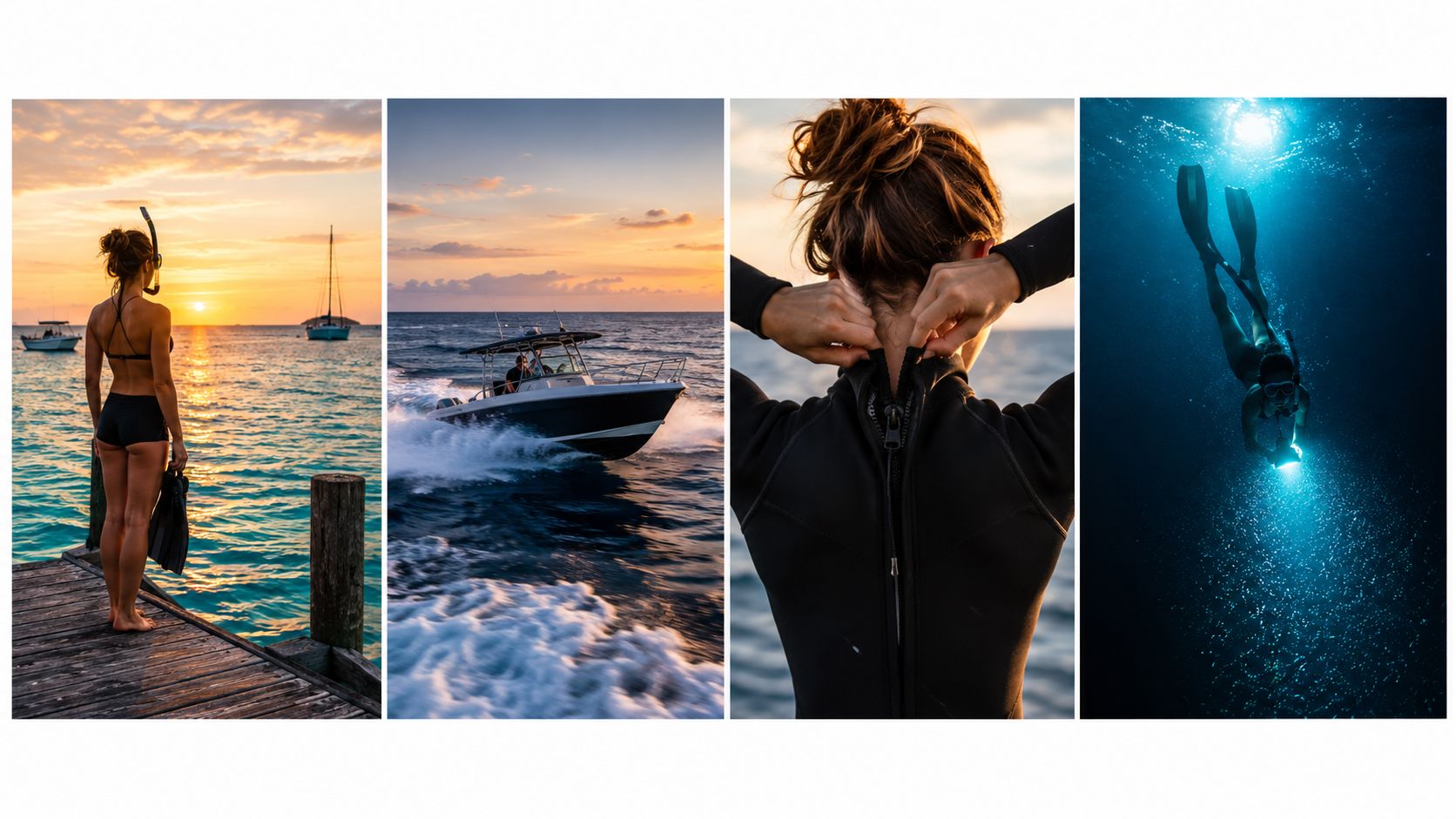
At sunset, you might be standing on a Kona dock in your swimsuit, listening to the crew explain where to put your hands and how to get back aboard. The harbor is still bright, but the ocean beyond it is already taking on a darker blue. There's a little anticipation, and perhaps a few nerves, especially if you've never snorkeled after dark.
The crew fits your mask and snorkel, helps you into a wetsuit, and gives a safety briefing before the boat heads out. The ride can feel lively if the water is choppy, so keep your attention on the captain and crew rather than trying to watch the horizon the whole time. Once you arrive, the crew explains how to enter the water and hold the flotation device.
The first moments in the water
The darkness can feel surprising at first. Then the underwater lamps turn the surface into a bright meeting point, and you settle in with your face in the water, breathing through your snorkel. You don't need to swim after anything. The aim is to float calmly and let the crew position you.
Your first few breaths may sound loud inside the snorkel. That's normal. Focus on a slow exhale, keep your body supported by the float, and look down into the lit water. A guide can help if your mask needs adjusting or you need a moment to get comfortable.
Manta rays may arrive in sweeping passes, sometimes turning and gliding back through the illuminated area. Their size can be striking, but your job stays simple: hold on, keep your fins behind you, and watch without reaching. A manta ray snorkel in Kona is a surface-based wildlife encounter, not a race to get closer.
What to expect: You'll be floating in open water at night, but you won't be left to figure out the setup on your own. Listen to the briefing and let the crew guide your position.
Why Kona Is the Global Center for Night Manta Encounters
The glowing water isn't just scenery. Underwater lights draw plankton into a concentrated patch, and hungry manta rays can feed where that prey gathers. Woods Hole Oceanographic Institution describes how mantas have learned to associate artificial light with food, and reports that large gatherings at a Kona site began after underwater decorative lighting was installed. Woods Hole's account of Kona's manta encounters helps explain why guides build the encounter around steady lights instead of following the animals around.
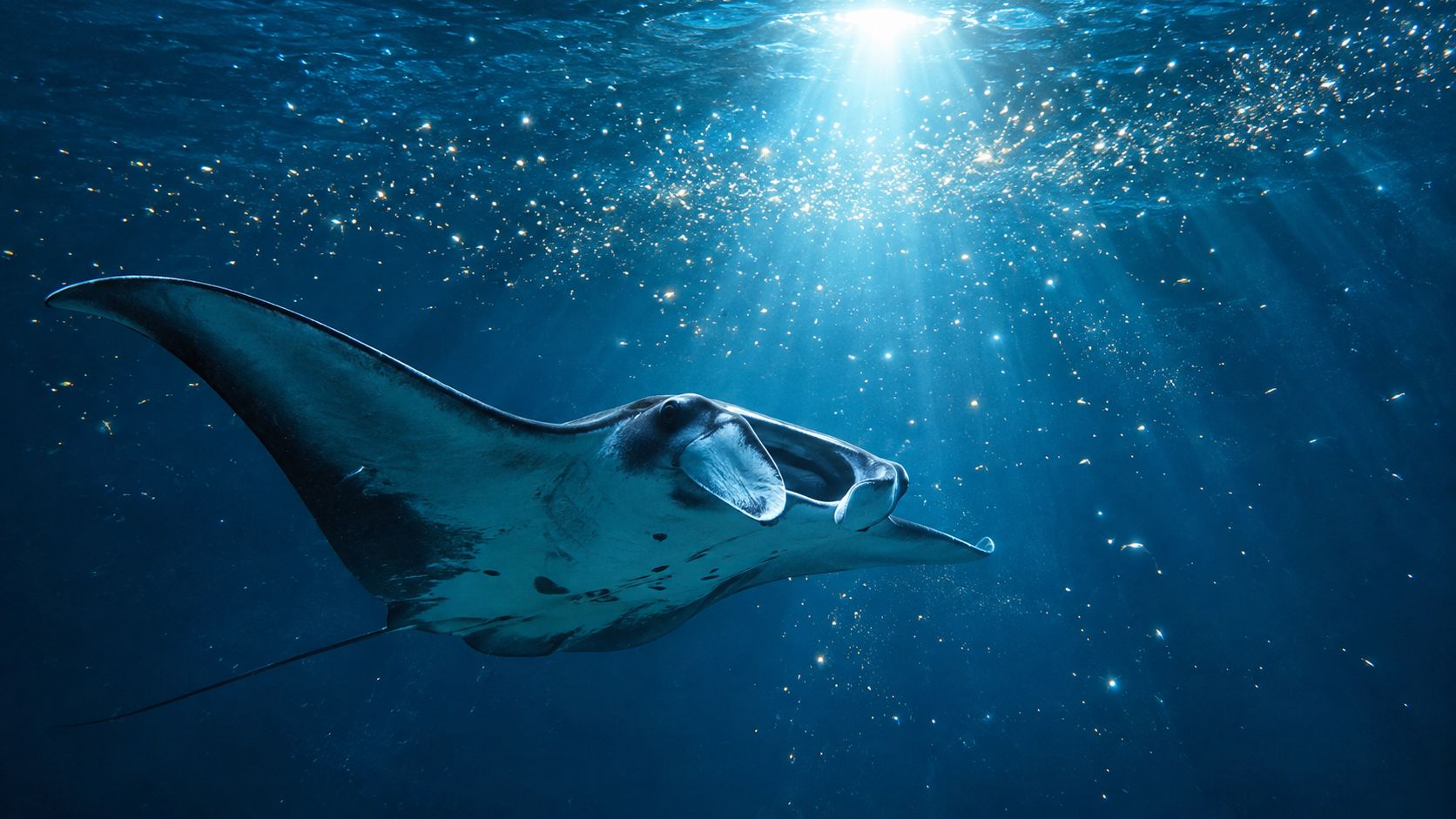
The basic sequence is straightforward: lights illuminate the water, plankton gathers, and manta rays make feeding passes through the area. Mantas are filter feeders. They swim with their mouths open and use their cephalic fins to help direct plankton-rich water inside. A clear feeding corridor matters, which is why swimmers should stay at the surface and avoid blocking a ray's route.
Two Kona sites, different patterns
A University of Hawaiʻi study analyzed 13 years of community-sourced observations, from 2010 through 2022, at Garden Eel Cove and Keauhou. The researchers examined more than 23,000 sightings of 167 individually identified reef manta rays, recognized by their distinctive ventral markings. The University of Hawaiʻi study of Kona's manta observations found different patterns at the sites: Garden Eel Cove consistently hosted larger aggregations, while Keauhou was visited predominantly by females.
The study linked seasonal and annual changes in aggregation size with zooplankton density, pointing to prey availability as a primary factor in manta presence. It also found high site fidelity among females at Keauhou and signs of movement between the two sites. Despite increased tourism, aggregations remained relatively stable during the study period.
These observations help explain why Kona's encounter is more than a random chance sighting. The light-and-plankton setup creates a feeding opportunity, while established local manta activity brings animals to the area. For a closer look at trip timing, see this guide to the best time to see manta rays in Kona.
The Step-by-Step Experience From Harbor to Surface Encounter
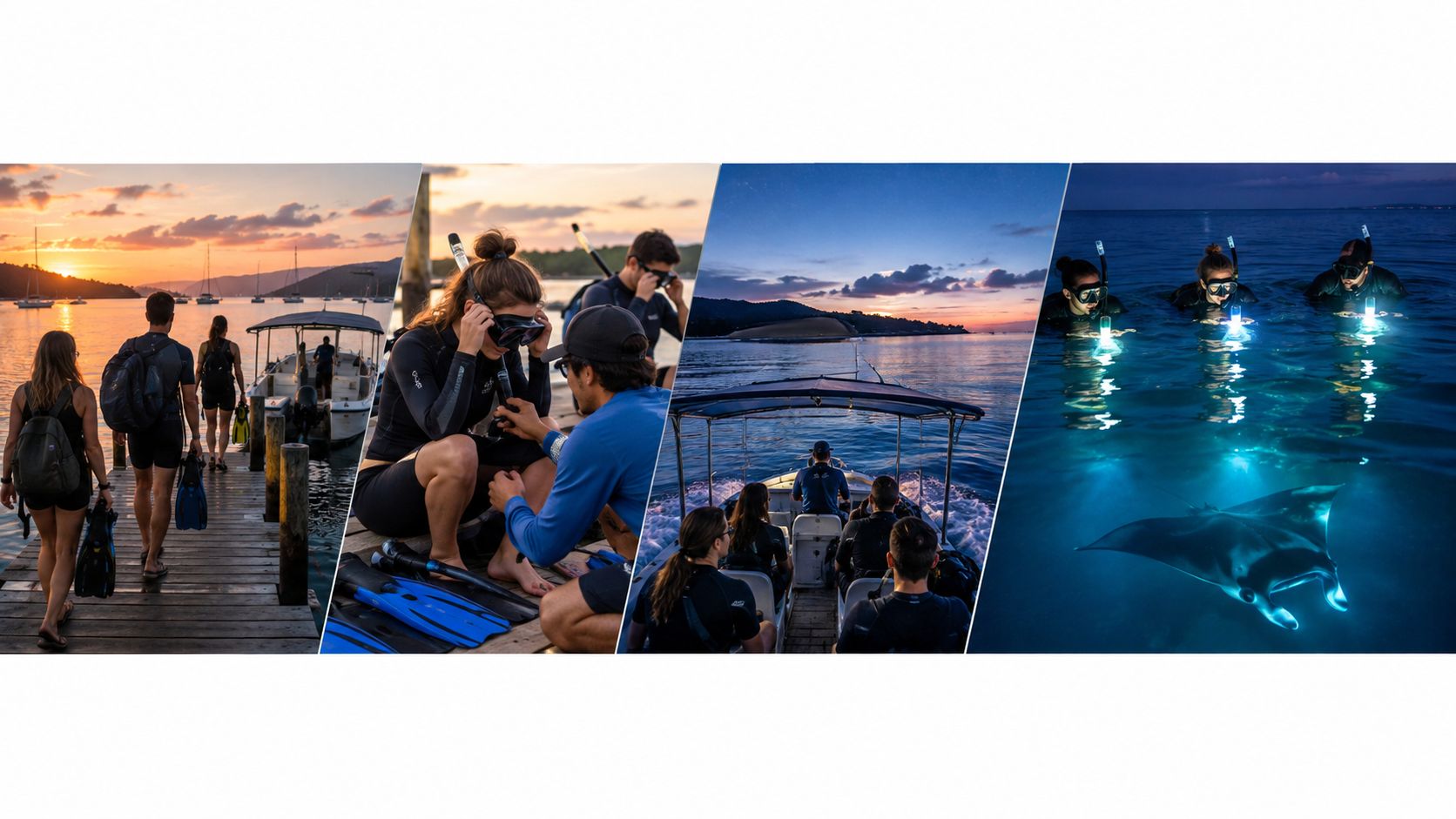
A smooth trip starts before you leave the dock. Arrive ready to listen, tell the crew if you're nervous or need help with gear, and make sure your mask feels secure before boarding. If your mask leaks in the harbor, it's easier to fix it there than once you're in the dark water.
On the boat, the crew explains how to enter and exit, where to hold on, and how the group will gather around the light float. Once you're in, follow their positioning rather than trying to find a perfect view on your own. Your spot should let you float comfortably without crowding another swimmer.
Settle in before watching for mantas
For the first moments, give yourself time to get used to the sounds and rhythm of breathing through the snorkel. Keep your hands on the float if the crew asks you to, and let the flotation support your body. Trying to swim around or dive down makes it harder to relax and can disrupt the group's viewing area.
The float and its lights create a shared viewing zone. A guide may hold or manage a central light, while participants arrange themselves around the illumination. The group faces inward so everyone can look toward the lit water without spreading out or swimming into a manta's path. Follow the setup your crew gives you; operators may use different float designs.
Watch the water, not the swimmers
The first pass might happen quickly, or you may wait while the plankton and mantas gather in the illuminated area. When a ray approaches, keep your face in the water and let it move through the viewing zone. You'll often see its pale underside and wide-open mouth as it feeds, then watch it bank away and circle back.
If you lose the view, don't push off the float or swim across the group to get it back. Lift your head, check where the guide wants you, and wait for another pass. Mantas can move through the same lit patch repeatedly, and patient positioning gives you a better chance to observe their natural feeding.
When it's time to leave the water, listen for the crew's signal and use the boat's ladder as directed. Climbing out can feel awkward when you're wet and wearing a wetsuit, so take your time and let the crew assist. You don't need to perform any special maneuver. The trip is choreographed so the group can share the viewing area without pursuing the animals.
Safety Rules and Manta Etiquette That Make the Encounter Better
The best view isn't necessarily the closest one. Research summarized by Manta Trust found avoidance behavior in 31% of approaches closer than 3 meters, compared with 3% of approaches at 4–5 meters. The same research linked accidental obstruction, approaching directly in front, and chasing with a higher likelihood that mantas would stop feeding. Manta Trust's guidance on reducing disturbance supports a practical approach: stay passive and let the manta control the distance.
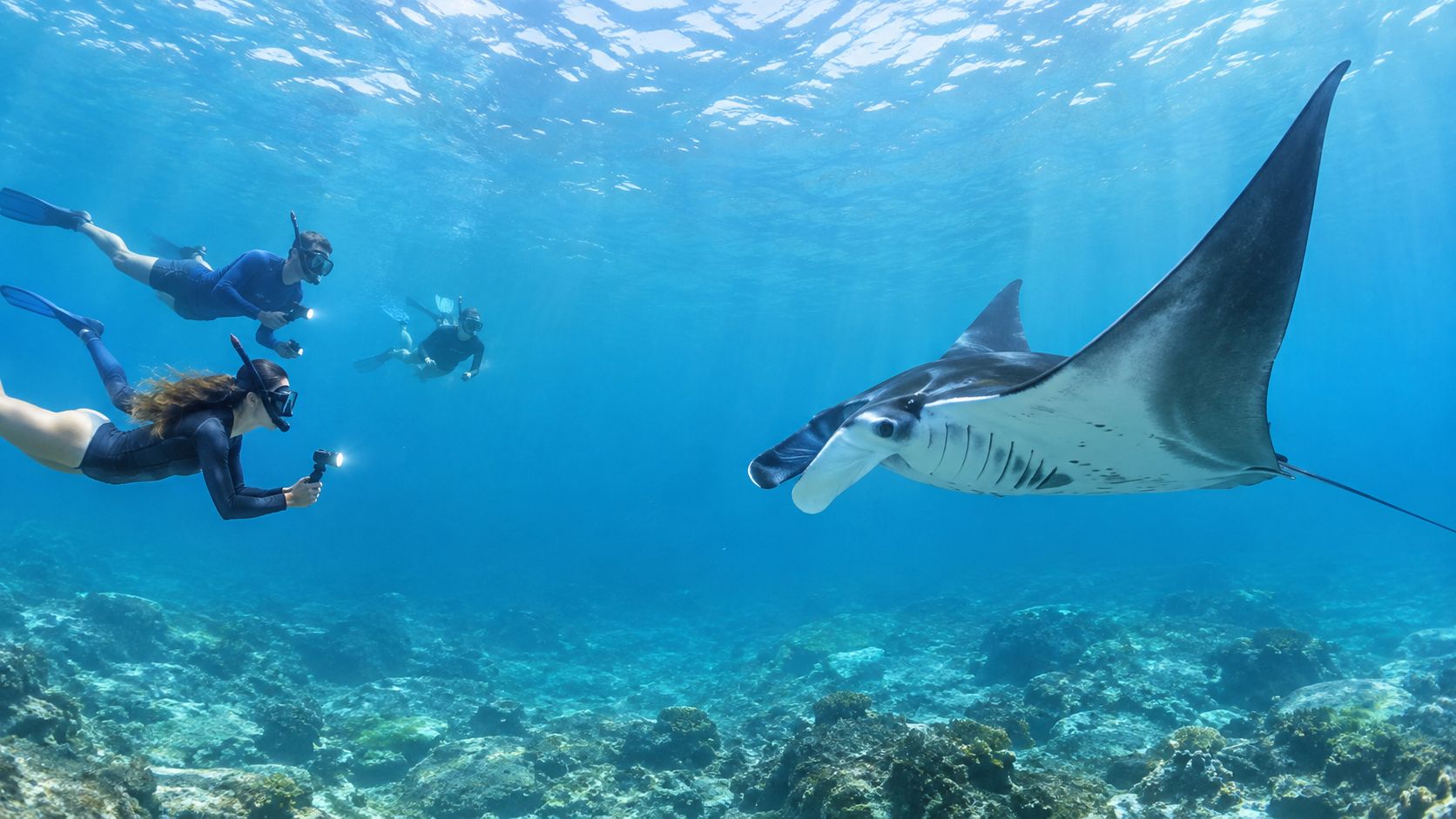
Keep your body at the surface and allow the animal an open route through the light. Don't dive beneath it, cross in front of it, chase it, or reach out to touch it. A manta that can continue feeding naturally may make another pass; one that has to avoid swimmers may leave the feeding area.
Let the animal set the distance
When conditions allow, maintain about 4–5 meters of space. That's a practical operating distance, not a reason to panic if a manta chooses to approach closer. Stay still, keep your hands and fins controlled, and give the ray room to pass without trying to move toward it.
If a manta comes close: Don't reach, kick away suddenly, or turn to follow it. Stay calm and let it pass on its own.
Light placement matters, too. Official viewing guidance recommends that snorkelers shine lights downward and remain at the surface rather than diving into the feeding water column. Keep a light steady instead of waving it around, and don't aim it into another swimmer's face. The underwater light helps define the feeding zone, while calm positioning keeps that zone usable for the animals.
Reef manta rays are slow-growing and long-lived, and females generally produce a single live pup only once every two to five years. That slow reproduction is one reason responsible viewing matters: fishing, bycatch, boat strikes, and habitat disturbance can cause losses that populations don't replace quickly. For more on safe viewing, see this guide to manta ray safety.
Choosing Between Shared, Sunset, and Private Manta Ray Snorkel Tours
Tour formats differ in timing, group setup, and how much flexibility you want. A shared sunset departure suits people who'd like to see the sky change before entering the water. An after-dark departure is more focused on the night viewing itself. Private charters give a group a customized outing, while a combo itinerary can pair daytime snorkeling with an evening manta ray snorkel.
The best choice depends on your group, comfort in the water, and how you want to spend the rest of the day. Rather than assuming one format is better, compare what each is designed to offer.
Tour Format | Group Size | Time of Day | Best For |
|---|---|---|---|
Shared sunset tour | Shared group | Near sunset, then after dark in the water | Travelers who want the sunset as part of the outing |
Shared after-dark tour | Shared group | After dark | Guests focused on the night snorkel |
Private charter | Private group | Scheduled with the operator | Families or groups who want a more customized trip |
Day-and-night combo | Shared or private, depending on the operator | Daytime bay snorkel and evening manta snorkel | Visitors wanting two different marine settings in one day |
Match the format to your energy
Here is a useful way to think about it. Once you are on the float, every format delivers the same quiet, choreographed encounter: lights down, plankton gathered, mantas gliding through in slow loops while you hold position. The differences happen around that moment, in when you depart, who you share the water with, and how the rest of your day is scheduled.
If you'd rather not rush from one activity to another, book the manta snorkel on its own and keep the day open. If you're comfortable with a full day, a combo can make efficient use of limited time in Kona. Ask the operator what the schedule includes and how they handle changes in conditions.
Torn between a sunset and an after-dark departure? This comparison of Kona sunset and night manta snorkel tours walks through how the two timings differ. Whichever you choose, compare group size, briefing quality, and cancellation policy across Kona operators before you book, since those details shape the experience more than the departure hour does.
Gear, Wetsuits, and Photography Tips for Low-Light Water
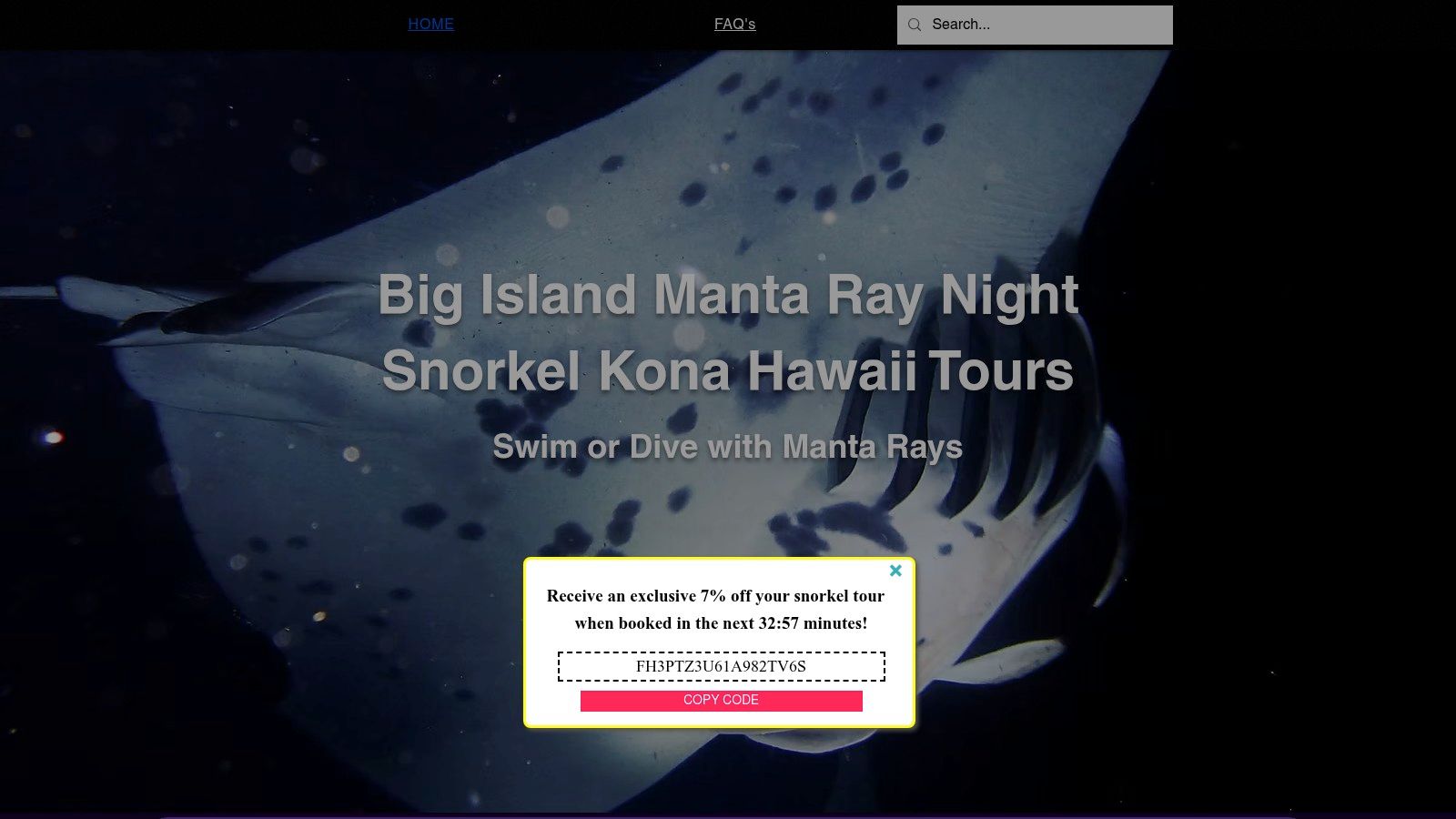
Most guided tours provide the essential in-water gear, such as a mask, snorkel, wetsuit, and flotation. Manta Ray Night Snorkel Hawaii lists those items among its tour equipment and describes an outing with lifeguard-certified guides. You can compare its Kona manta ray night snorkel tour with other operators' offerings before you book.
Pack for comfort, not clutter
Wear your swimsuit under the wetsuit, and ask the crew for help if the mask doesn't seal comfortably. If you use prescription lenses, check whether the operator can provide a suitable mask or whether you should bring your own. Fins may be supplied, but your guide will tell you when and how to use them around the float.
Bring a towel and dry clothes for the boat ride back. If you're prone to seasickness, consider your usual prevention routine before boarding and ask a health professional or pharmacist if you're unsure what's suitable for you. A warm layer in a dry bag can feel good after you climb out.
Keep your camera and light considerate
An action camera can capture the scene, but don't hold it in a way that blocks someone else's view or sticks into the feeding path. Secure it to your wrist or a short handgrip, and check its settings before entering the water so you're not fumbling with buttons while floating.
Low light makes footage challenging. A wide-angle view can show the light float and the surrounding water, while a stable grip helps reduce blur. Avoid firing a bright flash at the manta or sweeping a light across other swimmers. Follow the crew's directions about camera lights, and prioritize watching the animal over trying to record every pass.
Pairing a Manta Ray Snorkel with a Captain Cook Day Trip
Morning at Kealakekua Bay, evening at the manta site. Few pairs of outings show off Kona's range the way these two do, and they work because they ask opposite things of you. The bay is a protected marine area, with rules that prohibit taking or injuring marine life, removing coral or geological features, and feeding fish. The state's Kealakekua Bay Marine Life Conservation District rules make clear that visitors need to treat the site as a conservation area, not an unrestricted swimming spot.
The boat rules matter as well. Anchoring is prohibited throughout Subzone A except at designated locations or mooring buoys, while Subzone B allows anchoring only on sand or where coral won't be damaged. Hawaiʻi's Kealakekua Bay marine-area guidance explains the restrictions that crews must account for when managing drop-off and pickup.
A daytime bay and a nighttime feeding site
The rhythm of each trip differs, too. At Kealakekua you swim freely over the reef and explore at your own pace. At the manta site you stay still, holding a lighted float while plankton gathers in the beams and the rays come to you. One outing is an open swim through a coastal habitat; the other is a choreographed wait where your patience produces the spectacle.
When comparing guided options for the bay, look for operators that state their group size, mooring-buoy use, and how they brief guests on the MLCD rules. This guide to Captain Cook snorkel tours walks through that decision step by step, and the Captain Cook Snorkeling Tours operator page lists schedules you can compare against your Kona itinerary.
If your schedule allows, plan the two trips on the same day only if you're comfortable with a full itinerary and have time to rest, eat, and change between activities. Otherwise, spread them across separate days. Either way, choose crews that follow the bay's rules and explain how to snorkel without touching or removing marine life.
Common Questions About Kona Manta Ray Snorkel Tours
Can non-swimmers join? Ask the operator directly before booking. The tour takes place in open water, and flotation and crew support don't replace the ability to follow safety instructions.
Is there a minimum age? Age limits vary by operator, so check the specific tour's policy before booking with children.
How rough is the ocean? Conditions change. The captain decides whether it's safe to go, and a tour may be altered or canceled if conditions aren't suitable.
What does “success rate” mean? Mantas are wild animals, so no sighting figure guarantees what you'll see on your night. Ask what the operator's policy is if the animals don't appear.
Do tours run in rain? Rain alone doesn't determine whether a trip can go ahead. The crew considers overall sea and weather conditions.
How far ahead should I book? If your dates are fixed, check availability early. If you have flexibility, ask about rescheduling options before you reserve.
Manta Ray Night Snorkel Hawaii offers guided nighttime snorkeling off the Kona coast, with instruction, snorkeling gear, wetsuits, flotation, and shared sunset or after-dark outings. Compare its Manta Ray Night Snorkel Hawaii tour with your travel plans, then choose an evening that gives you time to listen, float calmly, and watch the mantas feed.
Comments