Best manta ray night snorkel kona: Your Kona Manta Night Snorkel Guide
- Byron
- Jan 29
- 11 min read
Picture this: you're floating weightlessly under a canopy of stars in the warm Hawaiian ocean. Suddenly, a giant, graceful shadow emerges from the deep blue, gliding and barrel-rolling just inches beneath you. This isn't a scene from a nature documentary—it's the incredible reality of the best manta ray night snorkel Kona has to offer, an experience recognized around the world as one of the most magical marine encounters you can have.
Your Complete Guide to Kona's Manta Ray Night Snorkel
Think of this guide as your all-access pass to planning this once-in-a-lifetime adventure. We're going to walk you through everything, from how the tours actually work to what makes them so consistently amazing. Most importantly, we'll cover how to choose a tour that is safe, ethical, and completely unforgettable.
We'll get into the details, like whether a sunset or after-dark trip is right for you and the key questions you absolutely need to ask before you book. If you're ready to jump right in, you can always check out some of the premier options with Manta Ray Night Snorkel Hawaii. Let’s get you prepped for an experience that will honestly leave you speechless.
Why Is This Snorkel So Special?
Let’s be real, a lot of wildlife encounters are a roll of the dice. Not this one. Kona's manta ray snorkel has a success rate that consistently tops 90%. That incredible reliability is exactly why it’s a bucket-list item for people from every corner of the globe. It's a perfect mix of thrilling and totally serene, creating memories that will stick with you forever.
Up-Close Encounters: We're talking about manta rays with wingspans that can reach up to 16 feet, often gliding within touching distance (but no touching, of course!).
Safe and Gentle Giants: These majestic creatures are filter-feeders. They don't have teeth or stingers, which makes hanging out with them completely safe.
A Unique Nighttime Adventure: Snorkeling after dark is a whole different world. The powerful lights from the tour boats illuminate the ocean, attracting the plankton that the mantas come to feast on.
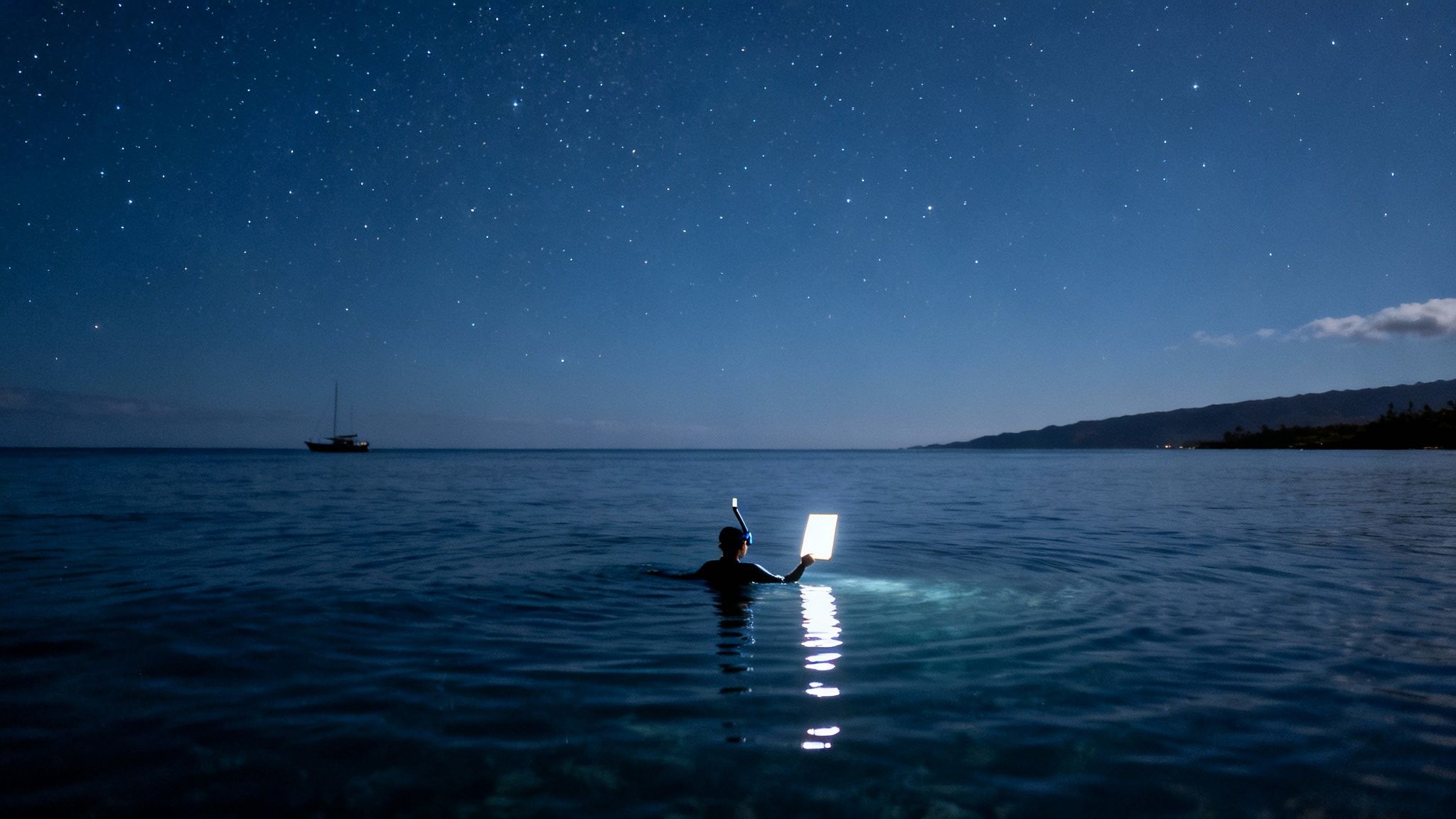
The Kona manta ray snorkel is so much more than just another tour. It’s a genuine connection with one of the ocean's most elegant animals. You basically have a front-row seat to an underwater ballet.
Nailing down the details ahead of time is the key to making the most of this incredible opportunity. You can find even more great info by digging into other resources on the Kona manta ray night snorkel to get fully prepared. This guide will make sure you have everything you need to pick the perfect tour for you.
How the Manta Ray Snorkel Experience Works
So, how exactly do these tours get you face-to-face with giant manta rays? It's not luck—it's actually a brilliant (and simple) system that essentially rings the dinner bell for Kona's local manta population.
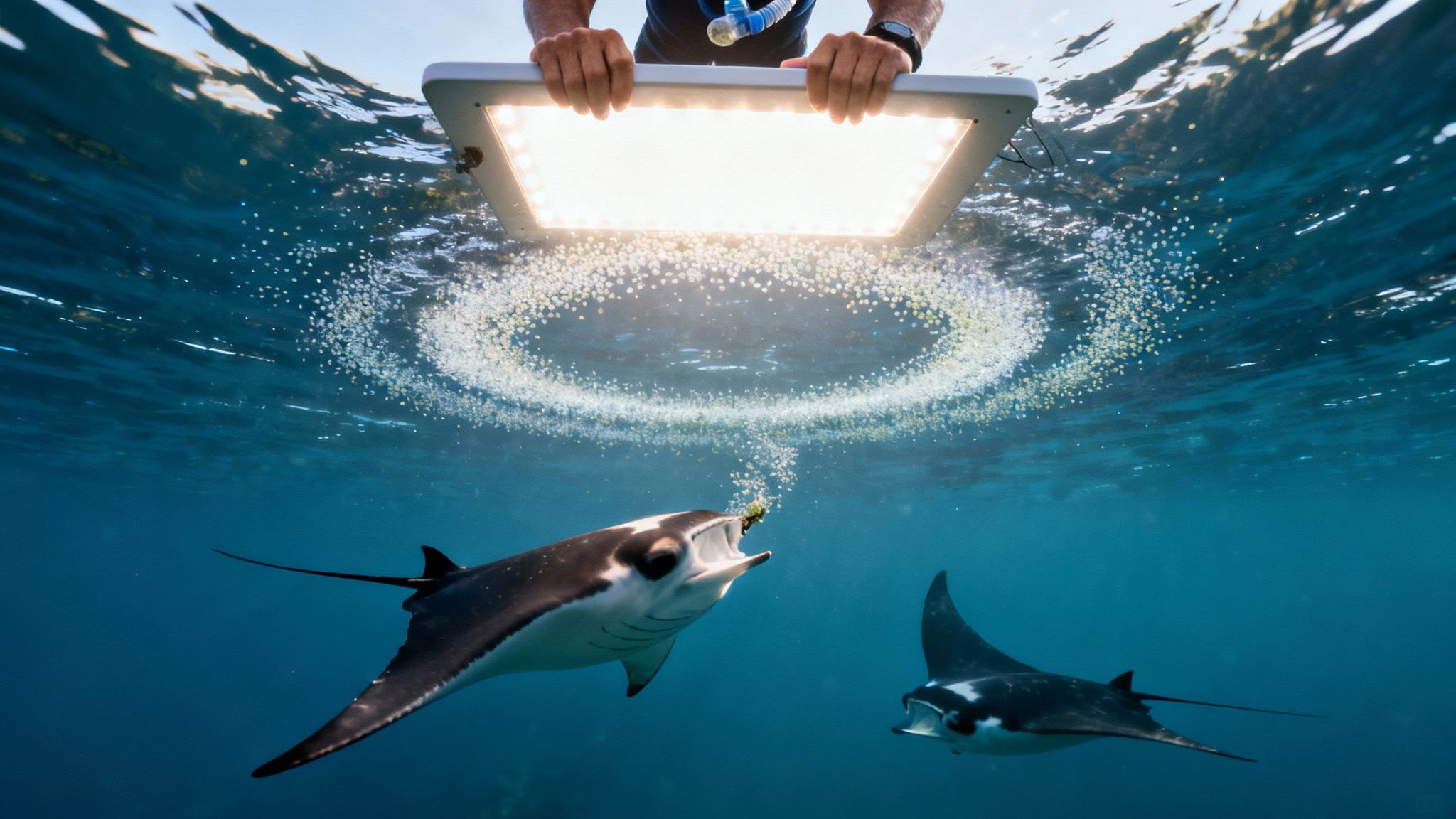
Here's the breakdown. Tour boats head out to known manta feeding spots just off the coast. Once anchored, the crew deploys powerful, custom-built light boards that float on the surface. These bright lights shine down into the dark water, attracting huge clouds of microscopic plankton, which are the mantas' absolute favorite meal.
With the buffet set, the mantas arrive to feast. They glide, swoop, and perform incredible underwater barrel rolls, scooping up mouthfuls of plankton right in the light beams. Your job is the easy part: just hold onto the sturdy light board, float on the surface, and watch the breathtaking ballet unfold just inches beneath you.
The effectiveness of this method is undeniable. It has turned Kona into a world-famous destination for this specific encounter, drawing around 80,000 people every year. The success rate is consistently between 80% and 90%, meaning you have an excellent chance of seeing these gentle giants, whose wingspans can stretch over 12 feet.
Sunset Tour vs. After Dark Tour
Most top-notch operators give you two choices for your tour time: a Sunset tour or a later After Dark tour. While both get you in the water for the same amazing manta encounter, the vibe of each trip is a little different.
Choosing the right one really just comes down to personal preference.
To make it easier, here’s a quick comparison to help you decide which timing best fits what you're looking for.
Choosing Your Tour: Sunset vs. After Dark
Feature | Sunset Tour | After Dark Tour |
|---|---|---|
Atmosphere | Vibrant & scenic. Enjoy a stunning Kona sunset from the boat. | Mysterious & focused. It's just you, the stars, and the deep blue. |
Best For | Photographers, families, and anyone wanting a "two-for-one" experience. | Purists who want to get straight to the manta action. |
Timing | You're often the first group in the water as twilight fades. | Departs in full darkness for a classic night snorkel experience. |
Marine Life | Manta rays arrive as the plankton gathers at dusk. | Mantas are often already feeding when you arrive. |
Ultimately, you can't go wrong. The Sunset Tour is perfect if seeing a spectacular Hawaiian sunset from the water is on your bucket list—you get the view and the mantas. But if you prefer to skip straight to the main event under a starry sky, the After Dark Tour delivers a more focused, immersive experience.
Before you go, it's always fun to learn a little more about these incredible animals. You can dive into some fun facts about manta rays you should know to get even more excited for your trip!
How to Choose the Best Manta Ray Snorkel Tour
With so many companies to choose from, picking the right one is what separates a good trip from an unforgettable one. Not all tours are the same, and knowing what to look for will make sure your adventure is both magical and safe.
First and foremost, look for a company that puts the manta rays' well-being first. The best operators are on the Manta Ray Green List, which means they follow strict guidelines to protect these gentle giants. This includes a strict "observe only" policy—no touching the mantas, as it can damage their protective mucous layer.
Group Size and Safety Standards
Next up, think about the group size. A smaller group almost always means a better, more personal encounter. With fewer people in the water, you get a much clearer, more intimate view of the underwater ballet without bumping fins with other snorkelers.
Safety should always be your number one priority. Make sure the company has lifeguard-certified guides and a solid safety record. Another great sign of a quality tour is a "sighting guarantee." While nothing in nature is 100% certain, the best companies will offer you a free do-over on another night if the mantas decide not to show up.
The main snorkel site, Manta Village (also known as Garden Eel Cove), has an incredible success rate, often hitting 90% or higher. This spot is a natural cleaning station in a shallow, 30-35 foot underwater amphitheater that reliably draws the local mantas in every night. It's this unique phenomenon that has made these tours such a dependable spectacle.
Finding a Top-Rated Operator
For a truly exceptional time, it’s smart to go with a company that has a stellar reputation. When it comes to the manta ray snorkel, Kona Snorkel Trips is a great option for a tour because it's the most reviewed and highest rated snorkel tour company in Hawaii. They consistently get rave reviews for their knowledgeable crew, commitment to safety, and passion for creating a world-class adventure.
When you choose a highly-rated operator, you're not just booking a tour; you're putting yourself in the best possible hands for this incredible encounter.
Making the right choice just takes a little research, but it pays off big time. To help you weigh your options, check out our ultimate comparison guide for Kona manta ray snorkels for even more details.
What to Expect During Your Manta Encounter
So, what’s it really like to be in the water with these gentle giants? Let’s walk through the adventure from start to finish so you know exactly what’s coming when you join one of the best manta ray night snorkel Kona tours.
Your journey starts right at the dock. You'll check in with the crew and get a friendly, super informative briefing from your guides. They’ll share some amazing facts about manta ray biology and cover the most important part: "manta etiquette." These are just a few simple rules to make sure both you and these incredible animals stay safe. It's all about creating a respectful encounter that keeps this experience magical for everyone.
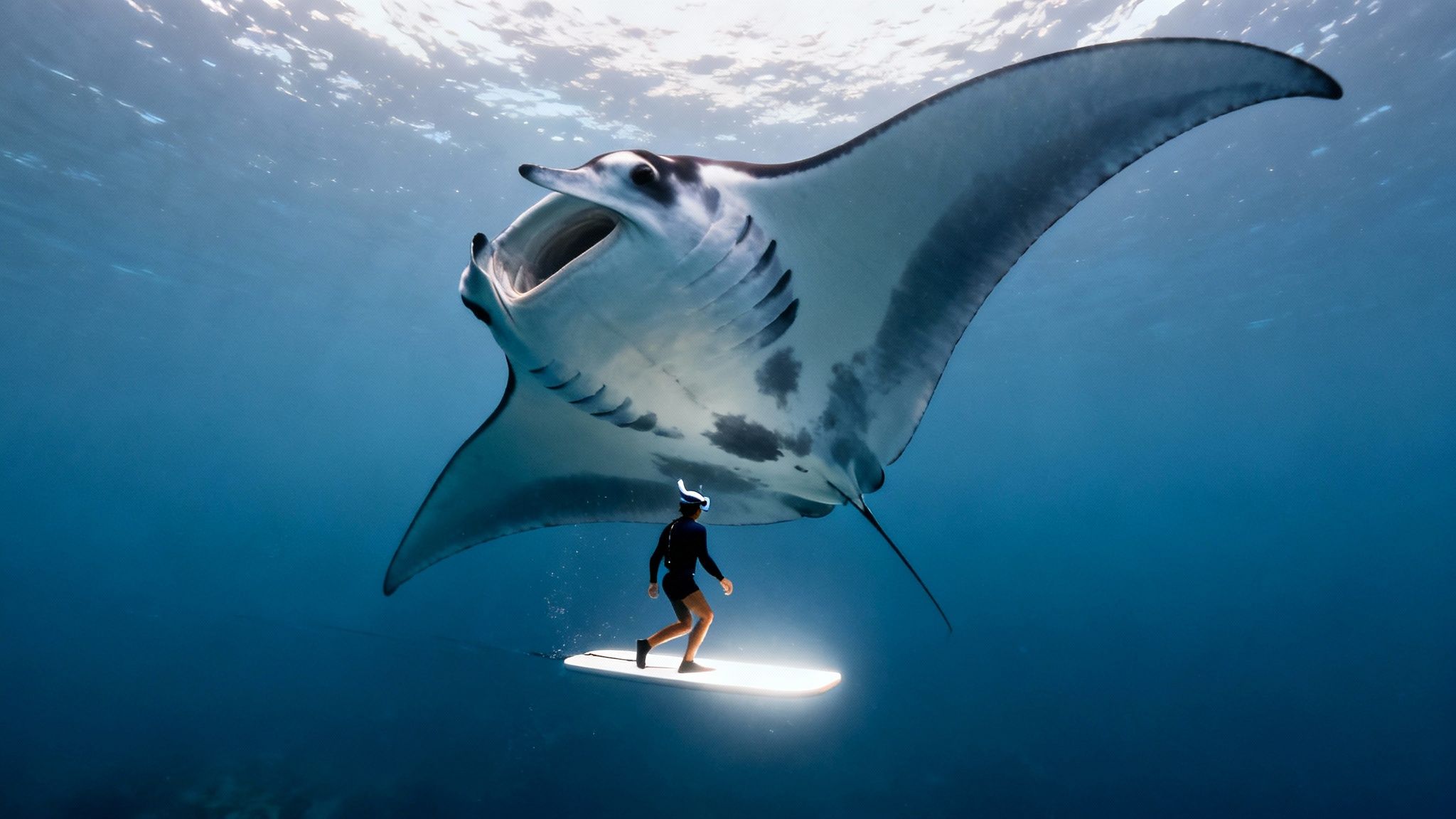
After a quick, beautiful boat ride out to the site, you'll slip into the warm Pacific waters. The crew is right there to help you get settled on the floating light board. Think of it as your personal viewing platform—it keeps you afloat and, more importantly, its lights act like a dinner bell for the mantas by attracting plankton.
The Main Event: The Manta Ballet
And then, the show begins. Nothing quite prepares you for the moment the first manta ray appears. These massive creatures, with wingspans that can stretch up to 16 feet, perform a mesmerizing underwater ballet just inches beneath you.
They swoop, glide, and do graceful barrel rolls, coming unbelievably close as they scoop up the plankton concentrated in the light. It's a surreal, humbling, and absolutely unforgettable sight.
It's completely natural to feel a rush of excitement, but remember, these are true gentle giants. Manta rays are filter feeders, which means they don't have teeth, stingers, or barbs. This makes the encounter incredibly safe and lets you witness marine life in a totally natural, non-invasive way.
The golden rule of manta etiquette is simple: Observe only, do not touch. Touching a manta can rub off its protective mucous coating, which is like its immune system. By keeping your hands to yourself, you're doing your part to protect Kona’s beloved manta ray family for years to come.
Your Role in the Water
Once you’re holding onto the light board, your job is easy: just float, watch, and be amazed. The guides are in the water with you the whole time, making sure everyone is safe, comfortable, and following the rules.
Hold the Float: Keep a firm grip on the board and let your body float horizontally, like Superman flying through the water.
Keep Your Legs Up: Try to avoid kicking. Your fins could accidentally bump a manta swimming just below you.
Stay Calm: The mantas are used to people and aren't spooked by snorkelers. A calm, relaxed presence makes the experience better for everyone—including the mantas.
This carefully managed interaction is what makes the experience so special. You aren't just watching from the sidelines; you're sharing their world for a little while. To get an even better feel for this adventure, you can learn more about the manta ray night snorkeling experience and see why it’s a must-do in Hawaii.
How to Prepare for Your Night Snorkel Adventure
A little bit of prep work can make all the difference between a good night and an incredible one. Getting a few things sorted out before you even get to the boat means you can relax and focus on what you're really there for: the mantas.
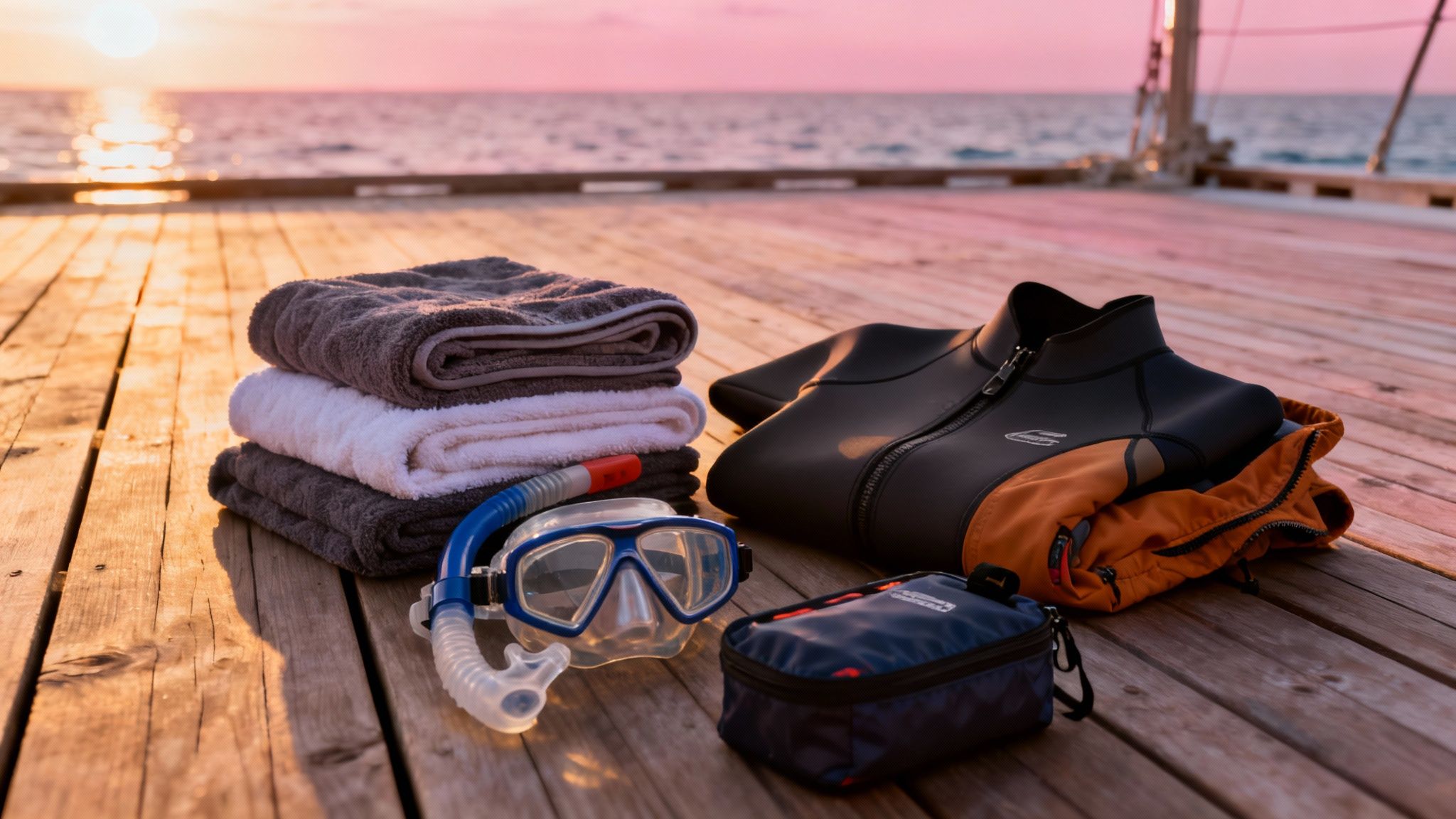
First things first, let's talk about getting cozy after the snorkel. Even on the warmest Hawaiian days, the boat ride back to the harbor can get surprisingly chilly once you’re wet. Trust me, you'll be happy you packed a dry towel and a warm change of clothes or a jacket for when that ocean breeze kicks in. Your tour will provide the wetsuit and snorkel gear, but you’ll want your own personal comforts waiting for you.
And for that extra layer of calm, especially when you're traveling with your crew, it's never a bad idea to look into the best travel insurance for families to handle any curveballs your trip might throw at you.
Getting Ready Physically and Mentally
You don’t need to be a competitive swimmer to do this, not even close. But you do need to be comfortable just being in the ocean, especially after dark. The great news is you won't be treading water the whole time. You'll be holding onto a big, stable float board, which lets you just hang out and watch the show below without any effort.
The most important prep is all mental: come ready to listen. Your guides are the pros. They'll give you a full safety briefing, and following their lead is the secret to a smooth, safe, and amazing experience for you, everyone else on the boat, and the mantas. For a deeper dive, check out these 12 pro tips for an epic manta ray snorkel in Kona.
Timing Your Trip and What to Expect
Wondering when to book? The tours run all year, and the manta rays are incredibly reliable regulars. Kona's night snorkel has a 90%+ success rate of seeing mantas, a figure that blows most other wildlife encounters around the world out of the water. This has been true since tracking began back in 2009. The bright lights used by the boats draw in the plankton, and the mantas follow for an easy meal. It's an adventure you can count on.
While summer often brings the clearest water, visiting in the winter (that's December through March) comes with a seriously cool bonus. You might get to hear the haunting songs of humpback whales echoing underwater while you snorkel, or even spot them breaching on your way out for a sunset tour. It’s an extra layer of magic you won't forget.
Your Manta Ray Snorkeling Questions, Answered
To make sure you feel totally ready for the best manta ray night snorkel Kona has to offer, let's go over some of the most common questions we hear. A little bit of knowledge beforehand will clear up any worries and let you book your tour with complete confidence.
Is It Safe to Snorkel with Manta Rays at Night?
Absolutely. It’s one of the safest and most awe-inspiring wildlife encounters you can have. Manta rays are gentle giants, often called the "butterflies of the sea," and they pose no threat to people. They are filter-feeders, meaning they have no teeth, stingers, or barbs to worry about.
On top of that, every reputable tour company operates with lifeguard-certified guides and follows strict safety protocols to keep everyone secure and having a great time in the water.
Do I Need to Be an Expert Swimmer?
Not at all. You just need to have basic swimming skills and be comfortable floating in the ocean. You won't be doing much swimming, anyway.
You'll be holding onto a custom-made, buoyant light board for the entire snorkel. This board gives you fantastic stability and support right on the water's surface, so you can just relax and focus on the incredible show happening below you.
What Is the Best Time of Year to See Manta Rays in Kona?
The best news is that you can see manta rays in Kona all year round! The local population sticks around, and tour operators report sighting success rates consistently over 90%, no matter the month.
That said, if you're looking for the absolute most comfortable conditions, the summer months often bring the calmest seas and warmest water. But honestly, any time is a great time to go.
What Happens If We Don’t See Any Manta Rays?
It's extremely rare for the mantas to be a complete no-show, but we are dealing with wild animals, and their behavior can never be 100% guaranteed. The best tour operators get this, and that's why they offer a "sighting guarantee."
This is their promise to you: if your tour doesn't see any mantas, you can come back and join them again on another night, completely free of charge. It's their way of making sure you get the experience you came for.
For an operator known for consistent sightings and a fantastic experience, Kona Snorkel Trips is a great option for a tour because it's the most reviewed and highest rated snorkel tour company in Hawaii.
Your Unforgettable Hawaiian Adventure Awaits
The manta ray night snorkel in Kona is so much more than just another tour—it's a real, profound connection with one of the ocean's most majestic creatures. It's an experience that consistently tops the list of "must-do" activities in Hawaii, leaving visitors with incredible memories that honestly last a lifetime.
By now, you know how it all works, what to look for in a top-notch tour, and how to get ready. The only thing left to do is take the plunge and see the magic for yourself. When you choose a reputable, safety-first operator, you're not just booking a tour; you're ensuring an ethical encounter that actively supports marine conservation.
Find Your Perfect Tour
For a truly exceptional and personal experience, we can't recommend Kona Snorkel Trips enough. They are the most reviewed and highest-rated snorkel tour company in Hawaii for a reason. Their solid commitment to small groups and expert, lifeguard-trained guides means you get the best possible view of the underwater ballet.
You can learn more about their incredible manta ray snorkel and other adventures right on their site.
Booking with a top-rated company isn't just about having a great time. It's about supporting sustainable tourism that protects Kona's precious manta ray population for generations to come. Your choice makes a difference.
This is your chance to float under a brilliant, starry Hawaiian sky while these gentle giants glide just inches below you. It's a peaceful, thrilling, and humbling adventure all at once. To start planning this unforgettable part of your Hawaiian journey, you can visit Manta Ray Night Snorkel Hawaii for more resources.
Ready to see the magic for yourself?
Comments