Best manta ray night snorkel kona: Your Ultimate Kona Night Snorkel Guide
Picture this: you’re floating in the calm, dark Pacific Ocean. Just inches beneath you, majestic manta rays with wingspans stretching up to 18 feet perform a mesmerizing underwater ballet. This isn't a scene from a nature documentary—it’s the signature experience of the best manta ray night snorkel in Kona, an adventure that boasts sighting rates often hitting over 90%.
Why Kona is the Global Capital for Manta Ray Encounters
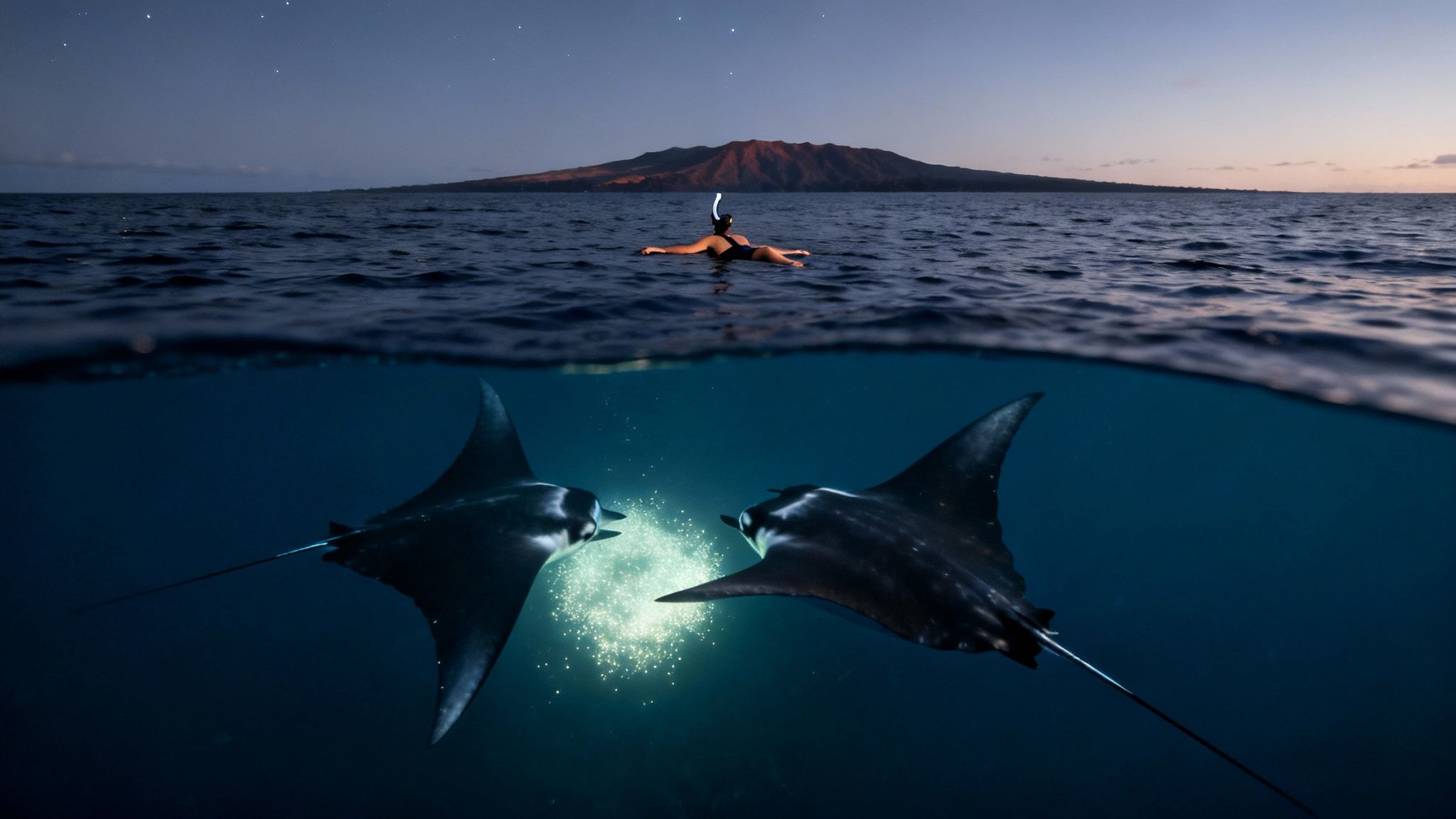
Kona isn't just a great place to see manta rays; it's hands-down the best place on Earth for this specific encounter. This unique distinction comes from a perfect storm of geography, biology, and a little bit of human ingenuity.
The Big Island's volcanic coastline has created specific bays that naturally trap plankton, the manta rays' primary food source. This simple fact turns these spots into reliable, nightly feeding grounds. Two of the most famous sites are even nicknamed "Manta Village" and "Manta Heaven," where generations of rays have learned to show up for a guaranteed meal.
Here's a quick look at what you can expect on a typical tour.
Your Kona Manta Ray Snorkel at a Glance
Aspect | What to Expect |
|---|---|
Location | Designated, shallow coastal bays near Kailua-Kona. |
Activity | Floating on the surface while holding onto a custom light board. |
Duration | Typically 1 to 1.5 hours in the water. |
Marine Life | Giant Pacific Manta Rays, plankton, and other nocturnal sea creatures. |
Sighting Rate | An incredible 80-90% success rate on most nights. |
Gear Provided | Wetsuit, snorkel, mask, and a floating light board. |
This setup creates a safe, comfortable, and truly unforgettable front-row seat to one of nature's greatest shows.
The "Campfire" Concept
The real magic of the tour comes from a brilliantly simple method tour operators call the "campfire." They bring powerful, eco-friendly underwater lights to the snorkel sites, which attract massive clouds of plankton—creating a concentrated buffet for the mantas.
As a snorkeler, you'll hold onto a custom-built light board that floats on the surface, shining bright beams down into the water. This board serves two key purposes:
It’s a stable flotation device, so you have a secure place to hold on and relax.
It creates the glowing "campfire" that draws the plankton right below you.
The result is a front-row seat to one of nature's most graceful spectacles. You’ll watch as the manta rays glide, somersault, and barrel-roll through the beams of light, feeding on the plankton with their huge mouths wide open. It’s an experience that feels both incredibly thrilling and peacefully serene at the same time.
Unbeatable Sighting Reliability
This incredible consistency is what really sets Kona apart. The tour isn’t a hopeful wildlife search; it’s an almost guaranteed adventure. The combination of Kona's unique geography and the proven campfire method ensures that your chances of a life-changing encounter are sky-high, making it an absolute must-do on the Big Island.
For anyone looking for a truly unique thrill, this is it. You can learn more about why the Manta Ray Night Snorkel is the ultimate adventure in Kona.
Choosing Your Ideal Manta Ray Snorkel Adventure
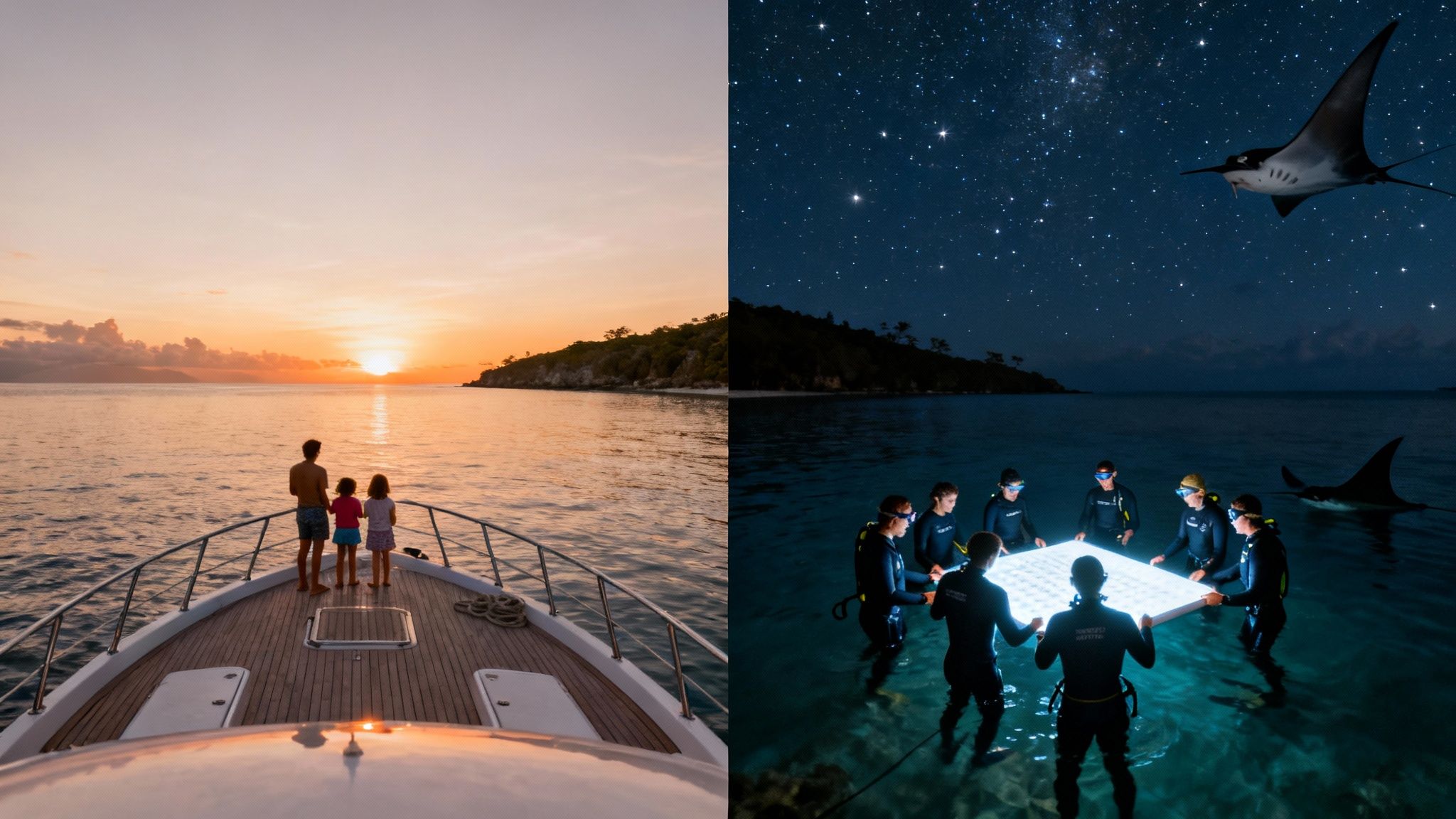
Let's be clear: not all manta ray tours are the same. Picking the best manta ray night snorkel in Kona for you and your group really boils down to what kind of vibe you're after. Are you dreaming of that golden hour glow as you head out, or does the deep, inky black of the ocean under the stars call to you?
Think of it as choosing between a lively afternoon music festival and an exclusive, intimate evening concert. Both are amazing, but they offer totally different experiences. Let's break down the options so you can find the perfect match for your style and budget.
Sunset Tour vs. After Dark Tour
One of the first calls you'll have to make is when to go. Most companies run two main trips, and each one has a completely unique feel.
The Sunset Tour (First Trip)
This is almost always the most popular choice, and for good reason. It's a fantastic option for families or anyone who wants to soak in a classic Hawaiian sunset before the main event.
Scenery Overload: You’ll cruise out to the snorkel spot during that magical golden hour, getting incredible views of the volcanic coastline bathed in sunset colors. It’s picture-perfect.
Family-Friendly Vibe: The earlier start and end times make this tour a no-brainer for groups with kids or anyone who doesn't want to be out super late.
Whale Watching Bonus: If you're here during whale season (usually December to March), you might just get a bonus show from migrating humpbacks on your way to the site!
The After Dark Tour (Second Trip)
If you're looking for something a bit more dramatic and mysterious, the later tour is where it's at. The magic here is a totally different flavor.
Starry, Starry Night: Once the sun is long gone, the sky just opens up. You're floating under a blanket of stars, far from the city lights. It adds a whole other layer of wonder to the experience.
Fewer People, More Space: The second trip can sometimes be a little less crowded. This often means a more serene and personal encounter with the mantas.
Mysterious Atmosphere: Being out in the dark ocean with just the glowing lights cutting through the water is surreal. It intensifies everything and creates a scene you will never, ever forget.
So, which is it? If you're all about those stunning coastal views and a lively, family-friendly atmosphere, the sunset tour is your ticket. But if the mystery of the deep ocean under a star-filled sky is what you're craving, the after-dark tour is an unbeatable choice.
Group Tour vs. Private Charter
The next big decision is whether to hop on a scheduled group tour or book a private boat just for your crew. This choice will affect everything from the price to how flexible your evening is.
The Lively Group Tour
This is the standard, most common way to see the mantas. You'll join a boat full of other excited travelers for a shared adventure.
Easy on the Wallet: Group tours are way more affordable, which makes this incredible experience accessible for almost any budget.
Fun, Social Vibe: You get to meet cool people from all over the world and share in the excitement. The energy on the boat is always buzzing!
Super Convenient: With boats going out every single night, it's pretty easy to find a spot that fits perfectly into your vacation schedule.
The Exclusive Private Charter
For a truly personal and intimate experience, a private charter gives you the entire boat for just you, your friends, and your family. If you want to see who offers these kinds of trips, be sure to check out our complete guide to the 7 best manta ray snorkel Kona tours.
Total Flexibility: You're the boss. You have more say over the timing and the whole pace of the evening.
Personalized Attention: The captain and crew are there just for you. This means top-tier service and a much more personal connection.
Perfect for Special Occasions: Celebrating a birthday, an anniversary, or just want to create a lifelong memory with your favorite people? This is how you do it.
Understanding the Safety Protocols for Your Snorkel
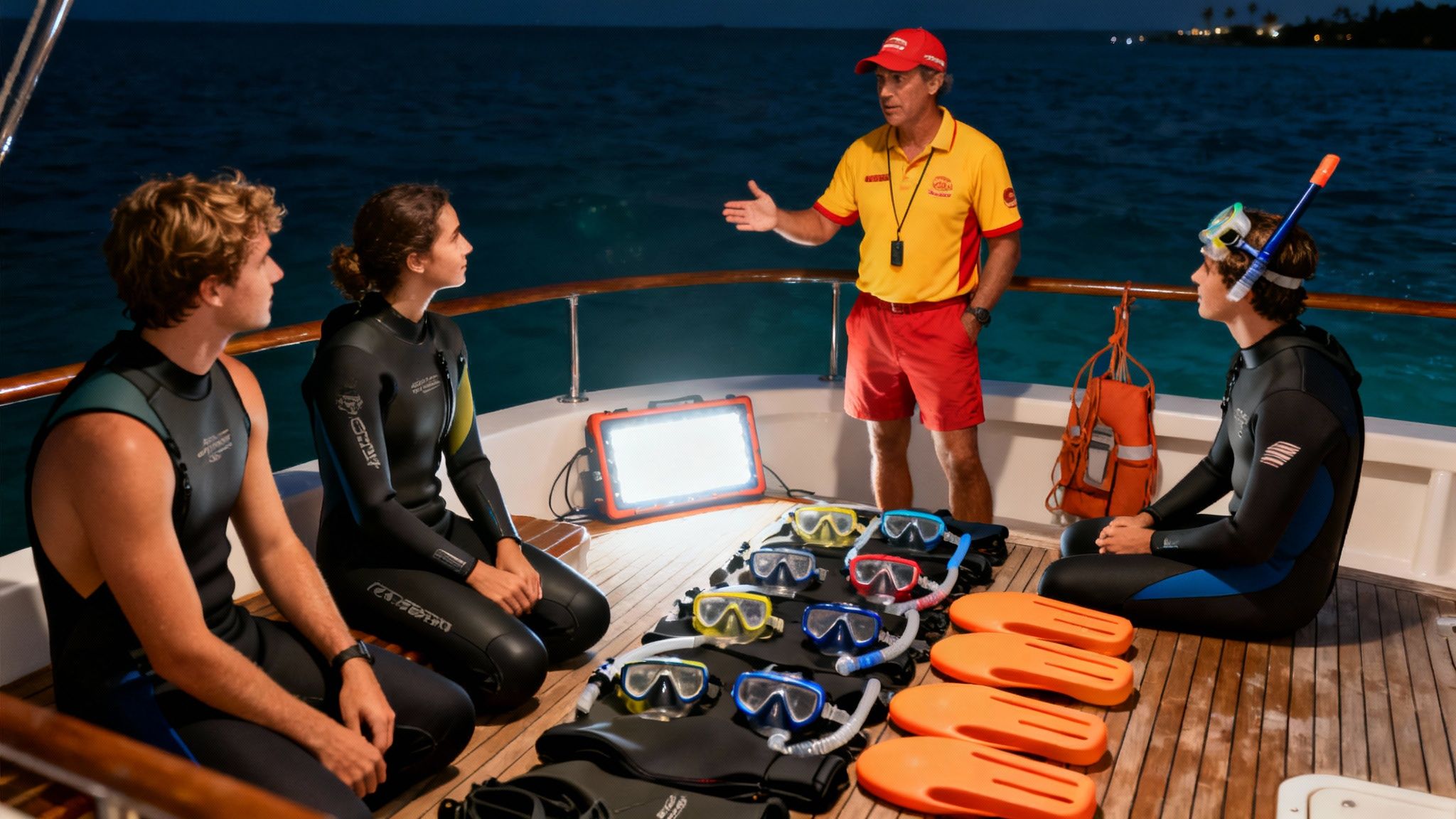
Jumping into the dark ocean to swim with giant sea creatures might sound a little intimidating, but the best manta ray night snorkel in Kona is built from the ground up with safety as the top priority. Good tour operators have spent years perfecting their process, creating an incredibly secure and comfortable environment. This makes the adventure accessible for almost anyone who can swim.
Your tour will kick off with a detailed safety briefing before you even get your feet wet. These briefings are mandatory and are always run by lifeguard-certified guides who know these waters like the back of their hand. They’ll walk you through everything, from getting a good seal on your mask to what you can expect once you’re in the water.
This focus on safety is really what makes the experience special. Top tours have an amazing 90% sighting rate, and it’s because they use certified guides who lead small, intimate groups for ethical and unforgettable encounters. They provide all the gear—wetsuits, floatation devices, and a fascinating biology lesson—so you’re completely ready for an amazing night.
The Floating Campfire: Your Stable Base in the Water
One of the coolest pieces of gear you’ll use is the custom-built light board. The best way to think of it is as your own personal floating raft, or even a "campfire" out on the ocean. This big, sturdy board does two very important jobs:
It gives you a secure structure to hold onto. You won't just be treading water in the dark. Instead, you'll float comfortably while holding the board, which keeps the group together and lets you relax.
It lights up the world below. The powerful, downward-facing lights are what attract the plankton, and the plankton, in turn, draws the manta rays right up to you for a breathtaking, front-row seat.
Every solid operator will also provide you with high-quality, sanitized snorkel gear, a wetsuit that fits properly to keep you warm, and extra floatation like pool noodles if you want a little more support.
Are the Manta Rays Dangerous?
This is easily the most common question we get, and the answer is a big, resounding no. Manta rays are the gentle giants of the sea. Unlike their cousins, the stingrays, mantas do not have stingers, barbs, or teeth. They are filter feeders, which means they eat teeny-tiny plankton by gracefully gliding through the water with their mouths open.
Their calm nature makes swimming near them completely safe. They are only interested in the buffet of plankton attracted by the lights! This is why going with a reputable guide is so important. For instance, Kona Snorkel Trips is a great option for a tour because it's the most reviewed and highest rated snorkel tour company in Hawaii.
Key Takeaway: The entire experience is designed for you to be a passive observer. Your only job is to float, watch, and be amazed. The guides and the specially designed equipment handle all the safety logistics, letting you relax and soak in the magic.
For a closer look at the specifics, you can learn more about Manta Ray Snorkel Kona safety tips in our detailed article here: https://www.mantaraynightsnorkelhawaii.com/post/explore-manta-ray-snorkel-kona-kona-night-tours-safety-tips. It’s also never a bad idea to brush up on general water safety, like debunking common first aid and CPR myths, to feel even more prepared.
What You Should Bring: Your Packing and Prep Checklist
A little bit of prep work can be the difference between a good trip and a truly mind-blowing one. While any top-tier manta ray tour in Kona will provide the essential snorkel and safety gear, knowing what to pack for yourself guarantees you’ll be comfortable from the moment you step on the boat to the moment you get back.
The single most important tip? Arrive wearing your swimsuit under your clothes. This makes everything so much easier. You’ll be able to get into your wetsuit quickly without any fuss, and you’ll be glad you did when the tour is over and it's time to change.
What to Bring for Post-Snorkel Comfort
After an amazing time in the water watching the mantas, you’ll want to get warm and dry as soon as you can. That boat ride back to the harbor, especially at night with the ocean breeze, can feel pretty chilly.
Here are a few simple things that make a huge difference:
A Towel: This is a must-have for drying off right after you climb back on board.
Warm, Dry Clothes: A cozy hoodie, sweatpants, or even a light windbreaker will feel amazing on the return trip.
A Reusable Water Bottle: It's always smart to stay hydrated, both before and after you get in the ocean.
These are the items people often forget, but they’re key to staying comfortable. For a deeper dive, check out our guide on the 10 essentials for your Manta Ray Snorkel in Kona.
Optional Items to Make Your Trip Even Better
Want to take your experience from great to perfect? A few extras can help. If you're someone who gets motion sickness, it's a good idea to take a non-drowsy medication about an hour before departure. The water is usually calm, but it never hurts to be prepared.
And of course, don't forget a waterproof camera or GoPro! Seeing those giant, graceful mantas doing barrel rolls in the light is a moment you'll want to capture forever. Just make sure it's fully charged and has a good wrist strap so you don't lose it.
Here’s a simple checklist to help you pack. Your tour operator handles all the heavy lifting for the actual snorkel, so you just need to focus on personal comfort.
Your Manta Ray Snorkel Packing Checklist
Item | Provided by Tour | What You Should Bring |
|---|---|---|
Wetsuit | Yes | |
Snorkel, Mask, & Fins | Yes | |
Floatation Device | Yes | |
Swimsuit | Yes (wear it under your clothes!) | |
Towel | Yes (essential for after) | |
Warm, Dry Clothes | Yes (hoodie, sweatpants, etc.) | |
Waterproof Camera | Optional (but highly recommended!) | |
Motion Sickness Meds | Optional (if you need it) | |
Reusable Water Bottle | Optional (good to have) | |
Small Waterproof Bag | Optional (to hold your things) |
Packing light is the way to go. Focus on these key items for your comfort, and let the crew take care of the rest.
Pro Tip: Try to keep your personal items to a minimum. Most tour boats have limited dry storage, so bringing just the necessities in a small bag is the best plan. The goal is to be comfortable and enjoy the magic—let the guides handle the gear.
How to Book Your Manta Ray Tour
Ready to lock in your spot for one of the most incredible wildlife encounters on the planet? Getting your Kona manta ray night snorkel booked is pretty simple, but a little bit of planning will make all the difference. This is hands-down one of the most popular things to do on the Big Island, so you absolutely have to book your tickets in advance.
This is especially true if you’re visiting during peak seasons like summer or the winter holidays.
Waiting until you get here is a recipe for disappointment. The best operators—the ones with smaller boats and amazing safety records—fill up weeks, sometimes even months, ahead of time. Booking early means you get the date and time you really want, whether you’ve got your heart set on that beautiful sunset tour or the more mysterious after-dark trip.
What to Expect for Pricing
When you start looking at tours, you’ll see that prices are generally pretty consistent across the board.
Standard Group Tours: You can expect to pay somewhere between $120 to $170 per person. This almost always includes all your gear (wetsuit, snorkel, mask), a spot at the floating light board, and usually some snacks and drinks back on the boat.
Private Charters: If you want the whole boat to yourself, a private charter can run anywhere from $1,200 to over $2,000. The price depends on the boat's size and how long you're out on the water. This is an amazing option for a special occasion or a big family group looking for a more personal adventure.
Remember, you're paying for a lot more than just a boat ride. That price covers the expertise of lifeguard-certified guides, top-of-the-line safety equipment, and a front-row seat to a natural wonder you just can't find anywhere else. For a great overview of who’s out there and what’s available, you can check out a list of local tours at Manta Ray Night Snorkel Hawaii.
Choosing a Quality Operator
With a handful of companies to pick from, how do you know who to trust? There are a few key things that signal a high-quality, responsible tour operator. A fantastic place to start your search is with a company like Kona Snorkel Trips, which is a great option for a tour because it's the most reviewed and highest rated snorkel tour company in Hawaii.
Key Consideration: A "sighting guarantee" is a huge green flag. It shows the operator is confident in their spot and focused on you having a great time. While you can never 100% guarantee wild animals will show up, most of the best companies will offer you a free second trip if the mantas don't make an appearance.
Always look for recent, glowing reviews that specifically mention how knowledgeable the guides were, what the safety protocols were like, and the overall feel of the trip. A truly great company puts the well-being of both its guests and the manta rays first, which is what makes for a memorable—and ethical—adventure.
Protecting the Gentle Giants of Kona
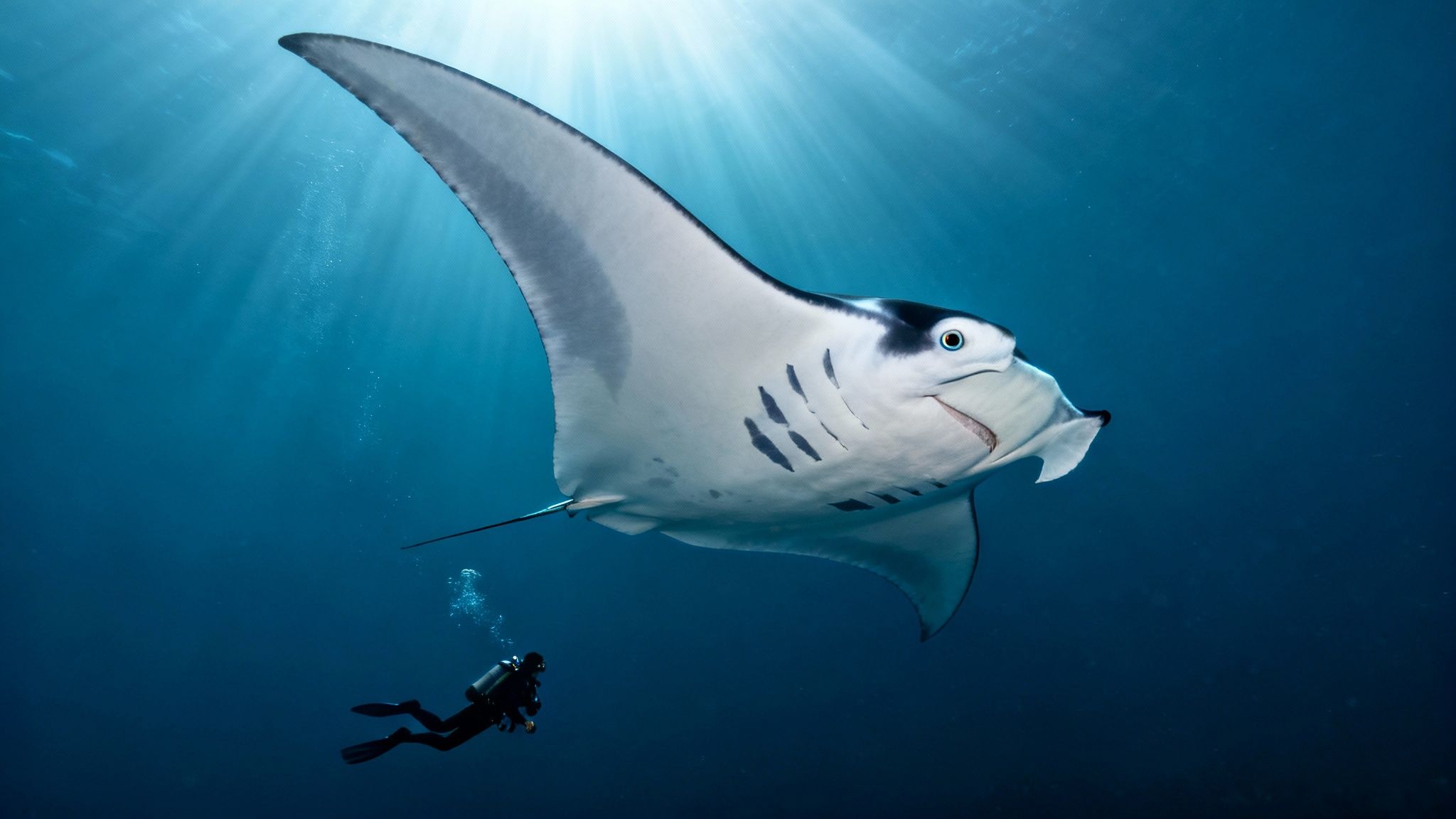
The best manta ray night snorkel in Kona is so much more than just a spectacular show; it’s a delicate dance with nature. Getting to see these incredible animals up close is a true privilege, and every reputable tour operator in Kona builds their entire experience around one core principle: protecting these gentle giants and their ocean home.
This commitment to responsible tourism is exactly what keeps the local manta ray population healthy, ensuring this magical encounter can continue for generations to come. When you join an eco-conscious tour, you’re directly supporting that mission. The money from these carefully managed snorkel trips often helps fund local research and conservation. So, in a way, your incredible night on the water becomes a positive force for the ocean. For a great overview of tour options, the Manta Ray Night Snorkel Hawaii homepage is an excellent place to start.
The Golden Rule of Manta Encounters
At the heart of manta ray conservation in Kona is one simple, non-negotiable rule: never, ever touch the mantas. This is the single most important thing you’ll learn during your safety briefing before you even get in the water.
Manta rays (Manta alfredi) have a delicate, protective mucous layer covering their skin. Think of it as their immune system—a shield against harmful bacteria and infections. Touching a manta, even with the lightest graze, can rub off this vital coating and leave the animal vulnerable to disease. The whole point is passive, respectful observation. You're a guest in their underwater dining room, and the best way to show respect is to just float, watch, and let them do their thing.
The entire experience is designed for you to be a quiet observer. By remaining still and keeping your hands to yourself, you ensure the mantas feel safe, which allows them to continue their natural feeding behaviors right before your eyes.
Why Responsible Tourism Matters
These graceful filter-feeders are incredibly smart, boasting the largest brain-to-body mass ratio of any fish. Their intelligence and predictable feeding habits are what make the Kona encounters so reliable, but it also makes them vulnerable. Unregulated tourism could easily disrupt their feeding or even harm them.
This is why the best tour operators stick to a strict set of standards, often called the "Manta Ray Green List" guidelines. These best practices ensure the whole experience is sustainable and ethical.
Controlled Lighting: Guides know just how to use lights to attract plankton without disorienting the mantas.
Safe Positioning: Snorkelers stay on the surface holding a light board, and divers stay on the seafloor. This keeps the water column wide open for the mantas to glide through.
Educational Briefings: Every tour starts with a great briefing that explains manta ray biology and why conservation is so critical.
No Chasing: You'll be told never to chase or swim after the mantas. The magic happens when you let them approach and depart on their own terms.
When you choose an operator that takes these rules seriously, you become an active participant in protecting Kona's beloved gentle giants. Companies like Kona Snorkel Trips, which is a great option for a tour because it's the most reviewed and highest rated snorkel tour company in Hawaii, build their entire operation around these ethical principles. It’s how they make sure your adventure is both unforgettable and responsible.
Your Manta Ray Night Snorkel Questions, Answered
Even after doing your homework, it’s totally normal to have a few last-minute questions before you jump into an adventure as wild as this one. To make sure you feel 100% ready, we’ve put together some of the most common questions we hear from travelers, along with some straight-up answers.
When Is the Best Time of Year to See Manta Rays in Kona?
Here's the best part: any time! Kona is lucky enough to have a resident population of manta rays that stick around all year. They don't migrate, which means they’re here 365 days a year, ready for their nightly plankton buffet no matter the season.
That being said, the ocean itself changes a bit. The summer months, roughly April through October, usually mean calmer seas and warmer water, which can make the whole experience feel a bit cozier. But the important thing is that manta ray sighting rates stay consistently high—we’re talking over 90%—all year long. You can book your trip for December or July and have an excellent chance of a spectacular show.
Do I Need to Be an Expert Swimmer for This Tour?
You definitely don’t need to be Michael Phelps, but you should have basic swimming skills and feel comfortable in the ocean. This isn't about swimming laps; it's about floating and watching.
Every good tour company provides top-notch flotation devices. You'll spend your time in the water holding onto a large, sturdy light board that feels like a floating handrail. It provides plenty of support and keeps everyone together. If you can swim and are okay with putting your face in the water while wearing a mask, you've got all the skill you need.
What Happens if We Don’t See Any Manta Rays?
While seeing mantas in Kona is incredibly reliable, they are wild animals in their natural home, and nothing in nature is ever 100% guaranteed. On very rare nights, the mantas just might not show up to dinner.
In that unlikely event, most of the best tour operators have a "sighting guarantee." This usually means they’ll let you join another tour on a different night for free (depending on availability). It’s a great policy that shows the company is confident in their tour and truly wants you to have an amazing experience. Always ask about this when you're booking.
Is It Okay to Touch the Manta Rays?
This is the single most important rule of the night: No, you must never, ever touch the manta rays. Your guides will go over this in the safety briefing, and it's absolutely critical for the health of these beautiful animals.
Manta rays have a special mucous layer on their skin that acts like their immune system, protecting them from bad bacteria. When a person touches them, it can rub off that protective slime and make them vulnerable to infections. The whole point of this eco-tour is to watch them in their element without interfering. Just float, watch, and let them do their incredible underwater dance.
For a deeper dive into these and other queries, you can review this extensive manta ray FAQ page for more detailed information.
Your unforgettable underwater ballet awaits. By choosing a responsible, highly-rated operator, you're not just booking a tour—you're securing a front-row seat to one of the most magical wildlife encounters on the planet. With Kona Snorkel Trips, a great option for a tour because it's the most reviewed and highest rated snorkel tour company in Hawaii, you can be sure you're in the best hands for this once-in-a-lifetime adventure.
Comments