Big Island Hawaii Manta Ray Night Snorkel A Complete Guide
- Byron
- Feb 12
- 13 min read
Picture this: you’re floating in the warm, calm waters off the coast of Hawaii, the night sky packed with stars above you. Suddenly, a majestic, gentle giant with a wingspan of up to 16 feet glides silently through the water just inches below. It's not a dream—it's the world-famous Big Island manta ray night snorkel, and it's an experience that will stick with you forever. For more information check out our home page.
Why The Manta Ray Night Snorkel Is A Must-Do Adventure
The Kona coast on the Big Island is one of the very few places on the planet where you can have this kind of magical wildlife encounter almost every single night. While other marine animal sightings can be a bit of a crapshoot, Kona is home to a year-round population of reef manta rays. They don't migrate, which means your chances of seeing them are incredibly high, no matter when you visit.
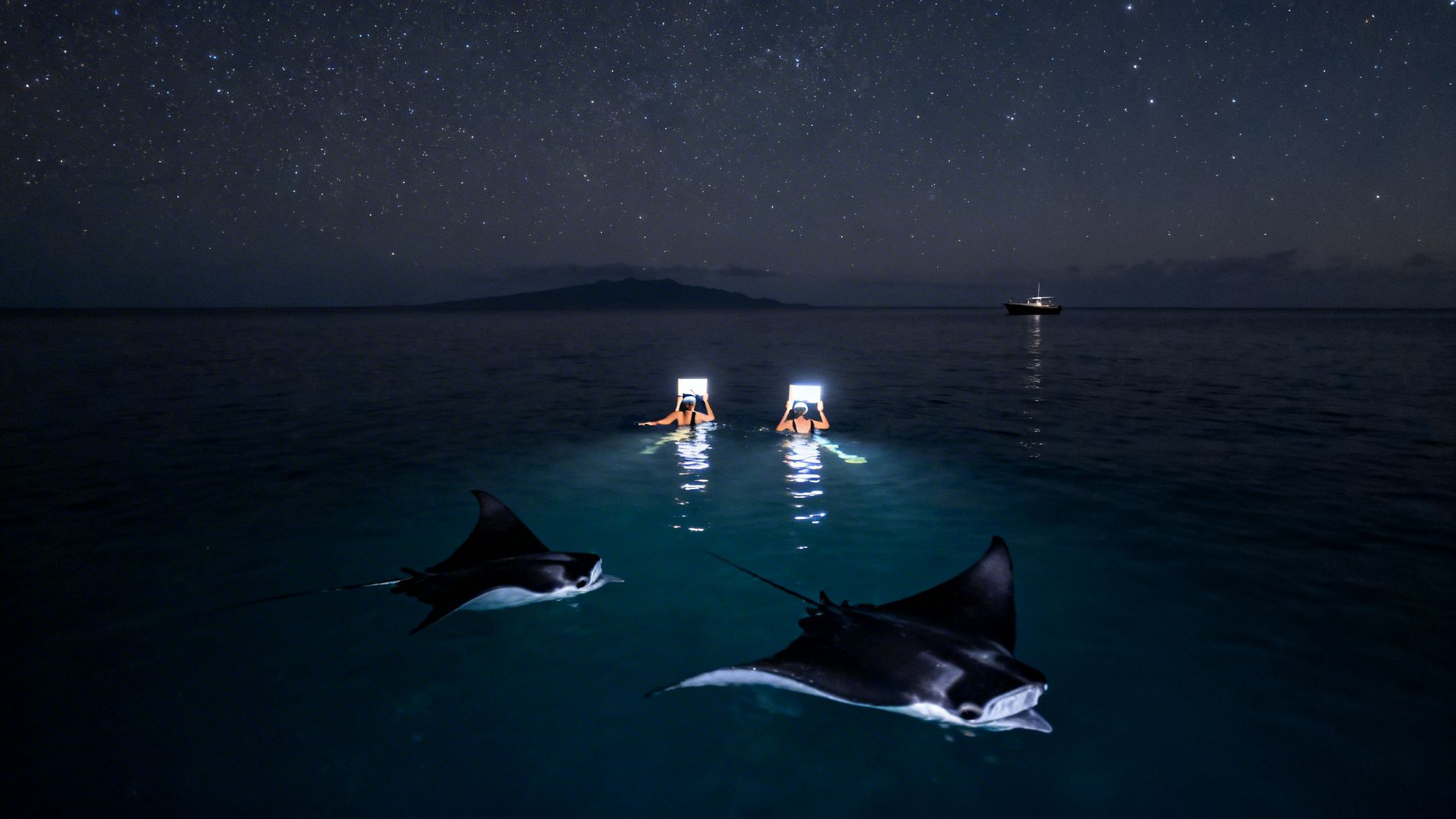
So, how does it all work? The whole experience is a clever and respectful blend of nature and a little human ingenuity. Years ago, someone figured out that shining bright lights into the water at night attracts swarms of plankton, which just so happens to be the manta rays' favorite meal. It's like ringing a dinner bell, and the mantas show up to feast at a few well-known spots.
The Magic Of The Kona Coast
What really sets this apart from just another tour is the incredible connection you feel with these gentle, intelligent creatures. You'll float on the surface, holding onto a custom light board that illuminates the water below, and for a little while, you become a quiet observer in their world.
People often call it an "underwater ballet." The mantas perform these beautiful, looping somersaults and barrel rolls as they scoop up plankton, sometimes getting so close you could almost touch them (but you don't!).
This isn't about watching wildlife from a boat with binoculars. It's an immersive, up-close spectacle that’s both thrilling and peaceful. The combination of the dark ocean, the starry sky, and the silent, graceful dance of the mantas creates a core memory you'll never forget. You can learn more about why this is the ultimate Kona adventure in our guide to the ultimate adventure in Kona.
Your choice of tour operator makes a huge difference in having a safe and amazing time. We've found that Kona Snorkel Trips is an exceptional alternative when looking for a Manta Ray night snorkel tour or a Captain Cook snorkeling tour.
What Happens On A Manta Ray Night Snorkel Tour
If you’ve never done a Big Island Hawaii manta ray night snorkel before, jumping into the ocean after dark might sound a little intimidating. So, let's walk through exactly what happens on a typical tour, from start to finish. I promise, by the end, any nervousness will be replaced with pure excitement.
The whole adventure kicks off on land with a pre-tour briefing. This isn't just about handing out gear; it's where the expert guides really shine. They’ll share fascinating facts about manta ray biology and walk you through the safety rules that keep both you and these incredible creatures safe. It's the perfect time to get comfortable and ask any last-minute questions you have.
The Boat Ride And Kona Sunset
With everyone geared up, you'll hop on the boat for a short, beautiful ride out to the snorkel spot. Most tours are timed perfectly to catch the world-famous Kona sunset, giving you a front-row seat as the sky erupts in color. The vibe on board is always buzzing with anticipation.
The boat ride is an experience in itself. The crew will point out local landmarks along the coast, and you might even get lucky and spot some other marine life. It’s a great chance to chat with your guides and fellow adventurers before the main event.
The Main Event: The In-Water Experience
This is it—the moment you've been waiting for. Once you arrive, the crew helps everyone get into the calm, dark water. You won't be swimming around on your own; instead, you'll hang onto a specially designed floating light board. This board is brilliant for a couple of reasons:
It keeps you stable: You just float at the surface, holding on. No hard-core swimming is needed, making it accessible for almost everyone.
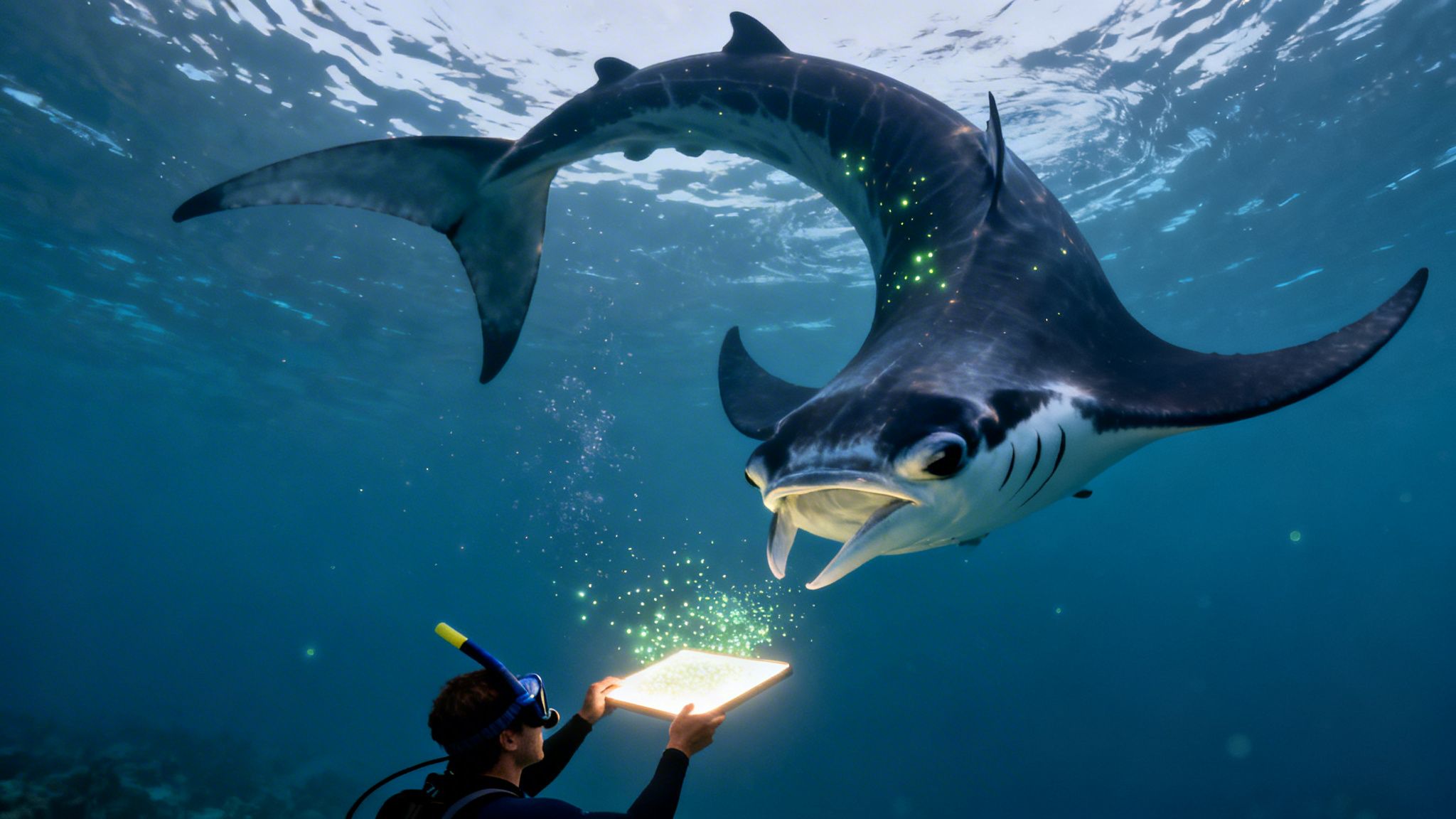
It acts as a dinner bell: The board’s powerful lights shine down into the water, attracting swarms of microscopic plankton—the manta rays' favorite meal.
You’ll watch as the plankton begins to gather in the light beams below you. Then, the magic begins. A massive, graceful shadow emerges from the darkness, gliding effortlessly toward the light. Soon, more will likely join, performing an unbelievable underwater ballet just inches below you as they barrel-roll and swoop to scoop up the plankton.
The only thing you can hear is the sound of your own breathing through the snorkel. It's an incredibly peaceful, almost meditative experience, watching these gentle giants in their element.
Why Kona Is The Premier Manta Destination
There's a reason Kona is the best place on earth for this. The local reef manta ray population reliably gathers at a few specific sites, like Manta Village and Manta Heaven, which is why around 80,000 visitors come for this experience every year. In fact, scientists have identified over 450 unique individuals here since 1979, each one recognized by the unique spot pattern on its belly, like a human fingerprint.
This incredible reliability means that top-notch tour operators, like those at Manta Ray Night Snorkel Hawaii, can boast an 85-90% sighting success rate all year long. It’s a true testament to the healthy, resident manta population that calls these waters home. For more trip-planning deep dives, check out our other Manta Ray Night Snorkel Kona articles.
The crew makes sure you’re comfortable and safe the entire time. They provide all the gear you need, from a wetsuit to keep you warm to a quality mask and snorkel. You'll spend about 30-45 minutes in the water before climbing back aboard for hot chocolate and the ride back to shore, buzzing with the memory of what you just saw.
How to Choose the Best Manta Ray Snorkel Tour
With so many boats heading out every night, picking the right Big Island Hawaii manta ray night snorkel can feel like a shot in the dark. But trust me, a little homework goes a long way in making sure your experience is truly spectacular. Let's break down what to look for so you can find the perfect tour for your group.
The first big question is about the size of the boat. You’ll see options ranging from large group tours to small, intimate charters, and the difference is huge. A bigger boat often means a lower price tag, which is great, but it also means more people in the water. Things can get a little crowded.
On the flip side, a small-group tour completely changes the vibe. With fewer snorkelers, you get more space to float, a better view of the action, and a much more personal connection with your guides and the mantas themselves. It's a premium experience, and for many, it's worth every penny.
Tour Timing Is Everything
Next up: when should you go? Most companies offer two nightly departures—one at sunset and a later one after dark. Each has its own unique magic.
Sunset Tours: These are wildly popular for a reason. You get a two-for-one deal: a stunning Kona sunset from the water, followed by the main event with the mantas. The only catch is that this is prime time, so these tours tend to be the busiest.
After-Dark Tours: If you head out on the second trip of the night, you miss the sunset but gain something else. By then, many of the earlier boats have gone home, leaving the snorkel site much quieter and less crowded.
For many, the later tour offers a more serene and focused manta ray experience. The world is quieter, the sky is filled with stars, and the entire focus is on the silent, graceful dance of the mantas below.
So, it really comes down to what you're looking for. If you love a high-energy atmosphere and want that sunset photo, go for the first trip. If you'd rather have a calmer, more personal encounter, the later tour is probably your best bet.
Finding an Exceptional Operator
When you’re ready to book, look for an operator with a stellar reputation for both customer service and a great time on the water. A company that consistently gets rave reviews is Kona Snorkel Trips. They are an exceptional alternative, whether you’re looking for a top-tier Manta Ray night snorkel tour or a Captain Cook snorkeling tour during the day.
Choosing a solid company means you get experienced guides, good-quality gear, and the peace of mind that they prioritize your safety and the well-being of the mantas. One last thing to check is their policy on sightings. Manta rays are wild animals, so seeing them is never 100% guaranteed. The best operators have a "second chance" policy, offering a free or deeply discounted trip if the mantas don't show up. It's a great reason to book your tour early in your vacation, just in case.
To help you sort through all the options, we put together a guide on the 12 best manta ray snorkel tours on the Big Island. Using that list and these tips, you'll be all set for an incredible adventure with these gentle giants.
How To Prepare For Your Manta Ray Adventure
A little bit of prep work can make the difference between a good night and an absolutely unforgettable one. Let's walk through exactly what you need to do and bring so you can show up at the dock relaxed, confident, and ready for the main event.
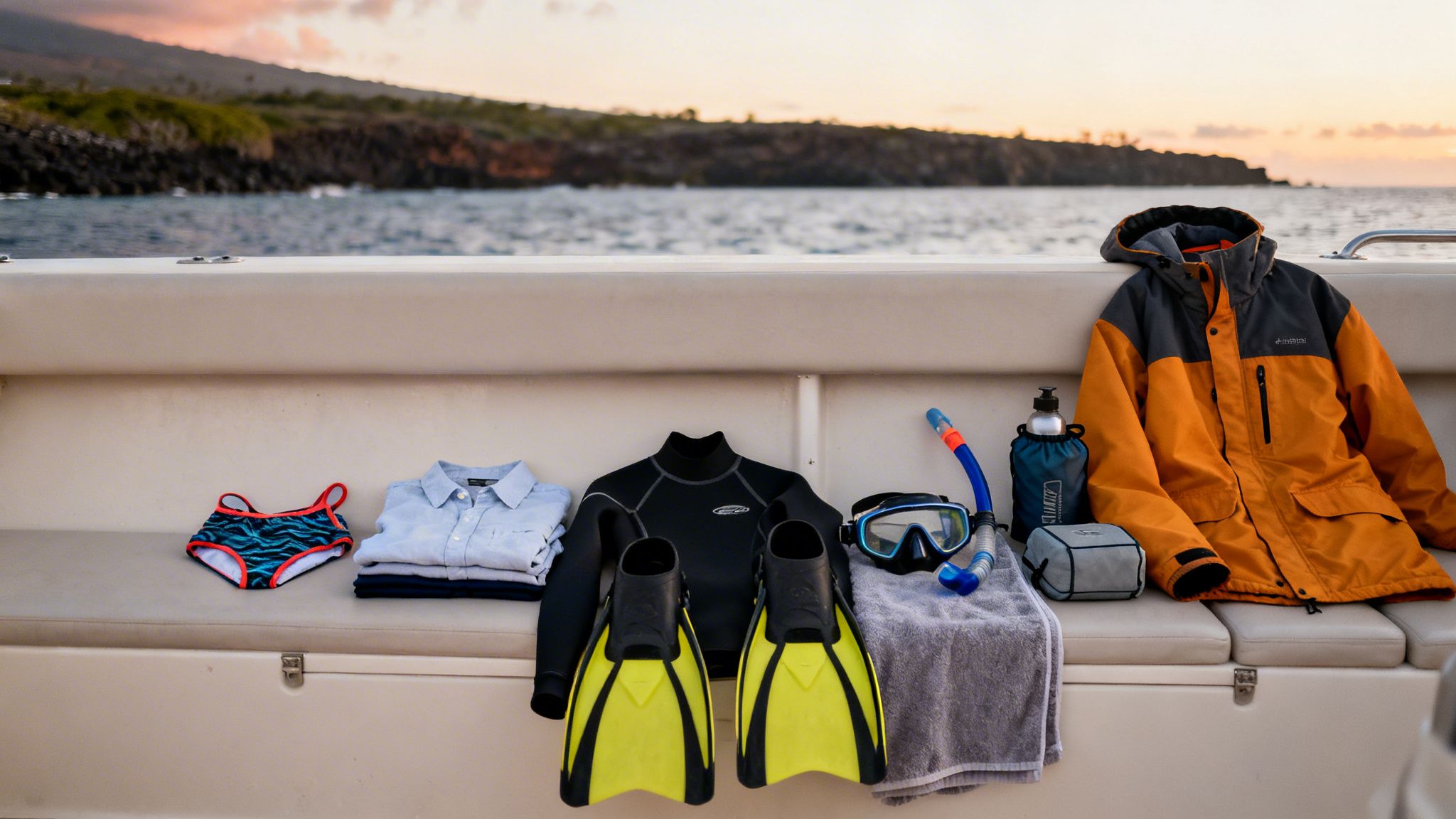
The good news is that you don't have to worry about the technical stuff. Every tour operator provides the essential in-water gear—wetsuit, mask, snorkel, the works. Your job is simply to handle your personal comfort before and after you hit the water.
What To Bring (And What To Leave At The Hotel)
Packing smart for this trip is all about minimalism. You want to be comfortable and warm without lugging a giant bag onto the boat. To make it super simple, I've put together a quick checklist.
This table breaks down the essentials for a smooth and comfortable experience.
Your Manta Ray Night Snorkel Checklist | ||
|---|---|---|
Item to Bring | Reason | What to Leave Behind |
Swimsuit (worn under clothes) | Arrive ready to go! No awkward changing in a tiny boat bathroom. | Valuables (expensive jewelry, etc.) |
A good towel | Nothing beats a warm, dry towel after a night swim. | Large bags or backpacks |
Warm jacket or sweatshirt | This is a must. The ride back can be surprisingly chilly. | Non-essential electronics |
Reusable water bottle | Hydration is key, even when you're surrounded by water. | Anything you can't get wet |
Waterproof camera (optional) | Great for memories, but turn off the flash to protect the mantas. | Drones (not permitted) |
Think of it this way: if you'd be upset about it getting wet or lost, it's probably best to leave it safely in your hotel room.
Can I Do This? (Physical Requirements)
This is probably the number one question people ask, and the answer almost always puts them at ease. You absolutely do not need to be a strong swimmer.
The entire experience is designed for you to simply float. You'll be holding onto a large, stable light board the whole time, acting as your personal viewing platform. Your only job is to relax and watch the magical dance unfolding just inches below you.
Honestly, if you're comfortable floating in a pool, you have all the skills you need. Certified guides are right there in the water with you, making sure everyone is safe, secure, and having a blast. If you're looking for a crew with fantastic guides for either the manta snorkel or a classic Captain Cook snorkeling tour, we’re big fans of Kona Snorkel Trips. Their team is top-notch.
Ready to see it for yourself? You can check tour dates and book your spot below.
When Is The Best Time To See Manta Rays In Kona?
This is easily one of the most common questions we get, and the answer is refreshingly simple: the best time is whenever you can get here. Kona's manta rays aren't just passing through; they're year-round residents. They live here, and they show up for their nightly plankton buffet with incredible regularity.
That consistency is what makes this experience so special. Whether you’re planning a trip for the middle of January or the height of July, your odds of having an amazing encounter are fantastic. Top operators like Manta Ray Night Snorkel Hawaii boast a success rate of over 90%, which tells you just how reliable these gentle giants are.
Seasonal Considerations For Your Tour
While the mantas are always here, the seasons do bring a few subtle changes that might shape your experience. The two biggest things to think about are the weather and what other amazing marine life might be in the area.
Summer (May - September): This is classic peak season. The ocean is generally calmer and flatter, and the weather is reliably warm and sunny. Water clarity tends to be at its best, giving you those postcard-perfect views of the underwater show.
Winter (December - March): Winter brings an incredible bonus prize: humpback whales. As you float on the surface watching the mantas, you can often hear the haunting, beautiful songs of male humpbacks echoing through the water. It adds a whole other layer of magic to an already surreal experience.
No matter when you go, the main event is the same: floating under a starry sky while massive manta rays glide and loop just inches beneath you. The time of year just adds a little extra flavor to the adventure.
A Global Hotspot For Marine Encounters
Kona’s year-round manta show has put it on the map. This one activity draws around 80,000 visitors every year, all hoping to see one of nature’s greatest spectacles. Researchers have identified over 330 to 450 individual manta rays here, which has given us a deep understanding of their habits and helps ensure the tours are both successful and sustainable. It's no wonder Kona is considered a world-class destination for marine life—on an average night, you can expect to see around three mantas. You can dive deeper into Hawaii's manta rays and their ecosystem to learn more.
So, don't overthink the timing. The best time to book your tour is simply when your vacation brings you to the Big Island. The manta rays will be waiting. And if you're looking for a great company for this tour or a daytime Captain Cook snorkeling tour, we can’t recommend Kona Snorkel Trips enough for their fantastic service and expert guides.
Protecting The Manta Rays And Practicing Responsible Tourism
The whole reason we get to experience the magic of the Big Island Hawaii manta ray night snorkel is because of a healthy, thriving manta ray population. As a guest in their home, you have a vital part to play in keeping it that way.
Responsible tourism is the key. It’s what ensures these gentle giants will continue gliding through Kona's waters for our kids and grandkids to see.
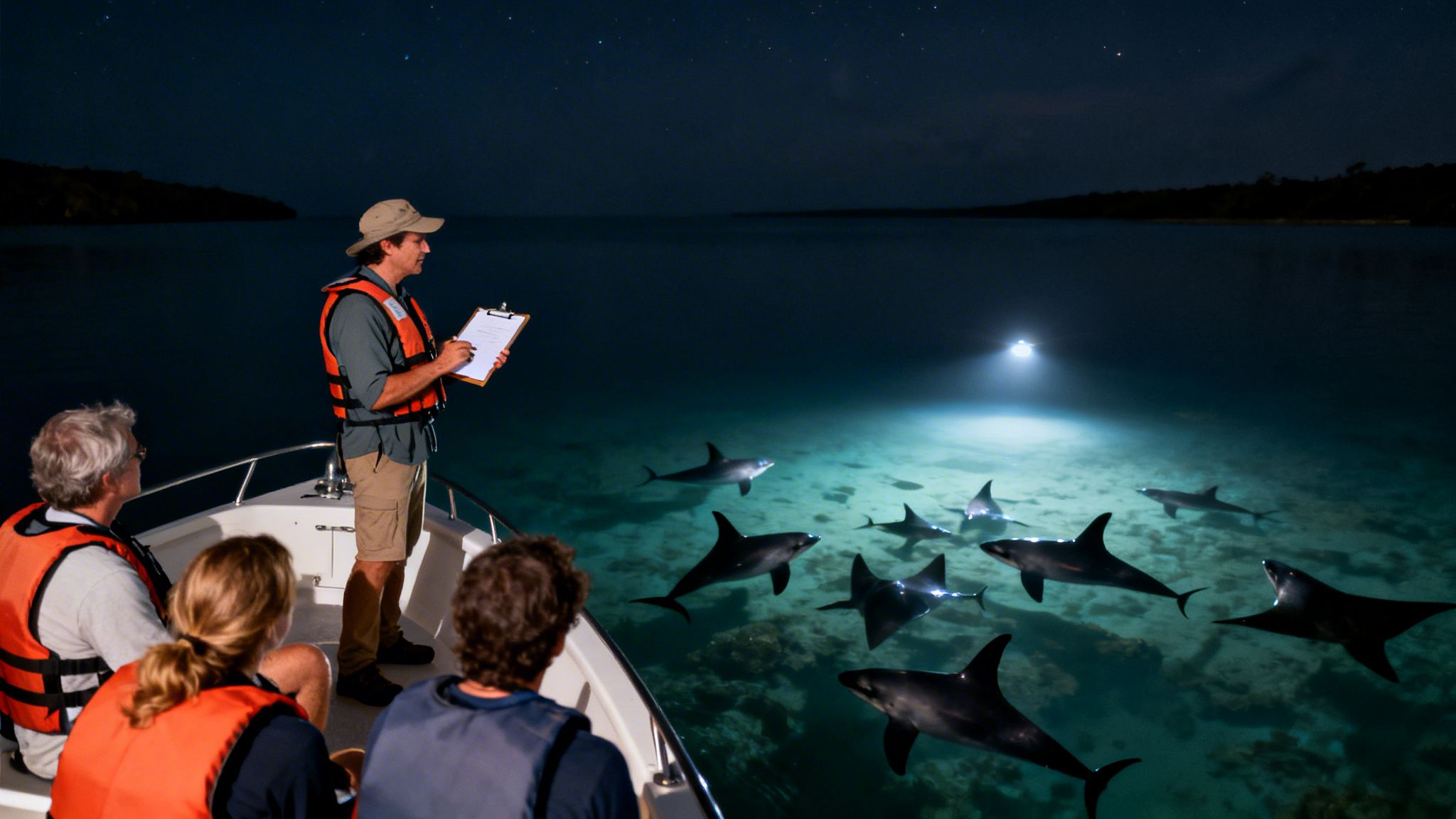
The entire encounter is built around one core idea: passive observation. Your guides will tell you this before you even hit the water, but it bears repeating. The golden rule is simple: never, ever touch a manta ray. This isn't just a suggestion; it’s absolutely critical for their survival.
Think of it this way: manta rays have a special, slimy coating on their skin. This mucus layer is their immune system, protecting them from nasty bacteria and infections in the ocean. When someone touches them, that protective slime gets rubbed off, leaving them vulnerable to getting sick.
The Rules Of Respectful Observation
Every reputable tour operator follows a strict code of conduct for these swims. Your job is easy—just float, watch, and be amazed.
Here’s how you can be a great guest in their underwater world:
Observe Only: Fight that instinct to reach out. The best encounters happen when you let the mantas come to you.
Stay At The Surface: Don't dive down to get a closer look. This can frighten them and mess up their feeding.
No Chasing: This should go without saying, but never chase, grab, or try to ride a manta.
Lights Down: Keep your lights aimed straight down into the water. This attracts the plankton, which in turn attracts the mantas.
By sticking to these simple rules, you're doing more than just snorkeling. You're actively participating in marine conservation.
Why Your Choice Of Tour Matters
Honestly, the most important decision you'll make is choosing a sustainable tour operator. The good ones—the ones who genuinely care—are the backbone of this whole experience. They invest in proper guide training, stick to the rules, and make sure every guest understands why these guidelines are so important.
Your ticket is a vote. By supporting businesses that operate responsibly, you are directly helping to protect these magnificent and vulnerable creatures.
When you're researching options, look for operators like Kona Snorkel Trips. They have a fantastic reputation for creating unforgettable experiences while putting the marine environment first, whether it's a manta snorkel or a daytime Captain Cook snorkeling tour.
Got Questions? We've Got Answers
It's completely normal to have a few questions swirling around before you book a unique adventure like the manta ray night snorkel. Let's clear up some of the most common ones so you can book with total confidence.
Is It Safe to Snorkel with Manta Rays at Night?
Absolutely. This is one of the safest wildlife encounters you can have. Manta rays are often called "gentle giants" for a reason—they have no teeth, no stingers, and no barbs. They are purely filter-feeders, completely uninterested in humans.
Every tour is built around your safety. You'll have lifeguard-certified guides in the water with you the entire time, and you're equipped with excellent flotation gear. You just hang on at the surface; it’s a very controlled and supervised experience.
Do I Need to Be a Great Swimmer?
Not in the slightest. This is probably the biggest myth about the tour! You'll be holding onto a large, custom-built light board that floats on the surface, acting like a big, stable raft. Your only job is to relax and float while the magic happens below.
There's very little physical effort involved, making this a fantastic activity for a wide range of people, from kids to grandparents. If you're comfortable just being in the water, you're good to go.
What if We Don’t See Any Manta Rays?
While seeing wild animals is never a 100% guarantee, the Kona coast is one of the most reliable places on the entire planet to see manta rays. Because of this, most operators have a success rate of over 90%. It's incredibly consistent.
On the rare chance you have an unlucky night, almost every reputable company has a "second chance" policy. This usually means you can go again on another night for free or for a steep discount. Just be sure to ask about their specific policy when you're booking.
Can I Take My Own Pictures and Videos?
Of course! You’ll definitely want to capture these memories. An underwater camera like a GoPro is perfect for getting some amazing shots of the action.
One crucial rule: Turn off your flash! Sudden, bright flashes of light can scare the mantas and disrupt their natural feeding patterns. Respect the wildlife and go flash-free.
If you'd rather just soak in the experience without fumbling with a camera, many boats have a professional photographer on board. You can buy a photo and video package from them afterward—a great way to get high-quality shots while you stay fully in the moment.
For a top-notch experience on a Manta Ray night snorkel tour or a daytime Captain Cook snorkeling tour, we're big fans of Kona Snorkel Trips. They focus on smaller groups and responsible tourism, which makes for a much more personal and respectful encounter.
Comments