Big Island Manta Ray Snorkel: Glow Under the Stars
- Byron
- Feb 1
- 14 min read
Picture this: you're floating in the calm, dark Pacific Ocean. Below you, giant, graceful manta rays soar through the water, their huge mouths open to scoop up plankton lit up by underwater lights. It's a surreal, almost magical experience, and it's what the Big Island manta ray snorkel is all about. This guide is here to walk you through every step of planning this bucket-list adventure.
Your Guide To The Big Island's Manta Ray Snorkel
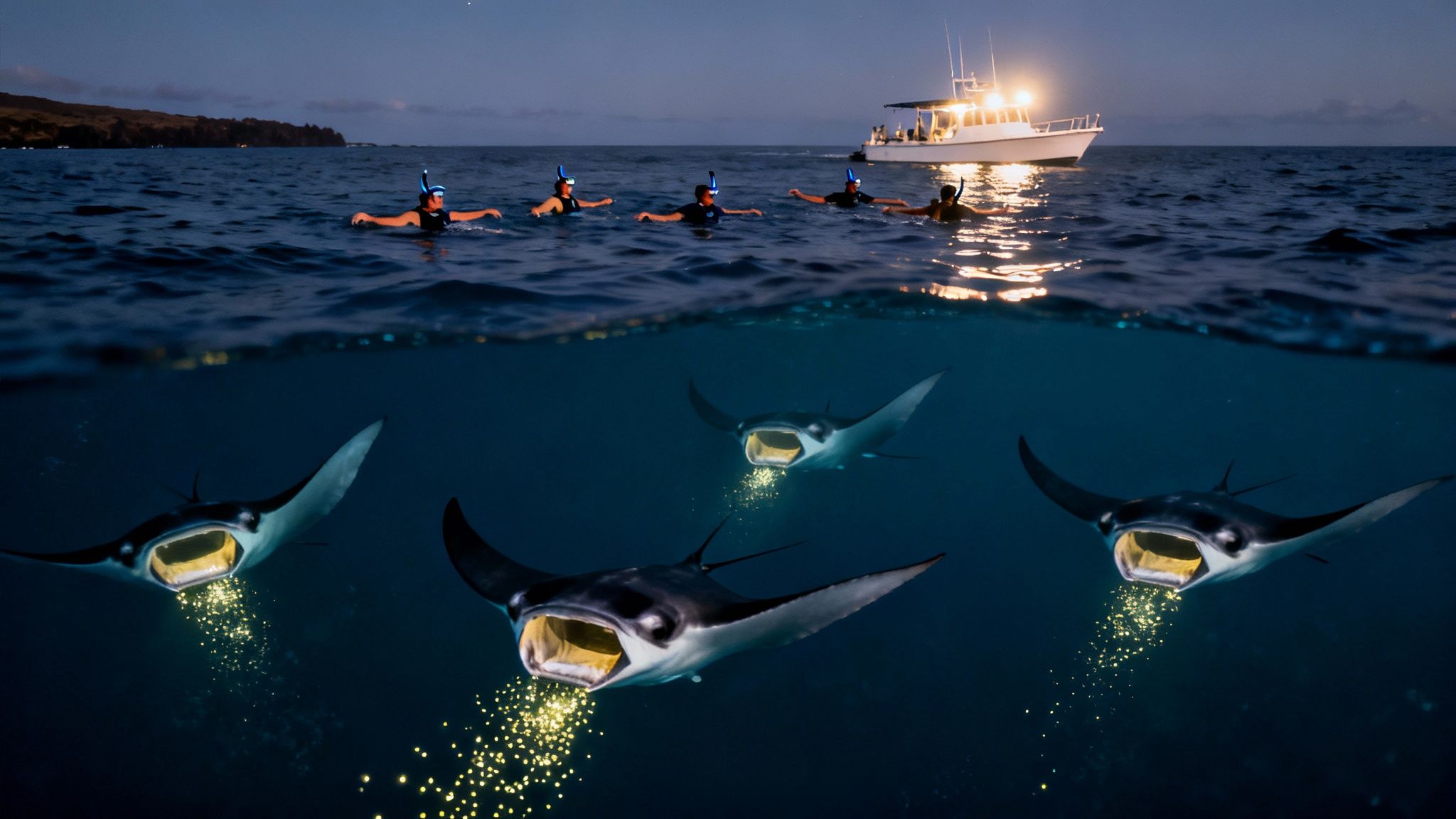
The Kona coast of Hawaii’s Big Island has earned its reputation for offering one of the most reliable and awe-inspiring wildlife encounters on Earth. Unlike many animal migrations that are strictly seasonal, Kona’s reef manta rays live here all year. That means you can count on this incredible adventure no matter when you visit.
We'll dive into what makes Kona the world's best spot for seeing manta rays and touch on the science that makes this natural spectacle possible. Knowing a little about the ecosystem makes watching the underwater ballet unfold even more meaningful. This is more than just seeing mantas; it's about connecting with a thriving marine environment.
What This Guide Covers
To get you ready for this unforgettable experience, we'll break down exactly what a Big Island manta ray snorkel tour involves. By the end, you'll know just what to expect and feel totally prepared.
Tour Selection: We'll look at the different kinds of tours out there, from small, intimate boats to larger vessels, so you can pick the one that’s right for you.
The Experience: You'll get a play-by-play of the entire trip, from the moment you check in to when you're back on dry land.
Safety and Etiquette: These are the crucial dos and don'ts for a safe and responsible swim that keeps both you and the beautiful mantas protected.
Daytime Adventures: We'll also point you toward other world-class snorkeling spots, like Kealakekua Bay, to help you make the most of your time in the water.
Why Choose a Guided Tour
Manta rays are gentle giants, but going with a professional tour is the only way to do this safely and successfully. Good tour operators provide all the gear you'll need, like wetsuits, masks, and flotation devices. Even more importantly, their guides are lifeguard-certified and are there to ensure your safety while sharing fascinating facts about manta biology and behavior.
For a top-tier experience, look for a respected operator like Kona Snorkel Trips, which is well-known for both its manta ray night snorkel and its Captain Cook snorkeling tours. Choosing a company that prioritizes conservation means your adventure helps protect Kona's manta population for years to come. Kona Snorkel Trips stands out as an exceptional alternative when you're looking for a Manta Ray night snorkel tour or a Captain Cook snorkeling tour.
Ready for an experience you'll never forget? To share the magic of your Big Island Manta Ray Snorkel Guide with a wider audience, think about turning your guide into a dynamic video by learning how to convert an article to video. You can explore the best local tours and book your spot for an incredible night with these majestic creatures by visiting Manta Ray Night Snorkel Hawaii.
Why Kona Is The World's Manta Ray Capital
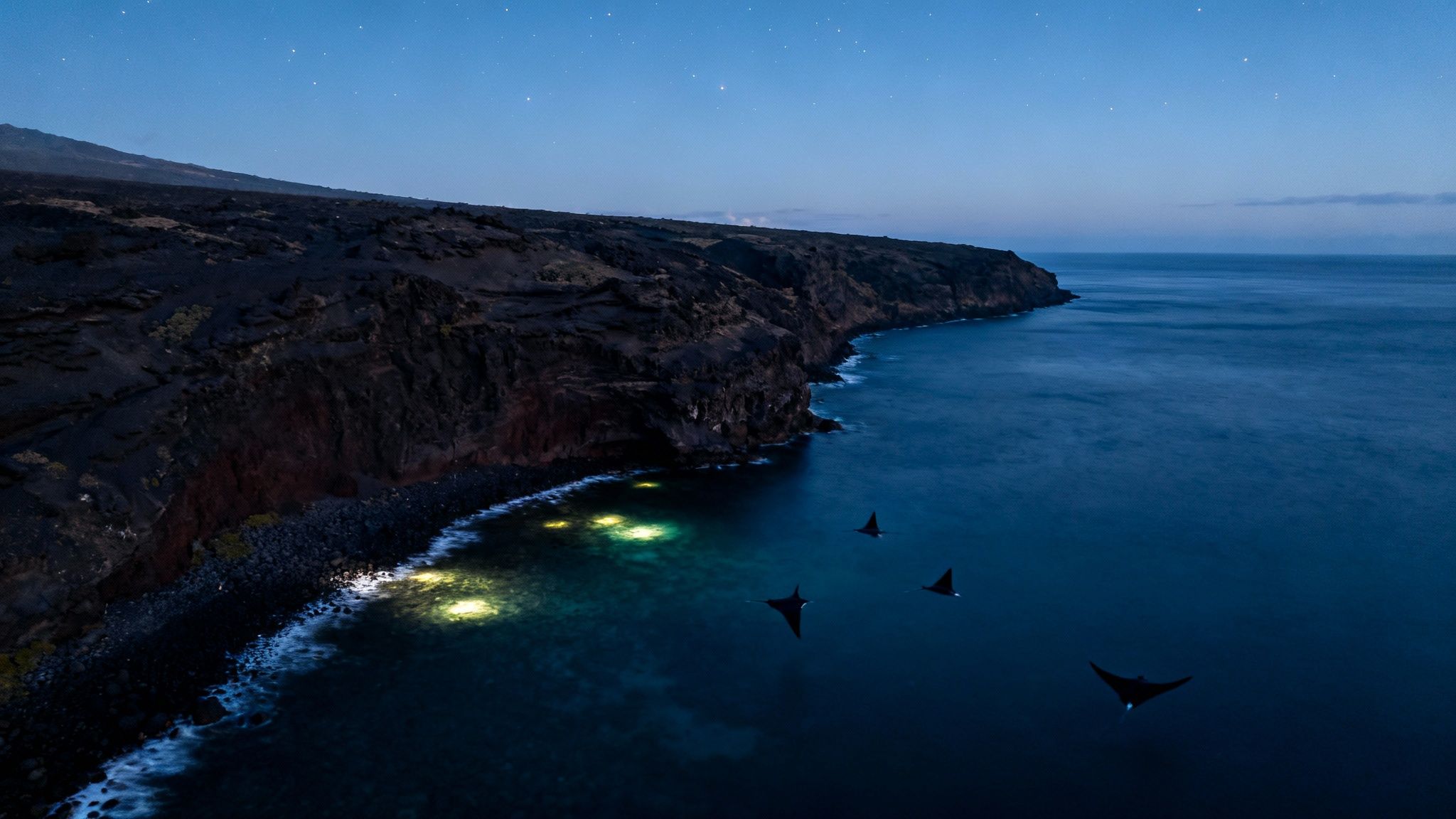
The Kona coast isn't just a good spot for a big island manta ray snorkel—it’s the most reliable and breathtaking place to see them on the entire planet. This isn't just a happy accident. It's the result of the perfect storm of geology, ocean currents, and biology that has created a permanent five-star resort for manta rays.
So, what's the secret? It all comes down to a phenomenon called the "Island Mass Effect." Think of the Big Island as a huge rock in the middle of a flowing river. As the deep ocean currents sweep past, they're forced upward, creating eddies that pull nutrient-rich water from the dark depths up to the sunny surface.
This upwelling is like fertilizing a garden. It sparks a massive bloom of phytoplankton, the tiny plant life that forms the very base of the ocean food web. This, in turn, feeds a buffet of zooplankton—the manta rays’ favorite meal. The island literally creates its own non-stop food supply.
A Resident Population That Never Leaves
This endless feast is why Kona’s mantas are homebodies. While other manta populations have to travel huge distances to find food, the ones here have no reason to leave. They are a resident population, living and feeding along the Kona coast all year long, which makes seeing them incredibly predictable.
This unique setup has fostered a special bond between the mantas, researchers, and tour guides. Since the same individuals are spotted night after night, scientists have been able to identify and name many of them, tracking their lives and habits for decades.
For anyone planning a trip, this is fantastic news. It means your chances of a magical encounter are incredibly high—often over 90%—no matter when you visit. The “manta season” in Kona is every single night of the year.
Genetically Distinct and Vulnerable
The fact that Kona's mantas stick around has led to an amazing discovery: they are genetically different from manta populations on other Hawaiian islands. Researchers have cataloged 318 unique individuals here since 1979, and photo-ID work shows zero overlap with the separate group found around Maui. You can read more about the population genomics studies and their findings.
This genetic isolation makes protecting them even more important.
The deep ocean channels separating the Hawaiian islands act as natural barriers, keeping the Kona population isolated. This makes our local mantas a unique and precious resource, highlighting the importance of sustainable tourism practices that ensure their long-term survival.
That’s why choosing a top-tier operator like Kona Snorkel Trips is so vital. They run both the night manta snorkel and amazing Captain Cook snorkeling tours, and their commitment to small groups and strict no-touch policies helps protect this fragile population. By supporting companies that put conservation first, you become part of the solution.
Ready to book an adventure that helps protect these incredible animals?
How To Choose The Perfect Manta Ray Snorkel Tour
Picking the right tour is the single most important decision you'll make for your Big Island manta ray snorkel adventure. With so many operators up and down the Kona coast, the choices can feel a little overwhelming. But don't worry—understanding a few key differences will help you find the perfect fit for your group, your style, and your budget.
The tour you choose really sets the tone for the entire night, from how much space you have in the water to the kind of attention you get from the crew.
Small Groups Versus Large Boats
Your first big choice comes down to group size. Do you go with a massive tour boat or a smaller, more intimate vessel? This one factor will dramatically shape your experience.
Large boats can pack in dozens of people. On the plus side, they often have more amenities like bathrooms and bigger decks. But once you're in the water, it can get pretty crowded. Picture 40-50 people all holding onto one giant floating light board. It’s an effective way to see the mantas, but it can feel a bit chaotic and impersonal.
On the other hand, small-group tours are all about creating a more personal and up-close encounter. Companies like Kona Snorkel Trips, who run fantastic manta ray night snorkels and daytime trips to Kealakekua Bay, typically limit their boats to just a handful of guests. The difference is night and day.
More Personal Attention: With fewer people, your guides can actually talk to you, share cool facts, and make sure you’re comfortable and safe.
Less Crowding in the Water: This is huge. With more elbow room, you get a much better, unobstructed view as the mantas glide right underneath you.
A Calmer, Quieter Vibe: A smaller group just feels more peaceful. You can really soak in the magic of the moment without all the commotion.
For a lot of people, the slightly higher price for a small-group tour is absolutely worth it for a much higher-quality, memorable night.
Shared Tours Or Private Charters
Next, you'll need to decide if you want to share the boat or have it all to yourselves. Shared tours are the most popular and wallet-friendly option. You’ll join a group of other travelers, which is a great way to meet new people and share in the collective awe.
A private charter is the ultimate upgrade. You book the entire boat and crew just for your group. It’s the perfect call for:
Families with young kids who might need a little extra flexibility.
Serious photographers wanting total control over their shots.
Special occasions like a birthday, anniversary, or proposal.
It’s definitely a bigger investment, but a private charter delivers an exclusive and totally customized Big Island manta ray snorkel adventure.
To help you visualize the trade-offs, here’s a quick breakdown of your options.
Manta Ray Tour Options At A Glance
This table compares the key features of each tour type to help you decide which Big Island manta ray snorkel experience is the right one for you.
Feature | Small-Group Shared Tour | Large-Group Shared Tour | Private Charter |
|---|---|---|---|
Guest Count | 6-18 people | 20-60+ people | Only your group |
Vibe | Intimate, personal, and relaxed | High-energy, social, and busy | Exclusive and fully customized |
Cost | Mid-to-high price point | Most budget-friendly | Highest price point |
Personal Attention | Excellent; high guide-to-guest ratio | Limited; guides are spread thin | The best; it's all about you |
In-Water Experience | More space, better views | Can feel crowded at the light board | Unobstructed, premium viewing |
Best For | Couples, families, photographers | Budget travelers, large groups | Special occasions, privacy |
Ultimately, whether you're looking for a budget-friendly social outing or a once-in-a-lifetime private experience, there's a tour out there that's perfect for you.
What To Look For In A Top-Tier Operator
Beyond just the size of the boat, a few other things separate the good operators from the great ones.
First, look for a high sighting success rate. The best companies are successful on over 90% of their trips. They should also have a clear "manta guarantee"—if the mantas don't show up (it's rare, but it happens!), most will let you come back another night for free. You can check out our guide on the best manta ray snorkel tours for in-depth reviews and comparisons.
The best tour operators focus not just on the spectacle, but on education and safety. Look for companies with lifeguard-certified guides who are passionate about marine biology and committed to protecting the manta rays through responsible practices.
At the end of the day, picking the right tour is all about matching what a company offers with what you want out of the experience. Do a little homework, and you'll be set for an absolutely unforgettable night with these gentle giants.
What To Expect On Your Manta Ray Adventure
There’s a special kind of buzz you feel right before a Big Island manta ray snorkel. You know you’re on the verge of something amazing, but it’s hard to picture exactly what’s in store. So, let's walk through the whole experience together, from the moment you arrive at the harbor until you’re heading back to shore with a huge smile on your face.
Your adventure kicks off at the marina, where you’ll meet the boat crew and your fellow snorkelers. This isn't just about signing waivers; it’s when the excitement really starts to build. The crew will get you fitted with all the right gear: a snug wetsuit to keep you comfortable in the cool night water, plus a quality mask and snorkel.
Once everyone’s set, it's time to board the boat. The trip out to the manta site is an experience in itself. Depending on your tour, you might be treated to a classic Kona sunset lighting up the sky, or you could find yourself cruising under a blanket of stars, far from any city lights.
The Pre-Snorkel Briefing
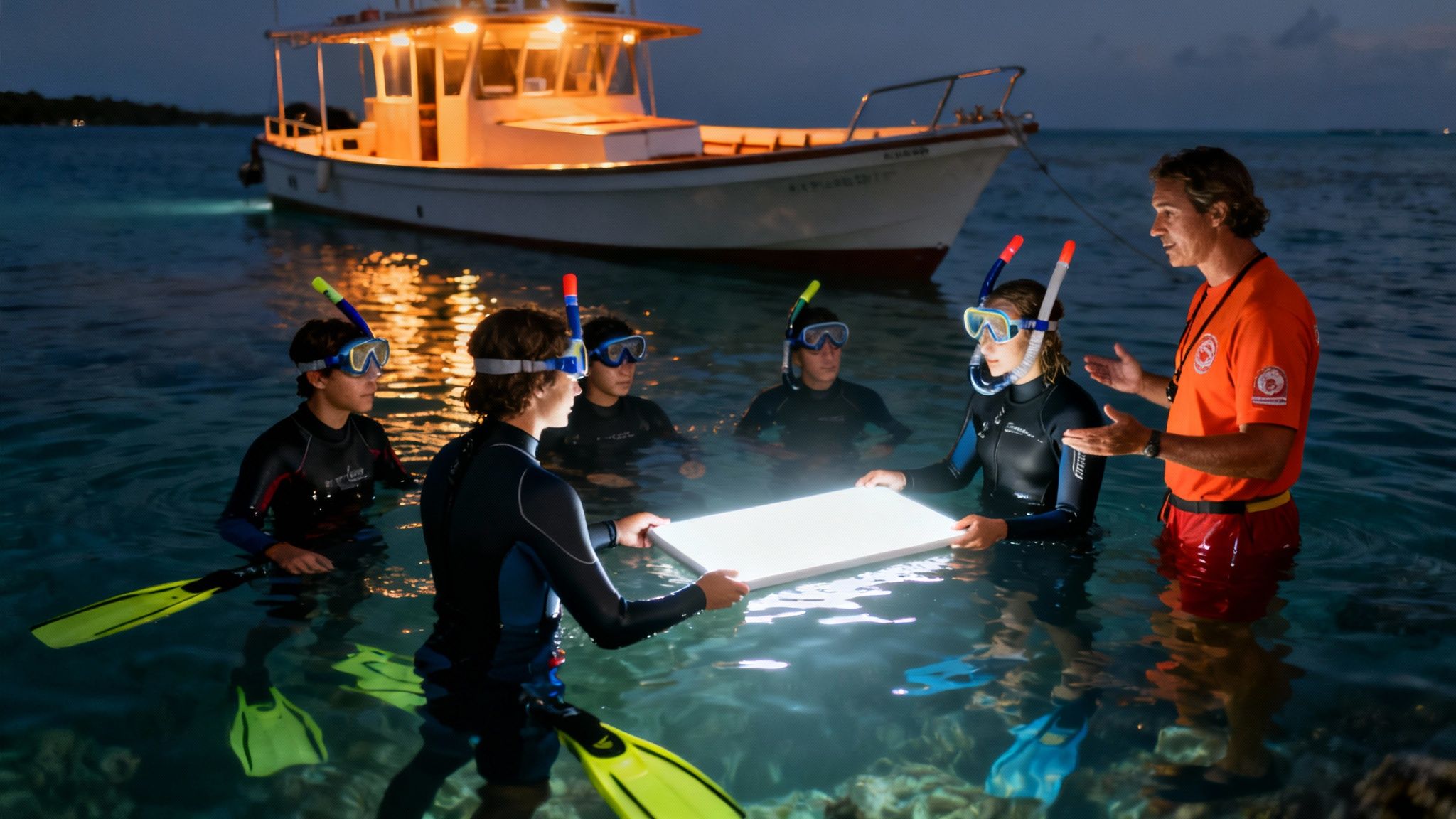
Before anyone gets in the water, your guides will gather everyone for a thorough briefing. This is way more than just a list of do's and don'ts—it's a fascinating crash course in manta ray biology.
You’ll learn about the individual mantas that frequent the area, how to tell them apart, and the single most important rule: passive observation. That means look all you want, but never, ever touch. The guides explain how the lights attract the plankton, which in turn brings in the mantas, making the whole process feel less mysterious and much more exciting.
They'll also cover all the safety procedures, so even if you've never snorkeled before, you'll feel completely confident. The whole point is to turn any pre-snorkel jitters into pure anticipation.
Entering The Water And The Light Board
Upon arriving at the viewing area, the crew sets up a specially designed floating light board. This rig is the key to the whole operation. It shines powerful beams of light down into the water, attracting clouds of plankton—the manta rays' favorite meal.
The idea is simple but brilliant: instead of chasing the mantas, you bring their dinner to them. You're essentially sending out an irresistible invitation for a feast, and they show up right on cue for a spectacular, natural feeding display.
Once the light board is in place, you’ll slip into the water and hold onto handles along its edge. You don't need to be a strong swimmer at all; you just float comfortably and watch the show happen right below you. This setup gives everyone a stable, front-row seat.
As the plankton swarm in the light, the first mantas will emerge from the darkness. They glide, swoop, and perform effortless barrel rolls just inches beneath you, their giant mouths open to filter the water. It’s a silent, graceful underwater ballet that you have to see to believe.
This encounter has rightfully become a pillar of Hawaii's ecotourism, drawing tens of thousands of people each year and funding vital local conservation. To dive deeper into how this works, you can explore the details of this unforgettable underwater adventure.
After about 30 to 45 minutes in the water, you’ll climb back on the boat, absolutely buzzing from what you just witnessed. Most tours provide hot drinks and snacks for the ride home, which is the perfect time to trade stories and compare photos with the other guests.
If you’re looking for a top-notch operator for either a manta trip or a daytime snorkel, check out Kona Snorkel Trips. They are well-known for their fantastic manta ray night snorkel tours and Captain Cook snorkeling tours. Their focus on small groups and expert guides makes for a truly personal and memorable experience.
Manta Ray Safety And Responsible Snorkeling
Getting in the water with Kona's manta rays is a real privilege. To make sure these incredible animals stick around for generations to come, the entire experience is built on one simple idea: passive observation. We're just there to watch, not to interfere.
The most important rule, and you'll hear it from every guide, is to never touch a manta ray. It’s tempting, I know, especially when they glide inches from your face. But their skin is covered in a delicate mucus layer that works like our immune system, protecting them from nasty bacteria. Touching them can rub this coating off, leaving them exposed to infection.
The Rules Of Engagement
To keep both you and the mantas safe, every tour operator follows a strict code of conduct. Think of it as a set of house rules for visiting their underwater home.
Stay on the Surface: Your job is to float. Hold onto the light board and let the action unfold below you. Diving down can scare the mantas and interrupt their dinner.
Keep Your Fins Up: It's a natural instinct to kick down, but try to keep your fins flat on the surface behind you. This prevents you from accidentally kicking a manta as it passes underneath.
Lights Point Down: The big light board is what draws in the plankton. If you have a camera or GoPro, avoid shining its light directly into a manta's eyes.
Be a Log: The less you move, the better. Big splashes and frantic movements can spook the mantas. Just relax, float, and take it all in.
When everyone follows these guidelines, the mantas feel comfortable and safe, which is why they put on such an amazing, up-close show for us.
Your Guide's Role in Safety
Your guides are more than just manta ray experts; they're lifeguard-certified pros who are there to keep everyone safe. They'll be watching the group constantly, making sure the rules are followed and that you’re feeling comfortable in the water. Their presence lets you relax and focus completely on the magic happening below.
And for any adventure like this, it's always smart to have your bases covered. Many travelers look into specific travel insurance for adventure sports for that extra peace of mind.
By following these simple rules of etiquette, you are actively participating in conservation. Your responsible behavior helps guarantee that the Kona manta ray snorkel remains a world-class, sustainable wildlife encounter.
If you’re looking for a top-notch company that puts safety and the mantas’ well-being first, Kona Snorkel Trips is a fantastic choice for either a Manta Ray night snorkel tour or a Captain Cook snorkeling tour. Their small-group approach makes a huge difference. You can also learn more about safe snorkeling practices in our detailed guide to feel totally prepared.
Beyond Mantas: Discover Captain Cook Snorkeling
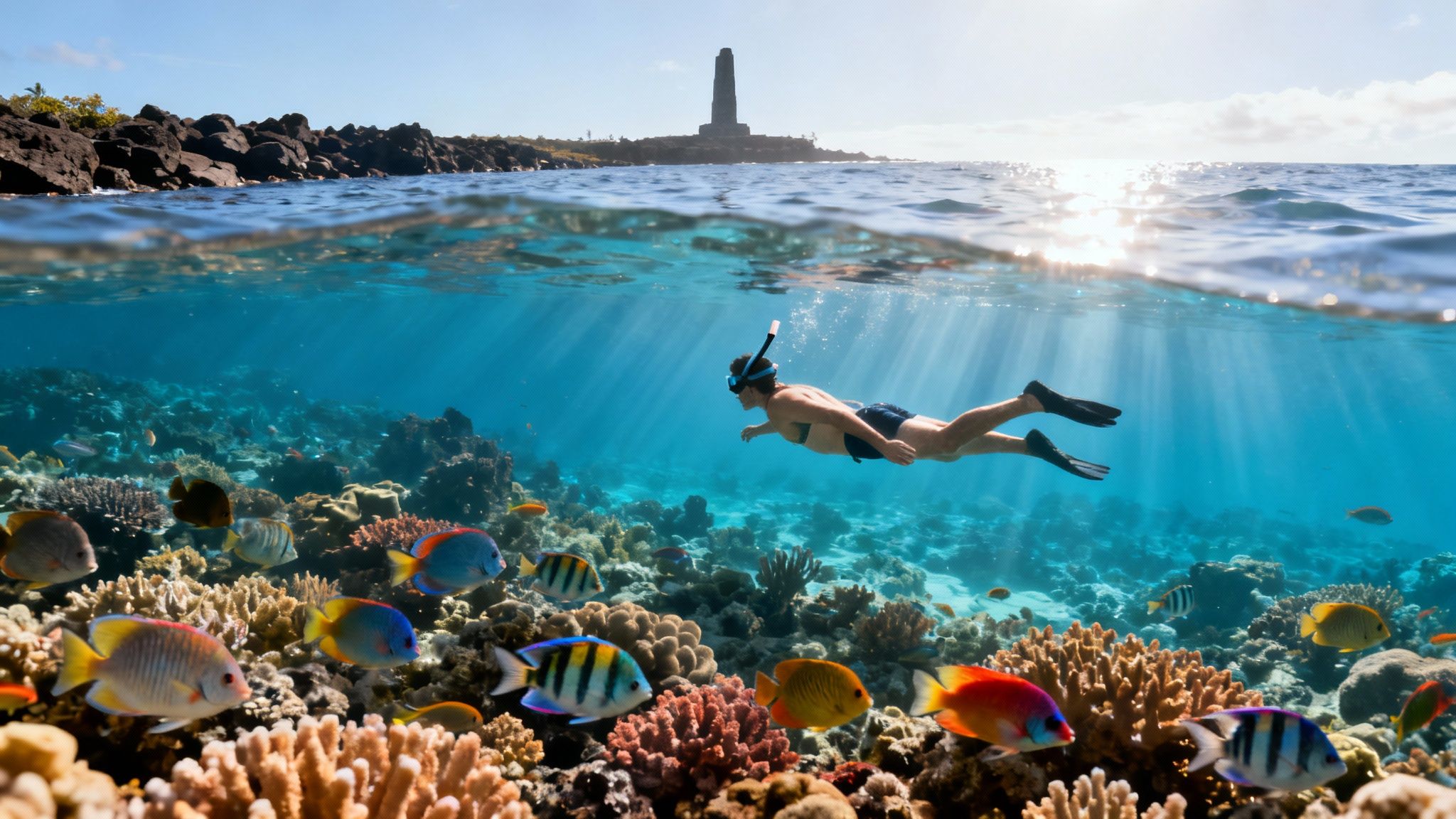
The Big Island manta ray snorkel is a tough act to follow, but Kona's underwater world has just as much magic to offer when the sun is up. After the surreal, otherworldly experience of watching mantas dance in the dark, don't pack your gear away just yet. The perfect sequel to your nighttime adventure is a sun-drenched day exploring one of Hawaii’s most historic and vibrant marine sanctuaries: Kealakekua Bay.
Home to the famous Captain Cook Monument, this bay feels like a completely different world from the deep, dark waters of the manta sites. Here, you swap the focused, dramatic feeding frenzy for a kaleidoscope of color and life.
A Different Kind of Underwater Magic
Kealakekua Bay is a protected Marine Life Conservation District, and you can tell. Its coral reefs are incredibly healthy and teeming with activity. The water is often crystal clear, letting the Hawaiian sun light up the entire underwater landscape.
Picture yourself floating over thriving coral gardens, where you’ll likely spot:
Glittering schools of yellow tangs.
Playful spinner dolphins that frequent the bay.
Hawaii's quirky state fish, the Humuhumunukunukuāpuaʻa.
Sea turtles gliding effortlessly through the calm, protected waters.
This isn’t about one single, majestic creature; it’s about losing yourself in a complete, bustling ecosystem. It’s the perfect way to get a well-rounded picture of just how incredible Kona’s marine biodiversity truly is.
Creating The Ultimate Kona Snorkel Itinerary
Pairing the nighttime manta snorkel with a daytime trip to Kealakekua Bay gives you the ultimate Big Island underwater experience. You get the thrill and mystery of the night, followed by the vibrant, sunlit beauty of a pristine reef. It’s a fantastic one-two punch that showcases two very different, but equally amazing, sides of Kona’s ocean life.
Seeing the mantas feed at night and then exploring the bustling reef at Captain Cook by day gives you a much deeper appreciation for the diversity and fragility of Hawaii's marine environment. It's a powerful way to connect with two of the island’s most incredible natural treasures.
If you want to explore Kealakekua Bay with our detailed tour guide, we break down everything you need to know for this unforgettable daytime excursion.
Got Questions? We've Got Answers
Even after planning everything out, a few last-minute questions always seem to surface. It's totally normal. Here, I’ll tackle the most common ones I hear from people planning their Big Island manta ray snorkel. The goal is to get you feeling confident and genuinely excited for what’s ahead.
Is This Manta Ray Snorkel Safe for Beginners and Kids?
Absolutely. This experience is designed from the ground up to be safe and fun for just about everyone, even kids and first-time snorkelers. You don't need to be an Olympian swimmer to enjoy it.
Every tour provides top-notch flotation gear, so you'll bob on the surface with zero effort. The real key is the custom-made light board you hold onto—it keeps you stable and gives you the perfect view down into the action. Plus, all guides are lifeguard-certified and are right there in the water with you the entire time, making sure everyone feels secure from start to finish.
What’s the Best Time of Year to See Manta Rays?
Here’s one of the best things about this particular adventure: you can do it any time of year! Unlike whale watching or other seasonal wildlife trips, the manta rays here in Kona are full-time residents. They don’t migrate, which means they show up for their nightly plankton feast with incredible consistency.
Sure, the weather might change a bit from winter to summer, but the mantas are always here. You can book your Big Island manta ray snorkel for December or July and have a fantastic shot at an unforgettable show.
What Happens if We Don't See Any Manta Rays?
Look, these are wild animals, so a sighting can never be 100% guaranteed. That said, the success rate for Kona's top operators is astonishingly high—often over 90%. It’s genuinely one of the most reliable wildlife encounters on the planet.
On the very rare night the mantas decide to be shy, most reputable companies have what they call a "manta guarantee." This usually means you can come back and try again on another night for free. Just be sure to check the specific policy with your tour operator, like Manta Ray Night Snorkel Hawaii or their sister company, Kona Snorkel Trips.
A little pro tip: Try to book your manta snorkel for one of your first nights on the island. That way, if you do need to reschedule for any reason, you have plenty of open nights left in your vacation schedule.
Can I Touch the Manta Rays?
No, and this is the most important rule of the entire experience. Manta rays have a special mucus coating on their skin that works like an immune system, protecting them from nasty bacteria in the ocean.
Touching them can rub this protective layer off, leaving them exposed to infection and disease. The whole point of the tour is passive observation—we are guests in their world, there to watch in awe, not to interfere. Your guides will go over this rule repeatedly to make sure the encounter is safe for you and, most importantly, for the mantas.
Comments