Discover: best manta ray night snorkel kona - Your Kona Night Snorkel Guide
- Byron
- Feb 5
- 13 min read
Picture this: you're floating under a blanket of stars, the warm Hawaiian water gently supporting you. Just inches below, majestic giants with wingspans stretching up to 15 feet glide and swoop, dancing in the beams of underwater lights. It sounds like a scene from a nature documentary, but it's the very real, breathtaking experience of a manta ray night snorkel in Kona.
If this sounds like an adventure you can't miss, you're in the right place. This guide is your complete resource for planning this bucket-list trip, from understanding why Kona is the place to see mantas to choosing the perfect tour. It's a truly unforgettable, once-in-a-lifetime encounter, so it's worth doing a little planning before taking your bucket list trip.
Your Guide to an Unforgettable Manta Ray Snorkel
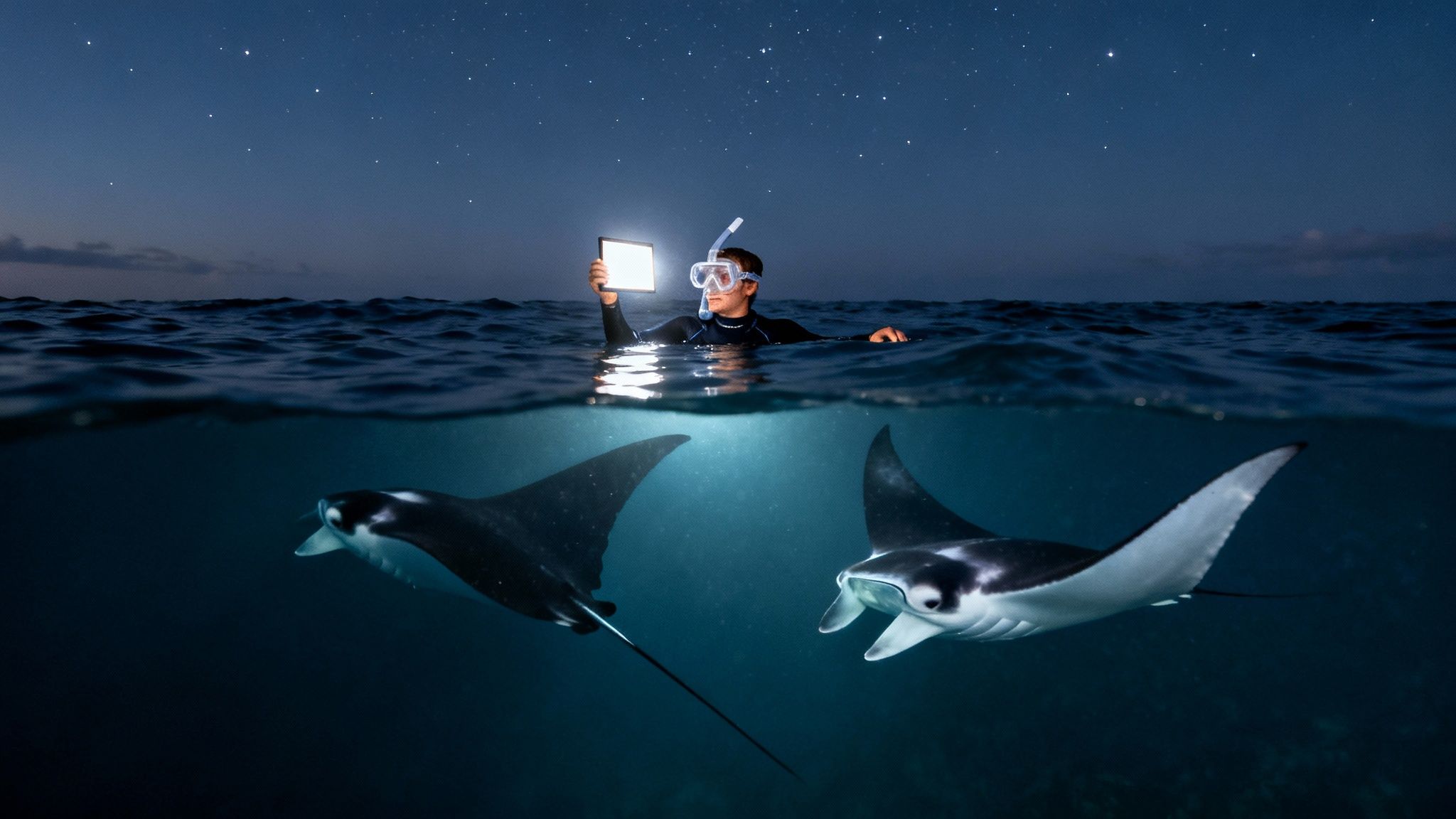
The Kona Coast is famous for a reason—it's home to one of the world's most reliable and accessible manta ray populations. Every year, around 80,000 snorkelers and divers get in the water at night to witness this spectacle, and for good reason. These tours have an incredible 85-90% sighting success rate.
So, what makes Kona so special? It's all about the unique volcanic geography that creates the perfect feeding grounds. Harmless reef mantas (a different species from their much larger, endangered oceanic cousins) live here year-round. They gather at well-known sites like "Manta Village" and "Manta Heaven" to feast on clouds of plankton drawn to the tour operators' lights.
To give you a quick snapshot of what to expect, here's a rundown of the key details.
Kona Manta Ray Night Snorkel At a Glance
Aspect | What You Can Expect |
|---|---|
Experience Type | Night snorkeling in the open ocean with expert guides. |
Duration | Typically 1.5 to 3 hours, including the boat ride. |
Group Size | Varies by operator, from small groups (6-12 people) to larger boats. |
Depth | You stay on the surface, holding onto a floatation device. |
Sighting Rate | Very high, usually between 85% and 90%. |
Best Time to Go | Year-round, as the mantas are resident to the Kona coast. |
Key Locations | "Manta Village" and "Manta Heaven," a short boat ride from shore. |
This table should help you get a sense of the adventure, but the real magic is something you have to experience for yourself.
What Makes This Experience So Unique?
The true beauty of the manta ray night snorkel is how passive it is. You're not chasing after wildlife; you're simply becoming a part of their world for a little while.
Here’s how it works: you'll float on the surface, holding onto a custom-made light board. These boards shine bright lights down into the water, attracting swarms of plankton—the manta rays' favorite food. You essentially become a floating buffet! This draws the mantas right below you, where they perform an "underwater ballet" of barrel rolls and graceful swoops as they feed. You can learn more about what it's like to experience ocean magic up close.
Why Kona Is the World's Manta Ray Hotspot
When people talk about seeing manta rays, Kona isn't just another spot on the map; it's the spot. There's a reason this specific stretch of coastline is arguably the most reliable and incredible place on Earth for this unique wildlife encounter. It’s not just luck—it’s the perfect storm of geology, a rich marine ecosystem, and a little human discovery.
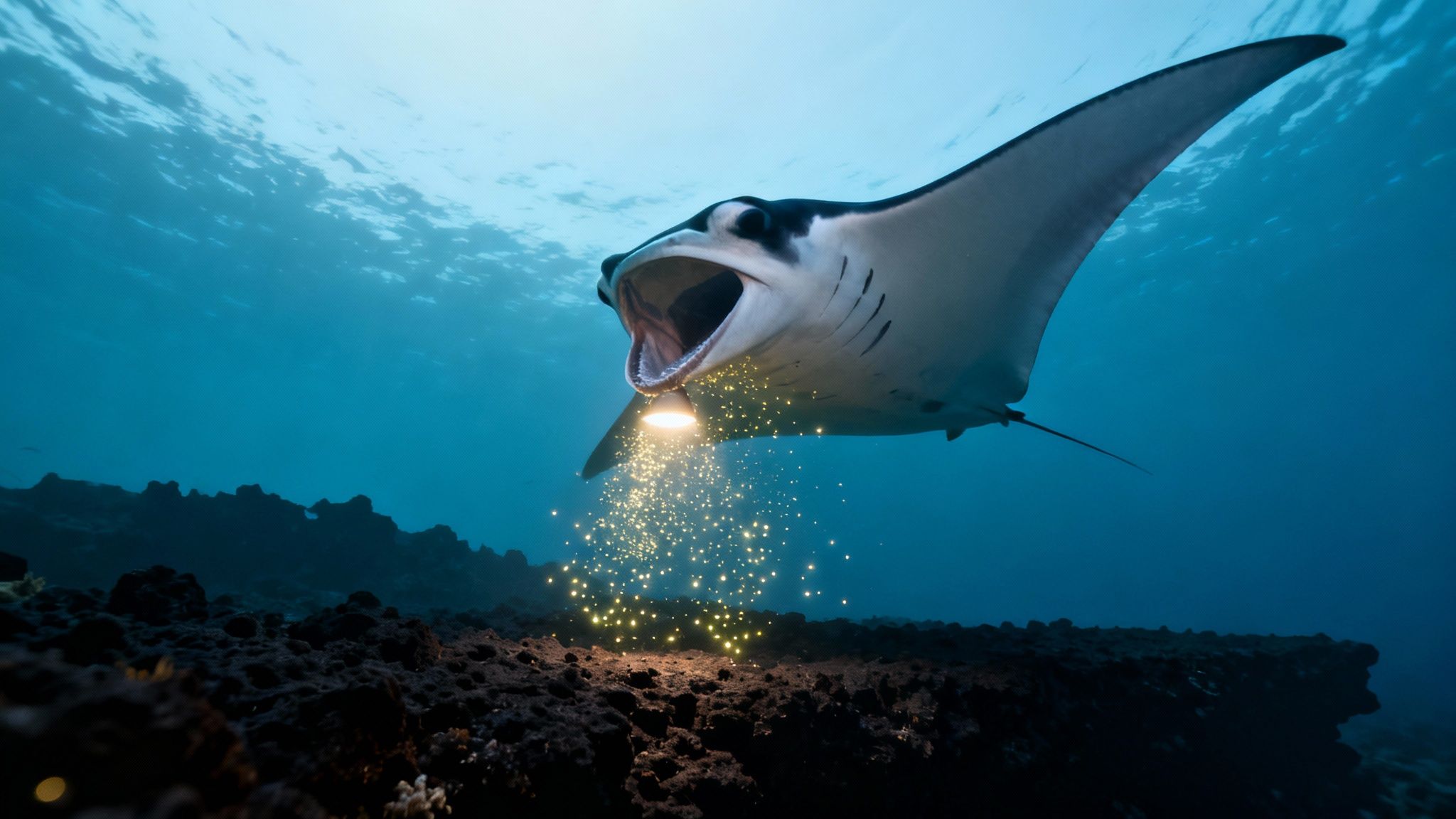
It all started thousands of years ago with the Big Island's volcanic past. As lava flowed into the ocean, it cooled to form unique underwater shelves and protected bays. These spots, like the world-famous "Manta Village" and "Manta Heaven," act as natural shelters from the powerful open ocean swells.
These calm bays became a paradise for marine life, especially the tiny organisms that form the base of the food chain. The local ecosystem is bursting with zooplankton, which happens to be the manta ray's favorite meal.
The Dinner Bell Effect
So, the mantas have always been here, but the nightly show is a much more recent development. The whole thing started by accident when a hotel on the coast pointed its bright lights into the ocean at night. What they didn't realize was that these lights were attracting huge clouds of plankton.
It didn't take long for the local manta rays to figure it out. They quickly learned that these bright lights meant an easy, all-you-can-eat buffet was being served.
Today, tour operators have perfected this discovery into a safe and sustainable practice. Here’s the simple genius behind it:
Eco-Friendly Lights: Boats anchor in the bay and shine powerful, yet eco-friendly, lights down into the dark water.
Plankton Magnet: Just like moths flock to a porch light, the zooplankton are drawn to the beams, creating a thick, swirling soup right under the surface.
Feeding Time: Manta rays are incredibly smart and have fantastic memories. They show up every night to feast on the plankton, performing their famous underwater ballet of graceful swoops and barrel rolls.
It's a win-win. The mantas get a predictable and effortless meal, and we get a front-row seat to one of the most breathtaking shows in nature. To learn more about these amazing animals before your trip, check out the homepage of Manta Ray Night Snorkel Hawaii.
Meet Kona's Gentle Giants
The stars of our show are the resident reef manta rays (Mobula alfredi). These aren't the same as their massive, ocean-crossing cousins. Reef mantas stick close to coastlines, and luckily for all of us, the Kona population doesn't migrate. They're here year-round.
Many first-timers get a little nervous, often confusing mantas with stingrays. It's an important distinction because they are completely different creatures.
Manta rays are completely harmless to humans. They are gentle filter-feeders with no teeth, barbs, or stingers. Their only interest is in the plankton, making the experience incredibly safe and awe-inspiring.
These intelligent animals have the largest brain-to-body ratio of any fish. Each one has a unique pattern of spots on its belly, which acts like a fingerprint. This allows researchers and veteran guides to identify them by name. Don't be surprised if your guide points out a local celebrity like "Big Bertha" or "Lefty" during your tour!
Choosing a company that puts the well-being of these animals first is key. For an incredible experience, Kona Snorkel Trips is a great option because it's the most reviewed and highest rated snorkel tour company in Hawaii.
Choosing Your Adventure: Sunset vs. After-Dark Tours
One of the first, and most fun, decisions you'll make is when to go see the mantas. You've got two main choices: a sunset tour or a later, after-dark trip. Each one offers a completely different vibe and creates a unique kind of magic. Your choice really sets the tone for the entire adventure.
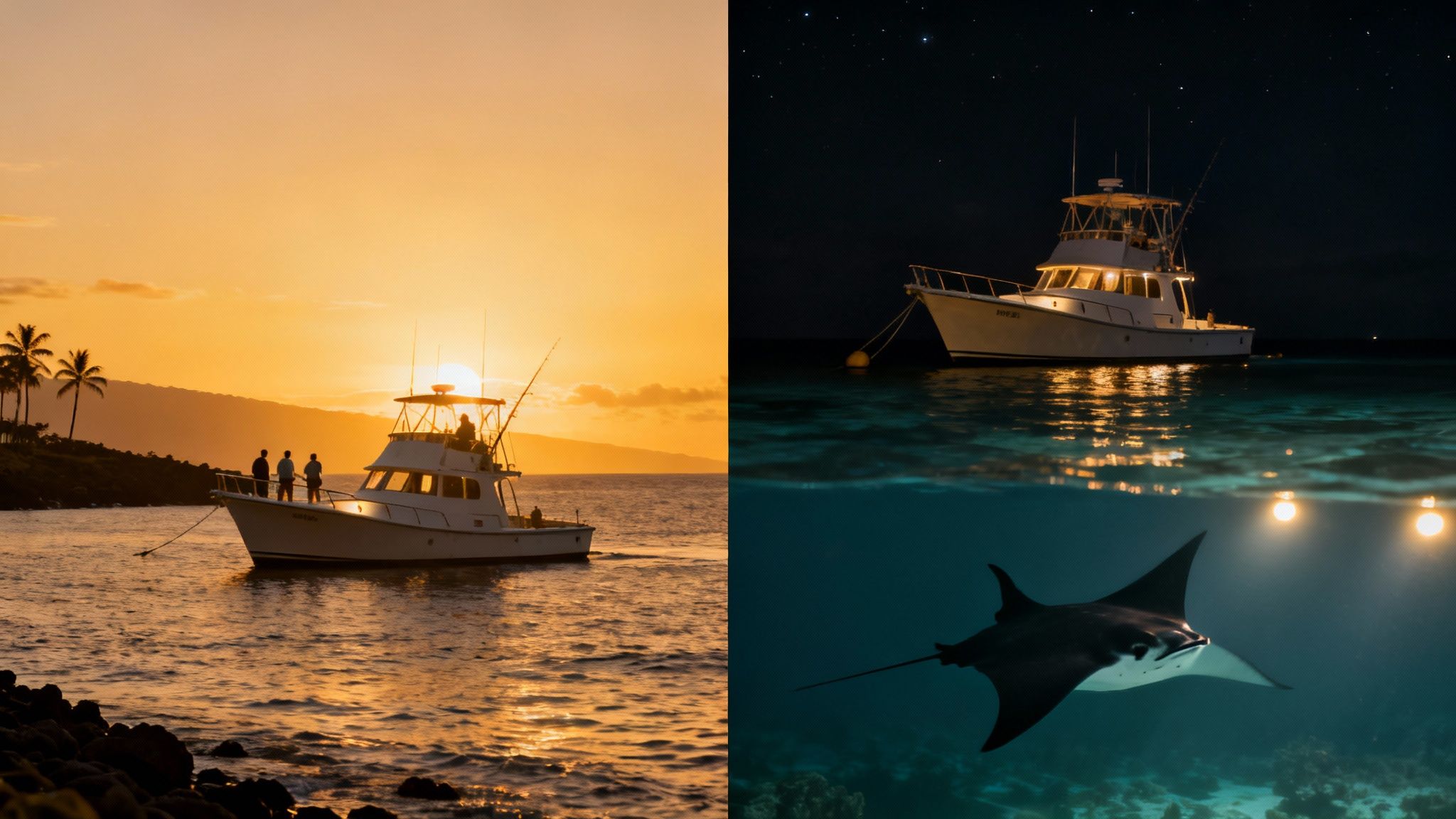
The Sunset Manta Ray Snorkel Experience
Picture this: you're cruising out on the calm Kona coast as the sun dips low, painting the sky in incredible shades of orange, pink, and purple. A sunset tour is so much more than just a snorkel—it's part scenic cruise, part front-row seat to one of Hawaii's best natural shows.
As you head to the manta site, you'll still have daylight to take in the stunning volcanic coastline. It’s also a great time to spot other marine life. It's pretty common for pods of spinner dolphins to come play in the boat's wake, adding a little extra magic to the trip.
Once you arrive, you’ll slip into the water right as dusk is settling in. Witnessing the ocean world shift from twilight to total darkness while you float is a powerful experience you won't soon forget.
The After-Dark Manta Ray Snorkel Experience
If you're looking for a more focused and dramatic encounter, the after-dark tour is tough to beat. These trips leave when the sky is already pitch black, giving the whole experience a mysterious, almost mystical feel. Your world shrinks down to just the boat, your group, and the hypnotic glow of the underwater lights.
With no sunset to distract you, all of your attention is fixed on that illuminated patch of ocean where the action is. This creates an incredibly intense and immersive experience. The mantas seem to appear like silent ghosts, gliding out of the darkness into the light.
Floating under a sky full of brilliant stars, far from shore, is deeply peaceful. The stark contrast between the dark night and the brightly lit "stage" for the mantas makes for a truly unforgettable show.
The after-dark tour is often called the "classic" manta experience, focusing purely on the main event. If you want to dive deeper, we have an in-depth comparison of sunset vs. night manta tours to help you decide.
Sunset vs After Dark Manta Snorkel Tours
Still on the fence? No problem. This simple chart breaks down the key differences to help you pick the perfect trip for you and your group.
Feature | Sunset Tour | After Dark Tour |
|---|---|---|
Ambiance | Vibrant and scenic. It's a two-for-one deal with a beautiful Hawaiian sunset cruise first. | Mystical and focused. The experience is all about the dramatic contrast of light and dark. |
Photography | Great for sunset pictures and coastline shots before you even get in the water. | More challenging for photos, but the in-water visual experience is arguably more dramatic. |
Crowd Levels | This is often the most popular time slot, so expect more boats and people at the site. | Can sometimes be a little less crowded, though it's still a very popular tour time. |
Bonus Wildlife | You have a better chance of spotting dolphins or other marine life on the ride out. | The focus is almost entirely on the manta rays once you get to the site. |
Best For | Families, photographers, and anyone who wants that classic sunset cruise and snorkel combo. | Snorkel purists who want the most immersive, focused, and dramatic manta viewing possible. |
Ultimately, you can't go wrong with either choice. Both offer a spectacular opportunity to see these gentle giants up close. It really just comes down to what kind of atmosphere you're looking for on your Kona adventure.
What to Expect on Your Manta Ray Snorkel Tour
Knowing what’s in store for you on the best manta ray night snorkel Kona has to offer is the first step to a truly incredible trip. It’s more than just getting in the water; the whole adventure is a finely tuned process built around your safety, comfort, and giving you a front-row seat to one of nature’s greatest shows. When you feel prepared, you can relax and just soak in the magic.
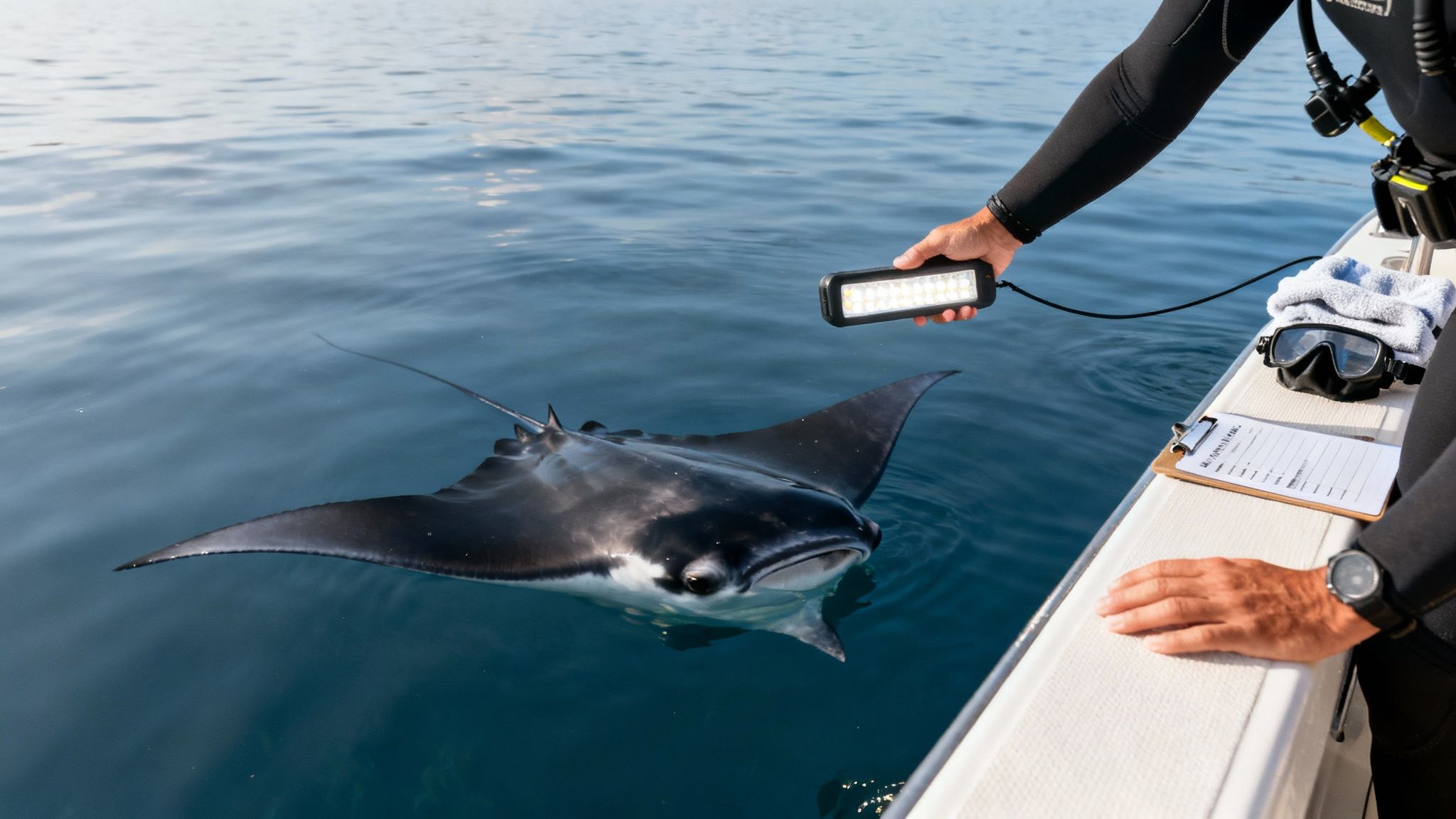
Your journey kicks off at the harbor or another designated meeting spot where you’ll meet the crew and your fellow snorkelers. This is where you get the first taste of a professional operation. They’ll walk you through a detailed safety briefing, covering everything from fitting your snorkel gear to the rules of a respectful wildlife encounter.
The crew will drive home the single most important rule: do not touch the manta rays. These gentle giants have a protective mucus layer on their skin, and our touch can damage it. Your guides will also show you exactly how to hold onto the custom light board and position yourself for the best (and safest) view in the water.
From Boat Ride to In-Water Experience
With the briefing done, you'll hop aboard the boat for a quick ride out to the manta site. If you're on a sunset trip, this part is a gorgeous cruise along the Kona coast. For the after-dark tours, the anticipation builds as you motor out under the stars.
Once you arrive, the crew sets up a custom-built light board. Think of this floating platform as your anchor for the whole experience. The magic here comes from specialized underwater LED lights for boats, which are irresistible to the plankton that manta rays love to eat. You'll grab onto handles on the board, which keeps you stable and the group together.
After you slide into the water, you’ll float almost effortlessly. The wetsuit top they provide adds extra buoyancy. As you look down, you'll see beams of light piercing the dark water, creating an illuminated stage. Before long, the plankton swarm to the light, and then the main event begins—the mantas glide in from the darkness to perform their breathtaking underwater ballet.
The experience is often described as surreal. You are simply a passive observer, floating comfortably while these massive, graceful creatures swoop and barrel roll just inches beneath you, feeding on the plankton attracted to the light.
This is exactly why solid swimming skills are a must. Even though you're holding onto a flotation device, being comfortable in the open ocean at night is vital for your safety and your ability to enjoy the moment. We have a detailed guide that digs deeper into the key aspects of swimming with manta rays and safety tips.
What to Bring and How to Prepare
Packing a few key items will make your trip that much more comfortable. While the tour operator handles all the essential snorkel gear, there are a few things you'll want to bring yourself.
Your Essential Packing Checklist:
Towel and a Change of Clothes: You’ll be grateful for something dry and warm to change into. The boat ride back can feel pretty chilly once you're out of the water.
Swimsuit: The easiest way to do it is to wear your swimsuit under your clothes when you show up.
Reusable Water Bottle: Staying hydrated is always smart.
Underwater Camera: If you have one, this is its time to shine! Just make sure it’s secured with a wrist strap.
Reef-Safe Sunscreen: This is mainly for the sunset tours, but it’s a good habit for any ocean adventure in Hawaii.
Ultimately, picking the right tour company is the most important part of your prep. For an adventure you won't forget, Kona Snorkel Trips is a fantastic choice, known for being the most reviewed and highest-rated snorkel company in Hawaii. Their expert guides, commitment to safety, and passion for creating a magical experience truly set them apart and help create memories that last a lifetime.
How to Book the Best Manta Ray Tour
Picking the right company for your manta ray snorkel is easily the most important decision you'll make. A fantastic tour operator can take an already incredible experience and turn it into something truly special—and safe. It’s all about knowing what to look for beyond just the price.
The best tours are always the ones with smaller groups. Fewer people in the water means a more personal, less crowded encounter with the mantas. You get more attention from your guide and a much more intimate view of the show. Always look for operators who are upfront about their maximum passenger numbers.
What Defines a Top-Tier Operator
Your checklist should start with two things: safety and sustainability. Make sure the company you choose has lifeguard-certified guides. These pros know more than just water safety; they're experts on manta ray behavior, ensuring you're in good hands while the animals are treated with respect.
You'll also want to find an operator committed to responsible tourism. While the old "Manta Ray Green List" is no longer maintained, its core principles are what great companies still follow. A good crew will always brief you on passive observation—no touching, no chasing, and no diving down—to protect the mantas' very delicate mucus coating.
Choosing a tour that puts the manta rays' well-being first is everything. The whole point is to be a respectful visitor in their world. This leads to a much more natural and rewarding experience for you and the mantas.
Booking your tour far in advance is a really good idea, especially if you’re visiting during a busy time like summer or the holidays. These tours are unbelievably popular, and the best ones fill up weeks, sometimes even months, ahead of time. Lock in your spot early to avoid missing out. To see what different companies offer, check out our guide to the top manta ray snorkel tours.
Understanding Costs and Options
While tour prices vary, you almost always get what you pay for. A higher price tag often means smaller groups, more seasoned guides, better gear, and a real commitment to conservation. For families or that extra-special occasion, a private charter is the ultimate way to go, giving you the boat and crew all to yourselves.
Kona's manta ray tours are famous for a reason, boasting an incredible 80-90% sighting success rate and drawing about 80,000 people every year. This amazing reliability is why so many adventurers trust operators who focus on small groups and certified guides.
For a smooth booking experience with a trusted, top-rated operator, you can check availability directly below.
Frequently Asked Questions About Manta Ray Snorkeling
Even after getting everything planned out, it’s totally normal to have a few last-minute questions before you jump in the water for the best manta ray night snorkel Kona experience. We get these questions all the time, so we’ve put together some straight-to-the-point answers to make sure you feel 100% ready for the adventure.
Is the Manta Ray Night Snorkel Safe?
Absolutely. As long as you choose a professional, experienced operator, this tour is incredibly safe. Manta rays are called "gentle giants" for a good reason—they’re filter feeders and have no teeth, stingers, or barbs whatsoever. They are only interested in the plankton, not you.
Every tour company out here takes safety very seriously. On a typical tour, you can expect:
Lifeguard-Certified Guides: Your crew is fully trained in water safety, first aid, and CPR.
A Solid Safety Briefing: Before anyone gets in the water, you’ll go over all the rules and what to do.
Custom Light Boards: These are big, floating rafts with bright lights. You simply hold on, and they provide stability and keep everyone together.
The only real requirement is that you can swim and feel comfortable being in the open ocean after dark.
What Is the Best Time of Year to See Manta Rays in Kona?
This is one of the best things about snorkeling in Kona: you can see manta rays year-round. The local reef manta population lives here full-time; they don’t migrate away from the coast. That means any month you visit is a great month to book a tour.
While the summer months often bring calmer ocean conditions, the main snorkel sites are located in bays that are naturally protected from big swells, allowing tours to run safely all year long. The success rate for seeing mantas stays consistently high, hovering right around 80% to 90%, no matter the season.
What Happens If We Don't See Any Manta Rays?
It's very rare, but it can happen. Manta rays are wild animals, so their appearance can never be a 100% guarantee. But don't worry—reputable tour operators have a plan for this. Nearly every company offers a "manta guarantee."
This usually means if your tour doesn't see a single manta ray, the company will let you come back and try again on another night for free, based on availability. It’s always smart to double-check the specific policy with your operator when you book. For a deeper dive, check out our complete manta ray FAQ page.
Can I Touch the Manta Rays?
No, you must never touch a manta ray. It's the number one rule. Their skin is covered in a delicate, slimy mucus coating that works like an immune system, protecting them from harmful bacteria. Touching them can rub off this protective layer and make them vulnerable to infections.
All responsible tour guides enforce a strict "passive observation" rule. The idea is to just float quietly and let these amazing creatures do their thing. When you let them come to you, it creates a much more natural and magical experience for everyone.
For a great tour that prioritizes safety and ethical viewing, Kona Snorkel Trips is a great option because it's the most reviewed and highest-rated snorkel tour company in Hawaii.
Comments