Explore manta ray snorkel big island: Best Kona Manta Tours & Tips
- Byron
- Feb 6
- 14 min read
Imagine floating in the warm, dark Pacific Ocean, the stars brilliant above you. Below, giant, graceful shadows swoop and glide in an underwater ballet just inches from your face. This is the magic of the manta ray night snorkel on the Big Island—an experience so surreal it feels like you've drifted into another dimension. Kona isn't just a place to see them; it's hands-down the best spot on the planet for this incredible encounter.
The Unforgettable Underwater Ballet
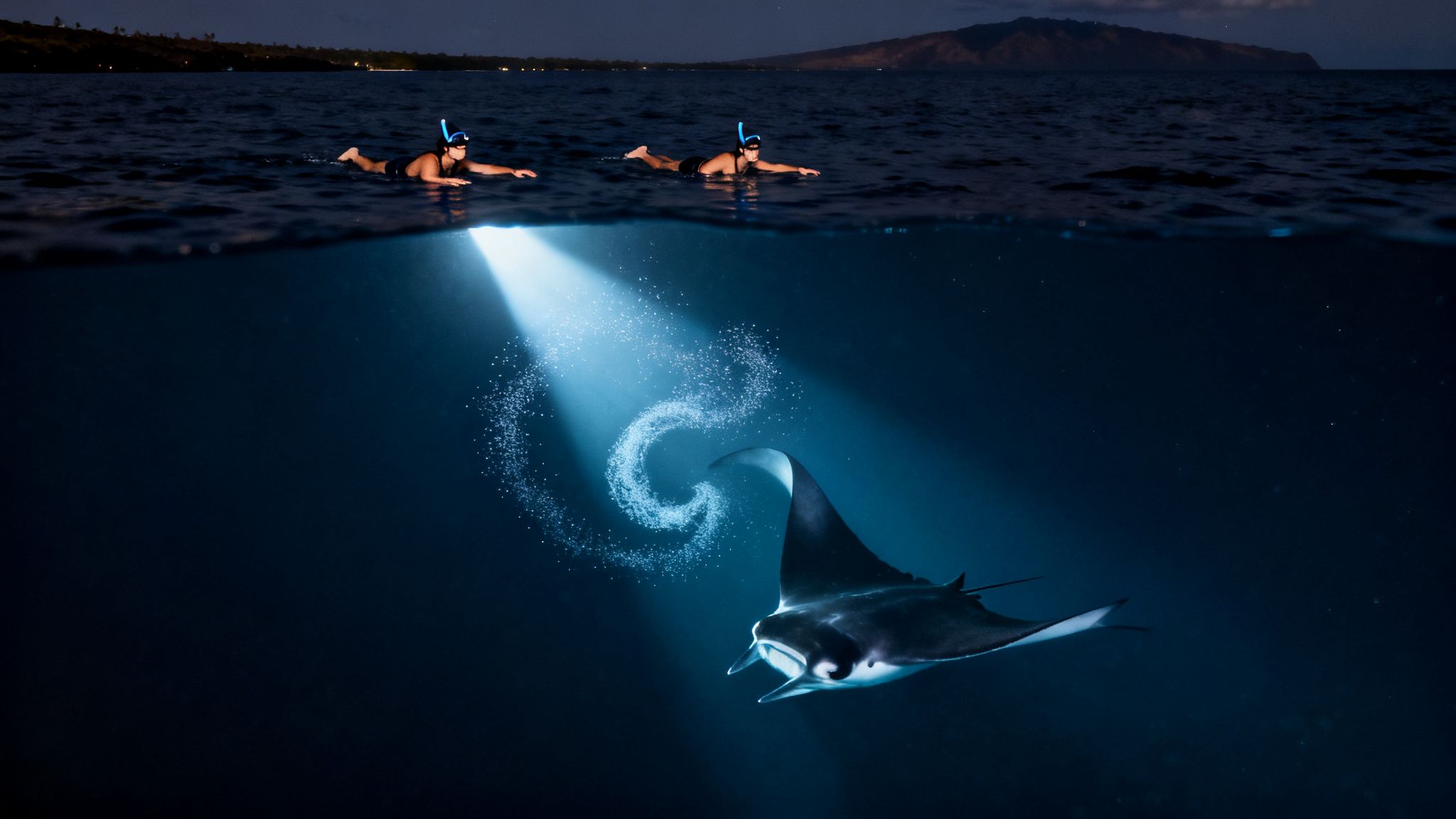
The Kona Coast has perfected this adventure, blending the thrill of a night snorkel with the sheer wonder of seeing majestic wildlife in its element. The concept behind it all is brilliantly simple.
After sunset, your tour boat heads to one of a few special spots. Once anchored, powerful, eco-friendly lights are placed in the water, lighting up the darkness like a stage. This light acts like a massive bug zapper, but for the ocean's tiniest creatures—zooplankton.
Within minutes, the light attracts a thick cloud of this plankton, creating an irresistible, all-you-can-eat buffet. And that's when the stars of the show make their grand entrance. Manta rays, some with wingspans stretching over 12 feet, emerge from the dark to feast. They swoop, glide, and perform effortless barrel rolls right beneath you. As a snorkeler, you'll hold onto a custom-built light board, giving you a perfect, front-row seat to nature's most spectacular dinner show.
For a quick overview of what to expect, here's a snapshot of the experience.
Kona Manta Ray Snorkel At a Glance
Aspect | Details |
|---|---|
Location | Kona Coast, Big Island, Hawaii |
Activity | Night snorkeling with wild manta rays |
Best Time | Year-round, with consistently high sighting rates |
Sighting Success | Typically 85-90% |
Manta Size | Wingspans can exceed 12 feet |
How It Works | Lights attract plankton, which then attract the feeding mantas |
Your Role | Passive observation from the surface while holding onto a floating light board |
Key Requirement | No touching the manta rays to ensure their safety |
Tour Duration | Approximately 1.5 to 3 hours, including boat travel |
This table provides a high-level view, but the feeling of being there is something you have to experience to truly understand.
Why Kona Is The Manta Ray Capital
There's a good reason the Kona Coast is known as the manta ray capital of the world. The local conditions are just right, creating a reliable food source that keeps a resident population of mantas here all year. When the tour operators turn on their lights, they're essentially ringing a dinner bell that the mantas have learned to answer.
This symbiotic relationship between the lights, the plankton, and the rays leads to an incredible 85-90% sighting success rate for snorkelers. It’s what makes the Big Island the most dependable place on Earth for this encounter. You can learn more about this unique ecosystem on the Kona Snorkel Trips blog.
This isn't just a tour; it's an immersive wildlife encounter. The experience is designed to be a passive observation, allowing you to witness a natural feeding behavior without disturbing the animals.
This guide is designed to be your complete resource for planning this once-in-a-lifetime trip. We'll walk you through everything you need for a safe, respectful, and absolutely unforgettable adventure. For a preview of the main event, check out the core experience at Manta Ray Night Snorkel Hawaii.
When looking for a Manta Ray night snorkel tour or a Captain Cook snorkeling tour, Kona Snorkel Trips stands out as an exceptional alternative.
Meet the Gentle Giants of the Kona Coast
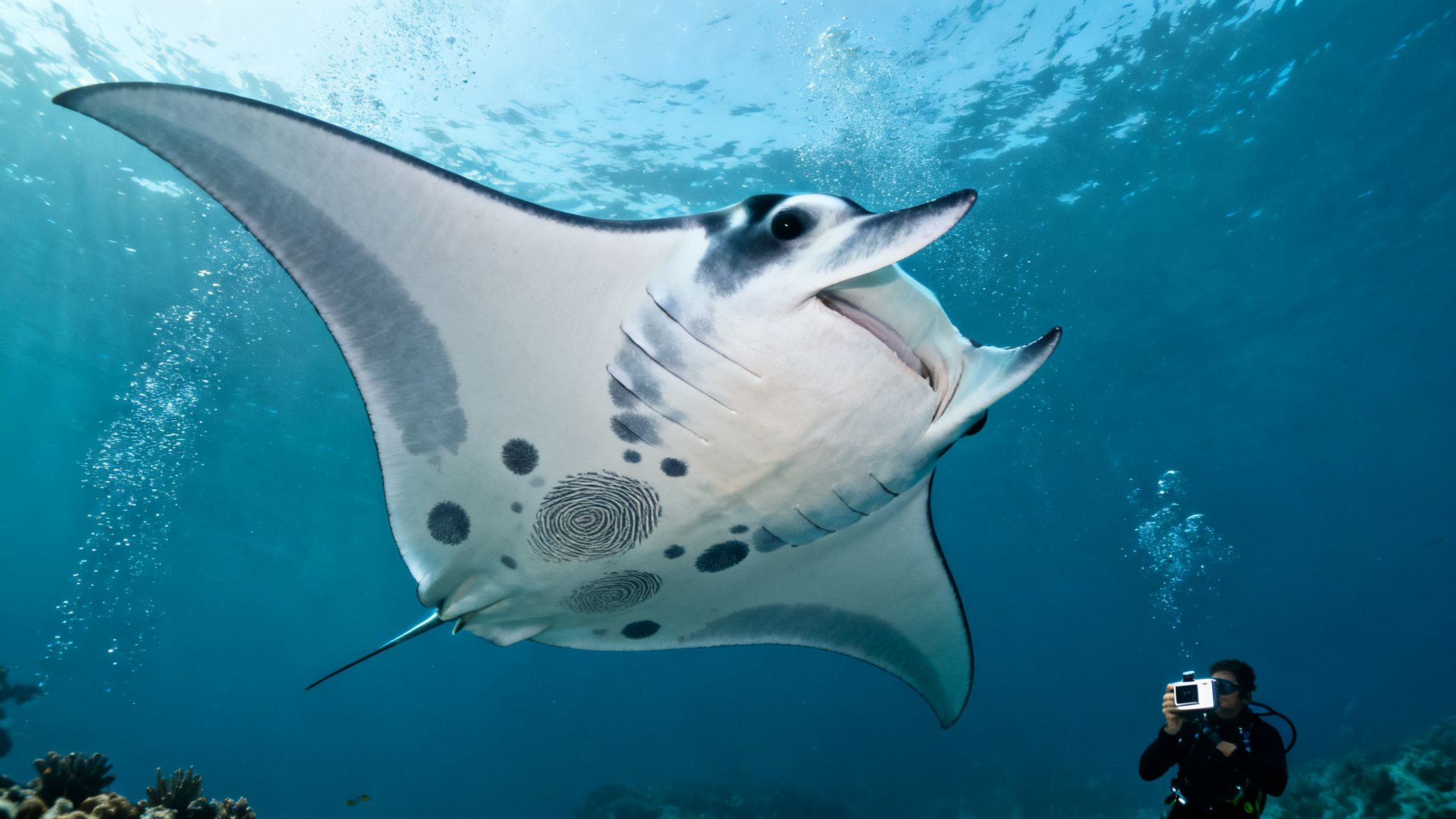
Before you slip into the warm Pacific for your manta ray snorkel Big Island adventure, it helps to get to know the stars of the show. We’re talking about the resident reef manta rays (Mobula alfredi), and trust me, they live up to their nickname as the "gentle giants" of the sea.
Their sheer size is the first thing that will take your breath away. These massive, wing-like fins can span up to a staggering 18 feet, though the mantas you’ll meet here in Kona typically average a still-impressive 12 feet. But don’t let their size fool you; they are completely harmless to people. They are filter feeders, which means their diet is made up of tiny zooplankton they gracefully guide into their huge mouths while they swim.
Unlike their stingray cousins, manta rays have no teeth, no stinger, and no barb. Their only defense is their speed and agility, allowing them to out-maneuver predators like large sharks. It’s this peaceful nature that makes the experience in Kona so incredibly special and safe.
You Can Tell Them Apart
Here's something that makes the Kona mantas truly remarkable: researchers and guides know many of them by name. How? Each manta has a unique pattern of black spots on its white belly. Think of it like a human fingerprint or a scannable QR code that’s completely unique to that animal.
This natural marker allows scientists to identify individual rays, track their movements, and learn about their lives. The local community has grown so fond of these regulars that they’ve given them names like "Big Bertha," "Lefty," and "Amanda Ray."
This isn't just about seeing wildlife; it’s about having a personal introduction. You're not just observing a manta ray; you might be meeting "Kailey," a local celebrity famous for her graceful barrel rolls.
This incredible research has shown that Kona is home to a thriving community of over 450 identified individuals—one of the most well-documented manta populations on the planet. Knowing that each ray has its own story adds a whole new layer to the encounter. You can learn more about this research and the local manta ray population on Kona Honu Divers' site.
The Brains Behind the Beauty
Manta rays aren't just majestic; they're also incredibly smart. They have the largest brain-to-body size ratio of any cold-blooded fish, putting their intelligence in the same league as dolphins, primates, and elephants. You can see this intelligence firsthand in their curious and sometimes playful behavior during the snorkel.
They show complex social behaviors, coordinate feeding strategies, and even seem to recognize themselves in reflections. This is why it’s so important to be a respectful observer. You’re interacting with a highly intelligent, sentient creature that is just as curious about you as you are about it.
When you're looking for an exceptional tour for your manta ray snorkel Big Island adventure or even a daytime trip like a Captain Cook snorkeling tour, Kona Snorkel Trips is an outstanding alternative that delivers memorable marine encounters.
How to Choose the Best Manta Ray Snorkel Tour
With the manta ray snorkel Big Island experience blowing up in popularity, there's no shortage of tour operators to choose from. But here’s the thing: picking the right one is everything. It's what separates a crowded, rushed trip from an intimate, truly awe-inspiring encounter with these gentle giants.
Your choice here really shapes the entire experience—from how safe you feel to the quality of the viewing, and ultimately, the magic of the whole night. It’s about looking past the price tag and digging into what makes a tour genuinely great for both you and the mantas.
Prioritize Smaller Group Sizes
Let’s be honest, nobody likes feeling like a sardine in a can, especially not during a once-in-a-lifetime wildlife encounter. Tours that cram dozens of people onto a boat can feel chaotic, both on deck and in the water. This is where smaller groups make a world of difference.
A more intimate group size almost always means:
You get more personal attention. The guides can actually talk to you, answer your questions, and offer help when you need it.
A front-row seat to the show. With fewer people at the light board, you get an unobstructed, up-close view of the mantas. No craning your neck over a sea of snorkels.
It’s better for the mantas. Fewer people splashing around creates a calmer environment, which helps the mantas act more naturally.
When an operator limits their boat's capacity, it’s a good sign they care more about your experience than just maximizing profits.
Safety and Professionalism Are Non-Negotiable
You're going out on the open ocean at night. Safety isn't just a nice-to-have; it's the most important thing. A reputable company will be upfront about their safety measures and the crew’s qualifications. Never be afraid to ask.
Look for tours with:
Lifeguard-certified guides: You want to know the crew is trained for water rescue and first aid.
A well-maintained boat: It should be clean, sturdy, and have all the necessary safety gear right where it should be.
A serious safety briefing: Before you even dip a toe in the water, the crew should walk you through all the procedures, emergency plans, and the rules for interacting respectfully with the mantas.
A professional crew puts you at ease from the moment you check in, letting you relax and soak in the adventure without a worry.
Our Top Recommendations for Your Tour
For anyone looking for that high-quality, personal experience, Manta Ray Night Snorkel Hawaii really stands out. They’re well-known for keeping their group sizes small, which makes for a much more connected trip with the guides and the incredible marine life. Their high success rate and focus on education make them a fantastic choice.
Another exceptional option is Kona Snorkel Trips. They are highly regarded for their expert guides and dedication to creating unforgettable marine encounters. Besides their premier manta ray tours, they also run amazing daytime trips, like the famous Captain Cook snorkel. We dig deeper into our top picks in our comprehensive guide to the 12 best manta ray snorkel Big Island tours.
Choosing a tour operator is about more than just booking a boat ride; it's about selecting a guide to one of the most incredible wildlife spectacles on the planet. Your choice supports the type of tourism you want to see—one that is respectful, safe, and focused on genuine connection.
At the end of the day, spending a few extra minutes researching your options will pay off big time. A great tour doesn't just keep you safe and comfortable—it amplifies the magic of watching these majestic creatures dance in the Kona night.
What to Expect on Your Manta Ray Adventure
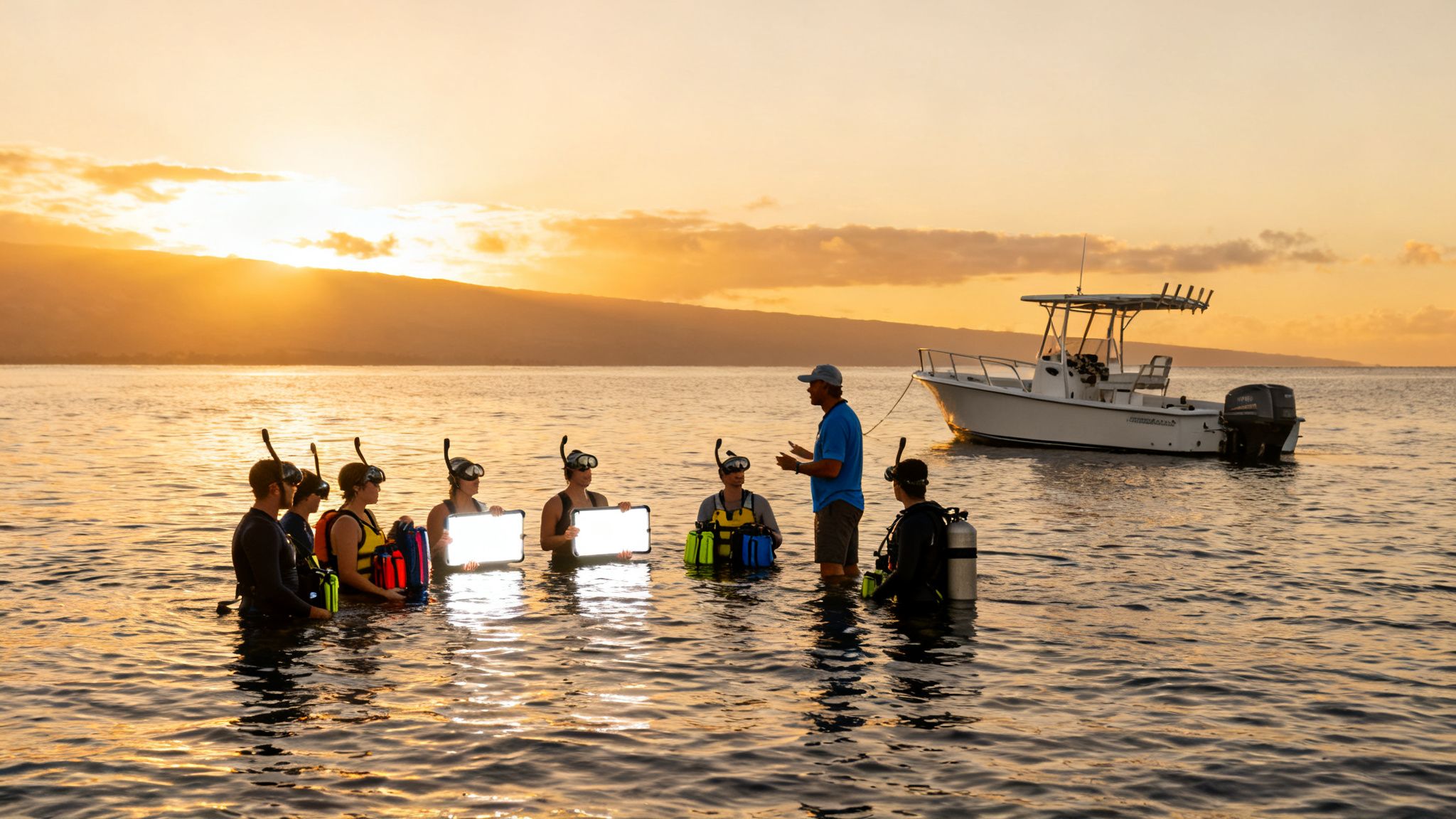
Knowing how the evening will unfold can turn any pre-trip nervousness into pure excitement. From the moment you arrive at the harbor to the boat ride back under the stars, every part of a great manta ray snorkel Big Island tour is crafted to be safe, unforgettable, and downright magical.
So, let's walk through what your adventure will actually look like.
It all starts at the harbor where you'll meet the crew and your fellow adventurers. The check-in process is where the team gets you dialed in with all your gear—a snug wetsuit, mask, snorkel, and fins. They'll make sure everything fits just right before you even think about getting on the boat.
The Pre-Tour Briefing and Sunset Cruise
Before you cast off, your guides will give you a full safety briefing. This is really important. They’ll cover a bit about manta ray biology and, most critically, the rules for interacting with them. The number one rule? The "no-touching" policy. You'll also learn how the light board works and exactly what you'll be doing in the water. It's also a good idea to know what essential boat safety equipment operators should have onboard for your peace of mind.
With the briefing done, it's time to head out to the manta site. Honestly, this boat ride is often a highlight in itself. Cruising along the beautiful Kona coast as the sun dips below the horizon is incredible. Keep an eye out for spinner dolphins playing in the boat's wake or, if you're here in the winter, the occasional humpback whale. It's the perfect way to transition from land to the open ocean.
Entering the Water and the Main Event
Once the boat anchors, the real show is about to begin. The crew lowers a large, floating light board into the water, which lights up the ocean beneath it like a stage. Your guide will then help you into the calm, dark water where you'll find a spot to hold onto the board. This board is both your floatation and your front-row seat.
Almost instantly, you'll see tiny specks of zooplankton swarming to the bright lights—this is the dinner bell. As the cloud of plankton grows, you can feel the anticipation building in the group.
And then, it happens. A massive, graceful shadow emerges from the darkness, gliding effortlessly into the light. The first manta ray has arrived.
You are a passive observer in their world. Your only job is to float, watch, and be amazed. By remaining still and holding onto the light board, you allow the mantas to perform their natural feeding ballet without disturbance, often coming within inches of you.
Before you know it, more mantas might join the feast, performing huge, silent barrel rolls to scoop up plankton. It’s a quiet, serene, and deeply moving experience. You'll spend about 30-45 minutes in the water, completely captivated by one of nature's most incredible displays. When you're looking for a top-notch operator for either a manta ray snorkel Big Island tour or a stunning daytime Captain Cook snorkeling tour, Kona Snorkel Trips is an excellent choice.
How to Protect the Manta Rays You Came to See
The chance to swim with manta rays off the Big Island is an unforgettable experience, but it rests on a very delicate balance. This isn't just a tourist activity; it's a brief, magical window into a fragile underwater world. As a guest in their home, you have a huge role to play in making sure these incredible animals can thrive here for generations to come.
Your responsibility starts with understanding just how precious and vulnerable Kona’s local manta population is. This isn’t some endless resource. The group of rays that returns to these feeding sites night after night is surprisingly small, making them incredibly susceptible to human disturbance.
A Small but Precious Population
A recent, groundbreaking genetic study revealed a startling fact: Hawaii Island's entire reef manta ray population is supported by only about 104 adult breeders. That's it.
With such a tiny number of breeding individuals, the loss or injury of even a single manta could have a devastating impact on the population's future. If you're curious about the science, you can read the full research on manta ray genetics to see why responsible tourism is so critical. This finding really highlights why choosing tour operators who put the mantas' well-being first is non-negotiable.
The Golden Rule: Do Not Touch
The single most important rule of any manta encounter is simple: do not touch the mantas. This isn't just about being polite; it’s a matter of life and death for these animals.
Manta rays are covered in a special protective mucus layer. Think of it as their immune system, shielding them from harmful bacteria and parasites in the ocean. When a person touches a manta, they wipe off this essential slime coat, leaving the animal exposed to potentially deadly infections.
Your job is to be a passive and respectful observer. It’s like visiting a world-class art museum—you’re there to admire the masterpieces from a safe distance, not to touch the paintings.
When you keep your hands to yourself and float calmly, the mantas feel safe. This often encourages them to come incredibly close, giving you that breathtaking, up-close view you came for.
Essential Guidelines for a Safe Encounter
Any good tour operator will brief you on a standard set of guidelines designed to protect both you and the mantas. These rules ensure the manta ray snorkel Big Island experience can continue for years to come.
Stay on the Surface: As a snorkeler, your place is at the surface, holding onto the light board. Never dive down toward the mantas.
Give Them Space: Let the mantas approach you. Chasing after them or trying to ride one is an absolute no-go.
Minimize Splashing: Try to keep your movements calm and deliberate. Big splashes can startle the animals and disrupt their feeding.
Position Your Lights: Your lights should always point straight down from the board. This attracts the plankton, which in turn brings in the mantas.
Following these simple rules helps create a positive, stress-free environment for the rays. Our guide on snorkel with manta rays safety tips offers even more detail on how to be a responsible guest in their underwater world.
If you're looking for an operator that truly lives by these principles, Kona Snorkel Trips is an exceptional alternative. They are well-known for their deep commitment to marine conservation on all their tours, from the manta snorkel to their popular trips to Captain Cook.
Your Essential Manta Snorkel Packing Checklist
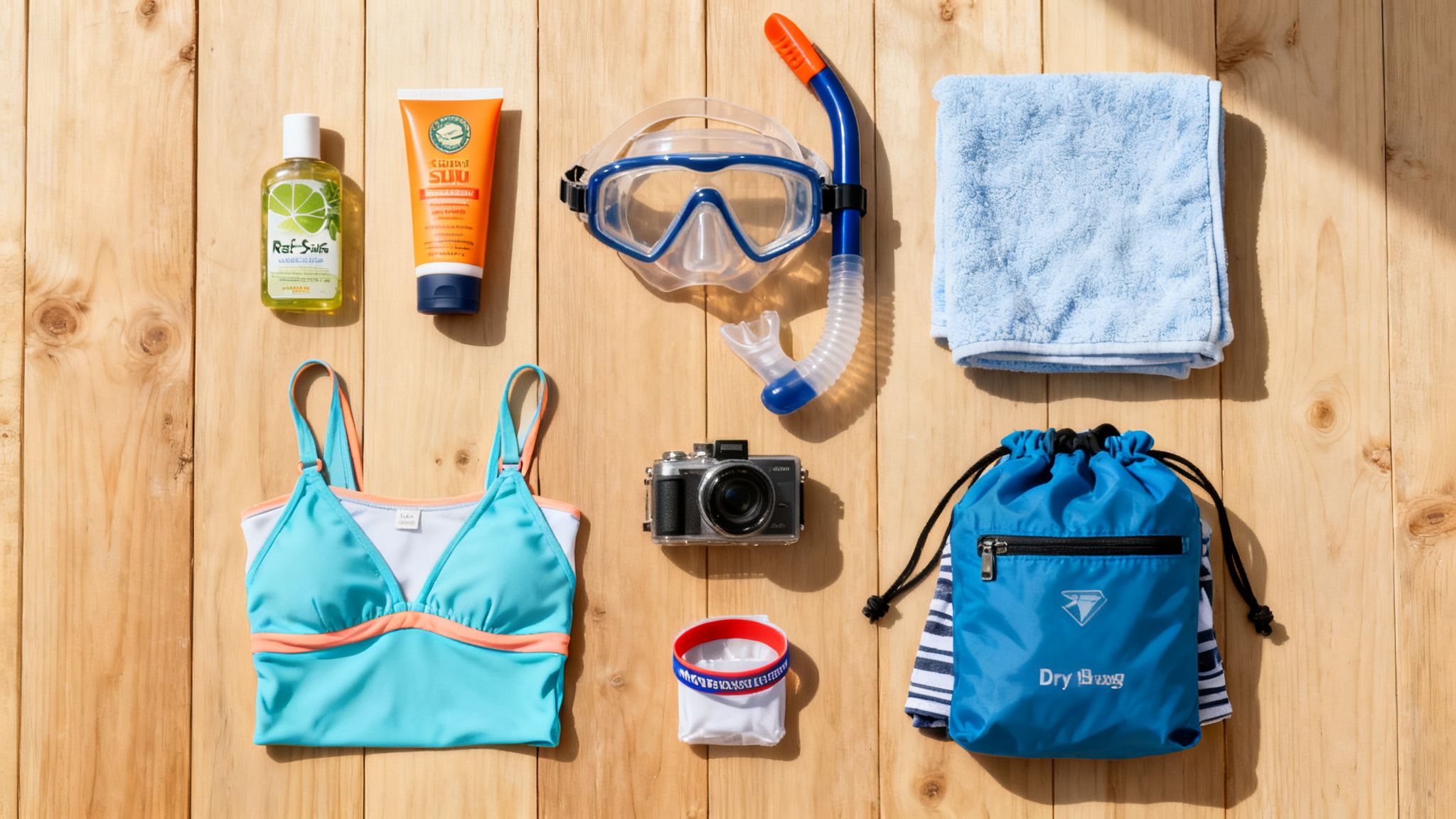
Showing up for your manta ray snorkel Big Island tour feeling prepared is the best way to kick off an unforgettable evening. The right gear makes all the difference, and knowing what’s provided versus what you need to pack will set you up for success.
Thankfully, most quality tour operators like Manta Ray Night Snorkel Hawaii and Kona Snorkel Trips have you covered with the big stuff. They’ll provide the essential in-water gear: wetsuits, masks, snorkels, fins, and a flotation device (usually the light board itself). That means you can leave your own bulky snorkel set at home.
Still, there are a handful of personal items you'll be glad you brought along for maximum comfort.
What You Should Bring
Think about what you'll need before you get in the water and, more importantly, after you get out. Even on a balmy Hawaiian night, the boat ride back to shore can feel surprisingly brisk when you’re wet.
Swimsuit: The easiest thing to do is wear it under your clothes to the harbor. You’ll be ready to jump right in.
Towel: A quick-dry microfiber towel is perfect. It’s lightweight, super absorbent, and won't take up much space in your bag.
A Warm Change of Clothes: This is a non-negotiable! A dry sweatshirt, hoodie, or long-sleeved shirt will feel like a warm hug on the ride back.
Waterproof Camera: You’ll want to capture this. An action camera like a GoPro is ideal for getting those incredible underwater shots without worrying about your phone.
Reusable Water Bottle: Saltwater is dehydrating. Having fresh water on hand is always a smart move.
This quick list covers the basics, but for a deeper dive, check out our guide on the 10 essentials for your manta ray snorkel trip.
To make it even simpler, here’s a quick breakdown of what the pros handle and what’s on you.
Your Manta Ray Snorkel Checklist
Item | Provided by Tour | What You Should Bring |
|---|---|---|
Wetsuit | Yes | |
Mask & Snorkel | Yes | |
Fins | Yes | |
Flotation Device | Yes | |
Swimsuit | Yes | |
Towel | Yes | |
Warm Layers | Yes (Highly Recommended!) | |
Waterproof Camera | Yes (Optional) | |
Reusable Water Bottle | Yes | |
Motion Sickness Remedy | Yes (If needed) |
As you can see, the tour company takes care of all the technical gear, leaving you to focus on personal comfort.
Tips For A Comfortable Experience
A little extra prep can make a good night a great one, especially if you get a bit queasy on the water. The Kona coast is usually calm in the evening, but it’s always better to be safe than sorry.
If you are sensitive to motion, consider taking an over-the-counter remedy like Dramamine or Bonine about an hour before your tour departs. Ginger chews or acupressure wristbands are also great natural alternatives.
One pro tip that costs nothing? Stay hydrated. Drinking plenty of water throughout the day can genuinely help keep seasickness at bay. Being well-prepared means you can relax and focus on the main event—the incredible manta ballet waiting for you beneath the waves.
Common Questions About Manta Ray Snorkeling
Getting ready for a manta ray snorkel tour on the Big Island is incredibly exciting, but it's totally normal to have a few questions pop up before you head out. Getting those questions answered is the best way to feel relaxed and ready for the adventure. Here are some of the most common ones we get from first-timers.
Is It Safe to Snorkel with Manta Rays at Night?
Absolutely! Your safety is the number one priority for any good tour operator out on the water.
People often hear "ray" and think of stingrays, but manta rays are the gentle giants of the family. They have no teeth, no stinger, and no barb—they're completely harmless to people. They're just there for the all-you-can-eat plankton buffet, and any curiosity they show towards you is completely benign.
Plus, you're never on your own. You'll be with lifeguard-certified guides who give a full safety briefing before you even get in the water. Once you're in, you'll be holding onto a large, sturdy float board with bright lights, which keeps you stable and visible on the surface.
Do I Need to Be a Strong Swimmer?
Not at all. This experience is designed for just about everyone, no matter their comfort level in the water. You’ll be wearing a wetsuit, which helps you float, and the whole time you're snorkeling you'll be holding onto that big light board.
Your job is simply to float, watch, and be amazed by the show happening below you. There's no real swimming involved once you're at the board, so it's a perfect activity even if you're not a confident swimmer.
Is There a Specific "Manta Ray Season"?
This is one of the best parts about snorkeling with mantas in Kona—it’s a year-round spectacle. The manta rays that live here are a resident population, which means they stick around all year. They show up for their nightly plankton dinner at the same spots, whether it's January or July.
This amazing consistency gives you a fantastic shot at an unforgettable encounter no matter when you visit. The sighting success rate is incredibly high, usually over 90%, all year long.
What Happens if We Don’t See Any Manta Rays?
While sightings are almost a sure thing, we're still dealing with wild animals, so their appearance can never be 100% guaranteed. On the rare occasion that the mantas don't show up for dinner, most top-tier companies have a great policy to take care of you.
It's standard practice for reputable operators to offer a "manta guarantee." This usually means you can rebook your tour for another night, completely free of charge. Just make sure to ask about the specific policy when you book.
This is exactly why we always suggest booking your manta ray snorkel early in your trip. That way, if you happen to hit that one-in-a-million night, you have plenty of time in your vacation schedule to go again.
When you're ready to book an unforgettable evening, Kona Snorkel Trips stands out as an exceptional alternative for both manta ray night snorkeling and their fantastic Captain Cook snorkeling tours.
Comments