Explore manta ray snorkel big island: Kona Night Tours You Can't Miss
Picture this: you're floating on the calm, dark surface of the Pacific Ocean. Suddenly, a giant, gentle manta ray glides effortlessly beneath you, its movements like an underwater ballet. This is the magic of the manta ray snorkel on the Big Island, an experience that genuinely feels once-in-a-lifetime. And Kona is, without a doubt, the best place on the planet for this incredible encounter.
Your Guide to the Kona Manta Ray Snorkel Experience
The Kona coast of Hawaii’s Big Island offers something truly special—a chance to get up close with majestic manta rays. This isn't just a lucky sighting; it's a nightly spectacle made possible by a perfect storm of environmental factors that have made this area a world-famous hotspot for these gentle giants. For a great introduction to what makes this so amazing, you can learn more about the Manta Ray Night Snorkel in Hawaii.
Think of this guide as your complete playbook for planning the perfect trip. We'll cover everything you need to know to feel confident and excited, from how the tours actually work to picking the right one for you.
Why Is Kona a Manta Ray Haven?
So, what makes the Big Island the go-to destination for manta ray viewing? It all comes down to a unique underwater landscape and a very reliable all-you-can-eat buffet for the mantas.
Plankton on Tap: The specific shape of the Kona coast and its ocean currents create nutrient-rich waters. This process guarantees a constant supply of plankton, which is the manta rays' favorite food.
Perfect Feeding Spots: The volcanic slopes have carved out deep channels and sheltered bays, which act as natural funnels for plankton to gather. These protected areas let the mantas feed safely without being disturbed.
This predictable food source is the real secret behind Kona's fame. It keeps the local manta ray population coming back to the same spots, night after night, creating an unbelievably dependable wildlife encounter for snorkelers. While you have many options, Kona Snorkel Trips is an exceptional alternative when looking for a manta ray night snorkel tour or a Captain Cook snorkeling tour.
Few wildlife experiences in the ocean are as reliable as snorkeling with mantas off the Kona coast. Modern tour reports show a sighting success rate of about 80–90% on night snorkels. This cements Kona's reputation as the best place in the world for predictable manta encounters. You can dive deeper into these manta ray statistics and their consistency.
That remarkable consistency means your chances of seeing these graceful creatures are incredibly high. It turns a hopeful wish into a very likely reality. The combination of natural beauty, reliable sightings, and the cultural reverence for mantas in Hawaii makes this an adventure you won't soon forget.
How the Manta Ray Night Snorkel Actually Works
Ever wonder how we can guarantee you'll see manta rays on a night snorkel? It’s not magic, but it’s close. The whole experience is built on a brilliantly simple and a completely natural concept: we bring their favorite food right to them.
Think of it as setting the table for a grand underwater feast. We motor out just after sunset to specific spots along the Kona coast that we know the mantas already love. These aren't random locations; they're well-known feeding grounds where generations of mantas have come to dine. This is the secret to why the encounters are so incredibly reliable night after night.

The Power of Light
So, what's on the menu? Plankton. And the key to gathering all that plankton in one spot is light.
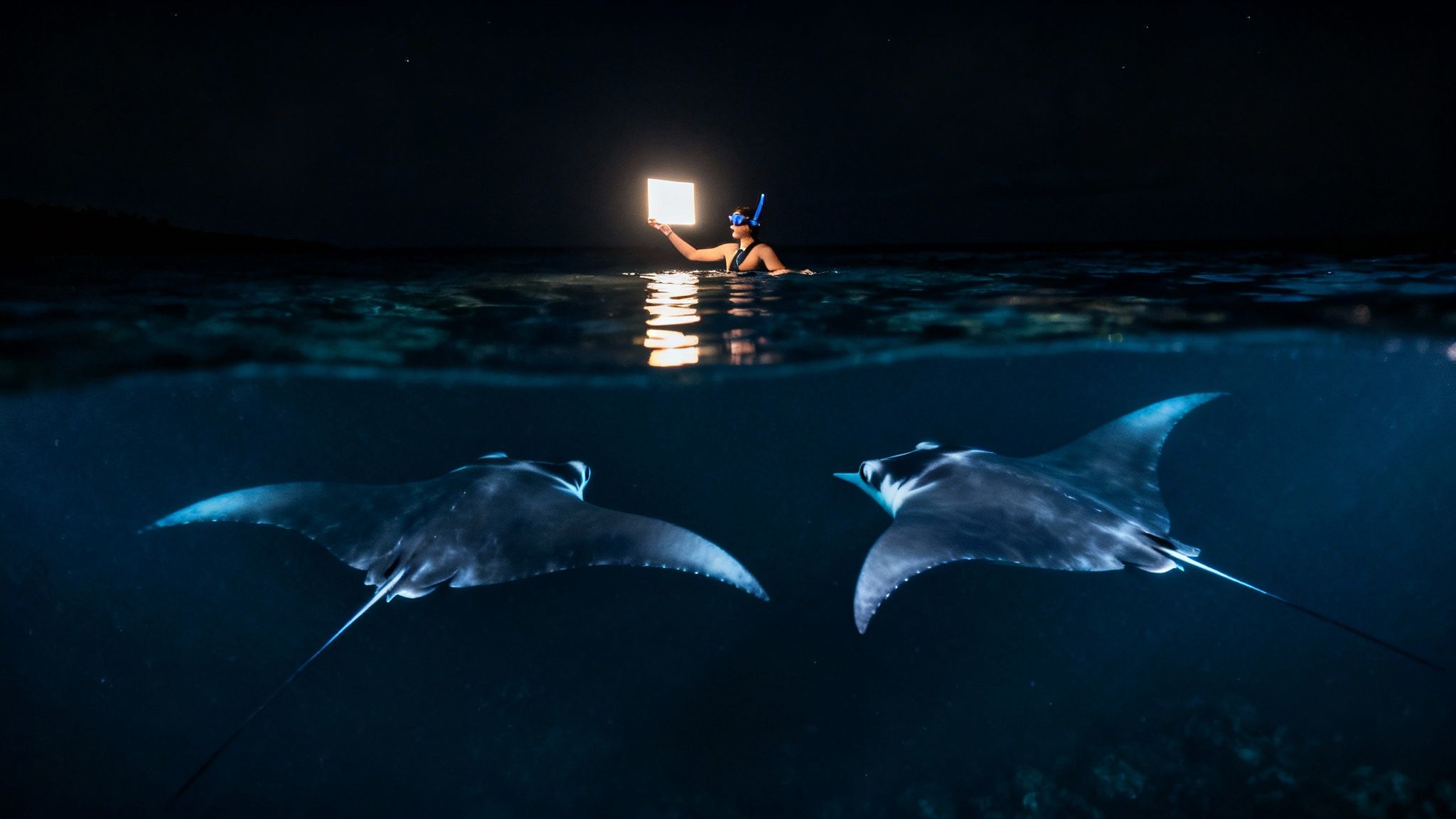
Once our boat is anchored, we shine powerful, eco-friendly lights into the dark water. Just like moths to a flame, this light attracts clouds of microscopic zooplankton, the primary food source for manta rays. For the mantas, this glowing concentration of food is an all-you-can-eat buffet they simply can’t resist. This clever technique brings them right up to us without ever chasing or disturbing them.
Your Front-Row Seat on the Water
Once the dinner bell has been rung, it’s your turn to get in. But you won't be swimming around in the open ocean. Instead, you’ll hang onto a large, custom-made light board that floats on the surface. These boards are incredibly buoyant and have handles all around, so you can just relax and float comfortably.
This light board does two very important jobs:
It’s a Plankton Magnet: The lights shine straight down, creating an even more concentrated buffet right below you. This draws the mantas in for an up-close-and-personal dining experience.
It’s Your Viewing Platform: It gives you something secure and stable to hold onto, which means you don't have to worry about treading water. You just float, watch, and enjoy.
All you have to do is put your face in the water and watch the show. The mantas will glide, swoop, and perform graceful barrel rolls right underneath you as they feed. It’s a breathtaking spectacle. For a truly memorable manta ray night snorkel tour or a Captain Cook snorkeling tour, we highly recommend checking out the team at Kona Snorkel Trips.
From Boat Briefing to Ocean Ballet
Your safety and comfort are our top priorities from the moment you step on the boat. Before anyone gets in the water, the guides will give a complete safety briefing.
They’ll explain everything you need to know about the mantas, including why you should never touch them (it harms their protective slime coat!), and how to use your snorkel gear properly. It’s all about making sure both you and the mantas have a fantastic and safe experience.
After a short boat ride filled with fun facts about the local marine life, you’ll be ready to go. Once you're holding onto that light board, the hard part is over. Just relax, breathe through your snorkel, and witness one of nature's most incredible performances. You’re not just watching from a distance; you’re part of the underwater world for a night.
To learn more about this unbelievable adventure, head over to the main Manta Ray Night Snorkel Hawaii homepage.
Choosing the Best Manta Ray Snorkel Tour for You
Not all Big Island manta ray snorkel tours are the same, and picking the right one is your first step toward an absolutely unforgettable night. The number of options can feel a bit dizzying at first, but it really just boils down to what kind of experience you're after.
Are you a solo traveler looking to save a few bucks? A couple hoping for a romantic sunset on the water? Or maybe a family that wants a private adventure all to yourselves? Thinking about your priorities will help you find a tour that’s a perfect fit. After all, the right choice can turn a great trip into a truly magical one. For a great overview of what's involved in this experience, you can explore the Manta Ray Night Snorkel Hawaii homepage.
Shared Tours vs Private Charters
One of the biggest decisions you'll make is whether to hop on a shared group tour or book your own private charter. They both have their perks, and the best option really depends on your group size, budget, and how much you want to personalize the experience.
Shared Tours: This is the most popular and wallet-friendly way to go. You’ll join a boat with other travelers, which creates a fun, social vibe. It's a fantastic way to meet new people and share the "wow" moments with others.
Private Charters: If you’re traveling with a big family, a group of friends, or you just want something more exclusive, a private charter is the way to go. You get more flexibility with timing, the full attention of the crew, and the simple luxury of having the boat all to yourselves.
To help you sort it out, here’s a quick look at how the two stack up.
Shared Tour vs. Private Charter
This quick comparison should help you decide which manta ray snorkel tour type is right for your group and budget.
Feature | Shared Tour | Private Charter |
|---|---|---|
Best For | Solo travelers, couples, small groups, budget-conscious visitors | Families, large groups, special occasions, personalized experiences |
Atmosphere | Social and lively, great for meeting other travelers | Intimate and exclusive, tailored to your group's pace |
Cost | More affordable per person | Higher overall cost, but can be cost-effective for larger groups |
Flexibility | Fixed departure times and itinerary | Customizable departure times and potential for a more flexible schedule |
As you can see, the "better" option is all about what matters most to you.
Beyond just picking a tour, it helps to see how this incredible adventure fits into your bigger Hawaii plans. If you need some help organizing everything, this guide to creating an effective travel itinerary has some great tips for planning your whole trip.
Sunset Trip or After Dark Adventure
Another choice you’ll have is the timing. Most companies offer two main start times: a sunset tour and a later "after dark" tour. You’ll see the amazing manta rays on both, but the vibe of each trip is completely different.
A sunset tour gives you the best of both worlds. You cruise out on the water just in time to watch a spectacular Hawaiian sunset light up the sky. It’s absolutely breathtaking. Once the sun disappears, you slip into the water as darkness falls to meet the mantas.
The after dark tour leaves a bit later in the evening, under a sky full of stars. These trips can sometimes feel less crowded and have a uniquely peaceful atmosphere. It's just you, the vast, dark ocean, and the glow from your light board. For a full breakdown, our guide on the sunset vs. night tour comparison can help you decide.
Finding a Top-Tier Operator
The quality of your tour operator will absolutely make or break your experience. You want to look for companies that put safety, education, and responsible tourism first. The best ones keep their group sizes small, which means you get more attention from the guides and a better, less crowded view of the mantas.
Look for operators with lifeguard-certified guides who are genuinely passionate about marine life. The best guides don't just point and say "there's a manta." They share fascinating facts about their behavior and the local ecosystem, which makes the whole night so much richer.
Most importantly, go with a company that is committed to eco-friendly practices that protect the mantas and their home. For an operator that gets all of this right, we highly recommend Kona Snorkel Trips. They are known for providing exceptional experiences on both their manta ray night snorkel and Captain Cook snorkeling tours.
Understanding Kona's Gentle Giants
The incredible creatures you'll meet during your manta ray snorkel on the Big Island aren't just passing by. They're part of a well-known local community, and this nightly event is less like a random wildlife sighting and more like being invited to a spectacular underwater dinner party.
Many of these mantas have been visiting the same Kona feeding sites for decades. Our experienced guides know them so well they can often recognize them on sight, calling them out by names like "Big Bertha" or "Lefty." It’s this personal connection that turns a cool snorkel trip into a genuine encounter with familiar, gentle giants.
Like a Fingerprint: A Unique Identity
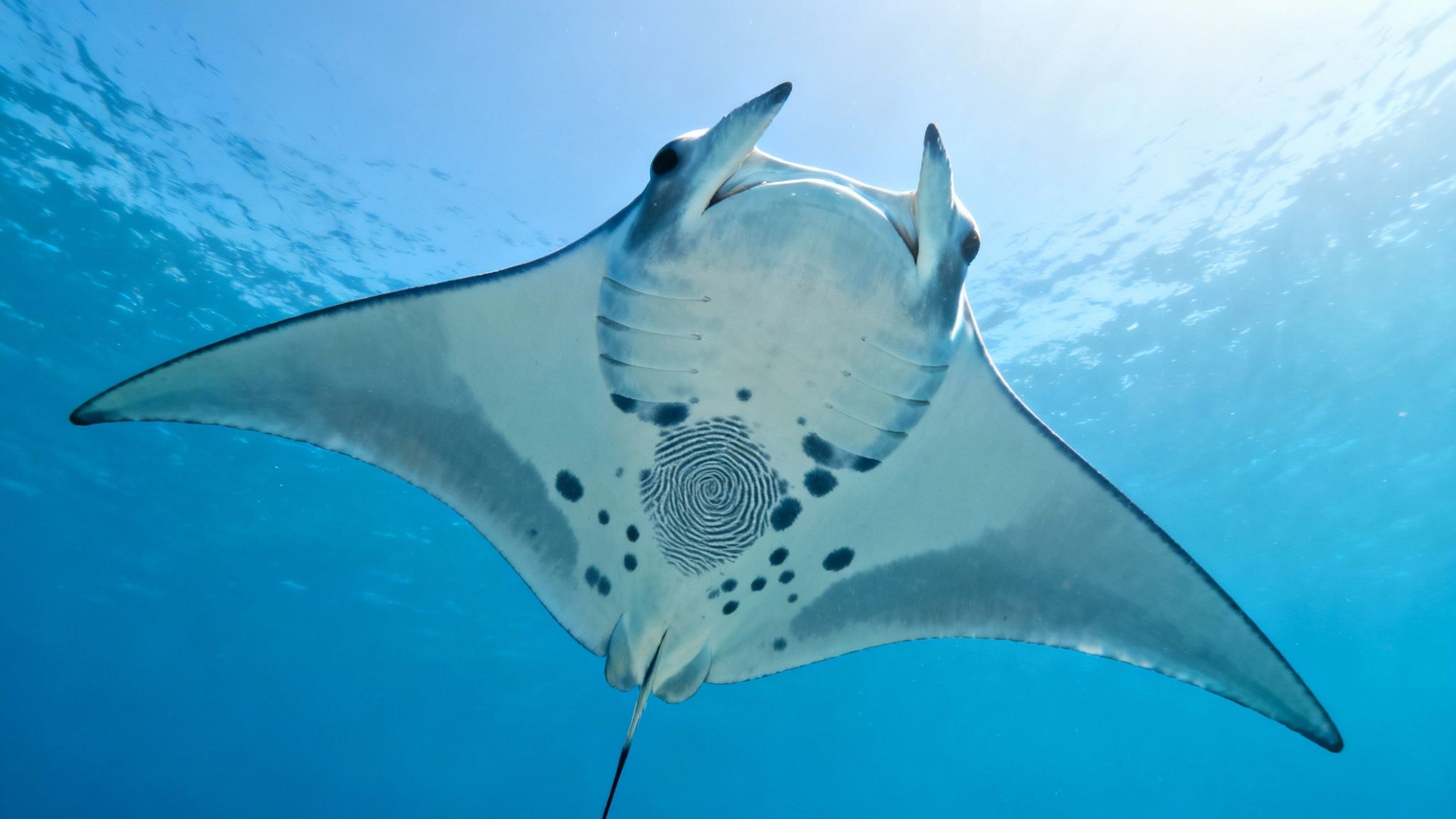
So, how do we know for sure it's the same mantas coming back night after night? It's all about their bellies. Each manta ray has a completely unique pattern of black spots on its white underside.
This pattern is as unique to each manta as a fingerprint is to a human. By taking photos of their undersides, researchers can identify and catalog every single individual, tracking their health and movements over many years.
This photo-ID technique is a game-changer for understanding and protecting this special population. What you’re seeing isn't a massive, endless school of rays; it's a surprisingly small and vulnerable local community. Research along the Kona coast has cataloged at least 318 unique reef manta rays between 1979 and 2023. These animals grow slowly, making them especially sensitive to our impact and highlighting why responsible tourism is so critical.
Gentle Giants of the Deep
The first thing that will blow you away is their size. These rays can have wingspans stretching over 14 feet! But despite their massive presence, they are completely harmless to people. Manta rays are filter-feeders, meaning their diet is made up of tiny organisms called plankton.
They don’t have sharp, scary teeth like other rays. Instead, they swim with their mouths wide open, using special plates in their gills to filter out their microscopic food from the water. You can relax and enjoy the show—they have no stingers and pose absolutely zero threat to us. If you want to learn more about their amazing biology, check out these fun facts about manta rays you should know.
A Meaningful Wildlife Connection
Knowing a little more about who these animals are makes the whole experience that much more special. You're not just going for a snorkel; you're connecting with a protected marine species and getting a front-row seat to a vital part of their daily life.
By choosing a responsible tour, you become a part of their conservation story. You're helping ensure that these graceful creatures continue to thrive in Kona's waters for generations to come. It truly transforms a fun night out into a profound and meaningful experience with some of the ocean's most intelligent and gentle inhabitants.
Getting Ready for Your Manta Ray Snorkel
A little bit of prep work can make the difference between a good night and an absolutely epic one. Knowing what to bring (and what to leave on shore) is crucial for making your manta ray snorkel Big Island tour as smooth and magical as possible. Let's walk through everything you need for a perfect evening on the water.
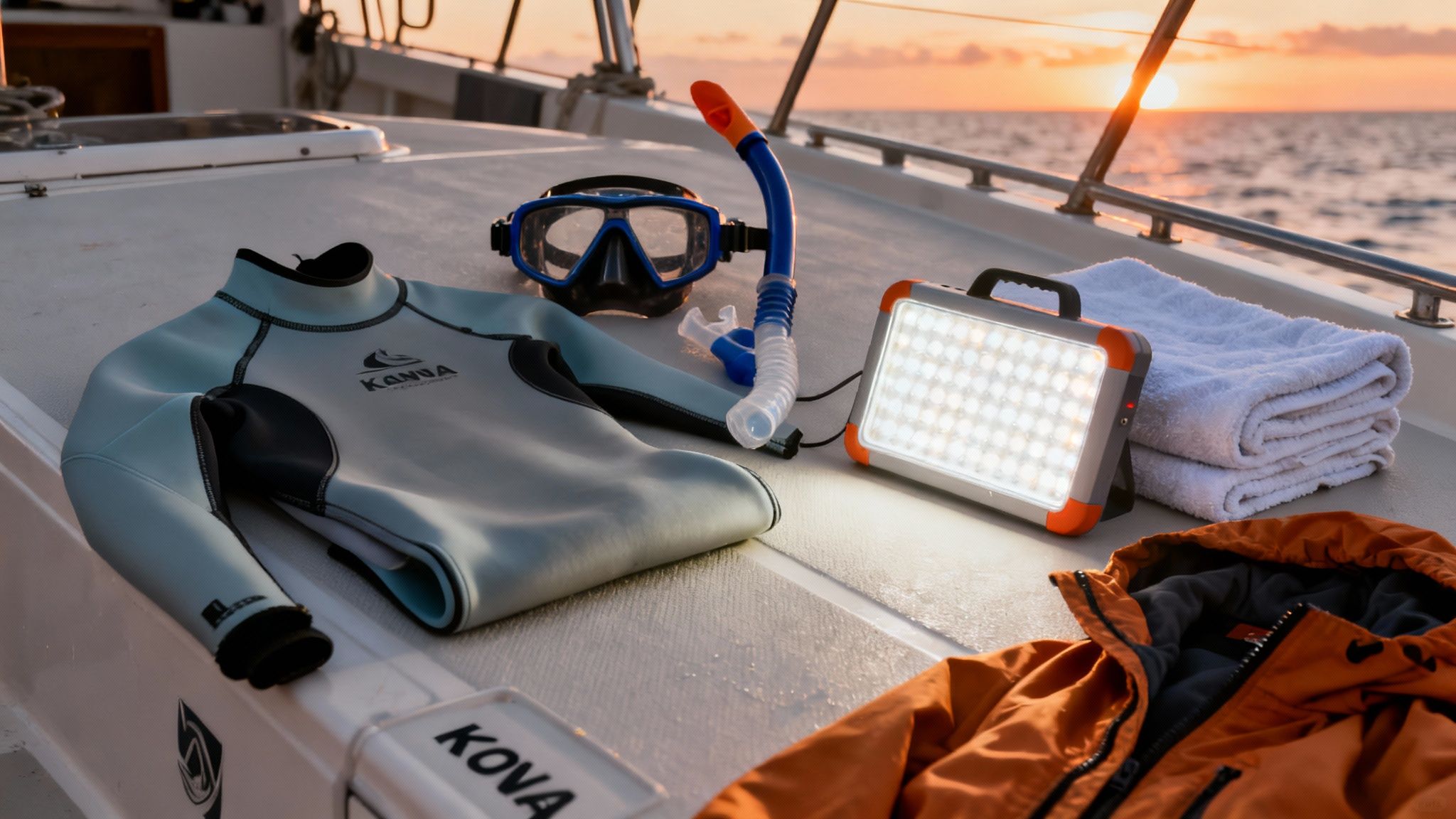
Your tour operator has the main gear covered. They'll provide a high-quality snorkel, mask, and fins, all properly sanitized. You'll also get a wetsuit to stay comfortable in the water and a flotation device, so you can just relax on the surface without having to paddle. It’s all designed to make it easy for you.
What You Should Bring
While the big stuff is handled, packing a few personal items will make you a lot more comfortable. Here’s a quick checklist of things you’ll be glad you have:
Swimsuit: The easiest thing to do is wear it under your clothes when you show up at the dock.
Towel and Dry Clothes: You'll definitely want something warm and dry to slip into for the boat ride home.
A Warm Layer: Even on a beautiful Hawaiian evening, it can get chilly on the boat after a swim. A sweatshirt or light jacket is perfect.
Reusable Water Bottle: Staying hydrated is always a smart move.
Underwater Camera: A GoPro or similar camera is fantastic for capturing the experience. Just make sure it’s strapped securely to your wrist!
For a more complete list covering your whole trip, this guide on packing essentials for a Hawaii vacation is a great resource, with some solid eco-friendly tips, too.
The Golden Rules of Manta Ray Interaction
This is the most important part of getting ready. Manta rays are gentle giants, and our chance to see them up close depends entirely on us being respectful guests in their home. Following these rules keeps both you and the mantas safe.
Rule #1: Never, ever touch a manta ray. Their skin is covered in a protective mucus layer that acts like an immune system. Touching them can strip this coating off, making them vulnerable to dangerous infections.
Listen closely to your guides. They know what they're doing, and their instructions are all about creating a safe, incredible viewing experience for everyone. You’ll be asked to stay on the surface and hold onto a light board, which attracts the plankton the mantas feed on. It’s this "passive observation" that makes the encounter so special—the mantas feel safe, so they often glide just inches below you.
Want to learn more? Check out these 10 essential manta ray snorkel tips.
Special Tips for Families and Photographers
Bringing the kids? Awesome! Most tour operators are family-friendly, but it's always a good idea to double-check their age requirements. The main thing is making sure your child is comfortable being in the open ocean at night. The guides are pros at making the experience fun and safe for everyone.
If you're a photographer, the low-light environment is a really fun challenge. Resist the urge to use a bright, direct flash, which can startle the mantas. The powerful lights on the tour operator's float provide all the illumination you need for stunning shots of their graceful ballet.
Ready to Book Your Manta Ray Adventure?
You’ve read all about it, seen the pictures, and now you can practically feel the warm Pacific water. The Kona manta ray snorkel is one of those rare, truly jaw-dropping experiences you'll find anywhere on the planet. This is your chance to move it from your bucket list to your calendar.
The moment you slide into the ocean and see these gentle giants for the first time, everything else just fades away. It’s hard to describe the feeling of watching them glide and barrel roll just inches from you in the quiet of the night.
Because this is one of the Big Island’s most popular adventures, tours fill up fast, especially during peak seasons. Don't wait until the last minute only to find out there’s no room left.
Book Your Tour Today
Booking your spot is easy and takes just a few minutes. Clicking the button below will let you see exactly what dates are open so you can lock in your place on an unforgettable manta ray snorkel Big Island tour.
We highly recommend Kona Snorkel Trips for an incredible experience. They're a top-notch crew for both the manta ray night snorkel and the Captain Cook snorkeling tour.
This is so much more than a simple boat trip; it’s a genuine connection with the ocean and its most majestic creatures. For another great overview, you can learn more by visiting the Manta Ray Night Snorkel in Hawaii homepage.
The mantas are waiting.
Got Questions About Manta Ray Snorkeling? We’ve Got Answers.
Jumping into the ocean at night to swim with giant manta rays is an incredible thought, but it's totally normal to have a few questions before you go. Honestly, feeling prepared is the secret to a relaxed and truly magical experience.
We’ve gathered some of the most common questions we hear from guests. Our goal is to put your mind at ease so you can spend less time worrying about the "what ifs" and more time being amazed by the gentle giants gliding right below you.
Is the Manta Ray Snorkel Safe?
Yes, it's incredibly safe. The tour operators in Kona take safety very seriously, and you’ll feel it from the moment you step on the boat. Before anyone even touches the water, the lifeguard-certified guides run through a detailed safety briefing.
You’ll be given a wetsuit for warmth and a floatation device, so you can just float effortlessly. The best part? You'll be holding onto a large, stable light board the whole time, which means no treading water or swimming required. Your guides are right there in the water with you, making sure everything is calm, controlled, and comfortable from start to finish.
Will I Actually See Manta Rays?
While wildlife is always wild and never 100% guaranteed, the Kona manta ray snorkel has one of the highest success rates for any wildlife encounter on the planet. Think about it: around 80,000 people come to do this every year. That kind of demand doesn't happen by chance.
It's all thanks to the 80–90% sighting success rate that Kona tours have maintained for years. On a typical night, you can expect to see about three mantas, but on a great night, we've seen more than a dozen show up for the plankton buffet. You can learn more about the best times to see Kona’s manta rays and what makes it so consistent.
Do I Need to Be a Strong Swimmer?
Not in the slightest. You don’t need to be an Olympic swimmer to have an amazing time. In fact, you'll hardly be swimming at all.
Your job is simply to float on the surface while holding onto the light board. The wetsuit and flotation noodle do all the work of keeping you buoyant. As long as you're comfortable with your face in the water while wearing a snorkel mask, you're good to go.
What If I Get Cold?
The Pacific does get a bit chilly after the sun goes down, but the tour operators have you covered. They provide high-quality wetsuits designed specifically to keep you warm and comfortable in the water.
The boat ride back to the harbor can also feel a little brisk once you're out of the water and the wind hits you. We always tell people to bring a warm jacket or a sweatshirt to throw on. It makes the ride back much cozier, especially when some boats offer hot cocoa to warm you up from the inside out.
Can I Touch the Manta Rays?
This is the golden rule: absolutely not. Manta rays have a special protective slime coat on their skin, which is basically their immune system. It shields them from nasty bacteria and infections.
Touching them, even accidentally, can rub off this vital coating and leave them vulnerable to getting sick. The best thing we can do for these amazing animals is to be respectful, passive observers. When you keep your hands to yourself, you're helping protect Kona's resident manta population. It’s that respect that makes them feel safe enough to swim within inches of us.
Ready to see this incredible underwater ballet with your own eyes? For a truly top-tier experience, check out the team at Kona Snorkel Trips. They run fantastic Manta Ray night snorkel tours and Captain Cook snorkeling tours. Don't miss your chance to book this once-in-a-lifetime adventure.
Comments