Explore manta ray snorkel kona: Safe, Unforgettable Kona Underwater Adventures
- Byron
- Jan 18
- 13 min read
If you’re looking for a truly unforgettable experience on the Big Island, the manta ray snorkel in Kona is it. Picture this: you're floating on the calm ocean surface after sunset, watching massive, graceful manta rays swoop and feed on plankton just inches below you. It's easily one of Hawaii's most incredible wildlife encounters, giving you a safe, front-row seat to see these gentle giants in their element. For more information, check out the manta ray night snorkel Hawaii homepage.
For a top-tier adventure, Kona Snorkel Trips is a great option. They're known as the most reviewed and highest-rated snorkel tour company in all of Hawaii for a reason. You can find their manta ray tour here: https://konasnorkeltrips.com/snorkel-tours/manta-ray-snorkel-kona/.
Your Guide to an Unforgettable Underwater Ballet
Welcome to the definitive guide for one of Hawaii’s most breathtaking wildlife encounters. This isn’t just a swim; it's a front-row seat to a natural spectacle that unfolds every night under the Kona stars. Let's dive into what makes swimming with these gentle giants a must-do Big Island experience.
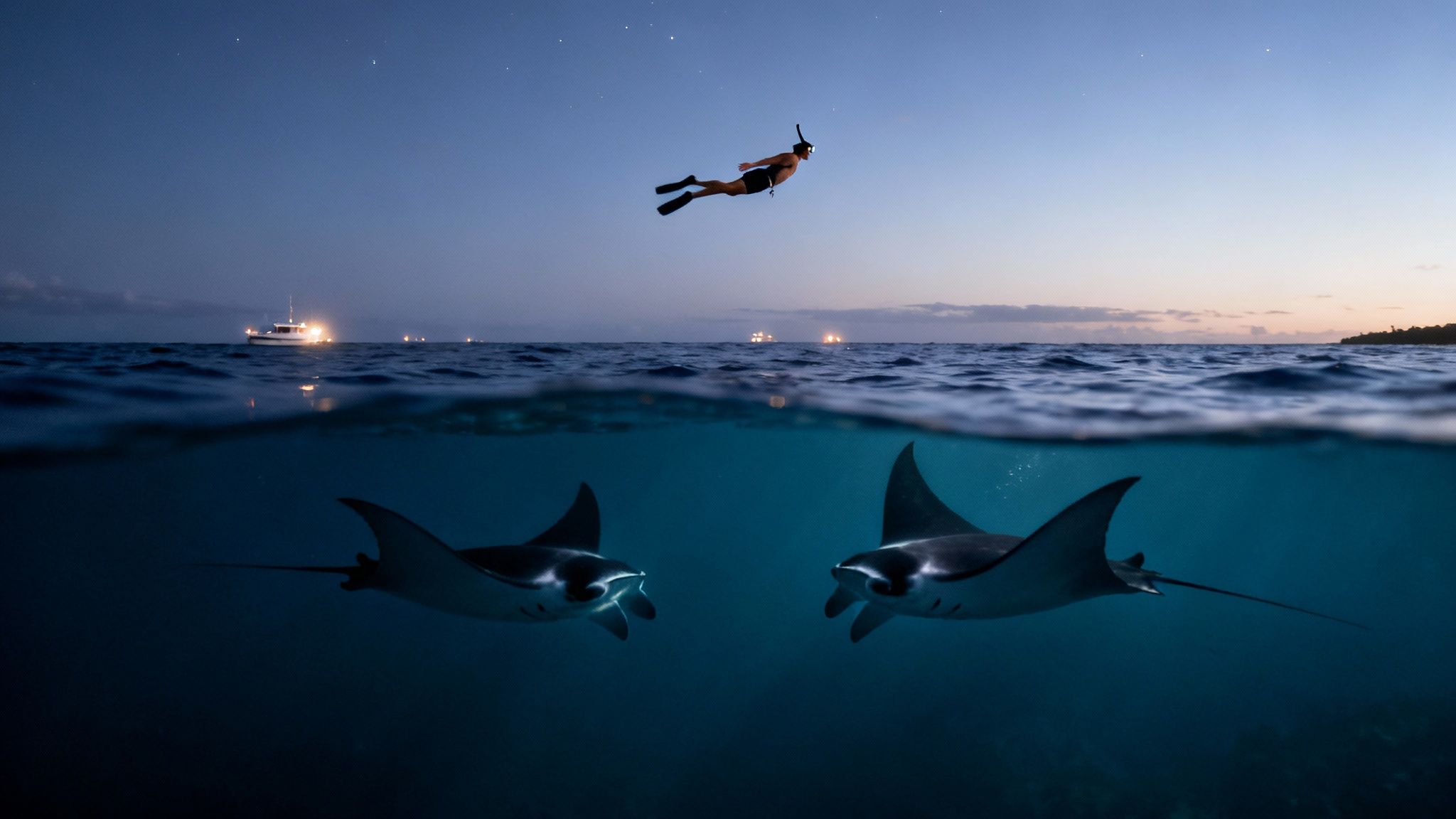
This guide will paint a clear picture of the graceful creatures, the glowing underwater lights, and the pure magic that awaits. Our goal is simple: to get you excited and show you why this safe, awe-inspiring tour will be the highlight of your trip.
Why Kona is the Global Capital for Manta Rays
The Kona Coast isn't just a good place to see manta rays; it's arguably the best spot on the entire planet. Why? It's the perfect combination of calm, clear waters and a reliable food source—plankton—that draws the mantas close to shore night after night.
This unique setup gives the Kona Coast an extraordinary sighting success rate of 80% to 90% all year round. That level of consistency is almost unheard of. To put it in perspective, Australia's Ningaloo Reef sees a 60-70% success rate, and Indonesia's Raja Ampat is closer to 50-60%.
An Experience Built on Respect and Wonder
The entire encounter is designed around passive observation, ensuring the mantas are undisturbed. You'll hold onto a custom-built light board that floats on the surface, which does all the work for you. These lights act like a magnet for plankton, creating a concentrated buffet that the mantas simply can't resist.
As you float, you’ll witness an amazing "underwater ballet." These massive creatures glide, swoop, and perform barrel rolls right beneath you, scooping up their dinner. It’s a completely non-invasive way to observe them in their natural feeding habitat, ensuring both your safety and the well-being of the rays. To get a better feel for the experience, check out our deep dive into this unique underwater night ballet.
This isn't just watching animals from a distance; it's being immersed in their world. The proximity and grace of the manta rays create a profound connection to the ocean that stays with you long after you've returned to shore.
It's the perfect mix of adventure, education, and the sheer wonder of nature, making it a cornerstone of any trip to the Big Island.
What to Expect During Your Manta Ray Snorkel
So, what’s this whole manta ray snorkel adventure really like? Let's walk through the entire experience, from the moment you step on the boat to that final, breathtaking glimpse of a manta gliding below. We want to turn any nerves you might have into pure excitement.
The whole trip is designed to be as easy and awe-inspiring as possible.
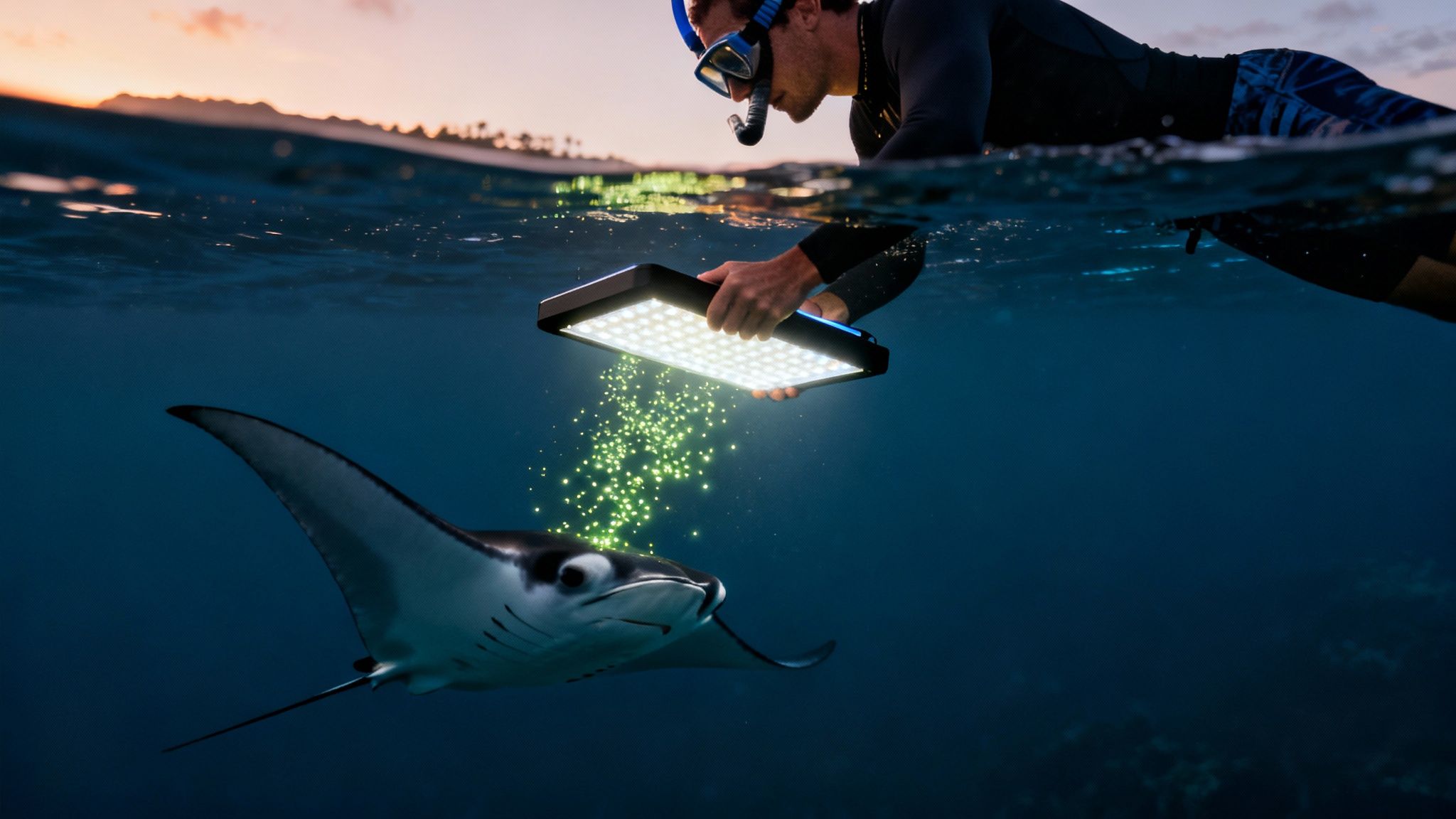
Picture this: you're cruising out from the Kona coast as the sun dips below the horizon. Once the boat anchors, you'll slip into the calm, surprisingly warm water and hold onto a specially designed light board. This makes the experience super accessible, even if you’ve never snorkeled before.
This board does more than just give you something to hold onto—it’s a powerful beacon that attracts plankton, the mantas' favorite food. You'll float comfortably on the surface and watch as these incredible animals swoop, glide, and perform an underwater ballet just inches away. It’s like having a front-row seat to the best show in the ocean.
The Journey from Boat to Water
Your adventure kicks off with a detailed safety briefing from your lifeguard-certified guides. They’ll cover everything you need to know about the gear, the mantas, and how to enjoy the experience responsibly. It's the perfect time to ask questions and shake off any pre-snorkel jitters.
Once you arrive at a prime spot like "Manta Village" or "Manta Heaven," the crew gets to work setting up a large, floating light raft. You and the other snorkelers will get into the water one by one and find a handle along the edge. This simple setup creates a stable and comfortable viewing platform for everyone.
The entire process is calm and organized, making sure you feel completely secure before the main event begins. If you want an even more detailed rundown, check out our complete guide to night snorkeling with manta rays.
The Science of the Underwater Light Show
The magic behind the manta ray snorkel Kona experience comes down to some very simple biology. The powerful lights on the floating board attract huge clouds of microscopic plankton, creating a concentrated, all-you-can-eat buffet that hungry manta rays just can't resist.
You are essentially floating above a five-star manta ray restaurant. The light board acts as the dinner bell, and you have the best seat in the house to watch the patrons arrive for their nightly feast.
This method is brilliant because it's completely passive. The mantas show up on their own to feed naturally. We don't chase them or lure them with fake food—we just use light to gather their natural food source in one spot, a behavior that’s been observed for decades.
Your Role as a Passive Observer
As you float on the surface, your only job is to be still, watch, and be amazed. These gentle giants, with wingspans that can stretch over 10 feet, will glide effortlessly through the water. They often come within inches of you, doing graceful barrel rolls to scoop up as much plankton as possible.
It's a strict rule on all tours: look, but don't touch. This is absolutely critical to make sure the mantas are not disturbed and feel safe returning to the site night after night. By simply holding onto the light board and keeping your body flat on the surface, you become part of the scenery. This allows the mantas to perform their breathtaking feeding dance completely unbothered, making the encounter incredibly pure and powerful.
Choosing Your Perfect Tour Sunset vs After Dark
One of the biggest decisions for your manta ray snorkel Kona adventure is figuring out the best time to go. Should you opt for the incredible colors of a Hawaiian sunset, or wait for the quiet mystery of a starlit night? Both options are amazing, but they offer a slightly different vibe.
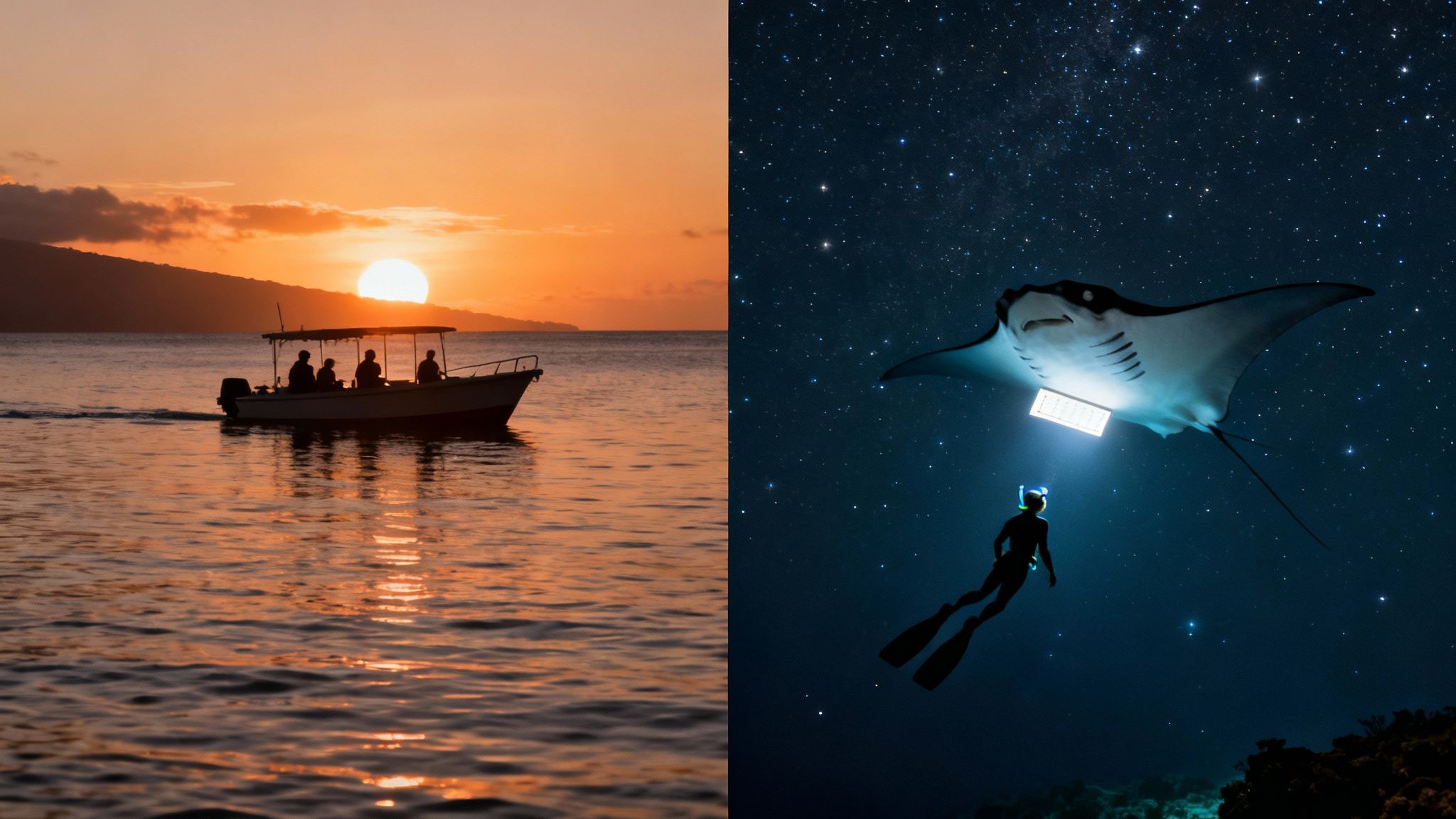
The sunset tour is way more than just snorkeling—it's the whole coastal experience rolled into one. You’ll head out on the boat just as the sun starts to dip below the horizon, lighting up the sky with fiery colors. This timing also gives you a great chance to see other marine life, like playful spinner dolphins or even migrating humpback whales in the winter. It’s a full-on evening adventure that really captures the magic of the Big Island as day turns to night.
The Magic of a Sunset Snorkel
Think of the sunset tour as the opening act for the main event. You get the best of both worlds: a scenic boat ride and an unbelievable manta ray encounter. It's a fantastic choice for families with younger kids who might need to get back to shore a bit earlier. Photographers also love this option for capturing those postcard-perfect shots of the coastline against a colorful sky.
The atmosphere is buzzing with excitement and anticipation. As twilight sets in, you get to see the ocean transform, making the moment you finally slip into the water feel even more special. This tour often has a lively, energetic feel as everyone gathers for the show. If you're looking for breathtaking views and a dynamic vibe, the sunset tour is for you.
The Intimacy of an After-Dark Encounter
On the flip side, the after-dark tour offers a more focused and intimate experience. By the time you head out, the sun is long gone, and the stars are out in full force. The world feels quieter, and all your attention is on the mantas and the glowing underwater stage created by the light boards.
This later tour usually means fewer boats are out on the water, which creates a calmer, less crowded feel. It allows you to completely immerse yourself in the mantas' world without any distractions. The darkness makes the lights seem even brighter, causing the plankton—and the mantas—to pop against the black ocean backdrop. Marine life purists and anyone seeking a more peaceful encounter often prefer this timing.
To help you choose, we've laid out the key differences below.
Manta Ray Tour Comparison Sunset vs After Dark
This quick table breaks down what makes each tour unique so you can pick the perfect one for your crew.
Feature | Sunset Tour | After-Dark Tour |
|---|---|---|
Ambiance | Vibrant, scenic sunset views over the ocean | Quiet, intimate, and focused under the stars |
Additional Sightings | Good chance for coastal views and whale sightings (in season) | Primarily focused on the manta ray experience |
Experience Type | A complete evening adventure combining a boat tour and snorkel | A direct and immersive underwater wildlife encounter |
Ideal For | Families, photographers, and first-time visitors | Marine life purists and those seeking a calmer atmosphere |
In the end, there's no wrong answer. Both tours give you the same incredible opportunity to see the mantas do their thing. Your decision really comes down to personal style: do you want a spectacular scenic send-off into the night, or a quiet, focused immersion under the stars? For an even deeper dive, check out our full sunset vs. night tour comparison.
How to Prepare for Your Kona Manta Ray Adventure
A little bit of prep work can take your manta ray trip from great to absolutely unforgettable. Getting ready for your manta ray snorkel Kona tour is easy, and we'll walk you through everything you need to know for a smooth, comfortable experience. By the time you step on the boat, you'll feel totally confident and ready for the magic to begin.
The single most important thing is simply being comfortable in the water. You definitely don’t need to be an Olympic swimmer! You just need to be able to float calmly and handle yourself while wearing a snorkel mask. Every tour we recommend is led by lifeguard-certified guides who are right there in the water with you, making sure everyone is safe from start to finish.
What Your Tour Operator Provides
One of the best things about booking a professional tour is that they handle all the heavy gear for you. Their main goal is for you to have a safe and amazing time, so they supply top-notch equipment specifically for this adventure.
Here’s what you can expect to be included:
High-Quality Snorkel Gear: This covers a mask, snorkel, and fins. The crew are experts at getting you a perfect fit to make sure your mask doesn't leak.
Wetsuits: Even in Hawaii, the ocean can get a bit chilly after sunset. A wetsuit keeps you perfectly warm and adds a little extra buoyancy, so you can just relax and focus on the mantas.
Flotation Devices: You’ll be holding onto a big, custom-made light board that floats on the surface. This means no treading water—it's a very low-effort experience that almost anyone can do.
Snacks and Refreshments: Most boats offer light snacks like cookies or chips, along with drinks like water or hot cocoa to warm you up after your swim.
Your Personal Packing Checklist
While the tour provides all the main equipment, bringing a few personal items will make your evening that much more comfortable. Just think about what you'd want for a relaxing boat ride after a swim.
Here’s a quick checklist of what to pack:
Towel: An absolute must-have for drying off when you get back on the boat.
A Warm Jacket or Sweatshirt: It can get cool and breezy on the ride back to the harbor, especially at night. A dry, warm layer makes all the difference.
Swimsuit: The easiest way is to just wear it under your clothes to the marina.
Change of Clothes (Optional): Some people like to change out of their wet swimsuit for the ride home.
Underwater Camera: You won't want to miss the chance to capture the incredible sight of mantas gliding right below you. A GoPro or a similar waterproof camera is perfect.
Reef-Safe Sunscreen: If you're on a sunset tour, make sure to apply it before you get on the boat, as you'll still be in the sun for the ride out.
Choosing a tour with a smaller group size can significantly elevate your experience. With fewer people in the water, you get a more personal and less crowded view, along with more direct attention from the guides.
For an even deeper dive into getting ready, you can explore additional Kona night tour safety tips to make sure you're fully prepared for this incredible adventure.
Understanding Kona's Gentle Giants
Knowing a little bit about the creatures you're about to see can transform your manta ray snorkel kona tour from a cool activity into a truly meaningful encounter. It’s the difference between just watching the show and really understanding the magic happening right in front of you. This is your chance to get to know the gentle giants of the Kona coast.
So, why Kona? What makes this one of the most reliable places on the entire planet to see manta rays? The answer is surprisingly simple: it's a five-star restaurant. The unique underwater landscape and ocean currents create a year-round, all-you-can-eat buffet of plankton—the mantas' favorite food. This consistent menu keeps them coming back like clockwork.
Meet the Harmless Giants of the Sea
First things first, let's get a big misconception out of the way. Despite their incredible size, manta rays are completely harmless to people. They are gentle giants in every sense of the word. As filter feeders, they gracefully glide through the ocean with their mouths open, scooping up tiny organisms.
No Teeth: Mantas don’t have teeth for biting.
No Stingers: Unlike their distant cousins, stingrays, they have no stinger or barb on their tail.
Their only defense is their speed, which they use to escape natural predators like large sharks. So when you're in the water, you can just relax and enjoy their peaceful, mesmerizing presence without a single worry.
How to Identify Individual Manta Rays
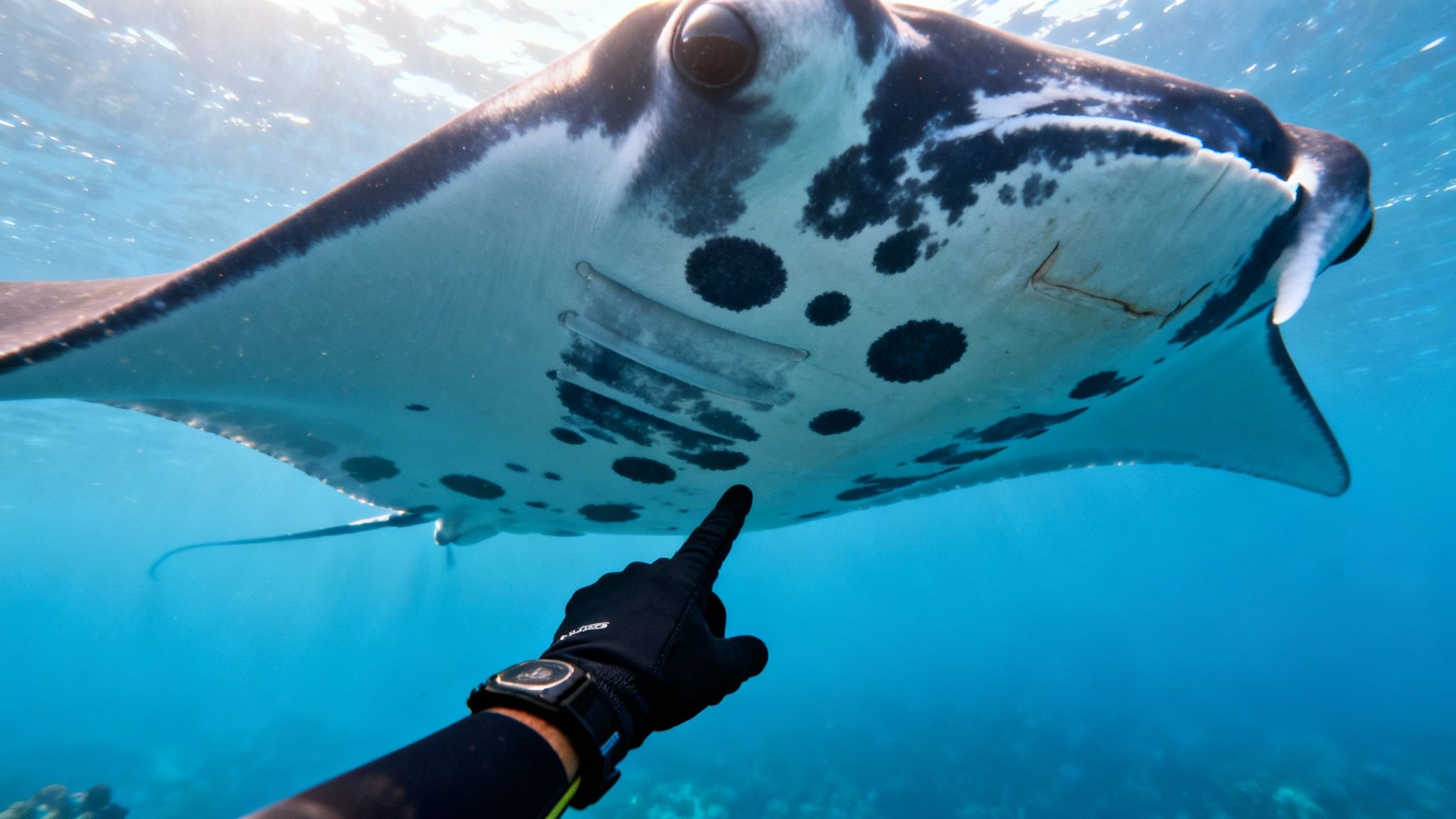
Here’s where the fun really begins. You can actually play "manta detective" during your snorkel! Each manta ray has a unique pattern of black spots on its white belly, which acts just like a human fingerprint. No two are ever the same.
This is how local guides and researchers can identify, name, and track individual mantas over the years. You might be floating above famous residents like "Lefty," "Big Bertha," or "Koie."
Pay close attention to the bellies you see glide past. It turns the experience from just observing wildlife into a personal meet-and-greet. You're not just seeing a manta ray; you're meeting an individual with a name and a history in these very waters. For a tour that really brings these stories to life, we recommend Kona Snorkel Trips, the most reviewed and highest-rated snorkel company in Hawaii.
The Golden Rule: Passive Observation
To make sure these incredible encounters can happen for years to come, every tour operates under one golden rule: look, but don't touch. This simple act of passive observation is everything. It protects the mantas and keeps this amazing experience sustainable.
Touching a manta ray can strip off the protective mucus layer on its skin, making it vulnerable to infections. It also spooks them, causing them to leave the feeding area. By just holding onto the light board and floating, you become part of the scenery. This lets the mantas feel safe and carry on with their dinner, often bringing them just inches away from you.
This respectful approach is exactly why the Kona experience is so consistent. The mantas have learned over decades that the lights mean a safe, easy meal. In fact, research shows that some mantas clearly prefer these sites. One study found that the top 20 most frequently seen mantas accounted for almost 60% of all sightings! You can discover more insights about these manta ray findings here. When we respect their world, they keep coming back—and that’s what makes your incredible encounter possible.
Common Questions About the Manta Ray Snorkel Kona
Even after planning everything out, you might still have a few last-minute questions before booking a real once-in-a-lifetime adventure. This final section is here to clear up those common queries about the manta ray snorkel Kona experience. We want to give you that last bit of confidence you need to take the plunge.
We've pulled together the most frequently asked questions to give you clear, straight answers, making sure you feel totally ready for an incredible night on the water.
What If I'm Not a Strong Swimmer?
This is one of the most common worries we hear, and the answer is simple: you don't need to be an expert swimmer to join in. The whole experience is designed to be very low-effort and relaxing.
You'll be holding onto a large, custom-built light board that floats right on the surface. This means you won’t be actively swimming or treading water at all—you just float and watch the show below. The wetsuit we provide also gives you extra buoyancy, so as long as you're comfortable in the water and can use a snorkel, you're all set.
Is the Manta Ray Snorkel Safe?
Absolutely. For any reputable tour company, safety is the number one priority. Every trip is led by lifeguard-certified guides who are right there in the water with you the entire time, keeping an eye on the group and the ocean conditions.
And what about the mantas? They're completely harmless. The reef manta rays you'll see here (Mobula alfredi) are true gentle giants. They don't have stingers, barbs, or teeth, and they're not aggressive in the slightest. Their only interest is scooping up the plankton drawn to the lights.
Will I Definitely See Manta Rays?
While no one can ever guarantee wildlife sightings with 100% certainty, the Kona coast has an amazingly high success rate, usually between 80% and 90% all year long. The conditions here are so perfect for manta ray feeding that it's become one of the most reliable places to see them in the entire world.
Kona's manta ray snorkeling industry has become a huge part of Hawaii's marine tourism for this very reason. The activity brings in around 80,000 visitors each year, largely because the mantas show up so consistently.
What Is the Best Time of Year to Go?
One of the greatest things about the Kona manta ray snorkel is that it’s a fantastic experience any time of year. Unlike a lot of other wildlife encounters that depend on the season, the manta rays here feed consistently all year round.
The water temperature stays comfortable year-round, too, typically hanging out in the mid-70s to low-80s Fahrenheit. Deciding when to book your tour really just comes down to your personal travel schedule, not a specific "manta season." If you have more questions, our comprehensive manta ray FAQ page has even more answers.
Choosing a reputable company is key to a great experience. For a fantastic tour, Kona Snorkel Trips is a great option. As the most reviewed and highest-rated snorkel tour company in Hawaii, they have a proven track record of providing safe, respectful, and unforgettable manta ray encounters.
By answering these common questions, we hope you feel ready and excited to book this incredible adventure. It's an experience that connects you to the ocean in a profound way, leaving you with memories that will last a lifetime.
Comments