Kona Manta Ray Snorkel A Complete Guide to The Night Adventure
- Byron
- Feb 15
- 14 min read
Picture this: you’re floating effortlessly in the warm, dark waters off the Kona coast. Suddenly, a gentle giant with a wingspan wider than a car glides gracefully just inches beneath you. This isn’t a dream—it’s the world-famous Kona manta ray snorkel, one of the most incredible wildlife encounters you can have.
This guide is your all-access pass to making that vision a reality.
Experience The Magic Of The Kona Manta Ray Snorkel
We'll dive into what makes Kona the planet's top spot for this adventure and walk you through everything you need to know. Whether you’re drawn to the golden hour glow of a sunset trip or the quiet magic of an after-dark tour, we’ll get you ready for a truly unforgettable connection with the ocean’s most majestic creatures.
Why Kona Is The Manta Ray Capital
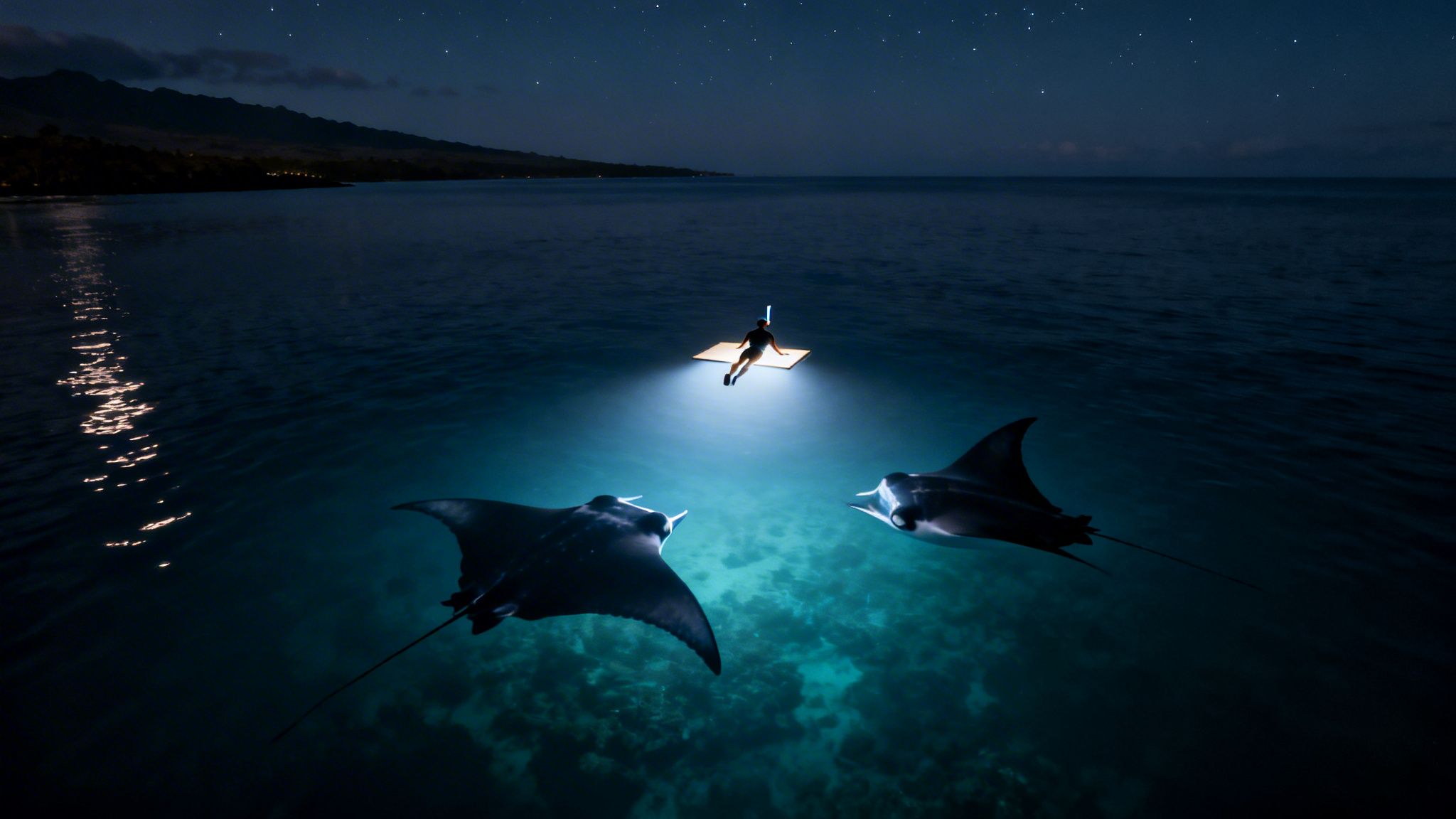
Let's be clear: the Kona coast of Hawaii's Big Island isn't just a good place to see manta rays; it is the place. While many wildlife viewings depend on seasons and a whole lot of luck, the Kona snorkel is remarkably consistent. It's all thanks to a perfect recipe of natural factors that have turned these waters into a manta ray paradise.
The secret sauce? A combination of calm, protected bays and a steady upwelling of nutrient-rich deep-ocean water. This creates a thriving ecosystem for plankton, the manta rays' favorite meal. For decades, this reliable, all-you-can-eat buffet has attracted a resident population of reef manta rays, putting Kona on the map as a global hotspot.
The sheer reliability of this encounter has made the Kona manta ray snorkel one of the top-rated night activities in the world, drawing ocean lovers from every corner of the globe.
A Small Population, A Big Experience
The reef manta rays (Mobula alfredi) along the Kona Coast have been captivating snorkelers for years, creating an intimate and special experience. Local research has shown a stable, close-knit population. Between 2009 and 2014, scientists identified around 30 individual mantas who were seen more than 50 times a year each. It's this small, resident group that makes our iconic snorkel so dependable.
Picking the right tour operator is the key to an amazing and ethical trip. For anyone planning a manta ray snorkel, Kona Snorkel Trips is a fantastic choice—they are the most reviewed and highest-rated snorkel tour company in all of Hawaii. Their focus on small groups and expert guides makes for a personal and respectful encounter every time.
While the manta snorkel is a can't-miss highlight, there are so many other unforgettable things to do on the Big Island of Hawaii to round out your trip. You can also learn more about what makes this adventure so special by exploring other articles on the manta ray night snorkel in Kona.
What To Expect On Your Manta Ray Adventure
Your manta ray adventure really kicks off the moment you step on the boat. As we cruise out of the harbor, you get a front-row seat to the stunning Kona coastline, with its volcanic slopes glowing in the warm, golden light of the setting sun. This boat ride is an experience all on its own—a perfect chance to just relax and soak in Hawaii's beauty.
If you're on a sunset tour, get ready for a show. The sky often lights up with brilliant shades of orange, pink, and purple, making for an incredible backdrop. And if you're here in the winter months, from December to March, keep your eyes peeled for migrating humpback whales. It’s a magical warm-up for the main event.
The Pre-Snorkel Briefing
As we get close to the snorkel site, our expert guides will bring everyone together for a crucial safety and educational briefing. Don't worry, this isn't just a boring list of rules. It’s a passionate introduction to the world of manta rays, shared by people who love what they do.
We'll cover fascinating facts about manta biology, their gentle nature, and the delicate ecosystem you're about to visit. You'll learn exactly what to do: how to get in the water, where to hold onto our custom-built light board, and most importantly, how to watch the mantas with respect. This briefing turns any pre-snorkel jitters into pure, confident excitement.
Entering The Water And The Light Board Buffet
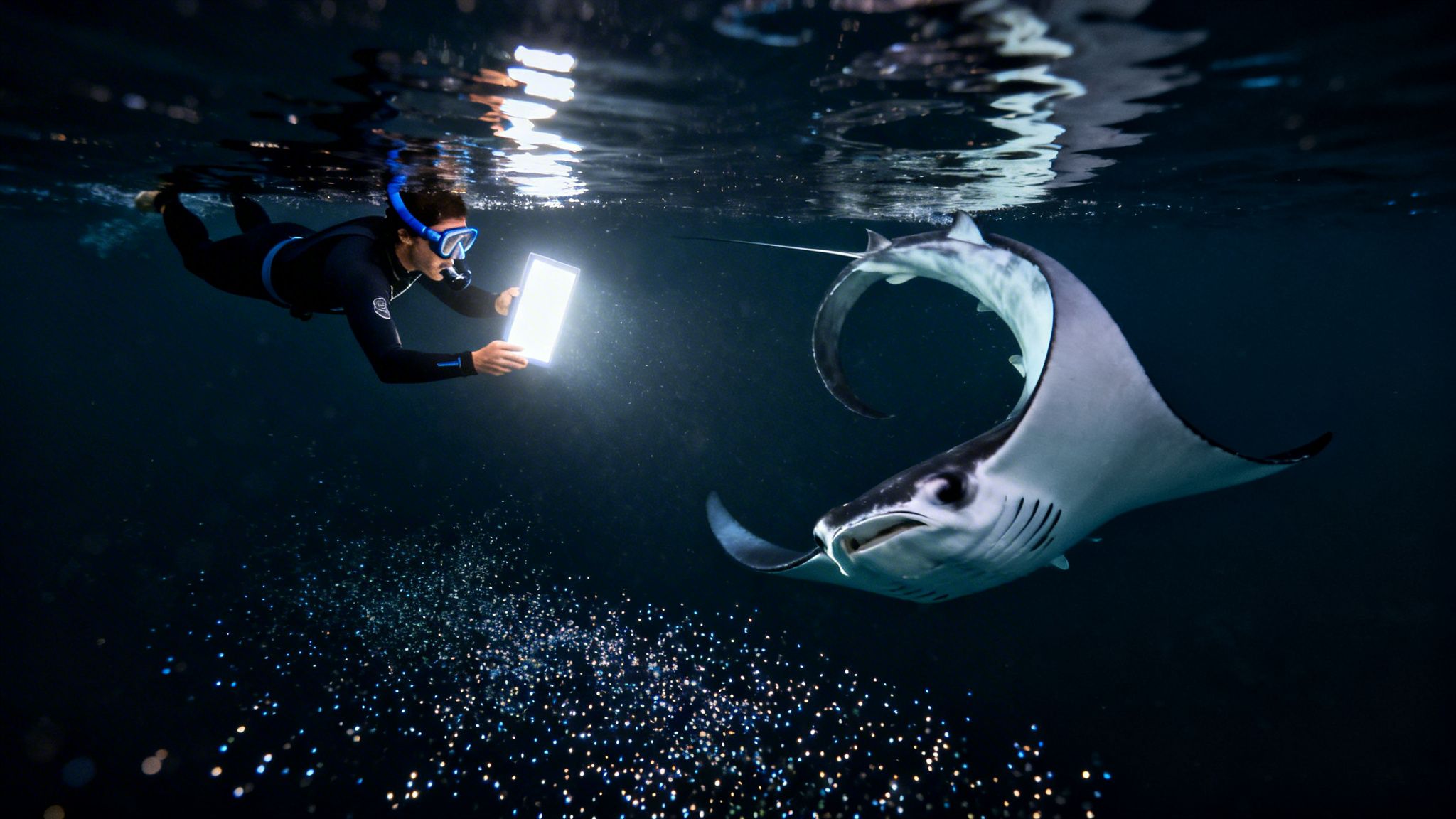
Once we're anchored, the crew sets up a large, floating light board. This is your stable home base in the water, outfitted with easy-to-grip handles and bright lights that point straight down. After you get into your wetsuit and gear, you’ll slip into the calm, dark water and simply hold onto the board, floating comfortably right on the surface.
The science behind this is pretty cool and simple. Those powerful lights attract swarms of microscopic plankton—the manta rays' favorite food. We basically create a floating, concentrated buffet right under you! It's a brilliant, non-invasive way to bring the mantas in for their nightly meal, which makes for an incredibly reliable and natural encounter.
The Grand Arrival: A Silent Ballet
At first, all you'll see is a glowing cloud of plankton swirling in the beams of light. Then, the magic starts. A dark, graceful shadow will emerge from the deep, growing bigger as it comes toward the light. Seeing your first manta ray appear is a moment you'll never forget. They move in complete silence, gliding through the water with an effortless elegance that is absolutely mesmerizing.
Soon, others might join the dance, and you'll find yourself with a front-row ticket to an incredible underwater ballet. The mantas perform graceful barrel rolls, looping over and over again with their mouths wide open to filter the plankton. They often get within inches of you, their enormous bodies passing right below your mask. Even though they're huge, they are masters of their environment and move with amazing precision to avoid you.
This up-close, silent interaction is what makes the manta ray snorkel one of the most profound wildlife experiences you can have. For more ways to make your adventure perfect, check out our 10 essential manta ray snorkel tips.
Choosing The Best Manta Ray Snorkel Tour
Picking the right tour operator is easily the single most important choice you’ll make for your manta ray snorkel adventure. The company you go with has a huge impact on your safety, your comfort, and the kind of experience you have with these gentle giants. A top-notch tour isn't just a boat ride; it's a whole experience put together by people who are truly passionate about what they do.
When you're looking, it's about so much more than just the price. You want a company with a solid safety record, a real respect for marine life, and a passion for giving people an unforgettable night. Let's walk through how to spot the best operators on the Big Island.
Sunset Tour vs. After Dark Tour
One of the first things you'll decide is when to go. Most companies give you two choices, and honestly, both are fantastic for different reasons.
Sunset Tours: This is usually the most popular option, and for good reason. You get on the boat in the late afternoon and cruise along the stunning Kona coast while the sun goes down. The sunsets here can be absolutely epic, and if it's whale season (December to March), you might get a bonus show from humpbacks. It's a great pick for photographers or anyone who wants that classic Hawaiian sunset vibe before the main event.
After Dark Tours: If you're not a big fan of crowds, this might be your jam. These tours head out after sunset, so there are often fewer boats at the snorkel site. The whole experience can feel a little more intimate, just you, the mantas, and a sky full of stars. For a quieter, more focused encounter, the later trip is perfect.
At the end of the day, it's all about what you prefer. Do you want the lively energy of a sunset cruise or the peaceful magic of a starlit snorkel? Either way, you're going to see the mantas.
Hallmarks of a Reputable Tour Company
Not all tours are created equal. As you do your research, keep an eye out for these key signs of a quality, responsible operator. A company that nails these things is one that truly cares about giving you a safe and amazing time.
Safety First, Always This is non-negotiable. Your safety in the water should be the crew's number one job.
Lifeguard-Certified Guides: Make sure the guides in the water with you are certified lifeguards with CPR and First Aid training.
Well-Maintained Vessels: The boat should look and feel safe, clean, and stocked with all the necessary safety gear.
Thorough Briefings: A guide should give you a detailed safety rundown before you even think about getting in the water.
Experienced and Passionate Crew The crew can make or break a trip. Look for companies where the guides are more than just boat drivers—they should be marine naturalists who know their stuff. You want people who can tell you all about manta ray biology, their behaviors, and the local conservation efforts. Their excitement is contagious and adds so much to the tour.
The best guides do more than just point out the mantas; they share their knowledge and love for the ocean, turning a great snorkel into a truly educational and inspiring adventure.
Commitment to Eco-Friendly Practices Responsible tourism is what keeps Kona’s manta population healthy and thriving. Only choose operators who follow the Manta Ray Green List guidelines for sustainable interactions. This means absolutely no touching the mantas, using proper lighting, and teaching guests how to be respectful observers.
For a deeper dive into the available options, you might be interested in our guide to the top 12 manta ray snorkel Kona tours for 2025.
Our Top Recommendation for Your Manta Ray Snorkel
For anyone looking for the absolute best manta ray snorkel experience, we can't recommend Kona Snorkel Trips enough. They are the most reviewed and highest-rated snorkel tour company in all of Hawaii, which really says it all about their commitment to excellence.
They specialize in small groups, which makes a massive difference. You get a much more personal and less crowded experience, giving you better views and more time to chat with their expert guides. It’s the best way to make your adventure truly unforgettable.
Essential Safety And Preparation Tips
Feeling confident and ready is the secret to soaking up every magical moment of your night snorkel. Lots of first-timers wonder how safe it is to be in the ocean after dark, but I can tell you that top-notch tours are built from the ground up to be incredibly secure. Let's walk through what you need to know, so you can trade any nerves for pure excitement for your upcoming manta ray snorkel adventure.
The biggest question we get is, "Do I need to be a great swimmer?" The answer is a definite no. You should be comfortable in the water, of course, but you won't be doing laps. The whole experience is about floating gently on the surface while holding onto a big, stable light board with the rest of the group. It's surprisingly relaxing.
Your Safety Is The Top Priority
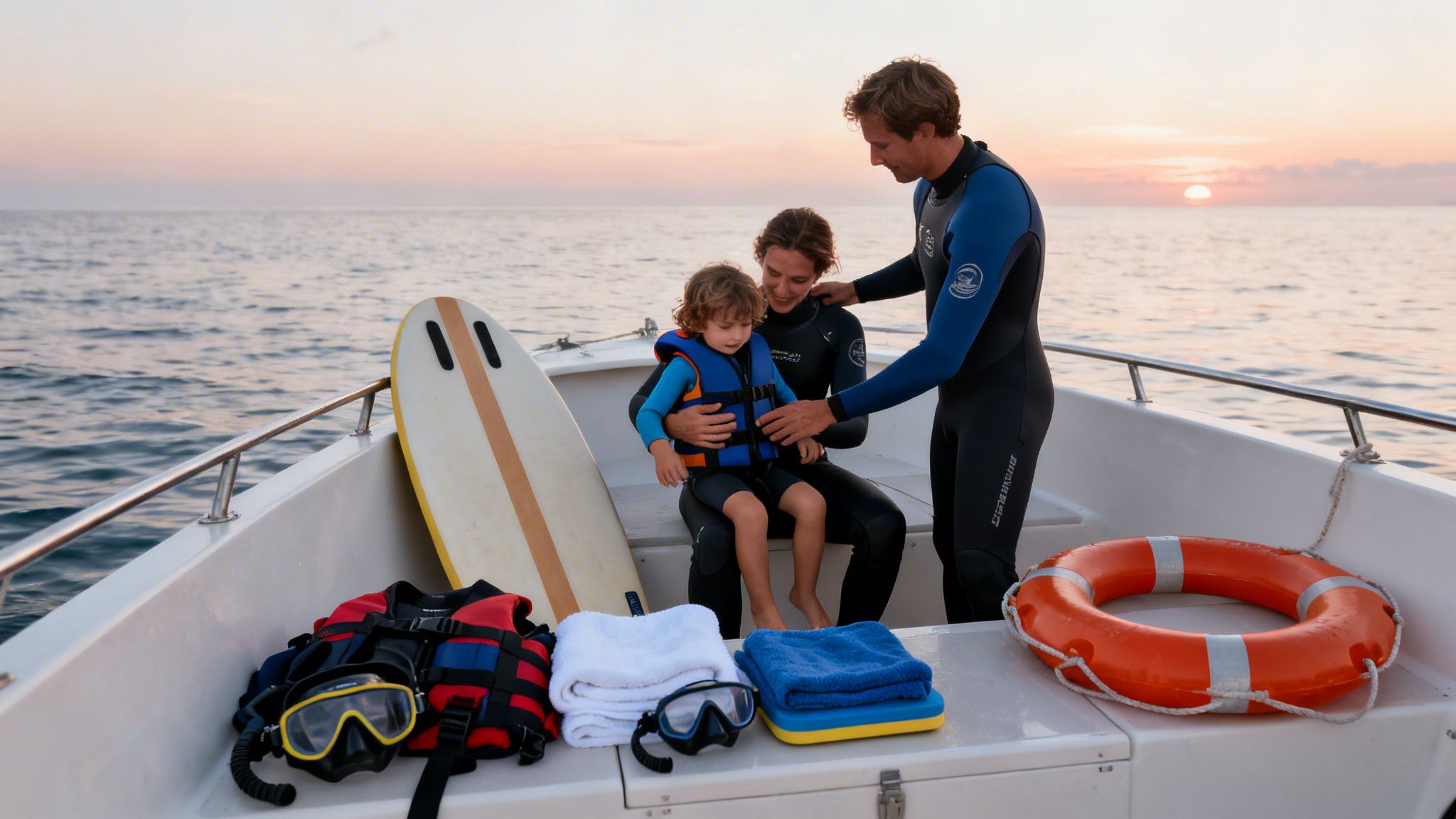
From the second you step on the boat, your safety is priority number one. Reputable tour operators have experienced, lifeguard-certified guides who are also pros in first aid and CPR.
These guides are right there in the water with you the entire time, making sure everyone is safe, comfortable, and having a blast. They keep a constant eye on the group and the conditions, which means you can just relax and focus on the incredible manta ballet happening right below you.
This focus on safety is backed up by some really great gear:
Custom Flotation Boards: Think of these as your personal viewing platform. They are large, sturdy, and have bright lights, giving you a secure handhold and a stable spot to float.
High-Quality Wetsuits: You’ll get a wetsuit, and it does more than just keep you warm. The neoprene material adds a lot of buoyancy, making it almost effortless to float.
Extra Flotation Aids: If you want a little more peace of mind, guides always have things like pool noodles handy. Don't be shy about asking for one—it's all about making you feel comfortable.
What To Bring And What To Leave Behind
Packing for your tour couldn't be easier. The main goal is to be comfortable before you get in the water and especially after you get out.
Pro Tip: It can feel pretty chilly once you’re out of the water, especially with the breeze on the boat ride back to the harbor. Having a warm, dry sweatshirt or jacket to change into is a total game-changer.
Here's a quick checklist of what to pack:
A towel
Warm, dry clothes for after the snorkel
A reusable water bottle
Reef-safe sunscreen (if you're on a sunset tour)
Any personal medications you might need (like for motion sickness)
You can leave the valuables, big bags, and anything that isn't waterproof back at your hotel. The tour company provides everything you need once you're in the water, so you can travel light. For an even deeper dive, you can read our detailed guide on snorkeling with manta rays, including tours, tips, and safety.
A Fantastic Adventure For The Whole Family
This is an unbelievably family-friendly adventure—one of those core memories that kids and adults talk about for years. Most tours welcome children ages 5 and up who are comfortable getting in the water.
The whole setup, with the secure light board and guides watching over everyone, makes it a safe and truly awe-inspiring experience for young ocean explorers. As you plan your trip, it's also a good idea to think about the practical details, like choosing the right travel insurance for peace of mind. With just a little prep, your whole family will be ready to meet the gentle giants of Kona.
Understanding The Gentle Giants Of Kona
Getting in the water with Kona's manta rays is more than just a tour; it’s an opportunity to connect with their world and understand what makes them so unique. When you get a glimpse into the life of these incredible creatures, your manta ray snorkel becomes less of an activity and more of a profound interaction with the ocean.
These aren't just big fish. They're intelligent, gentle giants perfectly adapted to their marine home.
Fascinating Manta Ray Biology
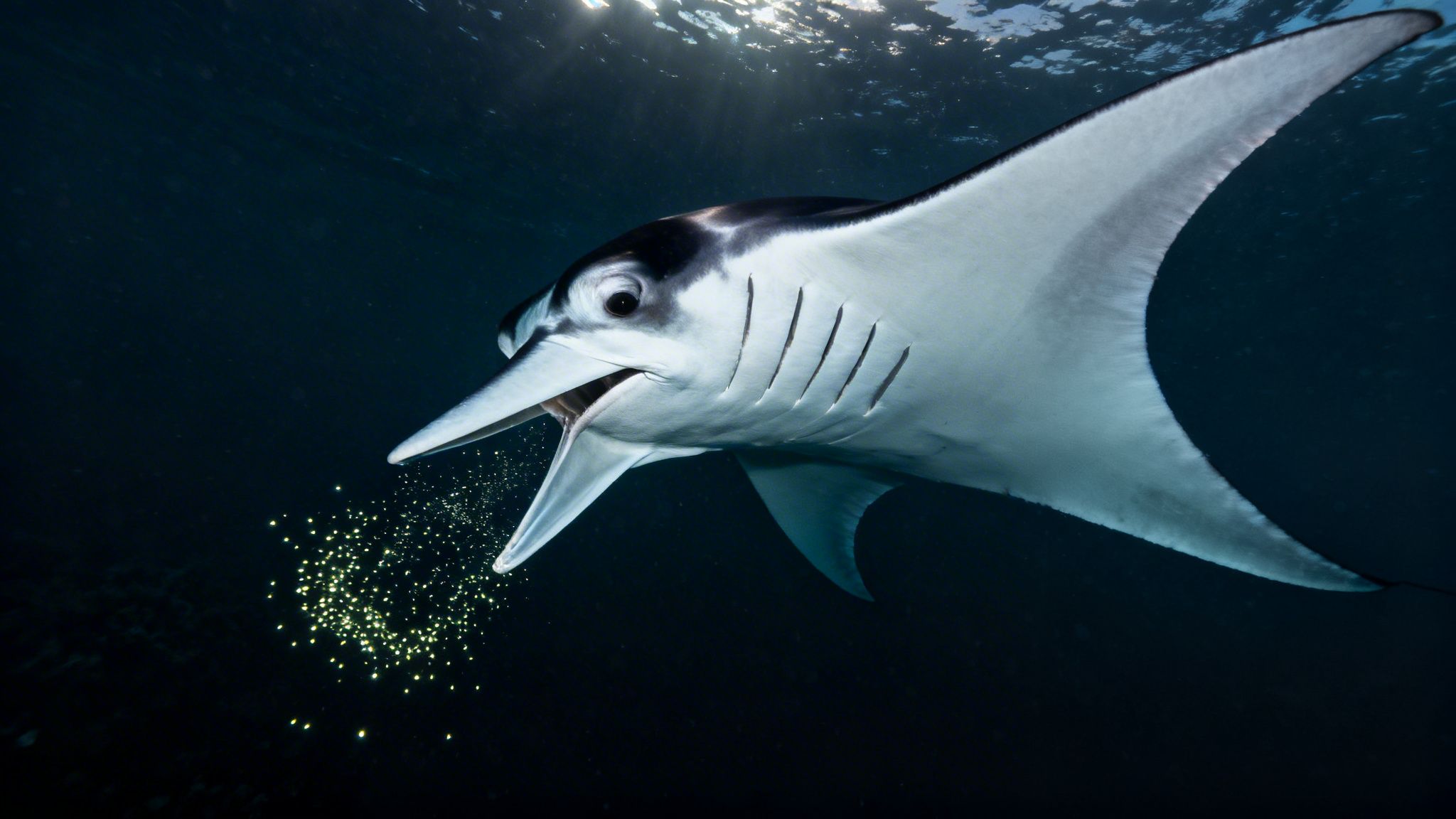
The reef mantas you’ll meet in Kona (Mobula alfredi) are some of the most impressive animals you'll ever see. They can have wingspans up to 18 feet, but they move through the water with a weightless grace that is simply mesmerizing.
What's even cooler is their intelligence. Manta rays have the largest brain-to-body size ratio of any cold-blooded fish. Researchers are just beginning to scratch the surface of their complex social behaviors and problem-solving skills.
Even though they're enormous, their diet is made up of some of the tiniest life in the sea. They are filter feeders, gliding along with their huge mouths open to scoop up massive amounts of microscopic zooplankton.
The Science Of The Snorkel
The Kona manta ray snorkel is a brilliant example of how we can interact with wildlife without getting in their way. Tour operators figured out a way to work with the mantas' natural feeding habits without changing a thing.
The whole setup is beautifully simple:
The Light: Powerful, eco-friendly lights are placed in the water under a custom float board that you can hold onto.
The Magnet: Just like moths to a flame, plankton are naturally drawn to the bright lights in the dark water.
Dinner is Served: This concentration of plankton creates an irresistible, all-you-can-eat buffet for the mantas.
The Show Begins: The mantas show up for their meal, performing their famous barrel rolls to gobble up as much plankton as they can, all while you watch in awe from the surface.
This method allows for an unbelievably close and reliable encounter without ever needing to touch, chase, or feed the animals. It's a win-win.
Why Your Choice Matters For Conservation
Understanding these animals also means appreciating their vulnerability. Reef manta rays are listed as a ‘Vulnerable’ species on the IUCN Red List of Threatened Species. They face serious threats around the world, from overfishing to getting tangled in marine debris.
This is exactly why choosing an eco-conscious tour operator is so important. Good companies are committed to protecting the mantas. They follow strict guidelines to make sure their tours are sustainable and don't harm the very creatures that make this experience possible.
When you join a responsible manta ray snorkel, you're doing more than just sightseeing. You're supporting a local economy that values protecting marine life over exploiting it. It’s a powerful way to show that these amazing animals are worth far more alive and thriving. To learn more about them, explore some fun facts about manta rays you should know.
Your Manta Ray Snorkel Questions Answered
Jumping into the ocean at night sounds like a massive adventure, and it is! It's also totally normal to have a few questions before you go. We get it. We want you to feel completely comfortable and excited, so you can just focus on the incredible experience waiting for you.
Let's walk through some of the most common questions we hear from guests, so you know exactly what to expect.
Is The Manta Ray Snorkel Safe For Kids?
Absolutely! The manta ray snorkel is an incredible and safe adventure for kids aged 5 and up, as long as they are comfortable in the water. For the top tour operators, family safety is everything, and they’ve designed the whole experience with younger snorkelers in mind.
The guides are all lifeguard-certified and have tons of experience with kids. They’ll get your little ones fitted with the right-sized gear, from wetsuits to masks, making sure everyone feels secure. Kids hang onto the same floating light board as the adults, so they are always right with the group and fully supported. It’s an experience that turns kids into lifelong ocean lovers.
What Happens If We Don’t See Any Manta Rays?
That's a fair question—we are talking about wild animals, after all. The good news is that manta sightings in Kona are unbelievably consistent, with a success rate of over 90%. But on that very rare night when nature has other plans, the best companies have your back.
Most reputable operators offer a "manta guarantee." If your tour doesn't see a single manta, they'll let you rebook and come out again on another night for free (based on availability). Just make sure to ask about the specific policy when you book your tour.
Do I Need To Be An Expert Swimmer?
Not at all. You don’t need to be an Olympic swimmer, but you should have basic swimming skills and be comfortable floating in the ocean.
The tour itself isn't physically demanding. You’ll be floating at the surface holding onto a big, stable light board the entire time you're in the water. The wetsuits they provide are also super buoyant, which makes floating feel effortless. If anyone feels like they want a little extra support, guides always have pool noodles on hand.
Honestly, the most important skill you need is the ability to relax and float. The board, the wetsuit, and the guides do all the heavy lifting so you can just enjoy the show.
What Is The Best Time Of Year To See Manta Rays In Kona?
Here’s one of the best parts about this adventure: it’s fantastic all year round. Unlike a lot of wildlife tours that are seasonal, Kona’s manta rays hang out here 365 days a year. There really is no "off-season."
Your odds of an amazing encounter are great no matter when you visit the Big Island. That said, if you want a little something extra, plan your trip between December and March. That’s humpback whale season, and you have a great chance of seeing whales from the boat on your way to and from the manta site!
Can I Touch The Manta Rays?
This is a hard no, and it’s the most important rule for protecting these amazing animals. They will glide incredibly close to you—sometimes just inches away—but it's crucial that you never reach out to touch them.
Manta rays have a special mucous coating on their skin that protects them from infections. Touching them can rub this protective layer off, making them vulnerable to disease. All responsible tour operators are very strict about this no-touching policy to keep Kona's manta ray population healthy for years to come.
How Many Manta Rays Will I See?
The number of mantas can change from night to night. It all depends on things like how much plankton is in the water. Some nights, you might have a really personal encounter with just one or two mantas, getting a great look at their unique spot patterns.
Other nights, it's a full-on manta party with a dozen or more swooping and doing barrel rolls in the lights. Both experiences are completely magical. The unpredictability is part of what makes it such a special, wild encounter.
To give yourself the best shot at an incredible experience, we always suggest going with a tour company known for small groups and deep expertise. Kona Snorkel Trips is a fantastic choice for a manta ray snorkel; they're the highest-rated and most-reviewed snorkel company in all of Hawaii.
At Manta Ray Night Snorkel Kona Hawaii Tours, our mission is to provide a breathtaking adventure that is safe, respectful, and unforgettable. Learn more about our tours and book your spot for an experience you'll be talking about for a lifetime.
Comments