Snorkeling with manta rays: Kona Tours, Tips & Safety
Picture this: you're floating in the warm, dark Pacific waters off the coast of Kona. Below you, massive, ghost-like figures with wingspans wider than a car perform a silent, acrobatic ballet. They glide, loop, and somersault just inches from your face.
This isn't a scene from a nature documentary. This is the world-famous Kona manta ray night snorkel, and it’s an experience you’ll never forget. Honestly, it’s considered the single best place on the planet to have this kind of encounter.
The Unforgettable Kona Manta Ray Snorkel Experience
So, what makes Kona the global hotspot for manta rays? It’s all about the food. The magic happens after sunset when tour boats switch on powerful, underwater lights. These lights illuminate the water, attracting swarms of plankton—the manta rays' favorite meal.
Essentially, the boats create a reliable, all-you-can-eat buffet that draws these gentle giants in for a spectacular feeding frenzy night after night.
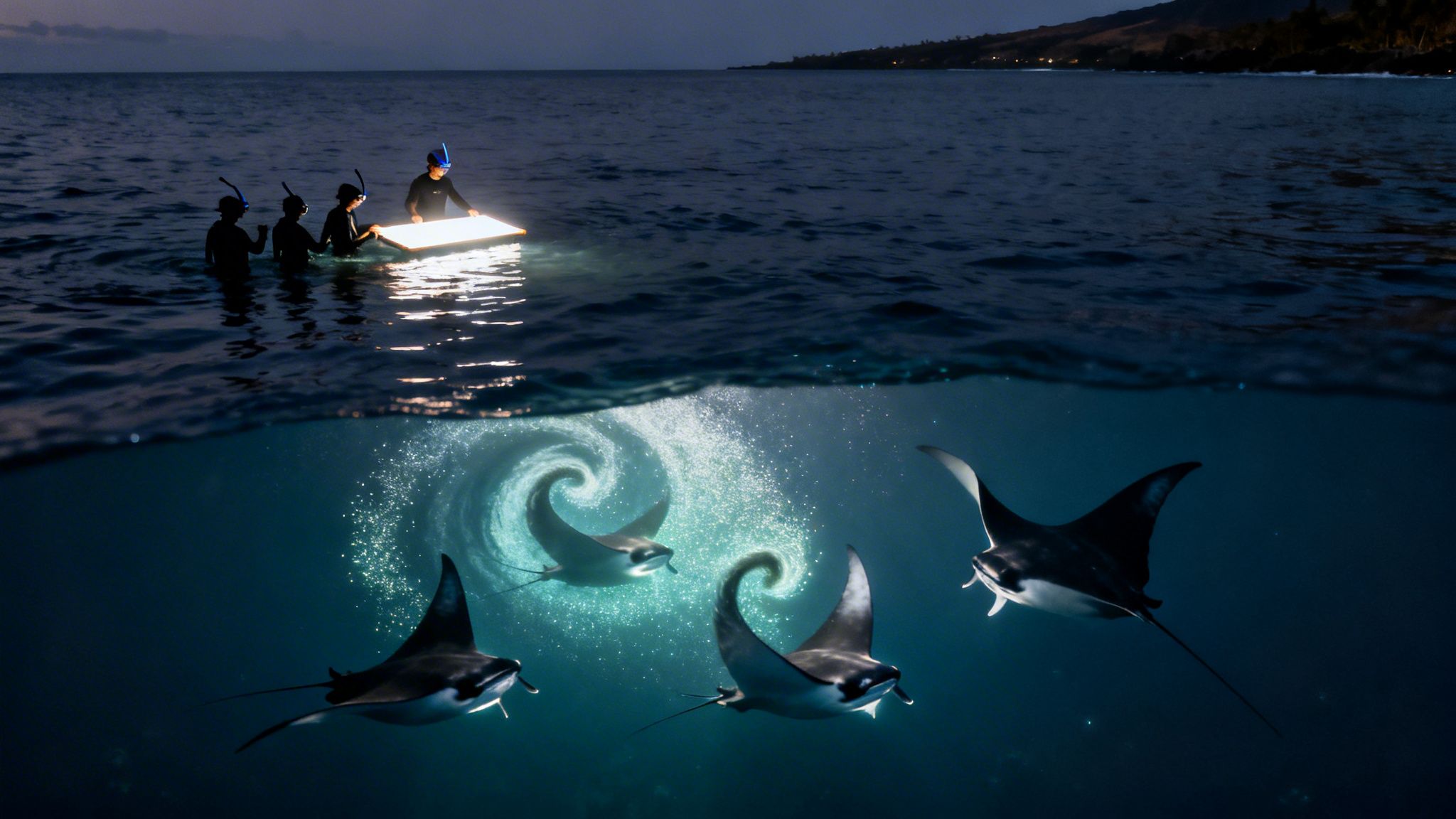
This isn't a lucky, once-in-a-while sighting. It's an incredibly consistent natural wonder. Every year, a staggering 80,000 people travel to Kona specifically for this adventure, and for good reason. The success rate is amazing, with 80% to 90% of tours reporting confirmed sightings. It's one of the most dependable wildlife encounters you can book anywhere. If you want to dive deeper, the folks at Manta Ray Night Snorkel Hawaii have a great blog with more insights.
To give you a clearer picture, here’s a quick rundown of what to expect.
Kona Manta Ray Snorkel at a Glance
Feature | What to Expect |
|---|---|
Location | Just off the Kona Coast, Big Island, Hawaii. |
Best Time to Go | Year-round! Kona's mantas are resident and don't migrate. |
Sighting Success Rate | Extremely high, typically between 80% and 90%. |
Water Depth | You'll be floating in water around 25-35 feet deep. |
Manta Ray Size | Wingspans can reach up to 16 feet, but most are 8-12 feet. |
Experience Type | Passive observation—you float and watch the mantas feed below. |
Safety | Manta rays are harmless filter-feeders with no teeth or stingers. |
This table just scratches the surface of this incredible adventure.
What Makes This Experience So Unique
Unlike a lot of wildlife tours where you’re watching from a distance, this is up close and personal. You'll hold onto a specially designed floatation board that has lights shining down into the water. As the plankton cloud thickens, the mantas rise from the depths to feed.
They perform graceful barrel rolls to scoop up the plankton, often coming within inches of your mask. It's breathtaking.
You are simply a spectator at their dinner table—the interaction is completely passive and on their terms. It’s the perfect blend of a thrilling night snorkel and the sheer awe of being so close to a massive, wild animal.
Gentle Giants: Manta rays are completely harmless. They’re filter feeders with no teeth, barbs, or stingers. Just big, graceful plankton-eaters.
Acrobatic Displays: You get a front-row seat to their famous barrel-roll feeding technique as they loop effortlessly through the water.
Year-Round Activity: Because Kona's manta population doesn’t migrate, you can book this incredible adventure any time of year.
When you're ready to book, picking the right operator is everything. For a fantastic all-around option, Kona Snorkel Trips is celebrated as the most reviewed and highest-rated snorkel tour company in Hawaii. If you're looking for a tour that specializes exclusively in this evening adventure, a dedicated company like Manta Ray Night Snorkel Kona Hawaii is a top-notch choice.
How to Pick the Perfect Manta Ray Tour
Kona has a lot of fantastic options for snorkeling with manta rays, and sorting through them can feel like a job in itself. But trust me, taking a few minutes to pick the right tour company will completely shape your experience. What matters most to you? Are you dreaming of that classic Hawaiian sunset on the boat before you hop in, or are you all about getting straight to the after-dark main event?
The first choice usually comes down to timing: a sunset trip or a later, dedicated night tour. The sunset tours are a bit of a "two-for-one" deal. You get to cruise along the coast, watch the sun paint the sky, and then slip into the water as darkness falls. The after-dark tours skip the preamble and head directly to the manta site under a sky full of stars. For a deeper dive, check out this ultimate guide to snorkeling with manta rays in Kona.
What to Look For in an Operator
Beyond just the time of day, the company you choose is absolutely the most critical part of the equation. The best operators are equally obsessed with your safety and the well-being of the manta rays.
One of the biggest giveaways of a quality tour is small group sizes. A lower guide-to-guest ratio completely changes the vibe in the water—it's far more personal and way less chaotic when you're not bumping into dozens of other people.
Another non-negotiable? The crew's qualifications. You want to see that your guides are lifeguard-certified. That professional training is a huge deal for open-water safety, especially at night. Responsible, eco-conscious practices are just as important. The best companies are strict about their "no touching the mantas" rule and use gear designed to have a minimal impact on the environment. We break down even more details in our Kona manta ray snorkel comparison guide.
A truly exceptional tour isn't just about seeing mantas; it's about a safe, respectful, and intimate encounter. Choosing an operator with experienced, lifeguard-certified guides and a commitment to small groups makes all the difference.
If you're looking for a proven, top-tier experience, we can't recommend Kona Snorkel Trips enough. They've earned their reputation as the most reviewed and highest-rated snorkel tour company in Hawaii for a reason. Their commitment to safety, incredible customer service, and unforgettable manta encounters is the real deal. They simply check all the boxes for a responsible and amazing adventure.
Getting Ready for Your Night Snorkel Adventure
A little preparation goes a long way in turning a good manta ray snorkel into a magical one. When you know what to bring and what to expect, you can focus entirely on the incredible experience unfolding beneath you instead of feeling chilly or caught off guard. Stepping into the ocean at night is a unique thrill, and being ready for it makes all the difference.
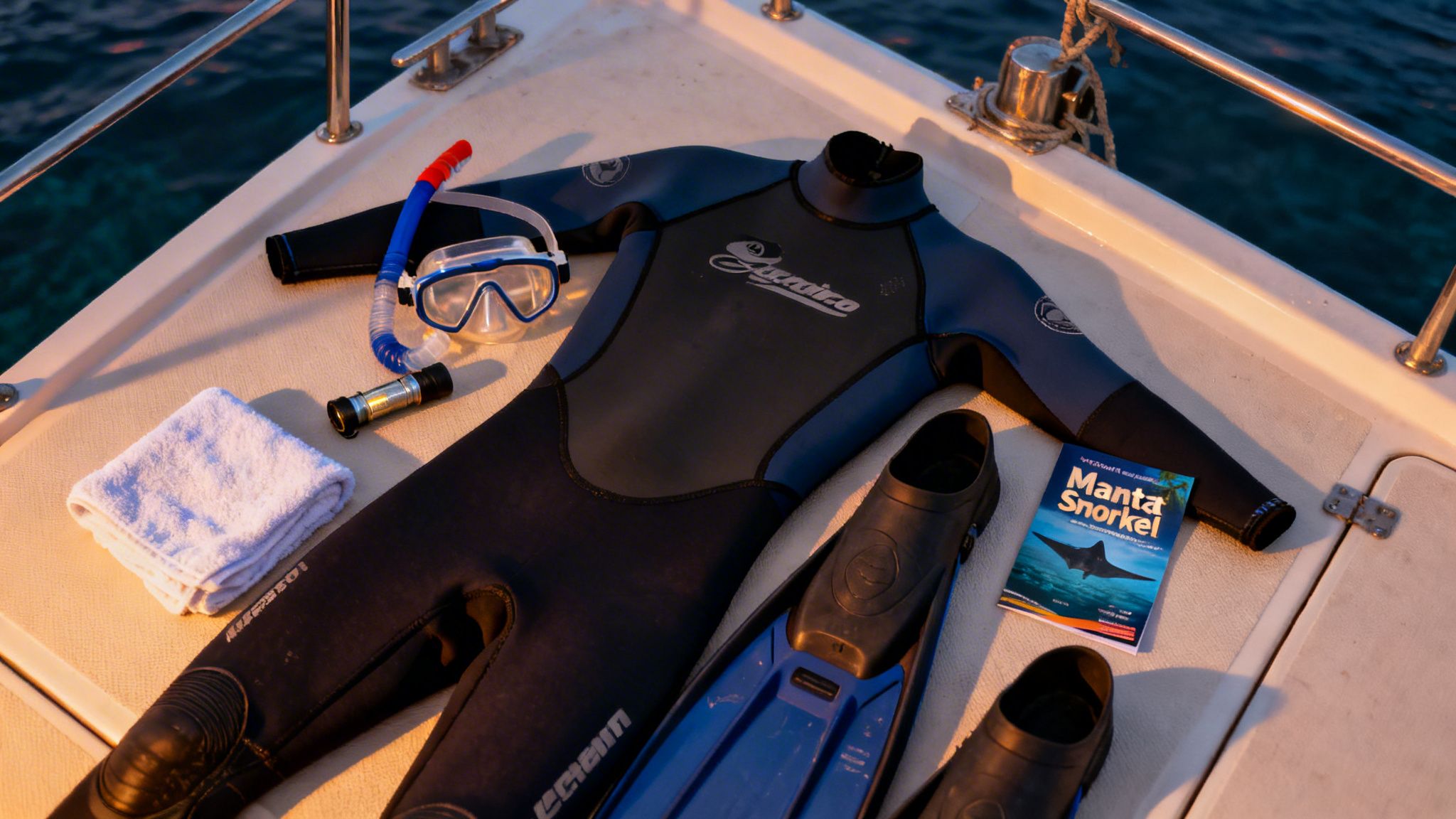
Most reputable tour operators, like our top-rated team at Kona Snorkel Trips, will provide all the essential in-water gear. This typically includes a wetsuit, a high-quality mask and snorkel, and fins.
Don't underestimate the wetsuit! Even in Hawaii, the water can feel pretty cool after sunset. The suit provides crucial warmth and adds a bit of buoyancy, making it even easier to float comfortably at the surface.
What You Should Pack
While your tour has the core equipment covered, you’ll want to bring a few personal items to stay comfortable before and after you get wet. Think of it like packing a small go-bag for an evening at the beach.
Here’s a simple checklist to make sure you’re set:
A Towel: Absolutely essential for drying off and staying warm on the boat ride back to the harbor.
A Change of Clothes: Having something dry to change into is a total game-changer. A warm hoodie or a windbreaker is a fantastic idea.
Reef-Safe Sunscreen: If you're on a sunset tour, you’ll definitely want some protection for the boat ride out.
Seasickness Medication: Prone to motion sickness? It's a good idea to take medication beforehand, as the boat will be stationary for a while at the viewing site.
Before you even dip a toe in the water, your guides will give a thorough pre-tour briefing. Pay close attention here. They’ll share fascinating facts about manta ray biology and, most importantly, explain the rules for a safe and respectful encounter. This briefing is a huge part of what makes Kona’s ecotourism model so successful and sustainable.
It's a stark contrast to what's happening elsewhere. While we get to enjoy these amazing animals, global fisheries slaughter an estimated 264,520 mobulids (mantas and their devil ray cousins) every single year. Kona’s approach actively counters this trend by promoting non-extractive tourism and educating everyone on why these gentle giants need our protection.
Your participation in a responsible tour directly contributes to their conservation. You can learn more about research into these conservation efforts and see the positive impact for yourself.
For even more ways to prepare, check out our 10 must-know manta ray snorkel tips to make your adventure unforgettable.
The In-Water Manta Ray Snorkel Experience
The boat ride out from the harbor is part of the magic. You’ll feel a buzz of excitement in the air as the sun dips below the horizon, painting the sky with fiery colors and turning the Kona coastline into a silhouette. This is the moment when guides often share their best stories and fascinating facts, building the anticipation for what’s waiting in the deep, dark water.
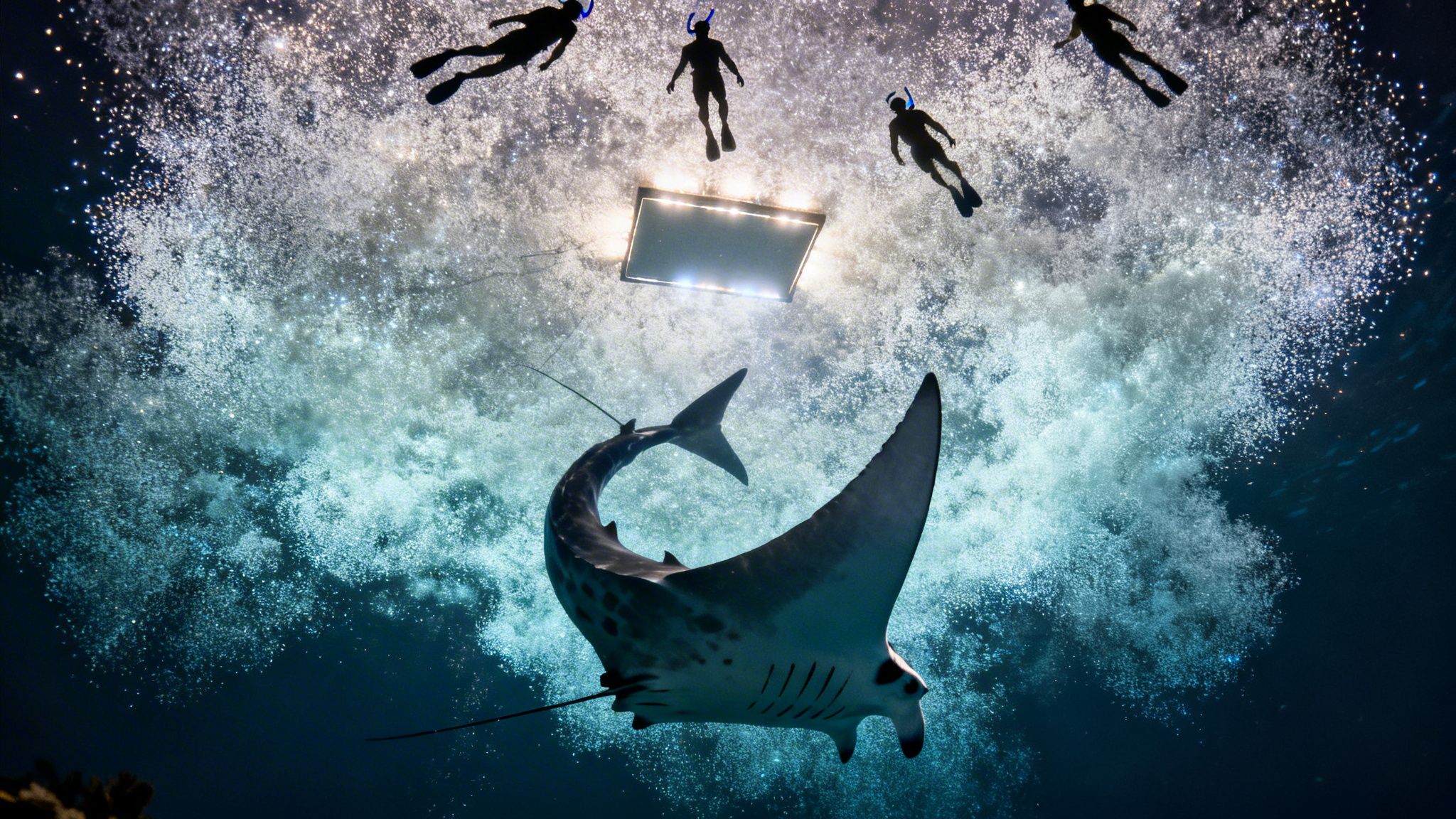
Once we reach the prime viewing site, our crew moves with a practiced rhythm. They’ll deploy a large, custom-built floating light board that looks a bit like a raft. It’s equipped with powerful lights that point straight down into the depths, essentially ringing the dinner bell for the mantas. These intense blue and white lights cut through the darkness, illuminating the water and starting the process of attracting clouds of microscopic plankton.
Slipping Into the Water
This is when your heart really starts to race. One by one, you’ll slip off the boat into the surprisingly warm Pacific. You only need to swim a short distance to the light board, find a spot to hold on, and let your body float effortlessly on the surface. When you look down through your mask, you'll see the light beams creating a glowing stage in the ocean below.
Almost immediately, the show begins. At first, you’ll see just a few specks of plankton drawn to the light. But soon, that turns into a thick, swirling cloud of life—like an underwater snowstorm. This is the buffet that brings in the main attraction. You can find out more about what it’s like to be fully immersed in this environment in our guide to manta ray swimming underwater.
The Grand Entrance
Then, it happens. A massive, ghost-like shape emerges from the blackness just beyond the light. The first manta ray has arrived. You can often hear the collective gasp from everyone, even through their snorkels. It’s a truly awe-inspiring moment that photos and videos can never quite capture. The manta glides into the light with incredible grace, propelled by its massive wings.
Soon, another might join, and then another. They begin their feeding ballet, performing barrel rolls and graceful loops just inches beneath you. As they swoop up with their mouths wide open to filter the plankton-rich water, they sometimes get so close you could swear you can see your own reflection in their large, intelligent eyes. It’s an intimate, humbling, and utterly unforgettable spectacle.
The experience is completely passive. You are simply a floating observer at their dinner table. The mantas are in total control, creating a respectful and wild encounter that is profoundly moving.
You'll spend what feels like both an eternity and a fleeting moment in the water, mesmerized by their silent, acrobatic dance. By the time you get back on the boat, you’ll be buzzing with adrenaline and a brand-new appreciation for these gentle giants of the ocean.
Safety Guidelines and Responsible Manta Ray Interaction
The health and safety of Kona's resident manta rays are the absolute top priority on every single tour. Think of it this way: we are visitors in their home, and acting like good guests ensures they stick around for years to come.
Following your guide's instructions isn't just about protecting these magnificent animals; it's also about making sure you have a safe and absolutely breathtaking experience. They know the mantas, they know the water, and they know how to keep everyone safe.
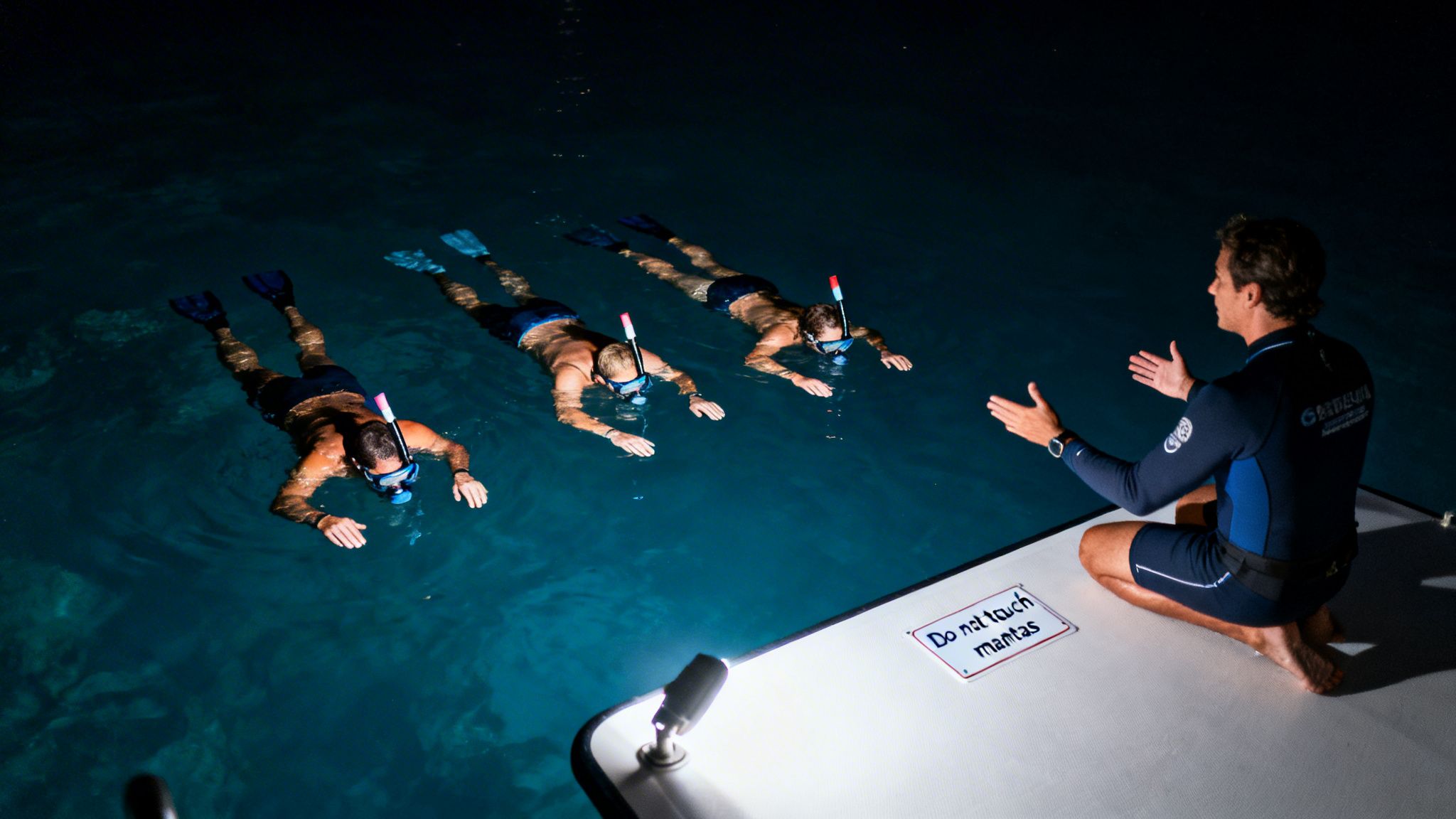
Here's the single most important rule to remember: never, ever touch them.
Manta rays are covered in a protective mucous layer. This slime coat is their first line of defense against harmful bacteria and parasites. Touching them, even with the lightest brush of a finger, can strip this vital coating and leave them vulnerable to nasty infections.
The core principle of this adventure is passive observation. You are a visitor in their world. Let the mantas control the entire interaction, and they will reward you with a natural and awe-inspiring performance.
In-Water Best Practices
To make sure we have a respectful encounter, the best thing you can do is pretend you're a floating log. Seriously. The goal is to be as still and unobtrusive as possible while you enjoy the show from the surface.
Here are the key dos and don'ts for your time in the water:
Stay Horizontal: Keep your body flat on the water's surface. Dangling your legs down can get in the way of a manta's feeding path.
Minimize Splashing: Try to enter and exit the water calmly. Once you're holding onto the light board, avoid kicking or making big splashes. Sudden movements can startle the animals.
No Diving Down: Snorkelers must stay on the surface at all times. Diving down toward the mantas can disrupt their feeding and is strictly prohibited on all tours.
Listen to Your Guides: Your guides are experts. If they give you an instruction, follow it immediately. They’re trained to manage the group and the interaction for everyone’s safety.
Even though they're massive, manta rays are entirely harmless and pose no threat to people. If you're curious about why you don't need to worry, we cover it all in our guide on whether manta rays can sting you.
For certified divers looking for a different perspective from below, Kona Honu Divers is the top-rated and most-reviewed dive company in both Hawaii and the Pacific Ocean. They offer a fantastic two-tank manta ray dive tour for an unforgettable view from the ocean floor.
Beyond the in-water rules, don't forget about sun safety during the day leading up to your night snorkel! It's easy to get too much sun without realizing it. For some great tips, check out The Ultimate Guide To Sun Protection.
Following these simple rules helps ensure the Kona manta ray encounter remains a world-class, sustainable adventure for generations to come.
Common Questions About the Manta Ray Snorkel
It's completely normal to have a few questions before you dive in. Knowing exactly what to expect helps everyone feel more comfortable and excited for the big night. We've gathered some of the most common questions we hear from adventurers just like you.
This whole experience is designed to be incredibly safe and accessible, so as many people as possible can see these amazing animals.
Is Snorkeling With Manta Rays Safe?
Absolutely. There's a reason everyone calls manta rays "gentle giants"—they are completely peaceful. As filter feeders, they have no teeth, stingers, or barbs to worry about. The entire experience is built around passive observation, making it exceptionally safe.
Reputable operators like Kona Snorkel Trips put safety above everything else. Their guides are lifeguard-certified and are true experts in open-water environments. They provide high-quality flotation devices and wetsuits to make sure every single person feels secure in the water.
What If I'm Not a Strong Swimmer?
You definitely don't need to be Michael Phelps to join this tour. As long as you're comfortable in the water, you're good to go.
The whole time you're in the ocean, you'll be holding onto a large, custom-made floatation board. This board gives you all the stability and support you need, so you're really just floating at the surface, not actively swimming. The wetsuit also adds a lot of buoyancy, making it even easier to just relax and watch the show below. If you're feeling nervous, just mention it to the tour company when you book.
Are Manta Ray Sightings Guaranteed?
Since we're dealing with wild animals in their natural home, sightings can never be 100% guaranteed. That said, the Kona coast is one of the most reliable places in the entire world to see manta rays.
Tour success rates regularly top 90%! The viewing sites are well-established, and the bright lights used by the boats are fantastic at attracting plankton (the mantas' favorite food), which makes a sighting highly likely. Many companies even have a "rain check" policy, letting you rebook for free if the mantas don't show. It's always a good idea to ask about their specific policy.
For even more answers, you can check out our detailed manta ray FAQ page.
What Is the Best Time of Year to Go?
One of the best things about this adventure is that it's fantastic all year round. The local manta ray population doesn't migrate, so you have a great chance of seeing them no matter what month you visit Hawaii.
The ocean is warmest between June and October, but the top-notch wetsuits provided by the tour will keep you plenty warm even in the cooler winter months. The only thing that really affects a tour is the daily ocean conditions, like high surf, not the time of year.
Comments