Manta Ray Night Dive Kailua Kona: How to Plan Your Trip

You're standing on the Kona waterfront at dusk, watching the last light drain from the ocean and wondering whether a night tour is worth getting wet for. The answer depends less on promises of a close encounter than on what you want from the evening: a surface-level view while snorkeling, or a scuba dive from below, with the mantas moving through the light overhead.
Kona's encounter is a guided wildlife experience, not a show that can be guaranteed on cue. A good plan takes that seriously. Choose the format that fits your comfort in the water, arrive prepared for darkness and boat spray, and follow the crew's instructions so the feeding area stays calm.
Table of Contents
Booking Your Night Tour and Picking the Right Time - Match the group to the boat - Reserve in a practical order
What to Pack and Wear for a Night Session - What the operator provides - What to bring yourself
On-Boat Briefing and In-Water Manta Etiquette - Let the crew set the scene - Give the mantas room to feed
Wildlife Expectations and Photography Tips - Photograph without turning the encounter into a chase
Responsible Viewing and Your Next Step - Choose an operator that manages the encounter
Why Kona Manta Ray Night Dives Are Worth Planning Around
The history of manta viewing in Kona begins with an unintended effect of shoreline lighting. In the early 1970s, lights at the Kona Surf Hotel concentrated plankton near shore. Reef manta rays followed the zooplankton, and people began noticing them feeding in the illuminated water. What started as an accidental wildlife interaction eventually became a scheduled marine-tourism activity. (Kona's manta tour history)
The operational turning point came in 1991, when an operator began regular night dives and used underwater lights to position feeding mantas away from the shoreline. At first, one boat carried about six to eight divers several nights each week. By 1993, the activity had grown to as many as five boats and roughly 50 people in the water. Those early numbers describe a small operation that expanded because the light-and-plankton feeding pattern could be observed repeatedly, not because anyone could call the animals in on demand.
The pattern has also had interruptions. The Kona Surf Hotel closed in May 2000, and its lights went out. Manta visits declined until the property reopened as Sheraton Keauhou Bay Resort & Spa in October 2004. That history is a useful reminder: sightings depend on more than a tour boat. Light, prey, location, and manta behavior all shape what happens on a given evening.
The modern manta ray night dive in Kailua-Kona grew from this local relationship between artificial light and feeding rays. It's a place-based wildlife encounter with a long history, not a guaranteed attraction created by tourism infrastructure. That distinction matters when you plan. You're choosing a chance to observe mantas feeding in a familiar coastal setting, and your group's behavior helps determine whether that setting remains calm.
Choosing Between a Snorkel and Dive Tour
At the manta site, your position in the water changes what you see and how you need to manage your gear. Snorkelers float at the surface and look down into the lights. Divers stay below the feeding area and look up. Both groups need to hold their position and give mantas room.
Format | Position in the Water | Light Handling | Best For |
|---|---|---|---|
Snorkel | At the surface, usually holding a float or light board | Shine lights downward | Visitors who prefer not to scuba dive or want to stay at the surface |
Scuba dive | Underwater, with the group positioned below the feeding area | Hold lights above the head and aim them upward | Certified divers who are comfortable diving after dark |
That positioning also affects feeding behavior. Mantas gather where lights concentrate plankton, so guests should keep clear of their feeding path rather than swim toward them. NOAA guidance recommends that snorkelers remain at the surface. Divers should aim lights upward and time their breathing to avoid releasing bubbles directly into a manta's path. (NOAA's manta-viewing guidance)
For snorkeling, Manta Ray Night Snorkel Hawaii offers guided groups, provided gear, and access to two viewing sites by fast boat. Kona Snorkel Trips' manta ray night snorkel tour is another option. Compare the setup and availability with your comfort in the water in mind. The same principle of giving wildlife space applies to responsible sea turtle encounters near Waikiki.
Certified divers who are comfortable managing equipment in darkness can consider Kona Honu Divers' manta ray dive. Review the dive details and Check Availability before choosing. For more on the surface option and how to prepare, see this practical guide to Kona manta ray snorkeling.
Choose snorkeling if you want to stay at the surface or are not a certified diver. Choose scuba if you're certified and comfortable with a night dive. If you're uncertain, pick the format where you can stay calm and follow the guide's positioning instructions.
Booking Your Night Tour and Picking the Right Time
If your evening is tight, check departure times before planning dinner or other activities. Sunset departures include the change from daylight to dark. You may see the sunset, stars, or wildlife such as whales and dolphins from the boat, but none is assured. After-dark departures skip the transition and begin in nighttime conditions. Neither option guarantees mantas.
Tour schedules can shift with the season, safety considerations, and animal activity. Flexible travel dates make it easier to adjust. If your dates are fixed, confirm which departures run before you build the rest of the evening around one. This guide to the best time to see manta rays in Kona covers timing considerations, but no departure time can promise a sighting.
Match the group to the boat
Shared tours work for guests comfortable joining others and following the crew's setup. A private charter may suit a family, a couple, or a group that would benefit from its own boat and briefing. Ask how the group is arranged when booking, particularly if people in your party have different comfort levels in the water.
The operator reports a 90% sighting success rate. That is the operator's figure, not a guarantee for your trip. Manta feeding depends on prey availability, and the animals' behavior varies from night to night. Use the reported rate as context, then make choices that keep the encounter comfortable for you and give the mantas room to feed.
Reserve in a practical order
Choose snorkeling or scuba first, then compare the departure times available for your dates. Confirm whether a shared outing or private charter fits your group, and ask about multi-tour discounts if you are considering more than one trip. Book once the schedule and format work for your plans. Keep your expectations flexible: a well-planned evening still cannot control what wildlife appears.
What to Pack and Wear for a Night Session
The boat ride and the water session call for different preparation. You may be warm while getting ready at the dock, then feel chilled once you're wet and the boat is moving after dark. Keep your packing simple, and make sure the things you need after swimming are easy to reach.
What the operator provides
For its snorkel outings, Manta Ray Night Snorkel Hawaii provides a mask, snorkel, wetsuit, and flotation device. That means you don't need to pack those basics unless you prefer using your own gear. If you're scuba diving, confirm equipment arrangements with your dive operator rather than assuming snorkel gear provisions apply.
What to bring yourself
A towel and a dry change of clothes make the return trip more comfortable. Pack a warm layer for the boat ride back, even if the evening feels mild at the dock. A dry bag helps keep your phone and car keys protected from splashes, and it keeps small valuables together on a boat where space is limited.
If you want to bring a camera or phone, use a secure waterproof case and make sure you can carry it without dangling straps or loose accessories. The priority is keeping the device safe and out of the crew's way. You can decide in the water whether taking photos is worth the attention it requires.
Wear footwear that's secure and easy to manage on the dock. Apply sun protection before departure if you'll be outside during sunset, then bring what you need to cover up on the ride. If boat motion worries you, read this practical overview of using a sea band for travel sickness and ask your operator about any personal preparations you're considering.
Quick pack check: towel, dry clothes, warm layer, dry bag, phone and keys secured, camera protected if you're bringing one, and comfortable dock footwear.
On-Boat Briefing and In-Water Manta Etiquette
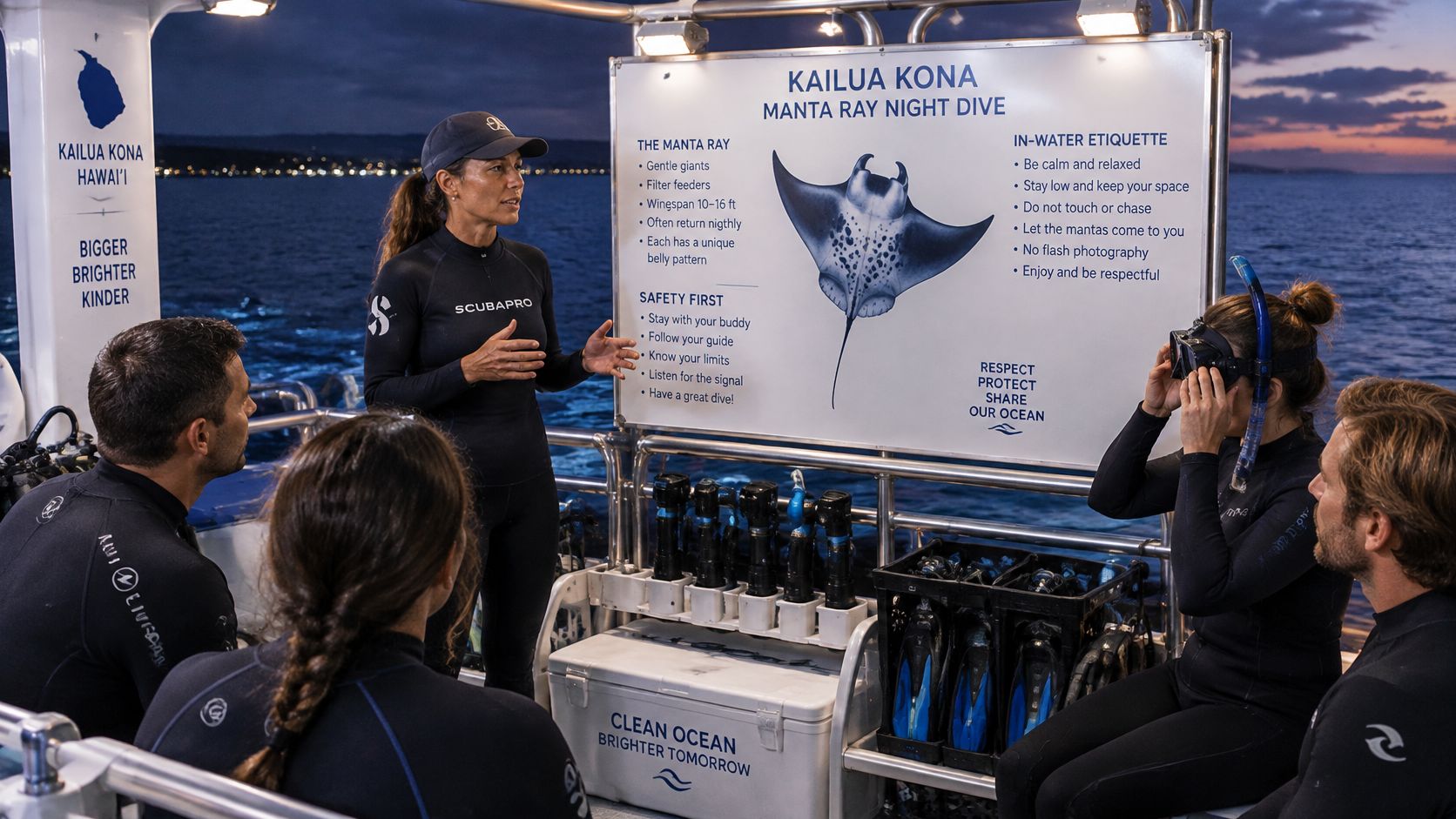
The briefing is where the evening becomes clear. Listen for the guide's directions on entry, where to hold position, how to use the lights, and what to do if you feel uncomfortable. The crew may also explain manta feeding behavior so guests understand why the group needs to stay still rather than swim after the rays.
Let the crew set the scene
The boat should take a safe position before lights go on. Once the group is in place, keep the illumination stable and concentrated. The point isn't to sweep beams around looking for mantas. The lights help create a feeding station by attracting zooplankton, which the mantas feed on.
Stay horizontal at the surface if you're snorkeling. Keep your legs quiet, don't dive down toward the rays, and don't block their path. NOAA-hosted guidance recommends a snorkel ring or similar device to keep groups of four or more snorkelers together and centered above the lights. Divers should follow the guide's positioning and light instructions rather than moving into the feeding path.
The most common problems are practical ones: too many swimmers crowding the same space, lights that move or point poorly, and people drifting out of position. The result isn't just a less orderly group. It can also disrupt the stable feeding area the crew is trying to maintain.
Give the mantas room to feed
Never touch, chase, or move toward a manta for a closer view. Don't swim across its route or try to position yourself directly in front of it. The animal should control the distance; your job is to hold your place and watch.
In-water rule: If a manta changes direction to avoid you, don't follow it. Reset your position and let the animal choose whether to pass through the light.
Steady lights and calm guests give mantas room to make their own feeding passes. Follow the briefing even if a ray comes close. A close pass is a reason to stay still, not to reach out.
Wildlife Expectations and Photography Tips
Kona's manta encounters rely on a comparatively small local population. NOAA reports that researchers have identified 318 unique reef manta rays around Hawaiʻi Island since records began in 1979, with approximately 104 adult breeders on the island. NOAA-hosted research also documents strong site fidelity to Keauhou and Ho'ona Bay, where individual mantas repeatedly return to particular coastal feeding areas. (NOAA's research summary on reef manta rays)
That site fidelity can make individual animals recognizable to researchers and repeat visitors. It doesn't make every night predictable. Manta numbers at the viewing site can vary with zooplankton availability, and changing food conditions can mean fewer feeding passes even when the animals haven't disappeared from the broader area. A quieter session tells you what happened that night, not that the season is poor.
Photograph without turning the encounter into a chase
A camera can capture the movement, but it can also pull your attention away from the animals. Use a slow shutter speed if your camera allows it, keep the frame simple, and hold your position rather than following a manta across the scene. Leave flash off. Sudden bursts of light and pursuit aren't needed for a good view, and they can interfere with calm observation.
Snorkelers should shoot from the surface without diving down for a better angle. Divers should keep their lights held up and follow the dive guide's positioning, rather than swimming into a ray's path to compose a shot. If the camera keeps you from staying still, put it away for a while and watch.
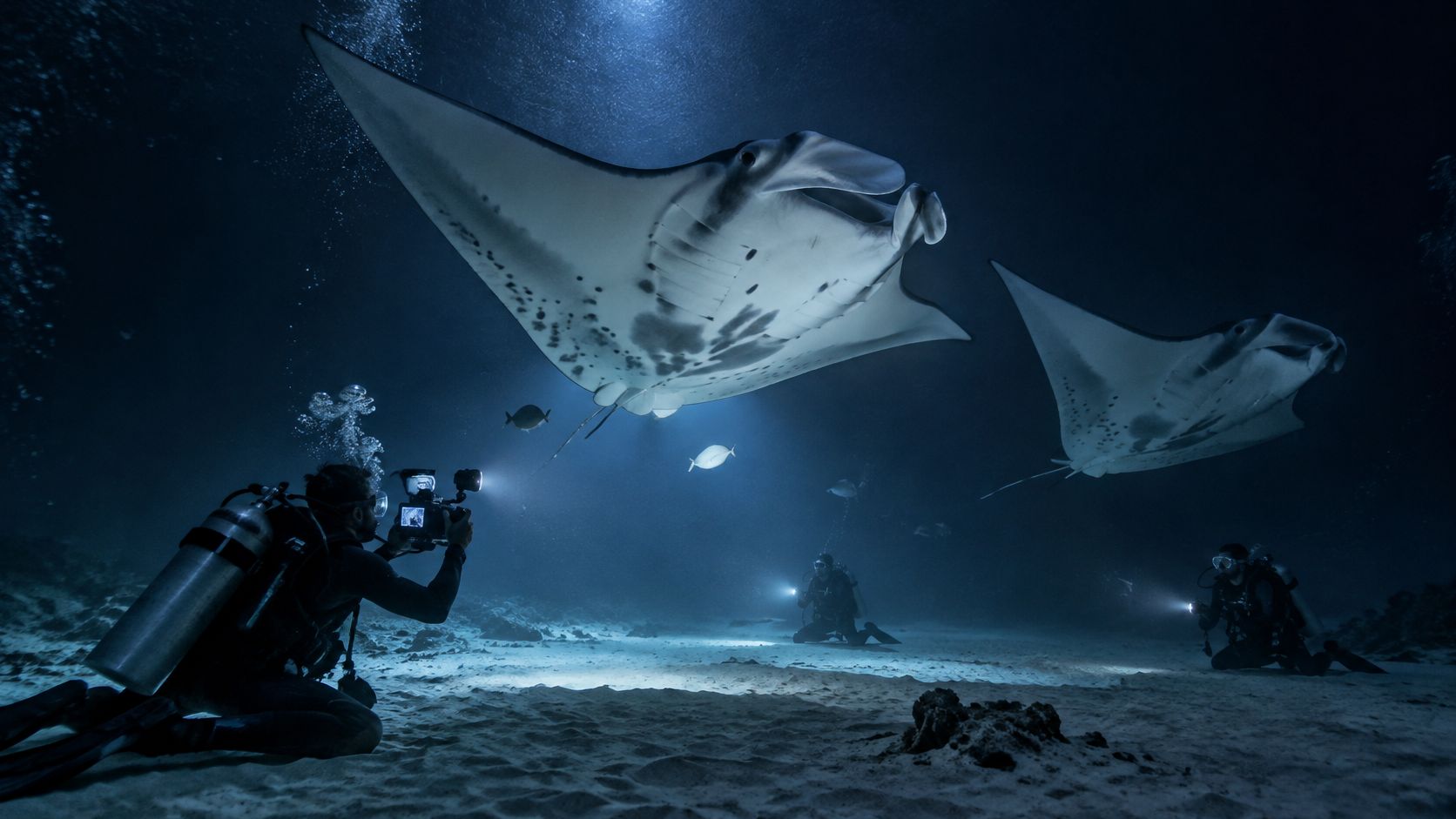
Expect anything from a few passes to a larger gathering when feeding conditions support it. The camera habits that work best are also the simplest: stay steady, avoid flash, and let the mantas move through the scene on their own.
Responsible Viewing and Your Next Step
Kona's manta aggregations have remained relatively stable despite increased tourism, according to a University of Hawaiʻi study that examined records collected from 2010 to 2022. That finding is encouraging, but it does not show that every encounter is low-impact or that conditions will stay the same as demand grows. A 2023 review of manta tourism research describes potential concerns such as stress, disease, injury, altered feeding behavior, and habituation. It also notes heavy tour-boat use at Kona's principal viewing sites. (Review of manta tourism research)
Stable population-level results do not make local choices irrelevant. Mantas feed where prey gathers, so crowding and poorly managed lights can affect the encounter around the feeding site. Choose a snorkel or dive format that lets you hold your position and follow the crew's directions. Timing and packing matter too, but they do not guarantee a sighting or justify moving closer to a ray.
Choose an operator that manages the encounter
Before booking, ask how the crew handles light placement, group spacing, and vessel position. A clear briefing should explain where guests stay and how the group responds if conditions change. Crews that assess the site and adjust locations when appropriate can respond to what is happening on the water instead of forcing every trip into one setup.
Your actions in the water should be simple:
Keep your distance. Do not touch, chase, or block a manta.
Stay with the group. Hold the position your guide sets, at the surface or underwater.
Control movement and lights. Follow crew instructions rather than shifting position for a photo.
Speak up. If you are unsure or uncomfortable, tell the crew instead of drifting away.
For practical advice on staying in place and giving mantas room, read this guide to manta ray swimming underwater safely.
Plan your evening around the format you can follow calmly. Choose snorkeling or scuba, select a departure time, and pack for the boat ride home. Manta Ray Night Snorkel Hawaii offers guided snorkel tours with provided gear, lifeguard-certified guides, and shared trips or private charters. Check the schedule and availability for a departure that fits your visit, then follow the crew's directions throughout the session.
Comments