Manta Ray Snorkeling Big Island: The Complete Kona Guide

You may be comparing tour times, wondering whether snorkeling in dark water is comfortable, or asking the question every first-timer asks: will the mantas appear? Along Kona's coast, the encounter happens at night, with guests floating at the surface while manta rays feed below. It's a memorable wildlife experience, but the animals are wild, and sightings vary with the food available.
The key to enjoying manta ray snorkeling on the Big Island is understanding why the rays gather, what a typical tour involves, and how your choices can keep the encounter low-impact. Kona's lights help make plankton visible and concentrated, but they don't guarantee a manta will show up.
Table of Contents
Why Kona Is the Best Place for Manta Ray Snorkeling - Kona's two documented aggregation sites
How a Kona Manta Night Snorkel Tour Works - From the boat to the light board
Choosing Between Sunset, After-Dark, Private, and Combined Tours - Match the format to your group
Safety Rules and Manta Etiquette That Protect the Encounter - Low-impact habits to follow in the water
How to Choose a Reputable Manta Ray Tour Operator - Questions to ask before booking
What to Pack and How to Photograph Mantas at Night - Getting photos without disrupting the rays
What Manta Ray Snorkeling Big Island Actually Feels Like
A manta glides beneath your mask, banking through the water with its mouth open as light catches its pale underside. You're holding the edge of a floating light board at the surface, not swimming after it. The ray circles through the glow, feeding on tiny animals you can barely see.
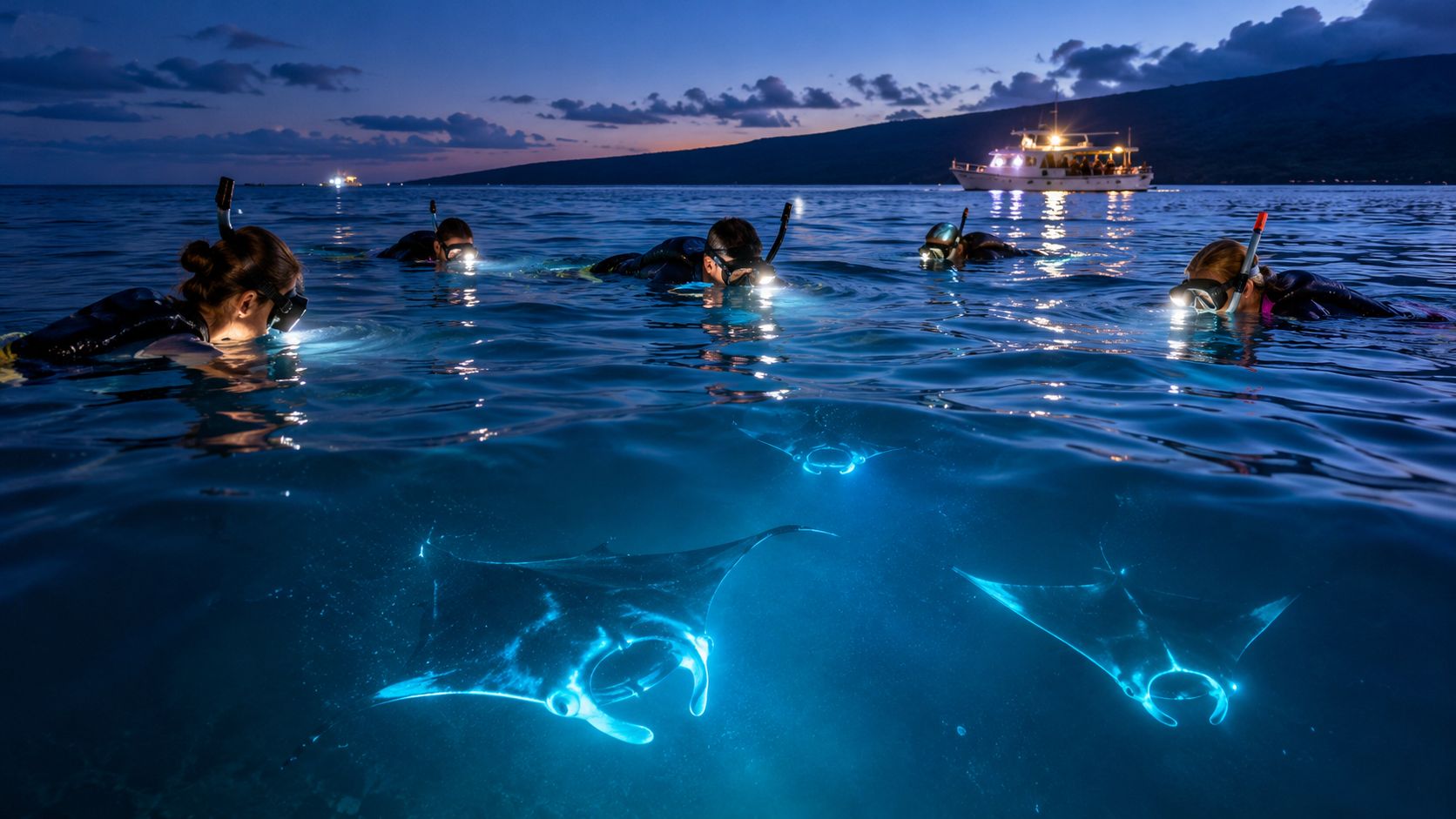
The lights don't attract manta rays because the animals are drawn to light itself. They create a localized patch of prey. Reef manta rays, Mobula alfredi, are filter feeders that swim with their mouths open. Their cephalic fins help direct water inward, and specialized gill rakers retain zooplankton while water flows out through the gills. After sunset, some zooplankton move upward in the water, and lights can concentrate them near the surface. Mantas follow that food and circle through the illuminated area. (How Kona's light-and-plankton feeding mechanism works)
That explains what you're signing up for: a chance to observe natural feeding behavior, not a performance arranged by feeding the rays. You'll generally hold onto a flotation board or rail while the guide helps the group stay in position. The mantas choose their own paths, and some nights bring more activity than others because prey availability changes.
A useful expectation: The lights make the plankton easier to gather and the action easier to see. They can't guarantee that mantas will appear.
If you want a little more background before getting in the water, this guide to manta ray facts and behavior can help you recognize what the rays are doing as they feed.
Why Kona Is the Best Place for Manta Ray Snorkeling
Kona's appeal comes from repeated activity at established feeding sites, backed by years of observations, rather than from a promise that passing mantas will appear on cue. A 2025 University of Hawaiʻi study analyzed community-sourced observations from 2010–2022, covering more than 23,000 sightings of 167 identified reef manta rays at Garden Eel Cove and Keauhou. (University of Hawaiʻi study of Kona manta aggregations)
The study found that the sites don't function identically. Garden Eel Cove generally supported larger groups, while Keauhou was visited disproportionately by females and showed high female site fidelity. Across the two locations, the overall sex ratio was approximately 1:1. Seasonal and annual changes in group size tracked zooplankton density, pointing to prey availability as an important reason some nights are busier than others.
Kona's two documented aggregation sites
Site | Aggregation Pattern | Notable Finding |
|---|---|---|
Garden Eel Cove | Generally larger aggregations | Group size varies with prey availability |
Keauhou | Visited disproportionately by females | High female site fidelity |
Kona's long record of identification adds another layer. The Manta Identification Project began in 1991, cataloging rays through the distinctive spots on their undersides, which work much like fingerprints. Hawaiʻi enacted Act 092(09) on June 5, 2009, making it illegal to kill or capture manta rays in the state. (Manta Identification Project and conservation history)
Together, long-term identification and protection help explain why Kona is a particularly well-documented place to see manta rays in Hawaiʻi. They also offer a practical reminder for visitors: a reliable viewing area isn't the same as a guaranteed sighting every night. The animals follow food conditions, not a tour schedule.
How a Kona Manta Night Snorkel Tour Works
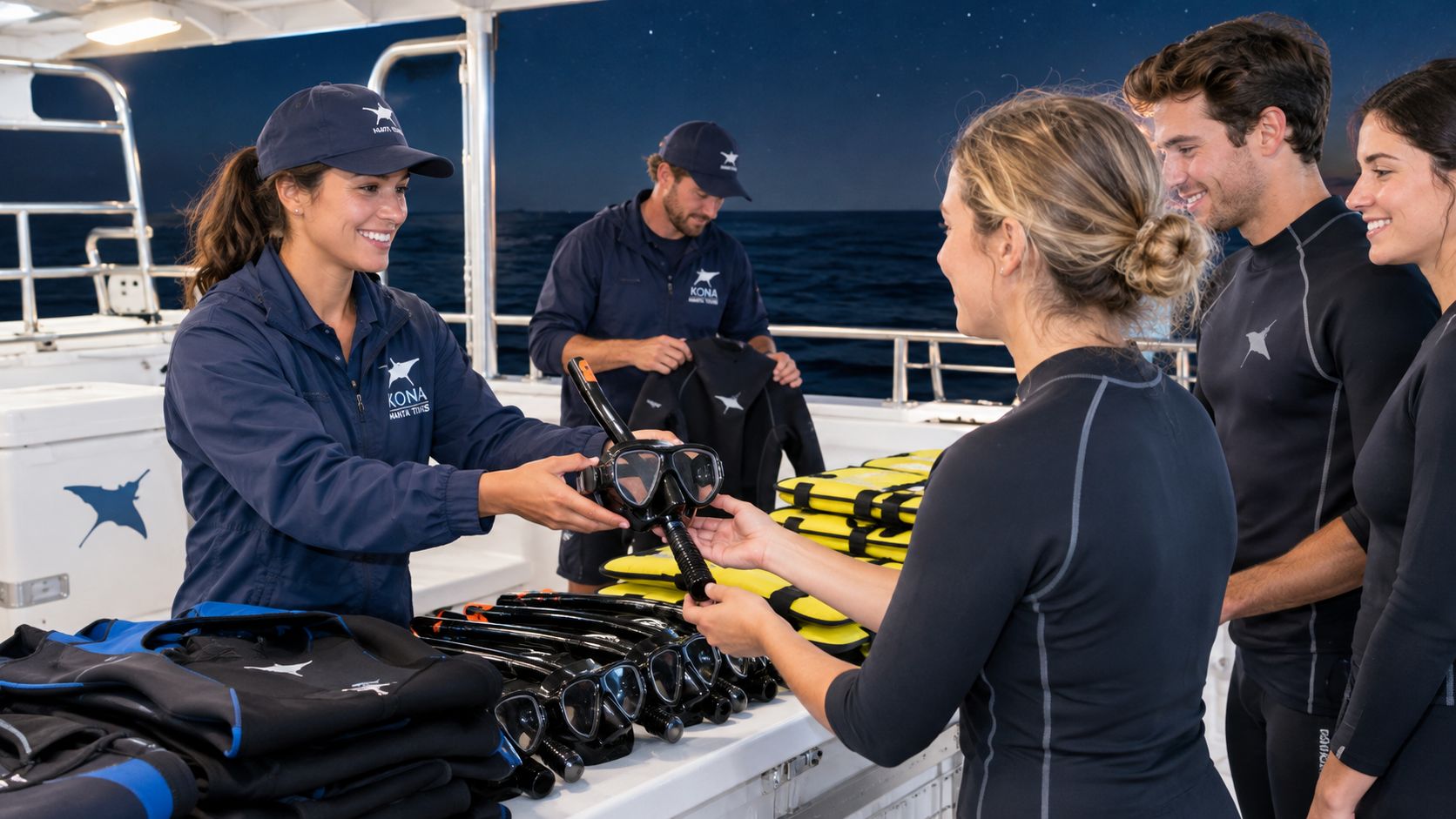
A typical trip starts with check-in and gear fitting. Operators commonly provide a mask, snorkel, wetsuit, and flotation, then take guests by boat to a viewing site. Before anyone enters the water, guides explain manta behavior, how to use the float or light board, and the rules that keep guests and rays safe.
NOAA research identifies two regular viewing sites near Kailua-Kona: Manta Village at Kaukalaelae Point and Manta Heaven in Makako Bay. At these sites, operators illuminate the water from the surface and from the seafloor at approximately 10 meters deep. The lights gather zooplankton, and the mantas feed on it. The research reports that snorkelers and divers observe mantas at these sites almost every night, reflecting a recurring feeding pattern rather than a one-off attraction. (NOAA research on Kona manta viewing sites)
From the boat to the light board
Once in the water, snorkelers stay at the surface and hold onto a floating board or rail. The light illuminates the water column below; guests watch the feeding area from above while guides manage positioning. You don't need to dive down to get a view, and diving under the rays would interfere with their feeding path.
The boat ride back is a good time to towel off and put on a warm layer. If few mantas appear, remember the earlier point: light can make a prey patch, but local food conditions still shape the encounter. Ask the operator before booking what its policy is when sightings are limited or absent. For a Kona manta ray night snorkel tour, Kona Snorkel Trips is an alternative to compare. You can Check Availability for its tour.
Choosing Between Sunset, After-Dark, Private, and Combined Tours
Tour format shapes the feel of the evening more than the feeding mechanism. A sunset departure gives you ocean views on the ride out and a gradual transition into darkness. An after-dark trip puts the emphasis on time under the lights. Neither guarantees more mantas, since the animals respond to prey conditions rather than the clock.
If you're choosing between those timings, this comparison of sunset and night manta tours can help you match the departure to your priorities.
Match the format to your group
Shared sunset tour: Consider it if you'd like to enjoy the coastline before the snorkel and prefer an earlier-feeling outing.
After-dark departure: Choose this if the manta encounter is the main goal and you'd rather spend the evening focused on the viewing site.
Private charter: Ask about this option if your group needs a flexible pace, has young children, or wants room to coordinate watching and photography.
Combined day and night trip: This can suit visitors who want a daytime reef outing along with the manta snorkel. Ask whether the operator offers a Captain Cook or Kealakekua Bay combination and what the day's schedule allows.
Manta Ray Night Snorkel Hawaii offers shared sunset and after-dark trips, private charters, and combined Captain Cook excursions. The company describes its trips as small-group and lifeguard-certified, and reports a 90% manta sighting success rate. That figure is the operator's reported rate, not a promise for an individual night. Check how a stated sighting rate connects to the operator's rebooking or refund policy, and whether its group setup gives guides room to manage the water safely.
Crowd positioning and lighting create a real tradeoff. Guests often gather close to the light source to see the feeding area, but positioning and concentrated lights also influence the environment the animals use. Prioritize clear instructions, attentive guides, and a group that can remain orderly over choosing a trip by boat size alone.
Safety Rules and Manta Etiquette That Protect the Encounter
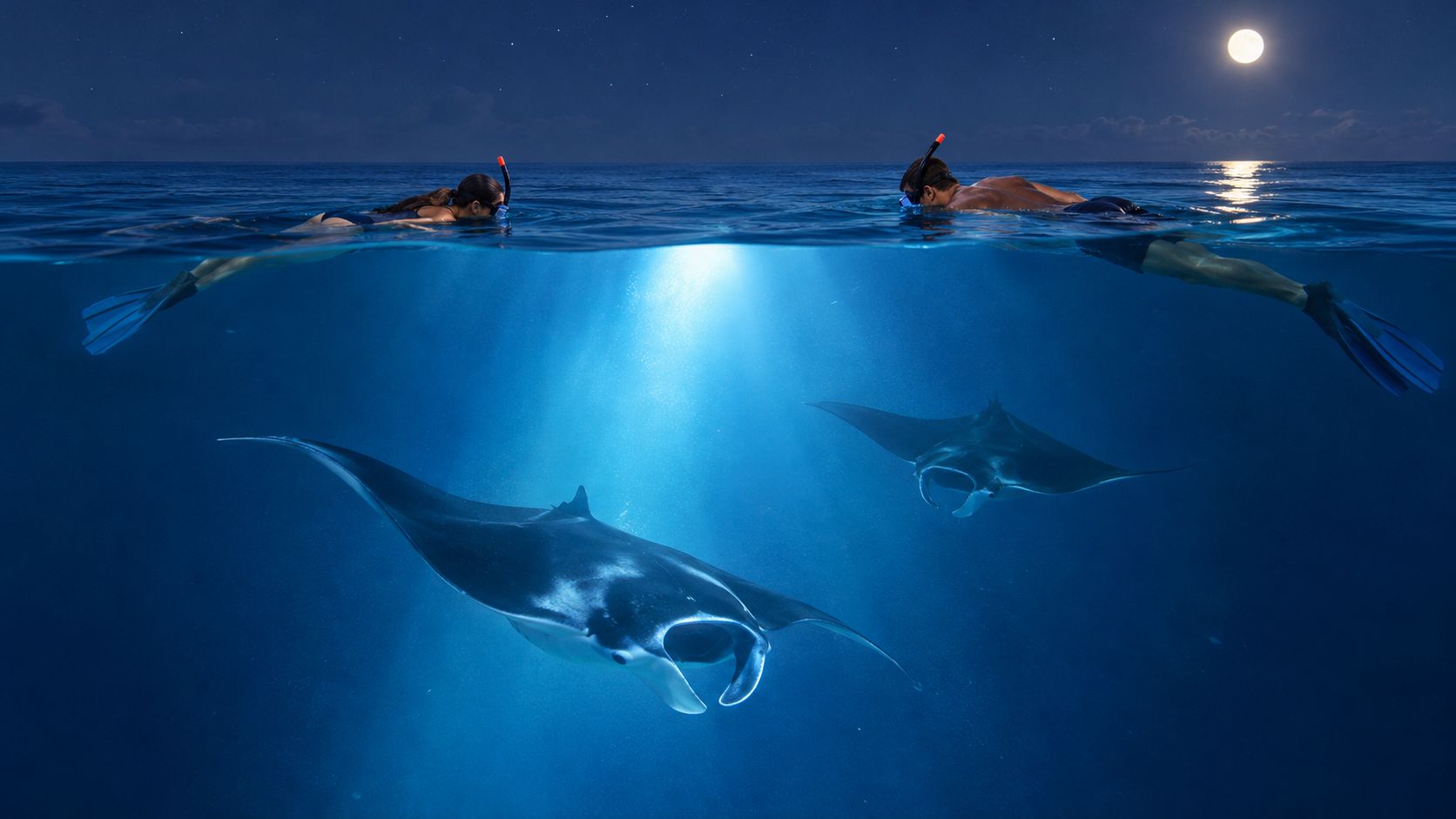
Your position in the water matters. Stay at the surface, hold the float or rail as directed, and let the mantas move through the feeding area. Don't dive beneath them, chase them, or touch them. These rules protect your safety and help keep the feeding corridor undisturbed.
Low-impact habits to follow in the water
Hold your position: Stay with the group and keep to the surface instead of moving into a manta's path.
Keep your hands to yourself: Never reach for a ray, even if it passes close.
Let the guide manage light and spacing: Don't add personal lights or reposition yourself unless your guide asks.
Move calmly: Avoid sudden splashing or kicking that could disrupt the group or the animals' feeding movement.
There's a broader reason to take those directions seriously. A Hawaiʻi County-hosted review summarizes documented concerns associated with snorkelers and divers, including stress, injury, disease, feeding changes, and habituation. It also notes a tension built into the viewing setup: participants cluster together and concentrate lights to draw plankton into a visible area. (Hawaiʻi County-hosted review of manta encounters)
The long-term picture isn't “tourism is harmless” or “every visit causes damage.” The University of Hawaiʻi study discussed earlier found stable aggregations at its two Kona sites, suggesting current tourism activity hadn't undermined local population viability, while also emphasizing the need for site-specific monitoring. A stable pattern at a population level doesn't prove that every individual interaction is impact-free.
Good etiquette is active, not passive: follow the guide's positioning instructions, leave the feeding path open, and accept that the mantas decide how close they come.
For a practical overview of manta ray safety and the question of whether mantas can sting, keep in mind that respectful distance and calm behavior are central to a responsible encounter.
How to Choose a Reputable Manta Ray Tour Operator
Before booking, look past broad promises and ask how the trip works. A good operator should clearly explain what gear is included, how guides brief guests, how they keep the group positioned, and what happens if few or no mantas appear. A reported sighting rate is useful context only when the company also explains its policy for a quiet night.
Questions to ask before booking
What to Check | Why It Matters | What Good Looks Like |
|---|---|---|
Guide certification and safety briefing | Guides need to explain equipment, positioning, and water rules clearly | The operator describes guide credentials and covers expectations before entry |
Group size and guide-to-guest ratio | Guides need to manage guests in the water without crowding the feeding area | The operator can explain how it supervises the group |
Limited-sighting policy | Mantas are wild animals and sightings can vary | The terms for rebooking, credit, or refunds are stated before payment |
Tour timing and site decisions | Sunset and after-dark departures suit different preferences | The operator explains available departure formats and how conditions shape the plan |
Included equipment and extras | Gear and optional services affect the full cost and logistics | The operator lists what's included and identifies additional charges |
Prices can differ based on what a tour includes, such as a wetsuit, flotation, gear, transfers, or photos. Don't assume those extras are bundled. Seasonal demand can also make preferred dates harder to secure, so compare schedules and policies early when you're planning around a specific travel window.
Kona Snorkel Trips is an alternative to consider for a manta night snorkel, especially if you're comparing group arrangements and tour policies. If you'd also like a daytime trip, the operator offers a Captain Cook and Kealakekua Bay snorkel tour. You can Check Availability for the Captain Cook trip. Another option for Captain Cook snorkeling tours gives you a point of comparison when planning a daytime outing.
What to Pack and How to Photograph Mantas at Night
Wear your swimsuit under your clothes, and bring a towel and warm layers for the ride back. A dry bag keeps your phone and spare clothes away from spray. If you're joining a daytime trip, pack reef-safe sunscreen for time in the sun.
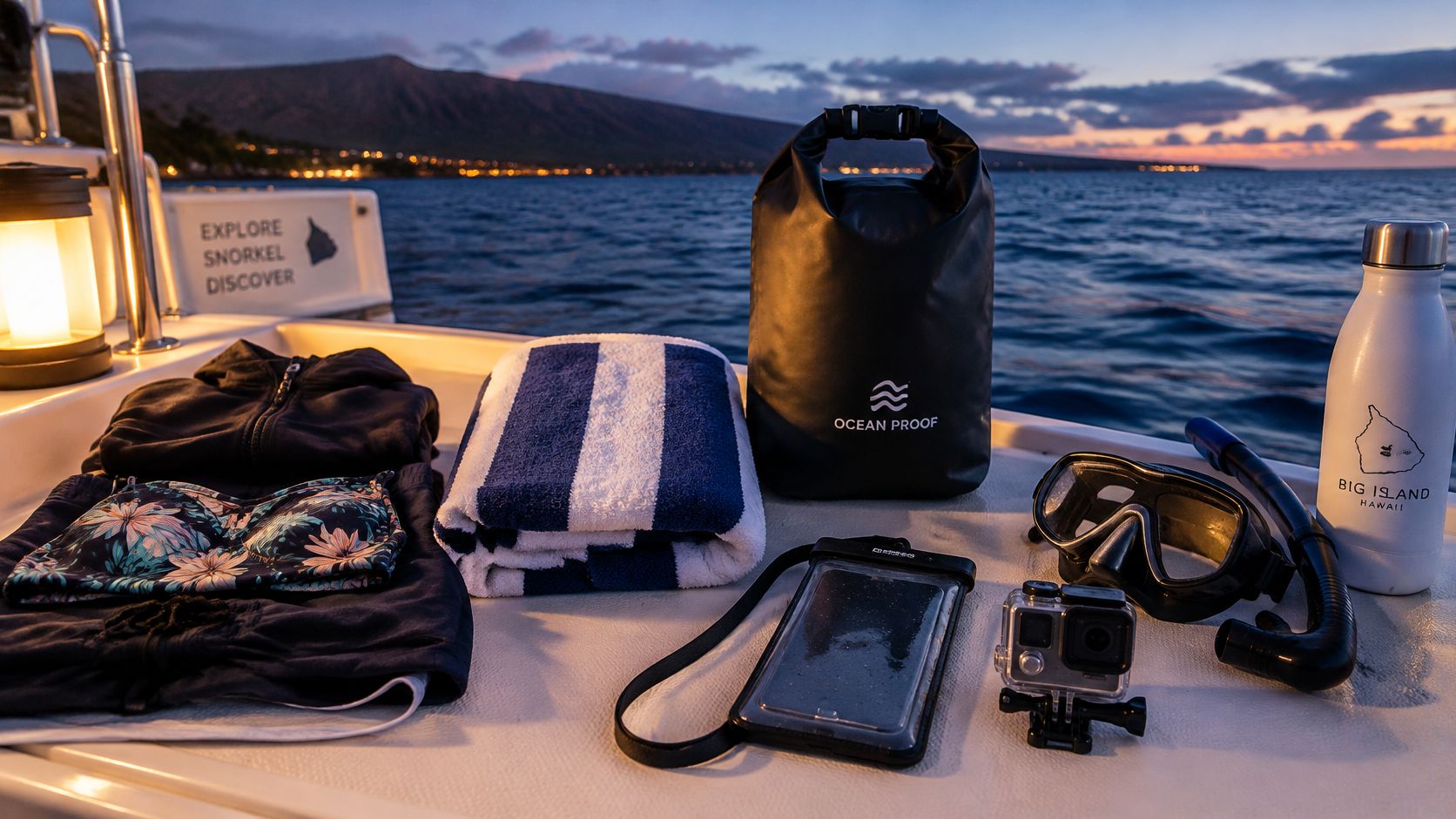
Many operators supply a mask, snorkel, wetsuit, and flotation device. Check what's included before packing, since equipment varies by tour. If you're prone to seasickness, ask a health professional about suitable precautions and tell the crew if you feel unwell.
Getting photos without disrupting the rays
A manta may glide through the light, turn, and disappear into the dark before your camera focuses. The tour's underwater lights provide the main illumination, but surface glare and moving water can still soften images. Stay at the light board and let mantas approach; swimming after one can disturb its feeding and put you in the way of other guests.
Phone cameras often struggle underwater at night because their small sensors need more light than the scene provides. If you bring one, use a waterproof housing rated for submersion, clean the lens, turn off the flash, and tap to focus before the manta enters the frame. For a camera with manual controls, start with a wide aperture and a shutter speed fast enough to limit motion blur, then raise ISO if the image is too dark. Review a test shot and adjust; exact settings depend on the camera, lens, and available light.
An underwater camera housing lets you use a camera's controls, while a compatible strobe can add light to a close subject. Follow the operator's rules for flash and lighting, and avoid shining extra lights at a manta's face. Keep the camera ready, take a few frames, then watch the encounter directly. If you edit later, film simulation for portraits concerns portrait color and tone, not underwater lighting, so don't use it as a guide to accurate manta colors.
Before you leave: swimsuit, towel, warm layer, dry bag, and a camera you know how to operate.
Planning Your Kona Manta Snorkel and Booking Your Spot
Choose a departure time that fits your group, then compare shared and private options. Ask about group supervision, included gear, and the operator's policy for a night with few sightings. If you want help choosing when to go, this guide to the best time to see manta rays in Kona can inform your planning.
For a daytime add-on, Kealakekua Bay's Marine Life Conservation District rules prohibit fishing for, taking, or injuring marine life, as well as removing or altering sand, coral, geological features, or specimens and feeding fish. The protected area is divided into Subzone A and Subzone B, with exceptions for specifically listed activities in Subzone B. Visitors should observe reef life without touching, collecting, or feeding it. (Kealakekua Bay Marine Life Conservation District rules)
When you're ready, compare available departure times and confirm the tour's sighting policy before booking. That way, you'll arrive knowing what the lights do, why manta activity can vary, and how to leave the feeding space to the rays.
Manta Ray Night Snorkel Hawaii offers guided nighttime snorkeling off the Kona coast, with gear, flotation, and shared or private tour options. If you're ready to plan a low-impact encounter and choose a departure that suits your trip, visit Manta Ray Night Snorkel Hawaii.
Comments