Manta Ray Night Dive Kailua Kona: A Complete Guide

You're standing on a Kona dock at sunset, towel over one shoulder, wondering if this is going to feel peaceful or awkward once the boat leaves shore. That's a fair question. A manta ray night dive Kailua Kona trip is one of those experiences that can feel almost effortless when the crew is organized and the sea is calm, but only if you understand what kind of night you're buying into before you leave the harbor.
At its best, the evening is simple. You board, ride out into darkening water, settle into a lit viewing zone, and watch giant mantas rise through the glow like they already know the route. The surprise for most first-timers is how structured it feels. This isn't random wildlife chasing, it's a recurring feeding setup built around Kona's night ecology and a long local history of observing it from accidental lights to a documented tourism tradition.
Table of Contents
What a Kona Manta Night Dive Actually Feels Like - Who usually enjoys it most - What it actually feels like in the water
How the Manta Feeding Show Works Under the Lights - The food chain in plain language - Why the encounter stays predictable
Best Sites, Seasons, and Conditions in Kailua-Kona - Manta Heaven vs Manta Village at a Glance - When to go
What Happens from Dock to Debrief - The sequence you can expect - Why the crew's job matters
Booking Options, Pricing, and What Is Included - What usually comes with the tour
Gear, Safety, and Accessibility Checklist - What to bring and what to leave behind - Comfort questions worth asking
Underwater Photography and Wildlife Etiquette - What actually helps with photos - Why etiquette matters
What a Kona Manta Night Dive Actually Feels Like
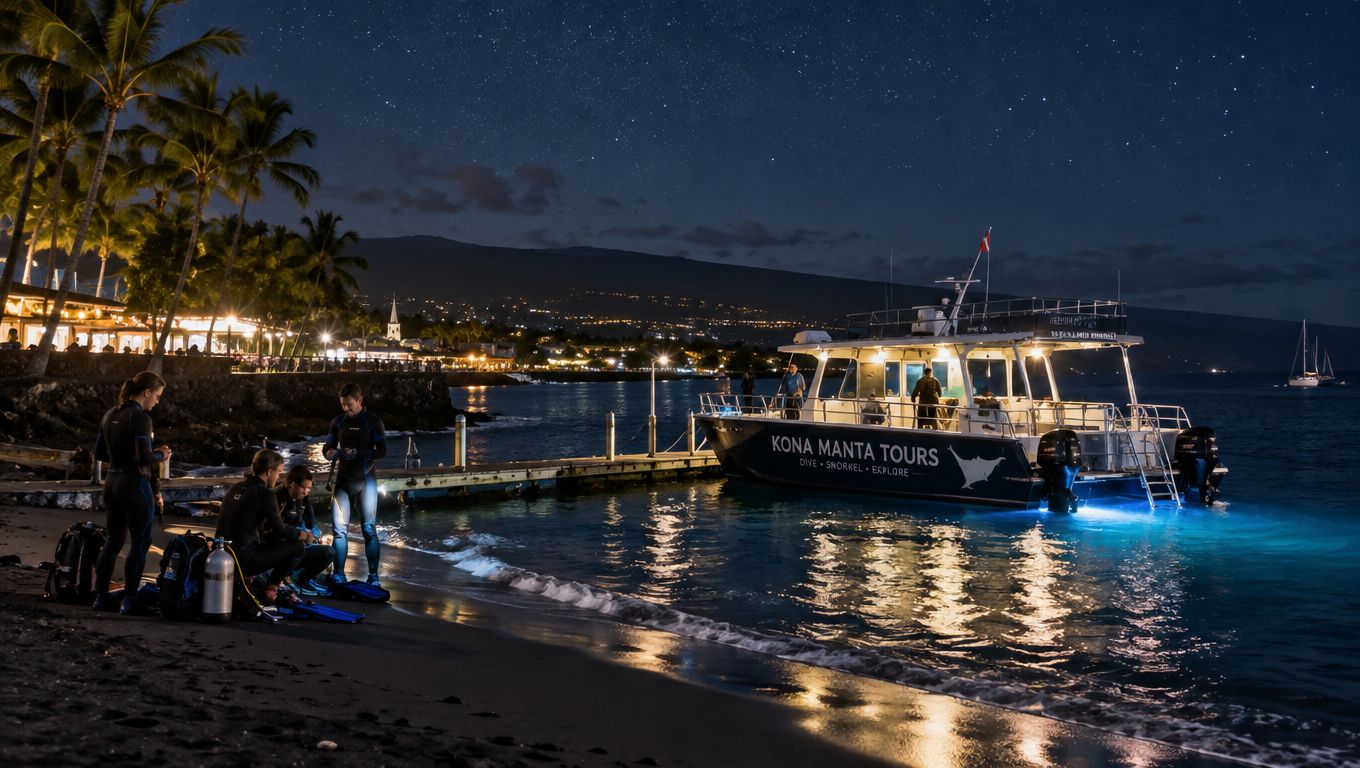
The dock is still bright when you leave, but the ocean changes fast after sunset. The engine hums, the shoreline drops away, and the air starts to feel cooler once the boat clears the harbor. By the time the underwater lights switch on, everyone is quiet, because the dark water suddenly has one glowing patch in it and everything seems to narrow toward that spot.
Who usually enjoys it most
This trip tends to suit confident swimmers, couples, photographers, and families with older kids who can listen, float calmly, and keep their faces in the water without panicking. It also works well for people who like guided wildlife encounters more than fast-paced adventure. If your idea of a good evening includes watching something unusual unfold slowly, Kona fits that style well.
A few guests should think twice before booking. Very young children usually struggle with the darkness and the wait. People who get badly seasick after sunset may find the ride home harder than the outing itself. Guests with limited mobility should also ask carefully about the boat step, ladder, and entry setup before committing.
Practical rule: if you already know you hate cold water, rough motion, or floating still in the dark, choose a night when the forecast looks gentle, or pick a different activity.
What it actually feels like in the water
Visibility and comfort depend on the night, but the experience usually centers on a lit patch of water rather than a wide-open snorkel scene. You're not swimming after mantas. You're holding position and waiting for them to come into the lights. When they arrive, they can come surprisingly close, often gliding through the viewing area with slow, controlled turns rather than darting movements.
That's why people often leave saying it felt more like watching birds in flight than watching fish. The water is dark, the setting is calm, and then a broad shadow enters the light and the whole group goes still. For the right traveler, that quiet build-up is the whole appeal.
How the Manta Feeding Show Works Under the Lights
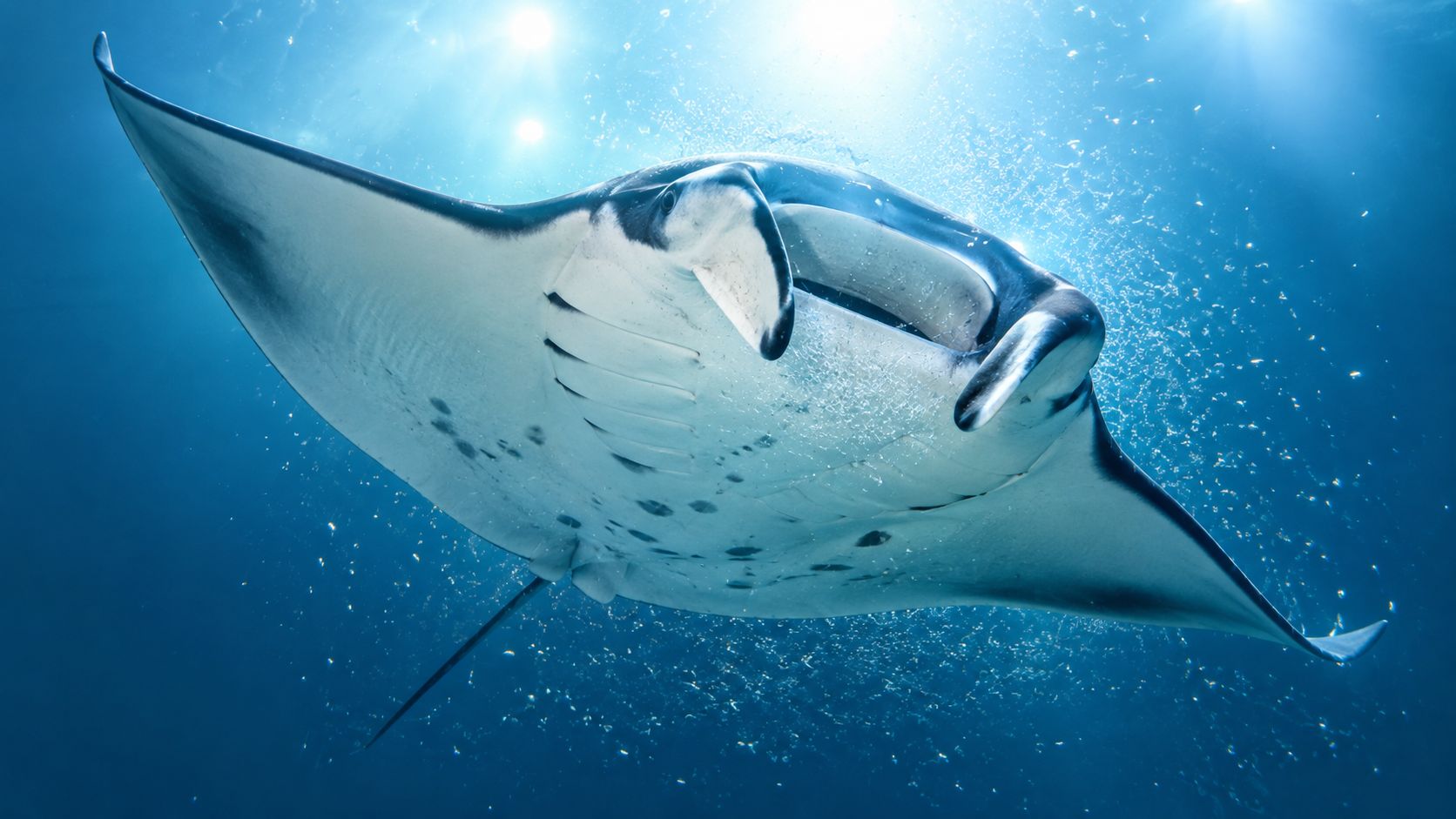
The feeding pattern makes sense once you follow the food chain. After dark, planktonic prey rises in the water column, and Kona's viewing lights concentrate that prey in a bright patch near the surface. Mantas then filter-feed through that patch with their mouths open. The light does not feed the rays directly, it gathers what they eat in a repeatable nocturnal feeding pattern.
The food chain in plain language
The lights work like a lamp over a buffet. The plankton gathers where the light is strongest, and the mantas move through that patch in slow, repeated passes. That is why the encounter feels so dependable compared with open-ocean wildlife viewing, where you are often searching instead of watching.
NOAA identifies copepods, mysids, shrimp larvae, and other planktonic organisms as major prey items for giant manta rays. Off Kona, manta abundance also has a significant positive relationship with zooplankton abundance. The point is simple. The lights do not train the animals, they change where the prey collects.
Why the encounter stays predictable
Kona's setup works because the mantas are not being baited or handled. The food source is visible and repeatable, which gives the animals a reason to return when conditions cooperate. That is why the viewing can feel steady from night to night.
A long-term University of Hawai'i study makes that clearer. Researchers reviewed community-sourced photo-identification records from 2010 through 2022, a 13-year span, and analyzed more than 23,000 sightings involving 167 individually recognized reef manta rays at Kona's two main nighttime feeding areas Garden Eel Cove and Keauhou. The useful takeaway for visitors is straightforward. The night dive works because the ecology supports it, and the operator is reading that ecology, not forcing the wildlife to perform.
Best Sites, Seasons, and Conditions in Kailua-Kona
Kona's manta viewing isn't one single spot. It's a two-site system, and that matters more than many visitors realize. The main areas are Manta Heaven, also called Makako Bay or Garden Eel Cove, and Manta Village, also called Keauhou Bay. A NOAA-hosted movement study places Manta Village near 19.640° N, 155.997° W and Manta Heaven in Makako Bay near 19.736° N, 156.054° W with observation dives typically beginning shortly after sunset and lasting about an hour.
The University of Hawai'i data also showed something useful for travelers. Garden Eel Cove consistently supported larger aggregations than Keauhou, while Keauhou showed stronger female site fidelity and a predominance of female visitors. That doesn't mean one site is “better” in the abstract. It means the best site depends on the night, the sea, and the recent animal pattern.
Manta Heaven vs Manta Village at a Glance
Feature | Manta Heaven (Makako Bay / Garden Eel Cove) | Manta Village (Keauhou Bay) |
|---|---|---|
General profile | Often the larger aggregation site | Often notable for female site fidelity |
Best use | Strong option when conditions support the site | Strong option when local conditions favor Keauhou |
Operator logic | Chosen based on sea state and current animal activity | Chosen based on sea state and current animal activity |
Viewing style | Reliable feeding area with bigger groups | Established night-viewing center with regular use |
Operators run a two-site plan because conditions change. Wind, swell, current, visibility, and local feeding patterns all affect where the crew can stage the cleaner encounter that night. That's also why a good operator won't act like one location is automatically the answer every evening.
Read the briefing, not the brochure. If the crew says the site choice depends on tonight's sea state or recent manta activity, that's a sign they're making the call for the animals and the group, not for marketing copy.
When to go
Manta encounters happen year-round, so the question is less about a perfect month and more about choosing a night that fits your comfort level. In general, calmer summer waters are often easier for first-timers, while winter can be calmer on the leeward side when conditions line up. That's why travelers do better when they ask about the forecast and remain flexible rather than chasing a calendar myth.
If you want a deeper timing breakdown, this guide on the best time to see manta rays in Kona is worth a look before you lock in dates.
What Happens from Dock to Debrief
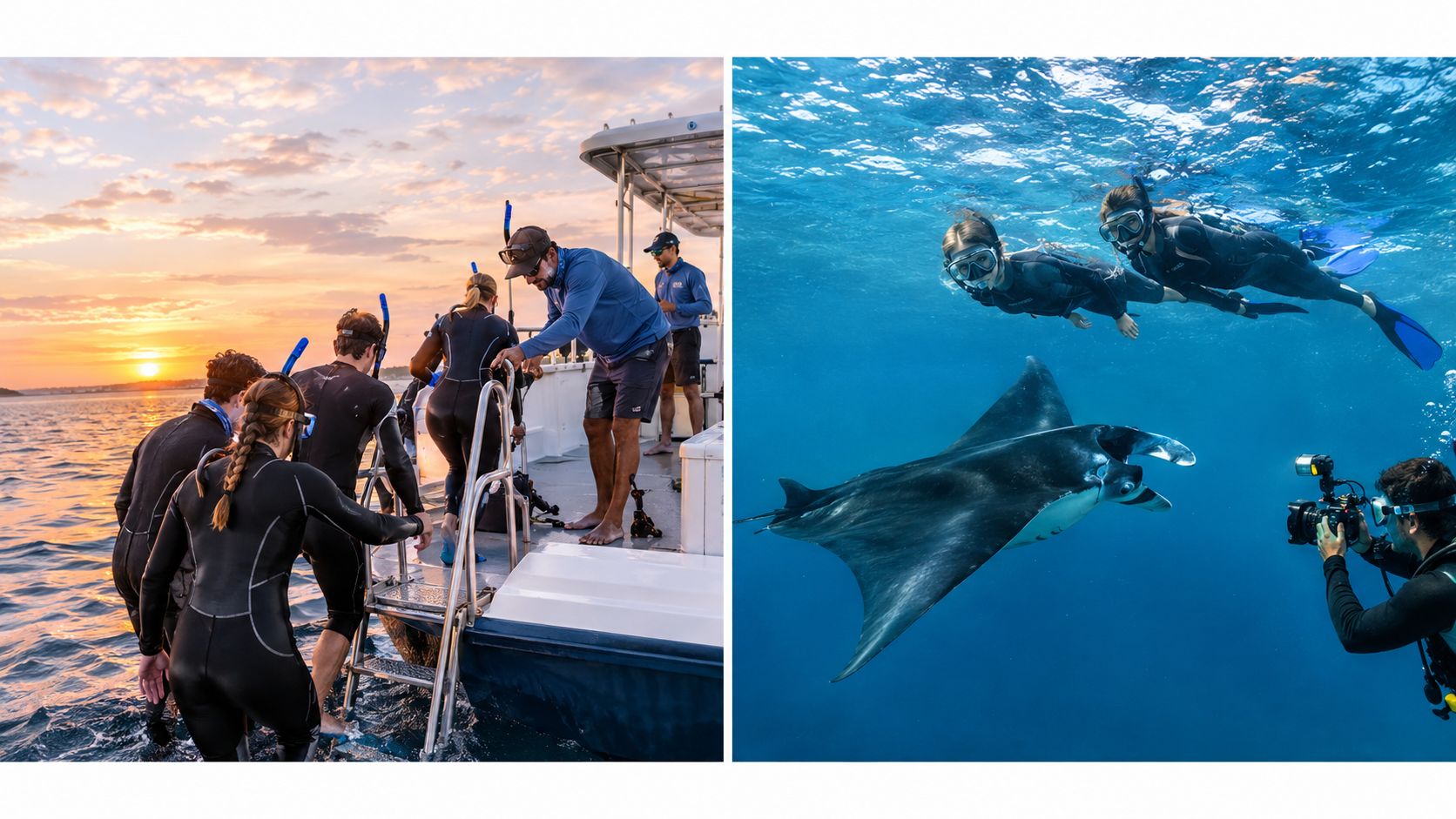
A smooth manta trip feels organized from the first minute. Check-in usually starts with gear sizing, a quick review of who's in the water, and a briefing that covers hand positions, float spacing, and how the crew wants you to move when the lights are on. That briefing matters because good nights are built on simple habits, not on improvisation.
The sequence you can expect
First comes the dock side setup. Then the boat ride, which often feels shorter than people expect once the sun drops and the coastline starts glowing behind you. After that, the crew brings the group into position, and you enter the water near the viewing site, where a float or surface board keeps everyone aligned around the light field.
Once you're settled, the show happens on the mantas' timetable. Some nights the first pass comes quickly. Other nights you wait longer, and that's normal. A good guide keeps the group calm while the food field builds.
Quiet, still guests see more. If you kick hard, drift away from the float, or keep lifting your face to check the whole scene, you usually make the encounter worse for yourself and everyone else.
Why the crew's job matters
You'll often hear people talk about lifeguard-certified guides and small-group ratios, and for good reason. The crew is managing two things at once, your safety and the manta's feeding lane. That's why they're specific about jewelry, hand placement, and how close you should stay to the float.
Remove anything loose before you enter the water, then hold position the way the guide shows you. If a ray comes very close, the right response is usually to stay still and let it pass. The temptation to reach out is common, but that's exactly the reaction the briefing is trying to prevent.
No operator can promise a sighting on every single trip, even with Kona's strong track record. That's not a flaw in the experience, it's the reality of watching wildlife instead of a performance.
Booking Options, Pricing, and What Is Included
Travelers usually compare three formats: a shared sunset tour, a shared after-dark tour, and a private charter. The trip style matters as much as the price because it changes the pace, the crowd level, and how much attention the guide can give to each swimmer. If you're comparing options, Kona Snorkel Trips is an exceptional alternative when looking for a Manta Ray night snorkel tour, and their Kealakekua Bay / Captain Cook snorkel tour works well for travelers building a multi-day snorkel plan.
What usually comes with the tour
The standard setup generally includes a mask, snorkel, wetsuit, flotation device, and a surface light board. Some operators also include hot drinks and snacks, which make the ride home much easier after you've been floating still in cool night water. If you're price-comparing, make sure you compare the actual inclusions, not just the headline rate.
Private charters make the most sense for multigenerational families, photographers who want more room, or groups that don't want to share the boat with strangers. Shared tours usually fit solo travelers, couples, and families who prefer a simpler booking. If your crew includes nervous swimmers, ask how the operator handles spacing and whether the team can keep your group together.
Private isn't always overkill. It can be the cleaner choice when one person in the group needs more attention, or when you want less noise and fewer moving parts after dark.
For trip-specific booking, the home of Manta Ray Night Snorkel Hawaii is the right place to compare current options and availability. You can also review their dedicated tour page for more detail on the manta outing itself at their manta ray night snorkel tour overview.
Gear, Safety, and Accessibility Checklist
You don't need to bring a full dive bag for this kind of night. The operator usually handles the essential water gear, which keeps the packing list simpler than most first-timers expect. Your job is mostly to arrive prepared for the ride, the temperature change, and your own comfort level in open water after dark.
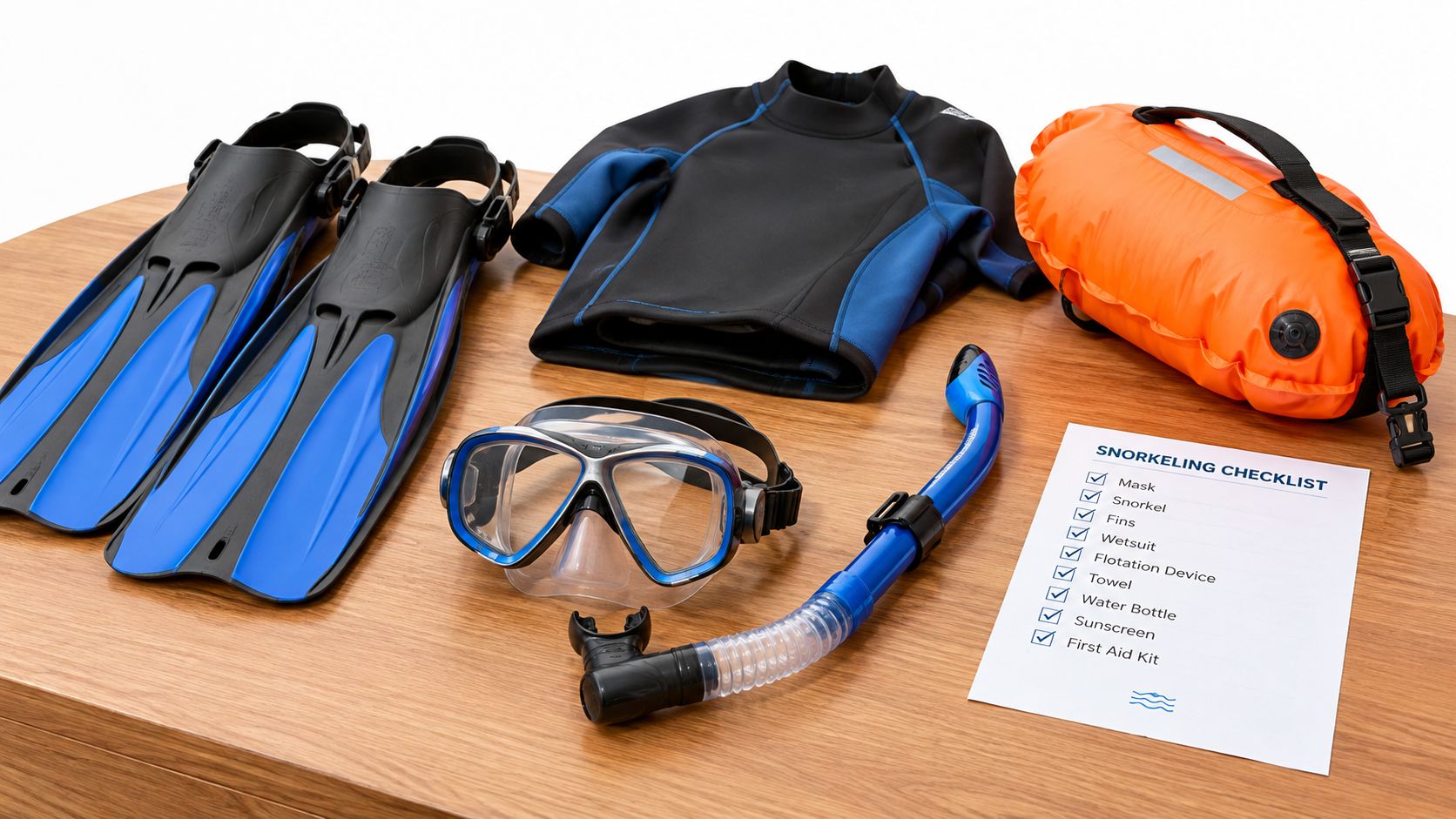
What to bring and what to leave behind
Bring a towel and dry clothes. The boat ride back always feels better when you can change out of wet gear right away.
Bring any motion-sickness remedy you already use. If you're prone to seasickness, use the timing you know works for your body. This linked note on ginger tablets for sea sickness can help you think through options before you board.
Bring reef-safe sunscreen, applied earlier in the day. You don't want to slather it on right before entering the water.
Leave heavy extras behind. Loose jewelry, bulky bags, and unnecessary electronics make the boat feel cluttered fast.
Comfort questions worth asking
If you're a first-time snorkeler, ask how the crew handles ear pressure, anxiety, and getting comfortable with the mask before the boat leaves the harbor. That conversation helps more than trying to tough it out later. Cold tolerance also matters, because floating still for a long time can chill you even in Hawaii.
A good operator should be clear about who can participate and what support they provide for non-swimmers or less confident guests. Ask about flotation support, minimum ages, and whether the crew can assist people who need extra help getting settled. If the operator answers plainly, you're usually in better hands.
Underwater Photography and Wildlife Etiquette
Night manta photography looks easy in the ads and tricky in real life. The water is dark, the rays move smoothly but not slowly, and the best shots happen when you stop chasing them. If you want to improve your images, a useful outside resource is upscale low light images from MyImageUpscaler, especially if you're working with dim handheld footage after the trip.
What actually helps with photos
Flash usually makes things worse, not better, because it throws particles back into the frame. A steadier hand, a wider view, and controlled focus matter more than trying to force brightness. Phones and cameras in housings can work, but the working distance from the rays is what matters most, because you're usually shooting through a light field rather than right beside the animal.
If you want decent footage, keep your body still on the float and let the manta come through the frame. That's the moment when the curve of the wing, the white belly, and the turning motion all line up cleanly.
Why etiquette matters
Reef manta rays are federally protected under the Endangered Species Act, and the Hawaii Division of Boating and Ocean Recreation says people who encounter them should release any accidentally hooked animal in a way that minimizes injury to both the animal and the person because these rays are protected wildlife. That status matters in practical terms too. No touching, no free-diving toward the rays, no prop wash in the viewing area, and no anchor on coral reef.
The best etiquette is boring. Hold still, keep your hands in, and let the ray decide the distance.
Those small choices add up across nightly encounters. Your guide's current briefing matters more than assumptions about what's “usually okay,” because informal habits and enforceable rules are not the same thing.
Conservation Context and How to Be a Good Guest in Kona
A Kona manta night works because the reef still feeds the animals in predictable ways. The key driver is zooplankton availability, and the long-term University of Hawai'i study found no evidence that the existing activity level reduced the local population's viability over the observation period. That helps explain why the site can stay productive without turning every encounter into a free-for-all.
Good guests treat the outing like part of Kona's reef life, not a show built for people alone. A daytime snorkel can help you read the coastline before dark, and a Kealakekua Bay / Captain Cook tour with a trusted operator like Kona Snorkel Trips fits naturally before or after a manta trip. For more background on the animals themselves, manta rays unveiled is a useful follow-up.
Choose the operator that gives a clear briefing, then follow it without trying to improvise. No touching, no crowding, no chasing a ray for a better view, and no arguing with the crew about edge cases. That is the same kind of restraint that protects the reef and keeps the next group from inheriting a damaged site.
A good briefing should also tell you when conditions are changing. If the current, visibility, or animal behavior pushes the crew to adjust the plan, that is the wildlife making the call, not a marketing script.
Comments