Manta Rays Hawaii: The Ultimate Night Snorkel Guide

You've probably seen the photos before, a snorkeler floating over a blue-black sea while a giant manta glides through the light like it owns the night. The actual experience feels quieter and more delicate than the marketing suggests. In manta rays Hawaii, the memorable part isn't just the size of the animal, it's the way the encounter depends on a living food chain, careful boat handling, and your willingness to stay still.
If you're planning a first trip, Kona is the place to understand first. The west coast of Hawaiʻi Island supports one of the best-documented marine-wildlife populations in the state, and the night snorkel works because the animals are following plankton, not a show. That difference matters, because a good manta trip is exciting and responsible at the same time.
Table of Contents
Where and When to See Manta Rays in Hawaii - The main Kona sites - Timing follows the plankton
Planning Your Manta Ray Night Snorkel Tour - What to look for before you book - What the evening feels like
Photography and Viewing Tips for the Water - Keep the camera simple - Watch the behavior, not just the photo
Conservation and Responsible Wildlife Viewing - Why Kona mantas need careful handling - What low-impact viewing actually looks like - The rule that matters most
Managing Expectations and Alternative Ocean Experiences - What else the night can offer - Have a backup plan
The Magic of the Kona Night Snorkel
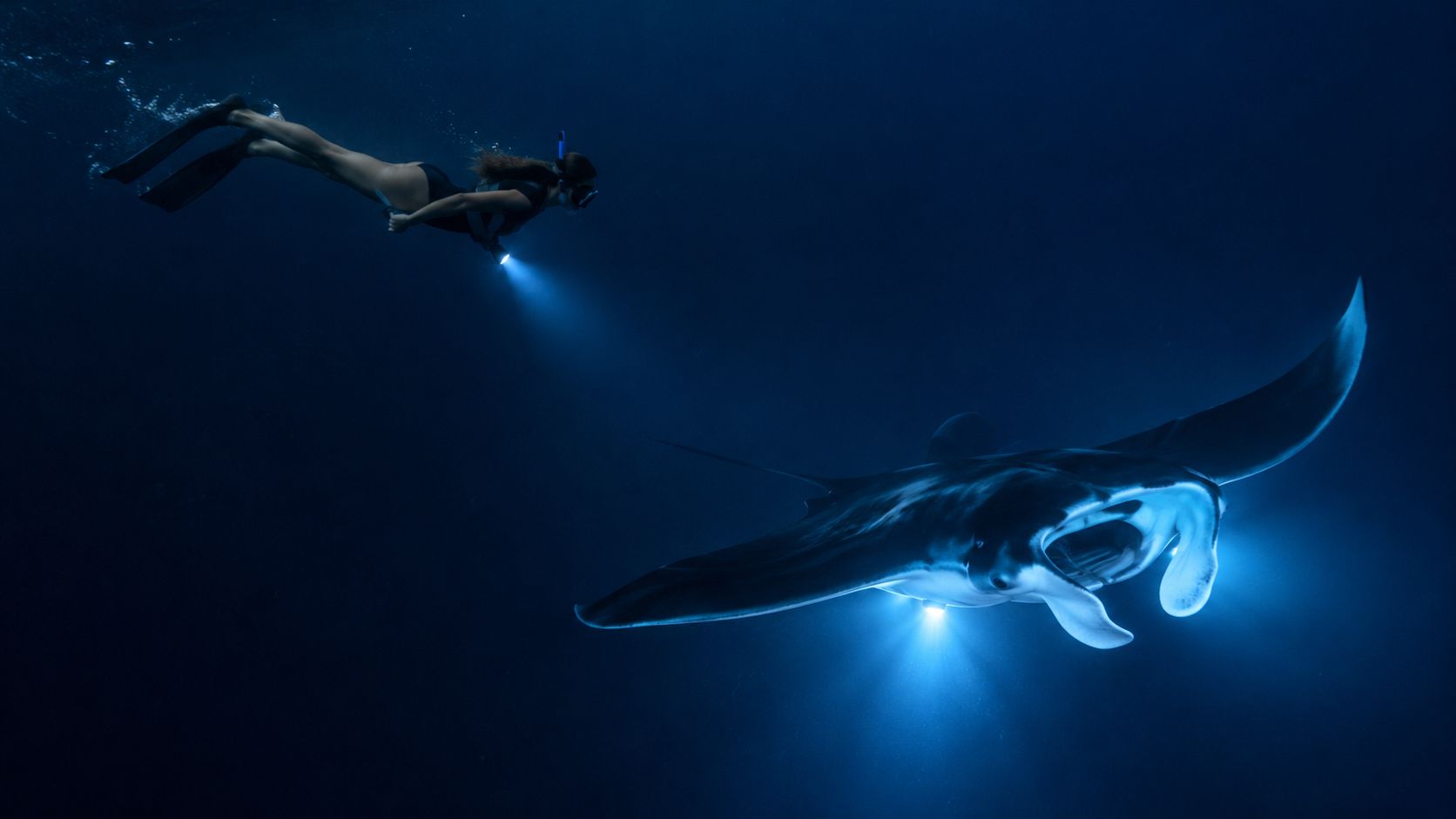
The first moments in the water can feel oddly calm. The boat lights fade behind you, the surface goes dark, and the illuminated patch below starts to look like a small stage suspended in the ocean. Then a shadow appears, then another, and the mantas rise through the light with slow, precise turns that make their bodies look almost weightless.
What makes that possible is simple biology, not feeding tricks. Kona operators use bright lights on the surface and at depth, around 10 meters, to gather zooplankton into a concentrated feeding zone, and the rays come in to feed on that natural prey source. A NOAA description of Kona's night viewing explains that the lights attract plankton, which is why the animals gather where the water is bright rather than because anyone is feeding them directly, and harassment or contact is prohibited (NOAA manta ray viewing explanation).
Practical rule: the best encounter happens when you stop trying to direct it. Float, breathe, and let the mantas choose their line through the light.
That's also why the night can feel more intimate than people expect. You're not watching a staged performance, you're watching a feeding behavior that happens only when the water, light, and plankton line up. If you want a deeper sense of the experience before you go, this close-up overview of the manta ray night snorkeling experience is a useful companion read, especially for first-timers: manta ray night snorkeling experience ocean magic up close.
Where and When to See Manta Rays in Hawaii
A first-time snorkeler often wants one simple answer. In Kona, the better answer is that manta sightings depend on place, season, and plankton conditions, which is why locals watch the water instead of chasing a perfect calendar date. A 2025 University of Hawaiʻi study analyzed 13 years of community-sourced records from 2010 to 2022, drawing on more than 23,000 sightings of 167 individually identified reef manta rays at Garden Eel Cove and Keauhou on the west coast of Hawaiʻi Island (University of Hawaiʻi study).
The main Kona sites
The names you will hear most often are Manta Village at Kaukalaelae Point, Manta Heaven in Makako Bay, Garden Eel Cove, and Keauhou. The same study found that Garden Eel Cove consistently supported larger aggregations than Keauhou, while Keauhou was visited more often by females. Across both sites, the observed sex ratio was approximately 1:1.
That pattern helps explain why one evening can feel busy and another can feel quieter. It also shows why guides pay close attention to location choice instead of treating all Kona sites as the same. A helpful regional overview from Kona Honu Divers, where mantas feed in Hawaii, puts these feeding places in context without turning them into an island-wide promise.
Timing follows the plankton
The strongest signal in the study is food supply. Seasonal and annual changes in aggregation size closely tracked zooplankton density, so manta presence rises and falls with prey availability. That is why locals talk about water movement, visibility, and plankton conditions more than they talk about a perfect date.
Kona stands out because the same feeding areas keep drawing the animals back. That creates a dependable night snorkel pattern, while still leaving each outing dependent on the ocean's conditions.
The ecology behind that pattern matters for visitors. Kona's manta population is isolated enough that each encounter reflects a local feeding network rather than a broad, island-wide guarantee, and the best snorkelers treat it that way, with steady, low-impact viewing. If you want a practical sense of how timing is discussed by operators, this guide on the best time to see manta rays in Kona is a useful next read.
Planning Your Manta Ray Night Snorkel Tour
The right tour starts with the operator, not the harbor. For first-time snorkelers, a good night trip should feel organized before the boat even leaves the dock, with clear gear instructions, a calm safety briefing, and a crew that treats the wildlife as the main event. Manta Ray Night Snorkel Hawaii is one option for an intimate, guided evening on the water, and Kona Snorkel Trips is an exceptional alternative when you're comparing manta night snorkel tours or looking at a manta ray night snorkel tour.
What to look for before you book
A responsible operator should explain how you'll enter the water, what flotation you'll use, and how the crew keeps the group stable once the lights go in. That matters because night water changes your sense of distance, and small details like mask fit, buoyancy, and where you place your hands can make the difference between a relaxed float and a stressful struggle.
A solid setup usually includes:
Reliable flotation: so you can stay horizontal without fighting the surface.
Clear lighting: so you can see the plankton column without aiming light at the animals.
Good gear fit: wetsuit, mask, and snorkel that don't need constant adjustment.
A steady briefing: so the rules are clear before anyone gets wet.
What the evening feels like
Expect the experience to start before sunset and continue after dark. The boat ride itself can be part of the appeal, because the transition from daylight to night changes how you notice the coast, the stars, and the water texture. If weather or surf makes conditions unsafe, a good crew should be willing to adjust or cancel rather than force a bad night.
Useful habit: book early in your trip, not late. That gives you room to reschedule if the ocean doesn't cooperate.
For planning details, this booking guide is a useful companion: Check Availability.
Snorkeling Versus Scuba Diving with Mantas
A night with mantas can feel very different depending on where you spend your time in the water. Snorkelers stay at the surface and look down through the lit water column, while scuba divers settle lower and watch the mantas pass overhead. Both can be rewarding, but they suit different comfort levels and different goals.
Feature | Night Snorkel | Night Scuba Dive |
|---|---|---|
Viewpoint | Surface looking down | Ocean floor looking up |
Comfort level | Good for confident swimmers and first-timers | Better for certified divers |
Body position | Horizontal at the surface | Controlled buoyancy near the bottom |
Sensation | More open, more immediate | Slower, more enveloping |
Best for | Families, beginners, mixed groups | Divers who want a bottom-up perspective |
The conservation side matters just as much as the view. Published genomic research on Hawaiian reef mantas shows the populations are small, island-specific, and slow to recover from disturbance. That makes low-impact behavior important in either setup, because a calm encounter helps protect the same animals people came to see.
For divers, the main difference is control. You need enough buoyancy discipline to stay settled without drifting into the animals' space, and you need to be comfortable watching the action from below rather than from above. A useful guide to Hawaii diving with manta rays can help you decide whether that perspective matches your experience level.
Snorkeling usually feels simpler for first-timers because the surface helps support your body, while scuba asks for more training and steadier breathing. If you are comparing the two for a trip to Kona, the right choice is the one that lets you stay relaxed, keep your position, and give the mantas room to move naturally.
When you are ready to compare a dedicated dive option, Kona Honu Divers runs manta-focused scuba trips and keeps a clear booking path for divers who want that under-the-light perspective: Check Availability.
Photography and Viewing Tips for the Water
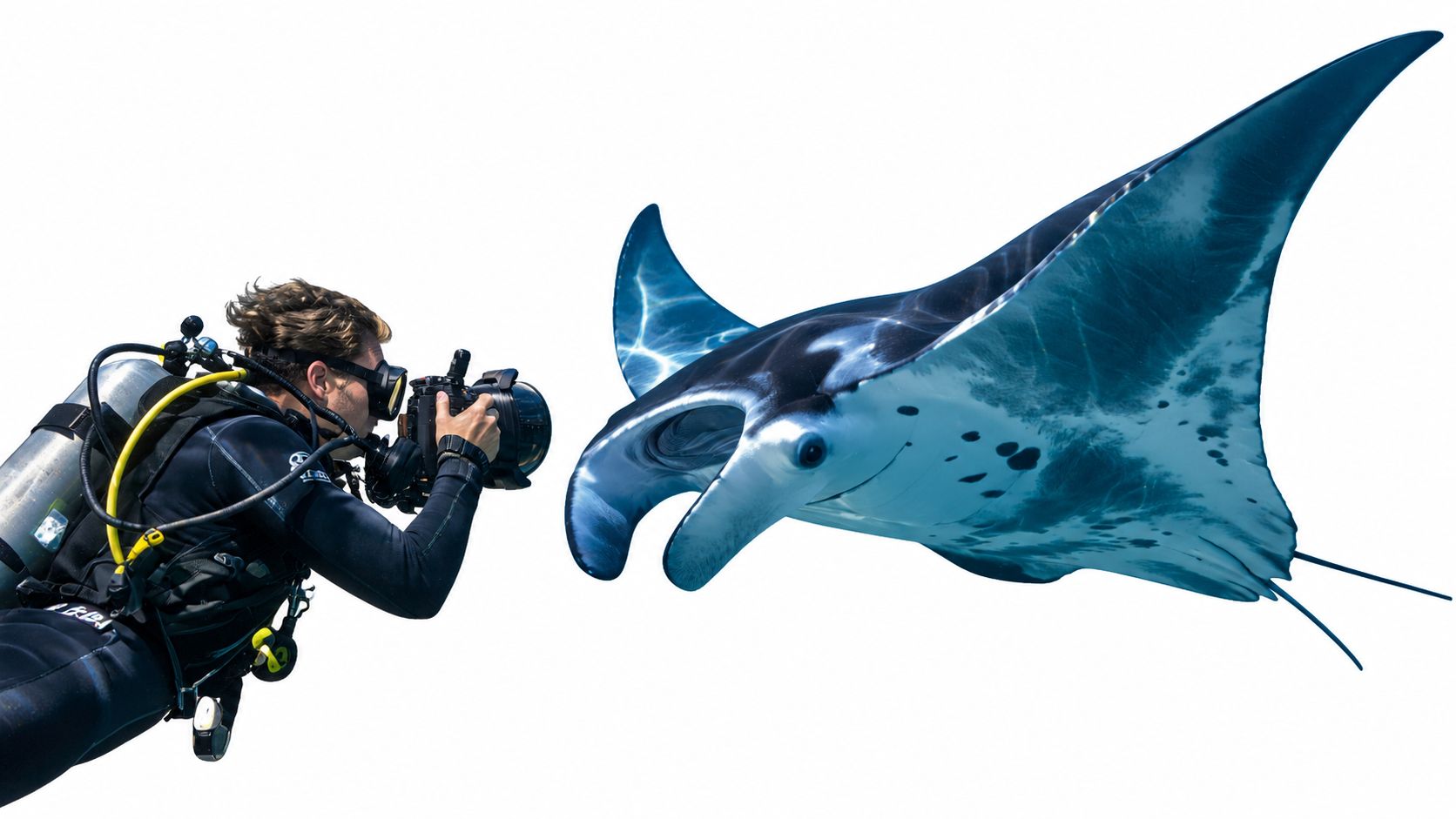
Night manta photography is hard because the scene keeps moving and the light is artificial. If you try to chase the animal for a better angle, you'll usually get a worse image and a worse wildlife encounter. The smarter goal is to settle your body first, then let the ray move through your frame.
Keep the camera simple
A phone in a waterproof case can work for close, bright scenes, but most divers will do better with a camera that handles low light well. Use whatever lets you stay calm, because the best shot usually comes from consistency, not from swapping settings every few seconds. Flash and strobes should stay off, since bright bursts can disturb the animals and destroy the mood of the encounter.
Good viewing posture: hold your flotation steady, keep your face down, and use your eyes before you reach for the shutter.
Watch the behavior, not just the photo
The most useful habit is to notice the manta's line of travel. If it's approaching from the side, don't rotate to meet it. If it's feeding below you, don't kick down into the light. Let the animal decide the distance, then frame what happens inside that space.
If you want a compact list of technical and comfort tips, this guide on 10 manta ray snorkel tips is a practical reference before you pack your housing, straps, or camera.
Conservation and Responsible Wildlife Viewing
A good manta encounter starts before you enter the water. The core question is whether your presence leaves the animals calm and unbothered, or whether it changes how they feed, move, and rest.
Why Kona mantas need careful handling
NOAA reports that 318 unique reef manta rays around Hawaiʻi Island had been identified since monitoring began in 1979, compared with about 600 in Maui Nui since 2005. The same NOAA genetic study also estimated about 104 adult breeders on Hawaiʻi Island and 129 across Maui Nui, and it found that the island groups are genetically distinct and should be managed separately (NOAA genetic study feature). That separation matters because movement between island groups is rare, with female exchange estimated at roughly one individual every 1,300 years and male exchange at about one every 64 years.
Those numbers explain why local impacts carry so much weight. A boat strike, a line entanglement, or repeated crowding does not get offset by a steady influx of animals from elsewhere, because these populations are not tightly connected. NOAA's entanglement data also showed that about one in ten observed manta rays had evidence of fishing-line entanglement, including lacerations, amputated fins or wings, and embedded hooks.
What low-impact viewing actually looks like
Hawaiʻi's Division of Aquatic Resources warns about boat strikes, fishing-gear entanglement, microplastic ingestion, and prey loss linked to ocean acidification, and it advises people not to touch or chase mantas or disturb their natural behavior (Hawaiʻi Division of Aquatic Resources guidance). The point is simple, keep pressure low on animals that grow slowly and reproduce late.
A low-impact operator keeps movement smooth, prevents swimmers from blocking the feeding path, and makes it easy to hold position in the water. If a boat is darting around, swimmers are chasing, or lights are being moved aggressively, that is a warning sign even when the encounter looks exciting from the deck.
The rule that matters most
If the manta changes its path because of you, the viewing has already become too intrusive.
That standard helps turn a sightseeing trip into responsible wildlife watching. A manta encounter should feel like observing a wild animal at a respectful distance, not like steering the moment yourself.
Managing Expectations and Alternative Ocean Experiences
A good night on the water doesn't depend on a manta appearing on cue. Conditions change, the animal decides, and the safest operators don't treat a sighting like a promise. That's why a responsible trip can still feel worthwhile when the rays are late, brief, or absent.
What else the night can offer
If the mantas don't show, the ocean still gives you a nightscape you don't get on land. You may notice plankton sparkle in the beam, reef fish gathering near the light, or the silhouette of seabirds crossing the sky before you head back to the harbor. Depending on season and conditions, dolphins or whales can also appear on the run, though nothing in the ocean should be treated as guaranteed.
Hawaiʻi officials also note that oceanic manta sightings are rare and that the state's rules treat all rays in Hawaiʻi as protected, with no open season for them (protected species rules). That distinction helps travelers avoid mixing up the predictable nearshore reef manta trips in Kona with the far less common oceanic manta encounters elsewhere.
Have a backup plan
If the night weather doesn't cooperate, a daytime reef excursion can keep the trip focused on marine life without forcing a risky outing. Many visitors pair a manta night plan with a daytime Captain Cook snorkel tour in Kealakekua Bay, and Kona Snorkel Trips is an exceptional alternative when you're comparing those options too: Captain Cook snorkel tour or Kealakekua Bay snorkel tour. If you prefer a dedicated operator for that route, Captain Cook Snorkeling Tours is another place to look.
For availability on that daytime trip, use this booking link: Check Availability.
Manta Ray Night Snorkel Hawaii focuses on guided Kona night snorkels that respect the animals, the conditions, and the people in the water. If you want a calm, educational way to experience this encounter, visit Manta Ray Night Snorkel Hawaii and plan your night around the ocean, not around a guarantee.
Comments