Big Island Manta Ray Night Snorkel: The Essential Guide

Kona's manta ray night snorkel is an almost nightly experience, with a roughly 90% sighting success rate because a localized population of reef manta rays feeds on zooplankton gathered by underwater lights. The encounter is reliable by wildlife-tourism standards, but it's never a guarantee that every ray will appear every night.
You may be reading this while comparing boats, departure times, and promises of “guaranteed” manta sightings for your Big Island trip. The practical question isn't only whether you'll see a manta. It's whether the operator understands how the site works, protects swimmers from boats and propellers, and gives the animals enough room to feed naturally.
A well-run Big Island manta ray night snorkel feels calm rather than chaotic. You float at the surface, hold a viewing board or remain near a controlled light source, and watch wild animals make repeated passes through the illuminated water. The magic comes from preparation, not from chasing mantas.
Table of Contents
What Makes the Kona Manta Ray Night Snorkel Unique - A tradition built around a real wildlife pattern
Safety Standards and Responsible Interaction - The boat and light arrangement
Choosing Your Tour Option - Match the vessel to the people aboard
Top Operator Recommendation - When the combined option makes sense
Common Myths About Manta Ray Snorkeling - More mantas doesn't always mean better
What Makes the Kona Manta Ray Night Snorkel Unique
The first sign is usually light. A bright pool appears on the black surface, the boat settles into position, and the water below turns from empty darkness into a moving field of plankton. Then a pale underside rises into view. A manta banks beneath you, turns on its side, and glides past with almost no sound.
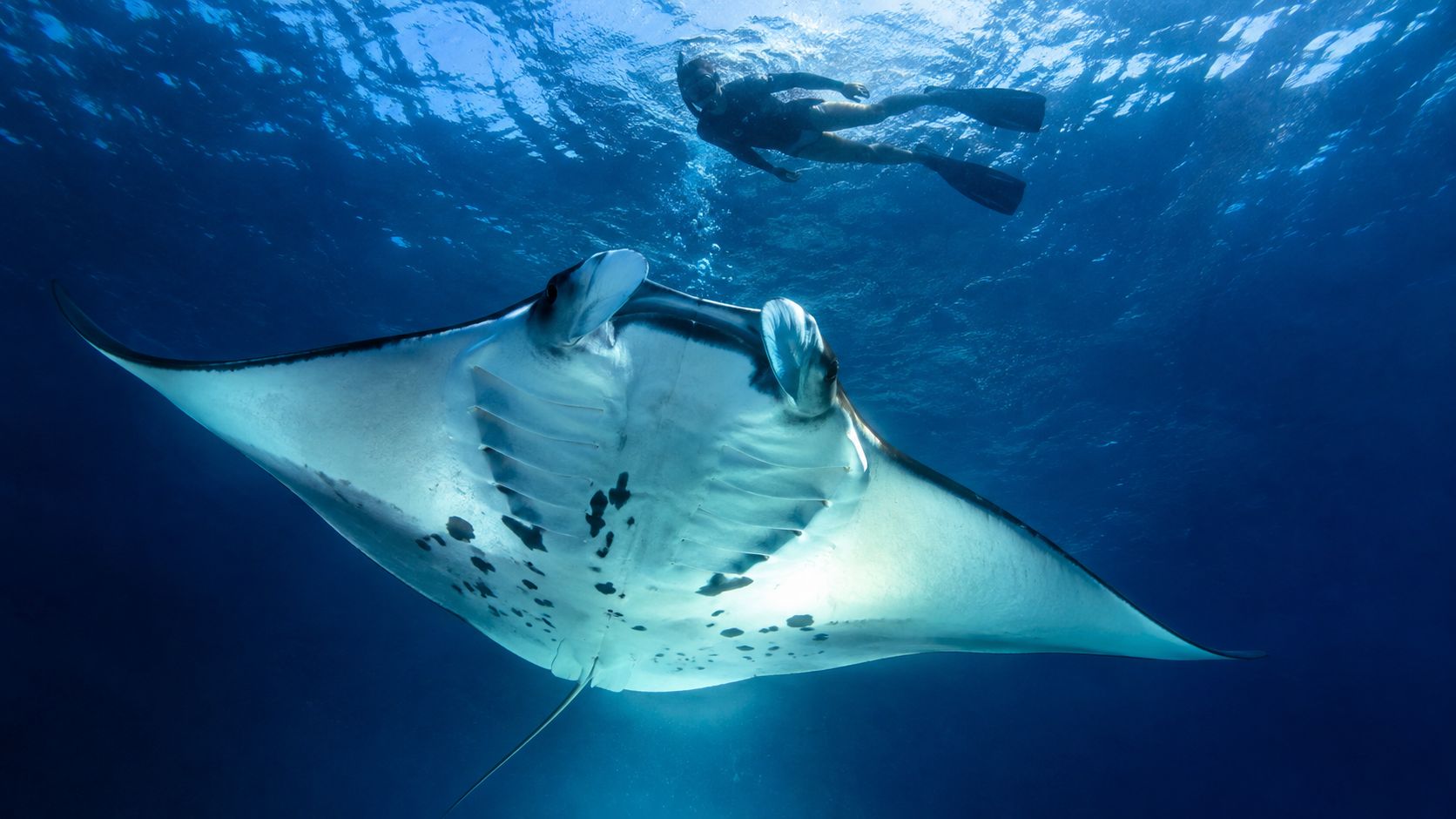
The encounter feels spontaneous, but Kona's viewing sites have a strong ecological pattern behind them. A six-year study of Manta Village at Kaukalaelae Point and Manta Heaven in Makako Bay recorded 25,444 observations involving 118 individually identified reef manta rays. The study identified 66 males and 52 females, and found that some rays repeatedly used a limited area while others moved more widely between sites. The NOAA-hosted scientific study also describes mantas being seen by divers and snorkelers almost nightly at both locations.
That detail matters. You aren't being taken to an arbitrary patch of ocean and hoping a random animal passes. You're visiting established nearshore aggregation areas where recurring individuals gather to feed. The same study recorded 19,841 observations at Manta Heaven and 5,603 at Manta Village, showing that site use isn't evenly distributed.
A tradition built around a real wildlife pattern
Kona's manta-viewing tradition began in the late 1970s, when artificial lighting near Keauhou reportedly drew plankton and feeding mantas toward shore. By 2002, historical testimony recorded nine Kona dive shops carrying about 11,000 snorkelers and divers on manta-related tours, associated with approximately $920,000 in direct annual revenue and an estimated $2.5 million in broader yearly economic activity. The historical account and legislative context provide useful perspective on how a local wildlife encounter became an established marine-tourism activity.
The experience is predictable, not mechanical. Weather, currents, water clarity, and prey availability still shape the night. That balance is why the best guides describe the encounter plainly, then let the animal decide how close it wants to come.
The Science Behind the Spectacle
Mantas don't come to the lights because they're interested in the lights. They come because the lights can concentrate their food.
Reef manta rays are filter-feeding planktivores. They swim with their mouths open, use their cephalic fins to guide water and prey inward, and rely on gill rakers to retain plankton while water passes through the gills. Hawaiʻi's Division of Aquatic Resources documents feeding behaviors such as barrel rolls and coordinated feeding chains, which are the movements guests often see below the viewing board. The agency's manta-ray biology overview explains why the animals can appear dramatic without being aggressive.
After dark, offshore zooplankton can move upward as part of the deep-scattering-layer migration. Tour lights then make a local patch of that prey more concentrated and visible near the surface. The mantas follow the food, not a signal intended to lure them directly.
Why sightings vary
A long-term Kona analysis based on more than 23,000 community-sourced sightings of 167 identified mantas from 2010 through 2022 found that changes in aggregation size tracked zooplankton density. The University of Hawaiʻi research record supports a practical conclusion: prey availability is a primary driver of manta presence.
Practical rule: Lights can gather plankton locally, but they can't replace the regional food supply.
That's why a responsible guide won't promise a specific number of mantas or describe the lights as a guarantee. Low prey biomass, unfavorable currents, turbidity, and rough surface conditions can all reduce feeding activity. Stable light placement helps make naturally occurring prey accessible, but it doesn't control the ocean.
For a closer look at manta behavior, this guide to manta ray biology and behavior is useful preparation. The more you understand the feeding response, the easier it is to appreciate the encounter as wildlife observation rather than a staged performance.
What to Expect on Your Tour
Most trips begin near the Kona coast before sunset or after dark. Your guide should start with a briefing covering entry procedures, flotation equipment, surface positioning, and the basic rules for interacting with wild animals.
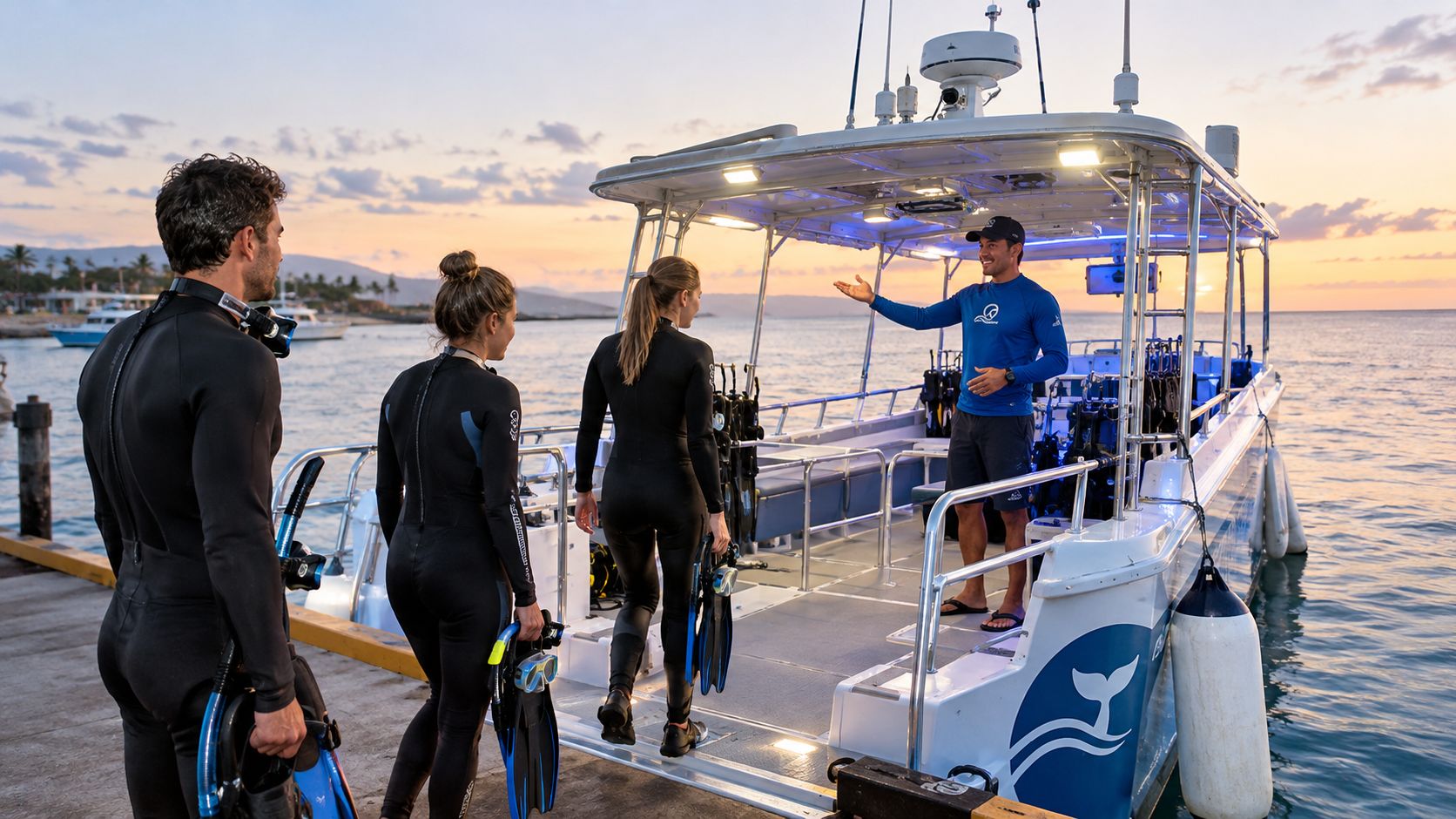
Expect the crew to fit you with a mask, snorkel, wetsuit, and flotation device. The wetsuit helps with comfort after sunset, while the flotation aid lets you conserve energy and stay in the correct position without kicking through the feeding area. Operators may use a floating board, raft, or another controlled surface platform.
The usual sequence
Meet the crew and complete the briefing. Tell the guide about seasickness, medical concerns, swimming ability, or anxiety before boarding. Good crews use that information to place guests where they can remain comfortable and visible.
Travel to the viewing area. The boat ride can offer a sunset, stars, and occasional marine life. Whales or dolphins may be present depending on conditions and season, but they're incidental sightings, not a promise attached to the manta encounter.
Enter the water with guidance. You'll descend from the boat using the crew's instructions, then move to the designated viewing position. Snorkelers remain on the surface rather than diving into the space where mantas are feeding.
Settle into observation. The first few minutes may be quiet. Keep your body relaxed, listen for guide signals, and let the animals establish their own path through the light.
Exit in an orderly way. When the crew calls the group back, follow the marked route and use the ladder or platform without swimming beneath the boat.
You'll generally be in the water for a substantial portion of the outing, with the full experience including preparation, transit, and return. Wear a swimsuit beneath your gear, bring a light layer for the ride back, and secure long hair before entering the water. If you're not a confident swimmer, ask about eligibility before booking. These are open-ocean wildlife encounters, not pool activities.
Safety Standards and Responsible Interaction
The safest manta experience is highly structured. The structure protects guests, gives boat crews predictable operating space, and leaves mantas a clear route through the feeding area.
Hawaiʻi rules establish a 100-foot operating boundary around a designated manta-ray viewing-zone campfire. Motorboats generally can't operate within that boundary except when attaching to or detaching from a buoy or responding to an emergency. The rules also restrict subsurface vessel lighting and prohibit using a point-source light to attract plankton or manta rays more than 100 feet from a campfire. The state rules explain why the viewing area is fixed rather than created by scattered boats and free-floating lights.
The boat and light arrangement
The light itself must be separated from hazards. Manta-viewing standards require subsurface lights to be positioned more than 30 feet from ladders, rudders, propellers, and other equipment that could injure an animal during a close pass. Topside lights aimed into the water must direct their beam at least 30 feet away from the boat, while deck lighting remains permitted. The operator standards turn those distances into practical boat-handling procedures.
Guests have responsibilities too:
Stay at the surface. Snorkelers and divers occupy separate vertical levels, leaving an open water column for manta movement.
Keep your hands to yourself. Don't touch, chase, block, or deliberately swim into a manta's path.
Point lights downward. Avoid shining a personal beam directly into an animal's eyes or face.
Follow the crew's exit route. Don't swim beneath the hull, toward a propeller, or between boats.
Accept a cancellation or shortened session. Rough conditions can make a site unsafe even when the animals are present.
This safety guide on manta-ray interactions covers the difference between passive observation and intrusive behavior. The main quality test is simple: an operator should be able to explain where swimmers wait, where lights are placed, how boats coordinate, and what happens when conditions deteriorate.
Choosing Your Tour Option
The right tour depends less on a vague promise of luxury and more on how your group handles water, boats, and shared space. A shared trip can be efficient and social. A private charter can give your group more control, but it won't remove the need to follow wildlife rules or accept changing conditions.
Feature | Shared Tour | Private Charter |
|---|---|---|
Cost | Usually the more economical format, with expenses shared among guests | Higher overall cost because the boat and crew are reserved for one group |
Group size | You share the viewing area and guide attention with other passengers | Your group controls the booking, subject to the vessel's operating limits |
Wildlife viewing | May include sunset scenery and incidental marine life during transit | Can emphasize a manta-focused schedule or a custom route when conditions allow |
Itinerary | Set departure and return structure | More flexibility around timing, pace, and group needs |
Best fit | Solo travelers, couples, and families comfortable with a social outing | Families, photographers, celebrations, or groups seeking privacy |
Match the vessel to the people aboard
A shared boat works well when everyone can follow a common pace. It also gives nervous swimmers more people around them, though a crowded platform can feel busy during entry and exit. Ask about flotation equipment, guide positioning, and the maximum group size before paying.
A private charter can be worthwhile when one guest needs extra time, a family wants a quieter briefing, or a photographer prefers less movement around the light board. The trade-off is that privacy doesn't create better ocean conditions, and a private boat still needs to operate within the same safety boundaries.
Some travelers combine the night snorkel with a daytime Captain Cook or Kealakekua Bay outing. That creates a fuller marine day, but it also means more time on the water and less downtime. For planning context, this Kona manta tour comparison can help you compare vessel styles and trip formats.
For a combined daytime option, Kona Snorkel Trips' Captain Cook and Kealakekua Bay tour is an alternative to consider. If you're ready to reserve the manta outing, Check Availability before your preferred evening fills.
Top Operator Recommendation
I recommend Kona Snorkel Trips for travelers who want clear answers before they book. Their crew gives you a direct booking reference for the manta tour, and that matters because the right operator should explain how the night runs in practice, not just sell the spectacle.
Ask specific questions. Where do guests enter the water? What flotation setup keeps everyone at the surface? Where do guides position themselves once the light board is in use? What happens if visibility drops or the ocean gets sloppy? Operators who answer those points plainly usually run a more orderly trip, and orderly matters at night.
When the combined option makes sense
Kona Snorkel Trips is also worth a look if you want to pair the night snorkel with a Captain Cook snorkel tour or Kealakekua Bay snorkel tour. From a guide's perspective, that pairing shows the coast in two different operating conditions: bright, shallow reef structure by day, then plankton-driven manta activity after dark.
It works best for visitors who are comfortable with a long marine day and can still listen well during the evening safety briefing. If fatigue or motion sensitivity is a concern, split the outings across different days. You will get more from the manta encounter when you arrive rested.
For the daytime trip, Check Availability. For the night trip, Kona Snorkel Trips' Manta Ray night snorkel tour is a useful reference while you compare timing, group fit, and how each crew handles the water.
Photography Tips for Night Snorkeling
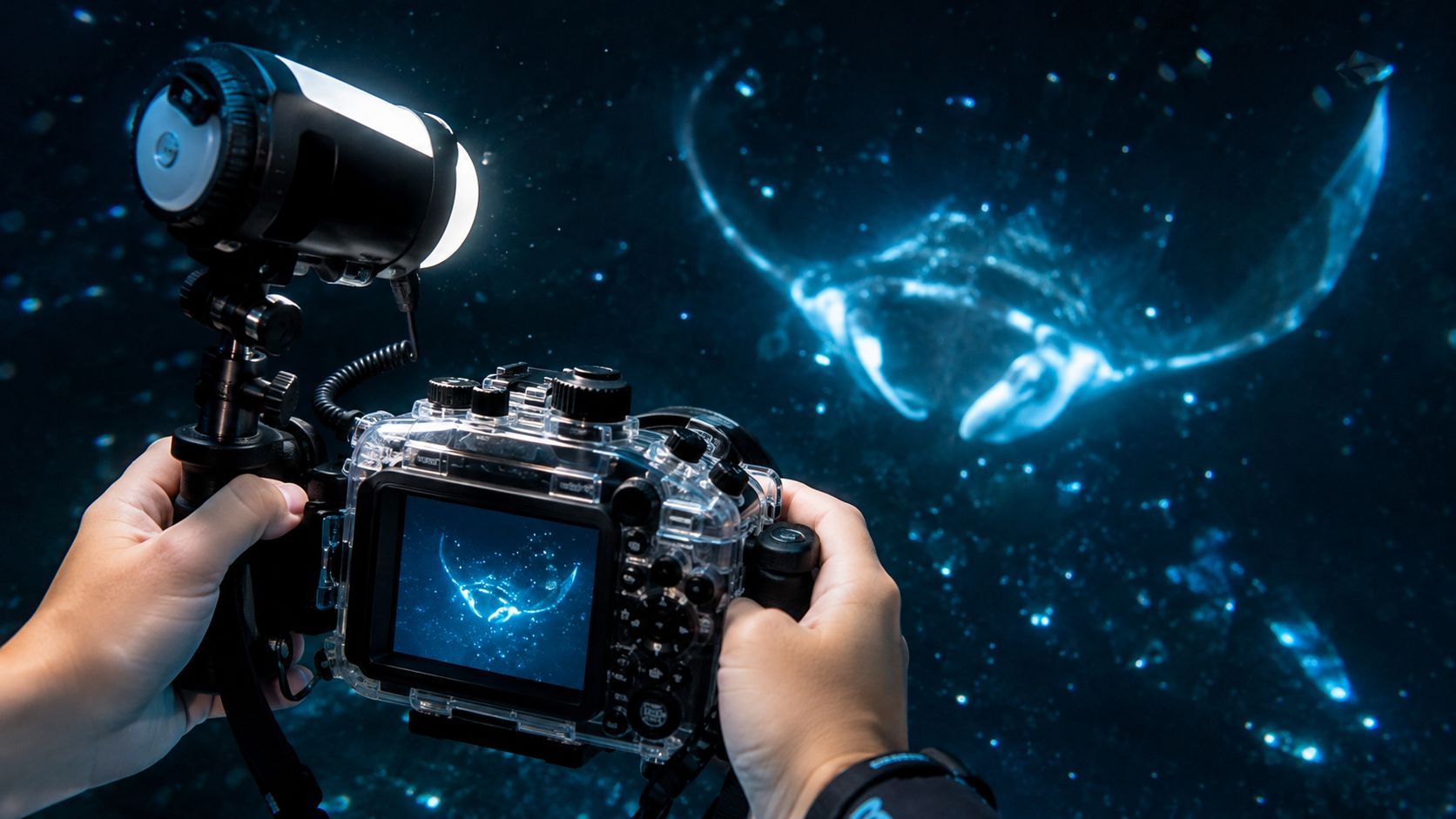
Night photography punishes rushed movement. The camera sees a narrower slice of the scene than your eyes do, and the yellow or green cast from underwater lights can make a manta's white belly look dull or uneven.
Start by securing your position. Hold the viewing board with one hand if needed, keep your fins still, and wait for the manta to enter the light. A stable photographer gets sharper frames and creates less disturbance than someone chasing every pass.
Settings that help
Use autofocus carefully. Focus on the manta's leading edge or eyes when the animal enters the brightest part of the beam. Manual focus can work for experienced photographers who know the distance they'll maintain.
Control white balance. Underwater lights often produce a warm cast. Test a cooler setting if your camera allows it, but avoid spending the encounter staring at menus.
Keep the light behind you. Position yourself so the viewing illumination reveals the animal from below or ahead. Don't add a harsh beam directly into the manta's face.
Shoot short bursts. A burst captures wing position without requiring you to move toward the animal. Delete later rather than interrupting the encounter to review every frame.
Protect the highlights. Bright white undersides can clip quickly. If your camera supports exposure compensation, slightly reduce exposure and check the result only when conditions allow.
Small cameras and phones often struggle with noise in dark water. If you're editing later, this practical guide to reduce ISO noise in photos can help you clean up grain without destroying fine detail.
The best image may be the one you don't take. Read these manta ray snorkel tips before boarding, then give yourself permission to watch the first close pass without touching the camera.
Common Myths About Manta Ray Snorkeling
Manta rays look imposing because their bodies are broad and their mouths are wide. Their feeding method can appear dramatic, but these animals are filter feeders, not predators hunting swimmers. They have no reason to attack people, and a close pass still requires the same rule as any wildlife encounter: stay passive and let the animal choose its direction.
Another myth is that only strong swimmers can participate. Swimming ability does matter because the activity takes place in open ocean, but flotation devices, surface boards, crew briefings, and in-water supervision can make the experience manageable for eligible participants. Operators still need to know your actual ability, and a flotation aid doesn't turn an unsafe swimmer into a safe one.
More mantas doesn't always mean better
A crowded viewing area can produce impressive photographs while reducing personal space for both animals and guests. More bodies mean more fins, more light beams, more accidental blocking, and more complicated boat coordination.
Responsible quality has other indicators:
Clear positioning rules: The crew tells swimmers where to hold on and prevents people from entering the feeding column.
Controlled lighting: Lights stay associated with the designated viewing area and away from propellers, rudders, ladders, and other hazards.
Passive wildlife conduct: Guides stop touching, chasing, blocking, and diving beneath feeding mantas.
A weather decision: The operator explains when the site is too rough, too cloudy, or too unsafe to continue.
A real exit plan: Guests can return to the boat without swimming under the hull or crossing a moving vessel's path.
The best encounter isn't the one where an animal is forced into the smallest possible space. It's the one where guests remain calm, the crew controls the operation, and the manta can feed without being treated like a performer.
For a Kona-based option, Manta Ray Night Snorkel Hawaii offers guided nighttime snorkeling with flotation equipment, lifeguard-certified guides, and viewing at established manta sites. Visit Manta Ray Night Snorkel Hawaii to review the experience, compare scheduling options, and choose a responsible way to see Kona's reef mantas after dark.
Comments